v2.webp)
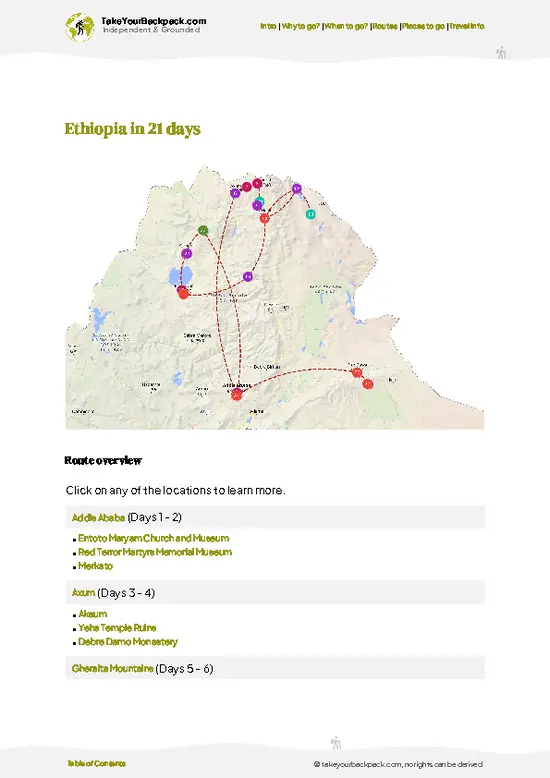
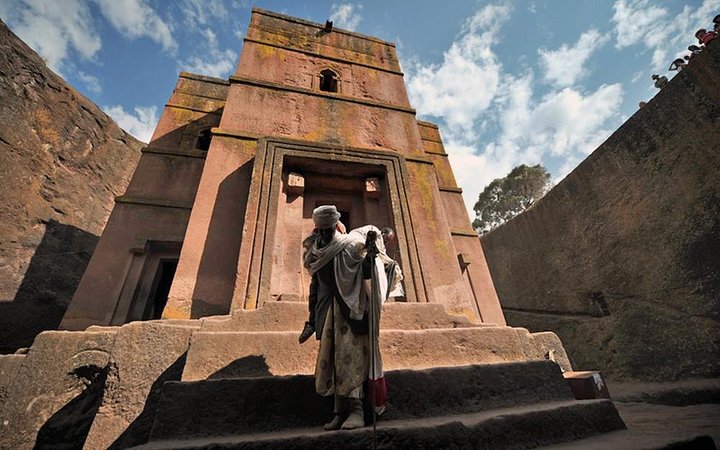
- Bete Giyorgis (Church of St. George): The cross-shaped church that most people come to see, dropped into a deep pit and carved from a single block of rock. Walk down the trench to see the roof from above, then look up at the carved crosses on the walls. Mid-morning light reaches the floor of the pit. Entry is covered by the main ticket (about US$50), and 45 minutes is plenty.
- Bete Medhane Alem: The largest monolithic rock church in the world, ringed by a colonnade of 72 pillars. Inside, the dim interior smells of old incense and sheepskin. Go early before tour groups arrive. Allow 40 to 60 minutes. Included in the main ticket.
- Bete Maryam: Said to be the oldest church in the complex and the one most loved by pilgrims. Its walls carry painted fabric and carved symbols, and a pillar is wrapped
- Bete Giyorgis (Church of St. George): The cross-shaped church that most people come to see, dropped into a deep pit and carved from a single block of rock. Walk down the trench to see the roof from above, then look up at the carved crosses on the walls. Mid-morning light reaches the floor of the pit. Entry is covered by the main ticket (about US$50), and 45 minutes is plenty.
- Bete Medhane Alem: The largest monolithic rock church in the world, ringed by a colonnade of 72 pillars. Inside, the dim interior smells of old incense and sheepskin. Go early before tour groups arrive. Allow 40 to 60 minutes. Included in the main ticket.
- Bete Maryam: Said to be the oldest church in the complex and the one most loved by pilgrims. Its walls carry painted fabric and carved symbols, and a pillar is wrapped in cloth. Come when the faithful gather for prayers. Plan 30 to 45 minutes. Included in the main ticket.
- Bete Amanuel: Part of the eastern group, with neat, even stonework that mimics timber beams. It is quieter than the northern cluster, so you can look at details without crowds. Afternoon visits work well. Allow 30 minutes. Included in the main ticket.
- Bete Abba Libanos: A lesser-visited church attached to the rock only at its roof and floor, with a narrow tunnel to reach it. Local legend says it was built by Lalibela’s wife in a single night. Few tour groups come, so bring a flashlight for the passages. Allow 30 minutes. Included in the main ticket.
Spotted a mistake or missing something? Contact us.

Visiting Lalibela churches

Tour 11 monolithic rock churches & museum in Lalibela & cave church with mummies

Visiting churches of lalibela

Rock Churches of Lalibela Guided Tour

2-Day Lalibela Culture Tour with Cooking, Coffee & Church Visits

Lalibela churches , church museum & Yemrehan kirstose ( cave church)

Day Trip to Rock Hewn Churches of Lalibela

2 Days 1 night tour to Lalibela Rock-hewn churches

Private Guided Tour in Lalibela Ethiopia

 Best Backpacking
.jpg) Hi, I’m Johan (Netherlands 🇳🇱), the creator of TakeYourBackpack. Over the past 3 decades, I’ve backpacked through 90+ countries across six continents, gaining extensive experience with independent travel, long-term trips, and overland routes.
Hi, I’m Johan (Netherlands 🇳🇱), the creator of TakeYourBackpack. Over the past 3 decades, I’ve backpacked through 90+ countries across six continents, gaining extensive experience with independent travel, long-term trips, and overland routes.