×

Ethiopia🇪🇹 | townsJinkaOmo Valley gateway, tribal markets, ethnographic museum | things to do and best time to go

Explore AxumExplore Lalibela

Backpacking in Jinka
🏆 Top picktown ranked #3
By Johan Kruseman 🇳🇱 | Updated May 23, 2026

Most travelers only realize after arriving: Jinka’s real advantage isn’t what’s inside the town, but how it lets you slow down and recalibrate before plunging into Ethiopia’s Omo Valley. Jinka sits in the far southwest, where the highlands start to fray into scrubby hills and the air smells faintly of woodsmoke and rain-soaked earth. The town itself is a bit rough around the edges—dusty streets, a handful of basic guesthouses, and a market that’s more practical than picturesque. But that’s the point: Jinka is a launchpad, not a destination. It’s where you stock up, meet guides, and catch your breath before heading to the tribal villages or Mago National Park. The pace is slower than Arba Minch or Konso, with fewer touts and less tourist gloss. Buses arrive battered and late, but you can walk most places or grab a bajaj (three-wheeled tuk-tuk). Evenings are quiet, with backpackers swapping stories over injera in dim cafés. It’s not cheap by Ethiopian standards, but it’s safer and more relaxed than most Omo towns. If you want a place to regroup, meet other travelers, and plan your next move, Jinka is the right kind of in-between.

Discover everything you want to know in the 📖 Ethiopia Travel Guide.
Safety warning

The current risk level for Ethiopia is high. Check the advice before going.


Get your Ethiopia guide
101 ranked highlights, routes & tips, works offline (398 pages)
Loading the map 🌍
CLICK TO FILTER
city
town
unique site
national park
hike
attraction
festival
region
SHOW COUNTRY’S BESTSHOW ALL

✨ Why go?
Ranked #3 town in Ethiopia
The unique appeal for travelers

Jinka serves as a gateway to the stunning landscapes and rich cultures of the Omo Valley. Backpackers flock here for its convenience; it’s the perfect base for exploring nearby hikes, like the breathtaking trails leading to the Mursi and Hamar villages. The local food scene is a treat, with small eateries serving up spicy stews and injera that fill the air with tantalizing aromas.

Strolling through Jinka’s walkable streets, you’ll find a friendly atmosphere that invites conversation. It’s a place where solo travelers can easily connect with others, while small groups appreciate the laid-back vibe. Most travelers tend to linger a few days, soaking in the culture and preparing for excursions, rather than just passing through.

Accommodations range from small-scale hostels to cozy guesthouses, … read more 👉
Jinka serves as a gateway to the stunning landscapes and rich cultures of the Omo Valley. Backpackers flock here for its convenience; it’s the perfect base for exploring nearby hikes, like the breathtaking trails leading to the Mursi and Hamar villages. The local food scene is a treat, with small eateries serving up spicy stews and injera that fill the air with tantalizing aromas.

Strolling through Jinka’s walkable streets, you’ll find a friendly atmosphere that invites conversation. It’s a place where solo travelers can easily connect with others, while small groups appreciate the laid-back vibe. Most travelers tend to linger a few days, soaking in the culture and preparing for excursions, rather than just passing through.

Accommodations range from small-scale hostels to cozy guesthouses, making it accessible for various budgets. The town isn’t about nightlife; it’s about the experience. If you’re a slow traveler or a hiker seeking authentic interactions and a taste of local life, Jinka is more than a stop; it’s a meaningful part of your journey.
Get the complete Travel Guide for Ethiopia
Everything organized for offline planning — routes, highlights, costs & tips

See what’s inside 👉

Get the Travel Guide -

💡 HighlightsWhat this place is best known for

  • Jinka Museum (South Omo Research Center Museum) — Small but packed: ethnographic displays, traditional costumes, tools and photographs that give real context to the tribes of the Omo Valley. It’s the best single stop in town to understand what you’re seeing out in the villages.
  • Jinka Central Market — The town’s beating heart. On market days people from surrounding groups bring produce, beads, pottery and livestock. It’s the most immediate place to meet locals, sample street food, and see everyday trade and costume up close (check the local schedule; market days shift).
  • Ari Cultural Village (Jinka) — A living-community stop inside town where you can observe Ari household life, crops and craft techniques without a long drive. Worth it for hands-on cultural exchange and simpler, quieter visits
read more 👉
  • Jinka Museum (South Omo Research Center Museum) — Small but packed: ethnographic displays, traditional costumes, tools and photographs that give real context to the tribes of the Omo Valley. It’s the best single stop in town to understand what you’re seeing out in the villages.
  • Jinka Central Market — The town’s beating heart. On market days people from surrounding groups bring produce, beads, pottery and livestock. It’s the most immediate place to meet locals, sample street food, and see everyday trade and costume up close (check the local schedule; market days shift).
  • Ari Cultural Village (Jinka) — A living-community stop inside town where you can observe Ari household life, crops and craft techniques without a long drive. Worth it for hands-on cultural exchange and simpler, quieter visits than the big tourist villages.
  • Mago / Omo National Park offices and information center — The administrative hub is in town; it’s where you sort permits, learn about park logistics, and hear from rangers about wildlife and conservation. Even if you don’t go far into the park, the briefings here add important context.
  • Jinka Airstrip — Small and low-key, the airstrip is interesting if you like watching the regional comings and goings. Flights are infrequent but realistic travel links and a reminder of how remote the area is; you’ll often see villagers and traders arriving or departing.
  • Women’s handicraft stalls and cooperatives — Scattered around the market and main streets, these stalls sell beadwork, textiles and small carvings made by local women. Buying here supports local incomes and you get the story behind items rather than soulless souvenirs.
  • Traditional coffee ceremony spots (family or small cafés) — Jinka does coffee right: slow, ceremonial, and social. Sit through a real home ceremony — the smell, the roasting, the conversation — it’s one of the best cultural experiences in town.
  • Omo River bank and nearby viewpoint — You can walk from town to sections of the Omo River and small vantage points where people wash, fish and cross. The river scenes are quietly powerful and give a real sense of how livelihoods link to the water.
  • Local tej houses and small eateries — For trying tej (honey wine), injera dishes and local stews that aren’t on tourist menus, head to the simpler joints around town. Food tells stories here — about crops, ceremony and daily life.
  • Community schools and research/library displays (South Omo Research Center outreach) — Not flashy, but visiting a local school or the research center’s smaller displays offers meaningful contact: students, language materials and community projects that show how education and research interact with local cultures.
A few solid day trips just outside Jinka: Mago National Park, the riverside Karo and Mursi villages along the Omo, and the Turmi/Hamer markets — my personal favorite for a day trip is Mago National Park.
Spotted a mistake or missing something? Contact us.

Things to do around Jinka

Ratings based on Tripadvisor reviews. When you book through this link, you support our work at no extra cost to you.

🏘️ NeighborhoodsWhere things are and how it's laid out

Jinka is a vibrant hub in the Omo Valley, where the pulse of local culture meets the thrill of adventure. Each neighborhood offers a unique flavor, making it essential to choose wisely for your stay.

Downtown Jinka: This is the heart of the action. Bustling markets and street vendors fill the air with the scent of spices and grilled meat. It’s walkable, with plenty of budget-friendly accommodations. You’ll find lively bars and cafes, perfect for unwinding after a day of exploration. Ideal for short stays, but the noise can be a bit much for longer visits.

Jinka’s Cultural District: A bit quieter, this area is where you’ll find museums and cultural centers. The vibe is more laid-back, with a focus on local art and history. It’s a great spot for those looking to immerse themselves in the region’s … read more 👉
Jinka is a vibrant hub in the Omo Valley, where the pulse of local culture meets the thrill of adventure. Each neighborhood offers a unique flavor, making it essential to choose wisely for your stay.

Downtown Jinka: This is the heart of the action. Bustling markets and street vendors fill the air with the scent of spices and grilled meat. It’s walkable, with plenty of budget-friendly accommodations. You’ll find lively bars and cafes, perfect for unwinding after a day of exploration. Ideal for short stays, but the noise can be a bit much for longer visits.

Jinka’s Cultural District: A bit quieter, this area is where you’ll find museums and cultural centers. The vibe is more laid-back, with a focus on local art and history. It’s a great spot for those looking to immerse themselves in the region’s heritage. Accommodations here are slightly pricier but worth it for the experience. Perfect for longer stays if you want to soak in the local culture.

Outskirts of Jinka: If you crave tranquility, head to the outskirts. Surrounded by nature, this area offers stunning views and a peaceful atmosphere. It’s less walkable, so having a bike or arranging transport is key. Accommodations range from budget to mid-range. Ideal for longer stays, especially if you want to explore the nearby national parks.

Each area in Jinka has its own rhythm. Choose based on what you want to experience, and you’ll unlock the best of this Ethiopian gem.

⌛️ 1 day1-day itinerary for Jinka

Jinka, the gateway to the Omo Valley, pulses with life and culture. It’s a place where the air is thick with the aroma of spices and the vibrant chatter of local markets fills the streets. This town is a blend of traditional and modern Ethiopia, making it a fascinating stop for any traveler.

Start your morning at the bustling Jinka Market. As the sun rises, the light dances off the colorful stalls, showcasing everything from fresh produce to handmade crafts. The scent of roasted coffee wafts through the air, inviting you to sip a cup while mingling with locals. Don’t miss the chance to chat with the vendors; their stories add depth to your experience. After soaking in the market’s energy, head to the nearby Jinka Museum. It’s often overlooked, but it offers a rich insight into the diverse … read more 👉
Jinka, the gateway to the Omo Valley, pulses with life and culture. It’s a place where the air is thick with the aroma of spices and the vibrant chatter of local markets fills the streets. This town is a blend of traditional and modern Ethiopia, making it a fascinating stop for any traveler.

Start your morning at the bustling Jinka Market. As the sun rises, the light dances off the colorful stalls, showcasing everything from fresh produce to handmade crafts. The scent of roasted coffee wafts through the air, inviting you to sip a cup while mingling with locals. Don’t miss the chance to chat with the vendors; their stories add depth to your experience. After soaking in the market’s energy, head to the nearby Jinka Museum. It’s often overlooked, but it offers a rich insight into the diverse cultures of the region, showcasing artifacts that tell the stories of the indigenous tribes.

In the afternoon, take a short drive to the Mursi village, about an hour away. This isn’t just a photo op; it’s a chance to engage with the Mursi people, known for their unique lip plates. The journey through the rugged landscape is breathtaking, with rolling hills and vibrant flora. Remember to approach with respect; ask questions and listen. The connection you make here is far more rewarding than any snapshot.

As evening falls, return to Jinka and explore the local eateries. Try a plate of injera with doro wat at a family-run restaurant. The spices will dance on your palate, and the warmth of the locals will make you feel at home.

End your day with a stroll through the town, where the sunset casts a golden hue over the landscape. The laughter of children playing and the distant sounds of traditional music create a symphony that lingers in the air. Jinka isn’t just a stop; it’s a vibrant chapter in your travel story.
Build the Right Itinerary
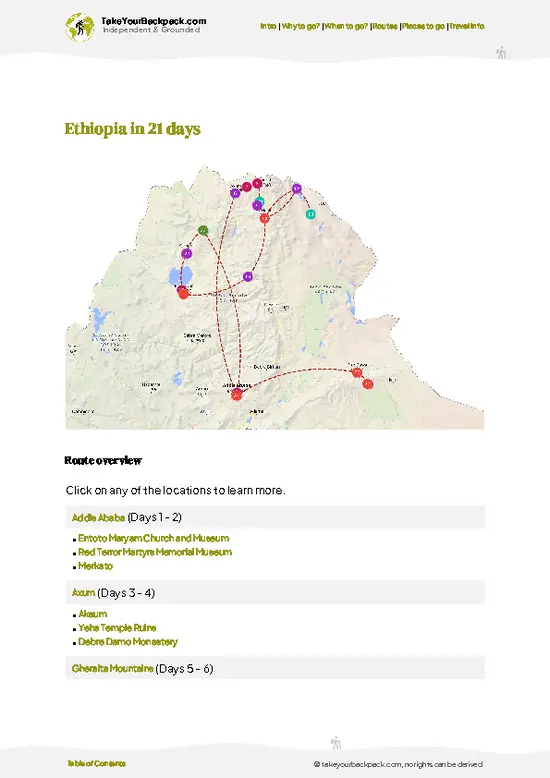
Use the Ethiopia Travel Guide’s 7, 14 & 21-day routes as a starting point to plan a trip that actually works on the ground.

Get the Travel Guide -

🌤️ When to go?Choosing the right time of year


  • Weather: Jinka’s dry season from October to March offers clear skies and dusty trails, perfect for trekking without the mud. The rainy season, April to September, drenches the landscape, turning paths into slippery challenges and limiting access to some tribal villages.

  • Temperature: Daytime highs in the dry season hover around 25-30°C (77-86°F), comfortable for hiking and exploring. Nights can dip to 10-15°C (50-59°F), so pack layers. The wet season is cooler but more humid, which can sap your energy faster.

  • Daylight Hours: Near the equator, daylight is steady year-round, roughly 12 hours daily. This consistency means you can plan early starts and late returns without worrying about losing light too soon.

  • Crowds: Tourist numbers peak during the dry months, especially December and
read more 👉

  • Weather: Jinka’s dry season from October to March offers clear skies and dusty trails, perfect for trekking without the mud. The rainy season, April to September, drenches the landscape, turning paths into slippery challenges and limiting access to some tribal villages.

  • Temperature: Daytime highs in the dry season hover around 25-30°C (77-86°F), comfortable for hiking and exploring. Nights can dip to 10-15°C (50-59°F), so pack layers. The wet season is cooler but more humid, which can sap your energy faster.

  • Daylight Hours: Near the equator, daylight is steady year-round, roughly 12 hours daily. This consistency means you can plan early starts and late returns without worrying about losing light too soon.

  • Crowds: Tourist numbers peak during the dry months, especially December and January, coinciding with Ethiopian holidays. Expect more guides and fellow travelers, which can add to the social vibe but also bump up prices.

  • Seasonal Activities: The dry season is prime for visiting the nearby tribes like the Mursi and Hamar, who hold vibrant ceremonies and markets. The wet season brings lush greenery but fewer cultural events and limited village access.

  • Price Fluctuations: Accommodation and tour prices rise during the dry season’s peak months due to demand. Booking ahead can save you from last-minute surges, while the wet season offers better deals but fewer options.


Pro-tip: Aim for late October or early March—when the dust has settled but the crowds haven’t fully arrived—to catch Jinka’s raw landscapes and tribal life in their most authentic, accessible form.


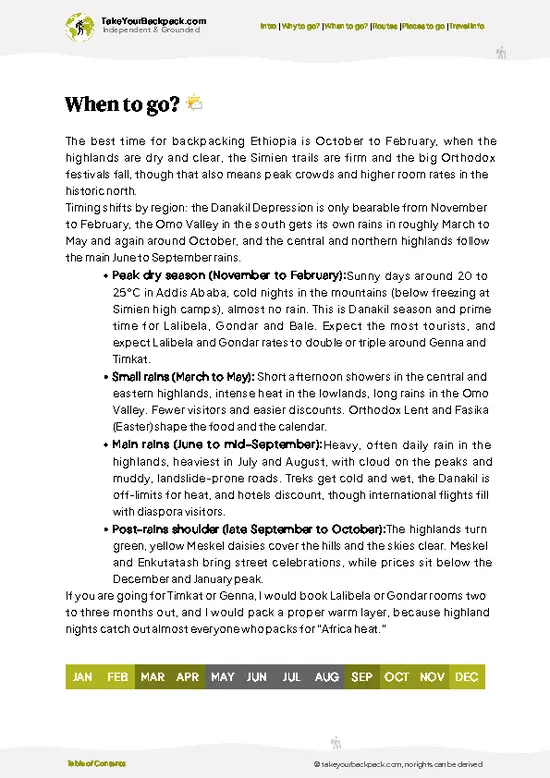
source: climatestotravel.comJANJanuary: highly recommended for travelingFEBFebruary: highly recommended for travelingMARMarch: excellent for travelingAPRApril: fair for travelingMAYMay: fair for travelingJUNJune: fair for travelingJULJuly: fair for travelingAUGAugust: fair for travelingSEPSeptember: fair for travelingOCTOctober: excellent for travelingNOVNovember: highly recommended for travelingDECDecember: highly recommended for traveling
when-to-go

✈️ The backpacker research shortcutEthiopia Travel Guide

An offline-friendly backpacking guide with optimized travel routes, ranked highlights, transport advice, and the best areas to stay.
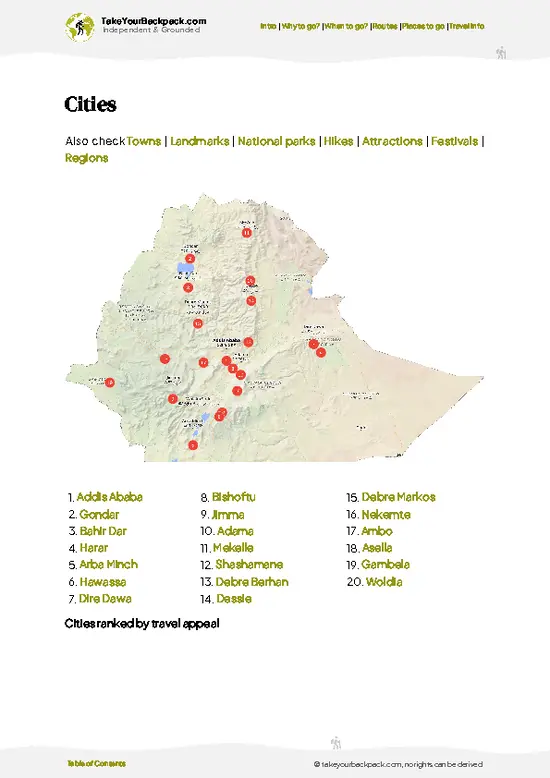
example page 0 from our offline Travel Guide for Ethiopiaexample page 1 from our offline Travel Guide for Ethiopiaexample page 2 from our offline Travel Guide for Ethiopiaexample page 3 from our offline Travel Guide for Ethiopiaexample page 4 from our offline Travel Guide for Ethiopiaexample page 5 from our offline Travel Guide for Ethiopiaexample page 6 from our offline Travel Guide for Ethiopiaexample page 7 from our offline Travel Guide for Ethiopia
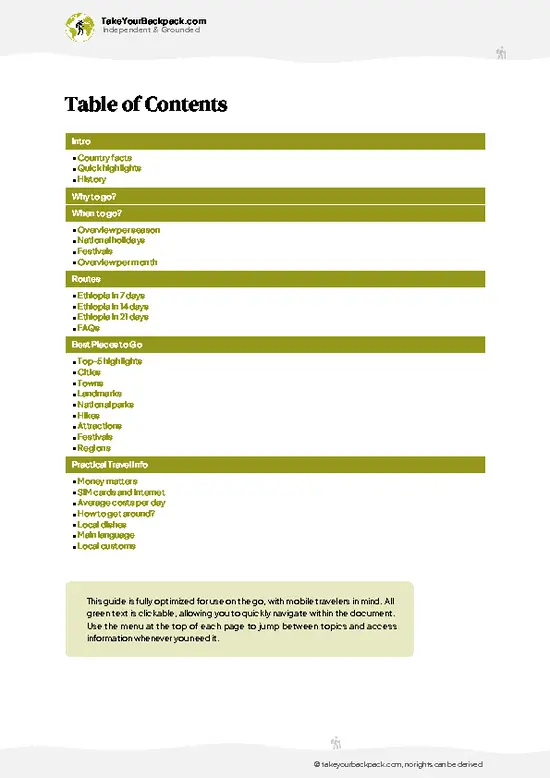
The digital guide (398 pages) contains:
101 highlights, ranked by travel appeal
Optimized 7, 14 & 21-day travel routes
Cities, national parks, beaches, historical sites, ...
How to get around
Offline-friendly for travel without Wi-Fi
👉 Click to see all 30+ guide features

📅 Plan smarter in minutes, not weeks
Month by month travel advice
Festivals & national holidays
Budget expectations

🗺️ Go to the right places, skip the overrated ones
Honest pros & cons of destinations
Top hikes, parks & viewpoints
Lesser-known places most travelers miss
Clear “worth it vs skip it” guidance

🛏️ Travel smoothly without rookie mistakes
Best areas to stay
Transport systems explained simply
Common scams & safety advice
SIM cards, money & practical tips

🌍 Understand the country, not just visit it
Culture & traditions
52 Essential phrases & customs
Festivals worth planning around
Traveler-friendly historical context
Insights that make places more meaningful

📱 Built for real travel conditions
Fully downloadable PDF
Works completely offline
Optimized for phone use
Useful in remote areas & buses
Everything in one place
Save weeks of stressful planning
Get instant access to the full guide directly. 30-day money-back guarantee.


Sent to your inbox immediately after payment • 100% Secure Checkout
Best Backpacking Travel Advisor 2025 tourism awardBest Backpacking
Travel Advisor
2025
What others say about Take Your Backpack Guides:
⭐⭐⭐⭐⭐
Fantastic, amazing amount of information!
⭐⭐⭐⭐⭐
My goodness this is amazing, it's what I've been looking for hats off too you!
⭐⭐⭐⭐⭐
I think this is absolutely BRILLIANT
⭐⭐⭐⭐
Very complete and informative. It's still missing places, but I gotta to commend you
⭐⭐⭐⭐⭐
This is truly amazing, thank you, can't wait to explore it with my kids!
⭐⭐⭐⭐⭐
Awesome resource, thank you!
⭐⭐⭐⭐⭐
This is amazing! Can't wait to explore the ones I haven't seen
⭐⭐⭐⭐
I love this! Well done, great idea.
⭐⭐⭐⭐⭐
Thanks for taking the time to make this gem!
⭐⭐⭐⭐⭐
This might be the best website I've ever seen.
⭐⭐⭐⭐⭐
Congratulations, and thank you so much for your work; it's incredibly valuable.
⭐⭐⭐⭐
In all seriousness I think you did a great job pointing out the important spots
⭐⭐⭐⭐⭐
10/10 very good
⭐⭐⭐⭐⭐
As someone who's only just starting to visit regularly this is awesome, thank you.
⭐⭐⭐⭐
Thank you very much! I'm going to visit my dad, it's going to be very useful!
⭐⭐⭐⭐⭐
This is really cool! We'll be travelling for the first time and this definitely come in handy.
⭐⭐⭐⭐⭐
You are now our minister of culture, congratulations 👨‍💼
⭐⭐⭐⭐⭐
Just wanted to tell you that this is a pearl! Going to follow your recommendations.
⭐⭐⭐⭐⭐
This is so cool. I'll definitely be using the resource for my travels soon.
⭐⭐⭐⭐⭐
This is very impressive! Good work.
⭐⭐⭐⭐⭐
This is an amazing and informative site. Very well done!

🛏️ Where to stay?Choosing the right base

In Jinka, the best spot for backpackers is the area around the main market and the town center. This neighborhood hums with life from dawn to dusk—the smell of fresh injera mingling with the dust and smoke from cooking fires. It’s where locals gather, and you’ll find the pulse of daily life in every corner. Staying here means you’re steps away from the market’s chaotic energy, where you can barter for fresh fruit or handmade crafts, and it’s easier to strike up conversations with other travelers and locals alike.

This area is also the hub for budget accommodations and hostels, which tend to … read more 👉
In Jinka, the best spot for backpackers is the area around the main market and the town center. This neighborhood hums with life from dawn to dusk—the smell of fresh injera mingling with the dust and smoke from cooking fires. It’s where locals gather, and you’ll find the pulse of daily life in every corner. Staying here means you’re steps away from the market’s chaotic energy, where you can barter for fresh fruit or handmade crafts, and it’s easier to strike up conversations with other travelers and locals alike.

This area is also the hub for budget accommodations and hostels, which tend to cluster near the main roads and market stalls. These places are simple but clean, often run by locals who double as guides or storytellers, giving you insider tips on the Omo Valley tribes and nearby hikes. The vibe is social without being overwhelming—perfect if you want to swap stories over coffee or plan your next move with fellow backpackers.

Compared to the quieter, more residential outskirts, the town center keeps you plugged into Jinka’s rhythm. It’s safer, too, because there’s always someone around, and the streetlights make late arrivals less daunting. You’re not just avoiding a mistake by staying here—you’re stepping into the heart of the experience.

🚌 Getting aroundTransportation options and practical tips

Jinka moves at its own rhythm—less a clockwork town and more a place where time bends to the sun and the needs of its people. The dusty streets hum with a mix of purposeful strides and spontaneous gatherings, where the scent of roasting coffee beans mingles with the earthy aroma of freshly turned soil. Here, schedules are loose suggestions, not ironclad rules. You’ll find that patience isn’t just a virtue; it’s your best travel companion. The flow of Jinka is a dance between the slow pulse of rural life and the bursts of activity around market days or bus arrivals. Understanding this flow means you don’t just get from point A to B—you move with the town, catching its mood and momentum.


  • Walking: The most reliable and immersive way to navigate Jinka’s compact center. Streets are unpaved
read more 👉
Jinka moves at its own rhythm—less a clockwork town and more a place where time bends to the sun and the needs of its people. The dusty streets hum with a mix of purposeful strides and spontaneous gatherings, where the scent of roasting coffee beans mingles with the earthy aroma of freshly turned soil. Here, schedules are loose suggestions, not ironclad rules. You’ll find that patience isn’t just a virtue; it’s your best travel companion. The flow of Jinka is a dance between the slow pulse of rural life and the bursts of activity around market days or bus arrivals. Understanding this flow means you don’t just get from point A to B—you move with the town, catching its mood and momentum.


  • Walking: The most reliable and immersive way to navigate Jinka’s compact center. Streets are unpaved and uneven, so sturdy shoes are a must. Walking lets you soak in the vibrant market stalls and the chatter of locals, all at your own pace. It’s free, flexible, and the best way to catch the subtle shifts in light and life as the day unfolds.


  • Minibus (Shared Taxi): These are the workhorses of regional travel, connecting Jinka to nearby towns like Arba Minch and Turmi. They leave when full, so expect waits that can stretch from 30 minutes to a couple of hours. Fares hover around 100-150 ETB depending on distance. The ride is bumpy and slow, but it’s a front-row seat to rural Ethiopia’s landscapes and roadside life.


  • Bajaj (Motorcycle Taxi): Perfect for short hops within town or to nearby villages. Bajajs dart through narrow lanes and crowded markets with surprising agility. Prices are negotiable but generally start around 20 ETB for short trips. They’re fast and flexible, but hold on tight—the ride can be rough and the dust thick.


  • Local Bus: Larger than minibuses and slightly more comfortable, local buses run on fixed routes but still leave only when full. They’re slower but cheaper, with fares often under 100 ETB. Expect a noisy, crowded experience that’s a slice of everyday life, complete with the smell of diesel and the chatter of passengers.


  • Private Car Hire: For those with a bit more budget and a tight schedule, hiring a private car offers the smoothest ride and the most control over timing. Prices vary widely, but this option lets you escape the unpredictability of shared transport and explore off-the-beaten paths around Jinka at your own pace.

👛 Costs (as of 28 July 2025)How expensive it really is

Backpacking in Jinka, Ethiopia, offers a raw, earthy experience where every birr spent feels like a step deeper into the heart of the Omo Valley. Here’s how your daily budget breaks down in practical terms.
  • Dorm Accommodation: Expect to pay around $5 to $10 per night for a basic dorm bed. The options are simple—think mosquito nets, shared bathrooms, and a fan if you’re lucky. It’s not luxury, but it’s clean enough to rest after a day of exploring.
  • Meals: Local eateries serve up hearty, filling meals for about $2 to $4 each. Injera with stews, fresh fruit, and coffee are staples. Street food can be even cheaper, but stick to cooked dishes to avoid stomach trouble.
  • Local Transport: Getting around Jinka is mostly on foot or by bajaj (three-wheeler taxis). Bajaj rides cost roughly $0.50 to
read more 👉
Backpacking in Jinka, Ethiopia, offers a raw, earthy experience where every birr spent feels like a step deeper into the heart of the Omo Valley. Here’s how your daily budget breaks down in practical terms.
  • Dorm Accommodation: Expect to pay around $5 to $10 per night for a basic dorm bed. The options are simple—think mosquito nets, shared bathrooms, and a fan if you’re lucky. It’s not luxury, but it’s clean enough to rest after a day of exploring.
  • Meals: Local eateries serve up hearty, filling meals for about $2 to $4 each. Injera with stews, fresh fruit, and coffee are staples. Street food can be even cheaper, but stick to cooked dishes to avoid stomach trouble.
  • Local Transport: Getting around Jinka is mostly on foot or by bajaj (three-wheeler taxis). Bajaj rides cost roughly $0.50 to $1 per trip within town. Walking is free and often the best way to soak in the dusty streets and local chatter.
  • Basic Activities/Entry Fees: Visiting local markets or cultural villages typically costs $2 to $5. Some community visits might include a small guide fee or donation. These experiences are worth every cent for the direct connection to local life.
  • Miscellaneous Expenses: Budget around $1 to $3 for bottled water, snacks, or small souvenirs. Electricity can be spotty, so a power bank or solar charger might save you from unexpected costs.

Altogether, you’re looking at roughly $10 to $23 per day to cover the essentials in Jinka. It’s a modest sum for a place where the air carries the scent of earth and fire, and every interaction feels like a doorway to a different world. Keep cash handy—ATMs are rare, and card payments almost nonexistent.


source: ethiopia.travel
⚠️ Prices can change and everyone travels differently, so take this as a rough guide. Hope it helps you plan your adventure!

🚌 Day tripsShort trips worth adding

Jinka is a vibrant hub for exploring the rich cultures and stunning landscapes of southern Ethiopia. With its strategic location, you can easily embark on day trips that reveal the heart of this diverse region.

Trip to Mursi Village
Visiting the Mursi people is like stepping into a living museum. The women wear lip plates that tell stories of beauty and tradition, while the men often showcase their prowess in stick fighting. The journey takes about an hour and a half, winding through lush hills and valleys. Expect to spend around $30 for transport and a guide. The best time to go is during the dry season, from October to March, when the trails are more accessible. A common mistake? Many first-timers forget to bring small bills for village fees. The experience is eye-opening, but respect … read more 👉
Jinka is a vibrant hub for exploring the rich cultures and stunning landscapes of southern Ethiopia. With its strategic location, you can easily embark on day trips that reveal the heart of this diverse region.

Trip to Mursi Village
Visiting the Mursi people is like stepping into a living museum. The women wear lip plates that tell stories of beauty and tradition, while the men often showcase their prowess in stick fighting. The journey takes about an hour and a half, winding through lush hills and valleys. Expect to spend around $30 for transport and a guide. The best time to go is during the dry season, from October to March, when the trails are more accessible. A common mistake? Many first-timers forget to bring small bills for village fees. The experience is eye-opening, but respect is key; engage with the locals genuinely.
👉 Explore Mursi Village

Trip to Konso Cultural Landscape
The Konso people are known for their terraced farming and unique wooden totems. This UNESCO World Heritage site is about two hours from Jinka. The drive is scenic, with panoramic views of terraced hillsides. Budget around $25 for transport and entry fees. Late afternoon visits can be magical, as the setting sun casts golden hues over the landscape. A rookie error is rushing through; take your time to absorb the intricate stories behind the totems and the community’s sustainable practices.
👉 Explore Konso Cultural Landscape

Trip to Ari Village
Ari Village offers a more intimate glimpse into daily life. Just a short 30-minute drive from Jinka, you can witness traditional weaving and coffee ceremonies. The cost is minimal—around $15 for transport. The best time to visit is early morning when the village is bustling with activity. Many backpackers overlook the importance of asking questions; the locals are eager to share their stories if you show genuine interest. This trip is a reminder that the simplest experiences often leave the deepest impressions.


Trip to the Omo River
The Omo River is a lifeline for many tribes and a stunning backdrop for a day of exploration. It takes about an hour to reach the riverbanks, where you can enjoy a picnic or a leisurely walk along the shore. Budget around $20 for transport. The dry season is ideal for clear views and pleasant weather. A common pitfall is not bringing enough water; it’s easy to underestimate the heat. This trip is a perfect blend of relaxation and cultural immersion, making it a must-do.
Want to know what more Ethiopia offers?
The Ethiopia Travel Guide describes 101 highlights, from cities to national parks, from beaches to hikes

Get the Travel Guide -

🛡️ SafetyStaying Safe: What Travelers Should Know

Jinka is generally safe, but like any place, a little awareness goes a long way. The bustling market is a vibrant hub, but keep your belongings close. Pickpockets can lurk in crowded areas, so wear a crossbody bag and keep your phone tucked away.

If you’re traveling solo, especially at night, stick to well-lit streets and avoid wandering too far from the main areas. The atmosphere shifts after dark, and while locals are friendly, it’s wise to be cautious.

Common scams are rare, but some vendors might inflate prices for tourists. Always ask for prices upfront and don’t hesitate to haggle; it’s part of the culture.

Annoyances can include aggressive touts, especially near popular spots. A firm but polite “no, thank you” usually does the trick. Carry yourself confidently, and you’ll blend … read more 👉
Jinka is generally safe, but like any place, a little awareness goes a long way. The bustling market is a vibrant hub, but keep your belongings close. Pickpockets can lurk in crowded areas, so wear a crossbody bag and keep your phone tucked away.

If you’re traveling solo, especially at night, stick to well-lit streets and avoid wandering too far from the main areas. The atmosphere shifts after dark, and while locals are friendly, it’s wise to be cautious.

Common scams are rare, but some vendors might inflate prices for tourists. Always ask for prices upfront and don’t hesitate to haggle; it’s part of the culture.

Annoyances can include aggressive touts, especially near popular spots. A firm but polite “no, thank you” usually does the trick. Carry yourself confidently, and you’ll blend in more easily. Embrace the experience, and you’ll find Jinka’s charm shines through.

Other Ethiopian towns near Jinka

Explore more nearby:

  • Mursi Village—lip plate tradition, Mago National Park, remote settlement| 11 km away
  • Bonga—Kaffa highlands, rainforest trails, wild coffee origin| 168 km away
  • Yabelo—Borena grasslands, cattle markets, red earth landscapes| 197 km away

👉 Discover all towns

Or checkout all Ethiopia has to offer (think cities, towns, villages, national parks, hikes, beaches, festivals)
Country photo of Ethiopia

We 💚 feedbackParting advice and final tips

Jinka is a gateway to the vibrant cultures of the Omo Valley, where the air buzzes with the sounds of local markets and the scent of fresh coffee wafts through the streets. But be ready for the reality check: infrastructure can be rough. Roads are bumpy, and services are basic. Embrace the chaos; it’s part of the experience. The connections you make here are worth every jolt.

✈️ When did I visit Ethiopia?
Ethiopia I visited back in October 2017. I combined the trip with a visit to Sudan. Ethiopia was a pure suprise with the magical scenery like the Danikal Depression and the Simien Mountains.

✍️ Help improve this page!
The information on this page is based on my own backpacking experience in Ethiopia, supplemented with up-to-date research and feedback from other travelers. Travel details can change, so if you notice anything outdated or incomplete, feel free to let me know.


🙋‍♂️ Give feedback

👋 Meet the founderWho’s Behind Take Your Backpack?

Johan, backpacker and founder of TakeYourBackpackHi, I’m Johan (Netherlands 🇳🇱), the creator of TakeYourBackpack. Over the past decade, I’ve backpacked through 80+ countries across six continents, gaining extensive experience with independent travel, long-term trips, and overland routes.

This site is built on a combination of firsthand travel experience and carefully curated insights from other backpackers. Many guides are based on places I’ve personally visited, while others bring together tips, observations, and practical advice shared by trusted travelers I’ve met along the way.

The goal is to provide realistic, experience-driven guidance — not generic itineraries — so you can explore destinations with better context, clearer expectations, and more confidence.

Get full Ethiopia guide •
Instant download • 101 highlights • Full Offline guide