v2.webp)

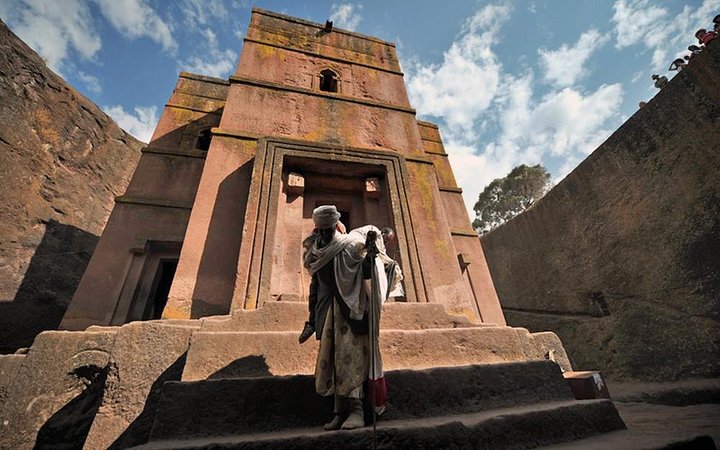
- Bete Giyorgis (Church of St. George) — The iconic cross-shaped, free-standing monolith carved down into the bedrock; photogenic, perfectly proportioned and astonishing when you realise it was hacked out of solid stone. Tight, candlelit interior, intense atmosphere — my personal favorite for the sheer “how on earth did they do that?” feeling.
- Bete Medhane Alem (Savior of the World) — Often called the largest monolithic church in the world, it feels cathedral-scale despite being carved from one piece. Look for its huge interior pillars and the sense of monumental engineering; it underlines how ambitious the whole project was.
- Bete Maryam (House of Mary) — One of the most richly decorated churches, with well-preserved wall paintings and carved details. It has a more intimate, lived-in feel:
- Bete Giyorgis (Church of St. George) — The iconic cross-shaped, free-standing monolith carved down into the bedrock; photogenic, perfectly proportioned and astonishing when you realise it was hacked out of solid stone. Tight, candlelit interior, intense atmosphere — my personal favorite for the sheer “how on earth did they do that?” feeling.
- Bete Medhane Alem (Savior of the World) — Often called the largest monolithic church in the world, it feels cathedral-scale despite being carved from one piece. Look for its huge interior pillars and the sense of monumental engineering; it underlines how ambitious the whole project was.
- Bete Maryam (House of Mary) — One of the most richly decorated churches, with well-preserved wall paintings and carved details. It has a more intimate, lived-in feel: priests still chant here and you can glimpse centuries of worship in the decorations and objets d’art.
- Bete Amanuel — Thought to be the royal chapel, compact and elaborately carved, with a tighter, more ornate interior that feels almost palatial. If you like stonework details and delicate carving in a small space, this one’s worth lingering in.
- Bete Golgotha Mikael & Bete Mercoreos cluster — These groups include smaller chapels, rock-cut tombs and crypt-like spaces that show a different side of Lalibela: funerary architecture, intricate niches and a quieter, more intimate vibe. Great for anyone interested in rituals, relics and the burial traditions tied to the site.
- Trenches, tunnels and courtyards — The churches aren’t isolated lumps; they’re connected by a maze of sunken courtyards, stone stairways and narrow tunnels that act as processional routes and frame views of the façades. Walking these paths gives you the scale and planning — you’ll appreciate the urban design as much as individual churches.
- Living liturgy, priests and festival atmosphere — Lalibela isn’t a museum: it’s an active pilgrimage centre. Watching morning prayers, witnessing chanters in bright robes, or timing a visit for Timkat (Epiphany) shows the site’s spiritual life and how these buildings still shape community and belief.
Spotted a mistake or missing something? Contact us.

Visiting Lalibela churches
✓ Free cancellation

Tour 11 monolithic rock churches & museum in Lalibela & cave church with mummies
✓ Free cancellation

Visiting churches of lalibela
✓ Free cancellation

Rock Churches of Lalibela Guided Tour
✓ Free cancellation

2-Day Lalibela Culture Tour with Cooking, Coffee & Church Visits

Lalibela churches , church museum & Yemrehan kirstose ( cave church)
✓ Free cancellation

Day Trip to Rock Hewn Churches of Lalibela
✓ Free cancellation

2 Days 1 night tour to Lalibela Rock-hewn churches

Private Guided Tour in Lalibela Ethiopia
✓ Free cancellation
Lalibela Rock Churches Guided Tour
✓ Free cancellation
 Best Backpacking
.jpg) Hi, I’m Johan (Netherlands 🇳🇱), the creator of TakeYourBackpack. Over the past decade, I’ve backpacked through 80+ countries across six continents, gaining extensive experience with independent travel, long-term trips, and overland routes.
Hi, I’m Johan (Netherlands 🇳🇱), the creator of TakeYourBackpack. Over the past decade, I’ve backpacked through 80+ countries across six continents, gaining extensive experience with independent travel, long-term trips, and overland routes.