×

Ethiopia🇪🇹 | townsMursi Villagelip plate tradition, Mago National Park, remote settlement | things to do and best time to go

Explore LalibelaExplore Dilla

Backpacking in Mursi Village
By Johan Kruseman 🇳🇱 | Updated June 13, 2026

If you crave polished comfort, seamless Wi-Fi, or nightlife, Mursi Village will test your patience. But for backpackers hungry for raw encounters, it’s a rare window into Ethiopia’s Omo Valley, deep in the south near Jinka. The village itself is dusty, basic, and more about people than place—think smoky air, ochre earth, and the hum of daily life. It’s not a base; it’s a detour, best as a day trip for cultural immersion, not amenities. Getting here means bumpy roads and patience, but the payoff is real: face-to-face moments with the Mursi, whose lip plates and traditions are as striking as the landscape. Costs run higher than you’d expect for rural Ethiopia, and you’ll need a guide—no solo wandering. Compared to Jinka, Mursi Village is less social, less practical, and far more intense.

Discover everything you want to know in the 📖 Ethiopia Travel Guide.
Safety warning

The current risk level for Ethiopia is high. Check the advice before going.


Get your Ethiopia guide
101 ranked highlights, routes & tips, works offline (395 pages)
Loading the map 🌍
CLICK TO FILTER
cities
towns
landmarks
national parks
hikes
attractions
festivals
regions
SHOW COUNTRY’S BESTSHOW ALL

✨ Why go?
Ranked #99 town in Ethiopia
Why Mursi Village should be on your travel list

Mursi Village draws backpackers for its strategic location along the route to some of Ethiopia’s most stunning hikes and cultural sites. The surrounding landscapes are a hiker’s dream, with trails that lead to breathtaking views and encounters with local wildlife. Here, you can find small-scale hostels and guesthouses that offer a cozy atmosphere, making it easy to connect with fellow travelers. The local food scene is a treat, with hearty dishes that reflect the region’s flavors, often served in communal settings that foster camaraderie.

Streets are walkable, allowing you to soak in the village’s charm at your own pace. While some travelers might stop for just a night, many linger for a few days, drawn in by the friendly social atmosphere and the chance to immerse themselves in the local … read more 👉
Mursi Village draws backpackers for its strategic location along the route to some of Ethiopia’s most stunning hikes and cultural sites. The surrounding landscapes are a hiker’s dream, with trails that lead to breathtaking views and encounters with local wildlife. Here, you can find small-scale hostels and guesthouses that offer a cozy atmosphere, making it easy to connect with fellow travelers. The local food scene is a treat, with hearty dishes that reflect the region’s flavors, often served in communal settings that foster camaraderie.

Streets are walkable, allowing you to soak in the village’s charm at your own pace. While some travelers might stop for just a night, many linger for a few days, drawn in by the friendly social atmosphere and the chance to immerse themselves in the local culture. Mursi is ideal for slow travelers, hikers, and solo adventurers seeking genuine connections. It’s not a party hub, but rather a place where the beauty of the experience unfolds gradually, rewarding those who take the time to explore.
Want to include Mursi Village in your Ethiopia route?
Create a personalized Ethiopia itinerary that includes Mursi Village and the places that fit your trip — based on your travel style, budget, and available time. Get your route in seconds.

Generate my trip

💡 HighlightsThe experiences that define the visit

  • Thatched tukul homesteads — the tightly clustered round houses are the backbone of village life: see how families cook, store grain and sleep, and get a real feel for Mursi daily routines (ask before stepping in).
  • Women’s lip-plate gatherings — visitors can observe (with permission) the distinctive lip plates and the adornment rituals that mark identity and status; it’s one of the most immediate cultural things you’ll remember.
  • Cattle kraal — livestock are wealth here; the kraal is where animals are counted, traded and tied up at night — a live lesson in Mursi economy and social ties.
  • Village ceremonial ground — the open space where dances, songs and local ceremonies happen; catching one of these gatherings (timing and permission permitting) gives real cultural context beyond photos.
read more 👉
  • Thatched tukul homesteads — the tightly clustered round houses are the backbone of village life: see how families cook, store grain and sleep, and get a real feel for Mursi daily routines (ask before stepping in).
  • Women’s lip-plate gatherings — visitors can observe (with permission) the distinctive lip plates and the adornment rituals that mark identity and status; it’s one of the most immediate cultural things you’ll remember.
  • Cattle kraal — livestock are wealth here; the kraal is where animals are counted, traded and tied up at night — a live lesson in Mursi economy and social ties.
  • Village ceremonial ground — the open space where dances, songs and local ceremonies happen; catching one of these gatherings (timing and permission permitting) gives real cultural context beyond photos.
  • Omo River bank within the village stretch — where people fish, wash and collect water; it’s scenic, full of daily activity and a good place to watch river life and, from a safe distance, hippo signs.
  • Traditional artisans’ huts — small workshops where women make pottery, beadwork and leather goods; you can watch techniques passed down generations and sometimes buy direct for modest prices.
  • Healer’s hut and medicinal plots — local healers still use plant lore; visiting (with respect) is a rare chance to hear traditional medicine stories and see the herbs they rely on.
  • Scarification and body-art explanations — many elders and adults bear patterned scars; a guided conversation about meanings and rites behind the marks is far more informative than a snapshot.
  • Community elder meeting spot — where disputes are settled and decisions are announced; sitting in on a discussion (if invited) shows governance and oral history in action.
  • Village lookout / landscape viewpoint — a short walk up from the huts gives sweeping views of the valley and neighbouring tribes’ lands; great at sunrise or late afternoon for atmosphere and photos.
A few real, visitable highlights just outside the village you can do as day trips: Mago National Park, Turmi and the Dimeka tribal market (my personal favorite for vivid market life), and short boat trips along the Omo River.
Spotted a mistake or missing something? Contact us.

Things to do near Mursi Village

Ratings based on Tripadvisor reviews. When you book through this link, you support our work at no extra cost to you.

🏘️ NeighborhoodsNeighborhood guide to Mursi Village

Mursi Village offers a raw, authentic glimpse into the heart of Ethiopia’s Omo Valley. Each area has its own character, catering to different backpacker needs.

Central Mursi: This is the beating heart of the village. It’s where you’ll find local markets buzzing with life. The vibe is energetic, filled with the scent of spices and the sound of laughter. Walkability is excellent; everything is close. Accommodations here are budget-friendly, making it ideal for short stays. Nightlife is minimal, but the evenings are perfect for mingling with locals over a coffee.

Outskirts of Mursi: For those seeking tranquility, the outskirts offer a quieter atmosphere. Here, you can soak in the stunning landscapes and enjoy the fresh air. It’s less walkable, so a bicycle or local transport is recommended. … read more 👉
Mursi Village offers a raw, authentic glimpse into the heart of Ethiopia’s Omo Valley. Each area has its own character, catering to different backpacker needs.

Central Mursi: This is the beating heart of the village. It’s where you’ll find local markets buzzing with life. The vibe is energetic, filled with the scent of spices and the sound of laughter. Walkability is excellent; everything is close. Accommodations here are budget-friendly, making it ideal for short stays. Nightlife is minimal, but the evenings are perfect for mingling with locals over a coffee.

Outskirts of Mursi: For those seeking tranquility, the outskirts offer a quieter atmosphere. Here, you can soak in the stunning landscapes and enjoy the fresh air. It’s less walkable, so a bicycle or local transport is recommended. This area is great for longer stays, allowing you to immerse yourself in the daily rhythms of village life. The cost is slightly higher for lodgings, but the peace is worth it.

Near the River: This area is a hidden treasure for nature lovers. The riverbanks provide a serene backdrop, perfect for relaxation after a day of exploring. It’s a bit of a trek from the main village, so plan your transport accordingly. Ideal for both short and long stays, the atmosphere here is calm, and you can often spot local wildlife. Accommodations vary, but you can find some unique options that enhance your experience.

⌛️ 1 dayWhat you can realistically do in a day

Mursi Village, tucked away in the Omo Valley, is a vibrant tapestry of culture and tradition. Known for its striking tribal customs, particularly the famous lip plates worn by the women, this village offers a raw glimpse into a way of life that feels worlds apart from the modern hustle. The air is thick with the scent of earth and smoke, and the sounds of laughter and chatter create a lively backdrop.

Start your morning with a stroll through the village. The sun rises slowly, casting a warm glow over the mud huts and the surrounding landscape. Engage with the locals; their smiles are genuine, and they often welcome visitors with open arms. Head to the nearby riverbank, where you can watch women washing clothes and children playing in the water. This is a slice of daily life that many tourists … read more 👉
Mursi Village, tucked away in the Omo Valley, is a vibrant tapestry of culture and tradition. Known for its striking tribal customs, particularly the famous lip plates worn by the women, this village offers a raw glimpse into a way of life that feels worlds apart from the modern hustle. The air is thick with the scent of earth and smoke, and the sounds of laughter and chatter create a lively backdrop.

Start your morning with a stroll through the village. The sun rises slowly, casting a warm glow over the mud huts and the surrounding landscape. Engage with the locals; their smiles are genuine, and they often welcome visitors with open arms. Head to the nearby riverbank, where you can watch women washing clothes and children playing in the water. This is a slice of daily life that many tourists miss, but it’s where you’ll feel the heartbeat of Mursi.

In the afternoon, visit the local market. It’s a sensory overload: vibrant fabrics, spices that tickle your nose, and the chatter of bargaining. Grab a bite from a local vendor—perhaps some injera with spicy lentils. This meal, simple yet bursting with flavor, will fuel your exploration. Afterward, take a short hike to the nearby hills for panoramic views of the valley. The sight of rolling hills and distant mountains is breathtaking and makes the effort worthwhile.

As evening approaches, return to the village for a traditional coffee ceremony. The rich aroma of roasted beans fills the air as the locals prepare this cherished ritual. Sit back, sip the strong brew, and soak in the stories shared around you. This is where the day culminates, connecting you to the essence of Mursi. You leave not just with photos, but with memories of a place that feels alive and real.
Turn your Mursi Village visit into an Ethiopia adventure
Build a complete Ethiopia route with Mursi Village, hidden gems, must-see destinations, and realistic travel times included.

Generate my trip

🌤️ When to go?Choosing the right time of year


  • Weather: The dry season from October to March offers clear skies and dusty trails, perfect for trekking. The wet season (June to September) turns the landscape lush but roads muddy and often impassable.

  • Temperature: Daytime highs hover around 25-30°C (77-86°F) in dry months, cooling to 15-20°C (59-68°F) at night. Wet months bring cooler days and chilly nights, so pack layers.

  • Daylight Hours: Roughly 12 hours year-round, but the sun rises around 6:30 AM and sets near 6:30 PM, giving you a solid window for exploration without rushing.

  • Crowds: Mursi Village remains off the beaten path, but dry season attracts more visitors. Expect quieter, more intimate encounters during shoulder months like October and March.

  • Seasonal Activities: Dry months are best for river crossings and village
read more 👉

  • Weather: The dry season from October to March offers clear skies and dusty trails, perfect for trekking. The wet season (June to September) turns the landscape lush but roads muddy and often impassable.

  • Temperature: Daytime highs hover around 25-30°C (77-86°F) in dry months, cooling to 15-20°C (59-68°F) at night. Wet months bring cooler days and chilly nights, so pack layers.

  • Daylight Hours: Roughly 12 hours year-round, but the sun rises around 6:30 AM and sets near 6:30 PM, giving you a solid window for exploration without rushing.

  • Crowds: Mursi Village remains off the beaten path, but dry season attracts more visitors. Expect quieter, more intimate encounters during shoulder months like October and March.

  • Seasonal Activities: Dry months are best for river crossings and village visits; wet months bring vibrant greenery and birdlife but limit mobility.

  • Price Fluctuations: Local guides and accommodations charge premium rates in peak dry season; visiting just before or after can save money without sacrificing experience.


Pro-tip: Aim for late October or early March—dusty trails, manageable crowds, and cooler mornings make your visit feel earned, not rushed.


source: climatestotravel.comJANJanuary: excellent for travelingFEBFebruary: excellent for travelingMARMarch: highly recommended for travelingAPRApril: good for travelingMAYMay: fair for travelingJUNJune: below average for travelingJULJuly: below average for travelingAUGAugust: below average for travelingSEPSeptember: fair for travelingOCTOctober: highly recommended for travelingNOVNovember: excellent for travelingDECDecember: excellent for traveling
when-to-go

✈️ The backpacker research shortcutEthiopia Travel Guide

An offline-friendly backpacking guide with optimized travel routes, ranked highlights, transport advice, and the best areas to stay.
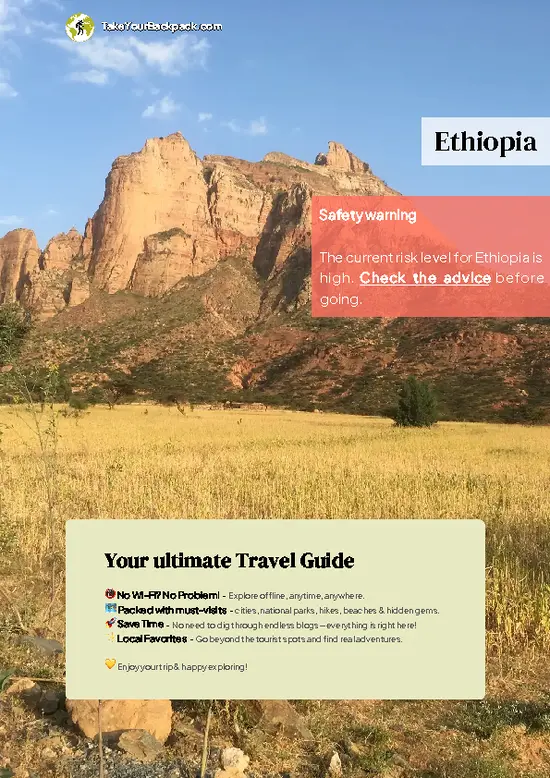
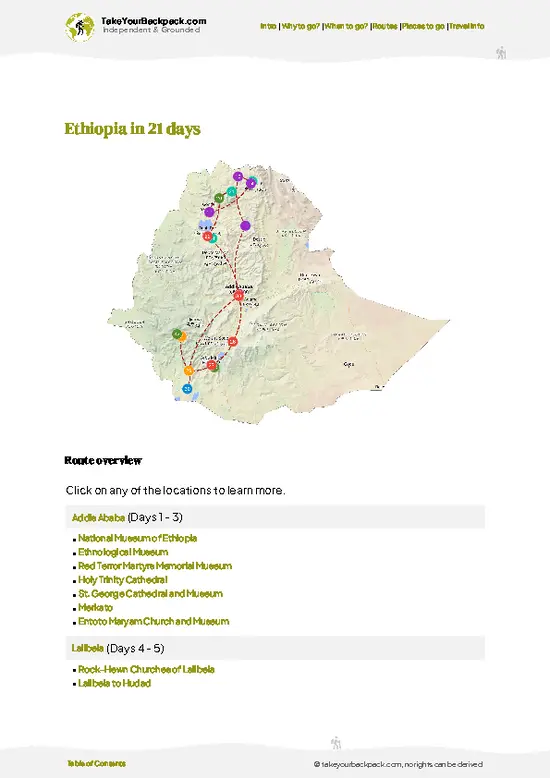
example page 0 from our offline Travel Guide for Ethiopia
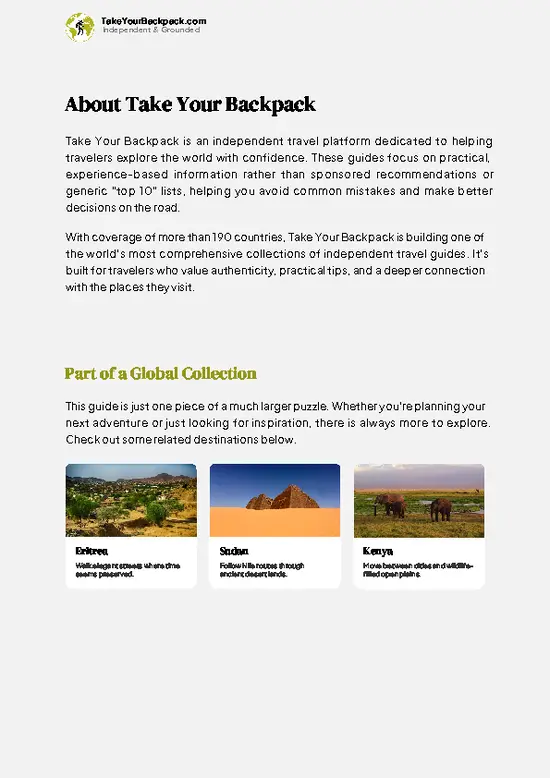
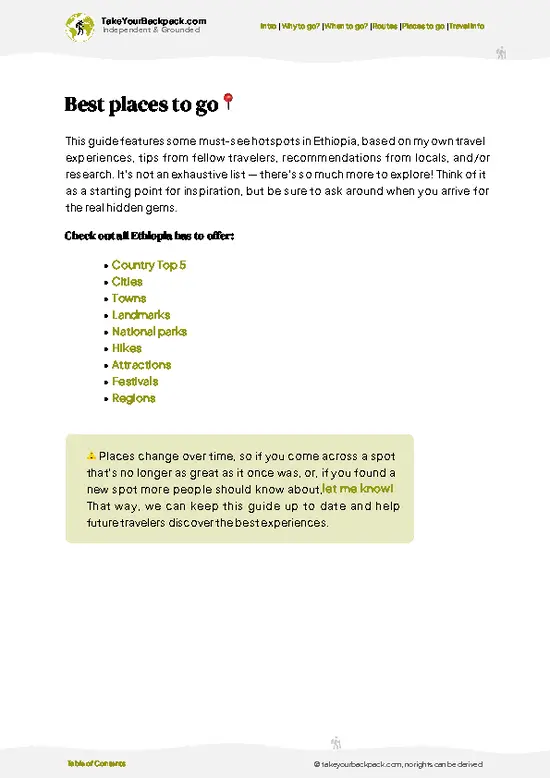
example page 1 from our offline Travel Guide for Ethiopia
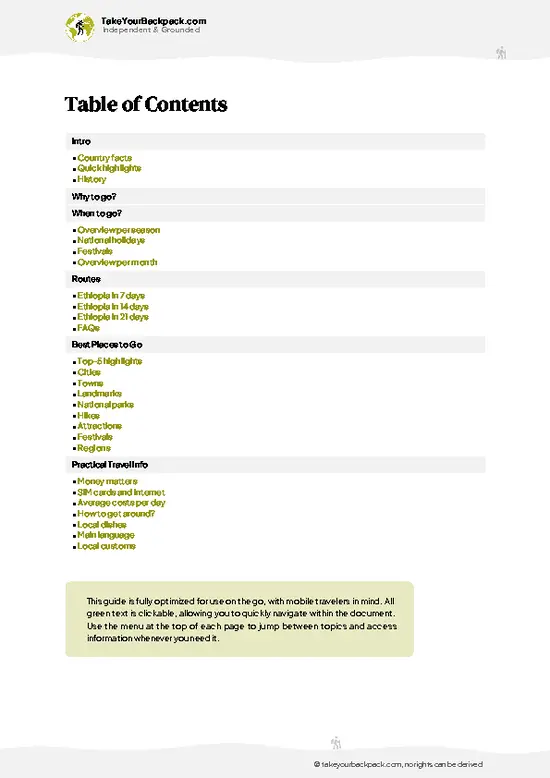
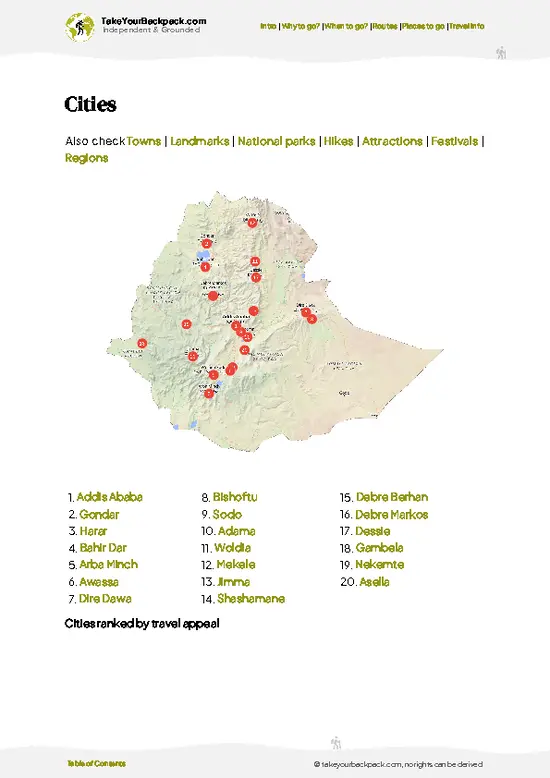
example page 2 from our offline Travel Guide for Ethiopia
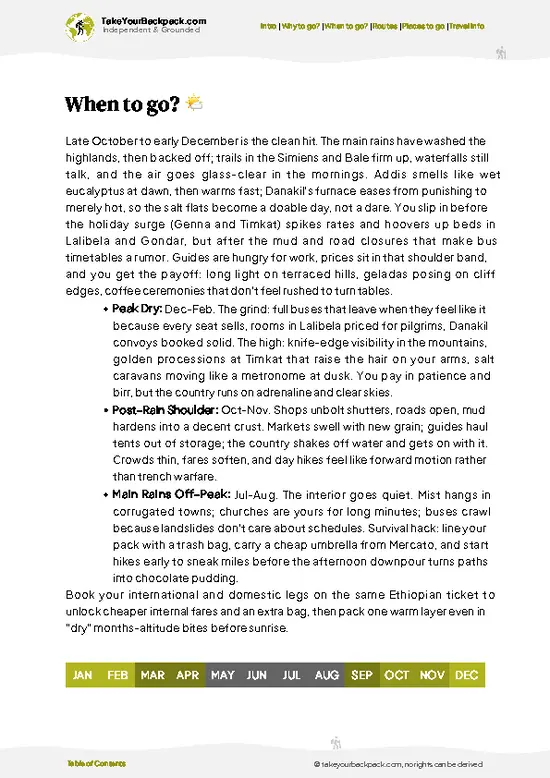
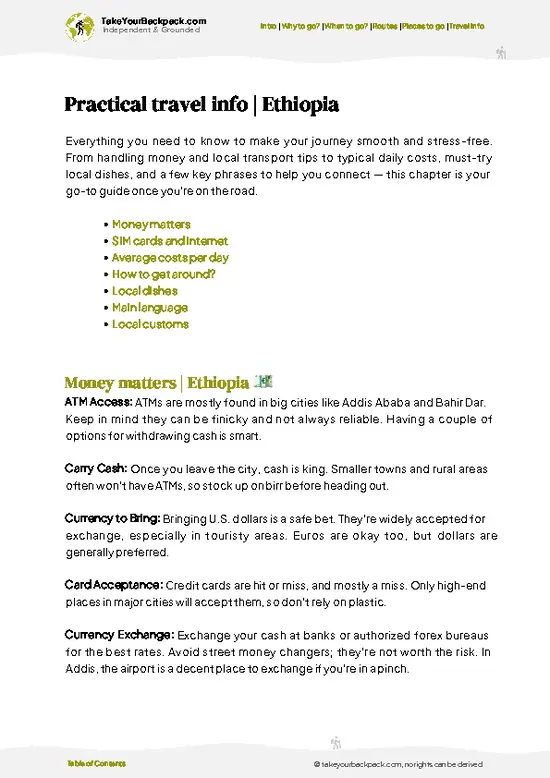
example page 3 from our offline Travel Guide for Ethiopia
example page 4 from our offline Travel Guide for Ethiopia
example page 5 from our offline Travel Guide for Ethiopia
example page 6 from our offline Travel Guide for Ethiopia
example page 7 from our offline Travel Guide for Ethiopia
The digital guide (395 pages) contains:
101 highlights, ranked by travel appeal
Optimized 7, 14 & 21-day travel routes
Cities, national parks, landmarks, beaches
How to get around
Offline-friendly for travel without Wi-Fi
👉 Click to see all 30+ guide features

📅 Plan smarter in minutes, not weeks
Month by month travel advice
Festivals & national holidays
Budget expectations

🗺️ Go to the right places, skip the overrated ones
Honest pros & cons of destinations
Top hikes, parks & viewpoints
Lesser-known places most travelers miss
Clear “worth it vs skip it” guidance

🛏️ Travel smoothly without rookie mistakes
Best areas to stay
Transport systems explained simply
Common scams & safety advice
SIM cards, money & practical tips

🌍 Understand the country, not just visit it
Culture & traditions
52 Essential phrases & customs
Festivals worth planning around
Traveler-friendly historical context
Insights that make places more meaningful

📱 Built for real travel conditions
Fully downloadable PDF
Works completely offline
Optimized for phone use
Useful in remote areas & buses
Everything in one place
Save weeks of stressful planning
Get instant access to your full guide. 30‑day money-back guarantee.


By proceeding you agree to our terms.
Sent to your inbox immediately after payment • 100% Secure Checkout
Best Backpacking Travel Advisor 2025 tourism awardBest Backpacking
Travel Advisor
2025
What others say about Take Your Backpack Guides:
⭐⭐⭐⭐⭐
Fantastic, amazing amount of information!
⭐⭐⭐⭐⭐
My goodness this is amazing, it's what I've been looking for hats off too you!
⭐⭐⭐⭐⭐
I think this is absolutely BRILLIANT
⭐⭐⭐⭐
Very complete and informative. It's still missing places, but I gotta to commend you
⭐⭐⭐⭐⭐
This is truly amazing, thank you, can't wait to explore it with my kids!
⭐⭐⭐⭐⭐
Awesome resource, thank you!
⭐⭐⭐⭐⭐
This is amazing! Can't wait to explore the ones I haven't seen
⭐⭐⭐⭐
I love this! Well done, great idea.
⭐⭐⭐⭐⭐
Thanks for taking the time to make this gem!
⭐⭐⭐⭐⭐
This might be the best website I've ever seen.
⭐⭐⭐⭐⭐
Congratulations, and thank you so much for your work; it's incredibly valuable.
⭐⭐⭐⭐
In all seriousness I think you did a great job pointing out the important spots
⭐⭐⭐⭐⭐
10/10 very good
⭐⭐⭐⭐⭐
As someone who's only just starting to visit regularly this is awesome, thank you.
⭐⭐⭐⭐
Thank you very much! I'm going to visit my dad, it's going to be very useful!
⭐⭐⭐⭐⭐
This is really cool! We'll be travelling for the first time and this definitely come in handy.
⭐⭐⭐⭐⭐
You are now our minister of culture, congratulations 👨‍💼
⭐⭐⭐⭐⭐
Just wanted to tell you that this is a pearl! Going to follow your recommendations.
⭐⭐⭐⭐⭐
This is so cool. I'll definitely be using the resource for my travels soon.
⭐⭐⭐⭐⭐
This is very impressive! Good work.
⭐⭐⭐⭐⭐
This is an amazing and informative site. Very well done!

🛏️ Where to stay?Best areas and accommodation options

Mursi Village isn’t your typical town with neighborhoods neatly divided by streets or cafes. Instead, the best place to stay is close to the village center where the Mursi people gather near the Omo River. This area hums with life at dawn and dusk—women painting their faces with ochre, children laughing by the water. It’s safe because it’s where locals and travelers naturally mingle, creating an unspoken community watch. Hostels here are basic but welcoming, often run by locals who double as guides. Staying here means you’re not just passing through; you’re part of the rhythm, with easy access … read more 👉
Mursi Village isn’t your typical town with neighborhoods neatly divided by streets or cafes. Instead, the best place to stay is close to the village center where the Mursi people gather near the Omo River. This area hums with life at dawn and dusk—women painting their faces with ochre, children laughing by the water. It’s safe because it’s where locals and travelers naturally mingle, creating an unspoken community watch. Hostels here are basic but welcoming, often run by locals who double as guides. Staying here means you’re not just passing through; you’re part of the rhythm, with easy access to markets and cultural exchanges that other parts of the village simply don’t offer.

🚌 Getting aroundTransportation options and practical tips

Mursi Village moves at its own rhythm—less a clock-driven town and more a place where the sun’s position and the river’s flow dictate the day. Expect no timetables, just the pulse of daily life: children running barefoot, elders chatting under acacia trees, and traders bartering with a mix of patience and urgency. The air carries the scent of dry earth and smoke from cooking fires, grounding you in a pace that’s both raw and real. Navigating here means embracing a blend of intuition and local cues, where your best bet is to read the mood rather than rely on schedules.


  • Walking: The primary way to get around. Paths are uneven and dusty, so sturdy shoes are a must. Walking lets you absorb the village’s textures—the cracked mud huts, the chatter, the scent of fresh cow dung fires. It’s free
read more 👉
Mursi Village moves at its own rhythm—less a clock-driven town and more a place where the sun’s position and the river’s flow dictate the day. Expect no timetables, just the pulse of daily life: children running barefoot, elders chatting under acacia trees, and traders bartering with a mix of patience and urgency. The air carries the scent of dry earth and smoke from cooking fires, grounding you in a pace that’s both raw and real. Navigating here means embracing a blend of intuition and local cues, where your best bet is to read the mood rather than rely on schedules.


  • Walking: The primary way to get around. Paths are uneven and dusty, so sturdy shoes are a must. Walking lets you absorb the village’s textures—the cracked mud huts, the chatter, the scent of fresh cow dung fires. It’s free and flexible but expect slow progress over rough terrain.

  • Local Donkey Transport: Donkeys are the village’s unofficial taxis. They’re slow but steady, perfect for hauling goods or tired legs. Prices are negotiable and usually paid in small local currency or barter. No fixed hours—just flag one down when you need it.

  • Shared Motorbike Rides: For trips to nearby villages or markets, motorbikes offer speed and a bit of thrill. Expect to pay a modest fee, often under a few dollars, but rides only start after mid-morning once the sun is up and roads are passable.

  • River Crossing by Canoe: If your route involves crossing the Omo River, local dugout canoes are the way to go. They run on demand but depend heavily on water levels. Prices vary, and the ride is slow but scenic, with the smell of wet wood and river plants filling the air.

👛 Costs (as of 17 June 2026)Typical daily expenses

Backpacking in Mursi Village, Ethiopia, is a raw, immersive experience where every dollar stretches into a deeper connection with the land and its people. Here’s what you can expect to spend daily as an independent traveler navigating this remote corner of the Omo Valley.
  • Dorm Accommodation: Options are extremely limited and basic, often in local guesthouses or community-run lodges. Expect to pay around $5 to $10 per night. These places usually have simple mats or beds with mosquito nets, no frills, but the chance to wake up to the scent of earth and firewood smoke.
  • Meals: Food here is straightforward and hearty—think injera with local stews or fresh river fish. Meals cost about $3 to $7 each, depending on whether you eat at a local hut or a slightly more tourist-oriented spot. Fresh fruit
read more 👉
Backpacking in Mursi Village, Ethiopia, is a raw, immersive experience where every dollar stretches into a deeper connection with the land and its people. Here’s what you can expect to spend daily as an independent traveler navigating this remote corner of the Omo Valley.
  • Dorm Accommodation: Options are extremely limited and basic, often in local guesthouses or community-run lodges. Expect to pay around $5 to $10 per night. These places usually have simple mats or beds with mosquito nets, no frills, but the chance to wake up to the scent of earth and firewood smoke.
  • Meals: Food here is straightforward and hearty—think injera with local stews or fresh river fish. Meals cost about $3 to $7 each, depending on whether you eat at a local hut or a slightly more tourist-oriented spot. Fresh fruit and coffee are local treats but can add a dollar or two.
  • Local Transport: Transport is mostly on foot or by hitching rides on trucks or shared jeeps. If you opt for a motorbike taxi or a hired vehicle to nearby villages, budget around $5 to $15 per trip. The roads are rough, so travel is slow but scenic, with dust and sun as constant companions.
  • Basic Activities/Entry Fees: Visiting the Mursi tribe and other local communities often involves a small fee or a negotiated tip, typically $5 to $10. This supports the community and grants you access to authentic cultural encounters. Guided walks or river visits might add another $5 to $10.
  • Miscellaneous Expenses: Water, snacks, and occasional phone credit or small souvenirs can add $2 to $5 daily. Keep cash handy—ATMs are nonexistent, and card payments are unheard of.

All told, you’re looking at roughly $20 to $45 per day to cover the essentials in Mursi Village. This isn’t about luxury; it’s about trading comfort for a front-row seat to a way of life that feels untouched by time. The dust, the heat, the slow rhythm of the day—all of it sets the stage for moments that no polished tourist trap can replicate.


source: ethiopia.travel
⚠️ Prices can change and everyone travels differently, so take this as a rough guide. Hope it helps you plan your adventure!

🚌 Day tripsWhere to go beyond the main area

Mursi Village is a fantastic base for exploring the rich tapestry of Ethiopia’s Omo Valley. Each day trip offers a unique glimpse into the culture and landscapes that define this vibrant region.

Omo National Park
A trip to Omo National Park is a must for nature lovers. The park is home to diverse wildlife, including elephants and various antelope species. The journey takes about an hour by 4x4, and the entrance fee is around $10. The best time to visit is during the dry season, from June to October, when animals congregate around water sources. Many first-timers underestimate the park’s size; plan to spend a full day to truly soak in the sights and sounds. The air is thick with the scent of acacia and the distant calls of birds, making every moment feel alive.
👉 Explore Omo National read more 👉
Mursi Village is a fantastic base for exploring the rich tapestry of Ethiopia’s Omo Valley. Each day trip offers a unique glimpse into the culture and landscapes that define this vibrant region.

Omo National Park
A trip to Omo National Park is a must for nature lovers. The park is home to diverse wildlife, including elephants and various antelope species. The journey takes about an hour by 4x4, and the entrance fee is around $10. The best time to visit is during the dry season, from June to October, when animals congregate around water sources. Many first-timers underestimate the park’s size; plan to spend a full day to truly soak in the sights and sounds. The air is thick with the scent of acacia and the distant calls of birds, making every moment feel alive.
👉 Explore Omo National Park

Turmi Market
Visiting the Turmi Market is a cultural immersion that’s hard to beat. This bustling market, held on Mondays and Thursdays, showcases the vibrant life of the Hamar people. It’s about a two-hour drive from Mursi, costing around $15 for transport. Arrive early to witness the market at its peak, filled with colors, sounds, and the aroma of local spices. A common mistake is to rush through; take your time to chat with vendors and sample local delicacies. The energy is contagious, and you’ll leave with stories and perhaps a handmade trinket.


Konso Cultural Landscape
The Konso Cultural Landscape is a UNESCO World Heritage site that offers a fascinating look at terraced farming and unique traditions. It’s roughly a two-hour drive from Mursi, with transportation costs around $20. The best time to visit is during the harvest season, when the fields are alive with activity. Many travelers overlook the importance of hiring a local guide; they can provide insights into the intricate customs and history of the Konso people. The landscape is striking, with layers of green hills and the scent of earth after rain.
👉 Explore Konso Cultural Landscape

Jinka
A day trip to Jinka is perfect for those interested in anthropology. The town is a hub for visiting various indigenous tribes, including the Mursi. It’s about a 90-minute drive, costing around $15. The best time to visit is during the dry season, when the roads are more accessible. First-timers often miss the local museum, which offers context about the tribes and their customs. The atmosphere is lively, with the chatter of locals and the smell of fresh injera wafting through the air.
👉 Explore Jinka
Want to know what more Ethiopia offers?
The Ethiopia Travel Guide describes 101 highlights, from cities to national parks, from beaches to hikes

Get the Travel Guide -

🛡️ SafetyTraveler Safety Guide

Mursi Village is generally safe, but a few practical tips can enhance your experience. The village is small, and while the locals are welcoming, it’s wise to stay aware of your surroundings, especially in crowded areas. Keep your belongings close; a simple crossbody bag works wonders.

Traveling solo? Daylight is your friend. The village has a relaxed vibe, but after sunset, the atmosphere shifts. Stick to well-lit paths and avoid wandering too far alone.

Scams are rare, but be cautious with photography. Some locals may expect a small fee for taking their picture, especially the famous lip-plate women. A polite ask goes a long way.

Annoyances can include persistent vendors. A friendly smile and a firm “no, thank you” usually do the trick. Embrace the interactions, but don’t feel pressured. … read more 👉
Mursi Village is generally safe, but a few practical tips can enhance your experience. The village is small, and while the locals are welcoming, it’s wise to stay aware of your surroundings, especially in crowded areas. Keep your belongings close; a simple crossbody bag works wonders.

Traveling solo? Daylight is your friend. The village has a relaxed vibe, but after sunset, the atmosphere shifts. Stick to well-lit paths and avoid wandering too far alone.

Scams are rare, but be cautious with photography. Some locals may expect a small fee for taking their picture, especially the famous lip-plate women. A polite ask goes a long way.

Annoyances can include persistent vendors. A friendly smile and a firm “no, thank you” usually do the trick. Embrace the interactions, but don’t feel pressured. Enjoy the rich culture and the genuine warmth of the people; it’s what makes Mursi special.

Other Ethiopian towns near Mursi Village

Explore more nearby:

  • Jinka—Omo Valley gateway, tribal markets, ethnographic museum| 11 km away
  • Bonga—Kaffa highlands, rainforest trails, wild coffee origin| 157 km away
  • Dilla—coffee farms, stelae fields, southern crossroads| 204 km away

💡 Not sure where to go next?
Create a personalized itinerary for Ethiopia including Mursi Village and the places that fit your trip.

Generate my itinerary

👉 Discover all towns

Or checkout all Ethiopia has to offer (think cities, towns, villages, national parks, hikes, beaches, festivals)
Country photo of Ethiopia

We 💚 feedbackFinal thoughts on visiting Mursi Village

Mursi Village is a raw, unfiltered experience that connects you to a culture steeped in tradition. The sight of the women with lip plates, the sound of laughter echoing through the huts—it’s captivating. But be prepared: the infrastructure is basic, and the roads can be rough. Embrace the discomfort; it’s part of the journey. The beauty here isn’t just in the scenery; it’s in the stories waiting to be shared.

✈️ When did I visit Ethiopia?
Ethiopia I visited back in October 2017. I combined the trip with a visit to Sudan. Ethiopia was a pure suprise with the magical scenery like the Danikal Depression and the Simien Mountains.

✍️ Help improve this page!
The information on this page is based on my own backpacking experience in Ethiopia, supplemented with up-to-date research and feedback from other travelers. Travel details can change, so if you notice anything outdated or incomplete, feel free to let me know.


🙋‍♂️ Give feedback

👋 Meet the founderWho’s Behind Take Your Backpack?

Johan, backpacker and founder of TakeYourBackpackHi, I’m Johan (Netherlands 🇳🇱), the creator of TakeYourBackpack. Over the past decade, I’ve backpacked through 80+ countries across six continents, gaining extensive experience with independent travel, long-term trips, and overland routes.

This site is built on a combination of firsthand travel experience and carefully curated insights from other backpackers. Many guides are based on places I’ve personally visited, while others bring together tips, observations, and practical advice shared by trusted travelers I’ve met along the way.

The goal is to provide realistic, experience-driven guidance — not generic itineraries — so you can explore destinations with better context, clearer expectations, and more confidence.

Get full Ethiopia guide •
Instant download • 101 highlights • Full Offline guide