×

Ethiopia🇪🇹 | citiesMekelleYohannes palace, Hawelti obelisk, Danakil salt, Tigray gateway | things to do and best time to go

Explore GondarExplore Dire Dawa

Backpacking in Mekelle
👍 Recommendedcity ranked #12
By Johan Kruseman 🇳🇱 | Updated October 22, 2026

Mekelle suits backpackers who want to use a working regional capital as a gateway to the Tigray rock-hewn churches and the Danakil, and who enjoy a city that doesn’t perform for visitors. Anyone after beaches, polished nightlife or a postcard old town will find it plain. It sits in the north of Ethiopia, on a high plateau ringed by dry hills. I bought a tiny cup of macchiato at a pavement stand and sat on a plastic stool while the grinder rattled and the milk hissed. Skip the concrete sprawl, spend your time in the museums and cafés. Your first day can be a slow walk, coffee, then a palace visit.

Discover everything you want to know in the 📖 Ethiopia Travel Guide.
Safety warning

The current risk level for Ethiopia is high. Check the advice before going.


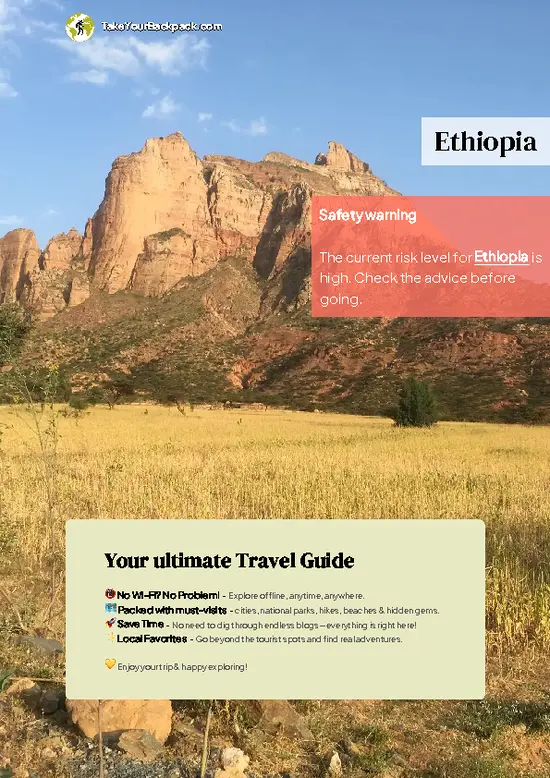
example page 0 from our offline Travel Guide for Ethiopia
example page 1 from our offline Travel Guide for Ethiopia
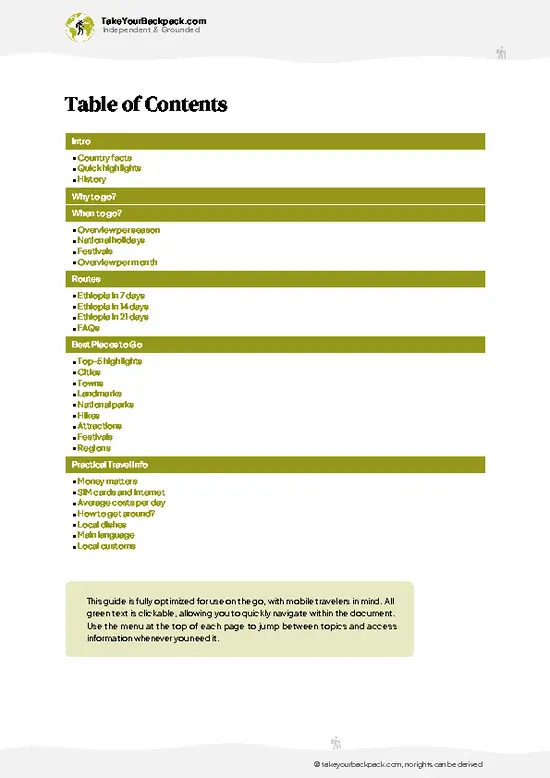
example page 2 from our offline Travel Guide for Ethiopia
example page 3 from our offline Travel Guide for Ethiopia
example page 4 from our offline Travel Guide for Ethiopia
example page 5 from our offline Travel Guide for Ethiopia
example page 6 from our offline Travel Guide for Ethiopia
example page 7 from our offline Travel Guide for Ethiopia
Loading the map 🌍
CLICK TO FILTER
cities
towns
landmarks
national parks
hikes
attractions
festivals
regions
SHOW COUNTRY’S BESTSHOW ALL

✨ Why go?
Ranked #12 city in Ethiopia
What sets this place apart

Mekelle earns its place on a northern Ethiopia route because it is the practical hub for Tigray. Tour operators for the Danakil Depression and the rock-church country are based here, so you can compare itineraries in person and haggle face to face rather than book blind online. Hostels and mid-range hotels are plentiful, and the center is compact enough to cover on foot, with plenty of macchiato cafés and cheap injera joints for refueling between errands. The city itself needs about a day, so treat it as a Danakil tour hub and a supply stop for onward bus travel toward Axum, Adigrat or Lalibela. Come for logistics and a few good sights, and don’t expect a long stay.

💡 HighlightsDon't-miss highlights and experiences

  1. Emperor Yohannes IV Palace and Museum: A stone castle built in the 1870s and 1880s, with carved wooden ceilings, imperial furniture and a rooftop view over the city. Go in the morning when light fills the rooms. Entry is about US$3 to 5, and a visit takes 1 to 1.5 hours.
  2. Martyrs’ Monument (Tigray Martyrs Memorial): A tall concrete tower on a hill commemorating fighters of the 1970s and 1980s. Late afternoon gives the best views over the city. Free to view the exterior, and 30 to 45 minutes is plenty.
  3. Tigray Martyrs Museum area and nearby Hawelti Monument: Hawelti, a short climb from the center, is a Derg-era obelisk and the city’s symbol. Visit at dusk. It is free and takes 20 to 30 minutes.
  4. Mekelle Ethnographic Museum area (Mekelle University): Displays of Tigrayan crafts, clothing and household
… read more 👉
  1. Emperor Yohannes IV Palace and Museum: A stone castle built in the 1870s and 1880s, with carved wooden ceilings, imperial furniture and a rooftop view over the city. Go in the morning when light fills the rooms. Entry is about US$3 to 5, and a visit takes 1 to 1.5 hours.
  2. Martyrs’ Monument (Tigray Martyrs Memorial): A tall concrete tower on a hill commemorating fighters of the 1970s and 1980s. Late afternoon gives the best views over the city. Free to view the exterior, and 30 to 45 minutes is plenty.
  3. Tigray Martyrs Museum area and nearby Hawelti Monument: Hawelti, a short climb from the center, is a Derg-era obelisk and the city’s symbol. Visit at dusk. It is free and takes 20 to 30 minutes.
  4. Mekelle Ethnographic Museum area (Mekelle University): Displays of Tigrayan crafts, clothing and household objects that explain local life. Visit on a weekday morning. Expect a small fee of US$1 to 3 and about an hour.
  5. Mekelle Central Market (Edaga Arbi area): Stalls of spices, grain, cloth and hardware. Go early, between 7 and 10 AM, when it is busiest. Free to wander, with 1 to 2 hours for browsing.
  6. Salt trader quarter: Salt bars from the Danakil are cut and traded here, and you can watch bundles being loaded. Mornings are best. Free, 30 minutes.
  7. Traditional coffee ceremony in a local café: Beans roasted in a pan, incense burning, three rounds of small cups. Any afternoon works. Costs US$0.50 to 2 and takes about an hour.
Mekelle’s closest day trips include the rock-hewn churches of Gheralta, the monastery of Debre Damo, and the Danakil Depression with its salt flats and Erta Ale volcano. Start with the Emperor Yohannes IV Palace, since it explains the region’s history in one sitting.
Spotted a mistake or missing something? Contact us.

Things to do in Mekelle

Ratings based on Tripadvisor reviews. When you book through this link, you support our work at no extra cost to you.

🏘️ NeighborhoodsNeighborhood guide to Mekelle

Mekelle sprawls across a high plateau, and its areas are easy to sort once you know where the action is.
  • Central Mekelle (around Romanat Square and the main avenue) is where you will spend most of your time. Minibuses honk, shoeshine boys tap their boxes, and cafés send out the smell of roasting coffee from early morning. It is flat enough to walk and has the best juice bars and tibs spots.
  • Kedamay Weyane and the market area is the loud, dusty heart of trade. Salt, spices, grain and secondhand clothes are stacked in narrow lanes. Go in the morning, keep your bag in front, and skip it after dark.
  • Hawelti (Martyrs Monument area) sits on a hill with wide views over tin roofs and the dry mountains. The museum next door is worth an hour. It is a steep walk, so take a minibus.
  • Adi Haki and the ring-road
… read more 👉
Mekelle sprawls across a high plateau, and its areas are easy to sort once you know where the action is.
  • Central Mekelle (around Romanat Square and the main avenue) is where you will spend most of your time. Minibuses honk, shoeshine boys tap their boxes, and cafés send out the smell of roasting coffee from early morning. It is flat enough to walk and has the best juice bars and tibs spots.
  • Kedamay Weyane and the market area is the loud, dusty heart of trade. Salt, spices, grain and secondhand clothes are stacked in narrow lanes. Go in the morning, keep your bag in front, and skip it after dark.
  • Hawelti (Martyrs Monument area) sits on a hill with wide views over tin roofs and the dry mountains. The museum next door is worth an hour. It is a steep walk, so take a minibus.
  • Adi Haki and the ring-road edges are residential, quiet and spread out. Little to see, so skip them unless you are passing through.

⌛️ 1 dayHow to make the most of one day

8:00 AM: Yohannes IV Palace Museum
Start at the stone palace built for Emperor Yohannes IV in the 1880s. The guided tour (about US$4 to 6, 1 hour) walks you through carved wooden ceilings, royal furniture and the view from the terrace over the city. Go early, before tour groups arrive, then walk downhill toward the center.

10:00 AM: Tigray Martyrs’ Monument
A tall concrete monument on a hill, with the whole city spread below. Take a short taxi or bajaj ride up. Allow 45 minutes to read the plaques and the memorial museum below, which gives real context for the 1970s and 80s struggle.

12:30 PM: Lunch near Romanat Square
Eat at a local spot for tibs or shiro with fresh injera, and finish with a macchiato from a corner café. Expect plastic stools, loud chatter and quick service.

2:30 PM: Mekelle … read more 👉
8:00 AM: Yohannes IV Palace Museum
Start at the stone palace built for Emperor Yohannes IV in the 1880s. The guided tour (about US$4 to 6, 1 hour) walks you through carved wooden ceilings, royal furniture and the view from the terrace over the city. Go early, before tour groups arrive, then walk downhill toward the center.

10:00 AM: Tigray Martyrs’ Monument
A tall concrete monument on a hill, with the whole city spread below. Take a short taxi or bajaj ride up. Allow 45 minutes to read the plaques and the memorial museum below, which gives real context for the 1970s and 80s struggle.

12:30 PM: Lunch near Romanat Square
Eat at a local spot for tibs or shiro with fresh injera, and finish with a macchiato from a corner café. Expect plastic stools, loud chatter and quick service.

2:30 PM: Mekelle Market (Edaga Hamus)
Wander the stalls of spices, woven baskets, leather and cloth. The salt trade here is a link to the Danakil, and you will see the slabs stacked in places. Bargain lightly and keep your phone in a front pocket.

4:30 PM: Mekelle University campus and Ayder neighborhood
Off the usual tourist route, the Ayder side of town has tree-lined paths and students chatting over tea on the grass. Sit at a café terrace here, order a spris juice (layered avocado and mango), and watch the evening settle over the hills before a simple dinner back in the center.

🌤️ When to go?Choosing the right time of year

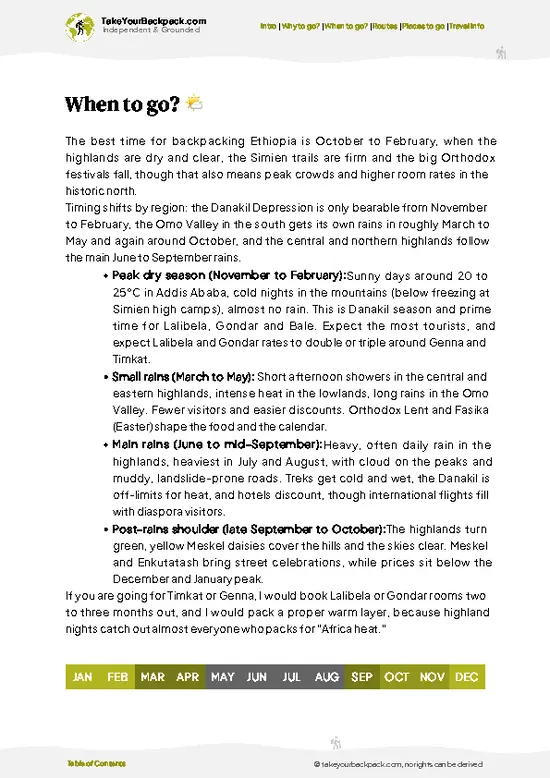
October to February is the easiest window, with sunny days around 22 to 27°C (72 to 81°F) and cold, clear nights that can fall to 6 to 10°C (43 to 50°F).
  • Dry Season (October to February): Blue skies, good hiking light and the Timkat and Meskel festivals bring crowds and higher guesthouse prices.
  • Hot Season (March to May): Highs reach 28 to 32°C (82 to 90°F), dusty and dry, and fewer visitors fill the beds.
  • Rainy Season (June to September): Afternoon downpours, 18 to 25°C (64 to 77°F), green hills, but washed-out rural roads and slow trips to the rock churches.
Book a bed ahead if you arrive around Timkat in January.

source: climatestotravel.comJANJanuary: highly recommended for travelingFEBFebruary: highly recommended for travelingMARMarch: excellent for travelingAPRApril: excellent for travelingMAYMay: excellent for travelingJUNJune: fair for travelingJULJuly: below average for travelingAUGAugust: below average for travelingSEPSeptember: fair for travelingOCTOctober: excellent for travelingNOVNovember: highly recommended for travelingDECDecember: highly recommended for traveling
when-to-go

✈️ The backpacker research shortcutEthiopia Travel Guide

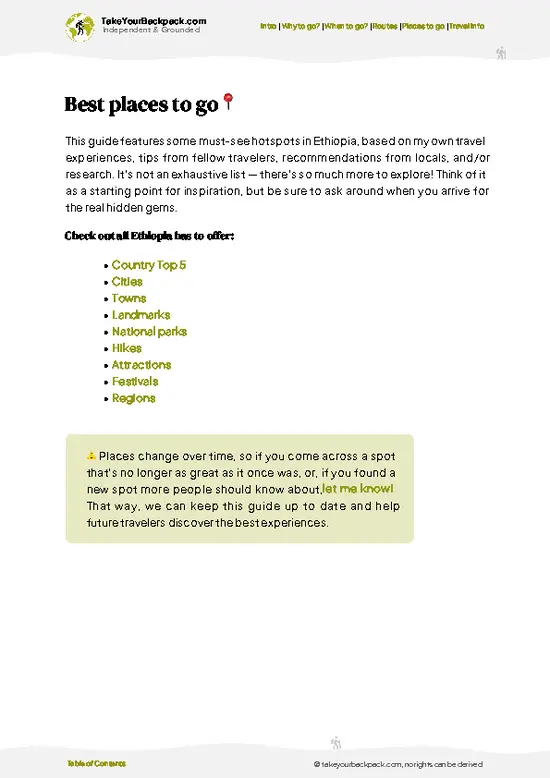
An offline-friendly backpacking guide with optimized travel routes, ranked highlights, transport advice, and the best areas to stay.
example page 0 from our offline Travel Guide for Ethiopia
example page 1 from our offline Travel Guide for Ethiopia
example page 2 from our offline Travel Guide for Ethiopia
example page 3 from our offline Travel Guide for Ethiopia
example page 4 from our offline Travel Guide for Ethiopia
example page 5 from our offline Travel Guide for Ethiopia
example page 6 from our offline Travel Guide for Ethiopia
example page 7 from our offline Travel Guide for Ethiopia
The digital guide (380 pages) contains:
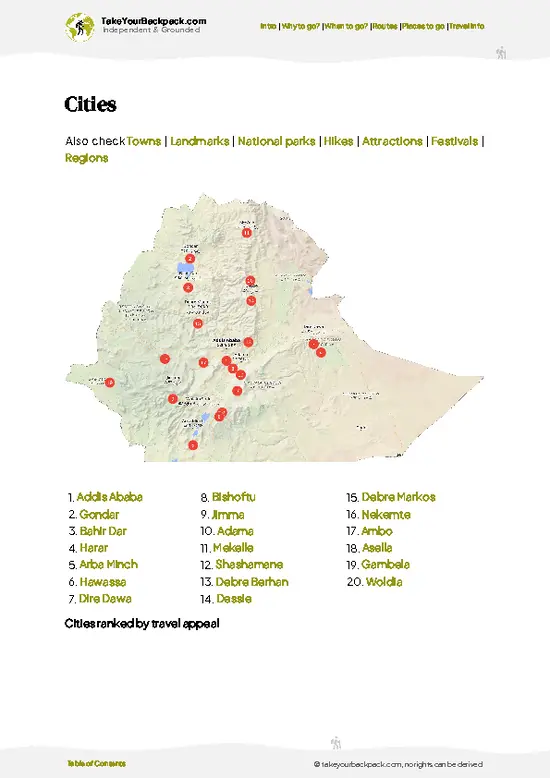
✅ 98 highlights, ranked by travel appeal
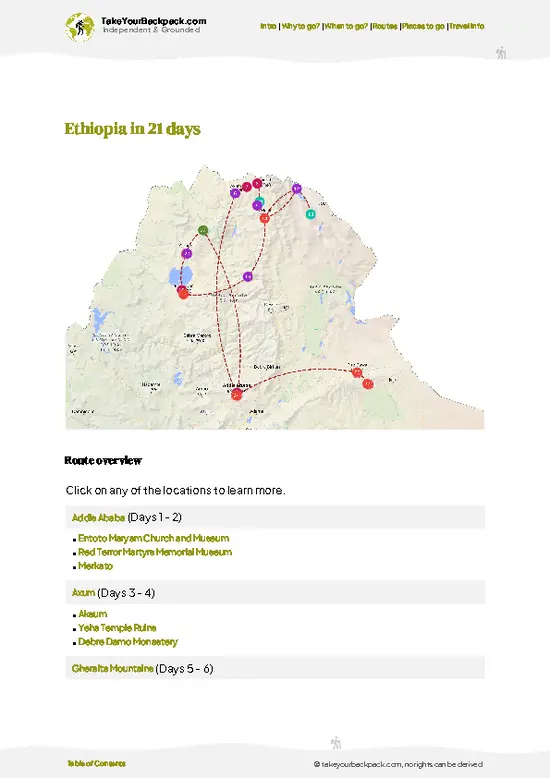
✅ Optimized 7, 14 & 21-day travel routes
✅ Cities, national parks, landmarks, beaches
✅ How to get around
✅ Offline-friendly for travel without Wi-Fi
👉 Click to see all 30+ guide features

📅 Plan smarter in minutes, not weeks
✅ Month by month travel advice
✅ Festivals & national holidays
✅ Budget expectations

🗺️ Go to the right places, skip the overrated ones
✅ Honest pros & cons of destinations
✅ Top hikes, parks & viewpoints
✅ Lesser-known places most travelers miss
✅ Clear “worth it vs skip it” guidance

🛏️ Travel smoothly without rookie mistakes
✅ Best areas to stay
✅ Transport systems explained simply
✅ Common scams & safety advice
✅ SIM cards, money & practical tips

🌍 Understand the country, not just visit it
✅ Culture & traditions
✅ 52 Essential phrases & customs
✅ Festivals worth planning around
✅ Traveler-friendly historical context
✅ Insights that make places more meaningful

📱 Built for real travel conditions
✅ Fully downloadable PDF
✅ Works completely offline
✅ Optimized for phone use
✅ Useful in remote areas & buses
✅ Everything in one place
Stop searching, start planning
Get instant access to your full guide. 30‑day money-back guarantee.
+ Add another guide for just

By proceeding you agree to our terms.
Sent to your inbox immediately after payment • 100% Secure Checkout
Best Backpacking Travel Advisor 2025 tourism awardBest Backpacking
Travel Advisor
2025
What others say about Take Your Backpack Guides:
⭐⭐⭐⭐⭐
Fantastic, amazing amount of information!
⭐⭐⭐⭐⭐
My goodness this is amazing, it's what I've been looking for hats off too you!
⭐⭐⭐⭐⭐
I think this is absolutely BRILLIANT
⭐⭐⭐⭐
Very complete and informative. It's still missing places, but I gotta to commend you
⭐⭐⭐⭐⭐
This is truly amazing, thank you, can't wait to explore it with my kids!
⭐⭐⭐⭐⭐
Awesome resource, thank you!
⭐⭐⭐⭐⭐
This is amazing! Can't wait to explore the ones I haven't seen
⭐⭐⭐⭐
I love this! Well done, great idea.
⭐⭐⭐⭐⭐
Thanks for taking the time to make this gem!
⭐⭐⭐⭐⭐
This might be the best website I've ever seen.
⭐⭐⭐⭐⭐
Congratulations, and thank you so much for your work; it's incredibly valuable.
⭐⭐⭐⭐
In all seriousness I think you did a great job pointing out the important spots
⭐⭐⭐⭐⭐
10/10 very good
⭐⭐⭐⭐⭐
As someone who's only just starting to visit regularly this is awesome, thank you.
⭐⭐⭐⭐
Thank you very much! I'm going to visit my dad, it's going to be very useful!
⭐⭐⭐⭐⭐
This is really cool! We'll be travelling for the first time and this definitely come in handy.
⭐⭐⭐⭐⭐
You are now our minister of culture, congratulations 👨‍💼
⭐⭐⭐⭐⭐
Just wanted to tell you that this is a pearl! Going to follow your recommendations.
⭐⭐⭐⭐⭐
This is so cool. I'll definitely be using the resource for my travels soon.
⭐⭐⭐⭐⭐
This is very impressive! Good work.
⭐⭐⭐⭐⭐
This is an amazing and informative site. Very well done!

🛏️ Where to stay?Best areas to stay in Ethiopia

The central area around Romanat Square and the main avenue is the best place for a budget bed, with the most guesthouses, cafés and minibus stops within a ten-minute walk. Dorm-style hostels are rare in Mekelle, so most backpackers take a basic private room, typically US$8 to 20 a night. It is lively until about 10 pm, then quiet enough to sleep, though mosque calls and early roosters do the rest by dawn. Walking back at night is usually fine along the lit main roads.
The area near the bus station is the second choice. It suits early departures to Axum, Adigrat or Addis Ababa, and rooms are among … read more 👉
The central area around Romanat Square and the main avenue is the best place for a budget bed, with the most guesthouses, cafés and minibus stops within a ten-minute walk. Dorm-style hostels are rare in Mekelle, so most backpackers take a basic private room, typically US$8 to 20 a night. It is lively until about 10 pm, then quiet enough to sleep, though mosque calls and early roosters do the rest by dawn. Walking back at night is usually fine along the lit main roads.
The area near the bus station is the second choice. It suits early departures to Axum, Adigrat or Addis Ababa, and rooms are among the cheapest, but it is dustier and noisier with minibus engines from 5 am. Hawelti on the hill has quieter, pricier rooms and needs a bajaj ride to reach the center.

🚌 Getting aroundMoving around without the hassle

A shared bajaj (three-wheeler) ride across central Mekelle costs about US$0.20 to 0.50 per person, paid in cash in local currency straight to the driver, usually at the end of the ride. Traffic is light compared with Addis Ababa, and the center is flat enough to walk, though the sun at 2,200 meters is sharp. There is no metro or formal bus network worth using.
  • Walking: Best option for the center, markets and cafés. Dust and heat in the afternoon wear you down, so go early or at dusk.
  • Shared bajaj: Blue three-wheelers rattle along fixed routes, packed with 3 or 4 passengers. Cheap, noisy and fast in short hops. They run from about 6 am to 9 pm.
  • Private bajaj or taxi: Negotiate before getting in. Expect US$1 to 3 across town and US$3 to 6 to the airport (about 10 km out). Worth it with luggage
… read more 👉
A shared bajaj (three-wheeler) ride across central Mekelle costs about US$0.20 to 0.50 per person, paid in cash in local currency straight to the driver, usually at the end of the ride. Traffic is light compared with Addis Ababa, and the center is flat enough to walk, though the sun at 2,200 meters is sharp. There is no metro or formal bus network worth using.
  • Walking: Best option for the center, markets and cafés. Dust and heat in the afternoon wear you down, so go early or at dusk.
  • Shared bajaj: Blue three-wheelers rattle along fixed routes, packed with 3 or 4 passengers. Cheap, noisy and fast in short hops. They run from about 6 am to 9 pm.
  • Private bajaj or taxi: Negotiate before getting in. Expect US$1 to 3 across town and US$3 to 6 to the airport (about 10 km out). Worth it with luggage or after dark.
  • Minibuses and long-distance buses: Minibuses to nearby towns leave from the bus station when full, US$1 to 6 for 1 to 4 hours. Buses to Addis Ababa (two days) or Axum take a full day or less and leave very early, around 5 am, so buy tickets the day before.

👛 Costs (as of 22 October 2026)What things cost and how to budget

Mekelle costs a backpacker about US$24 to 30 a day, with a typical day landing near US$27 in high season.
CategoryBudget RangeLocal Reality
Dorm/budget bed (high season)US$8 to 12Basic private rooms, few real dorms
Dorm/budget bed (off-season)US$6 to 9Easy to bargain in the rainy months
MealsUS$5 to 8Local plates US$1.50 to 4, juice US$1
Local transportUS$1 to 2Shared bajaj rides US$0.20 to 0.50
City transport passUS$0None exists, pay per ride
Activities/entry feesUS$3 to 6Churches and museums, guides extra
MiscellaneousUS$2 to 3Coffee, water, SIM data
Total Daily BudgetUS$27Without guided day trips
Eat at local restaurants at lunch, when plates are cheapest, and share bajaj rides rather than hiring private ones.
⚠️ Prices can change and everyone travels differently, so take this as a rough guide. Hope it helps you plan your adventure!

🚌 Day tripsEasy escapes and nearby places

Mekelle works well as a base for the Tigray rock churches and nearby highlands, since most sites are 1 to 3 hours away by road.Gheralta Rock Churches: Cliff-top churches such as Abuna Yemata Guh are the main reason to come. Minibuses go to Hawzen (about 2 hours, US$2 to 3), then you hire a local guide for US$15 to 25. The climb is steep and exposed, and first-timers often underestimate it. Go October to February.
Wukro Chirkos: A rock church 45 minutes north with painted interiors and a small entry fee of around US$5 to 10. Frequent minibuses cost under US$1.50 each way, and it fits into a half day. Wear modest clothes and bring change for the priest.
Debre Damo: Reached by a 3-hour trip toward Adigrat, this monastery perches atop a cliff and is accessed by climbing a rope. Men only are allowed. … read more 👉
Mekelle works well as a base for the Tigray rock churches and nearby highlands, since most sites are 1 to 3 hours away by road.Gheralta Rock Churches: Cliff-top churches such as Abuna Yemata Guh are the main reason to come. Minibuses go to Hawzen (about 2 hours, US$2 to 3), then you hire a local guide for US$15 to 25. The climb is steep and exposed, and first-timers often underestimate it. Go October to February.
Wukro Chirkos: A rock church 45 minutes north with painted interiors and a small entry fee of around US$5 to 10. Frequent minibuses cost under US$1.50 each way, and it fits into a half day. Wear modest clothes and bring change for the priest.
Debre Damo: Reached by a 3-hour trip toward Adigrat, this monastery perches atop a cliff and is accessed by climbing a rope. Men only are allowed. Budget US$10 to 20 with transport. Go early, as the return is long.
Hawzen and Abraha Atsbeha: Church with vivid ceiling paintings, about 1.5 hours away. Combine with Wukro to share a hired bajaj at US$20 to 30.

🍲 FoodEating & Drinking in Mekelle

Tigrayan food leans on tsebhi stews, which are richer and spicier than elsewhere, often with a strong berbere and clarified butter hit. Look for shiro served bubbling in clay pots, and tibs sizzling with onions and chili. Hilbet, a thick lentil and fava dip, shows up in many homes. Breakfast often means fit-fit or ful at a small café, with strong coffee after. Juice bars along the main avenue blend layered avocado, mango and papaya, and cost about US$0.60 to 1.50. Local suwa beer and tej honey wine are sold in simple bars. Meals in casual local restaurants run US$1.50 to 4. Eat where the lunch crowd is thick, and expect to share a big plate by hand.

🛡️ SafetyScams, Hazards, and Annoyances

Mekelle is broadly safe for backpackers in daytime, with pickpocketing in the market and around the bus station the main risk. Keep your phone and wallet in front pockets in crowds. Walk on lit main roads after dark, or take a bajaj, and avoid wandering alone late at night. Solo women usually get attention rather than trouble, and a firm no works. Agree taxi and bajaj prices before you get in, since foreigners sometimes hear a higher figure. Guides at the churches may quote high rates, so ask the guesthouse for a fair price. Check current regional conditions and travel advice before heading outside the city, as the situation in Tigray can change.

FAQCommon questions from travelers

Plan 2 to 3 days in Mekelle if you are using it as a base. One day covers the center, market and the Martyrs Monument museum, and the others suit trips to Wukro Chirkos (45 minutes) or the Gheralta churches (about 2 hours each way). Add a day if you want to climb Abuna Yemata Guh.
Mekelle is considered fairly safe for solo backpackers in daytime, with petty theft at the market and bus station the main concern. Use bajaj taxis at night, agree prices first, and keep valuables in front pockets. Check current regional travel advice before going, as conditions in Tigray can shift.
Mekelle is known as the capital of Tigray and the gateway to the Gheralta and Wukro rock-hewn churches. It also has the Martyrs Monument, Emperor Yohannes IV’s palace museum and busy salt and spice markets. Rooms cost about US$8 to 20 a night, and a day trip to the churches runs US$10 to 30.
⚠️ Things can change over time, so always validate details locally before you go.

Other Ethiopian cities near Mekelle

Explore more nearby:

  • Woldia—market town, Tigray-Amhara border, transport hub| 186 km away
  • Gondar—Royal castles, Debre Berhan Selassie church, hilltop views| 241 km away
  • Dessie—Mountain passes, Lake Hayq, regional trading center| 264 km away

💡 Not sure where to go next?
Create a personalized itinerary for Ethiopia including Mekelle and the places that fit your trip.

Generate my itinerary

👉 Discover all cities

Or checkout all Ethiopia has to offer (think cities, towns, villages, national parks, hikes, beaches, festivals)
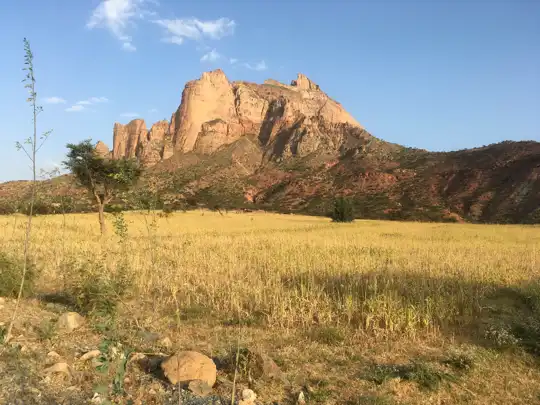
Country photo of Ethiopia

We 💚 feedbackKey takeaways before you go

Mekelle is best in the cool early morning, when markets open and the palace is empty. Visit from October to March, when the air is clear. I would stay one night, book the Danakil here, and move on, since the sights are few but the base is useful.

✈️ When did I visit Ethiopia?
Ethiopia I visited back in October 2017. I combined the trip with a visit to Sudan. Ethiopia was a pure surprise with the magical scenery like the Danakil Depression and the Simien Mountains.

✍️ Help improve this page!
The information on this page is based on my own backpacking experience in Ethiopia, supplemented with up-to-date research and feedback from other travelers. Travel details can change, so if you notice anything outdated or incomplete, feel free to let me know.


🙋‍♂️ Give feedback

👋 Meet the founderWho’s Behind Take Your Backpack?

Johan, backpacker and founder of TakeYourBackpackHi, I’m Johan (Netherlands 🇳🇱), the creator of TakeYourBackpack. Over the past 3 decades, I’ve backpacked through 90+ countries across six continents, gaining extensive experience with independent travel, long-term trips, and overland routes.

This site is built on a combination of firsthand travel experience and carefully curated insights from other backpackers. Many guides are based on places I’ve personally visited, while others bring together tips, observations, and practical advice shared by trusted travelers I’ve met along the way.

The goal is to provide realistic, experience-driven guidance — not generic itineraries — so you can explore destinations with better context, clearer expectations, and more confidence.