×

Ethiopia🇪🇹 | citiesDire DawaFrench-built railway, Kafira market, old quarter alleys | things to do and best time to go

Explore MekeleExplore Arba Minch

Backpacking in Dire Dawa
🌟 Highlightcity ranked #8
By Johan Kruseman 🇳🇱 | Updated June 14, 2026

Most travelers assume Dire Dawa is just a dusty transit hub—skip-worthy unless you’re chasing trains or crossing to Somaliland. That’s a rookie mistake. Dire Dawa sits in eastern Ethiopia, a day’s ride from Addis Ababa, and it’s a city with its own pulse: part colonial relic, part market chaos, part laid-back crossroads. The French-built railway station and the old quarter’s arcaded streets are worth a wander, especially if you like peeling back layers of history. Costs are lower than in Addis or Harar, and the city feels safer than its reputation suggests—though you’ll want to keep your wits about you after dark. Backpackers are rare, so you’ll stand out, but that means genuine interactions and zero tourist fatigue. Dire Dawa isn’t for everyone, but if you like cities that don’t try to impress you, it’s a fascinating detour.

Discover everything you want to know in the 📖 Ethiopia Travel Guide.
Safety warning

The current risk level for Ethiopia is high. Check the advice before going.


Get your Ethiopia guide
101 ranked highlights, routes & tips, works offline (395 pages)
Loading the map 🌍
CLICK TO FILTER
cities
towns
landmarks
national parks
hikes
attractions
festivals
regions
SHOW COUNTRY’S BESTSHOW ALL

✨ Why go?
Ranked #8 city in Ethiopia
What makes this city worth visiting

Dire Dawa is a strategic stop for backpackers weaving through Ethiopia. It offers a unique blend of affordability and accessibility. The city is a basecamp for day trips to stunning landscapes and cultural sites, making it a practical choice for those looking to explore beyond the urban sprawl.

Accommodations range from budget hostels to cozy guesthouses, ensuring you won’t break the bank. The food scene is a delightful mix of local flavors, with street vendors and restaurants serving up hearty meals. Plus, the city is walkable, allowing you to soak in the vibrant atmosphere without relying on transport.

Nightlife is low-key but engaging, perfect for unwinding after a day of exploration. With easy onward travel options, Dire Dawa can be a worthwhile stop or a brief layover, depending on your itinerary.
Want to include Dire Dawa in your Ethiopia route?
Create a personalized Ethiopia itinerary that includes Dire Dawa and the places that fit your trip — based on your travel style, budget, and available time. Get your route in seconds.

Generate my trip

💡 HighlightsDon't-miss highlights and experiences

Quick question: do you want only formally named, official attractions (museums, landmarks) or OK to include markets, neighborhoods, the Dechatu river gorge, old railway yards and other on-the-ground spots that locals actually visit?
Spotted a mistake or missing something? Contact us.

Things to do in Dire Dawa

Ratings based on Tripadvisor reviews. When you book through this link, you support our work at no extra cost to you.

🏘️ NeighborhoodsHow different areas shape the experience

Dire Dawa is a vibrant hub in Ethiopia, blending rich history with modern energy. Here’s how its neighborhoods stack up for backpackers:

Haramaya: This area buzzes with student life, thanks to the nearby university. Expect affordable accommodations and a lively atmosphere. It’s walkable, with local eateries and cafes. Perfect for short stays if you want to soak up youthful energy.

Gendf: A quieter neighborhood, Gendf offers a more laid-back vibe. It’s ideal for those seeking comfort without breaking the bank. The streets are easy to navigate, and you’ll find local markets nearby. Great for longer stays if you prefer a slower pace.

Dire Dawa City Center: The heartbeat of the city, this area is bustling with shops and nightlife. It’s well-connected by public transport, making it easy to explore. … read more 👉
Dire Dawa is a vibrant hub in Ethiopia, blending rich history with modern energy. Here’s how its neighborhoods stack up for backpackers:

Haramaya: This area buzzes with student life, thanks to the nearby university. Expect affordable accommodations and a lively atmosphere. It’s walkable, with local eateries and cafes. Perfect for short stays if you want to soak up youthful energy.

Gendf: A quieter neighborhood, Gendf offers a more laid-back vibe. It’s ideal for those seeking comfort without breaking the bank. The streets are easy to navigate, and you’ll find local markets nearby. Great for longer stays if you prefer a slower pace.

Dire Dawa City Center: The heartbeat of the city, this area is bustling with shops and nightlife. It’s well-connected by public transport, making it easy to explore. Expect a mix of budget and mid-range options. Best for short stays if you want to dive into the local scene.

Chiro: A bit off the beaten path, Chiro is less touristy. It’s a great spot for those looking to experience authentic local life. Accommodations are cheaper, but amenities may be limited. Ideal for longer stays if you’re up for an adventure.

⌛️ 1 dayHow to make the most of one day

Dire Dawa, Ethiopia, is a city where the past and present collide in a vibrant tapestry of culture and history. Known for its unique architecture and bustling markets, it offers a rich experience without the overwhelming tourist crowds.

Start your day in the historic neighborhood of Kebele 18. Grab a traditional breakfast at a local café—think injera with spicy stews. The flavors will kickstart your morning and give you a taste of local life. After breakfast, stroll through the colorful streets, where you can admire the blend of colonial and traditional Ethiopian architecture.

In the afternoon, head to the Dire Dawa Railway Station, a relic from the early 20th century. It’s not just a transportation hub; it’s a piece of history that tells stories of trade and travel. Spend some time exploring … read more 👉
Dire Dawa, Ethiopia, is a city where the past and present collide in a vibrant tapestry of culture and history. Known for its unique architecture and bustling markets, it offers a rich experience without the overwhelming tourist crowds.

Start your day in the historic neighborhood of Kebele 18. Grab a traditional breakfast at a local café—think injera with spicy stews. The flavors will kickstart your morning and give you a taste of local life. After breakfast, stroll through the colorful streets, where you can admire the blend of colonial and traditional Ethiopian architecture.

In the afternoon, head to the Dire Dawa Railway Station, a relic from the early 20th century. It’s not just a transportation hub; it’s a piece of history that tells stories of trade and travel. Spend some time exploring the nearby market, where the vibrant energy is palpable. Engage with local vendors; their stories and smiles are often the highlight of the visit.

As the sun sets, make your way to the outskirts of the city to visit the Harar Jugol, a UNESCO World Heritage site. While it’s a bit of a trek, the winding alleys and ancient walls are worth it. You’ll find fewer tourists here, allowing for a more intimate experience.

Wrap up your day with dinner at a local eatery, savoring the flavors of the region. In Dire Dawa, every moment is a chance to connect with the heart of Ethiopia.
Turn your Dire Dawa visit into an Ethiopia adventure
Build a complete Ethiopia route with Dire Dawa, hidden gems, must-see destinations, and realistic travel times included.

Generate my trip

🌤️ When to go?Best time to visit Dire Dawa


  • Topic: Weather – Dire Dawa’s climate is semi-arid, so expect hot, dry conditions most of the year. The rainy season runs from June to September, bringing sporadic downpours that can disrupt travel plans and muddy trails.

  • Topic: Temperature – Daytime highs hover around 28-34°C (82-93°F) in the dry months, cooling to 20-25°C (68-77°F) during the rainy season. Nights can drop to a comfortable 15-18°C (59-64°F), perfect for camping or hostel stays.

  • Topic: Daylight Hours – Near the equator, daylight stays steady year-round, roughly 12 hours daily. This consistency lets you plan hikes and city exploration without worrying about early sunsets.

  • Topic: Crowds – Tourist traffic peaks during the dry season, especially December to February, when the weather is most agreeable. Expect more competition
read more 👉

  • Topic: Weather – Dire Dawa’s climate is semi-arid, so expect hot, dry conditions most of the year. The rainy season runs from June to September, bringing sporadic downpours that can disrupt travel plans and muddy trails.

  • Topic: Temperature – Daytime highs hover around 28-34°C (82-93°F) in the dry months, cooling to 20-25°C (68-77°F) during the rainy season. Nights can drop to a comfortable 15-18°C (59-64°F), perfect for camping or hostel stays.

  • Topic: Daylight Hours – Near the equator, daylight stays steady year-round, roughly 12 hours daily. This consistency lets you plan hikes and city exploration without worrying about early sunsets.

  • Topic: Crowds – Tourist traffic peaks during the dry season, especially December to February, when the weather is most agreeable. Expect more competition for accommodations and higher prices.

  • Topic: Seasonal Activities – The dry months are prime for trekking and cultural festivals, while the rainy season offers lush landscapes but limited outdoor options.

  • Topic: Price Fluctuations – Accommodation and transport costs spike in the dry season due to demand. The rainy season sees lower prices but comes with the trade-off of less reliable travel conditions.


Pro-tip: Aim for the shoulder months—March to May or October to November—when you dodge heavy rains and crowds, scoring better prices and decent weather for a smart, balanced backpacking experience.


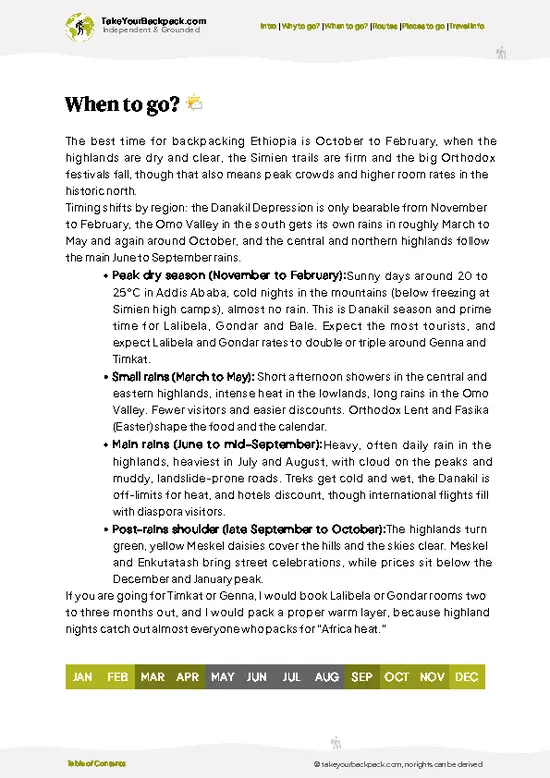
source: climatestotravel.comJANJanuary: excellent for travelingFEBFebruary: excellent for travelingMARMarch: highly recommended for travelingAPRApril: highly recommended for travelingMAYMay: highly recommended for travelingJUNJune: fair for travelingJULJuly: fair for travelingAUGAugust: fair for travelingSEPSeptember: fair for travelingOCTOctober: highly recommended for travelingNOVNovember: highly recommended for travelingDECDecember: excellent for traveling
when-to-go

✈️ The backpacker research shortcutEthiopia Travel Guide

An offline-friendly backpacking guide with optimized travel routes, ranked highlights, transport advice, and the best areas to stay.
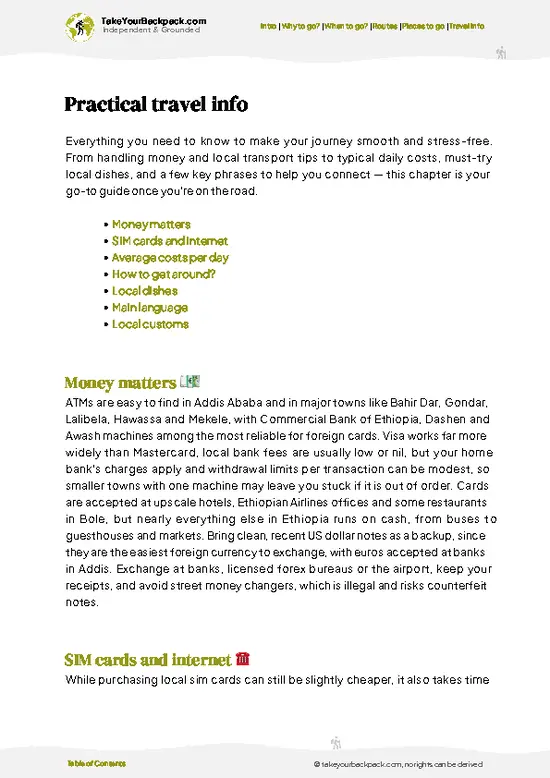
example page 0 from our offline Travel Guide for Ethiopia
example page 1 from our offline Travel Guide for Ethiopia
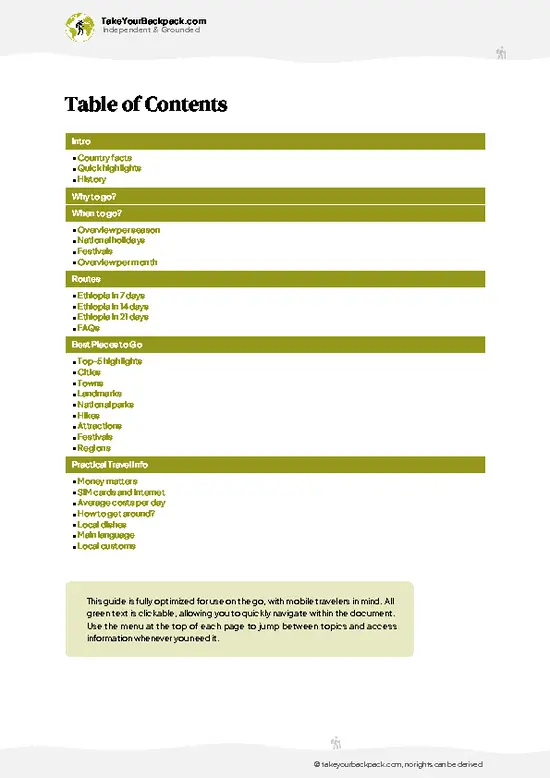
example page 2 from our offline Travel Guide for Ethiopia
example page 3 from our offline Travel Guide for Ethiopia
example page 4 from our offline Travel Guide for Ethiopia
example page 5 from our offline Travel Guide for Ethiopia
example page 6 from our offline Travel Guide for Ethiopia
example page 7 from our offline Travel Guide for Ethiopia
The digital guide (395 pages) contains:
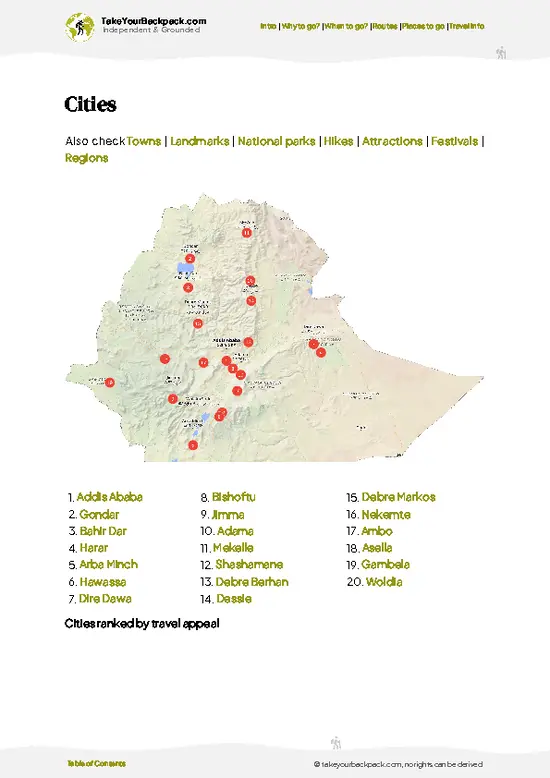
101 highlights, ranked by travel appeal
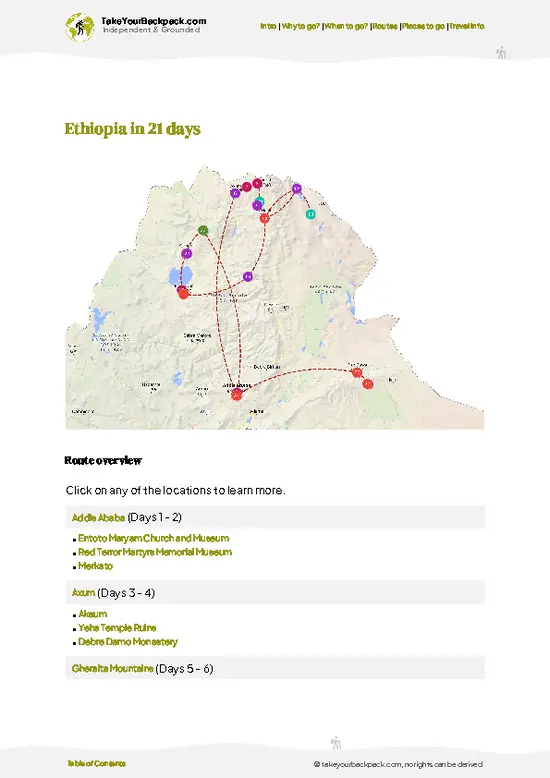
Optimized 7, 14 & 21-day travel routes
Cities, national parks, landmarks, beaches
How to get around
Offline-friendly for travel without Wi-Fi
👉 Click to see all 30+ guide features

📅 Plan smarter in minutes, not weeks
Month by month travel advice
Festivals & national holidays
Budget expectations

🗺️ Go to the right places, skip the overrated ones
Honest pros & cons of destinations
Top hikes, parks & viewpoints
Lesser-known places most travelers miss
Clear “worth it vs skip it” guidance

🛏️ Travel smoothly without rookie mistakes
Best areas to stay
Transport systems explained simply
Common scams & safety advice
SIM cards, money & practical tips

🌍 Understand the country, not just visit it
Culture & traditions
52 Essential phrases & customs
Festivals worth planning around
Traveler-friendly historical context
Insights that make places more meaningful

📱 Built for real travel conditions
Fully downloadable PDF
Works completely offline
Optimized for phone use
Useful in remote areas & buses
Everything in one place
Save weeks of stressful planning
Get instant access to your full guide. 30‑day money-back guarantee.


By proceeding you agree to our terms.
Sent to your inbox immediately after payment • 100% Secure Checkout
Best Backpacking Travel Advisor 2025 tourism awardBest Backpacking
Travel Advisor
2025
What others say about Take Your Backpack Guides:
⭐⭐⭐⭐⭐
Fantastic, amazing amount of information!
⭐⭐⭐⭐⭐
My goodness this is amazing, it's what I've been looking for hats off too you!
⭐⭐⭐⭐⭐
I think this is absolutely BRILLIANT
⭐⭐⭐⭐
Very complete and informative. It's still missing places, but I gotta to commend you
⭐⭐⭐⭐⭐
This is truly amazing, thank you, can't wait to explore it with my kids!
⭐⭐⭐⭐⭐
Awesome resource, thank you!
⭐⭐⭐⭐⭐
This is amazing! Can't wait to explore the ones I haven't seen
⭐⭐⭐⭐
I love this! Well done, great idea.
⭐⭐⭐⭐⭐
Thanks for taking the time to make this gem!
⭐⭐⭐⭐⭐
This might be the best website I've ever seen.
⭐⭐⭐⭐⭐
Congratulations, and thank you so much for your work; it's incredibly valuable.
⭐⭐⭐⭐
In all seriousness I think you did a great job pointing out the important spots
⭐⭐⭐⭐⭐
10/10 very good
⭐⭐⭐⭐⭐
As someone who's only just starting to visit regularly this is awesome, thank you.
⭐⭐⭐⭐
Thank you very much! I'm going to visit my dad, it's going to be very useful!
⭐⭐⭐⭐⭐
This is really cool! We'll be travelling for the first time and this definitely come in handy.
⭐⭐⭐⭐⭐
You are now our minister of culture, congratulations 👨‍💼
⭐⭐⭐⭐⭐
Just wanted to tell you that this is a pearl! Going to follow your recommendations.
⭐⭐⭐⭐⭐
This is so cool. I'll definitely be using the resource for my travels soon.
⭐⭐⭐⭐⭐
This is very impressive! Good work.
⭐⭐⭐⭐⭐
This is an amazing and informative site. Very well done!

🛏️ Where to stay?Best areas to stay in Ethiopia

In Dire Dawa, the best area for backpackers to base themselves is the city center, especially around the main market and railway station. This zone strikes a rare balance between safety, social buzz, and budget options. It’s where you’ll find the most hostels and guesthouses catering to solo travelers and those watching their wallets. The vibe here is practical and lively—think street vendors, local cafés, and a steady flow of fellow travelers swapping tips.

Compared to the quieter, more residential neighborhoods on the outskirts, the center keeps you plugged into the city’s pulse without sacrificing … read more 👉
In Dire Dawa, the best area for backpackers to base themselves is the city center, especially around the main market and railway station. This zone strikes a rare balance between safety, social buzz, and budget options. It’s where you’ll find the most hostels and guesthouses catering to solo travelers and those watching their wallets. The vibe here is practical and lively—think street vendors, local cafés, and a steady flow of fellow travelers swapping tips.

Compared to the quieter, more residential neighborhoods on the outskirts, the center keeps you plugged into the city’s pulse without sacrificing security. It’s also the hub for easy access to transport links, which is crucial if you’re hopping between Ethiopia’s diverse regions. While some parts of Dire Dawa can feel sprawling and disconnected, the central area condenses everything you need into walkable blocks. You’re trading a bit of polished comfort for authenticity and connection, but that’s the currency of real travel here.

🚌 Getting aroundTransportation options and practical tips

Dire Dawa moves at its own rhythm—neither fully regimented nor wildly unpredictable. It’s a city where the pulse is set by a blend of old-school schedules and street-smart improvisation. You’ll find buses and minibuses that mostly stick to their routes but don’t always stick to the clock. Drivers dart through traffic with a mix of urgency and local know-how, while pedestrians weave through the chaos with practiced ease. This isn’t a place where you can rely on a strict timetable, but it’s also not a free-for-all; it’s a system that rewards patience and a sharp eye for opportunity. Understanding this flow means you’re not just a passenger—you’re a player in the game of getting around efficiently, balancing your time, money, and comfort like a pro.


  • Walking: The ultimate budget option and
read more 👉
Dire Dawa moves at its own rhythm—neither fully regimented nor wildly unpredictable. It’s a city where the pulse is set by a blend of old-school schedules and street-smart improvisation. You’ll find buses and minibuses that mostly stick to their routes but don’t always stick to the clock. Drivers dart through traffic with a mix of urgency and local know-how, while pedestrians weave through the chaos with practiced ease. This isn’t a place where you can rely on a strict timetable, but it’s also not a free-for-all; it’s a system that rewards patience and a sharp eye for opportunity. Understanding this flow means you’re not just a passenger—you’re a player in the game of getting around efficiently, balancing your time, money, and comfort like a pro.


  • Walking: The ultimate budget option and often the fastest way to navigate Dire Dawa’s compact center. No cost, full control over your pace, and a chance to soak in street-level details. Ideal for trips under 2 kilometers, but be ready for uneven sidewalks and occasional dust.


  • Minibus (Share Taxi): The backbone of local transit, minibuses run from early morning (around 6 AM) until late evening (about 9 PM). Fares hover around 5-10 ETB, making them cheap but often crowded and hot. They follow fixed routes but leave when full, so timing is flexible but unpredictable. Expect a bumpy ride with frequent stops.


  • Regular Bus: Slightly more comfortable than minibuses, these buses operate on set routes with a rough schedule, typically from 7 AM to 8 PM. Tickets cost about 10-15 ETB. They’re slower due to fixed stops but offer a bit more space and shade, a good trade-off if you’re carrying luggage or want to avoid the crush.


  • Motorcycle Taxi (Bajaj): For short hops or when time is tight, bajajs zip through traffic with ease. Prices vary but expect to pay around 20-30 ETB for a quick trip. They’re fast and flexible but less comfortable and riskier, especially if you’re not used to the local traffic style.


  • Private Taxi: The most comfortable and fastest option, but also the priciest. Negotiated fares start around 150 ETB for intra-city trips. Ideal if you value direct routes and air conditioning, but it’s a clear trade-off against your budget.

👛 Costs (as of 21 June 2026)Typical daily expenses

Backpacking in Dire Dawa, Ethiopia, offers a clear-cut trade-off between cost and comfort, with prices that reflect the city’s modest but growing tourism infrastructure. Here’s how your daily budget breaks down:
  • Dorm Accommodation (High Season): Expect to pay around $8 to $12 per night. High season pushes prices up slightly due to demand, but dorms remain basic—think simple beds, shared bathrooms, and limited amenities.
  • Dorm Accommodation (Off-Season): Prices drop to about $5 to $8 per night. Fewer travelers mean better bargaining power and a quieter stay, though some places may close or reduce services.
  • Meals: Local eateries serve filling meals for $2 to $5. Street food and small cafes dominate, offering injera with stews or grilled meat. Western-style or tourist-targeted restaurants will
read more 👉
Backpacking in Dire Dawa, Ethiopia, offers a clear-cut trade-off between cost and comfort, with prices that reflect the city’s modest but growing tourism infrastructure. Here’s how your daily budget breaks down:
  • Dorm Accommodation (High Season): Expect to pay around $8 to $12 per night. High season pushes prices up slightly due to demand, but dorms remain basic—think simple beds, shared bathrooms, and limited amenities.
  • Dorm Accommodation (Off-Season): Prices drop to about $5 to $8 per night. Fewer travelers mean better bargaining power and a quieter stay, though some places may close or reduce services.
  • Meals: Local eateries serve filling meals for $2 to $5. Street food and small cafes dominate, offering injera with stews or grilled meat. Western-style or tourist-targeted restaurants will cost more, around $7 to $10.
  • Local Transport: Minibuses and shared taxis cost roughly $0.20 to $0.50 per trip within the city. They’re frequent but can be crowded and unpredictable, so factor in some patience.
  • City Transport Pass: Dire Dawa doesn’t have a formal city transport pass system. Budgeting for individual rides is necessary, but overall transport costs remain low.
  • Basic Activities/Entry Fees: Most local attractions, like markets or cultural sites, have minimal or no entry fees, usually under $1. Guided tours or special excursions can push this higher, around $10 to $20.
  • Miscellaneous Expenses: This includes bottled water, snacks, occasional internet cafes, or small tips. Budget about $2 to $4 daily to cover these.

All told, you’re looking at a daily spend between $10 and $25, depending on how much comfort you want and how adventurous your eating and transport choices are. Dire Dawa rewards those who embrace its straightforward, no-frills vibe—spend smart, and you’ll stretch your budget without missing out on the city’s character.


source: ethiopia.travel
⚠️ Prices can change and everyone travels differently, so take this as a rough guide. Hope it helps you plan your adventure!

🚌 Day tripsEasy escapes and nearby places

Dire Dawa is a fantastic launchpad for day trips that dive deep into Ethiopia’s rich culture and stunning landscapes. Here’s how to make the most of your time.

Harar Jugol
Just a quick 45-minute drive from Dire Dawa, Harar Jugol is a UNESCO World Heritage site that feels like stepping into a living museum. The narrow alleyways and vibrant markets are a feast for the senses. You’ll want to explore the 82 mosques and countless shrines, but don’t miss the chance to try the local coffee. Budget around $10 for transport and snacks. The best time to visit is during the dry season, from October to March. A common mistake? Skipping the guided tours; they reveal the stories behind the walls.
👉 Explore Harar Jugol

Dengego Mountain
For a breath of fresh air, head to Dengego Mountain, about an … read more 👉
Dire Dawa is a fantastic launchpad for day trips that dive deep into Ethiopia’s rich culture and stunning landscapes. Here’s how to make the most of your time.

Harar Jugol
Just a quick 45-minute drive from Dire Dawa, Harar Jugol is a UNESCO World Heritage site that feels like stepping into a living museum. The narrow alleyways and vibrant markets are a feast for the senses. You’ll want to explore the 82 mosques and countless shrines, but don’t miss the chance to try the local coffee. Budget around $10 for transport and snacks. The best time to visit is during the dry season, from October to March. A common mistake? Skipping the guided tours; they reveal the stories behind the walls.
👉 Explore Harar Jugol

Dengego Mountain
For a breath of fresh air, head to Dengego Mountain, about an hour’s drive away. The hike is moderate, offering stunning views of the surrounding valleys. Bring your own lunch to enjoy at the summit, and expect to spend around $5 on transport. The ideal time for this trip is early morning to catch the sunrise. Many first-timers underestimate the chill at the top, so pack a light jacket.


Kereyou Village
Immerse yourself in local culture with a visit to Kereyou Village, just 30 minutes from Dire Dawa. This vibrant community offers a glimpse into traditional life, complete with crafts and local cuisine. You can budget about $15 for transport and a meal. The best time to visit is during market days, typically on Saturdays. A common pitfall is not engaging with the locals; they love sharing their stories if you take the time.


Babile Elephant Sanctuary
About an hour’s drive from Dire Dawa, this sanctuary is a must for wildlife lovers. You might spot elephants, baboons, and various bird species. Entry is often free, but you’ll want to budget around $10 for transport. The dry season is best for wildlife sightings. Many travelers forget to bring binoculars, which can enhance the experience significantly.


These day trips not only enrich your journey but also allow you to balance time, money, and comfort effectively.
Want to know what more Ethiopia offers?
The Ethiopia Travel Guide describes 101 highlights, from cities to national parks, from beaches to hikes

Get the Travel Guide -

🍲 FoodWhat to Eat & Drink

In Dire Dawa, the food scene is a vibrant tapestry of flavors and aromas. Dive into injera, the spongy sourdough flatbread that serves as both plate and utensil. Pair it with doro wat, a spicy chicken stew that’s a local favorite. The heat is balanced by the tanginess of the injera, creating a delightful dance on your palate.

Street food is where the magic happens. Vendors line the bustling markets, offering sambusas—crispy pastries filled with lentils or meat. Grab one on the go, and you’ll feel the pulse of the city.

When it comes to drinks, don’t miss out on buna, the traditional Ethiopian coffee. The brewing process is a ritual, often shared among friends, and the rich, aromatic brew is a must-try.

Etiquette is simple: share your food and drink, and don’t rush. Enjoy the communal vibe; it’s all about connection here.

🛡️ SafetyTraveler Safety Guide

Dire Dawa is generally safe for travelers, but staying aware is key. Stick to well-lit areas at night, especially if you’re solo. The city has a friendly vibe, but be cautious in crowded markets where pickpockets might lurk.

Common scams include overly friendly locals who may offer unsolicited help, only to expect payment. Politely decline and keep your belongings close.

Annoyances like aggressive street vendors can be a hassle, but a firm “no, thank you” usually does the trick. Carry yourself with confidence; it signals you know what you’re doing. With a little awareness, you can navigate Dire Dawa smoothly and enjoy its unique charm.

Other Ethiopian cities near Dire Dawa

Explore more nearby:

  • Harar—Walled old city, hyena feeding, colorful markets| 43 km away
  • Debre Berhan—Highland plateau, wool markets, Orthodox churches| 255 km away
  • Kombolcha—Industrial zone, mountain backdrop, transport junction| 285 km away

💡 Not sure where to go next?
Create a personalized itinerary for Ethiopia including Dire Dawa and the places that fit your trip.

Generate my itinerary

👉 Discover all cities

Or checkout all Ethiopia has to offer (think cities, towns, villages, national parks, hikes, beaches, festivals)
Country photo of Ethiopia

We 💚 feedbackSumming up the experience

Dire Dawa is a vibrant crossroads of cultures, where the aroma of spices fills the air and the chatter of locals creates a lively backdrop. But be prepared: the infrastructure can be a bit rough around the edges. Embrace the chaos, and you’ll find a unique charm that makes the journey worthwhile. Just don’t expect luxury at every turn.

✈️ When did I visit Ethiopia?
Ethiopia I visited back in October 2017. I combined the trip with a visit to Sudan. Ethiopia was a pure suprise with the magical scenery like the Danikal Depression and the Simien Mountains.

✍️ Help improve this page!
The information on this page is based on my own backpacking experience in Ethiopia, supplemented with up-to-date research and feedback from other travelers. Travel details can change, so if you notice anything outdated or incomplete, feel free to let me know.


🙋‍♂️ Give feedback

👋 Meet the founderWho’s Behind Take Your Backpack?

Johan, backpacker and founder of TakeYourBackpackHi, I’m Johan (Netherlands 🇳🇱), the creator of TakeYourBackpack. Over the past decade, I’ve backpacked through 80+ countries across six continents, gaining extensive experience with independent travel, long-term trips, and overland routes.

This site is built on a combination of firsthand travel experience and carefully curated insights from other backpackers. Many guides are based on places I’ve personally visited, while others bring together tips, observations, and practical advice shared by trusted travelers I’ve met along the way.

The goal is to provide realistic, experience-driven guidance — not generic itineraries — so you can explore destinations with better context, clearer expectations, and more confidence.

Get full Ethiopia guide •
Instant download • 101 highlights • Full Offline guide