×

Ethiopia🇪🇹 | attractionsNational Museum of Ethiopiaarchaeological treasures, Lucy skeleton, art galleries | things to do and best time to go

Explore Debre Berhan Selassie ChurchExplore Holy Trinity Cathedral

Backpacking in National Museum of Ethiopia
🌟 Highlightattraction ranked #8
By Johan Kruseman 🇳🇱 | Updated September 23, 2026

Here’s what nobody tells you: the National Museum of Ethiopia is not some polished, air-conditioned Louvre of Africa. It’s a bit scruffy, the lighting is uneven, and the displays can feel almost improvised—but that’s exactly why it’s unforgettable. You’ll find it in Addis Ababa, just off King George VI Street, tucked behind a fence that looks more like a schoolyard than the gateway to one of humanity’s greatest archaeological jackpots. Backpackers come for Lucy—the 3.2-million-year-old hominin celebrity—but stay for the raw, unfiltered crash course in Ethiopian history, from ancient Axumite relics to Haile Selassie’s old throne. Yes, the crowds can be thick with school groups and tour buses, and yes, the signage sometimes leaves you guessing. But the entry fee is pocket change compared to what you’d pay for a single coffee in Europe, and the vibe is refreshingly unpretentious. If you want a museum that feels alive, imperfect, and deeply human, this is it.

Discover everything you want to know in the 📖 Ethiopia Travel Guide.
Safety warning

The current risk level for Ethiopia is high. Check the advice before going.


Get your Ethiopia guide
100 ranked highlights, routes & tips, works offline (387 pages)
Loading the map 🌍
CLICK TO FILTER
cities
towns
landmarks
national parks
hikes
attractions
festivals
regions
SHOW COUNTRY’S BESTSHOW ALL

✨ Why go?
Ranked #8 attraction in Ethiopia
Reasons people choose to visit here

The National Museum of Ethiopia isn’t just another stop on the tourist checklist—it’s a heavyweight in Africa’s cultural arena. Sure, it draws crowds, especially around the famous fossil Lucy, but that’s only the surface. This place is a deep dive into Ethiopia’s soul, showcasing artifacts that span millennia, from ancient civilizations to modern art that punches you with raw emotion. Backpackers who make the trek here aren’t just ticking a box; they’re connecting with a country that’s fiercely proud of its history and identity. The museum’s collection is a rare blend of historical depth and cultural significance that you won’t find anywhere else in East Africa. It’s a milestone on any Ethiopia route because it anchors your journey in context—before you hit the landscapes or markets, you get … read more 👉
The National Museum of Ethiopia isn’t just another stop on the tourist checklist—it’s a heavyweight in Africa’s cultural arena. Sure, it draws crowds, especially around the famous fossil Lucy, but that’s only the surface. This place is a deep dive into Ethiopia’s soul, showcasing artifacts that span millennia, from ancient civilizations to modern art that punches you with raw emotion. Backpackers who make the trek here aren’t just ticking a box; they’re connecting with a country that’s fiercely proud of its history and identity. The museum’s collection is a rare blend of historical depth and cultural significance that you won’t find anywhere else in East Africa. It’s a milestone on any Ethiopia route because it anchors your journey in context—before you hit the landscapes or markets, you get the backstory that turns every step into a story. Yes, the entrance fee isn’t dirt cheap by local standards, but the payoff is massive. You walk away with a clearer understanding of why Ethiopia stands apart, not just in Africa but globally. This isn’t a flashy, Instagram-ready spot; it’s a place that rewards patience and curiosity with genuine insight. If you want the real Ethiopia, this museum is non-negotiable.
Want to include National Museum of Ethiopia in your Ethiopia route?
Create a personalized Ethiopia itinerary that includes National Museum of Ethiopia and the places that fit your trip — based on your travel style, budget, and available time. Get your route in seconds.

Generate my trip

💡 HighlightsTop highlights of National Museum of Ethiopia

Lucy (Australopithecus afarensis) - The Star of the Show
Let’s cut through the hype: you’re here for Lucy. She’s not just a fossil; she’s a 3.2-million-year-old celebrity, and the museum knows it. The real bones (well, most of them—some are replicas for preservation) are displayed in a dimly lit, almost reverent room. It’s not flashy, but standing face-to-face with humanity’s distant cousin is a jolt of perspective you won’t get from any Instagram filter. The crowd thins out after the first selfie wave, so linger. This is the closest you’ll ever get to time travel.


The Prehistoric Hall - Ethiopia’s Deep Time
If you think Ethiopia is all about coffee and castles, the Prehistoric Hall will recalibrate your brain. This isn’t a parade of random bones; it’s a crash course in human evolution, with … read more 👉
Lucy (Australopithecus afarensis) - The Star of the Show
Let’s cut through the hype: you’re here for Lucy. She’s not just a fossil; she’s a 3.2-million-year-old celebrity, and the museum knows it. The real bones (well, most of them—some are replicas for preservation) are displayed in a dimly lit, almost reverent room. It’s not flashy, but standing face-to-face with humanity’s distant cousin is a jolt of perspective you won’t get from any Instagram filter. The crowd thins out after the first selfie wave, so linger. This is the closest you’ll ever get to time travel.


The Prehistoric Hall - Ethiopia’s Deep Time
If you think Ethiopia is all about coffee and castles, the Prehistoric Hall will recalibrate your brain. This isn’t a parade of random bones; it’s a crash course in human evolution, with fossils and artifacts that make you realize just how deep Ethiopia’s roots go. The displays are old-school, sure, but the content is heavyweight. You’ll see stone tools that predate most civilizations, and skulls that rewrite what you thought you knew about where we all come from.


Emperor Haile Selassie’s Throne and Regalia
Forget the dusty mannequins—this is the real deal. The throne room is a time capsule from Ethiopia’s imperial era, with Haile Selassie’s actual throne, robes, and ceremonial gear. It’s not roped off behind glass; you can get close enough to see the wear on the velvet. The aura of power is palpable, and the artifacts are a reminder that Ethiopia’s history isn’t just ancient—it’s royal, rebellious, and deeply modern in its own way.


Modern Ethiopian Art Gallery
Here’s where the museum flips the script. After all the fossils and crowns, you step into a gallery that feels like Addis Ababa’s creative pulse. The modern art collection is a wild, sometimes chaotic mix of bold colors, political commentary, and raw emotion. It’s not curated for tourists; it’s for Ethiopians, by Ethiopians, and you’ll feel that energy. If you want to understand the country now—not just then—don’t skip this room.


Ethnographic Collections - The Real Ethiopia
This is my personal favorite. The ethnographic section is a crash course in Ethiopia’s mind-bending diversity. Forget the one-size-fits-all narrative; here you’ll see traditional clothing, musical instruments, and everyday objects from dozens of ethnic groups. It’s not sanitized for easy consumption—some displays are rough around the edges, but that’s the point. You’ll walk out realizing Ethiopia isn’t a monolith; it’s a mosaic, and every piece matters.


Bonus: The Building Itself
No, it’s not a palace or a modernist marvel. But the museum’s brutalist architecture is a statement: unapologetically functional, a little worn, and totally unpretentious. It’s a reminder that the real treasures are inside, not outside. If you’re looking for a selfie with a grand façade, look elsewhere. If you want substance over style, you’re in the right place.
Spotted a mistake or missing something? Contact us.

Things to do around National Museum of Ethiopia

Ratings based on Tripadvisor reviews. When you book through this link, you support our work at no extra cost to you.

🌤️ When to go?Seasonal considerations and timing

  • Weather: Ethiopia’s dry season from October to February offers the most comfortable visit to the National Museum. Expect clear skies and minimal rain, unlike the heavy rains from June to September that can make travel and outdoor exploration a slog.
  • Temperature: Daytime temps hover around 20-25°C (68-77°F) during the dry months, perfect for wandering without overheating. The rainy season cools things down but brings mud and humidity that can dampen your experience.
  • Daylight Hours: Ethiopia enjoys roughly 12 hours of daylight year-round, but from November to January, the sun sets earlier, around 6 PM, giving you a cozy, early evening vibe to explore Addis Ababa’s cafes after the museum.
  • Crowds: Tourist numbers peak during the dry season, especially December and January, so expect more
… read more 👉
  • Weather: Ethiopia’s dry season from October to February offers the most comfortable visit to the National Museum. Expect clear skies and minimal rain, unlike the heavy rains from June to September that can make travel and outdoor exploration a slog.
  • Temperature: Daytime temps hover around 20-25°C (68-77°F) during the dry months, perfect for wandering without overheating. The rainy season cools things down but brings mud and humidity that can dampen your experience.
  • Daylight Hours: Ethiopia enjoys roughly 12 hours of daylight year-round, but from November to January, the sun sets earlier, around 6 PM, giving you a cozy, early evening vibe to explore Addis Ababa’s cafes after the museum.
  • Crowds: Tourist numbers peak during the dry season, especially December and January, so expect more visitors and slightly longer lines. The rainy season sees fewer tourists, offering a quieter, more intimate museum experience if you don’t mind the weather trade-off.
  • Seasonal Activities: Visiting during Ethiopian holidays like Timkat (January) adds cultural depth but also crowds. Plan accordingly if you want to catch local celebrations without museum chaos.
  • Price Fluctuations: Entry fees stay stable year-round, but flights and accommodation spike in the dry season. Booking early can save you a chunk, especially around major holidays.
Pro-tip: Aim for late October or early February—sweet spots where weather is solid, crowds thin, and prices haven’t hit their peak yet.


source: climatestotravel.comJANJanuary: highly recommended for travelingFEBFebruary: excellent for travelingMARMarch: good for travelingAPRApril: fair for travelingMAYMay: fair for travelingJUNJune: below average for travelingJULJuly: below average for travelingAUGAugust: below average for travelingSEPSeptember: fair for travelingOCTOctober: excellent for travelingNOVNovember: highly recommended for travelingDECDecember: highly recommended for traveling
ethiopia-attraction-national-museum-of-ethiopia
© Google |

✈️ The backpacker research shortcutEthiopia Travel Guide

An offline-friendly backpacking guide with optimized travel routes, ranked highlights, transport advice, and the best areas to stay.
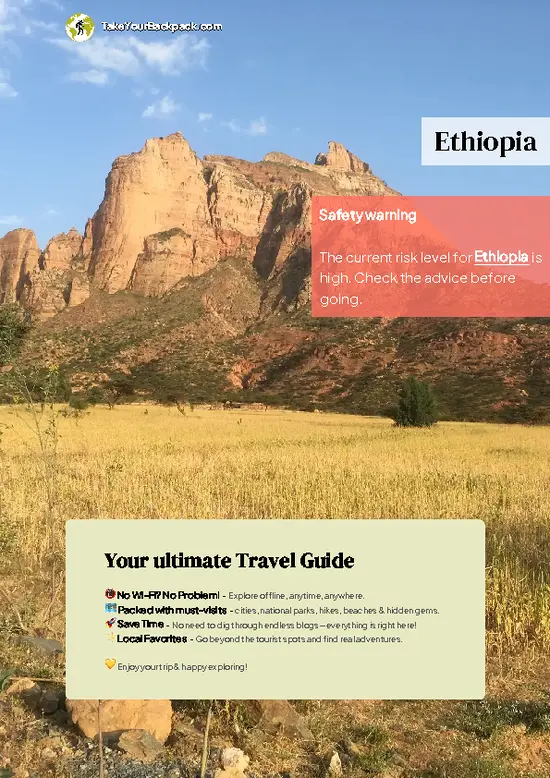
example page 0 from our offline Travel Guide for Ethiopia
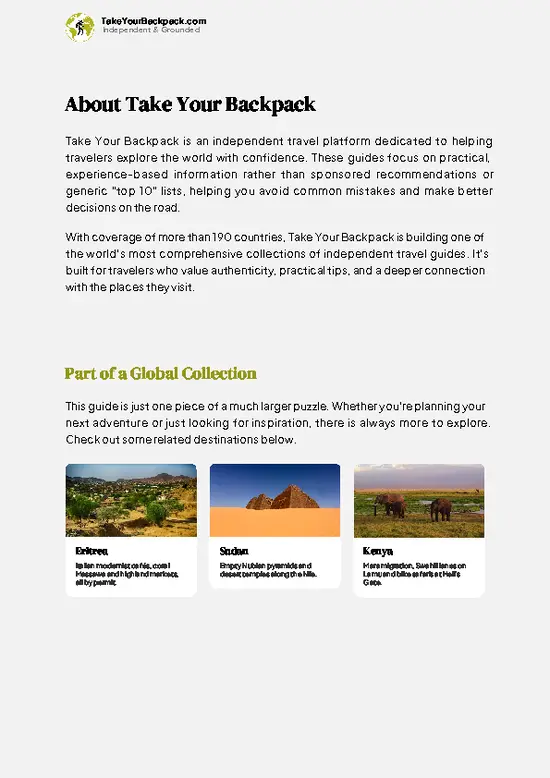
example page 1 from our offline Travel Guide for Ethiopia
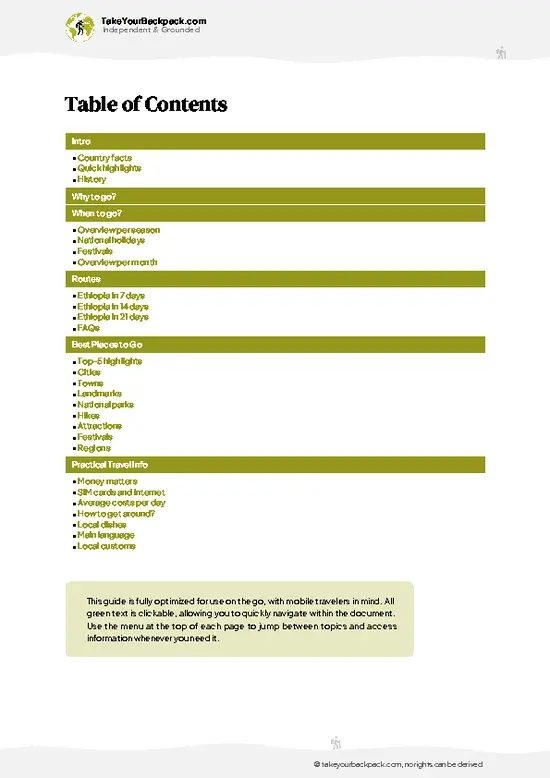
example page 2 from our offline Travel Guide for Ethiopia
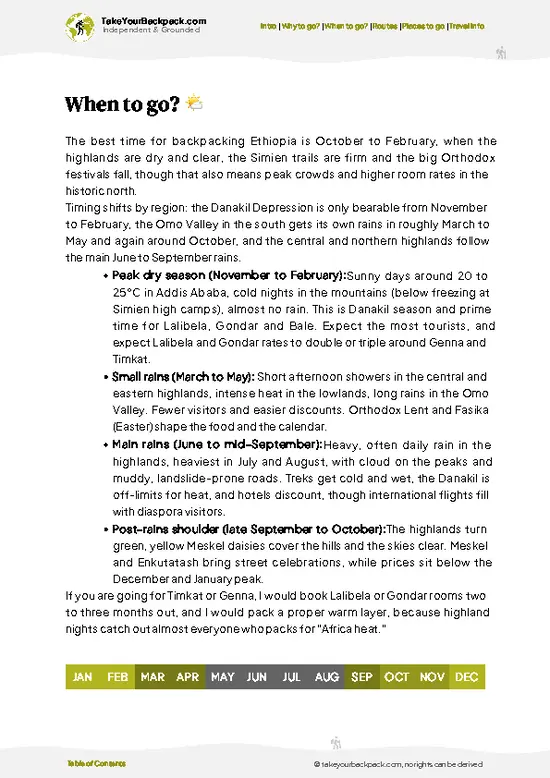
example page 3 from our offline Travel Guide for Ethiopia
example page 4 from our offline Travel Guide for Ethiopia
example page 5 from our offline Travel Guide for Ethiopia
example page 6 from our offline Travel Guide for Ethiopia
example page 7 from our offline Travel Guide for Ethiopia
The digital guide (387 pages) contains:
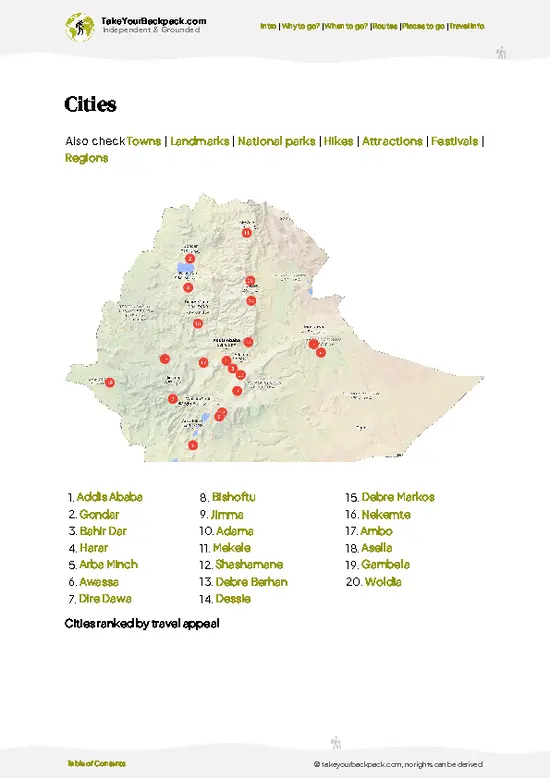
✅ 100 highlights, ranked by travel appeal
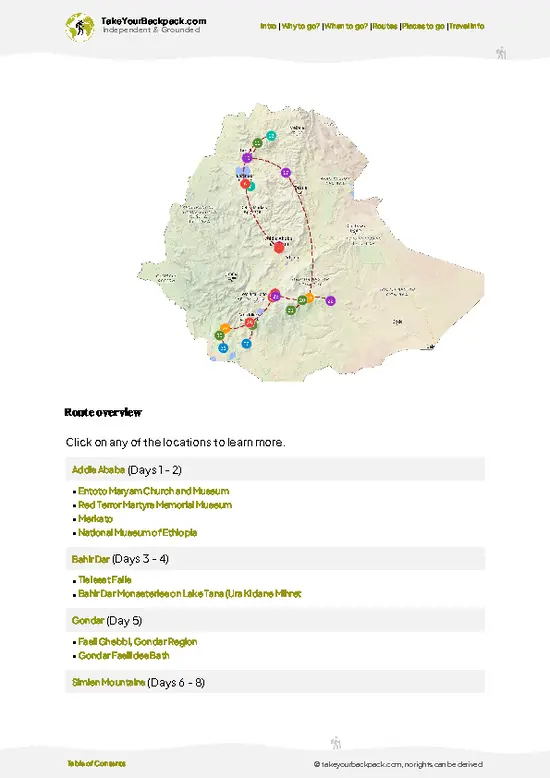
✅ Optimized 7, 14 & 21-day travel routes
✅ Cities, national parks, landmarks, beaches
✅ How to get around
✅ Offline-friendly for travel without Wi-Fi
👉 Click to see all 30+ guide features

📅 Plan smarter in minutes, not weeks
✅ Month by month travel advice
✅ Festivals & national holidays
✅ Budget expectations

🗺️ Go to the right places, skip the overrated ones
✅ Honest pros & cons of destinations
✅ Top hikes, parks & viewpoints
✅ Lesser-known places most travelers miss
✅ Clear “worth it vs skip it” guidance

🛏️ Travel smoothly without rookie mistakes
✅ Best areas to stay
✅ Transport systems explained simply
✅ Common scams & safety advice
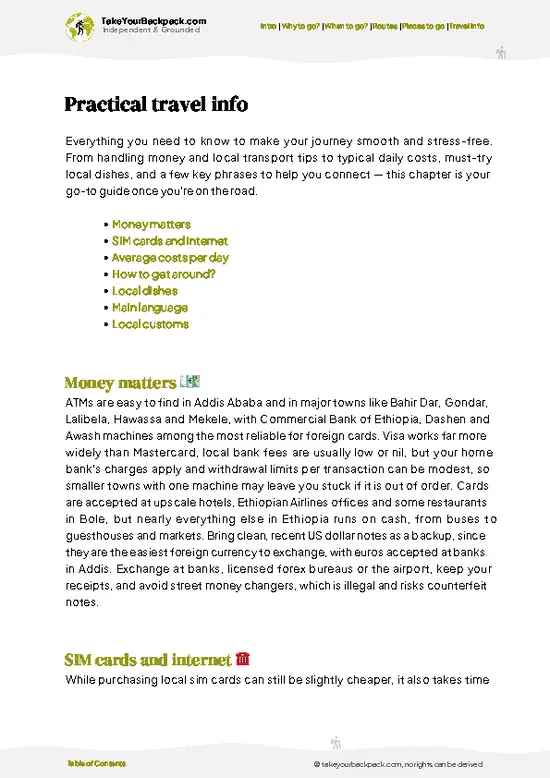
✅ SIM cards, money & practical tips

🌍 Understand the country, not just visit it
✅ Culture & traditions
✅ 52 Essential phrases & customs
✅ Festivals worth planning around
✅ Traveler-friendly historical context
✅ Insights that make places more meaningful

📱 Built for real travel conditions
✅ Fully downloadable PDF
✅ Works completely offline
✅ Optimized for phone use
✅ Useful in remote areas & buses
✅ Everything in one place
Save weeks of stressful planning
Get instant access to your full guide. 30‑day money-back guarantee.
+ Add another guide for just

By proceeding you agree to our terms.
Sent to your inbox immediately after payment • 100% Secure Checkout
Best Backpacking Travel Advisor 2025 tourism awardBest Backpacking
Travel Advisor
2025
What others say about Take Your Backpack Guides:
⭐⭐⭐⭐⭐
Fantastic, amazing amount of information!
⭐⭐⭐⭐⭐
My goodness this is amazing, it's what I've been looking for hats off too you!
⭐⭐⭐⭐⭐
I think this is absolutely BRILLIANT
⭐⭐⭐⭐
Very complete and informative. It's still missing places, but I gotta to commend you
⭐⭐⭐⭐⭐
This is truly amazing, thank you, can't wait to explore it with my kids!
⭐⭐⭐⭐⭐
Awesome resource, thank you!
⭐⭐⭐⭐⭐
This is amazing! Can't wait to explore the ones I haven't seen
⭐⭐⭐⭐
I love this! Well done, great idea.
⭐⭐⭐⭐⭐
Thanks for taking the time to make this gem!
⭐⭐⭐⭐⭐
This might be the best website I've ever seen.
⭐⭐⭐⭐⭐
Congratulations, and thank you so much for your work; it's incredibly valuable.
⭐⭐⭐⭐
In all seriousness I think you did a great job pointing out the important spots
⭐⭐⭐⭐⭐
10/10 very good
⭐⭐⭐⭐⭐
As someone who's only just starting to visit regularly this is awesome, thank you.
⭐⭐⭐⭐
Thank you very much! I'm going to visit my dad, it's going to be very useful!
⭐⭐⭐⭐⭐
This is really cool! We'll be travelling for the first time and this definitely come in handy.
⭐⭐⭐⭐⭐
You are now our minister of culture, congratulations 👨‍💼
⭐⭐⭐⭐⭐
Just wanted to tell you that this is a pearl! Going to follow your recommendations.
⭐⭐⭐⭐⭐
This is so cool. I'll definitely be using the resource for my travels soon.
⭐⭐⭐⭐⭐
This is very impressive! Good work.
⭐⭐⭐⭐⭐
This is an amazing and informative site. Very well done!

🛏️ Where to stay?Where staying makes the most sense

If you’re backpacking to see the National Museum of Ethiopia, you’re probably expecting a quiet, reflective experience surrounded by ancient artifacts and the famous Lucy skeleton. Here’s the reality check: the museum itself is a hotspot, especially mid-morning and weekends, so expect crowds and a steady stream of school groups. It’s not a secret hideaway. But that’s not a deal-breaker if you know where to base yourself.

The best areas to stay are those that balance safety, social vibes, and budget-friendly options without sacrificing proximity. The neighborhood around Bole Road and the nearby … read more 👉
If you’re backpacking to see the National Museum of Ethiopia, you’re probably expecting a quiet, reflective experience surrounded by ancient artifacts and the famous Lucy skeleton. Here’s the reality check: the museum itself is a hotspot, especially mid-morning and weekends, so expect crowds and a steady stream of school groups. It’s not a secret hideaway. But that’s not a deal-breaker if you know where to base yourself.

The best areas to stay are those that balance safety, social vibes, and budget-friendly options without sacrificing proximity. The neighborhood around Bole Road and the nearby Kazanchis district is a solid pick. It’s a lively part of Addis Ababa with plenty of guesthouses and budget hotels that cater to solo travelers and backpackers. You’ll find a good mix of locals and travelers, which means you’re not stuck in a tourist bubble. Plus, it’s a short taxi ride or a 20-minute walk to the museum.

Another option is the Piazza area. It’s a bit more chaotic but packed with character and affordable stays. It’s where you’ll rub shoulders with locals, street vendors, and fellow adventurers. The energy here is raw and real, and it’s a great place to dive into Ethiopian culture beyond the museum walls.

Both areas offer safe streets, easy access to public transport, and plenty of spots to meet other travelers. Just don’t expect luxury or quiet nights—this is Addis Ababa’s beating heart, and it’s worth it.

👛 Costs (as of 23 September 2026)Travel costs and budget guide for National Museum of Ethiopia

The entrance fee for the National Museum of Ethiopia typically ranges from USD5 to USD10 for international visitors. Additional costs may include guided tours or audio guides, which can add a few extra dollars. Local visitors usually pay a lower fee.
⚠️ Prices can change and everyone travels differently, so take this as a rough guide. Hope it helps you plan your adventure!

FAQTraveler FAQ

2 to 3 hours is sufficient to visit the National Museum of Ethiopia, allowing time to see key exhibits including the fossilized remains of Lucy and Ethiopian art collections.
Yes, the National Museum of Ethiopia is worth the entrance fee, which is around 150 ETB for foreigners. It offers unique insights into Ethiopia's ancient history and culture, making it a valuable experience for travelers.
You can get to the National Museum of Ethiopia by taxi or local minibus from central Addis Ababa. It is located about 3 kilometers south of the city center, near the Addis Ababa University campus.
⚠️ Things can change over time, so always validate details locally before you go.

Other Ethiopian attractions near National Museum of Ethiopia

Explore more nearby:


💡 Not sure where to go next?
Create a personalized itinerary for Ethiopia including National Museum of Ethiopia and the places that fit your trip.

Generate my itinerary

👉 Discover all attractions

Or checkout all Ethiopia has to offer (think cities, towns, villages, national parks, hikes, beaches, festivals)
Country photo of Ethiopia

We 💚 feedbackWhat to keep in mind

The National Museum of Ethiopia isn’t just another stop on the tourist circuit—it’s where you meet Lucy, the 3.2-million-year-old ancestor who rewrites your understanding of humanity. But heads-up: it can get crowded, especially around the fossil exhibits, and the lighting isn’t always museum-grade. Still, if you want a raw, unfiltered look at human history that hits deeper than any textbook, this place delivers in spades. Just come ready to share the spotlight.

✈️ When did I visit Ethiopia?
Ethiopia I visited back in October 2017. I combined the trip with a visit to Sudan. Ethiopia was a pure surprise with the magical scenery like the Danakil Depression and the Simien Mountains.

✍️ Help improve this page!
The information on this page is based on my own backpacking experience in Ethiopia, supplemented with up-to-date research and feedback from other travelers. Travel details can change, so if you notice anything outdated or incomplete, feel free to let me know.


🙋‍♂️ Give feedback

👋 Meet the founderWho’s Behind Take Your Backpack?

Johan, backpacker and founder of TakeYourBackpackHi, I’m Johan (Netherlands 🇳🇱), the creator of TakeYourBackpack. Over the past 3 decades, I’ve backpacked through 90+ countries across six continents, gaining extensive experience with independent travel, long-term trips, and overland routes.

This site is built on a combination of firsthand travel experience and carefully curated insights from other backpackers. Many guides are based on places I’ve personally visited, while others bring together tips, observations, and practical advice shared by trusted travelers I’ve met along the way.

The goal is to provide realistic, experience-driven guidance — not generic itineraries — so you can explore destinations with better context, clearer expectations, and more confidence.

Get full Ethiopia guide •
Instant download • 100 highlights • Full Offline guide