×

Fiji🇫🇯 | townsBaSugar mill, Ba River, curry counters, morning market | things to do and best time to go

Explore SavusavuExplore Somosomo

Backpacking in Ba
👌 Worth visitingtown ranked #5
By Johan Kruseman 🇳🇱 | Updated October 16, 2026

Ba is known as Fiji’s sugar town, and the mill on the river still sets the rhythm of the place. What travelers overlook is that this is one of the few spots where you see everyday Fijian-Indian life with no resort in sight. Ba sits on the northwest coast of Viti Levu, in Fiji, on the Ba River. Streets run flat and short, so you can walk the center in twenty minutes, stopping for roti and curry at a counter where the cook knows every regular. Go before 10 a.m. when the market is loud and the produce is fresh. Hostels are scarce and nightlife is quiet, so meeting other backpackers takes luck. Unlike Lautoka, which has ferries, a seafront and a steady stream of travelers, Ba is a working town that rarely sees them.

Discover everything you want to know in the 📖 Fiji Travel Guide.


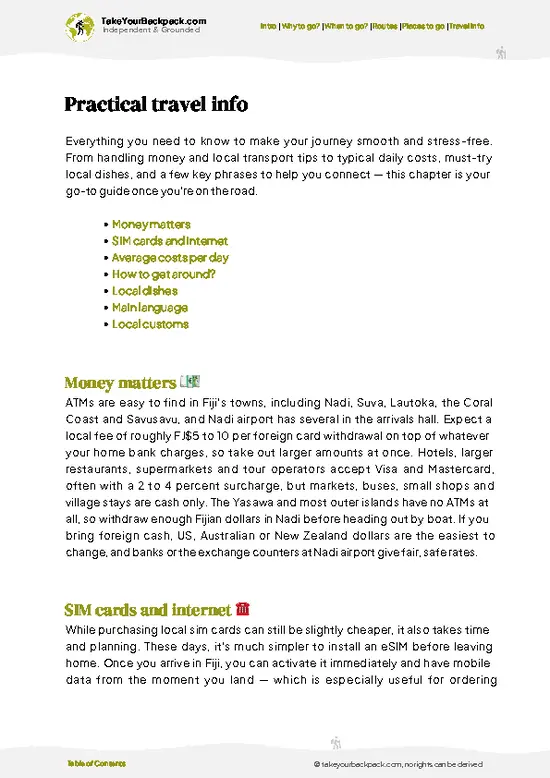
example page 0 from our offline Travel Guide for Fiji
example page 1 from our offline Travel Guide for Fiji
example page 2 from our offline Travel Guide for Fiji
example page 3 from our offline Travel Guide for Fiji
example page 4 from our offline Travel Guide for Fiji
example page 5 from our offline Travel Guide for Fiji
example page 6 from our offline Travel Guide for Fiji
example page 7 from our offline Travel Guide for Fiji
Loading the map 🌍
CLICK TO FILTER
cities
towns
villages
landmarks
national parks
hikes
beaches
attractions
festivals
regions
SHOW COUNTRY’S BESTSHOW ALL

✨ Why go?
Ranked #5 town in Fiji
What sets this place apart

Ba works as a one or two night stop for travelers who want to see Fiji without a resort wristband. The draw is the town itself: the Ba Market in the morning, the mosque and temples that reflect the area’s Indo-Fijian majority, and the sugar cane fields that surround everything. Add the Ba River walk along the bank and you have a slow, easy day. It suits slow travelers, solo travelers who like talking to shopkeepers, and anyone curious about how Fiji lives away from the coast. Hikers and divers will find little here, so treat it as a window into local life rather than an adventure base. Evenings are calm, with few bars and little music, so bring a book or plan an early start. People tend to stay briefly, then continue to the beaches or the highlands, and that is the right call. Ba rewards anyone … read more 👉
Ba works as a one or two night stop for travelers who want to see Fiji without a resort wristband. The draw is the town itself: the Ba Market in the morning, the mosque and temples that reflect the area’s Indo-Fijian majority, and the sugar cane fields that surround everything. Add the Ba River walk along the bank and you have a slow, easy day. It suits slow travelers, solo travelers who like talking to shopkeepers, and anyone curious about how Fiji lives away from the coast. Hikers and divers will find little here, so treat it as a window into local life rather than an adventure base. Evenings are calm, with few bars and little music, so bring a book or plan an early start. People tend to stay briefly, then continue to the beaches or the highlands, and that is the right call. Ba rewards anyone who wants texture before the island hopping begins.

💡 HighlightsThe experiences that define the visit

  1. Ba Market: The town’s best known spot and its busiest. Stalls sell yaqona (kava) roots, cassava, dalo, mangoes, fish and spices. Go between 7 and 10 a.m. on a weekday or Saturday. Entry is free and an hour is enough.
  2. Ba Mosque (Ba Jame Masjid): A large mosque on the main road that speaks to the long Muslim presence in the town. View it from outside or ask politely at the entrance to look in. Dress modestly, avoid prayer times, and allow 20 to 30 minutes. Free.
  3. Sugar mill area on the Ba River: The Rarawai Mill dominates the riverside, with cane trucks lining up during the crushing season, roughly May to November. You can watch the traffic and smell the sweet steam from the road. Visiting the interior needs permission, so plan on 30 minutes outside. Free.
  4. Riverside walk along the Ba River: A stroll
… read more 👉
  1. Ba Market: The town’s best known spot and its busiest. Stalls sell yaqona (kava) roots, cassava, dalo, mangoes, fish and spices. Go between 7 and 10 a.m. on a weekday or Saturday. Entry is free and an hour is enough.
  2. Ba Mosque (Ba Jame Masjid): A large mosque on the main road that speaks to the long Muslim presence in the town. View it from outside or ask politely at the entrance to look in. Dress modestly, avoid prayer times, and allow 20 to 30 minutes. Free.
  3. Sugar mill area on the Ba River: The Rarawai Mill dominates the riverside, with cane trucks lining up during the crushing season, roughly May to November. You can watch the traffic and smell the sweet steam from the road. Visiting the interior needs permission, so plan on 30 minutes outside. Free.
  4. Riverside walk along the Ba River: A stroll along the banks shows fishing boats, the old bridge and the flood walls that tell the story of the town’s regular battles with high water. Late afternoon is cooler and lighter. Free, 45 minutes.
  5. Local curry houses on Ba’s main street: A plate of fish curry, dhal and roti is the best way to taste the town’s Indian heritage. Lunch is the busiest time and the food is freshest. Expect to spend 30 to 45 minutes.
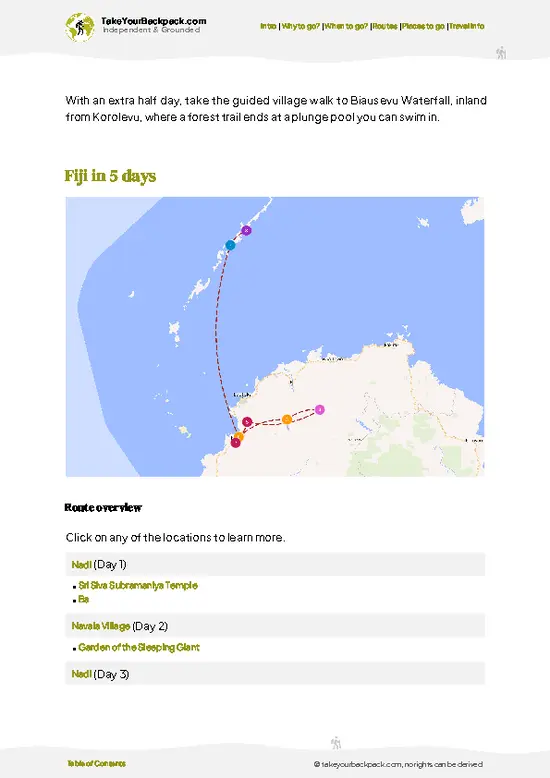
Day trips from Ba can reach the Ba highlands and Nausori Highlands villages, the beaches of Rakiraki and Tavua’s Vatukoula gold mine area, and Lautoka’s Garden of the Sleeping Giant. Most visitors skip the riverside walk, which shows Ba at its calmest and gives the best view of the old mill chimney.
Spotted a mistake or missing something? Contact us.

Things to do near Ba

Ratings based on Tripadvisor reviews. When you book through this link, you support our work at no extra cost to you.

🏘️ NeighborhoodsUnderstanding the local layout

Ba is a small river town on Viti Levu’s northwest coast, and you can cover all of it on foot in an afternoon. Here is how the pieces differ.
  • Main Street and the market: The strip along Ba’s main road is the heart of town, with curry houses, sari shops, bakeries and the produce market. Go before 10 a.m. when the stalls are stacked with dalo, eggplant and bundles of kava root. You leave with a bag of fresh mango and a feel for how the town earns its living.
  • Riverfront and Ba River bank: A short stroll from the center, the muddy Ba River slides past fishing boats and mangrove edges. Late afternoon is best, when the heat drops and locals sit on the wall. You get a quiet breather and soft light on the water.
  • Ba Mosque area: The big mosque with its green and white domes anchors the Indo-Fijian community,
… read more 👉
Ba is a small river town on Viti Levu’s northwest coast, and you can cover all of it on foot in an afternoon. Here is how the pieces differ.
  • Main Street and the market: The strip along Ba’s main road is the heart of town, with curry houses, sari shops, bakeries and the produce market. Go before 10 a.m. when the stalls are stacked with dalo, eggplant and bundles of kava root. You leave with a bag of fresh mango and a feel for how the town earns its living.
  • Riverfront and Ba River bank: A short stroll from the center, the muddy Ba River slides past fishing boats and mangrove edges. Late afternoon is best, when the heat drops and locals sit on the wall. You get a quiet breather and soft light on the water.
  • Ba Mosque area: The big mosque with its green and white domes anchors the Indo-Fijian community, and the streets nearby are calm and residential. Walk it in the morning, dress modestly and ask before going in. You get the best photo in town and a polite hello from almost everyone.
  • Sugar mill outskirts: The Rarawai Mill, a short ride from the center, is the industrial pulse of the district. During crushing season, cane trucks rumble in all day and the air smells of sweet smoke. Take a taxi or bus rather than walking the highway. You get a look at the industry that built Ba.

⌛️ 1 dayWhat you can realistically do in a day

8:00 AM, Ba Market: Start here and do not skip it. Walk the aisles while the produce is fresh, try a fruit you do not know, and watch kava roots being weighed. It is the most local scene in town and takes about an hour.

9:30 AM, Main street curry house: Walk five minutes for a hearty breakfast of roti and tea or a vegetable curry. The food is plain, filling and honest.

10:30 AM, Ba Mosque: Stroll along the main road to the mosque. Admire the architecture from the gate, dress modestly, and take a short pause in the shade.

12:00 PM, Riverside walk: Follow the Ba River along the bank. Look at the flood walls, fishing boats and the bridge. It is quiet and rarely on a tour list.

1:30 PM, Lunch: Return to town for fish curry and dhal at a local eatery. Linger over a cold drink while the heat … read more 👉
8:00 AM, Ba Market: Start here and do not skip it. Walk the aisles while the produce is fresh, try a fruit you do not know, and watch kava roots being weighed. It is the most local scene in town and takes about an hour.

9:30 AM, Main street curry house: Walk five minutes for a hearty breakfast of roti and tea or a vegetable curry. The food is plain, filling and honest.

10:30 AM, Ba Mosque: Stroll along the main road to the mosque. Admire the architecture from the gate, dress modestly, and take a short pause in the shade.

12:00 PM, Riverside walk: Follow the Ba River along the bank. Look at the flood walls, fishing boats and the bridge. It is quiet and rarely on a tour list.

1:30 PM, Lunch: Return to town for fish curry and dhal at a local eatery. Linger over a cold drink while the heat peaks.

3:00 PM, Rarawai Mill viewpoint: Walk or take a short taxi to the road beside the mill. During the crushing season, trucks full of cane roll in, and the sweet smell hangs in the air. Watch from outside and take photos only where it feels respectful.

4:30 PM, Off the usual path, residential lanes: Wander the side streets behind the main road, where small temples, tailors and tea stalls show daily life. Say hello, and you will often be answered with a smile.

6:00 PM, Sunset by the river: Finish where you can watch the light drop over the cane fields. Grab an early dinner before the streets quiet down.

🌤️ When to go?Best time to visit Ba

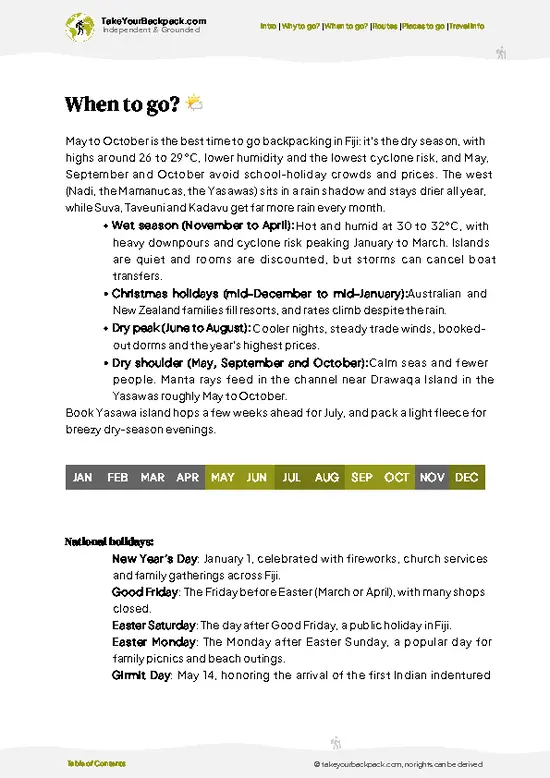
May to October is the easiest window for Ba, which sits in Fiji’s drier west and gets sunshine most days.
  • Dry Season (May to October): Days run 26 to 29°C (79 to 84°F), nights cool to about 18 to 20°C (64 to 68°F), and humidity eases. Daylight lasts about 11 hours. This is also sugarcane crushing season, so mill trucks fill the roads.
  • Wet Season (November to April): Expect 29 to 33°C (84 to 91°F), heavy humidity and downpours that can flood the Ba River. Cyclones are possible, mainly January to March. Daylight stretches to about 13 hours.
  • Crowds and Prices: Ba gets few tourists, so rooms stay cheap year-round. Prices at coastal resorts nearby rise in July, August and December.
  • Festivals: Diwali, usually October or November, brings lights and sweets to town.
Aim for June or July if you want cool mornings for market walks.

source: climatestotravel.comJANJanuary: fair for travelingFEBFebruary: fair for travelingMARMarch: fair for travelingAPRApril: highly recommended for travelingMAYMay: excellent for travelingJUNJune: excellent for travelingJULJuly: excellent for travelingAUGAugust: excellent for travelingSEPSeptember: excellent for travelingOCTOctober: excellent for travelingNOVNovember: highly recommended for travelingDECDecember: fair for traveling
fiji-city-ba
© Google |

✈️ The backpacker research shortcutFiji Travel Guide

An offline-friendly backpacking guide with optimized travel routes, ranked highlights, transport advice, and the best areas to stay.
example page 0 from our offline Travel Guide for Fiji
example page 1 from our offline Travel Guide for Fiji
example page 2 from our offline Travel Guide for Fiji
example page 3 from our offline Travel Guide for Fiji
example page 4 from our offline Travel Guide for Fiji
example page 5 from our offline Travel Guide for Fiji
example page 6 from our offline Travel Guide for Fiji
example page 7 from our offline Travel Guide for Fiji
The digital guide (159 pages) contains:
✅ 41 highlights, ranked by travel appeal
✅ Optimized 2, 3 & 5-day travel routes
✅ Cities, national parks, landmarks, beaches
✅ How to get around
✅ Offline-friendly for travel without Wi-Fi
👉 Click to see all 30+ guide features

📅 Plan smarter in minutes, not weeks
✅ Month by month travel advice
✅ Festivals & national holidays
✅ Budget expectations

🗺️ Go to the right places, skip the overrated ones
✅ Honest pros & cons of destinations
✅ Top hikes, parks & viewpoints
✅ Lesser-known places most travelers miss
✅ Clear “worth it vs skip it” guidance

🛏️ Travel smoothly without rookie mistakes
✅ Best areas to stay
✅ Transport systems explained simply
✅ Common scams & safety advice
✅ SIM cards, money & practical tips

🌍 Understand the country, not just visit it
✅ Culture & traditions
✅ 52 Essential phrases & customs
✅ Festivals worth planning around
✅ Traveler-friendly historical context
✅ Insights that make places more meaningful

📱 Built for real travel conditions
✅ Fully downloadable PDF
✅ Works completely offline
✅ Optimized for phone use
✅ Useful in remote areas & buses
✅ Everything in one place
Stop searching, start planning
Get instant access to your full guide. 30‑day money-back guarantee.
+ Add another guide for just

By proceeding you agree to our terms.
Sent to your inbox immediately after payment • 100% Secure Checkout
Best Backpacking Travel Advisor 2025 tourism awardBest Backpacking
Travel Advisor
2025
What others say about Take Your Backpack Guides:
⭐⭐⭐⭐⭐
Fantastic, amazing amount of information!
⭐⭐⭐⭐⭐
My goodness this is amazing, it's what I've been looking for hats off too you!
⭐⭐⭐⭐⭐
I think this is absolutely BRILLIANT
⭐⭐⭐⭐
Very complete and informative. It's still missing places, but I gotta to commend you
⭐⭐⭐⭐⭐
This is truly amazing, thank you, can't wait to explore it with my kids!
⭐⭐⭐⭐⭐
Awesome resource, thank you!
⭐⭐⭐⭐⭐
This is amazing! Can't wait to explore the ones I haven't seen
⭐⭐⭐⭐
I love this! Well done, great idea.
⭐⭐⭐⭐⭐
Thanks for taking the time to make this gem!
⭐⭐⭐⭐⭐
This might be the best website I've ever seen.
⭐⭐⭐⭐⭐
Congratulations, and thank you so much for your work; it's incredibly valuable.
⭐⭐⭐⭐
In all seriousness I think you did a great job pointing out the important spots
⭐⭐⭐⭐⭐
10/10 very good
⭐⭐⭐⭐⭐
As someone who's only just starting to visit regularly this is awesome, thank you.
⭐⭐⭐⭐
Thank you very much! I'm going to visit my dad, it's going to be very useful!
⭐⭐⭐⭐⭐
This is really cool! We'll be travelling for the first time and this definitely come in handy.
⭐⭐⭐⭐⭐
You are now our minister of culture, congratulations 👨‍💼
⭐⭐⭐⭐⭐
Just wanted to tell you that this is a pearl! Going to follow your recommendations.
⭐⭐⭐⭐⭐
This is so cool. I'll definitely be using the resource for my travels soon.
⭐⭐⭐⭐⭐
This is very impressive! Good work.
⭐⭐⭐⭐⭐
This is an amazing and informative site. Very well done!

🛏️ Where to stay?Best areas and accommodation options

The town center around the main street and bus station is the most practical place to sleep cheaply in Ba. Rooms here are basic guesthouse and budget hotel style, and dorm beds are scarce, so most backpackers pay for a simple private room. Everything is within a short walk, buses to Lautoka and Nadi start nearby, and taxis wait at the station if you arrive late.

Noise is the main downside. Traffic, market deliveries and early morning calls from vendors start before 6 a.m., so pack earplugs and ask for a room away from the road. After dark the center is quiet and mostly empty, with food stalls … read more 👉
The town center around the main street and bus station is the most practical place to sleep cheaply in Ba. Rooms here are basic guesthouse and budget hotel style, and dorm beds are scarce, so most backpackers pay for a simple private room. Everything is within a short walk, buses to Lautoka and Nadi start nearby, and taxis wait at the station if you arrive late.

Noise is the main downside. Traffic, market deliveries and early morning calls from vendors start before 6 a.m., so pack earplugs and ask for a room away from the road. After dark the center is quiet and mostly empty, with food stalls closing early.

The second option is to sleep in Lautoka or Nadi and visit Ba as a day trip. Both have far more hostels and dorm beds, restaurants open late, and frequent buses make the trip easy. If you want nightlife and a social crowd, that is the better choice. If you prefer a local feel and low prices, stay in Ba itself.

🚌 Getting aroundMoving around without the hassle

The center of Ba is flat and compact, so you can walk from the bus station to the market, mosque and riverbank in about 15 minutes. Walking stops making sense once you head for the sugar mill, the highway stretches or the villages in the hills, where distances grow and shade disappears. Traffic is light apart from cane trucks in crushing season, and public transport is frequent and cheap if not exactly punctual.
  • Walking: Free and the best way to see the main street. Go early, before the midday heat, and you pass bakeries pulling out hot rolls and curry houses setting up. You end up in the market with a cold coconut.
  • Local buses: Buses leave the Ba station for Lautoka, Tavua and Nadi, and local routes run to nearby villages. Fares are about FJ$1 to 5 (US$0.45 to 2.25) depending on distance, and
… read more 👉
The center of Ba is flat and compact, so you can walk from the bus station to the market, mosque and riverbank in about 15 minutes. Walking stops making sense once you head for the sugar mill, the highway stretches or the villages in the hills, where distances grow and shade disappears. Traffic is light apart from cane trucks in crushing season, and public transport is frequent and cheap if not exactly punctual.
  • Walking: Free and the best way to see the main street. Go early, before the midday heat, and you pass bakeries pulling out hot rolls and curry houses setting up. You end up in the market with a cold coconut.
  • Local buses: Buses leave the Ba station for Lautoka, Tavua and Nadi, and local routes run to nearby villages. Fares are about FJ$1 to 5 (US$0.45 to 2.25) depending on distance, and services run from about 6 a.m. to early evening. Windows stay open and you get a view of cane fields and hills.
  • Taxis: Plentiful around the bus station and market. Short hops in town cost about FJ$3 to 6 (US$1.35 to 2.70). Agree on the price or check the meter before you set off. Handy after dark or with a heavy pack.
  • Minivans and carriers: Shared vans run along the Kings Road to Lautoka and Nadi, often faster than buses at FJ$4 to 10 (US$1.80 to 4.50). They leave when full, so mornings are your best bet. You get a quicker ride and a chat with local commuters.
  • Rental car: Useful for exploring the highlands and coast, but you will usually pick one up in Nadi or Lautoka. Expect about FJ$100 to 150 (US$45 to 68) a day. Drive on the left, slow down for village speed bumps, and avoid night driving on unlit roads.

👛 Costs (as of 16 October 2026)Money, prices, and spending tips

Plan on about US$44 a day for backpacking in Ba, based on a high-season dorm bed and eating local. Ba is a working sugar and market town on Viti Levu's north coast, so prices run lower than the resort areas, and you pay in Fijian dollars.
CategoryBudget RangeLocal Reality
Dorm accommodationUS$14 to 20 (high season, use US$18)Dorm beds in town are few. Many travelers take a basic private room or sleep in Lautoka and visit Ba, so book ahead in July and August.
MealsUS$8 to 14 (use US$11)Curry and roti plates at market-area eateries run US$2 to 4. A fish or chicken plate with rice at a sit-down place is US$5 to 8. Fresh produce at the market is very cheap.
Local transportUS$2 to 5 (use US$3)Local buses and shared minivans around town and nearby villages cost under US$1 to 2 a ride. Taxis within town
… read more 👉
Plan on about US$44 a day for backpacking in Ba, based on a high-season dorm bed and eating local. Ba is a working sugar and market town on Viti Levu's north coast, so prices run lower than the resort areas, and you pay in Fijian dollars.
CategoryBudget RangeLocal Reality
Dorm accommodationUS$14 to 20 (high season, use US$18)Dorm beds in town are few. Many travelers take a basic private room or sleep in Lautoka and visit Ba, so book ahead in July and August.
MealsUS$8 to 14 (use US$11)Curry and roti plates at market-area eateries run US$2 to 4. A fish or chicken plate with rice at a sit-down place is US$5 to 8. Fresh produce at the market is very cheap.
Local transportUS$2 to 5 (use US$3)Local buses and shared minivans around town and nearby villages cost under US$1 to 2 a ride. Taxis within town are US$2 to 4.
Basic activities/entry feesUS$0 to 15 (use US$7)Walking the market, riverfront and streets is free. Village visits and guided highland trips cost more, so expect a small fee or gift for your host.
Miscellaneous expensesUS$3 to 8 (use US$5)Bottled water, a SIM card top-up, snacks and a bag of kava roots for village visits.
Total Daily BudgetUS$44A realistic day for one traveler. Skipping organized activities brings it near US$37.
Eat lunch at the market eateries and buy fruit and vegetables from the stalls, which easily saves US$5 to 8 a day compared with restaurant dining.
⚠️ Prices can change and everyone travels differently, so take this as a rough guide. Hope it helps you plan your adventure!

🚌 Day tripsWhere to go beyond the main area

Ba works well as a quiet base for day trips because buses and carriers run along the Kings Road, though most trips need an early start.
Lautoka:
Fiji’s Sugar City has a lively waterfront, a big produce market and the Garden of the Sleeping Giant nearby. The bus takes about 45 to 60 minutes and costs FJ$3 to 5 (US$1.35 to 2.25). Go on a weekday morning when the market is busiest, and budget FJ$25 to 40 (US$11 to 18) in total with lunch.

Tavua and Vatukoula:
Gold-mining country lies east of Ba, with a hillside town, rolling cane land and a coastal highway. The bus takes about 40 minutes and costs roughly FJ$3 to 5 (US$1.35 to 2.25). Visit in the dry season when roads are firm. First-timers often turn up expecting organized mine tours, so ask around locally.

Nadi:
Nadi is the transport hub for … read more 👉
Ba works well as a quiet base for day trips because buses and carriers run along the Kings Road, though most trips need an early start.
Lautoka:
Fiji’s Sugar City has a lively waterfront, a big produce market and the Garden of the Sleeping Giant nearby. The bus takes about 45 to 60 minutes and costs FJ$3 to 5 (US$1.35 to 2.25). Go on a weekday morning when the market is busiest, and budget FJ$25 to 40 (US$11 to 18) in total with lunch.

Tavua and Vatukoula:
Gold-mining country lies east of Ba, with a hillside town, rolling cane land and a coastal highway. The bus takes about 40 minutes and costs roughly FJ$3 to 5 (US$1.35 to 2.25). Visit in the dry season when roads are firm. First-timers often turn up expecting organized mine tours, so ask around locally.

Nadi:
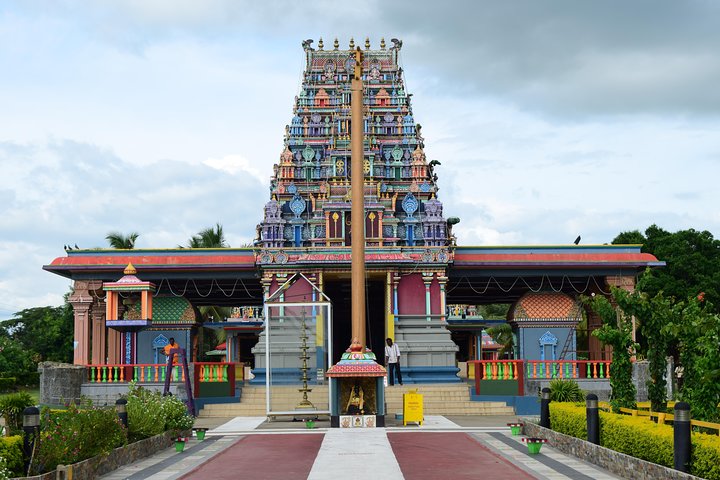
Nadi is the transport hub for the west, with the Sri Siva Subramaniya Swami Temple and its colorful tower. The ride takes about 1.5 hours by bus or van and costs FJ$5 to 10 (US$2.25 to 4.50). Allow a full day and head back before dusk so you are not on the highway after dark.
👉 Explore Nadi
Nausori Highlands:
Inland from Ba, the highlands offer cooler air, village views and a taste of rural Fijian life. Local transport is limited, so a hired driver is common, around FJ$100 to 150 (US$45 to 68). Go in the dry season, when tracks are passable, and bring a sarong for village visits.
👉 Explore Nausori Highlands

🛡️ SafetyTraveler Safety Guide

Ba is broadly safe for travelers, and daytime on the main street and market is relaxed. After dark the center empties quickly, so avoid walking alone on unlit side streets and along the riverbank, and take a taxi for even short trips. Solo travelers, including women, generally report friendly treatment, though dressing modestly helps you avoid stares. Opportunistic theft such as bag snatching or phone grabbing can happen in crowded market areas and bus stations, so keep valuables in a front pocket or zipped bag. Scams are rare. Some taxi drivers quote high prices to visitors, so agree on the fare first. Stray dogs roam some streets, and heavy rain can flood low roads, so check conditions before heading out. During cyclone season, follow local advice and weather alerts.

FAQFrequently asked questions about Ba

Ba is worth a short visit if you like local life more than resorts. You can see the main street, produce market and Ba Mosque in a few hours, and the Rarawai sugar mill and river add context to the district. Most travelers pair it with Lautoka, about 45 to 60 minutes away, rather than treating it as a destination on its own.
One day is enough for Ba itself, and a half day covers the market, mosque and riverfront. Add a second day if you want to include a trip to Tavua or the Nausori Highlands. Rooms cost about FJ$45 to 80 (US$20 to 36) a night, so staying two nights is easy on a budget.
Yes, Ba is easy to visit as a day trip from Lautoka or Nadi. Buses and vans take about 45 to 60 minutes from Lautoka and about 1.5 hours from Nadi, costing FJ$3 to 10 (US$1.35 to 4.50) each way. Leave by mid-morning and return before dusk, since buses thin out in the evening.
⚠️ Things can change over time, so always validate details locally before you go.

Other Fijian towns near Ba

Explore more nearby:

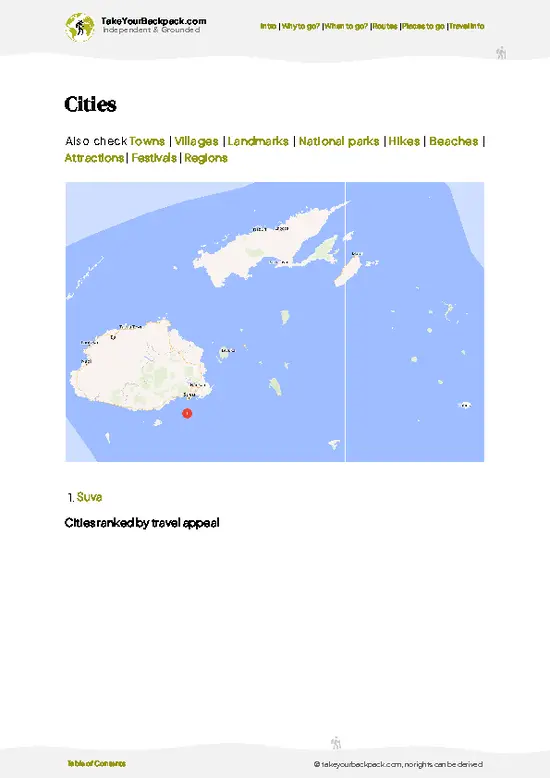
  • Nadi—Airport gateway, Dravidian temple, Main Street roti, Denarau boats| 26 km away
  • Levuka—Beach Street seawall, wooden shopfronts, UNESCO waterfront, 199 Steps| 124 km away
  • Savusavu—Steaming shoreline, yacht marina, pearl farm, Saturday market| 206 km away

💡 Not sure where to go next?
Create a personalized itinerary for Fiji including Ba and the places that fit your trip.

Generate my itinerary

👉 Discover all towns

Or checkout all Fiji has to offer (think cities, towns, villages, national parks, hikes, beaches, festivals)
Country photo of Fiji

We 💚 feedbackKey takeaways before you go

One night is plenty in Ba, and a full day if you want to see the market, mosque and river properly. I would arrive by midday, sleep in town, and leave after the next morning’s market. Bring cash in small notes, since stalls rarely take cards.

✍️ Help improve this page!
The information on this page is based on in-depth research, insights shared by experienced travelers, and feedback from the local travel community in Fiji. While every effort is made to keep the information accurate and current, conditions can change — so if you spot anything incorrect or outdated, please get in touch.


🙋‍♂️ Give feedback

👋 Meet the founderWho’s Behind Take Your Backpack?

Johan, backpacker and founder of TakeYourBackpackHi, I’m Johan (Netherlands 🇳🇱), the creator of TakeYourBackpack. Over the past 3 decades, I’ve backpacked through 90+ countries across six continents, gaining extensive experience with independent travel, long-term trips, and overland routes.

This site is built on a combination of firsthand travel experience and carefully curated insights from other backpackers. Many guides are based on places I’ve personally visited, while others bring together tips, observations, and practical advice shared by trusted travelers I’ve met along the way.

The goal is to provide realistic, experience-driven guidance — not generic itineraries — so you can explore destinations with better context, clearer expectations, and more confidence.