×

Fiji🇫🇯 | townsSomosomosacred groves, chiefly meeting grounds, Taveuni coastline | things to do and best time to go

Explore BaExplore Naihehe Caves

Backpacking in Somosomo
👀 For curious travelerstown ranked #6
By Johan Kruseman 🇳🇱 | Updated September 4, 2026

Most online blurbs sell Somosomo as just a “gateway to Taveuni,” but the surprise for backpackers is how much of your trip’s rhythm is actually set here: this is where you feel the real village pace before you chase waterfalls and reefs. Somosomo sits on the west coast of Taveuni, in Fiji’s northern islands, strung along the main coastal road with the sea on one side and steep, green slopes on the other. It’s practical more than pretty at first glance, a place you pass through for buses, supplies, and kava roots, yet the slow evenings and church bells at dusk have a pull. Nights are quiet: dim streetlights, family dinners, maybe a rugby game on TV, and low-key chats at guesthouses if other travelers are around. Compared with more resorty pockets further south, Somosomo feels busier, more lived-in, less scenic, but more “real Fiji” in your face.

Discover everything you want to know in the 📖 Fiji Travel Guide.


Get your Fiji guide
50 ranked highlights, routes & tips, works offline (208 pages)
Loading the map 🌍
CLICK TO FILTER
towns
villages
landmarks
national parks
hikes
beaches
attractions
festivals
regions
SHOW COUNTRY’S BESTSHOW ALL

✨ Why go?
Ranked #6 town in Fiji
Reasons people choose to visit here

In the village of Somosomo, backpackers find a refreshing pause from the busier Fijian hotspots. The atmosphere here is laid-back, with the gentle sound of waves lapping against the shore and the scent of salt in the air. It’s a place where you can truly slow down. Nestled among lush greenery, it offers easy access to hikes that wind through dense forests, leading to breathtaking views. The nearby beaches are pristine, perfect for a quiet afternoon of sunbathing or snorkeling.

Travelers often linger longer than planned, drawn in by the local character and the chance to connect with the community. It’s ideal for slow travelers, solo adventurers seeking tranquility, or couples wanting to escape the crowds. While some may stop briefly, many find themselves enchanted, opting to stay and soak … read more 👉
In the village of Somosomo, backpackers find a refreshing pause from the busier Fijian hotspots. The atmosphere here is laid-back, with the gentle sound of waves lapping against the shore and the scent of salt in the air. It’s a place where you can truly slow down. Nestled among lush greenery, it offers easy access to hikes that wind through dense forests, leading to breathtaking views. The nearby beaches are pristine, perfect for a quiet afternoon of sunbathing or snorkeling.

Travelers often linger longer than planned, drawn in by the local character and the chance to connect with the community. It’s ideal for slow travelers, solo adventurers seeking tranquility, or couples wanting to escape the crowds. While some may stop briefly, many find themselves enchanted, opting to stay and soak in the serenity. If you crave a blend of nature and culture, Somosomo is a must-stop on your journey.
Want to include Somosomo in your Fiji route?
Create a personalized Fiji itinerary that includes Somosomo and the places that fit your trip — based on your travel style, budget, and available time. Get your route in seconds.

Generate my trip

💡 HighlightsKey sights and experiences for travelers

  • Somosomo chiefly compound (the Tui Cakau grounds) — The cultural heart of the village: traditional architecture, ceremonial space and the seat of the Tui Cakau chiefly line. You won’t get to wander on a whim — visits are respectful, often arranged through a host — but seeing the compound and hearing its stories is the fastest way to understand Somosomo’s local power and history.
  • Village kava (yaqona) circle — A living ritual more than a “sight.” Join a formal kava ceremony with villagers to learn the protocol, taste yaqona, and hear oral histories and songs. It’s low-key, immediate, and reveals social life in a way museums can’t.
  • Somosomo village church — The church is central to daily rhythm and community gatherings. Services, choirs and village meetings are great for seeing faith and
read more 👉
  • Somosomo chiefly compound (the Tui Cakau grounds) — The cultural heart of the village: traditional architecture, ceremonial space and the seat of the Tui Cakau chiefly line. You won’t get to wander on a whim — visits are respectful, often arranged through a host — but seeing the compound and hearing its stories is the fastest way to understand Somosomo’s local power and history.
  • Village kava (yaqona) circle — A living ritual more than a “sight.” Join a formal kava ceremony with villagers to learn the protocol, taste yaqona, and hear oral histories and songs. It’s low-key, immediate, and reveals social life in a way museums can’t.
  • Somosomo village church — The church is central to daily rhythm and community gatherings. Services, choirs and village meetings are great for seeing faith and song woven into local life; architecture is simple but the atmosphere and voices are memorable.
  • Local craft and tapa demonstrations — Small-scale artisans in Somosomo still make bark cloth, woven mats and carved pieces. Stops here let you watch hands-on traditional crafts, buy directly from makers, and learn about materials and meaning.
  • Waterfront/boat landing — The working landing is where fishermen come and go, boats are repaired, and cargo arrives. It’s a noisy, efficient slice of island life — great for photography, meeting fishers, and catching a ride or day-boat out if arranged locally.
  • Yaqona (kava) gardens and smallholder farms — Walkable from the village, these plots show how kava and subsistence crops are grown and processed. Talking with growers gives insight into both economy and the ceremonial uses that structure community ties.
  • Community meeting house / village fale — The public fale is where meetings, storytelling and informal gatherings happen. Visiting (with permission) is a direct way to experience village governance and traditional social life in practice.
  • Village school and youth projects — Small schools in Somosomo are hubs of activity; many welcome respectful visitors who want to learn about education here or support local projects. You’ll get a feel for everyday life and intergenerational connections.
  • Ancestral grounds and memorial sites — Scattered family grave sites and memorial stones are quiet, culturally important places. They’re not touristy, but visiting with a local host offers perspective on lineage, land and respect for elders.
  • Local creek, mangrove edge and short village trails — Simple walks within village boundaries reveal freshwater springs, mangrove life and small waterfalls or pools used by villagers. These short, local trails are great for a close-up nature fix without leaving Somosomo proper.
A few real, visitable highlights just outside Somosomo that make easy day trips: Bouma National Heritage Park with the Tavoro (Taveuni) waterfalls, the Lavena Coastal Walk and beaches, and Rainbow Reef/Waitabu Marine Park for snorkeling and diving.
Spotted a mistake or missing something? Contact us.

🏘️ NeighborhoodsUnderstanding the local layout

Somosomo is a small town that feels like a gateway to Fiji’s raw charm, but knowing where to land makes all the difference. Here’s the lowdown on its key areas to help you settle in smart.

Downtown Somosomo
This is the heartbeat of the town, where local markets and small shops cluster. It’s noisy, bustling, and full of life—perfect if you want to dive into daily Fijian rhythms. Walkability is solid; everything you need is a few minutes on foot. Budget travelers will find cheap eats and basic guesthouses here. Nightlife is low-key—think local kava bars rather than clubs. Best for short stays or those who thrive on constant movement.

Wainikoro Village
A short ride from downtown, this area offers a quieter, more authentic village vibe. It’s where you’ll catch the scent of fresh bread baking … read more 👉
Somosomo is a small town that feels like a gateway to Fiji’s raw charm, but knowing where to land makes all the difference. Here’s the lowdown on its key areas to help you settle in smart.

Downtown Somosomo
This is the heartbeat of the town, where local markets and small shops cluster. It’s noisy, bustling, and full of life—perfect if you want to dive into daily Fijian rhythms. Walkability is solid; everything you need is a few minutes on foot. Budget travelers will find cheap eats and basic guesthouses here. Nightlife is low-key—think local kava bars rather than clubs. Best for short stays or those who thrive on constant movement.

Wainikoro Village
A short ride from downtown, this area offers a quieter, more authentic village vibe. It’s where you’ll catch the scent of fresh bread baking and hear children playing barefoot in the dirt streets. Transport is less frequent, so plan ahead. Accommodations lean toward homestays and eco-lodges, making it ideal for longer stays if you want to slow down and soak in local culture. Not the place for nightlife, but perfect for evening chats under starry skies.

Seaside Road
Stretching along the coast, this strip is where you’ll find guesthouses with ocean views and easy beach access. It’s more spread out, so walking is less practical—rent a bike or grab a tuk-tuk. The vibe is relaxed, with mornings scented by salt and hibiscus. Nightlife is nearly non-existent, but the sound of waves replaces any need for noise. Great for those who want to balance exploration with downtime.

Understanding these zones helps you pick your pace in Somosomo—whether you want to plug into local buzz or drift with the tide.

⌛️ 1 day1-day itinerary for Somosomo

Somosomo, tucked into Fiji’s Taveuni Island, is a place where the rainforest’s humidity mingles with the salt air, and the pace slows to the rhythm of crashing waves and bird calls. It’s not just a town; it’s a gateway to raw island life, where the lush green hills meet the Pacific with a kind of unpolished charm that rewards those willing to explore beyond the usual postcard views.

Start your morning wandering through the village of Somosomo itself. The streets here aren’t paved with tourist traps but lined with local markets where the scent of fresh yaqona (kava) roots and tropical fruits fills the air. Grab a cup of strong Fijian coffee from a roadside stall and chat with vendors selling handwoven mats and carved wooden bowls. This is where you get a real sense of the community’s heartbeat—unfiltered … read more 👉
Somosomo, tucked into Fiji’s Taveuni Island, is a place where the rainforest’s humidity mingles with the salt air, and the pace slows to the rhythm of crashing waves and bird calls. It’s not just a town; it’s a gateway to raw island life, where the lush green hills meet the Pacific with a kind of unpolished charm that rewards those willing to explore beyond the usual postcard views.

Start your morning wandering through the village of Somosomo itself. The streets here aren’t paved with tourist traps but lined with local markets where the scent of fresh yaqona (kava) roots and tropical fruits fills the air. Grab a cup of strong Fijian coffee from a roadside stall and chat with vendors selling handwoven mats and carved wooden bowls. This is where you get a real sense of the community’s heartbeat—unfiltered and welcoming. From here, take a short walk to the nearby Waitabu Marine Park. The water here is a clear, inviting blue-green, perfect for snorkeling. Unlike busier spots, the coral gardens feel intimate, and you’ll often find yourself alone with schools of colorful fish darting through the coral fingers.

By afternoon, head uphill to the village of Vuna, just a few kilometers away. It’s less visited but home to the Vuna Blowholes, where seawater bursts through natural rock formations with a thunderous roar. The spray cools the air, and the raw power of the ocean here is a reminder of the island’s wild side. Nearby, the Vuna Village Cultural Centre offers a chance to see traditional Fijian crafts and hear stories that deepen your connection to the land and its people.

As the sun dips, settle into the small bay area near Somosomo where fishermen bring in their catch. Find a local eatery serving fresh fish grilled over coconut husks, the smoky aroma blending with the salty breeze. The light here softens, casting long shadows on the water, and the day’s heat fades into a comfortable warmth. It’s a moment that feels earned—the kind of evening where you’re not just a visitor but a participant in the island’s ongoing story.
Turn your Somosomo visit into an Fiji adventure
Build a complete Fiji route with Somosomo, hidden gems, must-see destinations, and realistic travel times included.

Generate my trip

🌤️ When to go?Best time to visit Somosomo


  • Topic: Weather — Somosomo sits in Fiji’s tropical zone, so expect warm, humid days year-round. The dry season from May to October offers clearer skies and less rain, making trails and village visits more pleasant. The wet season (November to April) brings heavy showers and potential cyclones, which can turn dirt paths into slippery challenges.

  • Topic: Temperature — Daytime temps hover between 24°C and 30°C (75°F to 86°F) during the dry months, perfect for hiking and exploring without overheating. The wet season can push temps higher, with humidity making it feel stickier and more draining.

  • Topic: Daylight Hours — Near the equator, daylight stays steady around 11 to 12 hours year-round. Early mornings and late afternoons offer the best light for photography and cooler trekking conditions.
read more 👉

  • Topic: Weather — Somosomo sits in Fiji’s tropical zone, so expect warm, humid days year-round. The dry season from May to October offers clearer skies and less rain, making trails and village visits more pleasant. The wet season (November to April) brings heavy showers and potential cyclones, which can turn dirt paths into slippery challenges.

  • Topic: Temperature — Daytime temps hover between 24°C and 30°C (75°F to 86°F) during the dry months, perfect for hiking and exploring without overheating. The wet season can push temps higher, with humidity making it feel stickier and more draining.

  • Topic: Daylight Hours — Near the equator, daylight stays steady around 11 to 12 hours year-round. Early mornings and late afternoons offer the best light for photography and cooler trekking conditions.

  • Topic: Crowds — Peak tourist season aligns with the dry months, especially July and August, when international travelers flock to Fiji. Somosomo remains quieter than main hubs, but expect more visitors during this window.

  • Topic: Seasonal Activities — The dry season hosts cultural festivals and traditional ceremonies, giving you a richer, more immersive experience. The wet season slows down village events but brings lush greenery and fewer tourists.

  • Topic: Price Fluctuations — Accommodation and transport costs spike in the dry season’s peak months. Booking early can lock in better rates, while the wet season offers bargains but with the trade-off of unpredictable weather.


Pro-tip: Aim for the shoulder months of May or October—enjoy manageable weather, fewer crowds, and a more authentic vibe without the premium prices.


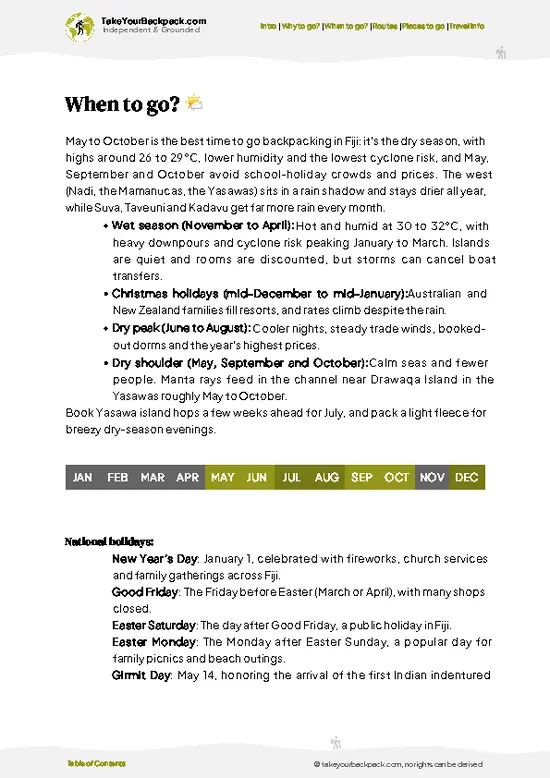
source: climatestotravel.comJANJanuary: fair for travelingFEBFebruary: fair for travelingMARMarch: fair for travelingAPRApril: good for travelingMAYMay: highly recommended for travelingJUNJune: highly recommended for travelingJULJuly: excellent for travelingAUGAugust: excellent for travelingSEPSeptember: highly recommended for travelingOCTOctober: highly recommended for travelingNOVNovember: fair for travelingDECDecember: fair for traveling
when-to-go

✈️ The backpacker research shortcutFiji Travel Guide

An offline-friendly backpacking guide with optimized travel routes, ranked highlights, transport advice, and the best areas to stay.
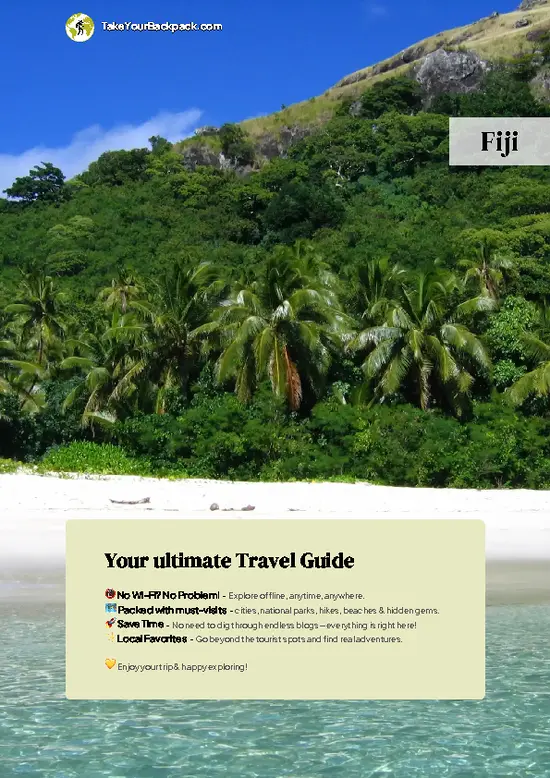
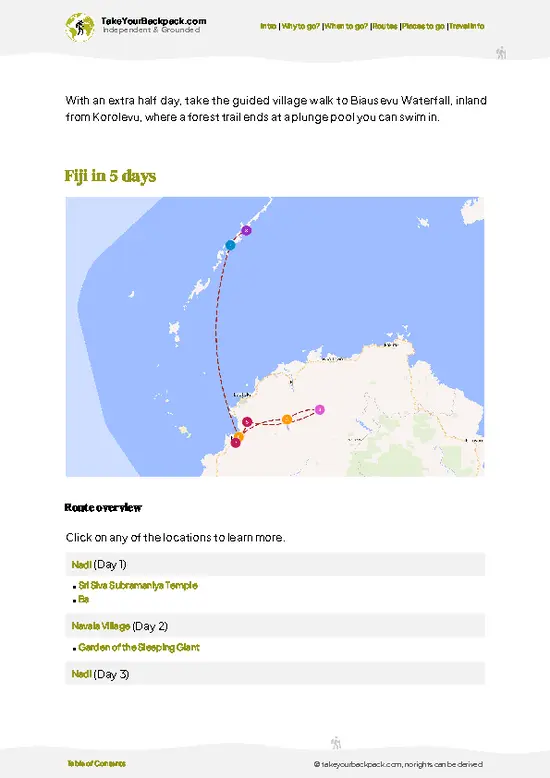
example page 0 from our offline Travel Guide for Fiji
example page 1 from our offline Travel Guide for Fiji
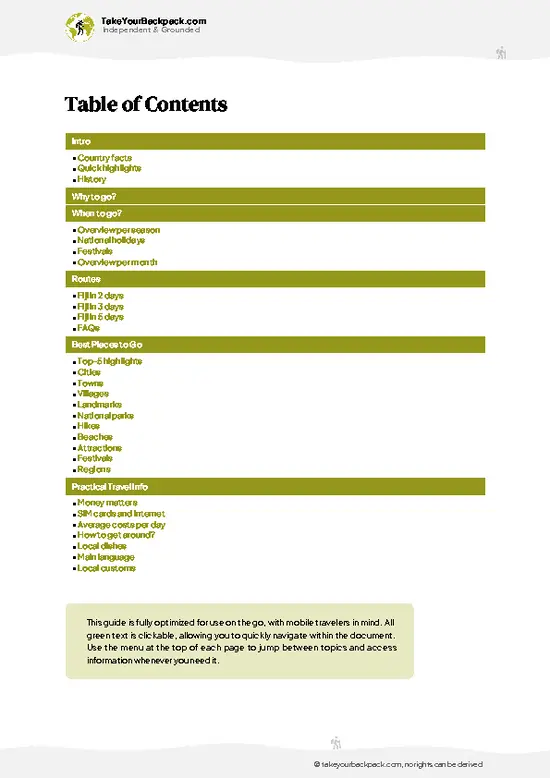
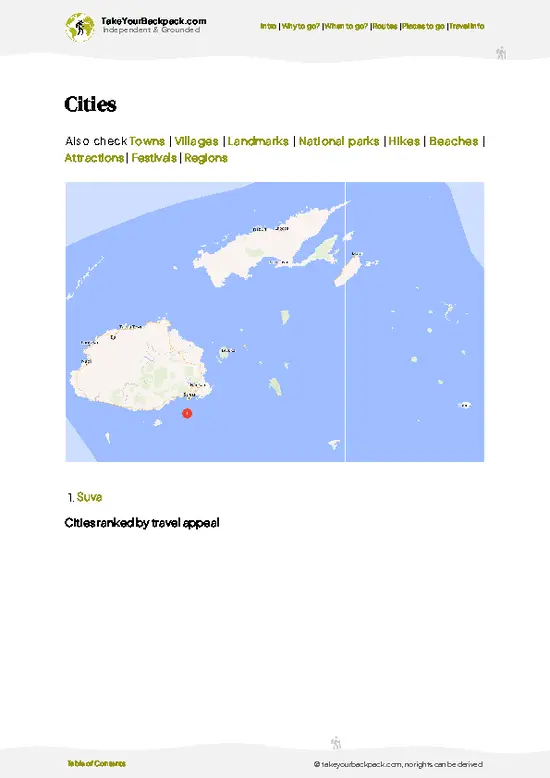
example page 2 from our offline Travel Guide for Fiji
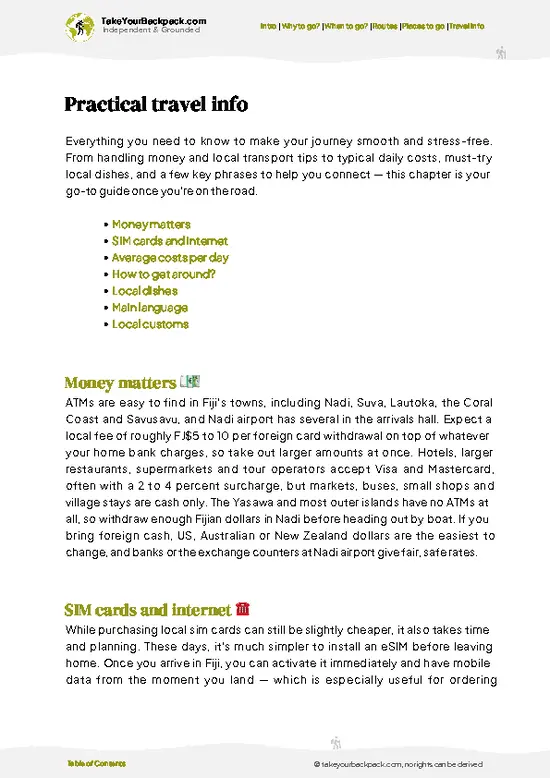
example page 3 from our offline Travel Guide for Fiji
example page 4 from our offline Travel Guide for Fiji
example page 5 from our offline Travel Guide for Fiji
example page 6 from our offline Travel Guide for Fiji
example page 7 from our offline Travel Guide for Fiji
The digital guide (208 pages) contains:
50 highlights, ranked by travel appeal
Optimized 2, 3 & 5-day travel routes
Cities, national parks, landmarks, beaches
How to get around
Offline-friendly for travel without Wi-Fi
👉 Click to see all 30+ guide features

📅 Plan smarter in minutes, not weeks
Month by month travel advice
Festivals & national holidays
Budget expectations

🗺️ Go to the right places, skip the overrated ones
Honest pros & cons of destinations
Top hikes, parks & viewpoints
Lesser-known places most travelers miss
Clear “worth it vs skip it” guidance

🛏️ Travel smoothly without rookie mistakes
Best areas to stay
Transport systems explained simply
Common scams & safety advice
SIM cards, money & practical tips

🌍 Understand the country, not just visit it
Culture & traditions
52 Essential phrases & customs
Festivals worth planning around
Traveler-friendly historical context
Insights that make places more meaningful

📱 Built for real travel conditions
Fully downloadable PDF
Works completely offline
Optimized for phone use
Useful in remote areas & buses
Everything in one place
Save weeks of stressful planning
Get instant access to your full guide. 30‑day money-back guarantee.
+ Add another guide for just US$7.80

By proceeding you agree to our terms.
Sent to your inbox immediately after payment • 100% Secure Checkout
Best Backpacking Travel Advisor 2025 tourism awardBest Backpacking
Travel Advisor
2025
What others say about Take Your Backpack Guides:
⭐⭐⭐⭐⭐
Fantastic, amazing amount of information!
⭐⭐⭐⭐⭐
My goodness this is amazing, it's what I've been looking for hats off too you!
⭐⭐⭐⭐⭐
I think this is absolutely BRILLIANT
⭐⭐⭐⭐
Very complete and informative. It's still missing places, but I gotta to commend you
⭐⭐⭐⭐⭐
This is truly amazing, thank you, can't wait to explore it with my kids!
⭐⭐⭐⭐⭐
Awesome resource, thank you!
⭐⭐⭐⭐⭐
This is amazing! Can't wait to explore the ones I haven't seen
⭐⭐⭐⭐
I love this! Well done, great idea.
⭐⭐⭐⭐⭐
Thanks for taking the time to make this gem!
⭐⭐⭐⭐⭐
This might be the best website I've ever seen.
⭐⭐⭐⭐⭐
Congratulations, and thank you so much for your work; it's incredibly valuable.
⭐⭐⭐⭐
In all seriousness I think you did a great job pointing out the important spots
⭐⭐⭐⭐⭐
10/10 very good
⭐⭐⭐⭐⭐
As someone who's only just starting to visit regularly this is awesome, thank you.
⭐⭐⭐⭐
Thank you very much! I'm going to visit my dad, it's going to be very useful!
⭐⭐⭐⭐⭐
This is really cool! We'll be travelling for the first time and this definitely come in handy.
⭐⭐⭐⭐⭐
You are now our minister of culture, congratulations 👨‍💼
⭐⭐⭐⭐⭐
Just wanted to tell you that this is a pearl! Going to follow your recommendations.
⭐⭐⭐⭐⭐
This is so cool. I'll definitely be using the resource for my travels soon.
⭐⭐⭐⭐⭐
This is very impressive! Good work.
⭐⭐⭐⭐⭐
This is an amazing and informative site. Very well done!

🛏️ Where to stay?How to pick the right area

In Somosomo, the backpacker scene is all about embracing the raw, island vibe without the polished resort gloss. The village itself is small, so your best bet is to lean into local homestays or eco-lodges that put you right in the heart of Fijian life. These spots aren’t just places to crash; they’re your gateway to the scent of frangipani in the morning air and the sound of waves threading through coconut palms.

Why homestays? Because they offer more than a bed—they offer connection. Staying with a local family means waking up to fresh yaqona (kava) ceremonies and stories that no guidebook captures. … read more 👉
In Somosomo, the backpacker scene is all about embracing the raw, island vibe without the polished resort gloss. The village itself is small, so your best bet is to lean into local homestays or eco-lodges that put you right in the heart of Fijian life. These spots aren’t just places to crash; they’re your gateway to the scent of frangipani in the morning air and the sound of waves threading through coconut palms.

Why homestays? Because they offer more than a bed—they offer connection. Staying with a local family means waking up to fresh yaqona (kava) ceremonies and stories that no guidebook captures. Plus, you get to dodge the tourist bubble and see Somosomo through the eyes of those who call it home. The trade-off is simple: fewer creature comforts, but a richer, more tactile experience.

If you want a step up in comfort without losing authenticity, eco-lodges nearby balance rustic charm with practical amenities—think solar-powered showers and hammocks strung between mango trees. They’re often a short walk from the village center, so you’re close enough to soak in daily rhythms but far enough to enjoy quiet nights under a sky thick with stars.

In Somosomo, the best stay isn’t about luxury; it’s about syncing your pace with the island’s slow, deliberate heartbeat. Choose a place that invites you to slow down, listen, and breathe in the island’s soul. That’s where the real magic happens.

🚌 Getting aroundHow to get around Somosomo

The rhythm of Somosomo is a slow, sun-drenched pulse, where the day unfolds with the warmth of the tropics and the scent of salt and earth mingling in the air. Time here doesn’t rush; it meanders like the nearby river, inviting you to sync with its unhurried pace. You won’t find rigid timetables or the clatter of a bustling metropolis. Instead, expect a blend of local intuition and a relaxed flow, where transport moves on a mix of habit, necessity, and the occasional burst of energy when a vehicle fills up or a boat is ready to depart. This is a place where the journey is part of the experience, not just a means to an end.


  • Walking: The heart of Somosomo is compact and best explored on foot. The streets are uneven but shaded by palms and flowering trees, making walking not just practical
read more 👉
The rhythm of Somosomo is a slow, sun-drenched pulse, where the day unfolds with the warmth of the tropics and the scent of salt and earth mingling in the air. Time here doesn’t rush; it meanders like the nearby river, inviting you to sync with its unhurried pace. You won’t find rigid timetables or the clatter of a bustling metropolis. Instead, expect a blend of local intuition and a relaxed flow, where transport moves on a mix of habit, necessity, and the occasional burst of energy when a vehicle fills up or a boat is ready to depart. This is a place where the journey is part of the experience, not just a means to an end.


  • Walking: The heart of Somosomo is compact and best explored on foot. The streets are uneven but shaded by palms and flowering trees, making walking not just practical but a sensory pleasure. You’ll catch the sounds of children playing, vendors calling out, and the occasional stray dog weaving through the lanes. Walking is free, flexible, and the best way to absorb the town’s atmosphere.


  • Local Minibus (Lokal Bus): These minibuses are the backbone of public transit here, running roughly from 6:30 AM to 6 PM. They don’t stick to strict schedules but leave once full, so patience is key. Fares hover around a few Fijian dollars, making them the cheapest option for longer distances. The ride can be bumpy and crowded, but it’s a genuine slice of local life, with windows down to catch the humid breeze and roadside chatter.


  • Shared Taxis: Shared taxis operate on flexible routes, often filling up before heading out. They’re faster than minibuses and run until about 8 PM, but cost a bit more—still affordable for budget travelers. The vehicles are usually older, so expect a lively, sometimes noisy ride. They’re perfect if you want to cover ground quickly without the wait of a minibus.


  • Boat Transfers: For reaching nearby islands or crossing the river, small boats run on demand rather than a fixed schedule. Prices vary depending on distance and negotiation skills, but expect to pay a bit more than land transport. The boat ride offers a refreshing break from the heat, with the smell of saltwater and the splash of waves adding a tactile layer to your journey.

👛 Costs (as of 4 September 2026)Travel costs and budget guide for Somosomo

Backpacking in Somosomo, Fiji, means balancing the island’s laid-back charm with the realities of remote travel costs. Here’s what you can expect day-to-day:
  • Dorm Accommodation: Budget hostels or guesthouses typically charge between $15 and $30 USD per night. These places are basic but clean, often with shared bathrooms and a chance to meet other travelers. Expect simple fan-cooled rooms rather than air conditioning.
  • Meals: Local food stalls and small eateries offer meals for around $5 to $10 USD. Fresh seafood, tropical fruits, and root vegetables dominate the menu. Cooking your own food can cut costs, but eating out is part of the experience here.
  • Local Transport: Transport options are limited and often informal. Expect to pay about $2 to $5 USD for short rides on local buses or shared
read more 👉
Backpacking in Somosomo, Fiji, means balancing the island’s laid-back charm with the realities of remote travel costs. Here’s what you can expect day-to-day:
  • Dorm Accommodation: Budget hostels or guesthouses typically charge between $15 and $30 USD per night. These places are basic but clean, often with shared bathrooms and a chance to meet other travelers. Expect simple fan-cooled rooms rather than air conditioning.
  • Meals: Local food stalls and small eateries offer meals for around $5 to $10 USD. Fresh seafood, tropical fruits, and root vegetables dominate the menu. Cooking your own food can cut costs, but eating out is part of the experience here.
  • Local Transport: Transport options are limited and often informal. Expect to pay about $2 to $5 USD for short rides on local buses or shared taxis. Renting a bike or scooter can be a good way to explore but costs around $15 to $25 USD per day.
  • Basic Activities/Entry Fees: Many natural attractions like beaches and waterfalls are free or have minimal entry fees, usually under $5 USD. Organized tours or cultural experiences can run $20 to $50 USD, depending on the activity and guide quality.
  • Miscellaneous Expenses: Budget around $3 to $7 USD for essentials like bottled water, snacks, or small souvenirs. Internet access can be patchy and sometimes requires buying local SIM cards or topping up data plans.

Altogether, a realistic daily budget for backpacking in Somosomo falls between $30 and $70 USD. This range covers the essentials without cutting corners on comfort or missing out on the local vibe. The island’s slower pace and limited infrastructure mean spending a bit more here feels like an investment in a genuine, off-the-beaten-path experience.


source: fiji.travel
⚠️ Prices can change and everyone travels differently, so take this as a rough guide. Hope it helps you plan your adventure!

🚌 Day tripsExploring the surroundings

Using Somosomo as your base in Fiji opens up a world of adventure. The village is not just a stopover; it’s a launchpad for some truly memorable day trips.

Trip to Taveuni Island
A quick boat ride from Somosomo, Taveuni Island is a paradise for nature lovers. The journey takes about 30 minutes, and you’ll be greeted by lush rainforests and cascading waterfalls. Don’t miss the Bouma National Heritage Park, where you can hike to the stunning Tavoro Falls. Expect to spend around $30 for the boat and park entry. The best time to visit is during the dry season, from May to October. Many first-timers underestimate the importance of packing sturdy shoes; slippery trails can lead to missed views. 👉 Explore Somosomo

Snorkeling at Rainbow Reef
Just a short boat trip away, Rainbow Reef is a snorkeling … read more 👉
Using Somosomo as your base in Fiji opens up a world of adventure. The village is not just a stopover; it’s a launchpad for some truly memorable day trips.

Trip to Taveuni Island
A quick boat ride from Somosomo, Taveuni Island is a paradise for nature lovers. The journey takes about 30 minutes, and you’ll be greeted by lush rainforests and cascading waterfalls. Don’t miss the Bouma National Heritage Park, where you can hike to the stunning Tavoro Falls. Expect to spend around $30 for the boat and park entry. The best time to visit is during the dry season, from May to October. Many first-timers underestimate the importance of packing sturdy shoes; slippery trails can lead to missed views. 👉 Explore Somosomo

Snorkeling at Rainbow Reef
Just a short boat trip away, Rainbow Reef is a snorkeling haven. The vibrant coral gardens and schools of fish make it a must-see. The trip usually takes about 45 minutes, costing around $50 for gear rental and the boat ride. Aim for early morning to catch the best visibility. A common mistake is not bringing an underwater camera; the colors are breathtaking. 👉 Explore Somosomo

Exploring the Bouma Waterfalls
If you’re up for a bit of a hike, head to the Bouma Waterfalls on Taveuni. The trek is about an hour from the park entrance, and the entry fee is around $10. The sound of rushing water and the scent of damp earth create an immersive experience. The best time to go is after a rain, when the falls are at their most powerful. Many backpackers forget to bring enough water; stay hydrated to enjoy the full experience. 👉 Explore Somosomo

Cultural Visit to a Local Village
Immerse yourself in Fijian culture with a visit to a nearby village. It’s a short walk or a quick boat ride away. Expect to spend about $20 for a guided tour, which often includes a traditional kava ceremony. The best time for this is during the week when villagers are more active. A common oversight is not dressing appropriately; respect local customs by wearing modest attire. 👉 Explore Somosomo
Want to know what more Fiji offers?
The Fiji Travel Guide describes 50 highlights, from cities to national parks, from beaches to hikes

Get the Travel Guide -

🛡️ SafetyTraveler Safety Guide

Somosomo, Fiji, carries the easygoing vibe of a small town where locals greet you with genuine warmth, but that doesn’t mean you should drop your guard entirely. The streets are generally safe, even after dark, but like anywhere, it pays to stay aware when wandering solo at night—stick to well-lit areas and avoid empty side streets where the quiet can feel too quiet. Pickpocketing isn’t a widespread issue here, but the occasional distraction scam can happen around busy markets or ferry docks, especially when you’re admiring the colorful crafts or waiting for a boat. Keep your valuables close and your attention sharper than the salty sea breeze. If someone offers a “too good to be true” deal on tours or transport, trust your gut and politely decline. The real charm of Somosomo comes from its … read more 👉
Somosomo, Fiji, carries the easygoing vibe of a small town where locals greet you with genuine warmth, but that doesn’t mean you should drop your guard entirely. The streets are generally safe, even after dark, but like anywhere, it pays to stay aware when wandering solo at night—stick to well-lit areas and avoid empty side streets where the quiet can feel too quiet. Pickpocketing isn’t a widespread issue here, but the occasional distraction scam can happen around busy markets or ferry docks, especially when you’re admiring the colorful crafts or waiting for a boat. Keep your valuables close and your attention sharper than the salty sea breeze. If someone offers a “too good to be true” deal on tours or transport, trust your gut and politely decline. The real charm of Somosomo comes from its relaxed rhythm and natural beauty, so moving through it with calm confidence lets you soak in the atmosphere without unnecessary hassle.

FAQCommon questions from travelers

Somosomo is worth visiting for its cultural significance and natural beauty, especially for those interested in Fijian history and traditional villages. It is not just a stopover, as it offers unique experiences like visiting the Taveuni Island and the nearby Bouma National Heritage Park. The area is less touristy, providing an authentic Fiji experience.
You need about 2 to 3 days in Somosomo to explore the main attractions, including the local villages, waterfalls, and snorkeling spots. This duration allows time to enjoy the natural environment and participate in cultural tours without rushing.
No, Somosomo cannot be easily visited as a day trip from a nearby city due to its remote location on Taveuni Island. Travel to Somosomo typically involves a flight to Taveuni and then local transport, making overnight stays necessary to fully experience the area.
⚠️ Things can change over time, so always validate details locally before you go.

Other Fijian towns near Somosomo

Explore more nearby:

  • Taveuni—rainforest trails, waterfalls, offshore reefs| 7 km away
  • Savusavu—harborfront market, geothermal springs, yacht anchorage| 73 km away
  • Suva—urban markets, colonial buildings, university campus| 228 km away

💡 Not sure where to go next?
Create a personalized itinerary for Fiji including Somosomo and the places that fit your trip.

Generate my itinerary

👉 Discover all towns

Or checkout all Fiji has to offer (think cities, towns, villages, national parks, hikes, beaches, festivals)
Country photo of Fiji

We 💚 feedbackIs it worth it?

In Somosomo, the air is thick with the scent of salt and frangipani. Dive into the coral gardens; the colors will knock your socks off. But don’t rush—take your time with the locals. Their stories are the real treasures. Just a heads-up: the tides can be tricky, so plan your snorkeling around them. Embrace the slow pace; it’s where the magic lives.

✍️ Help improve this page!
The information on this page is based on in-depth research, insights shared by experienced travelers, and feedback from the local travel community in Fiji. While every effort is made to keep the information accurate and current, conditions can change — so if you spot anything incorrect or outdated, please get in touch.


🙋‍♂️ Give feedback

👋 Meet the founderWho’s Behind Take Your Backpack?

Johan, backpacker and founder of TakeYourBackpackHi, I’m Johan (Netherlands 🇳🇱), the creator of TakeYourBackpack. Over the past decade, I’ve backpacked through 80+ countries across six continents, gaining extensive experience with independent travel, long-term trips, and overland routes.

This site is built on a combination of firsthand travel experience and carefully curated insights from other backpackers. Many guides are based on places I’ve personally visited, while others bring together tips, observations, and practical advice shared by trusted travelers I’ve met along the way.

The goal is to provide realistic, experience-driven guidance — not generic itineraries — so you can explore destinations with better context, clearer expectations, and more confidence.

Get full Fiji guide •
Instant download • 50 highlights • Full Offline guide