
×

Fiji🇫🇯 | landmarksNaihehe CavesGuided headlamp walk, limestone stream chambers, warrior refuge, village-run | things to do and best time to go

Explore SomosomoExplore Sawa-i-Lau Caves

Backpacking in Naihehe Caves
🌟 Highlightunique site ranked #2
By Johan Kruseman 🇳🇱 | Updated October 15, 2026

Naihehe Caves can only be entered with a guide from the local landowning community, so every ticket you buy goes partly to the village that lives beside them. They sit in the Sigatoka Valley highlands of Viti Levu, Fiji, inland and upland of the Coral Coast. The wow-factor is quiet rather than showy. You duck through a limestone mouth by a small stream, switch on a headlamp, and stand in chambers where hill warriors once sheltered from rival clans. Photos come out dim and grainy, so go for the atmosphere and not the portfolio. The valley road is rough in places, which keeps crowds thin and makes the ride up a pleasure, with cane fields giving way to steep green ridges. It costs more than a beach day and less than a big resort excursion, and the village welcome adds real value. Wear shoes that can get muddy and bring a sulu or modest shorts for the village.

Discover everything you want to know in the 📖 Fiji Travel Guide.


example page 0 from our offline Travel Guide for Fiji
example page 1 from our offline Travel Guide for Fiji
example page 2 from our offline Travel Guide for Fiji
example page 3 from our offline Travel Guide for Fiji
example page 4 from our offline Travel Guide for Fiji
example page 5 from our offline Travel Guide for Fiji
example page 6 from our offline Travel Guide for Fiji
example page 7 from our offline Travel Guide for Fiji
Loading the map 🌍
CLICK TO FILTER
cities
towns
villages
landmarks
national parks
hikes
beaches
attractions
festivals
regions
SHOW COUNTRY’S BESTSHOW ALL

✨ Why go?
Ranked #2 unique site in Fiji
Reasons people choose to visit here

Come for the fortress history. Fiji’s highland tribes fought long wars, and Naihehe is one of the few places where you can stand inside a refuge they actually used. A guide from the village tells the story chamber by chamber, which turns a damp hole in the rock into something with weight. You get the Fiji that tour buses on the Coral Coast mostly skip.

The second reason is the Sigatoka Valley itself. The drive in passes small farms, river crossings and roadside stalls, and you see daily rural life instead of resort life. If you are already travelling the south coast of Viti Levu, it fits into a half-day detour from Sigatoka, Nadi or the Coral Coast, and it pairs well with a river or dune stop on the same day.

The third is the village welcome. Entry income goes to the community, and the kava … read more 👉
Come for the fortress history. Fiji’s highland tribes fought long wars, and Naihehe is one of the few places where you can stand inside a refuge they actually used. A guide from the village tells the story chamber by chamber, which turns a damp hole in the rock into something with weight. You get the Fiji that tour buses on the Coral Coast mostly skip.

The second reason is the Sigatoka Valley itself. The drive in passes small farms, river crossings and roadside stalls, and you see daily rural life instead of resort life. If you are already travelling the south coast of Viti Levu, it fits into a half-day detour from Sigatoka, Nadi or the Coral Coast, and it pairs well with a river or dune stop on the same day.

The third is the village welcome. Entry income goes to the community, and the kava round and handshakes that usually accompany a visit are the friendliest part of the day. It is a low-effort way to spend money where it helps.

💡 HighlightsEssential experiences to have while visiting Naihehe Caves

  1. The main cave passage: The main attraction and the reason most people come. A guided walk follows a shallow stream through limestone chambers lit by headlamps, with dripping formations overhead and cool, damp air after the heat outside. Your guide explains how clans used the space to hide and defend themselves.
  2. Priest’s chamber and ritual platform: Deeper inside, the cave once sheltered more than 200 people. The guide shows you the ritual platform, the priest’s chamber and the old cannibal oven. This is where the history lesson lands, because you stand in the actual rooms.
  3. Pregnancy Gap and Grand Cathedral Chamber: A narrow squeeze leads on to the largest chamber. It takes some scrambling, and the reward is a sense of how hard the place would have been to attack. Wear shoes with grip.
  4. Stream
… read more 👉
  1. The main cave passage: The main attraction and the reason most people come. A guided walk follows a shallow stream through limestone chambers lit by headlamps, with dripping formations overhead and cool, damp air after the heat outside. Your guide explains how clans used the space to hide and defend themselves.
  2. Priest’s chamber and ritual platform: Deeper inside, the cave once sheltered more than 200 people. The guide shows you the ritual platform, the priest’s chamber and the old cannibal oven. This is where the history lesson lands, because you stand in the actual rooms.
  3. Pregnancy Gap and Grand Cathedral Chamber: A narrow squeeze leads on to the largest chamber. It takes some scrambling, and the reward is a sense of how hard the place would have been to attack. Wear shoes with grip.
  4. Stream Crossings and Limestone Formations: The cave stream is part of the experience, ankle to shin deep in spots. Stalactites and smooth, scalloped walls make the quieter stretches the best place to stop and listen to the water.
  5. Village Welcome: Visits normally begin with a greeting from the village. You are expected to be respectful, dress modestly and follow the guide’s lead. It is a short, warm moment that explains why the caves are managed by local people.
  6. Kava Ceremony: Many visits include a kava round, with the drink shared in a coconut shell and the traditional clap and cry of “bula” before and after. The taste is earthy and numbs your tongue slightly. Take a single shell if you are unsure.
  7. Sigatoka Valley Road: The drive up the valley is a highlight in its own right, with cane fields, river flats, and steep ridges framing each bend. Leave time to stop at roadside stalls for fruit and vegetables.
Allow about three to four hours at the site, or a half day once the valley drive is included.
Spotted a mistake or missing something? Contact us.

Things to do near Naihehe Caves

Ratings based on Tripadvisor reviews. When you book through this link, you support our work at no extra cost to you.

🌤️ When to go?Seasonal considerations and timing

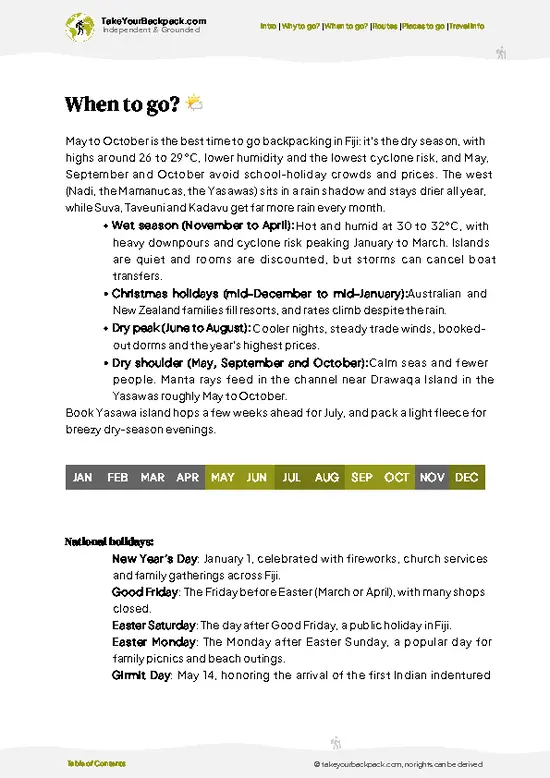
  • May to October (dry season): Naihehe Caves sit in the Sigatoka Valley highlands, and dry months mean firmer tracks and lower river levels for the 4WD or jeep ride in. Days run 24 to 28°C (75 to 82°F), nights 16 to 20°C (61 to 68°F). Daylight lasts roughly 11 to 12 hours, so morning tours finish well before dusk.
  • July to September: Busiest weeks, with Australian and New Zealand school holidays filling coach tours from the Coral Coast. Tour prices stay fixed, but accommodation nearby rises.
  • November to April (wet season): Hot and humid at 28 to 32°C (82 to 90°F), with heavy downpours and cyclone risk from January to March. Roads can turn to mud, and tours are sometimes canceled when the Sigatoka River runs high. Crowds thin and hotel rates drop.
  • Time of day: Mornings are cooler and the limestone
… read more 👉
  • May to October (dry season): Naihehe Caves sit in the Sigatoka Valley highlands, and dry months mean firmer tracks and lower river levels for the 4WD or jeep ride in. Days run 24 to 28°C (75 to 82°F), nights 16 to 20°C (61 to 68°F). Daylight lasts roughly 11 to 12 hours, so morning tours finish well before dusk.
  • July to September: Busiest weeks, with Australian and New Zealand school holidays filling coach tours from the Coral Coast. Tour prices stay fixed, but accommodation nearby rises.
  • November to April (wet season): Hot and humid at 28 to 32°C (82 to 90°F), with heavy downpours and cyclone risk from January to March. Roads can turn to mud, and tours are sometimes canceled when the Sigatoka River runs high. Crowds thin and hotel rates drop.
  • Time of day: Mornings are cooler and the limestone chambers are quietest before the midday coaches arrive.
Book a morning slot in May or June for dry tracks, light crowds and mild air.


source: climatestotravel.comJANJanuary: fair for travelingFEBFebruary: fair for travelingMARMarch: fair for travelingAPRApril: fair for travelingMAYMay: highly recommended for travelingJUNJune: highly recommended for travelingJULJuly: good for travelingAUGAugust: good for travelingSEPSeptember: highly recommended for travelingOCTOctober: highly recommended for travelingNOVNovember: fair for travelingDECDecember: fair for traveling
fiji-unique-site-naihehe-caves
© Google | Andy Taylor

✈️ The backpacker research shortcutFiji Travel Guide

An offline-friendly backpacking guide with optimized travel routes, ranked highlights, transport advice, and the best areas to stay.
example page 0 from our offline Travel Guide for Fiji
example page 1 from our offline Travel Guide for Fiji
example page 2 from our offline Travel Guide for Fiji
example page 3 from our offline Travel Guide for Fiji
example page 4 from our offline Travel Guide for Fiji
example page 5 from our offline Travel Guide for Fiji
example page 6 from our offline Travel Guide for Fiji
example page 7 from our offline Travel Guide for Fiji
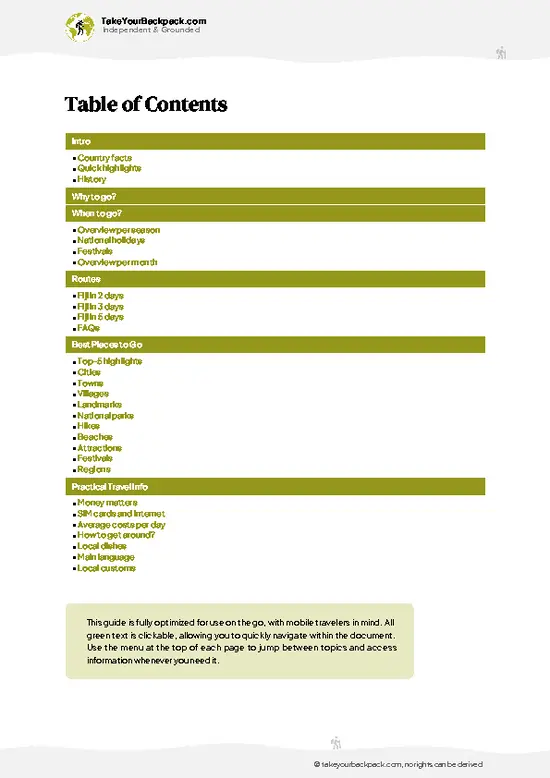
The digital guide (159 pages) contains:
✅ 41 highlights, ranked by travel appeal
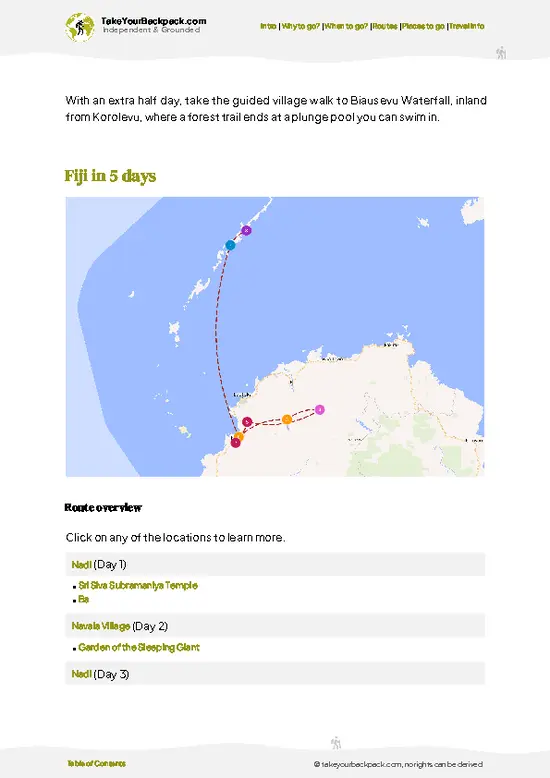
✅ Optimized 2, 3 & 5-day travel routes
✅ Cities, national parks, landmarks, beaches
✅ How to get around
✅ Offline-friendly for travel without Wi-Fi
👉 Click to see all 30+ guide features

📅 Plan smarter in minutes, not weeks
✅ Month by month travel advice
✅ Festivals & national holidays
✅ Budget expectations

🗺️ Go to the right places, skip the overrated ones
✅ Honest pros & cons of destinations
✅ Top hikes, parks & viewpoints
✅ Lesser-known places most travelers miss
✅ Clear “worth it vs skip it” guidance

🛏️ Travel smoothly without rookie mistakes
✅ Best areas to stay
✅ Transport systems explained simply
✅ Common scams & safety advice
✅ SIM cards, money & practical tips

🌍 Understand the country, not just visit it
✅ Culture & traditions
✅ 52 Essential phrases & customs
✅ Festivals worth planning around
✅ Traveler-friendly historical context
✅ Insights that make places more meaningful

📱 Built for real travel conditions
✅ Fully downloadable PDF
✅ Works completely offline
✅ Optimized for phone use
✅ Useful in remote areas & buses
✅ Everything in one place
Stop searching, start planning
Get instant access to your full guide. 30‑day money-back guarantee.
+ Add another guide for just

By proceeding you agree to our terms.
Sent to your inbox immediately after payment • 100% Secure Checkout
Best Backpacking Travel Advisor 2025 tourism awardBest Backpacking
Travel Advisor
2025
What others say about Take Your Backpack Guides:
⭐⭐⭐⭐⭐
Fantastic, amazing amount of information!
⭐⭐⭐⭐⭐
My goodness this is amazing, it's what I've been looking for hats off too you!
⭐⭐⭐⭐⭐
I think this is absolutely BRILLIANT
⭐⭐⭐⭐
Very complete and informative. It's still missing places, but I gotta to commend you
⭐⭐⭐⭐⭐
This is truly amazing, thank you, can't wait to explore it with my kids!
⭐⭐⭐⭐⭐
Awesome resource, thank you!
⭐⭐⭐⭐⭐
This is amazing! Can't wait to explore the ones I haven't seen
⭐⭐⭐⭐
I love this! Well done, great idea.
⭐⭐⭐⭐⭐
Thanks for taking the time to make this gem!
⭐⭐⭐⭐⭐
This might be the best website I've ever seen.
⭐⭐⭐⭐⭐
Congratulations, and thank you so much for your work; it's incredibly valuable.
⭐⭐⭐⭐
In all seriousness I think you did a great job pointing out the important spots
⭐⭐⭐⭐⭐
10/10 very good
⭐⭐⭐⭐⭐
As someone who's only just starting to visit regularly this is awesome, thank you.
⭐⭐⭐⭐
Thank you very much! I'm going to visit my dad, it's going to be very useful!
⭐⭐⭐⭐⭐
This is really cool! We'll be travelling for the first time and this definitely come in handy.
⭐⭐⭐⭐⭐
You are now our minister of culture, congratulations 👨‍💼
⭐⭐⭐⭐⭐
Just wanted to tell you that this is a pearl! Going to follow your recommendations.
⭐⭐⭐⭐⭐
This is so cool. I'll definitely be using the resource for my travels soon.
⭐⭐⭐⭐⭐
This is very impressive! Good work.
⭐⭐⭐⭐⭐
This is an amazing and informative site. Very well done!

🛏️ Where to stay?How to pick the right area

The Coral Coast, especially around Sigatoka town and Korotogo, is where most backpackers sleep for Naihehe Caves. Sigatoka is the closest real town, with a market, supermarkets, ATMs and buses to the valley road, so it works well if you want local life and cheap meals. Expect a drive of 30 to 45 minutes up the valley from there to the caves.

Korotogo and the nearby beachfront strip hold the social side. Dorm-style budget lodges here draw a steady mix of solo travelers, so you can find people to share a tour van and split the cost. The beach is walkable, evenings are relaxed, and it is safe for … read more 👉
The Coral Coast, especially around Sigatoka town and Korotogo, is where most backpackers sleep for Naihehe Caves. Sigatoka is the closest real town, with a market, supermarkets, ATMs and buses to the valley road, so it works well if you want local life and cheap meals. Expect a drive of 30 to 45 minutes up the valley from there to the caves.

Korotogo and the nearby beachfront strip hold the social side. Dorm-style budget lodges here draw a steady mix of solo travelers, so you can find people to share a tour van and split the cost. The beach is walkable, evenings are relaxed, and it is safe for walking after dark along the main road, though you should still use a taxi late at night.

If you want more nightlife and a bigger hostel scene, Nadi sits further north and has the airport, plenty of dorms and many tour pickups. It is the practical choice for a short stay or an early flight. Pickups for cave tours usually run from Coral Coast and Nadi accommodation, which means you rarely need a base inside the valley itself.

👛 Costs (as of 15 October 2026)How expensive it really is

A budget backpacker can cover a day around Naihehe Caves for roughly US$56 to 106, including the cave tour, a dorm bed, local transport and meals. The caves sit in the Sigatoka Valley highlands near Sautabu village, so most costs come from getting there and eating well along the way.
CategoryBudget RangeLocal Reality
Cave TourUS$20 to 30Guided tour with the Sautabu cave keepers, paid in Fijian dollars. Rates are per person, and the visit often includes a village welcome and a short wade through the river passage.
Accommodation (High Season)US$15 to 30Dorm beds in the Coral Coast or Nadi area. Prices rise from June to September and around school holidays. Low season dorms run about US$12 to 22.
TransportUS$8 to 20Local bus along the Queens Road to Sigatoka, then a taxi or arranged pickup up the
… read more 👉
A budget backpacker can cover a day around Naihehe Caves for roughly US$56 to 106, including the cave tour, a dorm bed, local transport and meals. The caves sit in the Sigatoka Valley highlands near Sautabu village, so most costs come from getting there and eating well along the way.
CategoryBudget RangeLocal Reality
Cave TourUS$20 to 30Guided tour with the Sautabu cave keepers, paid in Fijian dollars. Rates are per person, and the visit often includes a village welcome and a short wade through the river passage.
Accommodation (High Season)US$15 to 30Dorm beds in the Coral Coast or Nadi area. Prices rise from June to September and around school holidays. Low season dorms run about US$12 to 22.
TransportUS$8 to 20Local bus along the Queens Road to Sigatoka, then a taxi or arranged pickup up the valley road. Group taxis split the fare. Organized transfers cost more.
FoodUS$10 to 18Curries and rice at Sigatoka market cafes cost US$3 to 6 a plate. Hostel dinners and bakery snacks fill the rest.
Sevusevu and ExtrasUS$3 to 8A small gift of yaqona root for the village welcome, bottled water and a tip for guides.
Total Daily BudgetUS$56 to 106Per person, per day, in high season.
⚠️ Prices can change and everyone travels differently, so take this as a rough guide. Hope it helps you plan your adventure!

FAQFrequently asked questions about Naihehe Caves

Naihehe Caves are a limestone cave system in the Sigatoka Valley on Fiji’s main island, Viti Levu. They were used as a stronghold by local highland Fijians and hold large chambers, a natural limestone altar and a cathedral-like main cavern. Guided visits are led by people from the nearby village, and the cave walls reveal stalactites and old carved features.
Plan on half a day, about 3 to 4 hours including the ride in and the guided walk, with the caves themselves taking around 1 to 1.5 hours. Tours from the Coral Coast or Nadi often take 5 to 7 hours door to door. Go in the morning, and add a night in Sigatoka if you want to combine it with the Sigatoka Sand Dunes or a valley trip.
From Sigatoka town on the Queens Road, it is a drive of roughly 30 to 45 minutes inland along the Sigatoka Valley road to Naihehe, with the last stretch on unsealed track. Most backpackers book a tour from the Coral Coast or Nadi (about 1 to 1.5 hours from Nadi) that includes transport, since public buses stop well short of the caves. A taxi from Sigatoka costs roughly FJ$50 to 100 return, depending on waiting time.
⚠️ Things can change over time, so always validate details locally before you go.

Other Fijian landmarks near Naihehe Caves

Explore more nearby:

  • Tavuni Hill Fort—Tongan-built fortress, Sigatoka River view, defensive ditch, lali drum| 19 km away
  • Sawa-i-Lau Caves—Boat-only island, open-roof pool, underwater swim-through, wall carvings| 127 km away

💡 Not sure where to go next?
Create a personalized itinerary for Fiji including Naihehe Caves and the places that fit your trip.

Generate my itinerary

👉 Discover all landmarks

Or checkout all Fiji has to offer (think cities, towns, villages, national parks, hikes, beaches, festivals)
Country photo of Fiji

We 💚 feedbackFinal thoughts on visiting Naihehe Caves

Treat Naihehe as the inland half of a south-coast loop. Pair it with the Sigatoka Sand Dunes and a night on the Coral Coast, then finish with a river or jungle stop later in the week. I would leave early to get the cave to yourself and bring a dry change of socks for the ride back.

✍️ Help improve this page!
The information on this page is based on in-depth research, insights shared by experienced travelers, and feedback from the local travel community in Fiji. While every effort is made to keep the information accurate and current, conditions can change — so if you spot anything incorrect or outdated, please get in touch.


🙋‍♂️ Give feedback

👋 Meet the founderWho’s Behind Take Your Backpack?

Johan, backpacker and founder of TakeYourBackpackHi, I’m Johan (Netherlands 🇳🇱), the creator of TakeYourBackpack. Over the past 3 decades, I’ve backpacked through 90+ countries across six continents, gaining extensive experience with independent travel, long-term trips, and overland routes.

This site is built on a combination of firsthand travel experience and carefully curated insights from other backpackers. Many guides are based on places I’ve personally visited, while others bring together tips, observations, and practical advice shared by trusted travelers I’ve met along the way.

The goal is to provide realistic, experience-driven guidance — not generic itineraries — so you can explore destinations with better context, clearer expectations, and more confidence.