




×

Fiji🇫🇯 | landmarksTavuni Hill Fortstone ramparts, panoramic ridge, Tongan heritage | things to do and best time to go

Explore Sawa-i-Lau CavesExplore Kioa Island

Backpacking in Tavuni Hill Fort
👌 Worth visitingunique site ranked #3
By Johan Kruseman 🇳🇱 | Updated September 4, 2026

You know what nobody tells you about Tavuni Hill Fort? It’s one of the few “big story” sites in Fiji that you can actually explore without a tour bus circus, and it’s an easy half-day trip from Sigatoka on Viti Levu’s Coral Coast. This isn’t some polished theme-park fortress; it’s a grassy ridge with stone walls, old fortifications, and a heavy history of tribal warfare and cannibalism that hits harder once you’re standing where it happened. The wow-factor is quiet, not explosive: wide river views, moody skies, and space to breathe. Crowds are usually light, entry is cheap, and you can wander at your own pace, but there’s minimal signage and you’ll get more from it if you read up beforehand or chat with the local caretaker. Photos come out raw and atmospheric, not glossy-postcard perfect—and that’s exactly the point.

Discover everything you want to know in the 📖 Fiji Travel Guide.


Get your Fiji guide
50 ranked highlights, routes & tips, works offline (208 pages)
Loading the map 🌍
CLICK TO FILTER
towns
villages
landmarks
national parks
hikes
beaches
attractions
festivals
regions
SHOW COUNTRY’S BESTSHOW ALL

✨ Why go?
Ranked #3 unique site in Fiji
The unique appeal for travelers

Tavuni Hill Fort isn’t just another stop on your Fiji itinerary; it’s a raw slice of history that demands your attention. Sure, you’ll encounter crowds—it’s a popular spot—but don’t let that deter you. The sweeping views from the fort are worth the hustle. You’re standing where ancient warriors once strategized, and that connection to the past is palpable.

The cost? Minimal. A small entry fee grants you access to a site that feels untouched by the commercialism plaguing other tourist traps. You can easily fit this into a broader route, perhaps while exploring the nearby beaches or villages. It’s a perfect pit stop that adds depth to your Fijian adventure.

What sets Tavuni apart is its authenticity. Unlike the polished resorts, here you’ll find local stories and a sense of community. Engage … read more 👉
Tavuni Hill Fort isn’t just another stop on your Fiji itinerary; it’s a raw slice of history that demands your attention. Sure, you’ll encounter crowds—it’s a popular spot—but don’t let that deter you. The sweeping views from the fort are worth the hustle. You’re standing where ancient warriors once strategized, and that connection to the past is palpable.

The cost? Minimal. A small entry fee grants you access to a site that feels untouched by the commercialism plaguing other tourist traps. You can easily fit this into a broader route, perhaps while exploring the nearby beaches or villages. It’s a perfect pit stop that adds depth to your Fijian adventure.

What sets Tavuni apart is its authenticity. Unlike the polished resorts, here you’ll find local stories and a sense of community. Engage with the guides—they’re passionate and knowledgeable, eager to share tales that breathe life into the stones. This isn’t just sightseeing; it’s a chance to connect with Fiji’s soul. Don’t skip it.
Want to include Tavuni Hill Fort in your Fiji route?
Create a personalized Fiji itinerary that includes Tavuni Hill Fort and the places that fit your trip — based on your travel style, budget, and available time. Get your route in seconds.

Generate my trip

💡 HighlightsPlaces and moments you shouldn't skip

  • Hilltop panoramic vistas — The fort sits on a steep rise, so you get sweeping views of the surrounding reef, lagoon and inland ridges; great for mapping the landscape the old chiefs once controlled and for sunset photos without the tourist crowds.
  • Stone terraces and earthworks — Visible remnants of defensive terraces, low stone walls and raised platforms show clever pre-colonial engineering adapted to a steep slope rather than heavy masonry, which is unusual and tells you how people used the land.
  • Defensive layout and sightlines — Walk the ramparts to see how the fort’s placement and sightlines created natural choke points and long-range visibility — a practical, low-tech military solution that’s easy to appreciate on-site.
  • Layers of archaeology — Subtle midden deposits, pottery fragments
read more 👉
  • Hilltop panoramic vistas — The fort sits on a steep rise, so you get sweeping views of the surrounding reef, lagoon and inland ridges; great for mapping the landscape the old chiefs once controlled and for sunset photos without the tourist crowds.
  • Stone terraces and earthworks — Visible remnants of defensive terraces, low stone walls and raised platforms show clever pre-colonial engineering adapted to a steep slope rather than heavy masonry, which is unusual and tells you how people used the land.
  • Defensive layout and sightlines — Walk the ramparts to see how the fort’s placement and sightlines created natural choke points and long-range visibility — a practical, low-tech military solution that’s easy to appreciate on-site.
  • Layers of archaeology — Subtle midden deposits, pottery fragments and turning-up-of-stone features point to long-term occupation; you won’t find a museum’s worth of artifacts, but the visible strata give a real sense of time compressed into the hillside.
  • Living cultural ties — The site is still meaningful to local communities, and small guided visits often include oral histories or stories from elders, which turns stones and earthworks into human narratives rather than just ruins.
  • Native flora and birdlife — The hill supports pockets of native vegetation and is a quiet spot for endemic birds and butterflies — pleasant on a hot day and a reminder this isn’t just a static ruin but part of a living landscape.
  • Quiet, off-the-beaten-track atmosphere — Unlike bigger tourist spots, Tavuni Hill Fort rewards a bit of effort: you get space to explore, reflect and shoot photos without crowds, which is rare and lovely on a budget trip.
Spotted a mistake or missing something? Contact us.

Things to do near Tavuni Hill Fort

Ratings based on Tripadvisor reviews. When you book through this link, you support our work at no extra cost to you.

🌤️ When to go?Choosing the right time of year


  • Weather: Fiji’s tropical climate means it’s warm year-round, but Tavuni Hill Fort gets muggy and wet from November to April. Expect heavy rains and humidity that can turn your hike into a swamp slog. The dry season, May to October, offers clearer skies and less sweat—ideal for exploring ruins without slipping on mud.

  • Temperature: Daytime highs hover around 28-31°C (82-88°F) in the dry season, dropping to a cooler 24-27°C (75-81°F) at night. The wet season cranks humidity, making it feel hotter than the thermometer says. Dress light but pack for sudden showers if you go off-season.

  • Daylight Hours: Fiji enjoys roughly 11-12 hours of daylight year-round, with sunrise around 6:30 AM and sunset near 6:30 PM. This steady light window means you can plan your trek without worrying about losing
read more 👉

  • Weather: Fiji’s tropical climate means it’s warm year-round, but Tavuni Hill Fort gets muggy and wet from November to April. Expect heavy rains and humidity that can turn your hike into a swamp slog. The dry season, May to October, offers clearer skies and less sweat—ideal for exploring ruins without slipping on mud.

  • Temperature: Daytime highs hover around 28-31°C (82-88°F) in the dry season, dropping to a cooler 24-27°C (75-81°F) at night. The wet season cranks humidity, making it feel hotter than the thermometer says. Dress light but pack for sudden showers if you go off-season.

  • Daylight Hours: Fiji enjoys roughly 11-12 hours of daylight year-round, with sunrise around 6:30 AM and sunset near 6:30 PM. This steady light window means you can plan your trek without worrying about losing daylight too early or late.

  • Crowds: Tavuni Hill Fort isn’t a tourist magnet like Fiji’s beaches, but the dry season still draws more visitors. If you want near solitude, aim for shoulder months May or September when the weather is good but fewer backpackers are around.

  • Seasonal Activities: The dry season aligns with local festivals and cultural events, adding layers to your visit beyond the fort itself. Wet season limits outdoor activities, so you’ll miss out on hiking and village visits if you time it poorly.

  • Price Fluctuations: Accommodation and tours spike in the dry season, especially July and August. Off-season means cheaper stays and more bargaining power, but you trade that for less reliable weather and fewer activity options.


Pro-tip: Visit Tavuni Hill Fort in late May or early September to dodge crowds, enjoy stable weather, and catch local culture without paying premium prices or battling the wet season’s mud.


source: climatestotravel.comJANJanuary: fair for travelingFEBFebruary: fair for travelingMARMarch: fair for travelingAPRApril: fair for travelingMAYMay: highly recommended for travelingJUNJune: excellent for travelingJULJuly: excellent for travelingAUGAugust: excellent for travelingSEPSeptember: highly recommended for travelingOCTOctober: excellent for travelingNOVNovember: fair for travelingDECDecember: fair for traveling
when-to-go

✈️ The backpacker research shortcutFiji Travel Guide

An offline-friendly backpacking guide with optimized travel routes, ranked highlights, transport advice, and the best areas to stay.
example page 0 from our offline Travel Guide for Fiji
example page 1 from our offline Travel Guide for Fiji
example page 2 from our offline Travel Guide for Fiji
example page 3 from our offline Travel Guide for Fiji
example page 4 from our offline Travel Guide for Fiji
example page 5 from our offline Travel Guide for Fiji
example page 6 from our offline Travel Guide for Fiji
example page 7 from our offline Travel Guide for Fiji
The digital guide (208 pages) contains:
50 highlights, ranked by travel appeal
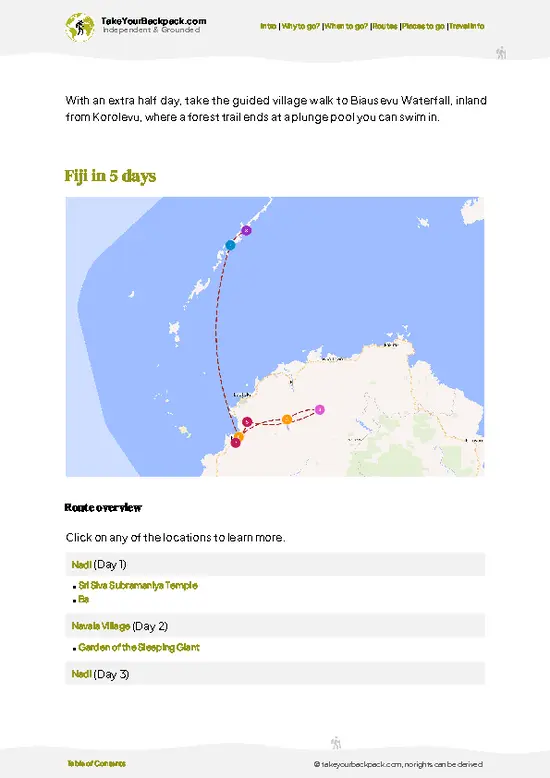
Optimized 2, 3 & 5-day travel routes
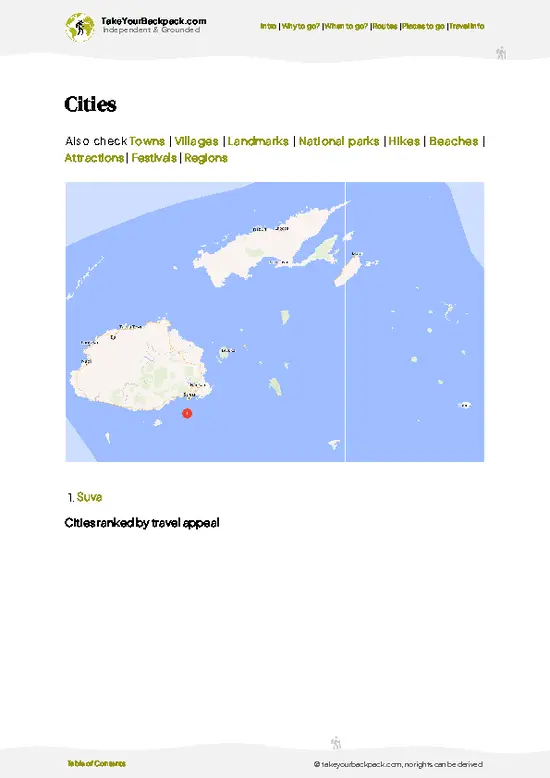
Cities, national parks, landmarks, beaches
How to get around
Offline-friendly for travel without Wi-Fi
👉 Click to see all 30+ guide features

📅 Plan smarter in minutes, not weeks
Month by month travel advice
Festivals & national holidays
Budget expectations

🗺️ Go to the right places, skip the overrated ones
Honest pros & cons of destinations
Top hikes, parks & viewpoints
Lesser-known places most travelers miss
Clear “worth it vs skip it” guidance

🛏️ Travel smoothly without rookie mistakes
Best areas to stay
Transport systems explained simply
Common scams & safety advice
SIM cards, money & practical tips

🌍 Understand the country, not just visit it
Culture & traditions
52 Essential phrases & customs
Festivals worth planning around
Traveler-friendly historical context
Insights that make places more meaningful

📱 Built for real travel conditions
Fully downloadable PDF
Works completely offline
Optimized for phone use
Useful in remote areas & buses
Everything in one place
Save weeks of stressful planning
Get instant access to your full guide. 30‑day money-back guarantee.
+ Add another guide for just US$7.80

By proceeding you agree to our terms.
Sent to your inbox immediately after payment • 100% Secure Checkout
Best Backpacking Travel Advisor 2025 tourism awardBest Backpacking
Travel Advisor
2025
What others say about Take Your Backpack Guides:
⭐⭐⭐⭐⭐
Fantastic, amazing amount of information!
⭐⭐⭐⭐⭐
My goodness this is amazing, it's what I've been looking for hats off too you!
⭐⭐⭐⭐⭐
I think this is absolutely BRILLIANT
⭐⭐⭐⭐
Very complete and informative. It's still missing places, but I gotta to commend you
⭐⭐⭐⭐⭐
This is truly amazing, thank you, can't wait to explore it with my kids!
⭐⭐⭐⭐⭐
Awesome resource, thank you!
⭐⭐⭐⭐⭐
This is amazing! Can't wait to explore the ones I haven't seen
⭐⭐⭐⭐
I love this! Well done, great idea.
⭐⭐⭐⭐⭐
Thanks for taking the time to make this gem!
⭐⭐⭐⭐⭐
This might be the best website I've ever seen.
⭐⭐⭐⭐⭐
Congratulations, and thank you so much for your work; it's incredibly valuable.
⭐⭐⭐⭐
In all seriousness I think you did a great job pointing out the important spots
⭐⭐⭐⭐⭐
10/10 very good
⭐⭐⭐⭐⭐
As someone who's only just starting to visit regularly this is awesome, thank you.
⭐⭐⭐⭐
Thank you very much! I'm going to visit my dad, it's going to be very useful!
⭐⭐⭐⭐⭐
This is really cool! We'll be travelling for the first time and this definitely come in handy.
⭐⭐⭐⭐⭐
You are now our minister of culture, congratulations 👨‍💼
⭐⭐⭐⭐⭐
Just wanted to tell you that this is a pearl! Going to follow your recommendations.
⭐⭐⭐⭐⭐
This is so cool. I'll definitely be using the resource for my travels soon.
⭐⭐⭐⭐⭐
This is very impressive! Good work.
⭐⭐⭐⭐⭐
This is an amazing and informative site. Very well done!

🛏️ Where to stay?Choosing the right base

Tavuni Hill Fort is a slice of Fijian history that’s worth the trek, but let’s get real about where to crash nearby. The area around the fort isn’t overflowing with options, but you’ve got a few solid choices that cater to backpackers.

First up, head to the town of Sigatoka. It’s a hub for budget travelers, with a lively market scene and plenty of local eateries. You’ll find guesthouses and budget lodges that are safe and welcoming. The vibe here is social; you can easily meet fellow travelers and swap stories over a bowl of kava.

If you’re looking for something a bit more laid-back, consider … read more 👉
Tavuni Hill Fort is a slice of Fijian history that’s worth the trek, but let’s get real about where to crash nearby. The area around the fort isn’t overflowing with options, but you’ve got a few solid choices that cater to backpackers.

First up, head to the town of Sigatoka. It’s a hub for budget travelers, with a lively market scene and plenty of local eateries. You’ll find guesthouses and budget lodges that are safe and welcoming. The vibe here is social; you can easily meet fellow travelers and swap stories over a bowl of kava.

If you’re looking for something a bit more laid-back, consider the coastal villages nearby. They offer a more authentic experience, with homestays that let you connect with locals. You might even score a homemade meal or two. Just be prepared for a slower pace and fewer amenities.

Lastly, don’t overlook the campsites. They’re not just for hardcore adventurers; they can be a fantastic way to immerse yourself in nature. Picture waking up to the sound of waves and the smell of fresh coconut. It’s a different kind of magic that the Instagram crowd misses.

👛 Costs (as of 4 September 2026)Typical daily expenses

Visiting Tavuni Hill Fort in Fiji is a journey that comes with its own set of costs, but it’s worth every cent for the history and views. Here’s a breakdown of what you can expect to spend:
  • Entry Fee: Expect to pay around $10 USD per person. This fee grants you access to the fort and its stunning panoramic views. It’s a small price for a piece of Fijian history.
  • Transportation: If you’re not renting a car, budget about $30-$50 USD for a taxi from Nadi or Sigatoka. Public transport is cheaper, but it can be less convenient. Factor in time and comfort when making your choice.
  • Guided Tours: If you want a deeper dive into the fort’s history, consider a guided tour. Prices range from $20 to $50 USD, depending on the length and depth of the tour. A knowledgeable guide can really enhance your experience.
read more 👉
Visiting Tavuni Hill Fort in Fiji is a journey that comes with its own set of costs, but it’s worth every cent for the history and views. Here’s a breakdown of what you can expect to spend:
  • Entry Fee: Expect to pay around $10 USD per person. This fee grants you access to the fort and its stunning panoramic views. It’s a small price for a piece of Fijian history.
  • Transportation: If you’re not renting a car, budget about $30-$50 USD for a taxi from Nadi or Sigatoka. Public transport is cheaper, but it can be less convenient. Factor in time and comfort when making your choice.
  • Guided Tours: If you want a deeper dive into the fort’s history, consider a guided tour. Prices range from $20 to $50 USD, depending on the length and depth of the tour. A knowledgeable guide can really enhance your experience.
  • Food & Drink: There are limited options nearby, so plan for about $15-$25 USD for a meal. Bring snacks or a packed lunch to enjoy at the fort. It’s a great way to soak in the atmosphere without breaking the bank.
  • Souvenirs: If you’re looking to take a piece of Fiji home, budget around $10-$30 USD for local crafts or mementos. Support local artisans while you’re at it.

Overall, a day at Tavuni Hill Fort can cost anywhere from $65 to $150 USD, depending on your choices. It’s a small investment for a slice of Fijian culture and breathtaking views.


source: fiji.travel
⚠️ Prices can change and everyone travels differently, so take this as a rough guide. Hope it helps you plan your adventure!

FAQCommon questions from travelers

Tavuni Hill Fort is an ancient Fijian archaeological site featuring remnants of a fortified village and defensive structures dating back several centuries. It offers insight into traditional Fijian warfare and settlement patterns. The site is notable for its stone walls and strategic hilltop location overlooking the surrounding landscape.
Visiting Tavuni Hill Fort typically requires about 2 to 3 hours to explore thoroughly, including time to hike up the hill and examine the ruins. Plan for additional time if you want to enjoy the panoramic views or take photographs. The site is best visited during daylight hours for safety and visibility.
To get to Tavuni Hill Fort, you generally need to travel to the main island of Viti Levu in Fiji, then arrange local transport to the village near the fort, often by taxi or tour operator. From the village, a moderate hike of around 30 to 45 minutes uphill leads to the fort. It is advisable to hire a local guide for navigation and historical context.
⚠️ Things can change over time, so always validate details locally before you go.

Other Fijian landmarks near Tavuni Hill Fort

Explore more nearby:

  • Naihehe Caves—limestone chambers, torchlit passages, cannibal history| 19 km away
  • Sawa-i-Lau Caves—turquoise pools, limestone grotto, Yasawa Islands| 143 km away

💡 Not sure where to go next?
Create a personalized itinerary for Fiji including Tavuni Hill Fort and the places that fit your trip.

Generate my itinerary

👉 Discover all landmarks

Or checkout all Fiji has to offer (think cities, towns, villages, national parks, hikes, beaches, festivals)
Country photo of Fiji

We 💚 feedbackParting advice and final tips

Tavuni Hill Fort isn’t just about the views; it’s a slice of history that feels alive. Sure, you’ll share the space with tourists, but the real magic happens when you sit quietly and soak in the stories of the land. The best surprise? The locals often share tales that aren’t in any guidebook. Just a heads-up: the climb can be steep, so wear good shoes. Embrace the sweat; it’s part of the journey. Trust me, it’s worth every step.

✍️ Help improve this page!
The information on this page is based on in-depth research, insights shared by experienced travelers, and feedback from the local travel community in Fiji. While every effort is made to keep the information accurate and current, conditions can change — so if you spot anything incorrect or outdated, please get in touch.


🙋‍♂️ Give feedback

👋 Meet the founderWho’s Behind Take Your Backpack?

Johan, backpacker and founder of TakeYourBackpackHi, I’m Johan (Netherlands 🇳🇱), the creator of TakeYourBackpack. Over the past decade, I’ve backpacked through 80+ countries across six continents, gaining extensive experience with independent travel, long-term trips, and overland routes.

This site is built on a combination of firsthand travel experience and carefully curated insights from other backpackers. Many guides are based on places I’ve personally visited, while others bring together tips, observations, and practical advice shared by trusted travelers I’ve met along the way.

The goal is to provide realistic, experience-driven guidance — not generic itineraries — so you can explore destinations with better context, clearer expectations, and more confidence.

Get full Fiji guide •
Instant download • 50 highlights • Full Offline guide