




×

Fiji🇫🇯 | national parksSigatoka Sand Dunes National ParkShifting dunes, ancient burials, river mouth views, visitor center | things to do and best time to go

Explore Koroyanitu National Heritage ParkExplore Waisali Rainforest Reserve

Backpacking in Sigatoka Sand Dunes
🏆 Top picknational park ranked #2
By Johan Kruseman 🇳🇱 | Updated October 15, 2026

The dunes are a burial ground: human remains and pottery fragments dating back some 2,600 years have been found here, and wandering off the marked paths is not allowed. The park sits on Fiji’s Coral Coast, on the Viti Levu shoreline just west of Sigatoka town, about an hour’s drive from Nadi in the direction of Suva. Expect a compact, windswept ridge of grey-gold sand, a loop walk with sweeping views over the Pacific and the Sigatoka River valley, and very few animals beyond birds and the odd skink. Crowds are thin, and the vibe is quiet and reflective rather than adventurous. Start early, because midday on the exposed sand is hot, shadeless and slow going in sandals. Wear closed shoes, carry your own water, and skip the guided add-ons you don’t need. Check the gate is staffed before you commit to the trip, and bring cash for the entrance.

Discover everything you want to know in the 📖 Fiji Travel Guide.


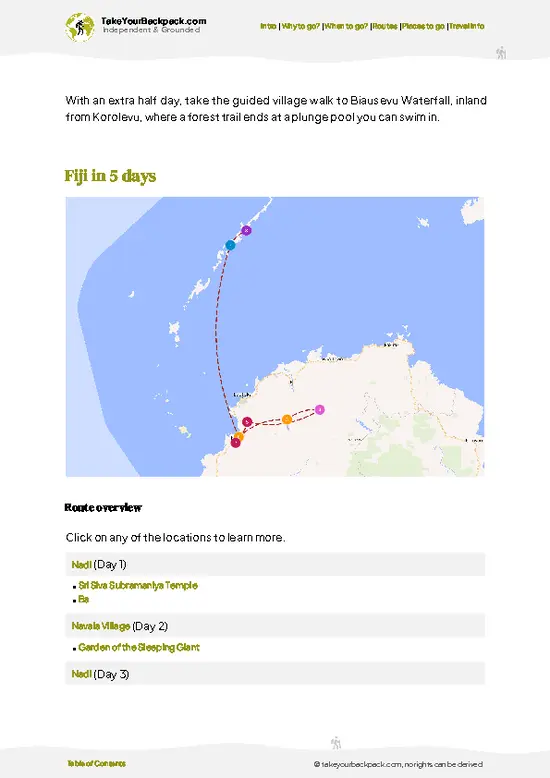
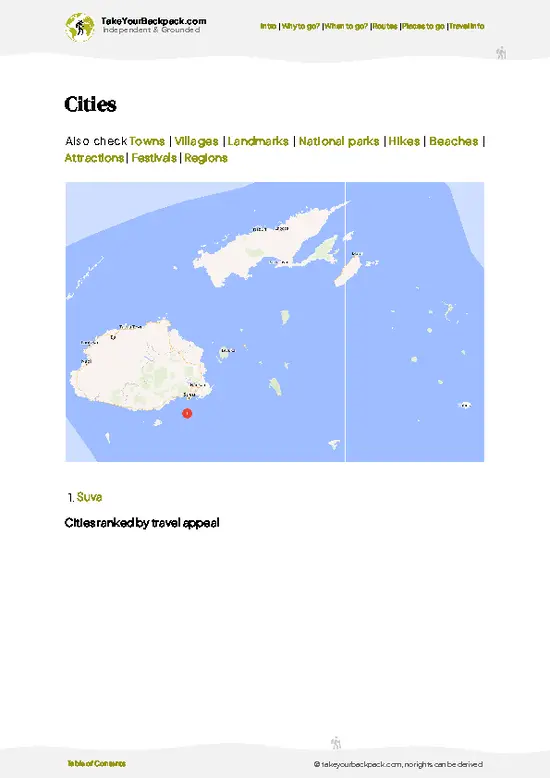
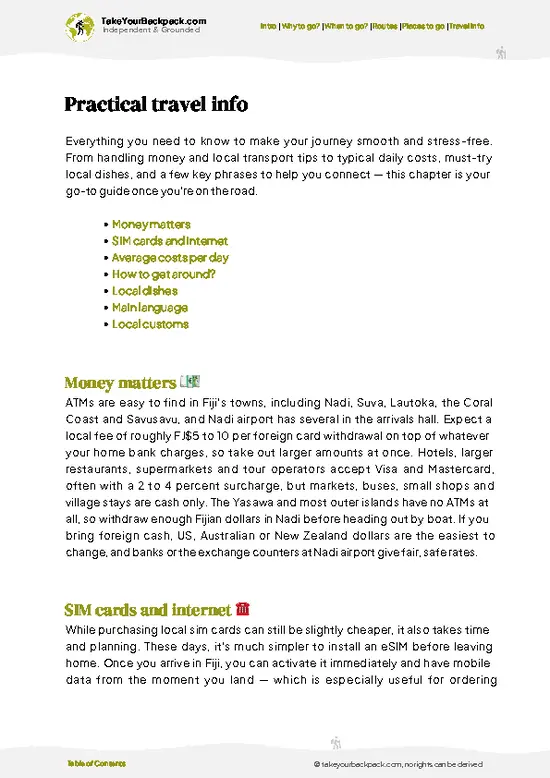
example page 0 from our offline Travel Guide for Fiji
example page 1 from our offline Travel Guide for Fiji
example page 2 from our offline Travel Guide for Fiji
example page 3 from our offline Travel Guide for Fiji
example page 4 from our offline Travel Guide for Fiji
example page 5 from our offline Travel Guide for Fiji
example page 6 from our offline Travel Guide for Fiji
example page 7 from our offline Travel Guide for Fiji
Loading the map 🌍
CLICK TO FILTER
cities
towns
villages
landmarks
national parks
hikes
beaches
attractions
festivals
regions
SHOW COUNTRY’S BESTSHOW ALL

✨ Why go?
Ranked #2 national park in Fiji
What sets this place apart

Backpackers pick this park because it is one of the few places on Viti Levu where you can walk through real archaeology without a tour group in tow. The visitor center at the gate holds pottery shards and a display on Lapita-era settlement, and it puts the ridge into context before you climb. Rangers give short orientations, so you get the story without paying for a full guided day.

It also suits independent travelers who like easy logistics. Local buses run along the Queens Road past the entrance, so you can tack the dunes onto a Coral Coast stay, then carry on to the beach or the river. The Sigatoka River valley, which you can see from the top of the ridge, is worth planning around if you want to continue to villages or farms upstream afterward.

The walk is short but exposed, so it fits … read more 👉
Backpackers pick this park because it is one of the few places on Viti Levu where you can walk through real archaeology without a tour group in tow. The visitor center at the gate holds pottery shards and a display on Lapita-era settlement, and it puts the ridge into context before you climb. Rangers give short orientations, so you get the story without paying for a full guided day.

It also suits independent travelers who like easy logistics. Local buses run along the Queens Road past the entrance, so you can tack the dunes onto a Coral Coast stay, then carry on to the beach or the river. The Sigatoka River valley, which you can see from the top of the ridge, is worth planning around if you want to continue to villages or farms upstream afterward.

The walk is short but exposed, so it fits neatly into a morning. Combine it with a swim or a lunch in town, and you have a full, cheap day with no booking required.

💡 HighlightsThe experiences that define the visit

  1. Dunes Ridge Viewpoint: the high point of the loop, with the Pacific on one side and the long ribbon of the Sigatoka River mouth on the other. The sand here shifts constantly in the wind, so the ridge looks different from one visit to the next.
  2. Ancient Burial Sites: the dunes hold burials some 2,600 years old, plus remains from later Fijian settlement. You view the area from the path, with signs and rangers explaining what lies beneath.
  3. Visitor Center Exhibits: a small display of pottery fragments, tools and photos of excavations. It takes 15 to 20 minutes and makes the walk far more meaningful.
  4. Coastal Dune Walk: the sand drops steeply to a wide, empty beach where waves pound the shore. Swimming here is not safe because of strong currents, but the walk along the dune edge is superb for photos.
… read more 👉
  1. Dunes Ridge Viewpoint: the high point of the loop, with the Pacific on one side and the long ribbon of the Sigatoka River mouth on the other. The sand here shifts constantly in the wind, so the ridge looks different from one visit to the next.
  2. Ancient Burial Sites: the dunes hold burials some 2,600 years old, plus remains from later Fijian settlement. You view the area from the path, with signs and rangers explaining what lies beneath.
  3. Visitor Center Exhibits: a small display of pottery fragments, tools and photos of excavations. It takes 15 to 20 minutes and makes the walk far more meaningful.
  4. Coastal Dune Walk: the sand drops steeply to a wide, empty beach where waves pound the shore. Swimming here is not safe because of strong currents, but the walk along the dune edge is superb for photos.
  5. Sigatoka River Mouth: seen from the ridge, the river meets the sea in a muddy brown plume. Morning light is best for pictures.
  6. Dune Vegetation and Birdlife: creeping beach plants stabilize the sand, and you may spot herons and other shorebirds near the river and the scrub. Bring binoculars if you have them.
  7. Sunrise and Early Morning Light: the cooler hours turn the sand a soft gold and give you the ridge almost to yourself.
Allow two to three hours for everything, including the visitor center and a slow loop at the top.
Spotted a mistake or missing something? Contact us.

Things to do around Sigatoka Sand Dunes National Park

Ratings based on Tripadvisor reviews. When you book through this link, you support our work at no extra cost to you.

🌤️ When to go?Best time to explore Sigatoka Sand Dunes

May to October is the best window for Sigatoka Sand Dunes, with dry days and comfortable hiking temperatures.
  • Dry Season (May to October): Days run 24 to 28°C (75 to 82°F), nights dip to 17 to 20°C (63 to 68°F), and rain is light. Sunrise is around 6:15 am and sunset near 5:45 pm, so start the dune walk early. July and August bring the most visitors and the highest Coral Coast room rates.
  • Wet Season (November to April): Expect 27 to 32°C (81 to 90°F), heavy humidity and sudden downpours that turn the track muddy. Cyclones are possible, mostly January to March. Daylight stretches to about 7 pm. The park is nearly empty and rooms are discounted.
  • Early Morning or Late Afternoon: Midday sun on exposed sand is harsh in any month, and the light on the ridges is best then.
Aim for September, when the … read more 👉
May to October is the best window for Sigatoka Sand Dunes, with dry days and comfortable hiking temperatures.
  • Dry Season (May to October): Days run 24 to 28°C (75 to 82°F), nights dip to 17 to 20°C (63 to 68°F), and rain is light. Sunrise is around 6:15 am and sunset near 5:45 pm, so start the dune walk early. July and August bring the most visitors and the highest Coral Coast room rates.
  • Wet Season (November to April): Expect 27 to 32°C (81 to 90°F), heavy humidity and sudden downpours that turn the track muddy. Cyclones are possible, mostly January to March. Daylight stretches to about 7 pm. The park is nearly empty and rooms are discounted.
  • Early Morning or Late Afternoon: Midday sun on exposed sand is harsh in any month, and the light on the ridges is best then.
Aim for September, when the weather is dry, the sand is firm and school-holiday crowds have thinned.


source: climatestotravel.comJANJanuary: fair for travelingFEBFebruary: fair for travelingMARMarch: fair for travelingAPRApril: fair for travelingMAYMay: highly recommended for travelingJUNJune: excellent for travelingJULJuly: excellent for travelingAUGAugust: excellent for travelingSEPSeptember: excellent for travelingOCTOctober: highly recommended for travelingNOVNovember: fair for travelingDECDecember: fair for traveling

✈️ The backpacker research shortcutFiji Travel Guide

An offline-friendly backpacking guide with optimized travel routes, ranked highlights, transport advice, and the best areas to stay.
example page 0 from our offline Travel Guide for Fiji
example page 1 from our offline Travel Guide for Fiji
example page 2 from our offline Travel Guide for Fiji
example page 3 from our offline Travel Guide for Fiji
example page 4 from our offline Travel Guide for Fiji
example page 5 from our offline Travel Guide for Fiji
example page 6 from our offline Travel Guide for Fiji
example page 7 from our offline Travel Guide for Fiji
The digital guide (159 pages) contains:
✅ 41 highlights, ranked by travel appeal
✅ Optimized 2, 3 & 5-day travel routes
✅ Cities, national parks, landmarks, beaches
✅ How to get around
✅ Offline-friendly for travel without Wi-Fi
👉 Click to see all 30+ guide features

📅 Plan smarter in minutes, not weeks
✅ Month by month travel advice
✅ Festivals & national holidays
✅ Budget expectations

🗺️ Go to the right places, skip the overrated ones
✅ Honest pros & cons of destinations
✅ Top hikes, parks & viewpoints
✅ Lesser-known places most travelers miss
✅ Clear “worth it vs skip it” guidance

🛏️ Travel smoothly without rookie mistakes
✅ Best areas to stay
✅ Transport systems explained simply
✅ Common scams & safety advice
✅ SIM cards, money & practical tips

🌍 Understand the country, not just visit it
✅ Culture & traditions
✅ 52 Essential phrases & customs
✅ Festivals worth planning around
✅ Traveler-friendly historical context
✅ Insights that make places more meaningful

📱 Built for real travel conditions
✅ Fully downloadable PDF
✅ Works completely offline
✅ Optimized for phone use
✅ Useful in remote areas & buses
✅ Everything in one place
Stop searching, start planning
Get instant access to your full guide. 30‑day money-back guarantee.
+ Add another guide for just

By proceeding you agree to our terms.
Sent to your inbox immediately after payment • 100% Secure Checkout
Best Backpacking Travel Advisor 2025 tourism awardBest Backpacking
Travel Advisor
2025
What others say about Take Your Backpack Guides:
⭐⭐⭐⭐⭐
Fantastic, amazing amount of information!
⭐⭐⭐⭐⭐
My goodness this is amazing, it's what I've been looking for hats off too you!
⭐⭐⭐⭐⭐
I think this is absolutely BRILLIANT
⭐⭐⭐⭐
Very complete and informative. It's still missing places, but I gotta to commend you
⭐⭐⭐⭐⭐
This is truly amazing, thank you, can't wait to explore it with my kids!
⭐⭐⭐⭐⭐
Awesome resource, thank you!
⭐⭐⭐⭐⭐
This is amazing! Can't wait to explore the ones I haven't seen
⭐⭐⭐⭐
I love this! Well done, great idea.
⭐⭐⭐⭐⭐
Thanks for taking the time to make this gem!
⭐⭐⭐⭐⭐
This might be the best website I've ever seen.
⭐⭐⭐⭐⭐
Congratulations, and thank you so much for your work; it's incredibly valuable.
⭐⭐⭐⭐
In all seriousness I think you did a great job pointing out the important spots
⭐⭐⭐⭐⭐
10/10 very good
⭐⭐⭐⭐⭐
As someone who's only just starting to visit regularly this is awesome, thank you.
⭐⭐⭐⭐
Thank you very much! I'm going to visit my dad, it's going to be very useful!
⭐⭐⭐⭐⭐
This is really cool! We'll be travelling for the first time and this definitely come in handy.
⭐⭐⭐⭐⭐
You are now our minister of culture, congratulations 👨‍💼
⭐⭐⭐⭐⭐
Just wanted to tell you that this is a pearl! Going to follow your recommendations.
⭐⭐⭐⭐⭐
This is so cool. I'll definitely be using the resource for my travels soon.
⭐⭐⭐⭐⭐
This is very impressive! Good work.
⭐⭐⭐⭐⭐
This is an amazing and informative site. Very well done!

🛏️ Where to stay?How to pick the right area

Stay on the Coral Coast, because the park has no accommodation or camping inside it. The dunes sit about 5 km (3 miles) west of Sigatoka town, along the Queens Road.
Sigatoka town is the practical choice for backpackers, with a market, supermarkets, banks and local buses. Options are limited but include simple guesthouses and budget motels at roughly FJ$60 to 120 a night for a private room.
Closer to the dunes, the lodges around Kula and Korotogo offer a beach setting and a quieter evening. Backpacker-friendly hostels along the Coral Coast have dorm beds from about FJ$30 to 45. They have shared … read more 👉
Stay on the Coral Coast, because the park has no accommodation or camping inside it. The dunes sit about 5 km (3 miles) west of Sigatoka town, along the Queens Road.
Sigatoka town is the practical choice for backpackers, with a market, supermarkets, banks and local buses. Options are limited but include simple guesthouses and budget motels at roughly FJ$60 to 120 a night for a private room.
Closer to the dunes, the lodges around Kula and Korotogo offer a beach setting and a quieter evening. Backpacker-friendly hostels along the Coral Coast have dorm beds from about FJ$30 to 45. They have shared kitchens and lively common areas where you can find hiking and kayaking partners.
Pacific Harbour, about 1.5 hours east by road, and Nadi, about 1 hour west, are bigger bases with more choice. Nadi suits you if you fly in and out. Most visitors do the dunes as a half-day trip from wherever they sleep.

👛 Costs (as of 15 October 2026)Travel costs and budget guide for Sigatoka Sand Dunes

A day at Sigatoka Sand Dunes National Park runs about US$62 for a backpacker staying in a dorm along the Coral Coast, including the entry fee, local buses, food and a bed.
CategoryBudget RangeLocal Reality
Park entrance feeUS$8 to 10Paid in Fijian dollars at the visitor center near the Queens Road turnoff. Fees are per adult, with a lower rate for children. Rangers often include a short guided briefing.
Accommodation (high season)US$15 to 35Dorm beds in Sigatoka town or along the Coral Coast, such as Kulukulu and Korotogo. Private fan rooms sit near US$35 to 55. Rates rise from June to September and around school holidays.
Accommodation (low season)US$12 to 28November to April is wetter, and hostels often drop prices or throw in breakfast for stays of several nights.
Local transportUS$1 to 6Local
… read more 👉
A day at Sigatoka Sand Dunes National Park runs about US$62 for a backpacker staying in a dorm along the Coral Coast, including the entry fee, local buses, food and a bed.
CategoryBudget RangeLocal Reality
Park entrance feeUS$8 to 10Paid in Fijian dollars at the visitor center near the Queens Road turnoff. Fees are per adult, with a lower rate for children. Rangers often include a short guided briefing.
Accommodation (high season)US$15 to 35Dorm beds in Sigatoka town or along the Coral Coast, such as Kulukulu and Korotogo. Private fan rooms sit near US$35 to 55. Rates rise from June to September and around school holidays.
Accommodation (low season)US$12 to 28November to April is wetter, and hostels often drop prices or throw in breakfast for stays of several nights.
Local transportUS$1 to 6Local buses between Sigatoka town and the park entrance cost under US$2. A taxi from town is roughly US$5 to 8 each way. Coral Coast buses along the Queens Road are cheap and frequent.
Food and suppliesUS$10 to 20Sigatoka’s market sells fruit, cassava and roti for a few dollars. Curry lunches at local cafés cost US$3 to 6. The park has no food stalls, so bring water and snacks.
Guide or extrasUS$0 to 10Local guides can be arranged at the entrance for longer walks to the ridge and burial sites. Tips are welcome but not required.
Total Daily BudgetUS$62Based on a high-season dorm bed (US$25), entrance (US$9), transport (US$4), food (US$14) and a small extras allowance (US$10).
⚠️ Prices can change and everyone travels differently, so take this as a rough guide. Hope it helps you plan your adventure!

🥾 TrailsScenic routes and wildlife spotting in Sigatoka Sand Dunes

The park is small, and the walking is simple. The terrain is loose sand with a boardwalk-free, sometimes steep ridge path, so the effort is greater than the distance suggests.
  • Short Loop Walk: roughly an hour, easy to moderate, climbing from the visitor center onto the first dunes for the views over the coast and the river valley. Sand slows you on the uphill, and shade is almost nonexistent.
  • Full Ridge Circuit: around two to three hours at a relaxed pace, moderate. It continues along the main ridge toward the beach side, where the dunes are tallest and the wind is strongest.
  • Beach Edge Section:
… read more 👉
The park is small, and the walking is simple. The terrain is loose sand with a boardwalk-free, sometimes steep ridge path, so the effort is greater than the distance suggests.
  • Short Loop Walk: roughly an hour, easy to moderate, climbing from the visitor center onto the first dunes for the views over the coast and the river valley. Sand slows you on the uphill, and shade is almost nonexistent.
  • Full Ridge Circuit: around two to three hours at a relaxed pace, moderate. It continues along the main ridge toward the beach side, where the dunes are tallest and the wind is strongest.
  • Beach Edge Section: a gentle stretch along the base of the dunes, easy, with views of the surf. Swimming is unsafe because of currents, so keep your boots on and your eyes on the horizon.
  • Wildlife: mostly birds, small lizards and coastal plants. It is not a place for big animals, so treat anything you spot as a bonus.
Getting there is easy. Local buses and carriers run along the Queens Road between Nadi and Suva and stop near the park entrance, and taxis from Sigatoka town are short and inexpensive. It is rarely crowded, except when a tour group arrives mid-morning, so arrive early for quiet. An entrance fee applies and is paid at the gate, ideally in cash. Carry water, sun protection and sturdy footwear. Stay on the marked tracks, as the burial grounds are protected and respected locally.
⚠️ Hiking info can sometimes be outdated or inaccurate. Before you hit the trail, check the latest conditions with locals. If you do spot anything that's off, I'd love to hear from you, so I can update it for fellow travelers.

🛡️ SafetyScams, Hazards, and Annoyances

Sigatoka Sand Dunes is a short, well-marked park where the main hazards are sun and heat. The walking tracks cross open sand with almost no shade, so carry at least 1.5 liters of water, wear a hat and use sunscreen. Start early or late, as midday sand gets hot enough to burn bare feet, and closed shoes help on the loose, steep ridges.
The dune faces are soft, so go slowly on the climbs and take small steps. After heavy rain the tracks get slick and muddy. Stay on the marked paths, partly for navigation and partly because the dunes hold ancient burial sites, and the park asks visitors not to touch or remove bones or pottery.
Wildlife is not a concern. Expect birds and the occasional mongoose. Swimming at the beach beyond the dunes is risky, since the surf and currents are strong. Take a phone … read more 👉
Sigatoka Sand Dunes is a short, well-marked park where the main hazards are sun and heat. The walking tracks cross open sand with almost no shade, so carry at least 1.5 liters of water, wear a hat and use sunscreen. Start early or late, as midday sand gets hot enough to burn bare feet, and closed shoes help on the loose, steep ridges.
The dune faces are soft, so go slowly on the climbs and take small steps. After heavy rain the tracks get slick and muddy. Stay on the marked paths, partly for navigation and partly because the dunes hold ancient burial sites, and the park asks visitors not to touch or remove bones or pottery.
Wildlife is not a concern. Expect birds and the occasional mongoose. Swimming at the beach beyond the dunes is risky, since the surf and currents are strong. Take a phone with a charged battery, and tell someone your plans if you walk the longer coastal route. Theft from parked cars happens, so leave nothing visible.

FAQTraveler FAQ

Half a day is enough for Sigatoka Sand Dunes. The shorter loop through the dunes takes 1 to 1.5 hours, and the longer coastal route to the viewpoint takes about 2 hours. Most backpackers combine it with a second day in Sigatoka town or the Sigatoka River Valley, which gives you 1 to 2 days for the area.
Yes, the park is easy to reach without a car. Local buses along the Queens Road run between Nadi, Sigatoka and Suva, and the drop-off is roughly 5 km west of Sigatoka town. From the road, you can walk about 20 minutes to the entrance or take a taxi from Sigatoka for about FJ$10 to 15.
Yes, an entrance fee applies, roughly FJ$10 to 15 for adults, paid at the visitor center near the gate. No separate permit is needed for the standard walking tracks. Children usually pay less, and the park is typically open daily from about 8 am to 5 pm.
⚠️ Things can change over time, so always validate details locally before you go.

Other Fijian national parks near Sigatoka Sand Dunes

Explore more nearby:


💡 Not sure where to go next?
Create a personalized itinerary for Fiji including Sigatoka Sand Dunes and the places that fit your trip.

Generate my itinerary

👉 Discover all national parks

Or checkout all Fiji has to offer (think cities, towns, villages, national parks, hikes, beaches, festivals)
Country photo of Fiji

We 💚 feedbackParting advice and final tips

This park suits history-minded walkers and budget travelers with a spare morning on the Coral Coast. If you want waterfalls or jungle trekking, skip it. I would go early, wear closed shoes, and pair it with a swim elsewhere, because the surf here is dangerous. The quiet ridge and the story behind it make it a modest, memorable stop.

✍️ Help improve this page!
The information on this page is based on in-depth research, insights shared by experienced travelers, and feedback from the local travel community in Fiji. While every effort is made to keep the information accurate and current, conditions can change — so if you spot anything incorrect or outdated, please get in touch.


🙋‍♂️ Give feedback

👋 Meet the founderWho’s Behind Take Your Backpack?

Johan, backpacker and founder of TakeYourBackpackHi, I’m Johan (Netherlands 🇳🇱), the creator of TakeYourBackpack. Over the past 3 decades, I’ve backpacked through 90+ countries across six continents, gaining extensive experience with independent travel, long-term trips, and overland routes.

This site is built on a combination of firsthand travel experience and carefully curated insights from other backpackers. Many guides are based on places I’ve personally visited, while others bring together tips, observations, and practical advice shared by trusted travelers I’ve met along the way.

The goal is to provide realistic, experience-driven guidance — not generic itineraries — so you can explore destinations with better context, clearer expectations, and more confidence.