×

Fiji🇫🇯 | villagesKioa IslandPolynesian settlement, traditional crafts, remote beaches | things to do and best time to go

Explore Tavuni Hill FortExplore Levuka

Backpacking in Kioa Island
👌 Worth visitingvillage ranked #3
By Johan Kruseman 🇳🇱 | Updated September 4, 2026

Your first real decision on Kioa Island is whether to come on a quick cultural day trip from Vanua Levu or actually stay a night or two; that choice decides if you just watch the Tuvaluan community perform, or slow down enough to feel the rhythm of life here. Kioa sits off the south coast of Vanua Levu in northern Fiji, reached by small boat from the Buca Bay / Viani Bay area. As a backpacker stop, it’s raw, quiet, and very local: no bar strip, no hostel circuit, just village stays, church singing, kids playing on the shore, and water that smells faintly of salt and woodsmoke from cooking fires. It works best as a side trip from bases like Savusavu or Taveuni rather than a long-term hub, because transport is irregular and you’ll rely on pre-arranged boats and homestays. Costs are low once you’re here, but getting in can feel like a logistical puzzle, and you won’t find much in the way of nightlife or anonymity; you’re noticed, in a mostly warm, curious way. Compared with Savusavu’s easy cafés and dive shops or Taveuni’s well-trodden hiking scene, Kioa is more intimate and traditional, less convenient, and more rewarding if you’re willing to trade comfort and spontaneity for a deeper, slower encounter.

Discover everything you want to know in the 📖 Fiji Travel Guide.


Get your Fiji guide
50 ranked highlights, routes & tips, works offline (208 pages)
Loading the map 🌍
CLICK TO FILTER
towns
villages
landmarks
national parks
hikes
beaches
attractions
festivals
regions
SHOW COUNTRY’S BESTSHOW ALL

✨ Why go?
Ranked #3 village in Fiji
Reasons people choose to visit here

Kioa Island draws backpackers for its convenience as a launchpad to explore Fiji’s natural beauty. The walkable streets make it easy to navigate, with small-scale hostels and guesthouses offering a cozy, communal vibe. You’ll find yourself chatting with fellow travelers over a bowl of locally sourced food, sharing tips on nearby hikes or the best beaches to unwind.

While some pass through for a quick stop, many linger for a few days, soaking in the friendly atmosphere that encourages connection. This place suits slow travelers and solo adventurers seeking a break from the hustle. The cultural sites nearby add depth to your experience, making every moment feel earned. Whether you’re hiking through lush trails or lounging by the shore, Kioa Island offers a genuine slice of Fijian life that resonates long after you leave.
Want to include Kioa Island in your Fiji route?
Create a personalized Fiji itinerary that includes Kioa Island and the places that fit your trip — based on your travel style, budget, and available time. Get your route in seconds.

Generate my trip

💡 HighlightsDon't-miss highlights and experiences

  1. Village Church — The social heart of the settlement: services, weddings, and Sunday big gatherings give you an honest window into local faith, music and community life. Even if you don’t attend worship, the building, the songs and the people are what make Kioa feel lived-in.
  2. Maneaba / Community Meeting House — The traditional meeting house where chiefs and families sort out island business and host ceremonies. Visiting a maneaba (or watching a community meeting or dance there) is one of the quickest ways to understand local governance and social ties brought over from Tuvalu.
  3. Founders’/Settlement Memorial — A simple, on-site spot that commemorates the migration from Tuvalu and the families who bought and settled Kioa. It’s modest but meaningful: plaques, stories and elder recollections
read more 👉
  1. Village Church — The social heart of the settlement: services, weddings, and Sunday big gatherings give you an honest window into local faith, music and community life. Even if you don’t attend worship, the building, the songs and the people are what make Kioa feel lived-in.
  2. Maneaba / Community Meeting House — The traditional meeting house where chiefs and families sort out island business and host ceremonies. Visiting a maneaba (or watching a community meeting or dance there) is one of the quickest ways to understand local governance and social ties brought over from Tuvalu.
  3. Founders’/Settlement Memorial — A simple, on-site spot that commemorates the migration from Tuvalu and the families who bought and settled Kioa. It’s modest but meaningful: plaques, stories and elder recollections here anchor the island’s modern history.
  4. Village Green / Ceremonial Space — The open strip of land where festivals, cricket matches, wakes and communal events happen. It’s informal, noisy and a fantastic place to sit, chat and watch everyday island life unfold.
  5. Boat Landing and Fishermen’s Area — Where boats come and go, nets are mended and the day’s catch is sorted. Visiting at sunrise or late afternoon gives you street-level access to fishing techniques and the island’s food economy—bring a camera and an appetite.
  6. Main Beach and Village Snorkel Entry — A short walk from the huts, the village beach gives easy, safe access to the fringing reef. Good snorkeling, shallow coral gardens and local kids who’ll happily show you their favorite spots make this a practical hands-on coastal visit.
  7. Coconut Groves and Village Gardens — Small plots and copra stands around the village show subsistence food production in action: taro pits, banana clumps, and coconut processing. It’s a quiet lens into daily life and simple island economies.
  8. School and Youth Centre — The primary school and any youth meeting spaces are central to community continuity. If you time a visit right you can catch children’s performances, language classes or community learning projects—great for seeing how traditions are passed on.
  9. Traditional Boatbuilding / Canoe Sheds — Workshops where wooden boats and canoes are repaired or made by hand. Watching a local craftsman shape planks or carve outriggers connects you directly to maritime culture that keeps Kioa afloat.
  10. Village Cemetery and Ancestral Sites — Quiet, respectful places with graves and memorials for the island’s settlers and elders. Visiting with permission offers historical context and the chance to hear stories that aren’t in guidebooks—very grounding.
A few nearby, visitable highlights you can do as day trips: Rabi Island with its Banaban community and history, the better snorkeling and reef passes just off the village for a half-day trip, and a couple of small uninhabited islets nearby that are worth a short boat ride for birdlife and picnic beaches.
Spotted a mistake or missing something? Contact us.

Things to do near Kioa Island

Ratings based on Tripadvisor reviews. When you book through this link, you support our work at no extra cost to you.

⌛️ 1 daySeeing the highlights in 24 hours

Kioa Island, a small slice of paradise in Fiji, offers a unique blend of local culture and stunning natural beauty. This isn’t your typical tourist stop; it’s a place where you can truly connect with the community and experience the island’s authentic charm.

Start your morning with a stroll along the beach. The soft sand beneath your feet and the gentle sound of waves create a serene atmosphere. Grab a fresh coconut from a local vendor—there’s nothing quite like the sweet, cool water to kickstart your day. Afterward, head to the village of Kioa. Here, you can visit the community center, where you might catch a glimpse of traditional crafts being made. The vibrant colors of woven mats and baskets tell stories of the island’s heritage.

In the afternoon, hike to the nearby lookout point. The … read more 👉
Kioa Island, a small slice of paradise in Fiji, offers a unique blend of local culture and stunning natural beauty. This isn’t your typical tourist stop; it’s a place where you can truly connect with the community and experience the island’s authentic charm.

Start your morning with a stroll along the beach. The soft sand beneath your feet and the gentle sound of waves create a serene atmosphere. Grab a fresh coconut from a local vendor—there’s nothing quite like the sweet, cool water to kickstart your day. Afterward, head to the village of Kioa. Here, you can visit the community center, where you might catch a glimpse of traditional crafts being made. The vibrant colors of woven mats and baskets tell stories of the island’s heritage.

In the afternoon, hike to the nearby lookout point. The trail is a bit rugged, but the panoramic views of the turquoise waters and lush greenery make every step worth it. Bring a packed lunch to enjoy at the top; the salty breeze and distant sounds of the ocean create a perfect backdrop.

As evening approaches, return to the village for a communal dinner. Seek out a local home offering a traditional Fijian feast. The aroma of grilled fish and taro fills the air, and sharing a meal with locals will deepen your connection to the island.

Kioa Island isn’t just a destination; it’s an experience that lingers long after you leave.
Turn your Kioa Island visit into an Fiji adventure
Build a complete Fiji route with Kioa Island, hidden gems, must-see destinations, and realistic travel times included.

Generate my trip

🌤️ When to go?Best time to visit Kioa Island


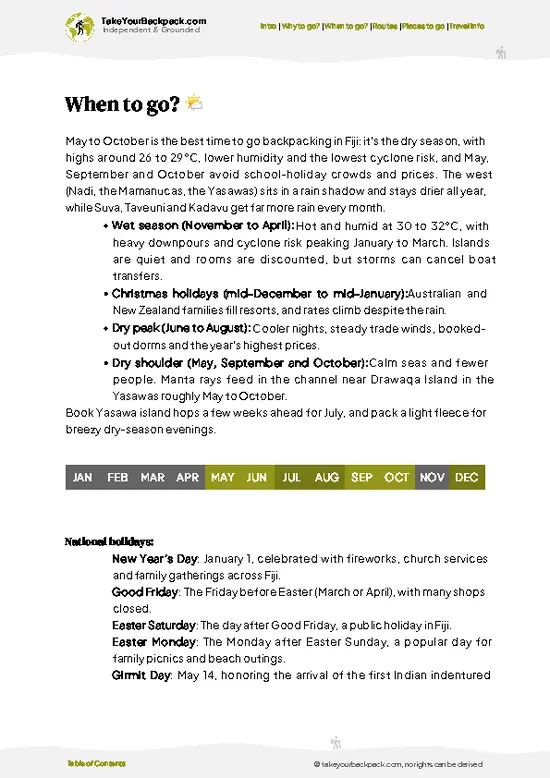
  • Weather: Kioa Island basks in tropical warmth year-round, but the dry season from May to October offers clearer skies and less humidity, making trekking and beach time more comfortable.

  • Temperature: Expect highs around 28-31°C (82-88°F) during the dry months, with nights cooling to a pleasant 22°C (72°F), perfect for sleeping under a mosquito net without sweating buckets.

  • Daylight Hours: Daylight stays steady, roughly 11-12 hours daily, but the dry season’s crisp mornings and golden evenings make early hikes and sunset swims especially rewarding.

  • Crowds: Kioa Island remains low-key, but visiting outside the wet season means fewer locals tied up with farming and more chances to connect with islanders without the tourist buzz.

  • Seasonal Activities: Dry months align with traditional
read more 👉

  • Weather: Kioa Island basks in tropical warmth year-round, but the dry season from May to October offers clearer skies and less humidity, making trekking and beach time more comfortable.

  • Temperature: Expect highs around 28-31°C (82-88°F) during the dry months, with nights cooling to a pleasant 22°C (72°F), perfect for sleeping under a mosquito net without sweating buckets.

  • Daylight Hours: Daylight stays steady, roughly 11-12 hours daily, but the dry season’s crisp mornings and golden evenings make early hikes and sunset swims especially rewarding.

  • Crowds: Kioa Island remains low-key, but visiting outside the wet season means fewer locals tied up with farming and more chances to connect with islanders without the tourist buzz.

  • Seasonal Activities: Dry months align with traditional festivals and fishing seasons, giving you a front-row seat to authentic cultural moments and fresh seafood feasts.

  • Price Fluctuations: Accommodation and transport costs dip slightly in the shoulder months (April and November), offering a sweet spot between good weather and better deals.


Pro-tip: Aim for late May or early October to catch the tail ends of the dry season—less humidity, vibrant island life, and a wallet-friendly vibe that feels like a local secret.


source: climatestotravel.comJANJanuary: fair for travelingFEBFebruary: fair for travelingMARMarch: fair for travelingAPRApril: good for travelingMAYMay: excellent for travelingJUNJune: excellent for travelingJULJuly: excellent for travelingAUGAugust: excellent for travelingSEPSeptember: excellent for travelingOCTOctober: excellent for travelingNOVNovember: good for travelingDECDecember: fair for traveling
fiji-city-kioa-island
© Google |

✈️ The backpacker research shortcutFiji Travel Guide

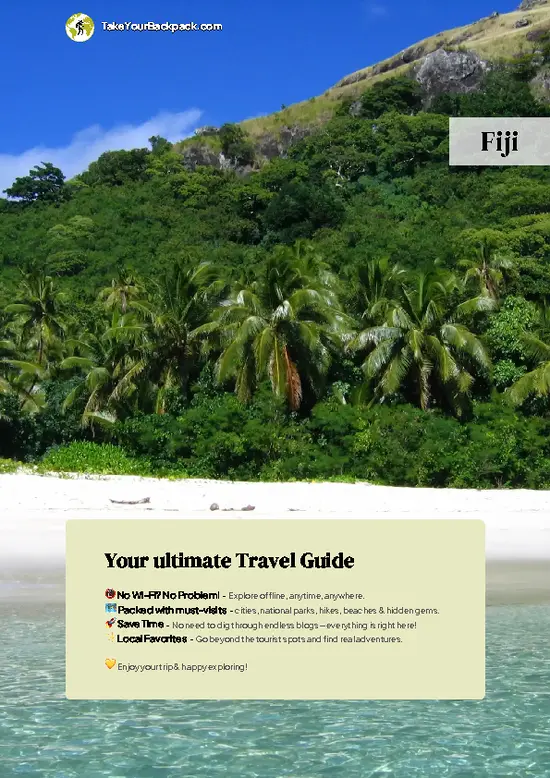
An offline-friendly backpacking guide with optimized travel routes, ranked highlights, transport advice, and the best areas to stay.
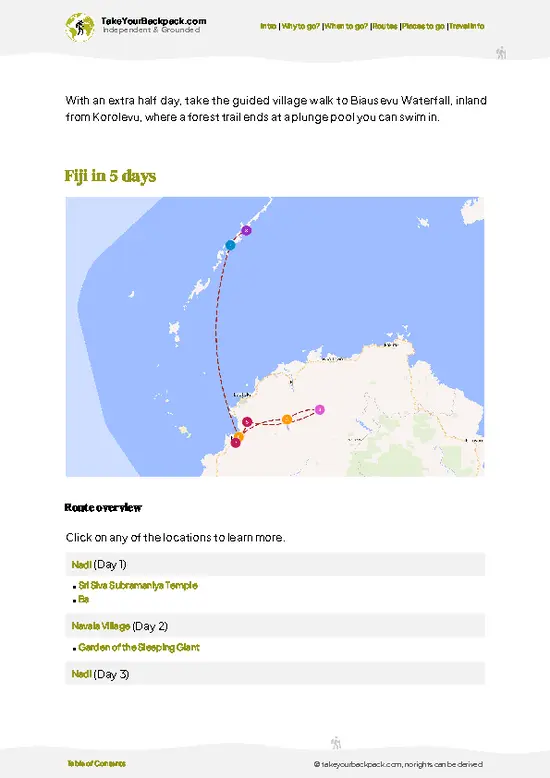
example page 0 from our offline Travel Guide for Fiji
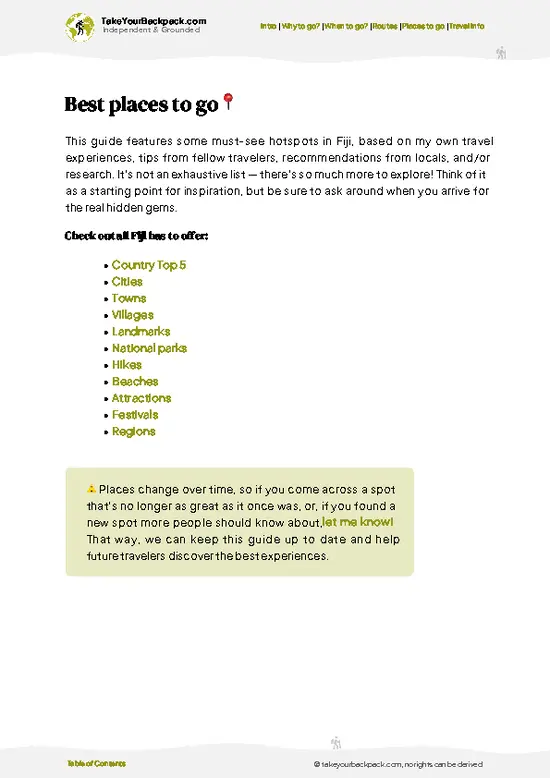
example page 1 from our offline Travel Guide for Fiji
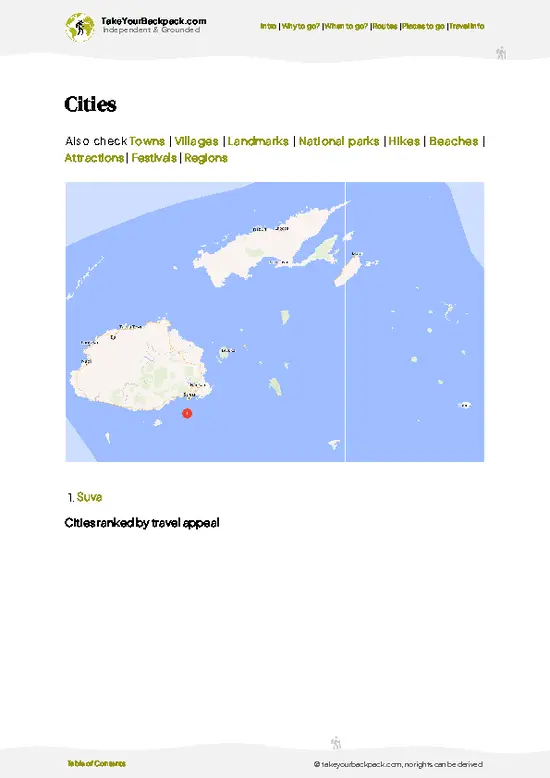
example page 2 from our offline Travel Guide for Fiji
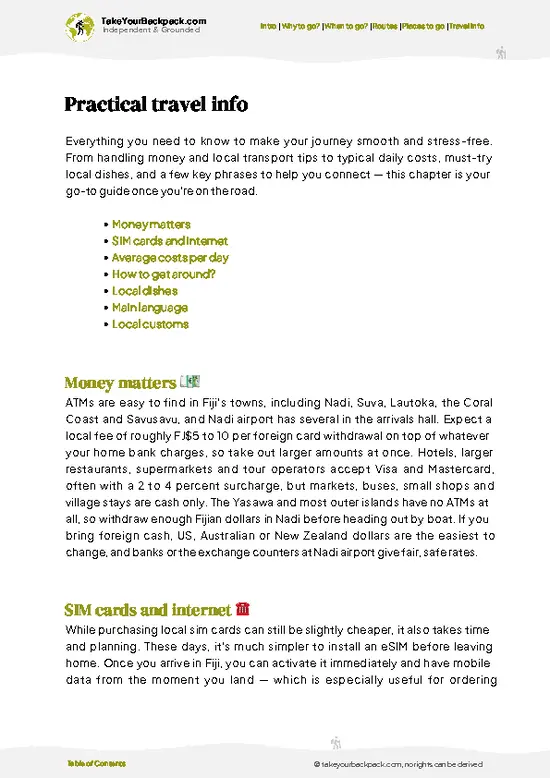
example page 3 from our offline Travel Guide for Fiji
example page 4 from our offline Travel Guide for Fiji
example page 5 from our offline Travel Guide for Fiji
example page 6 from our offline Travel Guide for Fiji
example page 7 from our offline Travel Guide for Fiji
The digital guide (208 pages) contains:
50 highlights, ranked by travel appeal
Optimized 2, 3 & 5-day travel routes
Cities, national parks, landmarks, beaches
How to get around
Offline-friendly for travel without Wi-Fi
👉 Click to see all 30+ guide features

📅 Plan smarter in minutes, not weeks
Month by month travel advice
Festivals & national holidays
Budget expectations

🗺️ Go to the right places, skip the overrated ones
Honest pros & cons of destinations
Top hikes, parks & viewpoints
Lesser-known places most travelers miss
Clear “worth it vs skip it” guidance

🛏️ Travel smoothly without rookie mistakes
Best areas to stay
Transport systems explained simply
Common scams & safety advice
SIM cards, money & practical tips

🌍 Understand the country, not just visit it
Culture & traditions
52 Essential phrases & customs
Festivals worth planning around
Traveler-friendly historical context
Insights that make places more meaningful

📱 Built for real travel conditions
Fully downloadable PDF
Works completely offline
Optimized for phone use
Useful in remote areas & buses
Everything in one place
Save weeks of stressful planning
Get instant access to your full guide. 30‑day money-back guarantee.
+ Add another guide for just US$7.80

By proceeding you agree to our terms.
Sent to your inbox immediately after payment • 100% Secure Checkout
Best Backpacking Travel Advisor 2025 tourism awardBest Backpacking
Travel Advisor
2025
What others say about Take Your Backpack Guides:
⭐⭐⭐⭐⭐
Fantastic, amazing amount of information!
⭐⭐⭐⭐⭐
My goodness this is amazing, it's what I've been looking for hats off too you!
⭐⭐⭐⭐⭐
I think this is absolutely BRILLIANT
⭐⭐⭐⭐
Very complete and informative. It's still missing places, but I gotta to commend you
⭐⭐⭐⭐⭐
This is truly amazing, thank you, can't wait to explore it with my kids!
⭐⭐⭐⭐⭐
Awesome resource, thank you!
⭐⭐⭐⭐⭐
This is amazing! Can't wait to explore the ones I haven't seen
⭐⭐⭐⭐
I love this! Well done, great idea.
⭐⭐⭐⭐⭐
Thanks for taking the time to make this gem!
⭐⭐⭐⭐⭐
This might be the best website I've ever seen.
⭐⭐⭐⭐⭐
Congratulations, and thank you so much for your work; it's incredibly valuable.
⭐⭐⭐⭐
In all seriousness I think you did a great job pointing out the important spots
⭐⭐⭐⭐⭐
10/10 very good
⭐⭐⭐⭐⭐
As someone who's only just starting to visit regularly this is awesome, thank you.
⭐⭐⭐⭐
Thank you very much! I'm going to visit my dad, it's going to be very useful!
⭐⭐⭐⭐⭐
This is really cool! We'll be travelling for the first time and this definitely come in handy.
⭐⭐⭐⭐⭐
You are now our minister of culture, congratulations 👨‍💼
⭐⭐⭐⭐⭐
Just wanted to tell you that this is a pearl! Going to follow your recommendations.
⭐⭐⭐⭐⭐
This is so cool. I'll definitely be using the resource for my travels soon.
⭐⭐⭐⭐⭐
This is very impressive! Good work.
⭐⭐⭐⭐⭐
This is an amazing and informative site. Very well done!

🛏️ Where to stay?Choosing the right base

Kioa Island’s main village area is the go-to spot for backpackers craving connection and ease. It’s where locals and travelers mingle, the air thick with salt and the hum of daily island life. Staying here means you’re steps from simple eateries and communal spaces where stories flow as freely as the ocean breeze. The vibe is laid-back but lively, perfect for solo travelers wanting to swap tips or join impromptu beach gatherings. Hostels here are basic but welcoming, offering a chance to meet others without the fuss of luxury. Other parts of the island are quieter and more isolated, which might … read more 👉
Kioa Island’s main village area is the go-to spot for backpackers craving connection and ease. It’s where locals and travelers mingle, the air thick with salt and the hum of daily island life. Staying here means you’re steps from simple eateries and communal spaces where stories flow as freely as the ocean breeze. The vibe is laid-back but lively, perfect for solo travelers wanting to swap tips or join impromptu beach gatherings. Hostels here are basic but welcoming, offering a chance to meet others without the fuss of luxury. Other parts of the island are quieter and more isolated, which might sound tempting, but they lack the social pulse that makes backpacking here truly rewarding.

🚌 Getting aroundTransportation options and practical tips

Kioa Island moves at the pace of the ocean tides—unhurried, rhythmic, and deeply tied to nature’s clock rather than any strict timetable. The air carries the salt and warmth of the sea, and locals navigate the island with a relaxed intuition born from generations of island life. You won’t find rigid schedules here; instead, you sync with the ebb and flow of daily routines, where a missed boat or a delayed ride is just part of the rhythm, not a disaster. This is a place where patience unlocks the best experiences, and understanding the local transit options means you can glide through the island’s charm without feeling stranded or rushed.


  • Walking: The island’s compact size makes walking the most reliable and immersive way to get around. Trails wind through coconut groves and along coral
read more 👉
Kioa Island moves at the pace of the ocean tides—unhurried, rhythmic, and deeply tied to nature’s clock rather than any strict timetable. The air carries the salt and warmth of the sea, and locals navigate the island with a relaxed intuition born from generations of island life. You won’t find rigid schedules here; instead, you sync with the ebb and flow of daily routines, where a missed boat or a delayed ride is just part of the rhythm, not a disaster. This is a place where patience unlocks the best experiences, and understanding the local transit options means you can glide through the island’s charm without feeling stranded or rushed.


  • Walking: The island’s compact size makes walking the most reliable and immersive way to get around. Trails wind through coconut groves and along coral beaches, taking 20-40 minutes between key spots. It’s free, scenic, and the best way to soak in the island’s scent of salt and earth.

  • Local Boat Taxi: Small motorized boats run between Kioa and nearby islands or the mainland, usually starting around 7 AM and wrapping up by late afternoon. Expect to pay a modest fee (roughly $5-$10), with rides lasting 15-30 minutes depending on the route. They’re bumpy but fast—perfect if you’re not in a rush but want to cover water distances efficiently.

  • Shared Minivan: These operate on a flexible schedule, often departing when full. They connect the main village to the island’s few outlying settlements. Fares are low, around $2-$3, but comfort is basic and the ride can be slow due to frequent stops. Great for budget travelers who want to cover ground without missing local interactions.

  • Bicycle Rental: Available from a handful of local shops, bikes offer a faster, more flexible way to explore beyond walking range. Rentals cost about $5 per day. The terrain is mostly flat but can get sandy, so a sturdy bike is essential. Early morning rides are best to avoid midday heat and catch the soft, golden light.

👛 Costs (as of 4 September 2026)Typical daily expenses

Backpacking on Kioa Island, Fiji, means embracing a remote, low-key vibe where costs reflect the island’s simplicity and limited infrastructure.
  • Dorm Accommodation: Options are scarce and basic, often in community-run guesthouses or small lodges. Expect to pay around $15 to $25 USD per night. These places usually offer simple rooms with shared facilities, no frills but a chance to connect with locals.
  • Meals: Food is straightforward and fresh, mostly local staples like root vegetables, fish, and tropical fruits. Budget about $5 to $10 USD per meal if you eat at small village eateries or buy ingredients to cook yourself. Imported goods are rare and pricey, so sticking to local fare keeps costs down.
  • Local Transport: Kioa is a small island, so transport costs are minimal. Walking is the main
read more 👉
Backpacking on Kioa Island, Fiji, means embracing a remote, low-key vibe where costs reflect the island’s simplicity and limited infrastructure.
  • Dorm Accommodation: Options are scarce and basic, often in community-run guesthouses or small lodges. Expect to pay around $15 to $25 USD per night. These places usually offer simple rooms with shared facilities, no frills but a chance to connect with locals.
  • Meals: Food is straightforward and fresh, mostly local staples like root vegetables, fish, and tropical fruits. Budget about $5 to $10 USD per meal if you eat at small village eateries or buy ingredients to cook yourself. Imported goods are rare and pricey, so sticking to local fare keeps costs down.
  • Local Transport: Kioa is a small island, so transport costs are minimal. Walking is the main mode, but if you need a boat ride or a local taxi, budget around $2 to $5 USD per trip. There’s no public transport system, so plan accordingly.
  • Basic Activities/Entry Fees: Most activities revolve around nature—snorkeling, hiking, or visiting local villages. These are often free or involve a small community fee of $2 to $5 USD to support local projects or guides. Organized tours are rare and tend to be pricier if available.
  • Miscellaneous Expenses: Think essentials like bottled water, occasional phone credit, or small souvenirs. Set aside about $3 to $7 USD daily. Electricity can be limited, so charging devices might require a small fee.

Overall, expect to spend roughly $30 to $50 USD per day backpacking on Kioa Island. The trade-off for this modest budget is a raw, authentic experience where the island’s quiet rhythms and natural beauty feel earned through simplicity and local connection.


source: fiji.travel
⚠️ Prices can change and everyone travels differently, so take this as a rough guide. Hope it helps you plan your adventure!

🚌 Day tripsExploring the surroundings

Kioa Island is a backpacker’s dream base for day trips, offering a blend of adventure and culture that’s hard to beat. The island’s laid-back vibe makes it easy to explore the surrounding wonders without breaking the bank.

Trip to Taveuni Island
Just a short boat ride away, Taveuni is known as the ”Garden Island” for good reason. The lush landscapes are alive with vibrant flora and the air is thick with the scent of tropical blooms. Spend the day hiking through Bouma National Heritage Park, where waterfalls cascade into crystal-clear pools. The journey takes about an hour, and you can expect to spend around $30 for the round trip. The best time to visit is during the dry season, from May to October, when trails are less muddy. A common mistake? Underestimating the time needed for the hike; … read more 👉
Kioa Island is a backpacker’s dream base for day trips, offering a blend of adventure and culture that’s hard to beat. The island’s laid-back vibe makes it easy to explore the surrounding wonders without breaking the bank.

Trip to Taveuni Island
Just a short boat ride away, Taveuni is known as the ”Garden Island” for good reason. The lush landscapes are alive with vibrant flora and the air is thick with the scent of tropical blooms. Spend the day hiking through Bouma National Heritage Park, where waterfalls cascade into crystal-clear pools. The journey takes about an hour, and you can expect to spend around $30 for the round trip. The best time to visit is during the dry season, from May to October, when trails are less muddy. A common mistake? Underestimating the time needed for the hike; start early to fully enjoy the experience.
👉 Explore Taveuni Island

Snorkeling at Rainbow Reef
If you’re into marine life, don’t miss a snorkeling trip to Rainbow Reef. The vibrant coral gardens are teeming with fish, and the underwater visibility is superb. It’s about a 45-minute boat ride, costing around $40 for gear rental and transport. Aim for the early morning to catch the best light and avoid the crowds. Many first-timers forget to bring reef-safe sunscreen, which is crucial for protecting both your skin and the delicate ecosystem.


Exploring the Village of Kioa
Stay local and immerse yourself in the culture by visiting the village of Kioa itself. Wander through the community, where you can chat with locals and learn about their traditions. This trip is free, and you can spend as little or as much time as you like. The best time to visit is during village events, which often happen on weekends. A common oversight is not respecting local customs; always ask before taking photos.


Day Trip to Rabi Island
Rabi Island offers a unique glimpse into the lives of the Banaban people. The boat ride takes about an hour and costs around $25. Once there, explore the beautiful beaches and learn about the island’s history. The dry season is ideal for this trip, as the weather is perfect for beach lounging. Many backpackers miss the chance to engage with locals; don’t hesitate to ask about their stories and traditions.


Each of these trips adds a layer of depth to your Kioa Island experience, making the effort worthwhile.
Want to know what more Fiji offers?
The Fiji Travel Guide describes 50 highlights, from cities to national parks, from beaches to hikes

Get the Travel Guide -

🛡️ SafetySafety Tips and Common Scams in Kioa Island

Kioa Island is generally safe, but a few practical tips can enhance your experience. Stay aware in crowded areas, especially near markets where locals gather. If you’re solo, avoid wandering too far after dark; the dimly lit paths can feel isolating.

While scams are rare, be cautious of overly friendly locals who may try to sell you something you didn’t ask for. It’s all part of the charm, but a polite “no, thank you” works wonders.

Annoyances can include the occasional stray dog; they’re usually harmless but can be loud. Keep your belongings close, especially at the beach. Embrace the laid-back vibe, and you’ll find that a little awareness goes a long way in making your trip smooth and enjoyable.

FAQCommon questions from travelers

You get to Kioa Island by boat from Vanua Levu, typically departing from the town of Labasa. The boat trip takes around 2 to 3 hours depending on sea conditions. Flights to Labasa are available from Nadi or Suva, making it a multi-step journey.
Yes, Kioa Island is worth the trip for travelers interested in unique cultural experiences and remote island life. The island is inhabited by a Polynesian community with a distinct heritage, offering authentic village interactions and pristine natural surroundings. It is less touristy than other Fijian islands, providing a peaceful and off-the-beaten-path experience.
No, Kioa Island is not practical for a day trip due to the travel time involved. The boat ride alone takes several hours each way, and there are no regular fast transport options. Visitors typically stay at least one or two nights to fully experience the island.
⚠️ Things can change over time, so always validate details locally before you go.

Other Fijian villages near Kioa Island

Explore more nearby:

  • Levuka—colonial-era buildings, hillside streets, portside markets| 162 km away
  • Navala Village—bure architecture, mountain valley, communal living| 250 km away

💡 Not sure where to go next?
Create a personalized itinerary for Fiji including Kioa Island and the places that fit your trip.

Generate my itinerary

👉 Discover all villages

Or checkout all Fiji has to offer (think cities, towns, villages, national parks, hikes, beaches, festivals)
Country photo of Fiji

We 💚 feedbackFinal thoughts on visiting Kioa Island

Kioa Island has a vibe that feels like a warm embrace. The locals are genuinely welcoming, and you’ll find yourself sharing stories over fresh coconut water. The best surprise? The untouched beaches where you can hear the waves whisper secrets. Just a heads-up: the paths can be a bit rugged, so sturdy shoes are a must. Embrace the journey; it’s all part of the charm.

✍️ Help improve this page!
The information on this page is based on in-depth research, insights shared by experienced travelers, and feedback from the local travel community in Fiji. While every effort is made to keep the information accurate and current, conditions can change — so if you spot anything incorrect or outdated, please get in touch.


🙋‍♂️ Give feedback

👋 Meet the founderWho’s Behind Take Your Backpack?

Johan, backpacker and founder of TakeYourBackpackHi, I’m Johan (Netherlands 🇳🇱), the creator of TakeYourBackpack. Over the past decade, I’ve backpacked through 80+ countries across six continents, gaining extensive experience with independent travel, long-term trips, and overland routes.

This site is built on a combination of firsthand travel experience and carefully curated insights from other backpackers. Many guides are based on places I’ve personally visited, while others bring together tips, observations, and practical advice shared by trusted travelers I’ve met along the way.

The goal is to provide realistic, experience-driven guidance — not generic itineraries — so you can explore destinations with better context, clearer expectations, and more confidence.

Get full Fiji guide •
Instant download • 50 highlights • Full Offline guide