×

France🇫🇷 | landmarksCanal du Miditree-lined towpaths, stone locks, leisure boating | things to do and best time to go

Explore Bourges CathedralExplore Cathedral of Notre-Dame, Reims

Backpacking in Canal du Midi
UNESCO World Heritage site
👍 Recommendedunique site ranked #11
By Johan Kruseman 🇳🇱 | Updated July 20, 2026

Most people only realize after they arrive that the Canal du Midi is basically a slow, cheap transport corridor: you can walk, cycle, or even hitch short boat hops between villages instead of paying for trains and taxis. It runs across southern France, roughly between Toulouse and the Mediterranean near Sète. As a backpacker spot, it’s low-drama but high-payoff: no Eiffel-Tower wow moment, just plane trees, old locks, and sleepy ports that feel like France on “offline mode.” Boats and organized cruises are pricey, but camping and self-catering are easy. Crowds cluster near big marinas; walk 20 minutes and it’s just you, birds, and ridiculously photogenic reflections.

Discover everything you want to know in the 📖 France Travel Guide.


Get your France guide
142 ranked highlights, routes & tips, works offline (461 pages)
Loading the map 🌍
CLICK TO FILTER
cities
towns
villages
landmarks
national parks
hikes
beaches
attractions
festivals
regions
SHOW COUNTRY’S BESTSHOW ALL

✨ Why go?
Ranked #11 unique site in France
What makes it a must-see unique site

The Canal du Midi is not just another pretty postcard; it’s a living piece of history that backpackers can’t afford to skip. Sure, you’ll encounter crowds—especially in summer—but that’s part of the charm. The unique engineering of this 17th-century marvel is mind-blowing. It connects the Mediterranean to the Atlantic, and walking or cycling along its banks reveals quaint villages and local markets that tourists miss.

The cost? Minimal. You can stroll for free or rent a bike for a few euros. Plus, it fits perfectly into a broader route through southern France, linking you to other gems like Carcassonne and Toulouse. The real magic lies in the authentic experiences you’ll have—sipping wine by the water, chatting with locals, and soaking in the vibrant culture. Don’t just pass through; make it part of your journey.
Want to include Canal du Midi in your France route?
Create a personalized France itinerary that includes Canal du Midi and the places that fit your trip — based on your travel style, budget, and available time. Get your route in seconds.

Generate my trip

💡 HighlightsThe experiences that define the visit

  • Fonserannes Locks (Béziers) — A dramatic multi-lock staircase that’s part engineering spectacle, part photo stage set; watching a barge drop or rise through the steps gives you a real feel for 17th-century canal ingenuity.
  • Agde Round Lock (Écluse Ronde) — A rare circular lock where the canal meets the Hérault river; its unusual shape and stonework make it one of the most photogenic and technically curious spots on the route.
  • Malpas Tunnel — One of the earliest navigable canal tunnels in Europe, bored through rock in Riquet’s time; it’s a compact slice of bold engineering that marks how ambitious the whole project was.
  • Seuil de Naurouze and Riquet’s Tomb — The canal’s highest watershed point and the symbolic heart of the design; the little park and Riquet’s tomb give context to the whole
read more 👉
  • Fonserannes Locks (Béziers) — A dramatic multi-lock staircase that’s part engineering spectacle, part photo stage set; watching a barge drop or rise through the steps gives you a real feel for 17th-century canal ingenuity.
  • Agde Round Lock (Écluse Ronde) — A rare circular lock where the canal meets the Hérault river; its unusual shape and stonework make it one of the most photogenic and technically curious spots on the route.
  • Malpas Tunnel — One of the earliest navigable canal tunnels in Europe, bored through rock in Riquet’s time; it’s a compact slice of bold engineering that marks how ambitious the whole project was.
  • Seuil de Naurouze and Riquet’s Tomb — The canal’s highest watershed point and the symbolic heart of the design; the little park and Riquet’s tomb give context to the whole enterprise and a nice viewpoint for the split of waters.
  • Plane-tree-lined towpaths — Those double rows of plane trees are the Canal du Midi’s signature: shady, slow-paced routes perfect for cycling or walking, and they create that postcard-perfect green corridor.
  • Stone aqueducts and old bridges — Small stone aqueducts and graceful arched bridges punctuate the route; each is a mix of functional craft and rural French charm, great for short detours or sunsets.
  • Locks, lock-keeper houses and village life — The working locks and their little habitations are living heritage: watch manual operations, stop at a riverside café, and you’ll see how the canal still shapes local rhythms.
  • Hire a péniche or bike the towpath — Nothing beats doing the canal at human speed: rent a day boat or bike and you’ll experience the architecture, landscape and village stops in the most relaxed, authentic way.
Spotted a mistake or missing something? Contact us.

Things to do near Canal du Midi

Ratings based on Tripadvisor reviews. When you book through this link, you support our work at no extra cost to you.

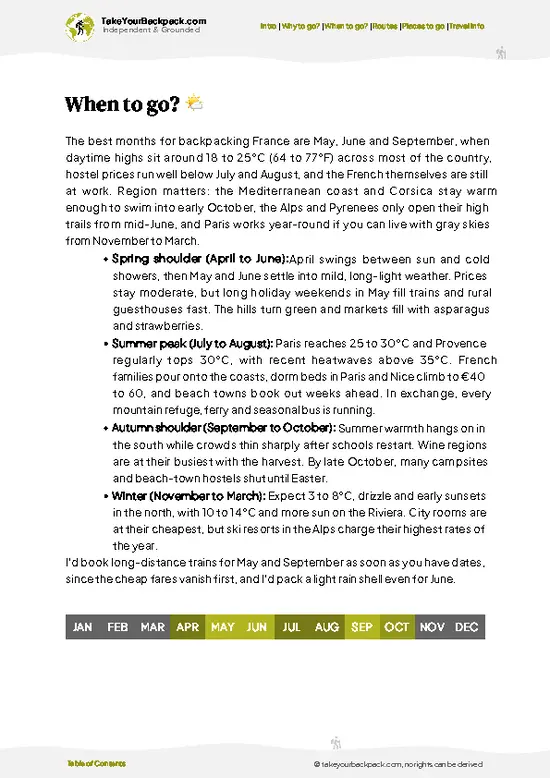
🌤️ When to go?Seasonal considerations and timing


  • Weather: Spring (April to June) offers mild, pleasant days around 15-22°C (59-72°F), perfect for walking or cycling without the sweat. Autumn (September to October) cools down to 13-20°C (55-68°F), with crisp air and fewer bugs. Summer can scorch you with highs hitting 30°C (86°F) or more, making midday treks brutal.

  • Daylight Hours: Long days from late May to early August give you up to 16 hours of light, ideal for extended exploration. Winter days shrink to about 8-9 hours, limiting your adventure window.

  • Crowds: Summer is peak tourist season, and the canal fills with boats, cyclists, and day-trippers. Spring and autumn see fewer visitors, letting you soak in the atmosphere without elbowing through selfie sticks.

  • Seasonal Activities: Summer hosts lively festivals and boat rentals, but these
read more 👉

  • Weather: Spring (April to June) offers mild, pleasant days around 15-22°C (59-72°F), perfect for walking or cycling without the sweat. Autumn (September to October) cools down to 13-20°C (55-68°F), with crisp air and fewer bugs. Summer can scorch you with highs hitting 30°C (86°F) or more, making midday treks brutal.

  • Daylight Hours: Long days from late May to early August give you up to 16 hours of light, ideal for extended exploration. Winter days shrink to about 8-9 hours, limiting your adventure window.

  • Crowds: Summer is peak tourist season, and the canal fills with boats, cyclists, and day-trippers. Spring and autumn see fewer visitors, letting you soak in the atmosphere without elbowing through selfie sticks.

  • Seasonal Activities: Summer hosts lively festivals and boat rentals, but these come with inflated prices and crowds. Spring and autumn offer serene walks, birdwatching, and quiet village markets, revealing the canal’s real charm.

  • Price Fluctuations: Accommodation and boat rentals spike in July and August. Booking in shoulder seasons (April-June, September-October) nets better deals and more availability.


Pro-tip: Aim for late May or early October—cool enough to enjoy the outdoors, light enough to explore fully, and quiet enough to feel like you own the place.


source: climatestotravel.comJANJanuary: fair for travelingFEBFebruary: fair for travelingMARMarch: good for travelingAPRApril: highly recommended for travelingMAYMay: excellent for travelingJUNJune: highly recommended for travelingJULJuly: good for travelingAUGAugust: good for travelingSEPSeptember: highly recommended for travelingOCTOctober: excellent for travelingNOVNovember: good for travelingDECDecember: fair for traveling

✈️ The backpacker research shortcutFrance Travel Guide

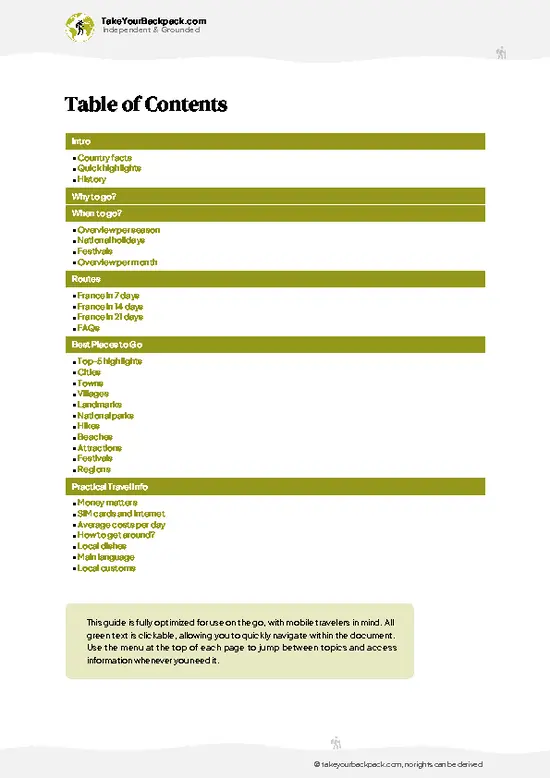
An offline-friendly backpacking guide with optimized travel routes, ranked highlights, transport advice, and the best areas to stay.
example page 0 from our offline Travel Guide for France
example page 1 from our offline Travel Guide for France
example page 2 from our offline Travel Guide for France
example page 3 from our offline Travel Guide for France
example page 4 from our offline Travel Guide for France
example page 5 from our offline Travel Guide for France
example page 6 from our offline Travel Guide for France
example page 7 from our offline Travel Guide for France
The digital guide (461 pages) contains:
142 highlights, ranked by travel appeal
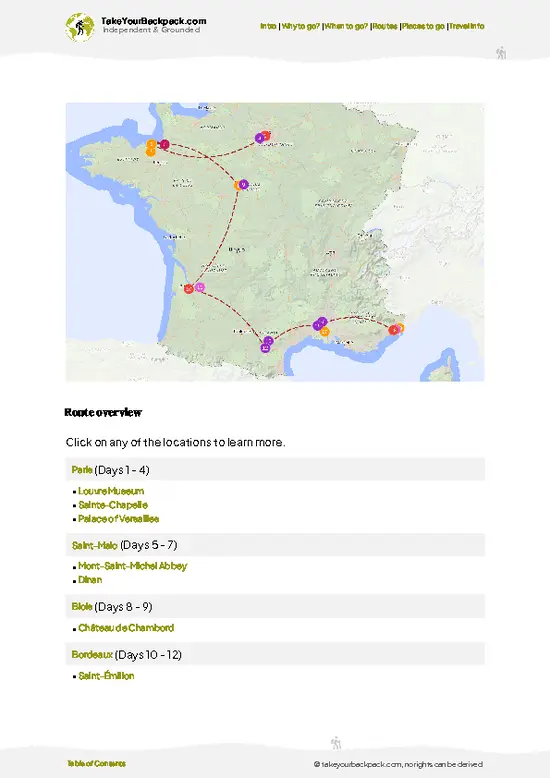
Optimized 7, 14 & 21-day travel routes
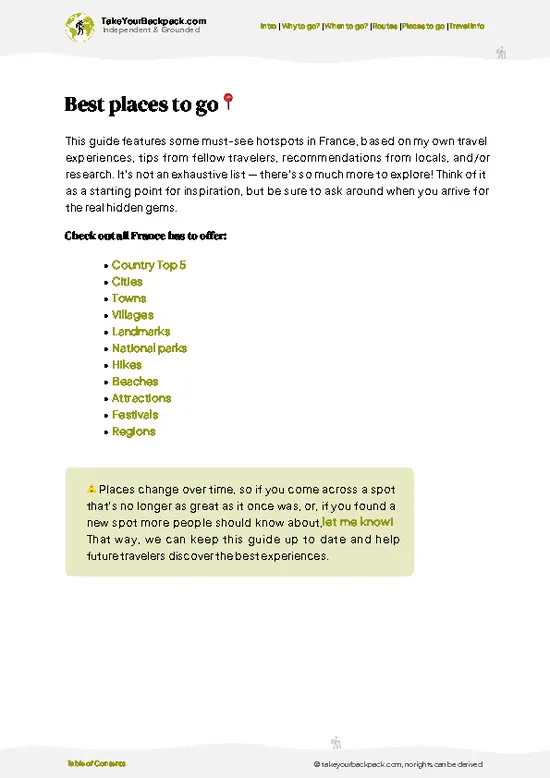
Cities, national parks, landmarks, beaches
How to get around
Offline-friendly for travel without Wi-Fi
👉 Click to see all 30+ guide features

📅 Plan smarter in minutes, not weeks
Month by month travel advice
Festivals & national holidays
Budget expectations

🗺️ Go to the right places, skip the overrated ones
Honest pros & cons of destinations
Top hikes, parks & viewpoints
Lesser-known places most travelers miss
Clear “worth it vs skip it” guidance

🛏️ Travel smoothly without rookie mistakes
Best areas to stay
Transport systems explained simply
Common scams & safety advice
SIM cards, money & practical tips

🌍 Understand the country, not just visit it
Culture & traditions
52 Essential phrases & customs
Festivals worth planning around
Traveler-friendly historical context
Insights that make places more meaningful

📱 Built for real travel conditions
Fully downloadable PDF
Works completely offline
Optimized for phone use
Useful in remote areas & buses
Everything in one place
Save weeks of stressful planning
Get instant access to your full guide. 30‑day money-back guarantee.


By proceeding you agree to our terms.
Sent to your inbox immediately after payment • 100% Secure Checkout
Best Backpacking Travel Advisor 2025 tourism awardBest Backpacking
Travel Advisor
2025
What others say about Take Your Backpack Guides:
⭐⭐⭐⭐⭐
Fantastic, amazing amount of information!
⭐⭐⭐⭐⭐
My goodness this is amazing, it's what I've been looking for hats off too you!
⭐⭐⭐⭐⭐
I think this is absolutely BRILLIANT
⭐⭐⭐⭐
Very complete and informative. It's still missing places, but I gotta to commend you
⭐⭐⭐⭐⭐
This is truly amazing, thank you, can't wait to explore it with my kids!
⭐⭐⭐⭐⭐
Awesome resource, thank you!
⭐⭐⭐⭐⭐
This is amazing! Can't wait to explore the ones I haven't seen
⭐⭐⭐⭐
I love this! Well done, great idea.
⭐⭐⭐⭐⭐
Thanks for taking the time to make this gem!
⭐⭐⭐⭐⭐
This might be the best website I've ever seen.
⭐⭐⭐⭐⭐
Congratulations, and thank you so much for your work; it's incredibly valuable.
⭐⭐⭐⭐
In all seriousness I think you did a great job pointing out the important spots
⭐⭐⭐⭐⭐
10/10 very good
⭐⭐⭐⭐⭐
As someone who's only just starting to visit regularly this is awesome, thank you.
⭐⭐⭐⭐
Thank you very much! I'm going to visit my dad, it's going to be very useful!
⭐⭐⭐⭐⭐
This is really cool! We'll be travelling for the first time and this definitely come in handy.
⭐⭐⭐⭐⭐
You are now our minister of culture, congratulations 👨‍💼
⭐⭐⭐⭐⭐
Just wanted to tell you that this is a pearl! Going to follow your recommendations.
⭐⭐⭐⭐⭐
This is so cool. I'll definitely be using the resource for my travels soon.
⭐⭐⭐⭐⭐
This is very impressive! Good work.
⭐⭐⭐⭐⭐
This is an amazing and informative site. Very well done!

🛏️ Where to stay?How to pick the right area

Staying near the Canal du Midi? You’ve got options that balance charm and budget without falling into the tourist trap.

First up, consider Toulouse. This city pulses with life. The vibrant student scene means you’ll find plenty of affordable eateries and bars. Plus, the historic center is a short bike ride from the canal. You can mingle with locals and other travelers, making it easy to share stories over a cheap glass of wine.

Then there’s Carcassonne. Yes, it’s famous for its medieval fortress, but the real magic lies in the surrounding neighborhoods. Look for spots near the canal where you … read more 👉
Staying near the Canal du Midi? You’ve got options that balance charm and budget without falling into the tourist trap.

First up, consider Toulouse. This city pulses with life. The vibrant student scene means you’ll find plenty of affordable eateries and bars. Plus, the historic center is a short bike ride from the canal. You can mingle with locals and other travelers, making it easy to share stories over a cheap glass of wine.

Then there’s Carcassonne. Yes, it’s famous for its medieval fortress, but the real magic lies in the surrounding neighborhoods. Look for spots near the canal where you can soak in the atmosphere without the crowds. It’s quieter, and you’ll get a taste of authentic French life.

Finally, Castelnaudary offers a more laid-back vibe. It’s less touristy, and you can enjoy local markets and cozy cafes. The canal here is stunning, and you’ll feel like you’ve stumbled upon a secret. Safe, social, and full of character—these spots are where the real adventure begins.

👛 Costs (as of 15 September 2025)Typical daily expenses

Visiting the Canal du Midi can be a rewarding experience, but it’s essential to know what you’re getting into financially.
  • Accommodation: Expect to pay between €50 to €150 per night for a decent hotel or guesthouse. If you’re on a tighter budget, hostels or camping options can drop that to around €20 to €40. Just remember, the closer you are to the canal, the pricier it gets.
  • Food: Dining can range from €10 for a casual meal at a bistro to €30 or more for a sit-down restaurant. If you’re looking to save, grab some local bread, cheese, and wine from a market for about €10, and enjoy a picnic by the water.
  • Transportation: If you’re not biking or walking, budget around €10 to €20 for local buses. Renting a bike is a fantastic way to explore, costing about €15 to €25 per day. If you’re feeling fancy,
read more 👉
Visiting the Canal du Midi can be a rewarding experience, but it’s essential to know what you’re getting into financially.
  • Accommodation: Expect to pay between €50 to €150 per night for a decent hotel or guesthouse. If you’re on a tighter budget, hostels or camping options can drop that to around €20 to €40. Just remember, the closer you are to the canal, the pricier it gets.
  • Food: Dining can range from €10 for a casual meal at a bistro to €30 or more for a sit-down restaurant. If you’re looking to save, grab some local bread, cheese, and wine from a market for about €10, and enjoy a picnic by the water.
  • Transportation: If you’re not biking or walking, budget around €10 to €20 for local buses. Renting a bike is a fantastic way to explore, costing about €15 to €25 per day. If you’re feeling fancy, a boat rental can set you back €100 to €200 for a day.
  • Activities: Many of the best experiences, like walking or cycling along the canal, are free. However, guided tours can range from €15 to €50, depending on the length and inclusions. Wine tastings or local workshops might add another €20 to €50 to your budget.
  • Miscellaneous: Always set aside about €10 to €20 for unexpected expenses, like souvenirs or snacks. Trust me, you’ll want to try the local pastries!

Understanding these costs helps you plan better. The Canal du Midi is worth it, but being prepared makes the journey smoother.


source: france.fr
⚠️ Prices can change and everyone travels differently, so take this as a rough guide. Hope it helps you plan your adventure!

Other French landmarks near Canal du Midi

Explore more nearby:


💡 Not sure where to go next?
Create a personalized itinerary for France including Canal du Midi and the places that fit your trip.

Generate my itinerary

👉 Discover all landmarks

Or checkout all France has to offer (think cities, towns, villages, national parks, hikes, beaches, festivals)
Country photo of France

We 💚 feedbackWhat to keep in mind

The Canal du Midi is a slice of history that feels alive. Picture cycling along the banks, the scent of lavender in the air, and locals sharing stories over a glass of wine. But let’s be real: it can get crowded, especially in summer. If you’re after solitude, aim for early mornings or shoulder seasons. The magic is there, but you’ll need to dodge the selfie sticks.

✈️ When did I visit France?
Being close to The Netherlands, my home base, I visited France many times.

✍️ Help improve this page!
The information on this page is based on my own backpacking experience in France, supplemented with up-to-date research and feedback from other travelers. Travel details can change, so if you notice anything outdated or incomplete, feel free to let me know.


🙋‍♂️ Give feedback

👋 Meet the founderWho’s Behind Take Your Backpack?

Johan, backpacker and founder of TakeYourBackpackHi, I’m Johan (Netherlands 🇳🇱), the creator of TakeYourBackpack. Over the past decade, I’ve backpacked through 80+ countries across six continents, gaining extensive experience with independent travel, long-term trips, and overland routes.

This site is built on a combination of firsthand travel experience and carefully curated insights from other backpackers. Many guides are based on places I’ve personally visited, while others bring together tips, observations, and practical advice shared by trusted travelers I’ve met along the way.

The goal is to provide realistic, experience-driven guidance — not generic itineraries — so you can explore destinations with better context, clearer expectations, and more confidence.

Get full France guide •
Instant download • 142 highlights • Full Offline guide