×

France🇫🇷 | landmarksCité de Carcassonnedouble ramparts, medieval towers, drawbridge gates | things to do and best time to go

Explore Eiffel TowerExplore Jurisdiction of Saint-Émilion

Backpacking in Cité de Carcassonne
UNESCO World Heritage site
🏆 Top pickunique site ranked #3
By Johan Kruseman 🇳🇱 | Updated October 15, 2026

Everyone shows up to Carcassonne for that perfect castle-on-a-hill Instagram shot, but if that’s your only goal, you’ll be disappointed by how fast the illusion cracks once you’re shoulder-to-shoulder with tour groups and plastic swords. What actually matters here is catching the fortified city when it breathes like a real place: early morning, off-season, or late at night when the stones go quiet and you remember this was once a frontline fortress, not a medieval theme park. Carcassonne sits in southern France, in the Aude department of Occitanie, an easy hop from Toulouse. As a backpacker, you get huge visual impact for relatively low effort: dramatic walls, towers, and killer photo angles. But it’s commercial, busy, and food inside the walls is often overpriced. Still, walk the ramparts at sunset and you’ll forgive a lot.

Discover everything you want to know in the 📖 France Travel Guide.


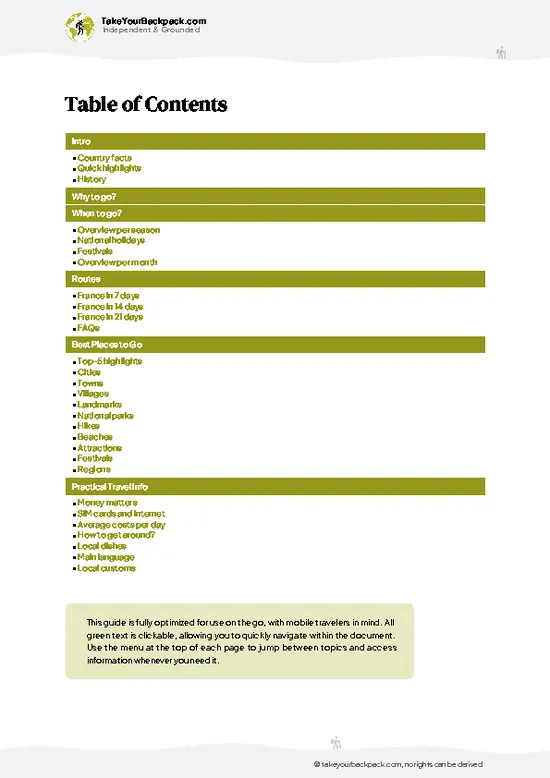
example page 0 from our offline Travel Guide for France
example page 1 from our offline Travel Guide for France
example page 2 from our offline Travel Guide for France
example page 3 from our offline Travel Guide for France
example page 4 from our offline Travel Guide for France
example page 5 from our offline Travel Guide for France
example page 6 from our offline Travel Guide for France
example page 7 from our offline Travel Guide for France
Loading the map 🌍
CLICK TO FILTER
cities
towns
villages
landmarks
national parks
hikes
beaches
attractions
festivals
regions
SHOW COUNTRY’S BESTSHOW ALL

✨ Why go?
Ranked #3 unique site in France
Reasons people choose to visit here

The Cité de Carcassonne is a must-see, but let’s cut through the fluff. Yes, it’s crowded, especially in peak season. You’ll dodge selfie sticks and tour groups, but here’s the kicker: the history and architecture are worth the hustle. This isn’t just a pretty backdrop for your Instagram feed; it’s a living piece of medieval history.

The cost? Surprisingly low for what you get. Entry fees are reasonable, and wandering the cobbled streets is free. You can grab a local baguette and enjoy a picnic with a view of the bastions and towers.

Carcassonne fits perfectly into a broader route through southern France. If you’re hitting Toulouse or Narbonne, it’s an easy stop that adds depth to your journey. The real magic lies in the stories whispered by the stones and the vibrant local culture that … read more 👉
The Cité de Carcassonne is a must-see, but let’s cut through the fluff. Yes, it’s crowded, especially in peak season. You’ll dodge selfie sticks and tour groups, but here’s the kicker: the history and architecture are worth the hustle. This isn’t just a pretty backdrop for your Instagram feed; it’s a living piece of medieval history.

The cost? Surprisingly low for what you get. Entry fees are reasonable, and wandering the cobbled streets is free. You can grab a local baguette and enjoy a picnic with a view of the bastions and towers.

Carcassonne fits perfectly into a broader route through southern France. If you’re hitting Toulouse or Narbonne, it’s an easy stop that adds depth to your journey. The real magic lies in the stories whispered by the stones and the vibrant local culture that thrives beyond the tourist traps. Embrace the crowds, soak in the history, and you’ll leave with more than just photos.

💡 HighlightsKey sights and experiences for travelers

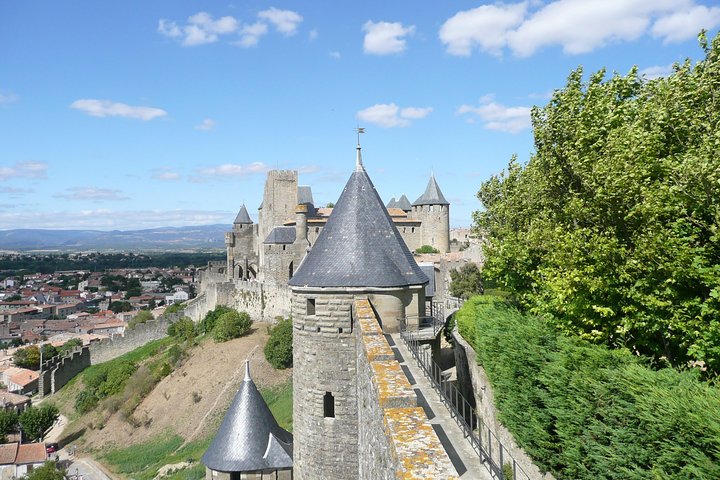
  • Double ring of ramparts — Carcassonne’s most striking feature: two concentric fortified walls with walkable ramparts. It’s rare to see such a complete medieval fortification still standing; you can trace how attackers were funneled and defended against while enjoying the feel of actually being “inside” the fortress.
  • Château Comtal (the Count’s Castle) — The inner keep with towers, battlements and a small museum that explains medieval military life. Climbing the towers gives a close-up of defensive architecture and great photo angles over the town—worth the modest entry fee if you want the full historical context.
  • Porte Narbonnaise and the barbican — The massive gate complex is a textbook example of layered medieval defense: gatehouse, barbican and murder-holes. It’s dramatic to stand where
… read more 👉
  • Double ring of ramparts — Carcassonne’s most striking feature: two concentric fortified walls with walkable ramparts. It’s rare to see such a complete medieval fortification still standing; you can trace how attackers were funneled and defended against while enjoying the feel of actually being “inside” the fortress.
  • Château Comtal (the Count’s Castle) — The inner keep with towers, battlements and a small museum that explains medieval military life. Climbing the towers gives a close-up of defensive architecture and great photo angles over the town—worth the modest entry fee if you want the full historical context.
  • Porte Narbonnaise and the barbican — The massive gate complex is a textbook example of layered medieval defense: gatehouse, barbican and murder-holes. It’s dramatic to stand where attackers once faced a gauntlet of obstacles, and it’s one of the best places to appreciate the scale of the fortifications.
  • Basilica of Saints Nazarius and Celsus — A calm, richly decorated Romanesque-Gothic church tucked inside the walls, notable for beautiful stained glass and carved stone. It provides a quieter, spiritual contrast to the military architecture and is often free or low-cost to enter.
  • Ramparts walk and panoramic views — The continuous walkways along the walls offer sweeping views of the Aude valley, vineyards and the distant Pyrenees. Go at sunrise or late afternoon for softer light and fewer crowds—perfect for cheap, memorable photos.
  • Medieval streets, crafts and local flavors — Narrow cobbled lanes lined with artisan shops, souvenir stalls and small bistros give the cité its living atmosphere. Wander aimlessly, pop into an inexpensive bakery or try a local cassoulet at a modest café outside the busiest spots to eat well without breaking the bank.
  • Viollet-le-Duc’s 19th-century restoration and UNESCO story — The fortress you see today owes a lot to Eugène Viollet-le-Duc’s extensive (and sometimes controversial) restoration, which tells a second chapter of its history. Understanding this makes Carcassonne more than a medieval relic—it’s also a case study in how we restore and reinterpret the past.
Spotted a mistake or missing something? Contact us.

Things to do around Cité de Carcassonne

Ratings based on Tripadvisor reviews. When you book through this link, you support our work at no extra cost to you.

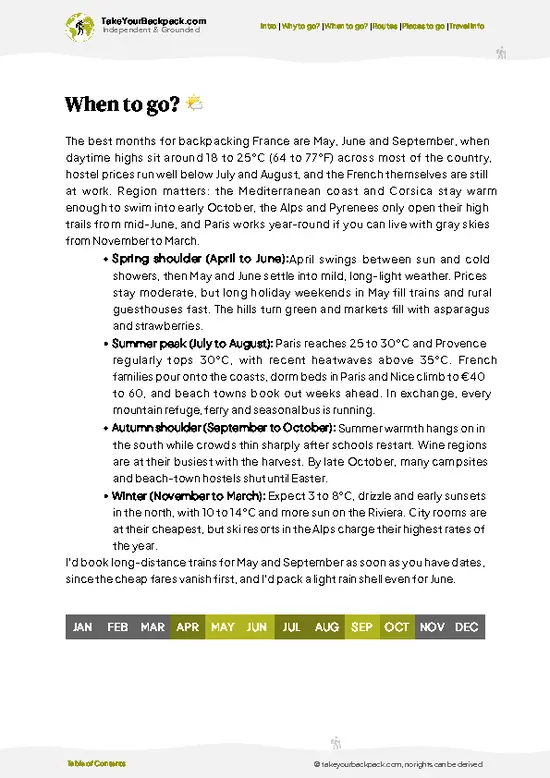
🌤️ When to go?Best time to visit Cité de Carcassonne

  • Weather: Summers are hot and dry, often pushing 30-35°C (86-95°F), which can make wandering the stone walls exhausting. Winters are mild but damp, hovering around 5-10°C (41-50°F), with a chill that seeps into the ancient stones.
  • Temperature: Spring and autumn offer the sweet spot—comfortable 15-22°C (59-72°F) days that invite long strolls without sweating buckets or shivering.
  • Daylight Hours: Peak season grants up to 15 hours of daylight, perfect for exploring every nook. Off-season days shrink to about 9-10 hours, so plan your wanderings accordingly.
  • Crowds: July and August are packed with tourists, turning the medieval streets into a slow-moving parade. Shoulder seasons (April-May, September-October) provide a quieter, more authentic vibe with fewer selfie sticks in your way.
  • Seasonal
… read more 👉
  • Weather: Summers are hot and dry, often pushing 30-35°C (86-95°F), which can make wandering the stone walls exhausting. Winters are mild but damp, hovering around 5-10°C (41-50°F), with a chill that seeps into the ancient stones.
  • Temperature: Spring and autumn offer the sweet spot—comfortable 15-22°C (59-72°F) days that invite long strolls without sweating buckets or shivering.
  • Daylight Hours: Peak season grants up to 15 hours of daylight, perfect for exploring every nook. Off-season days shrink to about 9-10 hours, so plan your wanderings accordingly.
  • Crowds: July and August are packed with tourists, turning the medieval streets into a slow-moving parade. Shoulder seasons (April-May, September-October) provide a quieter, more authentic vibe with fewer selfie sticks in your way.
  • Seasonal Activities: Summer hosts lively medieval festivals that add color but also crowds and noise. Winter is quiet, with fewer events but a chance to see the city’s eerie beauty under mist and low light.
  • Price Fluctuations: Accommodation and flights spike in summer. Booking in shoulder seasons can save you a solid 20-30%, and local eateries are less touristy and more wallet-friendly.
Pro-tip: Visit in late spring or early autumn—mild weather, manageable crowds, and a chance to soak in the city’s atmosphere without the tourist circus.


source: climatestotravel.comJANJanuary: fair for travelingFEBFebruary: fair for travelingMARMarch: good for travelingAPRApril: highly recommended for travelingMAYMay: excellent for travelingJUNJune: highly recommended for travelingJULJuly: fair for travelingAUGAugust: fair for travelingSEPSeptember: excellent for travelingOCTOctober: highly recommended for travelingNOVNovember: good for travelingDECDecember: fair for traveling
france-unique-site-cite-de-carcassonne
© Google | Laurence Dréano

✈️ The backpacker research shortcutFrance Travel Guide

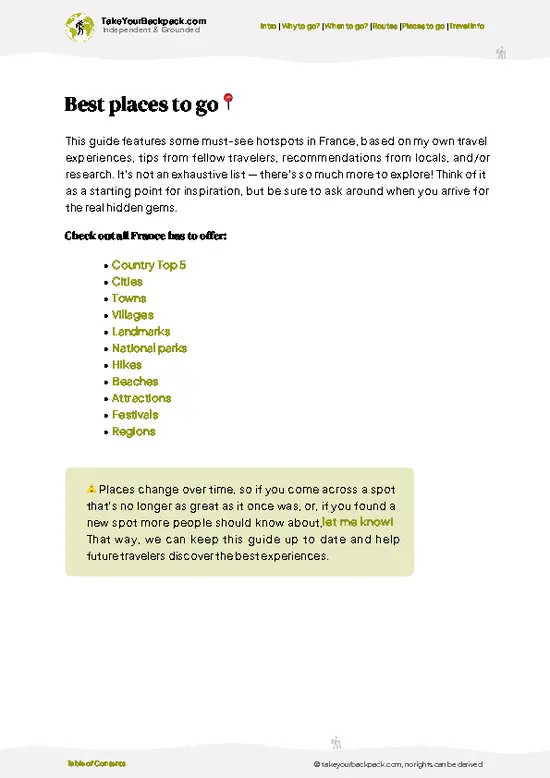
An offline-friendly backpacking guide with optimized travel routes, ranked highlights, transport advice, and the best areas to stay.
example page 0 from our offline Travel Guide for France
example page 1 from our offline Travel Guide for France
example page 2 from our offline Travel Guide for France
example page 3 from our offline Travel Guide for France
example page 4 from our offline Travel Guide for France
example page 5 from our offline Travel Guide for France
example page 6 from our offline Travel Guide for France
example page 7 from our offline Travel Guide for France
The digital guide (501 pages) contains:
✅ 135 highlights, ranked by travel appeal
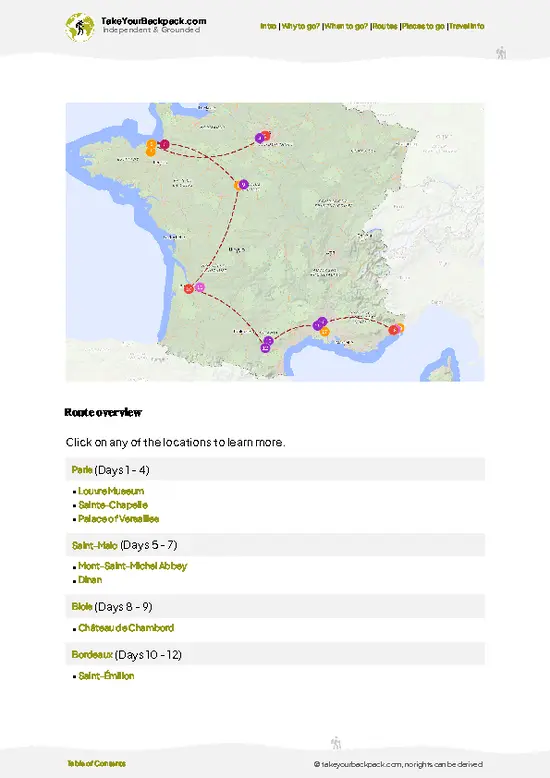
✅ Optimized 7, 14 & 21-day travel routes
✅ Cities, national parks, landmarks, beaches
✅ How to get around
✅ Offline-friendly for travel without Wi-Fi
👉 Click to see all 30+ guide features

📅 Plan smarter in minutes, not weeks
✅ Month by month travel advice
✅ Festivals & national holidays
✅ Budget expectations

🗺️ Go to the right places, skip the overrated ones
✅ Honest pros & cons of destinations
✅ Top hikes, parks & viewpoints
✅ Lesser-known places most travelers miss
✅ Clear “worth it vs skip it” guidance

🛏️ Travel smoothly without rookie mistakes
✅ Best areas to stay
✅ Transport systems explained simply
✅ Common scams & safety advice
✅ SIM cards, money & practical tips

🌍 Understand the country, not just visit it
✅ Culture & traditions
✅ 52 Essential phrases & customs
✅ Festivals worth planning around
✅ Traveler-friendly historical context
✅ Insights that make places more meaningful

📱 Built for real travel conditions
✅ Fully downloadable PDF
✅ Works completely offline
✅ Optimized for phone use
✅ Useful in remote areas & buses
✅ Everything in one place
Stop searching, start planning
Get instant access to your full guide. 30‑day money-back guarantee.
+ Add another guide for just

By proceeding you agree to our terms.
Sent to your inbox immediately after payment • 100% Secure Checkout
Best Backpacking Travel Advisor 2025 tourism awardBest Backpacking
Travel Advisor
2025
What others say about Take Your Backpack Guides:
⭐⭐⭐⭐⭐
Fantastic, amazing amount of information!
⭐⭐⭐⭐⭐
My goodness this is amazing, it's what I've been looking for hats off too you!
⭐⭐⭐⭐⭐
I think this is absolutely BRILLIANT
⭐⭐⭐⭐
Very complete and informative. It's still missing places, but I gotta to commend you
⭐⭐⭐⭐⭐
This is truly amazing, thank you, can't wait to explore it with my kids!
⭐⭐⭐⭐⭐
Awesome resource, thank you!
⭐⭐⭐⭐⭐
This is amazing! Can't wait to explore the ones I haven't seen
⭐⭐⭐⭐
I love this! Well done, great idea.
⭐⭐⭐⭐⭐
Thanks for taking the time to make this gem!
⭐⭐⭐⭐⭐
This might be the best website I've ever seen.
⭐⭐⭐⭐⭐
Congratulations, and thank you so much for your work; it's incredibly valuable.
⭐⭐⭐⭐
In all seriousness I think you did a great job pointing out the important spots
⭐⭐⭐⭐⭐
10/10 very good
⭐⭐⭐⭐⭐
As someone who's only just starting to visit regularly this is awesome, thank you.
⭐⭐⭐⭐
Thank you very much! I'm going to visit my dad, it's going to be very useful!
⭐⭐⭐⭐⭐
This is really cool! We'll be travelling for the first time and this definitely come in handy.
⭐⭐⭐⭐⭐
You are now our minister of culture, congratulations 👨‍💼
⭐⭐⭐⭐⭐
Just wanted to tell you that this is a pearl! Going to follow your recommendations.
⭐⭐⭐⭐⭐
This is so cool. I'll definitely be using the resource for my travels soon.
⭐⭐⭐⭐⭐
This is very impressive! Good work.
⭐⭐⭐⭐⭐
This is an amazing and informative site. Very well done!

🛏️ Where to stay?Choosing the right base

Staying near the Cité de Carcassonne is a game-changer for backpackers. The area around the cité is buzzing with energy, but don’t let the crowds fool you. Yes, it can get packed, especially in summer, but that’s part of the charm.

Opt for the neighborhoods just outside the fortified walls. The Bastide Saint-Louis offers a more local vibe. You’ll find cozy cafés, vibrant markets, and a genuine sense of community. It’s safe, and you can easily mingle with locals and fellow travelers alike.

Another solid choice is the area near the Canal du Midi. This picturesque spot is perfect for those who … read more 👉
Staying near the Cité de Carcassonne is a game-changer for backpackers. The area around the cité is buzzing with energy, but don’t let the crowds fool you. Yes, it can get packed, especially in summer, but that’s part of the charm.

Opt for the neighborhoods just outside the fortified walls. The Bastide Saint-Louis offers a more local vibe. You’ll find cozy cafés, vibrant markets, and a genuine sense of community. It’s safe, and you can easily mingle with locals and fellow travelers alike.

Another solid choice is the area near the Canal du Midi. This picturesque spot is perfect for those who appreciate a quieter atmosphere. You can stroll along the canal, meet other backpackers, and enjoy a sunset that doesn’t require elbowing through throngs of tourists.

Both areas are budget-friendly, with plenty of options for affordable eats and social hangouts. You’ll get the best of both worlds: proximity to the iconic site and a taste of authentic French life. Embrace the hustle, but don’t forget to find those moments of peace.

👛 Costs (as of 15 October 2026)Travel costs and budget guide for Cité de Carcassonne

Visiting the Cité de Carcassonne can be a mixed bag of costs, but knowing what to expect can help you navigate it like a pro.
  • Entry Fees: Expect to pay around €9 to €12 for adults to enter the medieval fortress. Kids often get discounted rates, sometimes as low as €6. If you want a guided tour, that’ll set you back an additional €15 to €20. Worth it if you want the full story behind those ancient walls.
  • Food & Drink: Dining options vary widely. A casual meal can cost you about €10 to €20 per person. If you’re feeling fancy, a sit-down dinner can easily run €30 to €50. Grab a baguette and some local cheese from a market for a budget-friendly picnic, which can be around €5 to €10.
  • Accommodation: Prices for hotels and hostels fluctuate. Budget travelers can find dorm beds starting at €20, while
… read more 👉
Visiting the Cité de Carcassonne can be a mixed bag of costs, but knowing what to expect can help you navigate it like a pro.
  • Entry Fees: Expect to pay around €9 to €12 for adults to enter the medieval fortress. Kids often get discounted rates, sometimes as low as €6. If you want a guided tour, that’ll set you back an additional €15 to €20. Worth it if you want the full story behind those ancient walls.
  • Food & Drink: Dining options vary widely. A casual meal can cost you about €10 to €20 per person. If you’re feeling fancy, a sit-down dinner can easily run €30 to €50. Grab a baguette and some local cheese from a market for a budget-friendly picnic, which can be around €5 to €10.
  • Accommodation: Prices for hotels and hostels fluctuate. Budget travelers can find dorm beds starting at €20, while mid-range hotels typically range from €70 to €150 per night. If you’re splurging, expect to pay €200 or more for a boutique hotel with a view of the fortress.
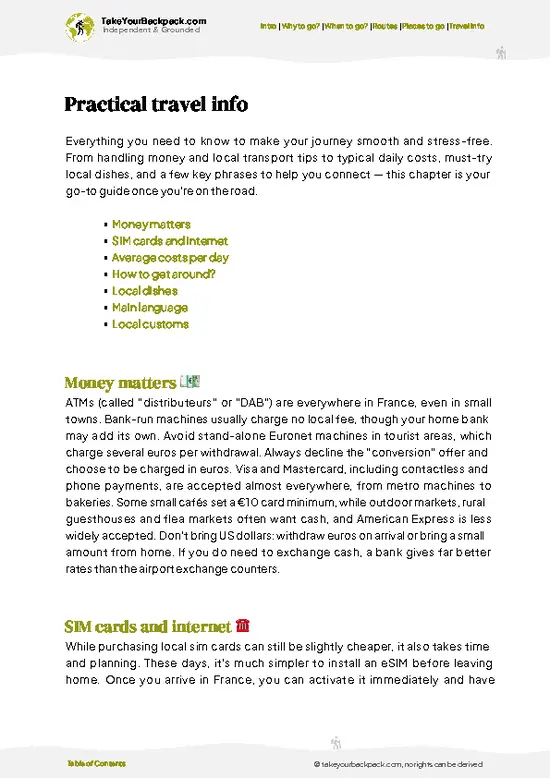
  • Transportation: If you’re coming from Toulouse, a train ticket will cost about €15 to €25 one way. Local buses are cheaper, usually under €5. Once in Carcassonne, walking is the best way to soak in the sights, but bike rentals are available for around €10 per day.
  • Souvenirs: Don’t forget to budget for mementos. Local crafts and wines can range from €5 to €50, depending on what you’re after. A simple postcard? Just a couple of euros.

Understanding these costs helps you plan better. Carcassonne is worth the journey, but being prepared means you can enjoy the real magic without the financial hangover.


source: france.fr
⚠️ Prices can change and everyone travels differently, so take this as a rough guide. Hope it helps you plan your adventure!

FAQTraveler FAQ

The Cité de Carcassonne is a medieval fortress located in the Aude department of France, known for its double-walled fortifications and 53 towers. It is a UNESCO World Heritage site and one of the best-preserved fortified cities in Europe.
You need about 3 to 4 hours to explore the main attractions of the Cité de Carcassonne, including the castle, ramparts, and medieval streets. For a more relaxed visit with guided tours and museum visits, plan for half a day.
You can get to the Cité de Carcassonne by train, with direct services from Toulouse and Narbonne taking about 30 to 45 minutes. The city is also accessible by car via the A61 motorway, with parking available outside the fortress walls.
⚠️ Things can change over time, so always validate details locally before you go.

Other French landmarks near Cité de Carcassonne

Explore more nearby:

  • Canal du Midi—tree-lined towpaths, stone locks, leisure boating| 23 km away
  • Maison Carrée—Roman temple, Corinthian columns, preserved façade| 176 km away
  • Pont du Gard—multi-tiered arches, river crossing, ancient engineering| 194 km away

💡 Not sure where to go next?
Create a personalized itinerary for France including Cité de Carcassonne and the places that fit your trip.

Generate my itinerary

👉 Discover all landmarks

Or checkout all France has to offer (think cities, towns, villages, national parks, hikes, beaches, festivals)
Country photo of France

We 💚 feedbackFinal thoughts on visiting Cité de Carcassonne

Carcassonne is a stunning medieval marvel that feels like stepping into a fairy tale. The intricate architecture and the sense of history are genuinely captivating. But let’s be real: the crowds can be overwhelming, especially in summer. You’ll be jostling for space with selfie sticks and tour groups. Still, if you can navigate the chaos, the evening light casting shadows on the ancient stones is worth every moment. Just be prepared for the hustle.

✈️ When did I visit France?
Being close to The Netherlands, my home base, I visited France many times.

✍️ Help improve this page!
The information on this page is based on my own backpacking experience in France, supplemented with up-to-date research and feedback from other travelers. Travel details can change, so if you notice anything outdated or incomplete, feel free to let me know.


🙋‍♂️ Give feedback

👋 Meet the founderWho’s Behind Take Your Backpack?

Johan, backpacker and founder of TakeYourBackpackHi, I’m Johan (Netherlands 🇳🇱), the creator of TakeYourBackpack. Over the past 3 decades, I’ve backpacked through 90+ countries across six continents, gaining extensive experience with independent travel, long-term trips, and overland routes.

This site is built on a combination of firsthand travel experience and carefully curated insights from other backpackers. Many guides are based on places I’ve personally visited, while others bring together tips, observations, and practical advice shared by trusted travelers I’ve met along the way.

The goal is to provide realistic, experience-driven guidance — not generic itineraries — so you can explore destinations with better context, clearer expectations, and more confidence.