v2.webp)
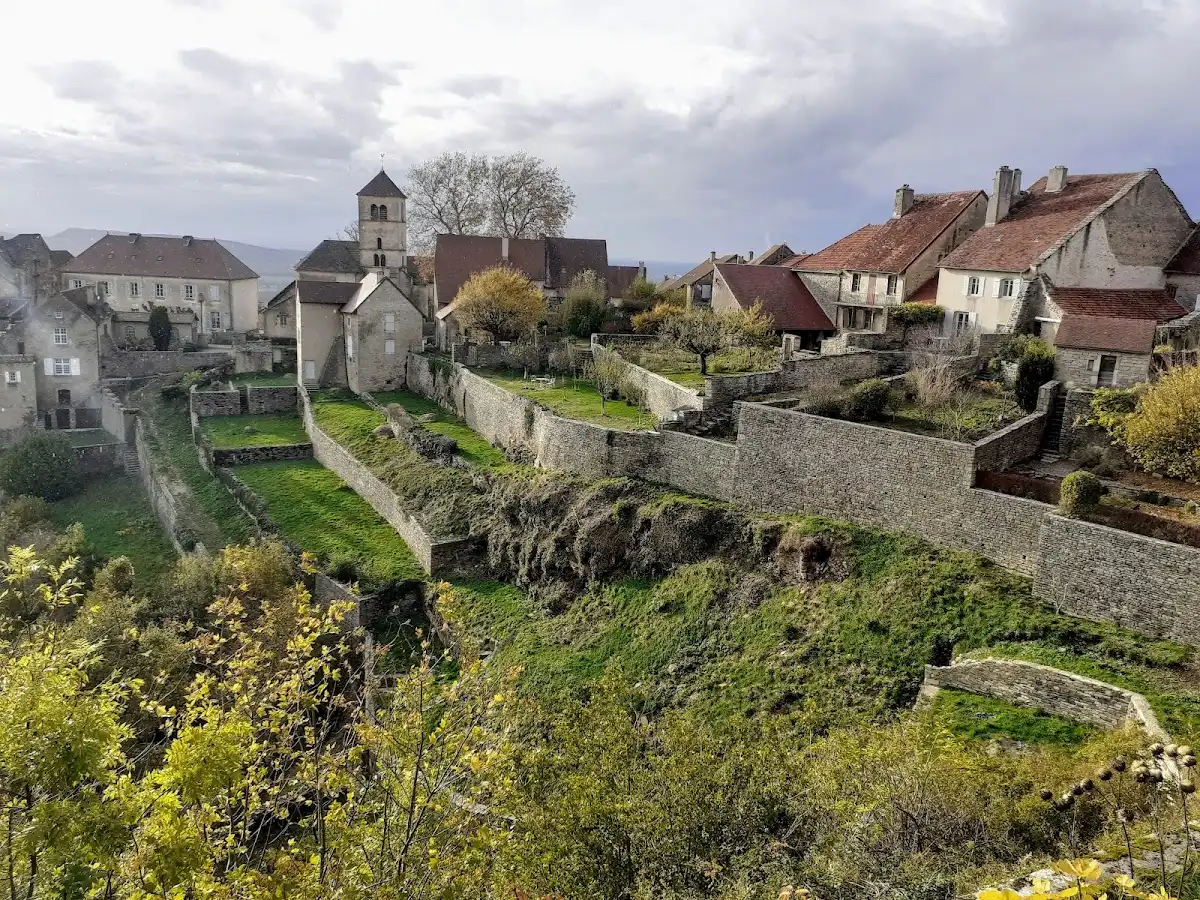
- The village core (medieval heart) — The whole compact village is the main attraction: narrow stone lanes, preserved facades and a medieval layout that earned Château-Chalon its place among ”Les Plus Beaux Villages de France.” Walking it feels like stepping into a postcard, and it’s all visitable on foot.
- Église Saint-Pierre — A small Romanesque church at the village spine. The architecture and simple interior give a good sense of the place’s long history, and the church sits high enough for a nice pause between tastings.
- Ruins of the old château — Remnants of the medieval castle that gave the village its name. The stones and low walls mark the defensive origin of the site and double as viewpoints over the vineyards below.
- Belvédère and ramparts — Walkable ramparts and a few lookout spots
- The village core (medieval heart) — The whole compact village is the main attraction: narrow stone lanes, preserved facades and a medieval layout that earned Château-Chalon its place among ”Les Plus Beaux Villages de France.” Walking it feels like stepping into a postcard, and it’s all visitable on foot.
- Église Saint-Pierre — A small Romanesque church at the village spine. The architecture and simple interior give a good sense of the place’s long history, and the church sits high enough for a nice pause between tastings.
- Ruins of the old château — Remnants of the medieval castle that gave the village its name. The stones and low walls mark the defensive origin of the site and double as viewpoints over the vineyards below.
- Belvédère and ramparts — Walkable ramparts and a few lookout spots give classic cliffside views over the Jura vines and the Bresse plain — the reason people come here for photography and sunsets.
- Steep historic streets and stone houses — The alleys that climb toward the château are full of carved lintels, arched doorways and old timber frames; excellent for slow wandering and finding hidden corners off the main viewpoints.
- Family wine cellars and tasting rooms — Château-Chalon is famous for vin jaune (and vin de paille). Many small domaines open cellar doors for tastings — often in cool, stone cellars carved into the slope — a must for understanding the place.
- Vineyard terraces and short walking loops — The vertical, walled ”clos” vineyards are right on the village’s doorstep. Short marked walks start from the streets and let you see the vineyards, dry-stone walls and terroir up close.
- Historic gates and fortification fragments — Several preserved entrances and fragments of the old defenses are scattered through the village; they’re small, tangible reminders of Château-Chalon’s medieval role and easy to inspect at street level.
- Local artisans, producers and seasonal markets — Small shops and occasional markets sell local cheeses, jars of must and crafts. It’s low-key, but where you’ll find the real, everyday local food and souvenirs (and friendly vendor tips).
- Tourist office & interpretive panels — The visitor point in the village provides maps, practical tasting openings and short panels explaining the vin jaune, geology and village history — helpful for planning a proper stroll or cellar visits.
Spotted a mistake or missing something? Contact us.

Besancon Private Walking Tour With A Professional Guide

Unusual track game on Christmas markets in Montbéliard

Private Sightseeing Flight above the Doubs

Besançon Audio guided walking tour 2h10 and 25 audio commentary

Tour guide in Besançon - Visit Besançon with your official guide

 Best Backpacking
.jpg) Hi, I’m Johan (Netherlands 🇳🇱), the creator of TakeYourBackpack. Over the past 3 decades, I’ve backpacked through 90+ countries across six continents, gaining extensive experience with independent travel, long-term trips, and overland routes.
Hi, I’m Johan (Netherlands 🇳🇱), the creator of TakeYourBackpack. Over the past 3 decades, I’ve backpacked through 90+ countries across six continents, gaining extensive experience with independent travel, long-term trips, and overland routes.