v2.webp)
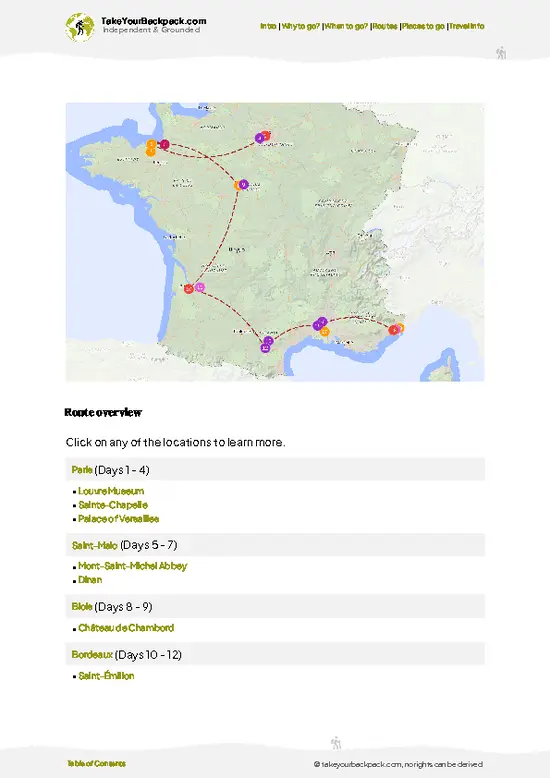
- Abbey of Mont-Saint-Michel (Abbaye) — The reason everyone comes: a mix of soaring medieval architecture, monastic history and that dramatic silhouette. Visiting the abbey church, cloisters and chapels gives you the core story of the island.
- La Merveille — The 13th-century “wonder” wing of the abbey (think elegant ribbed vaults, stacked halls and refined masonry). It’s where the abbey’s ambition and craftsmanship are most obvious.
- The Cloister and Garden — A quiet, green pocket tucked behind the abbey’s walls. The shaded walkways and small garden are perfect for slowing down and imagining medieval monks’ daily rhythms.
- Salle des Chevaliers (Great Refectory and Chapter House) — Big, austere spaces where monks ate, met and administered justice. The scale and acoustics are impressive; you
- Abbey of Mont-Saint-Michel (Abbaye) — The reason everyone comes: a mix of soaring medieval architecture, monastic history and that dramatic silhouette. Visiting the abbey church, cloisters and chapels gives you the core story of the island.
- La Merveille — The 13th-century “wonder” wing of the abbey (think elegant ribbed vaults, stacked halls and refined masonry). It’s where the abbey’s ambition and craftsmanship are most obvious.
- The Cloister and Garden — A quiet, green pocket tucked behind the abbey’s walls. The shaded walkways and small garden are perfect for slowing down and imagining medieval monks’ daily rhythms.
- Salle des Chevaliers (Great Refectory and Chapter House) — Big, austere spaces where monks ate, met and administered justice. The scale and acoustics are impressive; you can still feel the institutional power of the place.
- Ramparts and Fortifications — Walk the outer walls and towers for close-up views of the abbey’s defensive architecture and wide panoramas over the bay and causeway. Golden-hour light here is worth the climb.
- La Grande Rue — The narrow medieval main street that threads the village: tiny shops, old stone houses, salt-caked façades and cafés. It’s touristy, yes, but it’s the living spine of the island and great for people-watching.
- Église Paroissiale Saint-Pierre — The small parish church on the island, with simple stone interiors and local maritime ex-votos. It shows the island’s day-to-day devotional life beside the grand abbey.
- Chapelle Saint-Aubert — A compact chapel tucked into the ramparts area; quiet, atmospheric and historically connected to local saints and pilgrims. A nice counterpoint to the abbey’s scale.
- Musée Historique (Historical Museum) — Housed in old buildings, it gathers artifacts, models and daily-life exhibits that explain how the abbey and village functioned across centuries. Good context if you want more than just pretty stone.
- Traces of the Abbey’s Later Uses (former prison spaces and reinterpretations) — The abbey’s later chapters—used as a state prison after the Revolution—left scars and rooms that can be seen on visits. They add a darker, very human layer to the site’s history.
Spotted a mistake or missing something? Contact us.

Full-Day US Battlefields of Normandy Tour from Bayeux (A3LST)

Private Guided Tour in WW2 Jeep of the Landing Beaches

2-hour walking tour of Mont Saint-Michel

2 Hour Guided Walking tour of the Mont Saint Michel

From Cherbourg Cruise Port: D-Day Beaches Shore Excursion

Normandy Victory Museum admission ticket

Mt St. Michel Private Tour with Abbey tickets and tour guide

Quicksand Experience Mont Saint Michel

Private guided Allied D-Day Tour from Bayeux


 Best Backpacking
.jpg) Hi, I’m Johan (Netherlands 🇳🇱), the creator of TakeYourBackpack. Over the past 3 decades, I’ve backpacked through 90+ countries across six continents, gaining extensive experience with independent travel, long-term trips, and overland routes.
Hi, I’m Johan (Netherlands 🇳🇱), the creator of TakeYourBackpack. Over the past 3 decades, I’ve backpacked through 90+ countries across six continents, gaining extensive experience with independent travel, long-term trips, and overland routes.