v2.webp)
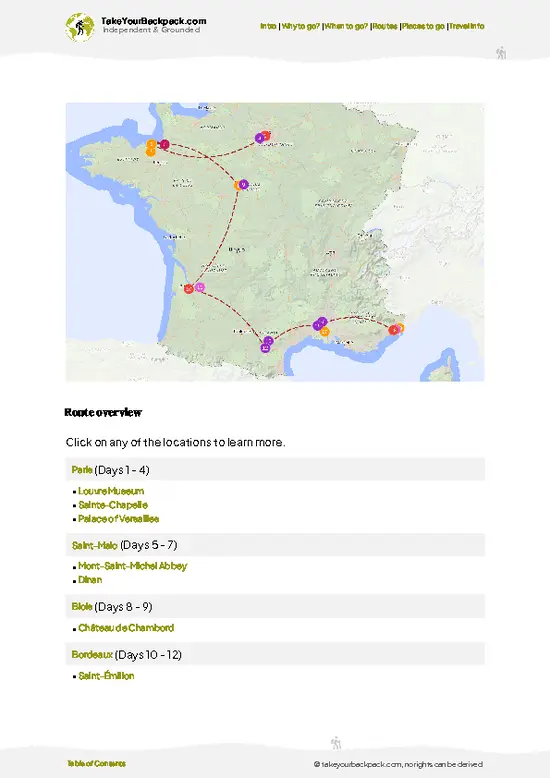
- Notre-Dame de Beauvoir (the cliff-top chapel) — a steep climb of roughly 260 stone steps rewards you with a tiny, centuries-old chapel and one of the best panoramas over the village and the Verdon valley; the ascent itself is part of the experience.
- The suspended star (L’Étoile) — the metal star hanging on a chain between the limestone cliffs is Moustiers’ signature sight; it’s a short, unavoidable photo stop and carries the village’s romantic, slightly mythic backstory.
- Musée de la Faïence — compact but focused, this museum shows why Moustiers is world-renowned for its tin-glazed pottery: historic pieces, local styles, and context that makes browsing the shops afterward more interesting.
- Local faïence workshops and showrooms — potters still work here; visit an atelier to see throwing
- Notre-Dame de Beauvoir (the cliff-top chapel) — a steep climb of roughly 260 stone steps rewards you with a tiny, centuries-old chapel and one of the best panoramas over the village and the Verdon valley; the ascent itself is part of the experience.
- The suspended star (L’Étoile) — the metal star hanging on a chain between the limestone cliffs is Moustiers’ signature sight; it’s a short, unavoidable photo stop and carries the village’s romantic, slightly mythic backstory.
- Musée de la Faïence — compact but focused, this museum shows why Moustiers is world-renowned for its tin-glazed pottery: historic pieces, local styles, and context that makes browsing the shops afterward more interesting.
- Local faïence workshops and showrooms — potters still work here; visit an atelier to see throwing and glazing, grab a hand-painted souvenir, and meet artisans who keep the tradition alive.
- Ruins of the old castle and cliff fortifications — the remains above the village are walkable and give a raw sense of the place’s medieval defensive position, plus more great lookout spots without the crowds.
- The village waterfall and old washhouse — a pretty, easy spot right by the lower streets where the mountain water tumbles through the village; nice for a quiet pause and a few cool minutes away from sunlit terraces.
- Église Notre-Dame-de-l’Assomption — the parish church in the heart of town; modest, atmospheric interior with local religious art and the everyday feel of a working village church.
- The main square and historic fountains — stone terraces, a central fountain, cafés and bakeries: this is where village life happens, great for people-watching and sampling Provencal snacks.
- Narrow medieval alleys and vaulted passages — wander the stepped lanes and tucked-away arches to find tiny shops, hidden viewpoints and the real, lived-in character of the old village away from the main crowds.
- Short footpaths and belvederes around the village — dozens of small trails and lookouts within the commune give immediate skyline views over olive groves, lavender fields (seasonal) and the Verdon watershed — ideal for a half-hour stroll with rewarding vistas.
Spotted a mistake or missing something? Contact us.


 Best Backpacking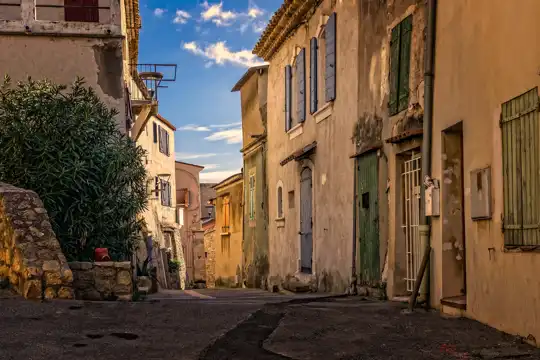
.jpg) Hi, I’m Johan (Netherlands 🇳🇱), the creator of TakeYourBackpack. Over the past 3 decades, I’ve backpacked through 90+ countries across six continents, gaining extensive experience with independent travel, long-term trips, and overland routes.
Hi, I’m Johan (Netherlands 🇳🇱), the creator of TakeYourBackpack. Over the past 3 decades, I’ve backpacked through 90+ countries across six continents, gaining extensive experience with independent travel, long-term trips, and overland routes.