
- Sentier des Ocres (the Ochre Trail) — A short, well-marked walk through the former ochre quarries where the rock’s reds, oranges and yellows are at their most dramatic; tactile, photogenic and the best way to understand why Roussillon looks the way it does.
- Conservatoire des Ocres et de la Couleur — Small museum and workshop space focused on the geology, traditional extraction and pigment-making techniques; you can see demonstrations and pick up locally made pigments or prints.
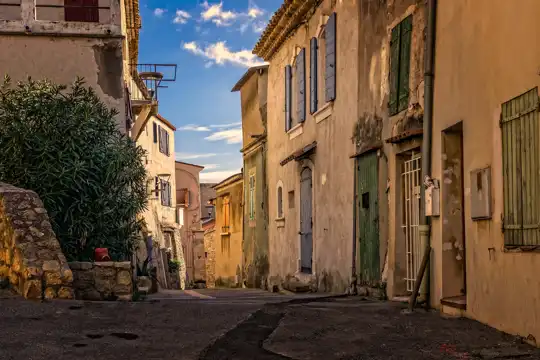
- The historic village centre (Le Bourg) — Narrow lanes and tightly packed ochre-painted houses with little surprises around every corner: tiny stairways, hidden courtyards, artisan shops and cafés that show the village’s personality more than any postcard.
- Ochre cliffs and abandoned quarries around the village —
- Sentier des Ocres (the Ochre Trail) — A short, well-marked walk through the former ochre quarries where the rock’s reds, oranges and yellows are at their most dramatic; tactile, photogenic and the best way to understand why Roussillon looks the way it does.
- Conservatoire des Ocres et de la Couleur — Small museum and workshop space focused on the geology, traditional extraction and pigment-making techniques; you can see demonstrations and pick up locally made pigments or prints.
- The historic village centre (Le Bourg) — Narrow lanes and tightly packed ochre-painted houses with little surprises around every corner: tiny stairways, hidden courtyards, artisan shops and cafés that show the village’s personality more than any postcard.
- Ochre cliffs and abandoned quarries around the village — Beyond the formal trail there are exposed faces and pockets of worked ochre that reveal mining history and make for quiet exploration and great photos if you stick to marked paths.
- Village viewpoints / belvederes — Small lookout points around the upper village give wide views over vineyards, the Luberon hills and the red earth below; perfect for sunrise/sunset without leaving the village.
- The village church (the Église on the hill) — Modest, atmospheric and set above the streets; worth a quick visit for its local architecture, a slice of community history and another angle on the surrounding scenery.
- Local artists’ galleries and studios — Roussillon has attracted painters for generations; pop into a handful of galleries or working studios to see ochre-inspired pieces and often meet the people making them.
- Ochre-focused artisan shops — Small businesses selling pigments, soaps, paints and crafts made from local ochre—nice for practical souvenirs and to learn how the material is still used today.
- Village squares and café terraces (Place de la Mairie and nearby) — Simple, lively spots to sit, watch local life, taste Provençal snacks and plan your walks; these squares are where the village feels lived-in rather than staged.
- Trailheads and short hikes that start in town — Several local footpaths leave directly from the streets of Roussillon into the Luberon countryside; good options for a 1-3 hour loop if you want quieter nature without driving.
Spotted a mistake or missing something? Contact us.

 Best Backpacking
 Hi, I’m Johan (Netherlands 🇳🇱), the creator of TakeYourBackpack. Over the past 3 decades, I’ve backpacked through 90+ countries across six continents, gaining extensive experience with independent travel, long-term trips, and overland routes.