×

Gabon🇬🇦 | citiesLibrevilleAtlantic coastline, open-air markets, embassies, modern boulevards | things to do and best time to go

Explore FrancevilleExplore Port-Gentil

Backpacking in Libreville
🏆 Top pickcity ranked #1
By Johan Kruseman 🇳🇱 | Updated July 23, 2026

Here’s the trick most travelers only realize on their way out: Libreville is one of the rare African capitals where you can hop from a bustling market to a breezy Atlantic beach in the same afternoon, no taxi drama required. Sitting on Gabon’s northwest coast, Libreville is the country’s entry point and its pulse—equal parts government suits, street food smoke, and salt air. For backpackers, it’s a city of contrasts: the National Museum’s tribal masks and colonial relics are genuinely worth a detour, but the city’s modern sprawl and patchy infrastructure can make getting around feel like a scavenger hunt. You’ll find a few lively bars and open-air clubs along the seafront, but don’t expect the backpacker camaraderie of Accra or Dakar—most travelers here are business types or locals. Costs are high for West Africa, safety is decent if you keep your wits, and the vibe is more laid-back than Libreville’s reputation suggests, but less friendly to shoestring wanderers than Gabon’s smaller towns like Lambaréné or Franceville.

Discover everything you want to know in the 📖 Gabon Travel Guide.


Get your Gabon guide
52 ranked highlights, routes & tips, works offline (222 pages)
Loading the map 🌍
CLICK TO FILTER
cities
towns
villages
landmarks
national parks
hikes
beaches
attractions
festivals
regions
SHOW COUNTRY’S BESTSHOW ALL

✨ Why go?
Ranked #1 city in Gabon
Reasons people choose to visit here

Backpackers often find themselves in Libreville not just for its highlights, but for the value it brings to their journey. This city serves as a solid basecamp for day trips into Gabon’s stunning national parks and coastal areas. The hostels here are affordable and social, making it easy to meet fellow travelers and share tips.

When it comes to food, you can indulge in local dishes without breaking the bank. Street vendors offer delicious bites that keep your energy up for exploring. The walkability of the city is a bonus; you can easily navigate its streets, soaking in the local vibe without needing a taxi.

As for nightlife, there’s a lively scene that caters to various tastes, from laid-back bars to energetic clubs. Plus, onward travel is a breeze, with connections to other parts of … read more 👉
Backpackers often find themselves in Libreville not just for its highlights, but for the value it brings to their journey. This city serves as a solid basecamp for day trips into Gabon’s stunning national parks and coastal areas. The hostels here are affordable and social, making it easy to meet fellow travelers and share tips.

When it comes to food, you can indulge in local dishes without breaking the bank. Street vendors offer delicious bites that keep your energy up for exploring. The walkability of the city is a bonus; you can easily navigate its streets, soaking in the local vibe without needing a taxi.

As for nightlife, there’s a lively scene that caters to various tastes, from laid-back bars to energetic clubs. Plus, onward travel is a breeze, with connections to other parts of Gabon and beyond.

If you’re looking for a place that balances comfort and adventure, Libreville is more than just a stopover; it’s a strategic point that enriches your backpacking experience. Choose wisely, and you’ll find it’s worth your time.
Want to include Libreville in your Gabon route?
Create a personalized Gabon itinerary that includes Libreville and the places that fit your trip — based on your travel style, budget, and available time. Get your route in seconds.

Generate my trip

💡 HighlightsPlaces and moments you shouldn't skip

  • Marché Mont-Bouët — the city’s biggest, loudest market: fresh fish, produce, spices and second-hand clothes. Go early, haggle, eat grilled fish at a stall and watch the real daily life of Libreville unfold.
  • Marché artisanal (seafront craft market) — stalls of wood carvings, masks, basketry and small galleries right by the waterfront. It’s tourist-friendly but the stuff is genuine and it’s the best place to see contemporary Gabonese craft in one spot.
  • Musée National des Arts et Traditions du Gabon — small but informative: traditional masks, ritual objects and displays that explain Gabon’s ethnic groups and history. A solid primer before you talk with locals about culture and symbolism.
  • Sibang Arboretum (Forêt de Sibang) — a surprising pocket of Atlantic rainforest inside the urban sprawl.
read more 👉
  • Marché Mont-Bouët — the city’s biggest, loudest market: fresh fish, produce, spices and second-hand clothes. Go early, haggle, eat grilled fish at a stall and watch the real daily life of Libreville unfold.
  • Marché artisanal (seafront craft market) — stalls of wood carvings, masks, basketry and small galleries right by the waterfront. It’s tourist-friendly but the stuff is genuine and it’s the best place to see contemporary Gabonese craft in one spot.
  • Musée National des Arts et Traditions du Gabon — small but informative: traditional masks, ritual objects and displays that explain Gabon’s ethnic groups and history. A solid primer before you talk with locals about culture and symbolism.
  • Sibang Arboretum (Forêt de Sibang) — a surprising pocket of Atlantic rainforest inside the urban sprawl. Short shaded trails, birdlife and a clear sense of what the region looked like before the city grew — great for a cool, green break.
  • Cathédrale Sainte-Marie de Libreville — an elegant cathedral whose interior and exterior reflect colonial-era architecture and local religious life. Quiet, photogenic and useful for people-watching during services.
  • Le Plateau and the seafront promenade — the business heart and waterfront: colonial buildings, government offices, a relaxed corniche for evening walks and plenty of street food vendors. It’s where modern Libreville meets older layers of the city.
  • Palais présidentiel (view from the outside) — impressive waterfront palace you can’t enter but can walk up to and photograph. The guarded grounds and nearby public spaces say a lot about Gabon’s recent political history and civic style.
  • Port de Libreville & fish market — early-morning bustle where fishermen, buyers and cooks all converge. The display of fresh catches and the hustle of the quay are a visceral way to understand local diets and livelihoods.
  • Stade Omar Bongo — catch a local football match if you can; the atmosphere is electric, local support intense, and it’s a real cultural experience outside museums and markets.
  • Institut Français / Maison de la Culture — where exhibitions, film nights, small concerts and workshops happen. Check the schedule: it’s the best place in the city to catch contemporary Gabonese art and events with English/French-friendly programming.
A few excellent day trips close to Libreville: the beaches at Pointe-Denis, birding and mangroves in Akanda National Park, and the coastal forests and beaches of Pongara National Park.
Spotted a mistake or missing something? Contact us.

Things to do in Libreville

Ratings based on Tripadvisor reviews. When you book through this link, you support our work at no extra cost to you.

🏘️ NeighborhoodsWhere things are and how it's laid out

Libreville offers a unique blend of urban energy and coastal charm, making it a fascinating stop for backpackers. Here’s a breakdown of key neighborhoods to help you navigate your choices.

Centre Ville: This is the heart of Libreville. It’s bustling with markets, shops, and local eateries. You’ll find a mix of affordable accommodations and mid-range hotels. The vibe is lively, perfect for those who thrive on energy. Walkability is decent, but be cautious of traffic. Nightlife is vibrant, with bars and clubs nearby. Ideal for short stays, as you can soak up the city’s pulse quickly.

Omar Bongo Avenue: Known for its wide boulevards and government buildings, this area feels more polished. It’s quieter than Centre Ville, making it suitable for longer stays if you prefer a more relaxed atmosphere. … read more 👉
Libreville offers a unique blend of urban energy and coastal charm, making it a fascinating stop for backpackers. Here’s a breakdown of key neighborhoods to help you navigate your choices.

Centre Ville: This is the heart of Libreville. It’s bustling with markets, shops, and local eateries. You’ll find a mix of affordable accommodations and mid-range hotels. The vibe is lively, perfect for those who thrive on energy. Walkability is decent, but be cautious of traffic. Nightlife is vibrant, with bars and clubs nearby. Ideal for short stays, as you can soak up the city’s pulse quickly.

Omar Bongo Avenue: Known for its wide boulevards and government buildings, this area feels more polished. It’s quieter than Centre Ville, making it suitable for longer stays if you prefer a more relaxed atmosphere. Transport access is good, with taxis readily available. Accommodations range from budget hostels to upscale hotels. While nightlife is limited, you can find cozy cafes for evening relaxation.

Libreville Beach: If you’re after sun and sand, this is your spot. The beach vibe is laid-back, attracting both locals and travelers. Accommodations here can be pricier, but the experience of waking up to ocean views is worth it. Walkability is excellent along the shore, and you’ll find beach bars for a casual night out. Best for longer stays if you want to unwind.

Akanda National Park: A bit outside the city, this area is for nature lovers. It’s less about nightlife and more about tranquility. Accommodations are limited, often in eco-lodges. Transport can be tricky, so plan ahead. Perfect for those looking to escape the urban hustle for a few days.

⌛️ 1 dayHow to make the most of one day

Libreville, the capital of Gabon, is a vibrant blend of urban life and lush nature. It’s a city where the Atlantic Ocean meets the rich culture of Central Africa. You’ll find lively markets, stunning beaches, and a sense of community that’s palpable. Spending a day here can be a delightful puzzle of choices, balancing time, money, and comfort.

Start your morning in the lively neighborhood of Mont-Bouet. Grab a fresh mango or a pastry from a local vendor at the bustling market. The energy is infectious, and the colors of the fruits and fabrics create a feast for the eyes. After fueling up, head to the nearby St. Michael’s Cathedral. Its striking architecture and serene atmosphere offer a moment of reflection amidst the city’s hustle.

As the sun climbs higher, make your way to the coast. The … read more 👉
Libreville, the capital of Gabon, is a vibrant blend of urban life and lush nature. It’s a city where the Atlantic Ocean meets the rich culture of Central Africa. You’ll find lively markets, stunning beaches, and a sense of community that’s palpable. Spending a day here can be a delightful puzzle of choices, balancing time, money, and comfort.

Start your morning in the lively neighborhood of Mont-Bouet. Grab a fresh mango or a pastry from a local vendor at the bustling market. The energy is infectious, and the colors of the fruits and fabrics create a feast for the eyes. After fueling up, head to the nearby St. Michael’s Cathedral. Its striking architecture and serene atmosphere offer a moment of reflection amidst the city’s hustle.

As the sun climbs higher, make your way to the coast. The beaches near the Presidential Palace, like Pointe Denis, are perfect for a midday escape. You can lounge on the sand or take a dip in the ocean. If you’re feeling adventurous, consider renting a kayak to explore the nearby mangroves. This isn’t a typical tourist activity, but it’s a fantastic way to connect with Gabon’s natural beauty.

In the afternoon, return to the city and visit the National Museum of Arts and Traditions. This often-overlooked spot showcases Gabonese art and culture, providing a deeper understanding of the country’s heritage. It’s a small investment of time that pays off in knowledge and appreciation.

As evening approaches, head to the lively area of Libreville’s downtown. Enjoy dinner at a local eatery, where you can savor grilled fish or chicken with plantains. The atmosphere is relaxed, and the flavors are authentic. Afterward, stroll along the waterfront promenade, where locals gather to unwind. The sunset over the ocean is a perfect way to cap off your day, leaving you with a sense of connection to this unique city.
Turn your Libreville visit into an Gabon adventure
Build a complete Gabon route with Libreville, hidden gems, must-see destinations, and realistic travel times included.

Generate my trip

🌤️ When to go?Seasonal considerations and timing


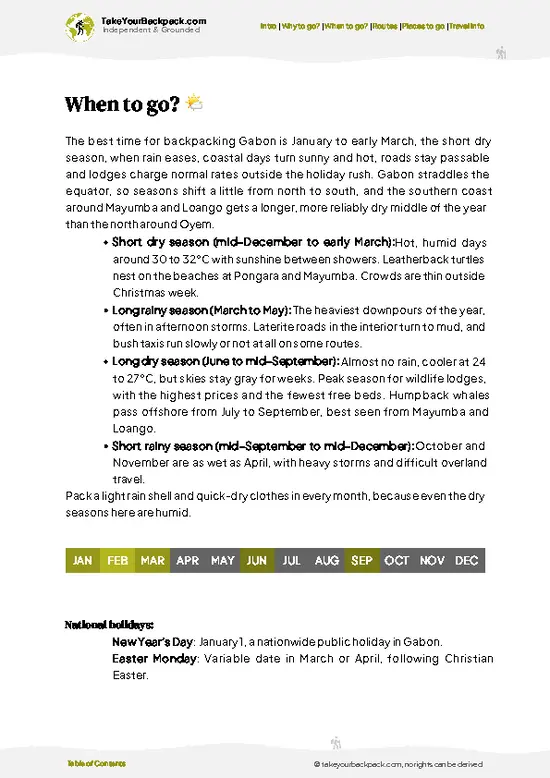
  • Topic: Weather – Libreville’s climate is equatorial, meaning it’s hot and humid year-round. The wet season from October to May brings heavy rains and frequent thunderstorms, which can slow down your plans and make trails slippery. The dry season, June to September, offers more stable weather, ideal for hiking and exploring without constant downpours.

  • Topic: Temperature – Expect highs around 28–32°C (82–90°F) throughout the year. Nights cool slightly to 22–24°C (72–75°F), but humidity keeps it feeling warmer. The dry season feels more comfortable due to lower humidity, making outdoor activities more enjoyable.

  • Topic: Daylight Hours – Near the equator, daylight stays consistent year-round, roughly 12 hours of light daily. This steady rhythm means you don’t have to juggle short days or
read more 👉

  • Topic: Weather – Libreville’s climate is equatorial, meaning it’s hot and humid year-round. The wet season from October to May brings heavy rains and frequent thunderstorms, which can slow down your plans and make trails slippery. The dry season, June to September, offers more stable weather, ideal for hiking and exploring without constant downpours.

  • Topic: Temperature – Expect highs around 28–32°C (82–90°F) throughout the year. Nights cool slightly to 22–24°C (72–75°F), but humidity keeps it feeling warmer. The dry season feels more comfortable due to lower humidity, making outdoor activities more enjoyable.

  • Topic: Daylight Hours – Near the equator, daylight stays consistent year-round, roughly 12 hours of light daily. This steady rhythm means you don’t have to juggle short days or long nights when planning your hikes or city strolls.

  • Topic: Crowds – Tourist traffic peaks during the dry season, especially July and August, when international travelers escape northern hemisphere summers. Visiting just before or after this window can mean fewer crowds without sacrificing good weather.

  • Topic: Seasonal Activities – The dry season aligns with local festivals and outdoor markets, offering richer cultural experiences. The wet season limits outdoor events but can be a good time for budget travelers who don’t mind the rain.

  • Topic: Price Fluctuations – Accommodation and flights spike during the dry season’s peak months. Booking in shoulder months like June or September can save money while still enjoying decent weather.


Pro-tip: Aim for the dry season’s shoulder months—June or September—to balance comfort, cost, and crowd size, turning timing into your secret weapon for a smooth, rewarding trip.


source: climatestotravel.comJANJanuary: fair for travelingFEBFebruary: fair for travelingMARMarch: fair for travelingAPRApril: fair for travelingMAYMay: fair for travelingJUNJune: highly recommended for travelingJULJuly: excellent for travelingAUGAugust: excellent for travelingSEPSeptember: highly recommended for travelingOCTOctober: fair for travelingNOVNovember: fair for travelingDECDecember: fair for traveling
when-to-go

✈️ The backpacker research shortcutGabon Travel Guide

An offline-friendly backpacking guide with optimized travel routes, ranked highlights, transport advice, and the best areas to stay.
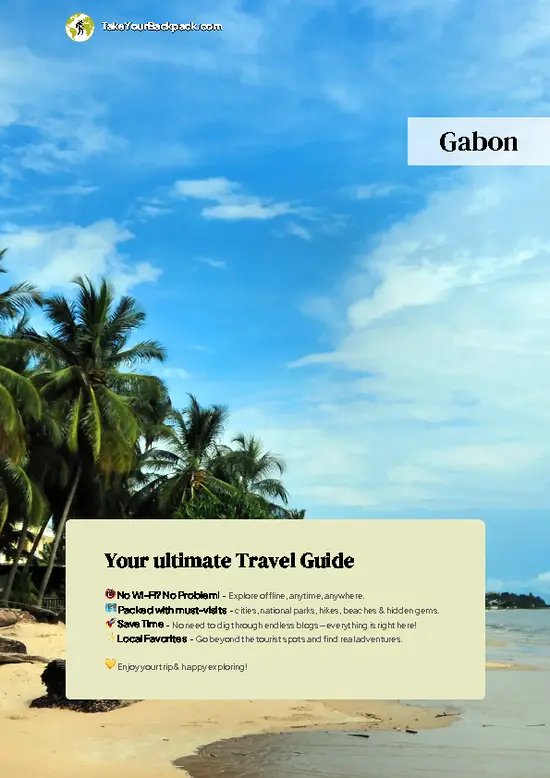
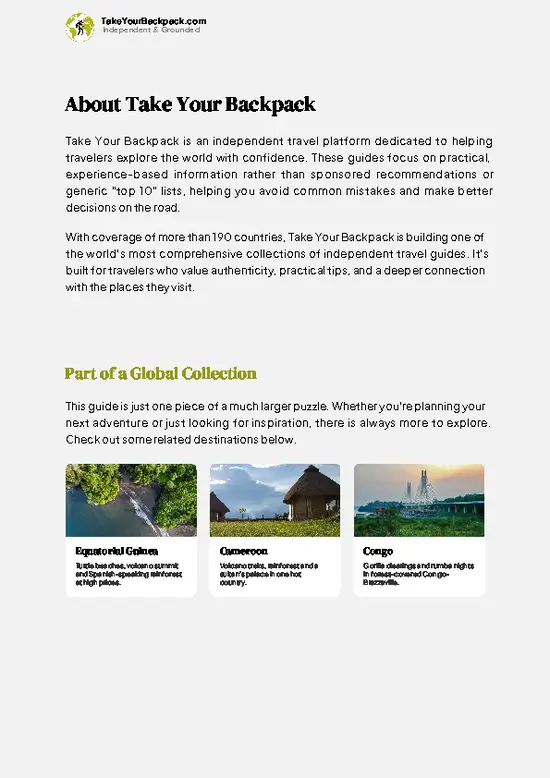
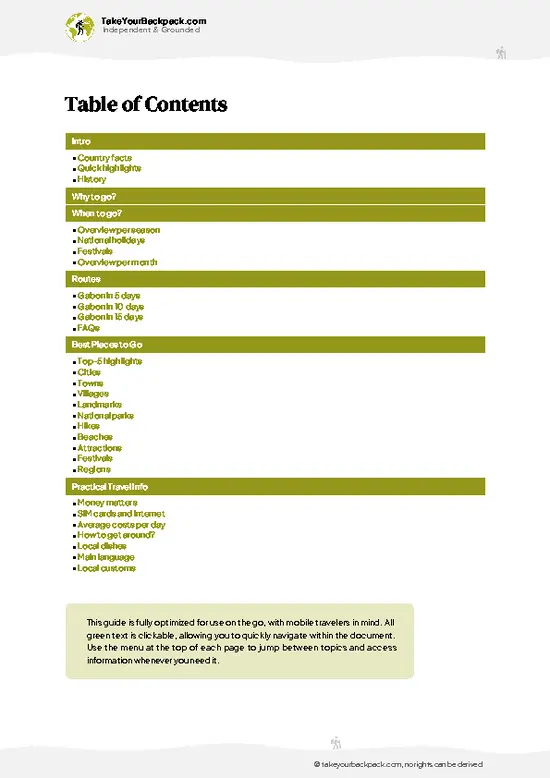
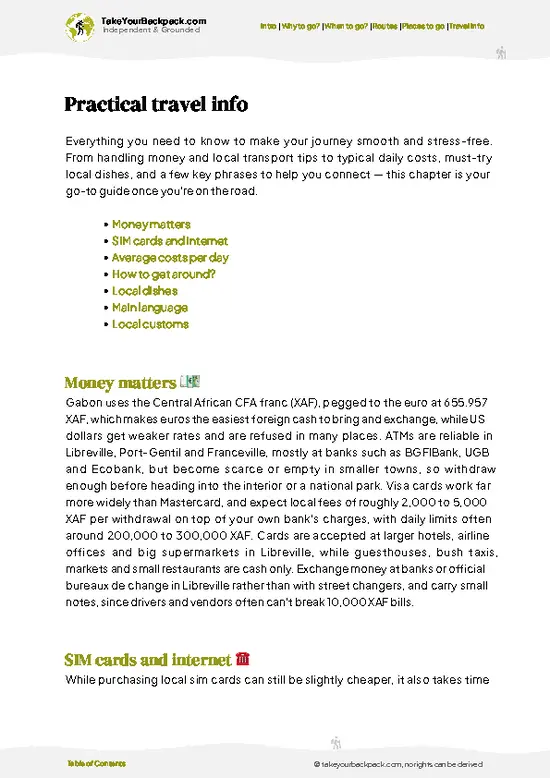
example page 0 from our offline Travel Guide for Gabon
example page 1 from our offline Travel Guide for Gabon
example page 2 from our offline Travel Guide for Gabon
example page 3 from our offline Travel Guide for Gabon
example page 4 from our offline Travel Guide for Gabon
example page 5 from our offline Travel Guide for Gabon
example page 6 from our offline Travel Guide for Gabon
example page 7 from our offline Travel Guide for Gabon
The digital guide (222 pages) contains:
52 highlights, ranked by travel appeal
Optimized 5, 10 & 15-day travel routes
Cities, national parks, landmarks, beaches
How to get around
Offline-friendly for travel without Wi-Fi
👉 Click to see all 30+ guide features

📅 Plan smarter in minutes, not weeks
Month by month travel advice
Festivals & national holidays
Budget expectations

🗺️ Go to the right places, skip the overrated ones
Honest pros & cons of destinations
Top hikes, parks & viewpoints
Lesser-known places most travelers miss
Clear “worth it vs skip it” guidance

🛏️ Travel smoothly without rookie mistakes
Best areas to stay
Transport systems explained simply
Common scams & safety advice
SIM cards, money & practical tips

🌍 Understand the country, not just visit it
Culture & traditions
52 Essential phrases & customs
Festivals worth planning around
Traveler-friendly historical context
Insights that make places more meaningful

📱 Built for real travel conditions
Fully downloadable PDF
Works completely offline
Optimized for phone use
Useful in remote areas & buses
Everything in one place
Save weeks of stressful planning
Get instant access to your full guide. 30‑day money-back guarantee.


By proceeding you agree to our terms.
Sent to your inbox immediately after payment • 100% Secure Checkout
Best Backpacking Travel Advisor 2025 tourism awardBest Backpacking
Travel Advisor
2025
What others say about Take Your Backpack Guides:
⭐⭐⭐⭐⭐
Fantastic, amazing amount of information!
⭐⭐⭐⭐⭐
My goodness this is amazing, it's what I've been looking for hats off too you!
⭐⭐⭐⭐⭐
I think this is absolutely BRILLIANT
⭐⭐⭐⭐
Very complete and informative. It's still missing places, but I gotta to commend you
⭐⭐⭐⭐⭐
This is truly amazing, thank you, can't wait to explore it with my kids!
⭐⭐⭐⭐⭐
Awesome resource, thank you!
⭐⭐⭐⭐⭐
This is amazing! Can't wait to explore the ones I haven't seen
⭐⭐⭐⭐
I love this! Well done, great idea.
⭐⭐⭐⭐⭐
Thanks for taking the time to make this gem!
⭐⭐⭐⭐⭐
This might be the best website I've ever seen.
⭐⭐⭐⭐⭐
Congratulations, and thank you so much for your work; it's incredibly valuable.
⭐⭐⭐⭐
In all seriousness I think you did a great job pointing out the important spots
⭐⭐⭐⭐⭐
10/10 very good
⭐⭐⭐⭐⭐
As someone who's only just starting to visit regularly this is awesome, thank you.
⭐⭐⭐⭐
Thank you very much! I'm going to visit my dad, it's going to be very useful!
⭐⭐⭐⭐⭐
This is really cool! We'll be travelling for the first time and this definitely come in handy.
⭐⭐⭐⭐⭐
You are now our minister of culture, congratulations 👨‍💼
⭐⭐⭐⭐⭐
Just wanted to tell you that this is a pearl! Going to follow your recommendations.
⭐⭐⭐⭐⭐
This is so cool. I'll definitely be using the resource for my travels soon.
⭐⭐⭐⭐⭐
This is very impressive! Good work.
⭐⭐⭐⭐⭐
This is an amazing and informative site. Very well done!

🛏️ Where to stay?Best areas to stay in Gabon

In Libreville, the backpacker’s sweet spot is the central district around the Boulevard Triomphal and the nearby Akébé area. This zone strikes a rare balance between safety, social buzz, and wallet-friendly options. It’s where you’ll find the most budget accommodations, including a handful of hostels and guesthouses that cater to solo travelers and small groups. The vibe here is low-key but lively enough to meet fellow adventurers without the touristy noise that can kill authenticity.

Compared to the more upscale and expensive neighborhoods like Pointe Denis or the business-heavy Libreville Centre, … read more 👉
In Libreville, the backpacker’s sweet spot is the central district around the Boulevard Triomphal and the nearby Akébé area. This zone strikes a rare balance between safety, social buzz, and wallet-friendly options. It’s where you’ll find the most budget accommodations, including a handful of hostels and guesthouses that cater to solo travelers and small groups. The vibe here is low-key but lively enough to meet fellow adventurers without the touristy noise that can kill authenticity.

Compared to the more upscale and expensive neighborhoods like Pointe Denis or the business-heavy Libreville Centre, this area feels more approachable and less polished—exactly what you want when you’re after genuine local interactions and a sense of community. It’s also safer than some of the outer districts, which can be hit-or-miss after dark. The streets are walkable, with markets, street food stalls, and small cafés where you can soak up local life without breaking the bank.

If you’re weighing your options, remember: staying here means sacrificing some luxury and polished infrastructure for a more immersive experience and easier social connections. It’s a trade-off that pays off in stories and friendships, not just comfort. For backpackers, that’s the real currency.

🚌 Getting aroundHow to get from A to B

Libreville moves at its own rhythm—neither a strict clockwork nor a free-for-all. The city’s pulse is a blend of informal hustle and pockets of order, where schedules exist but bend under the weight of local improvisation. You won’t find a transit system that runs like Swiss clockwork, but you will find a network that rewards patience and street smarts. Here, time, money, and comfort are constantly in negotiation, and understanding this trade-off is your key to mastering the city’s flow.


  • Walking: The purest way to absorb Libreville’s character. It costs nothing, offers maximum flexibility, and lets you catch the city’s textures up close—from the scent of grilled fish stalls to the chatter spilling out of markets. It’s slow, obviously, but perfect for short hops or exploring neighborhoods
read more 👉
Libreville moves at its own rhythm—neither a strict clockwork nor a free-for-all. The city’s pulse is a blend of informal hustle and pockets of order, where schedules exist but bend under the weight of local improvisation. You won’t find a transit system that runs like Swiss clockwork, but you will find a network that rewards patience and street smarts. Here, time, money, and comfort are constantly in negotiation, and understanding this trade-off is your key to mastering the city’s flow.


  • Walking: The purest way to absorb Libreville’s character. It costs nothing, offers maximum flexibility, and lets you catch the city’s textures up close—from the scent of grilled fish stalls to the chatter spilling out of markets. It’s slow, obviously, but perfect for short hops or exploring neighborhoods like Oloumi or the city center. No schedule, no fare, just your own pace.


  • Taxi: Taxis here are a mixed bag—cheap but unpredictable. Expect to haggle fares upfront; rides typically cost between 500 to 1,500 CFA francs depending on distance. They run 24/7, but comfort is basic—think worn seats and windows down, even in the heat. Speed varies wildly with traffic, which can be dense during rush hours. If you’re short on time but want to keep costs low, taxis are your go-to, just don’t expect air conditioning or a smooth ride.


  • Minibus (Taxi-Brousse): The backbone of budget transit, these minibuses operate on fixed routes but without strict timetables. They leave when full, so timing is a gamble—you might wait 10 minutes or 40. Fares are dirt cheap, often under 500 CFA francs for inner-city trips. They’re cramped and noisy, with frequent stops, but they’re the fastest way to cover longer distances without breaking the bank. Comfort is minimal, but the experience is authentically local.


  • Bicycle Taxi (Moto-Taxi): For short distances and quick zips through traffic, moto-taxis are a popular choice. They cost slightly more than minibuses but save you time in gridlock. Helmets aren’t guaranteed, so safety is a trade-off. They operate from dawn till late evening, and fares hover around 1,000 CFA francs per ride. If you value speed and a bit of adrenaline over comfort, this is your ride.


  • Car Rental: The most comfortable and flexible option, but also the priciest. Daily rates start around 25,000 CFA francs, plus fuel and insurance. Driving in Libreville demands confidence—traffic rules are suggestions, and parking is scarce. This option buys you control over your schedule and routes but at a significant cost in both money and mental energy. Best reserved for those who want to explore beyond the city limits on their own terms.


Understanding these options is like playing a strategic game: you’re constantly balancing the clock, your wallet, and how much discomfort you’re willing to endure. Walk when you want to soak in the vibe, hop on a minibus to stretch your budget, or grab a taxi when time is tight. Each choice shapes your experience, and knowing the trade-offs means you’re not just surviving Libreville’s transit—you’re winning it.

👛 Costs (as of 2 June 2026)Travel costs and budget guide for Libreville

Backpacking in Libreville, Gabon, demands a clear-eyed approach to budgeting, as costs here reflect a mix of local realities and the premium of limited backpacker infrastructure.
  • Dorm Accommodation (High Season): Expect to pay around €20-€30 per night. High season drives prices up due to limited availability and increased demand from business travelers and expats.
  • Dorm Accommodation (Off-Season): Prices drop to about €12-€18 per night. Fewer visitors mean more bargaining power and occasional discounts at guesthouses or hostels.
  • Meals: Street food and local eateries offer meals for €3-€6. Western-style restaurants or tourist spots push this to €10-€15 per meal, so mixing both is key to controlling costs.
  • Local Transport: Minibuses and shared taxis cost roughly €0.50-€1 per trip. They’re
read more 👉
Backpacking in Libreville, Gabon, demands a clear-eyed approach to budgeting, as costs here reflect a mix of local realities and the premium of limited backpacker infrastructure.
  • Dorm Accommodation (High Season): Expect to pay around €20-€30 per night. High season drives prices up due to limited availability and increased demand from business travelers and expats.
  • Dorm Accommodation (Off-Season): Prices drop to about €12-€18 per night. Fewer visitors mean more bargaining power and occasional discounts at guesthouses or hostels.
  • Meals: Street food and local eateries offer meals for €3-€6. Western-style restaurants or tourist spots push this to €10-€15 per meal, so mixing both is key to controlling costs.
  • Local Transport: Minibuses and shared taxis cost roughly €0.50-€1 per trip. They’re cheap but can be unpredictable in timing and comfort.
  • City Transport Pass: Libreville doesn’t have a formal city transport pass system. Budget around €5-€7 weekly if you rely heavily on taxis or shared rides.
  • Basic Activities/Entry Fees: Museums and local sites typically charge €2-€5. Nature reserves or guided tours can be pricier, around €10-€20, reflecting the cost of maintaining these spots.
  • Miscellaneous Expenses: Include essentials like bottled water, snacks, and occasional SIM cards or data top-ups, roughly €3-€7 daily.

Libreville’s daily backpacking budget lands roughly between €25 and €50, depending on how much you lean into comfort or hustle for bargains. The trade-off is clear: save on accommodation and transport, and you can splurge a bit on meals or activities, or vice versa. Understanding these levers lets you craft a trip that feels smart, not just cheap.
⚠️ Prices can change and everyone travels differently, so take this as a rough guide. Hope it helps you plan your adventure!

🚌 Day tripsEasy escapes and nearby places

Libreville, Gabon, is a fantastic launchpad for day trips that offer a taste of the country’s rich culture and stunning landscapes. Here are some worthwhile excursions that will elevate your experience.

Loango National Park
Just a couple of hours from Libreville, Loango National Park is a paradise for wildlife enthusiasts. Imagine spotting elephants roaming along the beach or watching hippos in the lagoons. The park is a mix of savannah, forest, and coastline, making it a unique ecosystem. Expect to pay around $20 for park entry and transportation, which can be shared with fellow travelers to keep costs down. The best time to visit is during the dry season, from June to September, when wildlife is more active. A common mistake? Underestimating the time needed for travel; plan for a full … read more 👉
Libreville, Gabon, is a fantastic launchpad for day trips that offer a taste of the country’s rich culture and stunning landscapes. Here are some worthwhile excursions that will elevate your experience.

Loango National Park
Just a couple of hours from Libreville, Loango National Park is a paradise for wildlife enthusiasts. Imagine spotting elephants roaming along the beach or watching hippos in the lagoons. The park is a mix of savannah, forest, and coastline, making it a unique ecosystem. Expect to pay around $20 for park entry and transportation, which can be shared with fellow travelers to keep costs down. The best time to visit is during the dry season, from June to September, when wildlife is more active. A common mistake? Underestimating the time needed for travel; plan for a full day to soak it all in.
👉 Explore Loango National Park

Akanda National Park
A mere 30 minutes from the city, Akanda National Park is perfect for a quick escape. This coastal park is known for its mangroves and birdwatching opportunities. Bring binoculars to catch glimpses of migratory birds and enjoy a picnic on the beach. The entry fee is minimal, around $5, making it budget-friendly. The dry season is ideal for visiting, but even during the rainy months, the lush scenery is captivating. First-timers often overlook the importance of timing; early mornings are best for bird activity.
👉 Explore Akanda National Park

Pongara National Park
Head to Pongara National Park for a mix of beach and forest. About an hour from Libreville, this park offers hiking trails that lead to stunning viewpoints. You might even spot sea turtles nesting if you visit during the right season, from November to March. Costs are around $15 for entry and transport. Be aware that the trails can be muddy after rain, so sturdy shoes are a must. Many backpackers miss out on the best views by not venturing off the main paths.
👉 Explore Pongara National Park

Lambaréné
A bit further afield, Lambaréné is about a two-hour drive and is home to the Albert Schweitzer Hospital. The town offers a glimpse into Gabonese history and culture. You can explore the hospital museum and take a boat ride on the Ogooué River. Expect to spend around $30 for transport and entry fees. The dry season is best for river activities. A common oversight is not checking transport schedules; plan your return trip carefully to avoid being stranded.
👉 Explore Lambaréné

Cap Estérias
Just under an hour from Libreville, Cap Estérias is a beach lover’s dream. With its soft sands and calm waters, it’s perfect for a day of relaxation. Grab some local food from beach vendors for an authentic taste of Gabon. Costs are low, around $10 for transport and snacks. The best time to visit is during the dry season, but even in the rainy months, the beach is a great escape. Many first-timers forget sunscreen; don’t make that mistake!
👉 Explore Cap Estérias
Want to know what more Gabon offers?
The Gabon Travel Guide describes 52 highlights, from cities to national parks, from beaches to hikes

Get the Travel Guide -

🍲 FoodLocal Flavors for Backpackers

In Libreville, the culinary scene is a vibrant tapestry of flavors that beckons you to dive in. Start with Poulet Nyembwe, a chicken dish simmered in a rich palm nut sauce. The depth of flavor is a revelation, and it’s often served with fufu, a starchy side that soaks up every drop. Don’t miss sauce graine, a hearty stew made from ground nuts, perfect for those who love a creamy texture.

Street food is where the magic happens. Vendors line the streets, grilling brochettes—skewered meats that are smoky and tender. Pair them with a cold Primus, the local beer, and you’re in for a treat. Markets are buzzing with life, filled with the scent of grilled fish and spices. Grab a plate of akassa, a fermented corn dish, and enjoy it with a side of fresh vegetables.

Eating in Gabon is a communal affair. … read more 👉
In Libreville, the culinary scene is a vibrant tapestry of flavors that beckons you to dive in. Start with Poulet Nyembwe, a chicken dish simmered in a rich palm nut sauce. The depth of flavor is a revelation, and it’s often served with fufu, a starchy side that soaks up every drop. Don’t miss sauce graine, a hearty stew made from ground nuts, perfect for those who love a creamy texture.

Street food is where the magic happens. Vendors line the streets, grilling brochettes—skewered meats that are smoky and tender. Pair them with a cold Primus, the local beer, and you’re in for a treat. Markets are buzzing with life, filled with the scent of grilled fish and spices. Grab a plate of akassa, a fermented corn dish, and enjoy it with a side of fresh vegetables.

Eating in Gabon is a communal affair. Expect to share dishes, which fosters a sense of connection. When dining, it’s customary to greet your companions and share stories over food. This isn’t just a meal; it’s an experience. Embrace the local pace, savor each bite, and let the flavors of Libreville linger long after you leave.

🛡️ SafetyTraveler Safety Guide

Libreville is generally safe for backpackers, but a few areas require a sharper eye. Stick to well-lit streets and avoid wandering into less populated neighborhoods after dark. Solo travelers should be particularly mindful at night; it’s best to use taxis rather than walking, especially if you’re unfamiliar with the area.

Scams aren’t rampant, but you might encounter the occasional overzealous vendor or taxi driver trying to charge more than the standard fare. Always agree on a price before hopping in a cab. When it comes to everyday annoyances, be prepared for some persistent street hawkers. A polite but firm “no, thank you” usually does the trick.

Keep your belongings secure and be aware of your surroundings, especially in crowded markets. Trust your instincts; if something feels off, … read more 👉
Libreville is generally safe for backpackers, but a few areas require a sharper eye. Stick to well-lit streets and avoid wandering into less populated neighborhoods after dark. Solo travelers should be particularly mindful at night; it’s best to use taxis rather than walking, especially if you’re unfamiliar with the area.

Scams aren’t rampant, but you might encounter the occasional overzealous vendor or taxi driver trying to charge more than the standard fare. Always agree on a price before hopping in a cab. When it comes to everyday annoyances, be prepared for some persistent street hawkers. A polite but firm “no, thank you” usually does the trick.

Keep your belongings secure and be aware of your surroundings, especially in crowded markets. Trust your instincts; if something feels off, it probably is. With a little awareness and common sense, you can navigate Libreville smoothly and focus on enjoying the vibrant culture and local experiences.

Other Gabonese cities near Libreville

Explore more nearby:

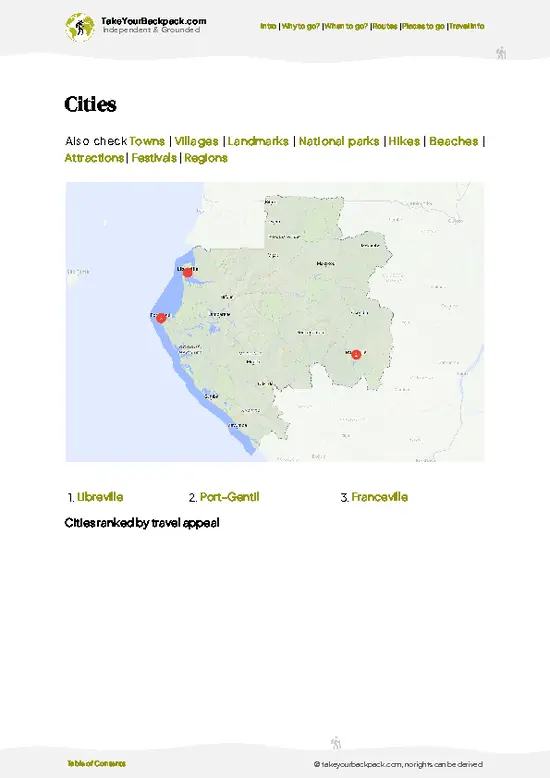
  • Port-Gentil—oil industry hub, expat bars, sandy beaches, mangrove edges| 145 km away
  • Franceville—market streets, university campus, plateau views, regional transport hub| 515 km away

💡 Not sure where to go next?
Create a personalized itinerary for Gabon including Libreville and the places that fit your trip.

Generate my itinerary

👉 Discover all cities

Or checkout all Gabon has to offer (think cities, towns, villages, national parks, hikes, beaches, festivals)
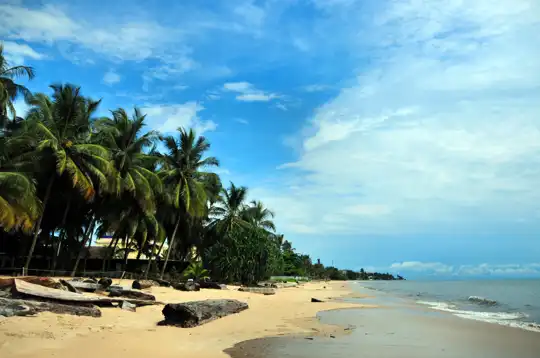
Country photo of Gabon

We 💚 feedbackIs it worth it?

Libreville has a laid-back charm that sneaks up on you. The coastal breeze and vibrant markets pulse with life. Don’t miss the local seafood—fresh and flavorful, it’s a highlight you won’t forget. But be mindful of the traffic; it can turn a quick trip into an unexpected adventure. Embrace the chaos. The best surprise? The warmth of the people. They’ll share stories that make you feel like you belong. Dive in, and let Libreville’s rhythm carry you away.

✍️ Help improve this page!
The information on this page is based on in-depth research, insights shared by experienced travelers, and feedback from the local travel community in Gabon. While every effort is made to keep the information accurate and current, conditions can change — so if you spot anything incorrect or outdated, please get in touch.


🙋‍♂️ Give feedback

👋 Meet the founderWho’s Behind Take Your Backpack?

Johan, backpacker and founder of TakeYourBackpackHi, I’m Johan (Netherlands 🇳🇱), the creator of TakeYourBackpack. Over the past decade, I’ve backpacked through 80+ countries across six continents, gaining extensive experience with independent travel, long-term trips, and overland routes.

This site is built on a combination of firsthand travel experience and carefully curated insights from other backpackers. Many guides are based on places I’ve personally visited, while others bring together tips, observations, and practical advice shared by trusted travelers I’ve met along the way.

The goal is to provide realistic, experience-driven guidance — not generic itineraries — so you can explore destinations with better context, clearer expectations, and more confidence.

Get full Gabon guide •
Instant download • 52 highlights • Full Offline guide