×

Gabon🇬🇦 | townsLambarénéAlbert Schweitzer Hospital, Ogooué River, stilt houses | things to do and best time to go

Explore KoulamoutouExplore Moanda

Backpacking in Lambaréné
🏆 Top picktown ranked #1
By Johan Kruseman 🇳🇱 | Updated October 16, 2026

If you crave nightlife, boutique shopping, or a city that hums with constant motion, Lambaréné will feel too slow, too spare. But that’s exactly why it works for backpackers who want Gabon’s riverine heart, not its urban gloss. Lambaréné sits on the Ogooué River, almost equidistant between Libreville and the wilds of Lope National Park—a crossroads where the air smells of rain and woodsmoke, and the river’s slow current sets the pace. The town itself is compact, with a walkable center that’s more practical than pretty, but the real draw is the launchpad it offers: pirogue trips to lakes teeming with hippos, or a visit to the storied Albert Schweitzer Hospital, which feels more like a living museum than a tourist site. Transport is straightforward—bush taxis and minibuses connect you to Libreville or Mouila, but don’t expect schedules to run like clockwork. Evenings are quiet, with a handful of local bars and riverside cafés where travelers swap stories, but you won’t find a hostel scene; most visitors are lone wanderers or small groups. Costs are moderate for Gabon, though food and lodging can feel steep compared to West Africa. Safety is solid, but the town’s sleepy vibe means you’ll notice every new face. Compared to bustling Libreville or the remote wilds of Lope, Lambaréné is a gentle, functional pause—less scenic, more real, and all the better for it.

Discover everything you want to know in the 📖 Gabon Travel Guide.


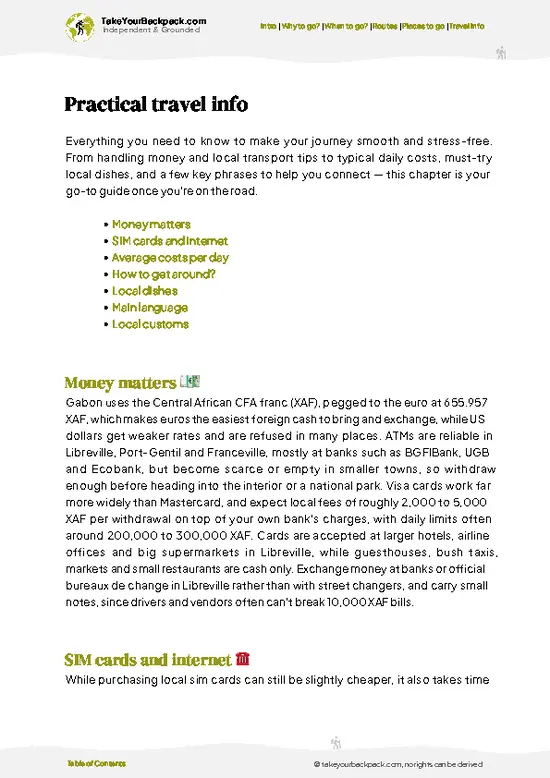
example page 0 from our offline Travel Guide for Gabon
example page 1 from our offline Travel Guide for Gabon
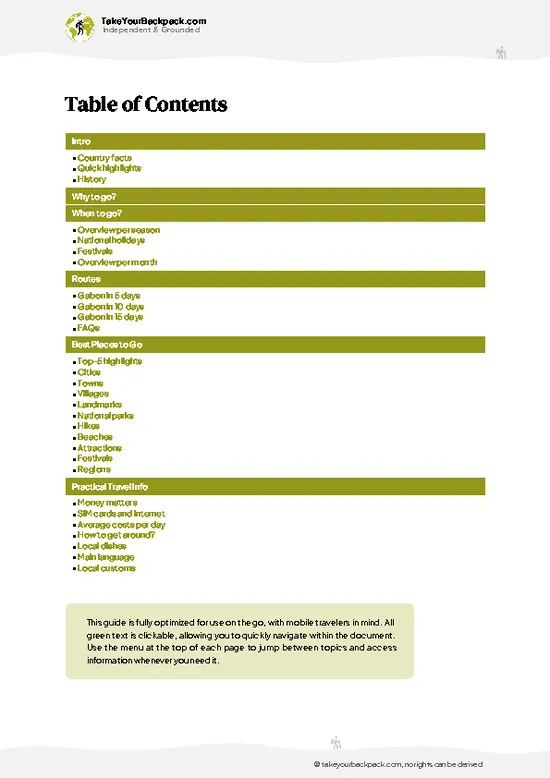
example page 2 from our offline Travel Guide for Gabon
example page 3 from our offline Travel Guide for Gabon
example page 4 from our offline Travel Guide for Gabon
example page 5 from our offline Travel Guide for Gabon
example page 6 from our offline Travel Guide for Gabon
example page 7 from our offline Travel Guide for Gabon
Loading the map 🌍
CLICK TO FILTER
cities
towns
villages
landmarks
national parks
hikes
beaches
attractions
festivals
regions
SHOW COUNTRY’S BESTSHOW ALL

✨ Why go?
Ranked #1 town in Gabon
Why visitors keep coming back

Lambaréné serves as a gateway for backpackers seeking a blend of nature and culture in Gabon. Its proximity to the Ogooué River and nearby hiking trails makes it an ideal base for those eager to explore the lush landscapes. You can easily spend a day trekking through the rainforest or paddling along the river, soaking in the sights and sounds of the wild.

The town’s walkable streets invite you to discover local food stalls and small-scale guesthouses that offer a cozy atmosphere. Here, you can savor traditional dishes while chatting with friendly locals, making it a perfect spot for solo travelers or small groups looking to connect.

Backpackers often find themselves lingering for a few days, enjoying the laid-back vibe and the chance to recharge before heading to more remote areas. While … read more 👉
Lambaréné serves as a gateway for backpackers seeking a blend of nature and culture in Gabon. Its proximity to the Ogooué River and nearby hiking trails makes it an ideal base for those eager to explore the lush landscapes. You can easily spend a day trekking through the rainforest or paddling along the river, soaking in the sights and sounds of the wild.

The town’s walkable streets invite you to discover local food stalls and small-scale guesthouses that offer a cozy atmosphere. Here, you can savor traditional dishes while chatting with friendly locals, making it a perfect spot for solo travelers or small groups looking to connect.

Backpackers often find themselves lingering for a few days, enjoying the laid-back vibe and the chance to recharge before heading to more remote areas. While Lambaréné isn’t a nightlife hub, its charm lies in the community feel and the opportunity to engage with fellow travelers. If you’re a slow traveler or a hiker, this town will feel like a warm embrace, offering both adventure and a sense of belonging.

💡 HighlightsMust-see experiences and standout moments

  1. Hôpital Albert Schweitzer (HAS) — The town’s most famous site: a working hospital and historic complex founded by Albert Schweitzer. Even if you’re not medically minded, the grounds, staff-run clinic areas and small displays tell the story of colonial-era medicine, humanitarian work and how the community relies on the hospital today.
  2. Maison et musée Albert Schweitzer — Schweitzer’s house and the modest museum on or beside the hospital compound give a personal, tangible sense of the man who put Lambaréné on the map: photos, medical instruments and the preserved rooms bring the history to life better than any book.
  3. Le jardin et la tombe d’Albert Schweitzer — Within the hospital grounds you can walk the gardens and find Schweitzer’s grave. It’s a quiet, reflective spot that connects the museum
… read more 👉
  1. Hôpital Albert Schweitzer (HAS) — The town’s most famous site: a working hospital and historic complex founded by Albert Schweitzer. Even if you’re not medically minded, the grounds, staff-run clinic areas and small displays tell the story of colonial-era medicine, humanitarian work and how the community relies on the hospital today.
  2. Maison et musée Albert Schweitzer — Schweitzer’s house and the modest museum on or beside the hospital compound give a personal, tangible sense of the man who put Lambaréné on the map: photos, medical instruments and the preserved rooms bring the history to life better than any book.
  3. Le jardin et la tombe d’Albert Schweitzer — Within the hospital grounds you can walk the gardens and find Schweitzer’s grave. It’s a quiet, reflective spot that connects the museum experience to the place where he lived and worked for decades.
  4. Quai et front de rivière de l’Ogooué — The riverfront is Lambaréné’s social spine: pirogues, cargo boats, fishermen, market stalls and dramatic sunsets. Walk the quay to watch river life up close and book a boat ride from here.
  5. Excursions en pirogue et observation des hippopotames — Short guided boat trips from town take you onto the Ogooué to see hippos, river birds and riverine villages. It’s the town’s top hands-on wildlife experience and easy to arrange from the quay.
  6. Grand marché de Lambaréné — The central market is where locals buy and sell food, textiles and everyday goods. You’ll find fresh catch from the river, bush spices, and a chance to practice French or a few words of Fang while sampling street food.
  7. Ateliers d’artisans et tressage local — Near the market and riverfront are small workshops and stalls run by local artisans weaving baskets, mats and raffia goods. Watching (and buying) here supports local livelihoods and makes for authentic souvenirs.
  8. Chantiers de fumage de poisson (les fumeries) — The smoky riverbank areas where fish are gutted and smoked are noisy, aromatic and fascinating. It’s a working cultural scene—great for photography and to understand the role of the Ogooué in daily life.
  9. Îles et hameaux fluviaux accessibles depuis Lambaréné — Several small islands and riverside hamlets a few minutes by pirogue are part of the town’s community. Visiting them gives insight into island living, traditional houses on stilts and fishing-focused villages.
  10. Le port/ferry local et le brassage des routes fluviales — The loading ramps and ferry points where people, vehicles and goods are transferred are chaotic in the best way: a real, local transport hub that shows how the Ogooué ties the region together.
A few easy day trips from Lambaréné include nearby river islands and fishing villages upriver, the town of Abanga (in the Abanga-Bigne area), and short boat excursions to smaller river settlements that give a broader feel for life along the Ogooué.
Spotted a mistake or missing something? Contact us.

🏘️ NeighborhoodsUnderstanding the local layout

Lambaréné, a town steeped in history and surrounded by lush nature, offers a unique blend of culture and adventure for backpackers. Here’s how to navigate its neighborhoods effectively:

Centre Ville: This is the heart of Lambaréné, buzzing with local markets and shops. The vibe is lively, perfect for soaking in daily life. You’ll find affordable accommodations here, making it ideal for budget travelers. Walkability is high; everything is within reach. Nightlife is low-key, with a few bars where locals gather. It’s great for short stays, but you might want to explore further if you’re here longer.

Quartier de l’Hôpital: Close to the Albert Schweitzer Hospital, this area is quieter and more residential. It’s a good spot if you’re interested in the hospital’s history or want a peaceful retreat. … read more 👉
Lambaréné, a town steeped in history and surrounded by lush nature, offers a unique blend of culture and adventure for backpackers. Here’s how to navigate its neighborhoods effectively:

Centre Ville: This is the heart of Lambaréné, buzzing with local markets and shops. The vibe is lively, perfect for soaking in daily life. You’ll find affordable accommodations here, making it ideal for budget travelers. Walkability is high; everything is within reach. Nightlife is low-key, with a few bars where locals gather. It’s great for short stays, but you might want to explore further if you’re here longer.

Quartier de l’Hôpital: Close to the Albert Schweitzer Hospital, this area is quieter and more residential. It’s a good spot if you’re interested in the hospital’s history or want a peaceful retreat. Transport options are decent, with easy access to taxis. Accommodations are modest and budget-friendly. Perfect for longer stays if you prefer a slower pace.

Ngounié: A bit off the beaten path, Ngounié offers a more authentic experience. The atmosphere is laid-back, with fewer tourists. It’s walkable, but you might need to rely on local transport for longer distances. Costs are low, and you’ll find some hidden eateries serving local cuisine. Ideal for those looking to immerse themselves in local culture for a while.

Les Rives du Ogooué: This riverside area is stunning, with views that make the effort worthwhile. It’s less populated, offering tranquility and a chance to connect with nature. Accommodations here can be pricier, but the experience is worth it. Perfect for longer stays, especially if you enjoy outdoor activities like kayaking or fishing.

⌛️ 1 daySeeing the highlights in 24 hours

Lambaréné, Gabon, is a town steeped in history and vibrant local culture, famously known for its connection to Albert Schweitzer and the hospital he founded. The air here carries a mix of earthy scents and the sweet aroma of tropical fruits, inviting you to explore its rich tapestry of life along the Ogooué River.

Start your day early at the bustling local market in the heart of the town. The sun filters through the trees, casting dappled light on stalls brimming with fresh produce, handmade crafts, and the chatter of vendors. Engage with the locals; their warmth is infectious. Grab a few ripe mangos or a steaming bowl of fufu to fuel your adventures.

Afterward, make your way to the Albert Schweitzer Hospital, a site that’s more than just a historical landmark. Here, you can take a guided … read more 👉
Lambaréné, Gabon, is a town steeped in history and vibrant local culture, famously known for its connection to Albert Schweitzer and the hospital he founded. The air here carries a mix of earthy scents and the sweet aroma of tropical fruits, inviting you to explore its rich tapestry of life along the Ogooué River.

Start your day early at the bustling local market in the heart of the town. The sun filters through the trees, casting dappled light on stalls brimming with fresh produce, handmade crafts, and the chatter of vendors. Engage with the locals; their warmth is infectious. Grab a few ripe mangos or a steaming bowl of fufu to fuel your adventures.

Afterward, make your way to the Albert Schweitzer Hospital, a site that’s more than just a historical landmark. Here, you can take a guided tour to learn about Schweitzer’s philosophy of “Reverence for Life.” The atmosphere is contemplative, and the stories shared by the guides will deepen your appreciation for the town’s legacy.

In the afternoon, head to the nearby village of Bifoun, a short taxi ride away. This spot is often overlooked by tourists but offers a genuine glimpse into Gabonese life. Walk through the village, where the sounds of laughter and music fill the air. You might even catch a glimpse of artisans at work, crafting traditional masks or weaving baskets.

As the sun begins to set, return to Lambaréné and find a cozy spot along the riverbank. The golden light reflecting off the water creates a serene backdrop for your evening. Enjoy a meal at a local eatery, where you can savor grilled fish seasoned with spices that dance on your palate.

End your day with a stroll through the town, soaking in the vibrant atmosphere as the stars begin to twinkle overhead. Lambaréné may be small, but its heart beats strong, offering a day filled with connection, culture, and unforgettable experiences.

🌤️ When to go?Best time to visit Lambaréné

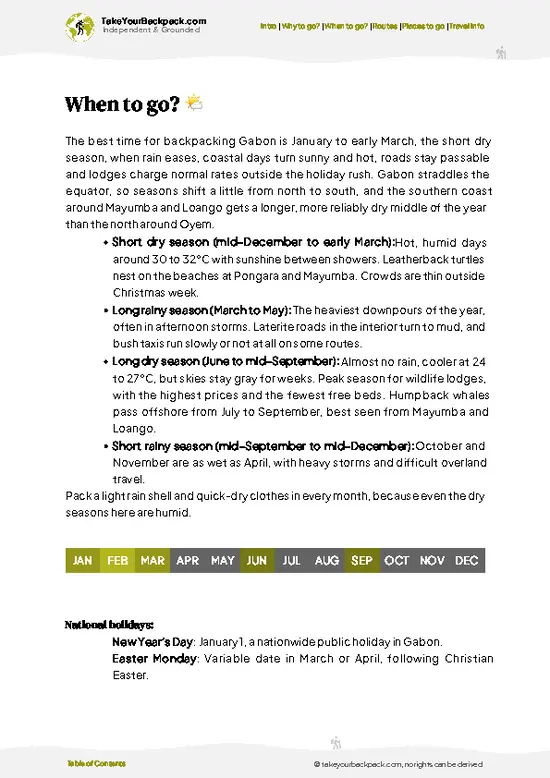
  • Topic: Weather and Rainfall — Lambaréné’s climate is equatorial, meaning it’s hot and humid year-round, but the heavy rains from October to May can turn trails into mud baths and swell the Ogooué River, limiting boat access. The drier months, June to September, offer clearer skies and easier trekking conditions.
  • Topic: Temperature — Expect daily highs around 30-32°C (86-90°F) and lows near 22-24°C (72-75°F). The temperature doesn’t swing much, but humidity makes the heat feel more intense during the rainy season, so plan for sweat and slow afternoons if you visit then.
  • Topic: Daylight Hours — Near the equator, daylight is steady year-round, roughly 12 hours a day. This consistency means you can plan hikes or river trips without worrying about early sunsets cutting your adventures short.
… read more 👉
  • Topic: Weather and Rainfall — Lambaréné’s climate is equatorial, meaning it’s hot and humid year-round, but the heavy rains from October to May can turn trails into mud baths and swell the Ogooué River, limiting boat access. The drier months, June to September, offer clearer skies and easier trekking conditions.
  • Topic: Temperature — Expect daily highs around 30-32°C (86-90°F) and lows near 22-24°C (72-75°F). The temperature doesn’t swing much, but humidity makes the heat feel more intense during the rainy season, so plan for sweat and slow afternoons if you visit then.
  • Topic: Daylight Hours — Near the equator, daylight is steady year-round, roughly 12 hours a day. This consistency means you can plan hikes or river trips without worrying about early sunsets cutting your adventures short.
  • Topic: Crowds — Lambaréné isn’t a tourist hotspot, so crowds are minimal year-round. However, the drier season attracts more eco-tourists and researchers, making accommodations slightly busier but still manageable.
  • Topic: Seasonal Activities — The dry season is prime for exploring the Albert Schweitzer Hospital’s history, river excursions, and wildlife spotting. The rainy season, while challenging, brings lush greenery and bird migrations, rewarding those willing to brave the elements.
  • Topic: Price Fluctuations — Prices for lodging and tours tend to dip during the rainy months due to lower demand. If you’re flexible and prepared for wet conditions, this is the time to snag deals and enjoy a quieter experience.
Pro-tip: Aim for the shoulder months of June and September to catch drier weather with fewer visitors and better prices—a sweet spot where the river is navigable, and the town feels alive without the full tourist buzz.


source: climatestotravel.comJANJanuary: fair for travelingFEBFebruary: fair for travelingMARMarch: fair for travelingAPRApril: fair for travelingMAYMay: fair for travelingJUNJune: highly recommended for travelingJULJuly: excellent for travelingAUGAugust: excellent for travelingSEPSeptember: highly recommended for travelingOCTOctober: fair for travelingNOVNovember: fair for travelingDECDecember: fair for traveling
when-to-go

✈️ The backpacker research shortcutGabon Travel Guide

An offline-friendly backpacking guide with optimized travel routes, ranked highlights, transport advice, and the best areas to stay.
example page 0 from our offline Travel Guide for Gabon
example page 1 from our offline Travel Guide for Gabon
example page 2 from our offline Travel Guide for Gabon
example page 3 from our offline Travel Guide for Gabon
example page 4 from our offline Travel Guide for Gabon
example page 5 from our offline Travel Guide for Gabon
example page 6 from our offline Travel Guide for Gabon
example page 7 from our offline Travel Guide for Gabon
The digital guide (209 pages) contains:
✅ 47 highlights, ranked by travel appeal
✅ Optimized 5, 10 & 15-day travel routes
✅ Cities, national parks, landmarks, beaches
✅ How to get around
✅ Offline-friendly for travel without Wi-Fi
👉 Click to see all 30+ guide features

📅 Plan smarter in minutes, not weeks
✅ Month by month travel advice
✅ Festivals & national holidays
✅ Budget expectations

🗺️ Go to the right places, skip the overrated ones
✅ Honest pros & cons of destinations
✅ Top hikes, parks & viewpoints
✅ Lesser-known places most travelers miss
✅ Clear “worth it vs skip it” guidance

🛏️ Travel smoothly without rookie mistakes
✅ Best areas to stay
✅ Transport systems explained simply
✅ Common scams & safety advice
✅ SIM cards, money & practical tips

🌍 Understand the country, not just visit it
✅ Culture & traditions
✅ 52 Essential phrases & customs
✅ Festivals worth planning around
✅ Traveler-friendly historical context
✅ Insights that make places more meaningful

📱 Built for real travel conditions
✅ Fully downloadable PDF
✅ Works completely offline
✅ Optimized for phone use
✅ Useful in remote areas & buses
✅ Everything in one place
Stop searching, start planning
Get instant access to your full guide. 30‑day money-back guarantee.
+ Add another guide for just

By proceeding you agree to our terms.
Sent to your inbox immediately after payment • 100% Secure Checkout
Best Backpacking Travel Advisor 2025 tourism awardBest Backpacking
Travel Advisor
2025
What others say about Take Your Backpack Guides:
⭐⭐⭐⭐⭐
Fantastic, amazing amount of information!
⭐⭐⭐⭐⭐
My goodness this is amazing, it's what I've been looking for hats off too you!
⭐⭐⭐⭐⭐
I think this is absolutely BRILLIANT
⭐⭐⭐⭐
Very complete and informative. It's still missing places, but I gotta to commend you
⭐⭐⭐⭐⭐
This is truly amazing, thank you, can't wait to explore it with my kids!
⭐⭐⭐⭐⭐
Awesome resource, thank you!
⭐⭐⭐⭐⭐
This is amazing! Can't wait to explore the ones I haven't seen
⭐⭐⭐⭐
I love this! Well done, great idea.
⭐⭐⭐⭐⭐
Thanks for taking the time to make this gem!
⭐⭐⭐⭐⭐
This might be the best website I've ever seen.
⭐⭐⭐⭐⭐
Congratulations, and thank you so much for your work; it's incredibly valuable.
⭐⭐⭐⭐
In all seriousness I think you did a great job pointing out the important spots
⭐⭐⭐⭐⭐
10/10 very good
⭐⭐⭐⭐⭐
As someone who's only just starting to visit regularly this is awesome, thank you.
⭐⭐⭐⭐
Thank you very much! I'm going to visit my dad, it's going to be very useful!
⭐⭐⭐⭐⭐
This is really cool! We'll be travelling for the first time and this definitely come in handy.
⭐⭐⭐⭐⭐
You are now our minister of culture, congratulations 👨‍💼
⭐⭐⭐⭐⭐
Just wanted to tell you that this is a pearl! Going to follow your recommendations.
⭐⭐⭐⭐⭐
This is so cool. I'll definitely be using the resource for my travels soon.
⭐⭐⭐⭐⭐
This is very impressive! Good work.
⭐⭐⭐⭐⭐
This is an amazing and informative site. Very well done!

🛏️ Where to stay?Choosing the right base

In Lambaréné, backpackers find their best footing near the town center, where the pulse of daily life hums steadily without overwhelming. This area strikes a balance between safety and accessibility, offering a grounded base to explore the town’s unique blend of riverine calm and bustling markets. The streets here are lined with modest guesthouses and a handful of hostels that cater to budget travelers, creating a quiet but social atmosphere where you can swap stories over a shared meal or a cold drink.

Why this spot? It’s where you’ll catch the light shifting over the Ogooué River, the scent … read more 👉
In Lambaréné, backpackers find their best footing near the town center, where the pulse of daily life hums steadily without overwhelming. This area strikes a balance between safety and accessibility, offering a grounded base to explore the town’s unique blend of riverine calm and bustling markets. The streets here are lined with modest guesthouses and a handful of hostels that cater to budget travelers, creating a quiet but social atmosphere where you can swap stories over a shared meal or a cold drink.

Why this spot? It’s where you’ll catch the light shifting over the Ogooué River, the scent of grilled fish mingling with fresh rain on warm earth, and the steady rhythm of locals going about their day. Compared to the more residential outskirts, which can feel isolated and less secure after dark, the center keeps you close to essential services and the informal social hubs that backpackers crave.

Avoid the industrial zones and the far-flung neighborhoods where infrastructure thins out and the vibe turns more utilitarian than welcoming. Staying central means you’re never far from a lively market or a friendly face, making it easier to navigate the town’s slower pace without losing the sense of connection that turns a simple stopover into a memorable chapter.

🚌 Getting aroundGetting around like a local

Lambaréné moves at its own pace, a rhythm shaped by the slow pulse of the Ogooué River and the steady hum of daily life. This isn’t a place where you’ll find strict timetables or the rush of a metropolis. Instead, the town flows with a kind of relaxed intuition—boats drift when the tide is right, minibuses fill up before they leave, and the market buzzes with a casual urgency that’s more about connection than clock-watching. The air carries a mix of river moisture and earth, punctuated by the scent of grilled fish and fresh fruit from street vendors. Understanding this flow means embracing a flexible mindset: your best travel moves here come from reading the moment, not the schedule.
  • Walking: The heart of Lambaréné is compact enough to explore on foot, especially around the market and riverfront.
… read more 👉
Lambaréné moves at its own pace, a rhythm shaped by the slow pulse of the Ogooué River and the steady hum of daily life. This isn’t a place where you’ll find strict timetables or the rush of a metropolis. Instead, the town flows with a kind of relaxed intuition—boats drift when the tide is right, minibuses fill up before they leave, and the market buzzes with a casual urgency that’s more about connection than clock-watching. The air carries a mix of river moisture and earth, punctuated by the scent of grilled fish and fresh fruit from street vendors. Understanding this flow means embracing a flexible mindset: your best travel moves here come from reading the moment, not the schedule.
  • Walking: The heart of Lambaréné is compact enough to explore on foot, especially around the market and riverfront. Walking lets you soak in the humid air, the chatter of locals, and the vibrant colors of daily life without missing a beat. It’s free, always available, and the best way to catch the town’s authentic vibe.
  • Shared Taxis (Taxi Collectif): These minibuses or vans operate on a fill-and-go basis rather than fixed schedules. Expect to wait until they’re full before departure, which can mean a flexible but unpredictable start time. Fares are low—usually under 1,000 CFA (about $1.50)—and they cover routes connecting Lambaréné to nearby villages and neighborhoods. The ride is bumpy and crowded, but it’s the most budget-friendly way to cover longer distances.
  • Motorcycle Taxis (Moto-Taxis): When time is tight or you’re carrying gear, moto-taxis are your go-to. They dart through narrow streets and unpaved paths with ease. Prices are negotiable but generally start around 500 CFA ($0.75) for short trips. Helmets aren’t always standard, so hold on tight and prepare for a splash of dust and the scent of gasoline mixed with river air.
  • Boat Transport: The river is Lambaréné’s lifeline, and small pirogues or motorboats shuttle people and goods between riverbank communities. These boats don’t run on a strict timetable; departures depend on passenger numbers and weather conditions. Fares vary but are typically affordable. The ride offers a cool breeze and a chance to see the town from a different angle—water lapping against the hull, birds calling overhead, and the sun casting sharp reflections on the river’s surface.
  • Private Car Hire: For those with a bit more budget and a desire for comfort, renting a car with a driver is an option. It’s pricier but offers flexibility and speed, especially for trips outside town. Expect to negotiate rates upfront, and keep in mind that roads can be rough, so a sturdy vehicle is essential.

👛 Costs (as of 16 October 2026)Travel costs and budget guide for Lambaréné

Backpacking in Lambaréné, Gabon, means balancing modest costs with the reality of limited infrastructure, so knowing where your money goes helps you stretch your budget without sacrificing the experience.
  • Dorm Accommodation: Options are sparse and basic, often guesthouses rather than formal hostels. Expect to pay around €10-15 per night for a shared room. These places usually have simple beds, mosquito nets, and basic sanitation—nothing fancy, but clean enough to rest after a day exploring.
  • Meals: Street food and local eateries dominate. A typical meal of grilled fish or chicken with rice or plantains runs about €3-5. Fresh fruit and snacks from markets are even cheaper, around €1-2. Western-style restaurants are rare and pricier, so sticking to local fare keeps costs low and flavors authentic.
… read more 👉
Backpacking in Lambaréné, Gabon, means balancing modest costs with the reality of limited infrastructure, so knowing where your money goes helps you stretch your budget without sacrificing the experience.
  • Dorm Accommodation: Options are sparse and basic, often guesthouses rather than formal hostels. Expect to pay around €10-15 per night for a shared room. These places usually have simple beds, mosquito nets, and basic sanitation—nothing fancy, but clean enough to rest after a day exploring.
  • Meals: Street food and local eateries dominate. A typical meal of grilled fish or chicken with rice or plantains runs about €3-5. Fresh fruit and snacks from markets are even cheaper, around €1-2. Western-style restaurants are rare and pricier, so sticking to local fare keeps costs low and flavors authentic.
  • Local Transport: Getting around mostly means shared taxis or minibuses, which cost roughly €0.50-1 per trip within town. For longer trips or private taxis, expect to pay closer to €5-10 depending on distance. Walking is often the best way to soak in the atmosphere and save money.
  • Basic Activities/Entry Fees: Lambaréné’s main draw is the Albert Schweitzer Hospital and the surrounding natural areas. Entry fees to local museums or small parks are minimal, usually under €2. Guided tours or boat trips on the Ogooué River can cost between €10-20, offering a richer understanding of the region’s history and ecology.
  • Miscellaneous Expenses: Budget around €2-5 daily for bottled water, snacks, or small souvenirs. Internet access is patchy and often requires buying local SIM cards or paying for Wi-Fi at guesthouses, which can add a few euros to your daily spend.

All told, a realistic daily budget for backpacking in Lambaréné falls between €20 and €40. This range covers basic comfort without overspending, letting you focus on the unique rhythms of this Gabonese town rather than worrying about every euro.
⚠️ Prices can change and everyone travels differently, so take this as a rough guide. Hope it helps you plan your adventure!

🚌 Day tripsWhere to go beyond the main area

Lambaréné, Gabon, is a backpacker’s dream base for exploring the lush landscapes and vibrant culture of Central Africa. With its laid-back vibe and proximity to stunning natural wonders, you can easily dive into unforgettable day trips that reveal the heart of Gabon.

1. Loango National Park
Just a couple of hours from Lambaréné, Loango National Park is a wild escape where the rainforest meets the ocean. Picture yourself walking along pristine beaches, spotting hippos lounging in lagoons, and hearing the rustle of monkeys overhead. The park is a biodiversity hotspot, so bring your binoculars for birdwatching. Expect to spend around $10 for park entry and transportation, and don’t forget to pack snacks; food options are limited. The dry season from June to September is ideal for wildlife spotting, … read more 👉
Lambaréné, Gabon, is a backpacker’s dream base for exploring the lush landscapes and vibrant culture of Central Africa. With its laid-back vibe and proximity to stunning natural wonders, you can easily dive into unforgettable day trips that reveal the heart of Gabon.

1. Loango National Park
Just a couple of hours from Lambaréné, Loango National Park is a wild escape where the rainforest meets the ocean. Picture yourself walking along pristine beaches, spotting hippos lounging in lagoons, and hearing the rustle of monkeys overhead. The park is a biodiversity hotspot, so bring your binoculars for birdwatching. Expect to spend around $10 for park entry and transportation, and don’t forget to pack snacks; food options are limited. The dry season from June to September is ideal for wildlife spotting, but be prepared for the occasional rain shower. A common mistake? Underestimating the time it takes to explore; plan for a full day to soak it all in.
👉 Explore Loango National Park

2. The Albert Schweitzer Museum
A short jaunt from the center of Lambaréné, the Albert Schweitzer Museum offers a glimpse into the life of the Nobel Prize-winning doctor and humanitarian. The museum is housed in his former residence, surrounded by lush gardens that exude a calming scent of tropical flora. Entry is typically around $5, and you can easily spend a few hours here, absorbing the history and philosophy that shaped Schweitzer’s work. Visit in the morning to avoid the heat and enjoy a quiet stroll through the gardens. Many first-timers rush through; take your time to reflect on the impact of his legacy.


3. The Ogooué River
A boat trip on the Ogooué River is a must. Just a short ride from Lambaréné, you can hire a local guide for around $15 to navigate the winding waterways. The river is alive with the sounds of nature, and you might spot crocodiles basking on the banks or colorful birds flitting overhead. This trip is best in the early morning when the light dances on the water, creating a magical atmosphere. A common rookie mistake is not bringing enough water; the sun can be relentless. Plan for a half-day adventure, and don’t forget your camera.


4. The Local Markets
Immerse yourself in the vibrant local culture by visiting Lambaréné’s bustling markets. Just a short walk from your accommodation, you’ll find stalls brimming with fresh produce, spices, and handmade crafts. The aromas of grilled street food waft through the air, tempting you to try local delicacies. Budget around $5 for lunch and a few souvenirs. The best time to visit is early morning when the market is alive with energy. Many travelers overlook this experience, but it’s a fantastic way to connect with the local community.


Each of these day trips offers a unique slice of Gabon, making Lambaréné not just a stopover, but a gateway to adventure.

🛡️ SafetyStaying Safe: What Travelers Should Know

Lambaréné is generally safe, but like any place, a bit of awareness goes a long way. The bustling market area can be lively, with vendors eager to sell their wares. Keep your belongings close; a crossbody bag is ideal. When wandering the streets, especially solo, stay alert. The light fades quickly, and while the town has a friendly vibe, it’s wise to avoid poorly lit areas after dark.

Scams aren’t rampant, but be cautious of overly friendly strangers offering unsolicited help. Politely decline and keep moving. If you’re approached by someone asking for money, a firm “no” usually suffices.

Annoyances can arise from the occasional tout or persistent vendor, but a smile and a polite “no, thank you” can often diffuse the situation. Embrace the local pace; patience is key. By staying aware … read more 👉
Lambaréné is generally safe, but like any place, a bit of awareness goes a long way. The bustling market area can be lively, with vendors eager to sell their wares. Keep your belongings close; a crossbody bag is ideal. When wandering the streets, especially solo, stay alert. The light fades quickly, and while the town has a friendly vibe, it’s wise to avoid poorly lit areas after dark.

Scams aren’t rampant, but be cautious of overly friendly strangers offering unsolicited help. Politely decline and keep moving. If you’re approached by someone asking for money, a firm “no” usually suffices.

Annoyances can arise from the occasional tout or persistent vendor, but a smile and a polite “no, thank you” can often diffuse the situation. Embrace the local pace; patience is key. By staying aware and carrying yourself confidently, you’ll navigate Lambaréné like a pro, soaking in its unique charm without unnecessary stress.

FAQTraveler FAQ

Lambaréné is worth visiting primarily for its historical significance and the Albert Schweitzer Hospital, rather than just a stopover. The town offers a unique glimpse into Gabon's colonial and medical history, which can be compelling for travelers interested in culture and history.
Two days are sufficient to explore Lambaréné, including a visit to the Albert Schweitzer Hospital and a boat trip on the Ogooué River. This allows enough time to absorb the main attractions without rushing.
Yes, Lambaréné can be visited as a day trip from Libreville, which is about 250 kilometers away. The journey by road takes approximately 4 to 5 hours each way, so an early start is necessary to make the most of the day.
⚠️ Things can change over time, so always validate details locally before you go.

Other Gabonese towns near Lambaréné

Explore more nearby:

  • Ndjolé—Ogooué River port, colonial relics, timber trade| 81 km away
  • Mouila—Ngounié River, palm groves, roadside markets| 158 km away
  • Gamba—oil industry, Atlantic coastline, lagoon wildlife| 228 km away

💡 Not sure where to go next?
Create a personalized itinerary for Gabon including Lambaréné and the places that fit your trip.

Generate my itinerary

👉 Discover all towns

Or checkout all Gabon has to offer (think cities, towns, villages, national parks, hikes, beaches, festivals)
Country photo of Gabon

We 💚 feedbackFinal thoughts on visiting Lambaréné

Lambaréné has a pulse that’s hard to ignore. The air is thick with the scent of damp earth and the distant calls of wildlife. You’ll stumble upon the unexpected charm of local markets, where vibrant fabrics and fresh produce collide. But be ready for the humidity—it’s relentless. Bring a good rain jacket; those sudden downpours can catch you off guard. Embrace the slow pace. It’s not just a destination; it’s a reminder to savor every moment.

✍️ Help improve this page!
The information on this page is based on in-depth research, insights shared by experienced travelers, and feedback from the local travel community in Gabon. While every effort is made to keep the information accurate and current, conditions can change — so if you spot anything incorrect or outdated, please get in touch.


🙋‍♂️ Give feedback

👋 Meet the founderWho’s Behind Take Your Backpack?

Johan, backpacker and founder of TakeYourBackpackHi, I’m Johan (Netherlands 🇳🇱), the creator of TakeYourBackpack. Over the past 3 decades, I’ve backpacked through 90+ countries across six continents, gaining extensive experience with independent travel, long-term trips, and overland routes.

This site is built on a combination of firsthand travel experience and carefully curated insights from other backpackers. Many guides are based on places I’ve personally visited, while others bring together tips, observations, and practical advice shared by trusted travelers I’ve met along the way.

The goal is to provide realistic, experience-driven guidance — not generic itineraries — so you can explore destinations with better context, clearer expectations, and more confidence.