v2.webp)
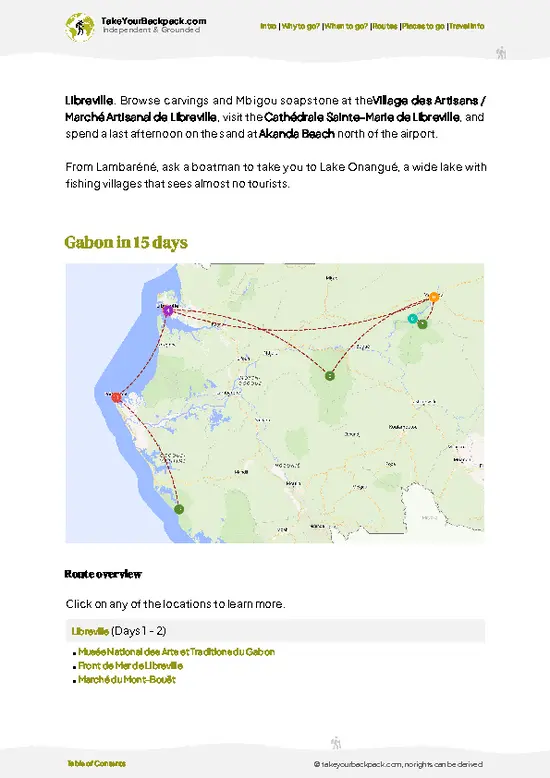
- Ngounié River waterfront — The river is the town’s lifeline: markets, pirogues, fishermen and a slow, photogenic rhythm of life. Walk the banks at golden hour, watch boat traffic and chat with people who live off the water.
- Marché Central (the central market) — Where Mouila really smells, tastes and sounds like itself. Fresh produce, bush spices, stalls of fabric and small craft — best place to see everyday life and pick up affordable souvenirs.
- The main Catholic church / town chapel — A local anchor for community events and religious festivals. Even if you’re not religious, Sunday services and the building’s simple colonial-era architecture give a peek into local traditions.
- La Mairie and the colonial administrative quarter — Walkable cluster of old French-era public buildings and shady
- Ngounié River waterfront — The river is the town’s lifeline: markets, pirogues, fishermen and a slow, photogenic rhythm of life. Walk the banks at golden hour, watch boat traffic and chat with people who live off the water.
- Marché Central (the central market) — Where Mouila really smells, tastes and sounds like itself. Fresh produce, bush spices, stalls of fabric and small craft — best place to see everyday life and pick up affordable souvenirs.
- The main Catholic church / town chapel — A local anchor for community events and religious festivals. Even if you’re not religious, Sunday services and the building’s simple colonial-era architecture give a peek into local traditions.
- La Mairie and the colonial administrative quarter — Walkable cluster of old French-era public buildings and shady squares. The architecture and street layout tell the story of Mouila’s role as a provincial capital.
- Mouila Aérodrome (the town airport) — More than a transit point: small charter planes, close-up views of the airstrip and surrounding countryside, and a good place to observe regional travel patterns and local commerce tied to flights.
- Stade Municipal — Catch a local football match or community event for a raw, friendly atmosphere. Games are lively, cheap, and a great way to meet residents and feel the town’s pulse.
- Artisan alleys and woodcarving stalls — Small workshops and street sellers where woodcarvers and textile vendors work and sell. You can watch pieces being made and haggle for honest, useful souvenirs.
- Riverside fishing quarter and boatyards — Traditional pirogues, fish-smoking racks and small repair yards. A hands-on slice of local economy; folks are generally open to showing how boats are built and maintained.
- Maison des Jeunes / cultural meeting spots — Places where music, dance and community theatre happen. Check local noticeboards for performances or impromptu drumming nights — the best cultural scenes are often informal.
- Shaded public squares and notable old trees — The town’s best social hubs: benches, markets spilling over into the squares, and venerable trees where people gather to trade news. Low-key, very local, and great for people-watching.
Spotted a mistake or missing something? Contact us.

 Best Backpacking
.jpg) Hi, I’m Johan (Netherlands 🇳🇱), the creator of TakeYourBackpack. Over the past 3 decades, I’ve backpacked through 90+ countries across six continents, gaining extensive experience with independent travel, long-term trips, and overland routes.
Hi, I’m Johan (Netherlands 🇳🇱), the creator of TakeYourBackpack. Over the past 3 decades, I’ve backpacked through 90+ countries across six continents, gaining extensive experience with independent travel, long-term trips, and overland routes.