×

The Gambia🇬🇲 | townsBasse Santa Sueastern trading post, riverside docks, cross-border traffic | things to do and best time to go

Explore BansangExplore Bonto

Backpacking in Basse Santa Su
👍 Recommendedtown ranked #8
By Johan Kruseman 🇳🇱 | Updated June 7, 2026

A rooster’s crow cuts through the haze as you step from the battered Peugeot bush taxi, dust swirling around your ankles, the scent of woodsmoke and river mud thick in the air. Basse Santa Su sits at the far eastern edge of The Gambia, where the river widens and the country’s pulse slows. This is not a town built for tourists, and that’s its charm and its challenge. You’ll find a sprawling market—raw, loud, and alive—where mangoes and dried fish compete for your attention, and the riverfront, where kids leap from canoes while women wash clothes in the shallows. Basse works best as a launchpad for deeper forays upriver or as a real-deal stopover between the coast and Senegal’s interior. It’s walkable, but the heat and dust make short rides on shared taxis a relief. Hostels are rare, and evenings are slow—expect more tea circles than backpacker bars. Costs are low, but so is the tourist infrastructure; you’ll need patience and a sense of humor. Compared to Janjanbureh’s island calm or the coast’s bustle, Basse feels raw, practical, and unfiltered—more crossroads than destination, but all the more real for it.

Discover everything you want to know in the 📖 The Gambia Travel Guide.


Get your Gambia guide
57 ranked highlights, routes & tips, works offline (243 pages)
Loading the map 🌍
CLICK TO FILTER
cities
towns
villages
landmarks
national parks
hikes
beaches
attractions
festivals
SHOW COUNTRY’S BESTSHOW ALL

✨ Why go?
Ranked #8 town in The Gambia
Why Basse Santa Su should be on your travel list

Basse Santa Su serves as a gateway for backpackers exploring The Gambia. Its convenient location near the Gambia River makes it a prime spot for those seeking hikes and cultural experiences. The town’s walkable streets invite you to wander, with small-scale hostels and guesthouses that foster a friendly, communal vibe. You’ll find local food stalls offering authentic dishes that tantalize your taste buds, all while soaking in the aroma of spices wafting through the air.

Travelers often linger here for a few days, enjoying the laid-back atmosphere that suits slow travelers and solo adventurers alike. While it’s not a nightlife hub, the social scene is warm and welcoming, perfect for connecting with fellow backpackers. If you’re looking for a place to recharge before heading to nearby beachesread more 👉
Basse Santa Su serves as a gateway for backpackers exploring The Gambia. Its convenient location near the Gambia River makes it a prime spot for those seeking hikes and cultural experiences. The town’s walkable streets invite you to wander, with small-scale hostels and guesthouses that foster a friendly, communal vibe. You’ll find local food stalls offering authentic dishes that tantalize your taste buds, all while soaking in the aroma of spices wafting through the air.

Travelers often linger here for a few days, enjoying the laid-back atmosphere that suits slow travelers and solo adventurers alike. While it’s not a nightlife hub, the social scene is warm and welcoming, perfect for connecting with fellow backpackers. If you’re looking for a place to recharge before heading to nearby beaches or nature reserves, Basse Santa Su is a solid choice, blending convenience with a genuine local experience.
Want to include Basse Santa Su in your The Gambia route?
Create a personalized The Gambia itinerary that includes Basse Santa Su and the places that fit your trip — based on your travel style, budget, and available time. Get your route in seconds.

Generate my trip

💡 HighlightsDon't-miss highlights and experiences

  • Basse Market — The beating heart of the town: colorful stalls, fresh produce, spices, second-hand clothes and the best place to watch daily life and barter like a local (biggest bustle on market day).
  • Central/Jumu’ah Mosque — The main mosque is where you can observe weekly community rhythms, hear the call to prayer echoing through the streets, and get a window into local religious life and architecture.
  • Gambia River landing / riverfront — Small wharves and landing spots where fishing boats and passenger pirogues come and go; great for short boat rides, birdwatching, and seeing riverside commerce up close.
  • Groundnut (peanut) trading yards — Basse is still part of The Gambia’s groundnut economy; watching farmers and traders at the peanut piles and packing areas tells you a lot about local
read more 👉
  • Basse Market — The beating heart of the town: colorful stalls, fresh produce, spices, second-hand clothes and the best place to watch daily life and barter like a local (biggest bustle on market day).
  • Central/Jumu’ah Mosque — The main mosque is where you can observe weekly community rhythms, hear the call to prayer echoing through the streets, and get a window into local religious life and architecture.
  • Gambia River landing / riverfront — Small wharves and landing spots where fishing boats and passenger pirogues come and go; great for short boat rides, birdwatching, and seeing riverside commerce up close.
  • Groundnut (peanut) trading yards — Basse is still part of The Gambia’s groundnut economy; watching farmers and traders at the peanut piles and packing areas tells you a lot about local livelihoods and seasonal rhythms.
  • Livestock market — On market days you’ll find traders moving goats, sheep and cattle; it’s noisy, earthy, and one of the clearest ways to see traditional trade networks in action.
  • Woodcarvers, tailors and small craft workshops — A short walk off the main street reveals local artisans making stools, masks, carved signs and custom clothes — perfect for seeing skills passed between generations and buying direct.
  • Big shade trees / meeting baobabs — Scattered around the town are large baobabs and shady gathering spots where elders sit, decisions are discussed, and oral history is handed down; these are simple, meaningful social landmarks.
  • Town council compound / market square — The civic center where announcements are made and local events happen; visiting during a community meeting or celebration gives a real sense of local governance and social life.
  • Homestay and family compound visits (arranged with a host) — Staying with or visiting a local family to share a meal, watch food preparation, and sleep under a mosquito net is one of the most authentic ways to experience daily Basse life (ask a guesthouse or fixer to arrange).
  • Live music, story-telling and griot meetups — If you time it right or ask around, you can catch local musicians and griots performing traditional songs and histories in a compound or at a small local bar — raw, live culture that doesn’t translate in brochures.
A few real, visitable highlights just outside Basse that make excellent day trips: Tendaba and its river camps (for wildlife and river islands), the riverside town of Fatoto with its markets, and upriver Janjanbureh (Georgetown) for island history and colonial-era sites.
Spotted a mistake or missing something? Contact us.

🏘️ NeighborhoodsUnderstanding the local layout

Basse Santa Su is a vibrant hub in The Gambia, offering a mix of local culture and practical amenities for backpackers. Here’s how to navigate its neighborhoods:

City Center
This area pulses with life. Street vendors sell everything from fresh fruit to handmade crafts. It’s walkable, with a lively atmosphere that’s perfect for short stays. The nightlife is low-key, with local bars offering a taste of Gambian music. Transport options are plentiful, making it easy to hop on a shared taxi or catch a bus.

Janjanbureh Road
A bit quieter, this stretch is ideal for those seeking a more laid-back vibe. It’s lined with guesthouses that cater to budget travelers. You’ll find a mix of locals and expats here, creating a friendly community feel. It’s a good spot for longer stays, with easy access … read more 👉
Basse Santa Su is a vibrant hub in The Gambia, offering a mix of local culture and practical amenities for backpackers. Here’s how to navigate its neighborhoods:

City Center
This area pulses with life. Street vendors sell everything from fresh fruit to handmade crafts. It’s walkable, with a lively atmosphere that’s perfect for short stays. The nightlife is low-key, with local bars offering a taste of Gambian music. Transport options are plentiful, making it easy to hop on a shared taxi or catch a bus.

Janjanbureh Road
A bit quieter, this stretch is ideal for those seeking a more laid-back vibe. It’s lined with guesthouses that cater to budget travelers. You’ll find a mix of locals and expats here, creating a friendly community feel. It’s a good spot for longer stays, with easy access to local markets and parks.

Riverfront
This scenic area offers stunning views of the river, perfect for sunset strolls. It’s a bit pricier, but the tranquility is worth it. Ideal for unwinding after a day of exploring, it’s less about nightlife and more about soaking in the natural beauty. Transport is slightly less frequent, so plan ahead if you’re heading out.

Each area has its own charm, making Basse Santa Su a rewarding stop on your Gambian adventure.

⌛️ 1 dayWhat you can realistically do in a day

Basse Santa Su, the bustling heart of The Gambia’s eastern region, offers a vibrant mix of local culture and everyday life. The air is thick with the scent of spices and the sounds of laughter, making it a perfect spot to dive into authentic Gambian experiences.

Start your morning at the local market, where the colors of fresh produce pop against the earthy tones of the stalls. Engage with vendors selling everything from ripe mangoes to handmade crafts. The market is a sensory overload, but it’s a fantastic way to connect with the community. Grab a breakfast of ‘bajeh’—a traditional rice dish—at a nearby eatery, where the warmth of the locals matches the heat of the sun.

As the day unfolds, head to the nearby village of Kuntaur, a short ride away. This lesser-known spot is home to the Kuntaur … read more 👉
Basse Santa Su, the bustling heart of The Gambia’s eastern region, offers a vibrant mix of local culture and everyday life. The air is thick with the scent of spices and the sounds of laughter, making it a perfect spot to dive into authentic Gambian experiences.

Start your morning at the local market, where the colors of fresh produce pop against the earthy tones of the stalls. Engage with vendors selling everything from ripe mangoes to handmade crafts. The market is a sensory overload, but it’s a fantastic way to connect with the community. Grab a breakfast of ‘bajeh’—a traditional rice dish—at a nearby eatery, where the warmth of the locals matches the heat of the sun.

As the day unfolds, head to the nearby village of Kuntaur, a short ride away. This lesser-known spot is home to the Kuntaur Cultural Center, where you can learn about traditional Gambian music and dance. The rhythmic beats and vibrant performances will leave you energized and inspired.

In the afternoon, return to Basse and stroll along the banks of the Gambia River. The light glistens off the water, and you might catch sight of fishermen casting their nets. This peaceful moment is a perfect contrast to the morning’s hustle.

As evening approaches, find a local spot for dinner. Try ‘domoda,’ a peanut stew that’s rich and comforting. The atmosphere is relaxed, filled with the chatter of families enjoying their meals.

End your day by watching the sunset over the river. The sky transforms into a canvas of oranges and purples, a fitting close to a day filled with genuine Gambian spirit.
Turn your Basse Santa Su visit into an The Gambia adventure
Build a complete The Gambia route with Basse Santa Su, hidden gems, must-see destinations, and realistic travel times included.

Generate my trip

🌤️ When to go?Seasonal considerations and timing


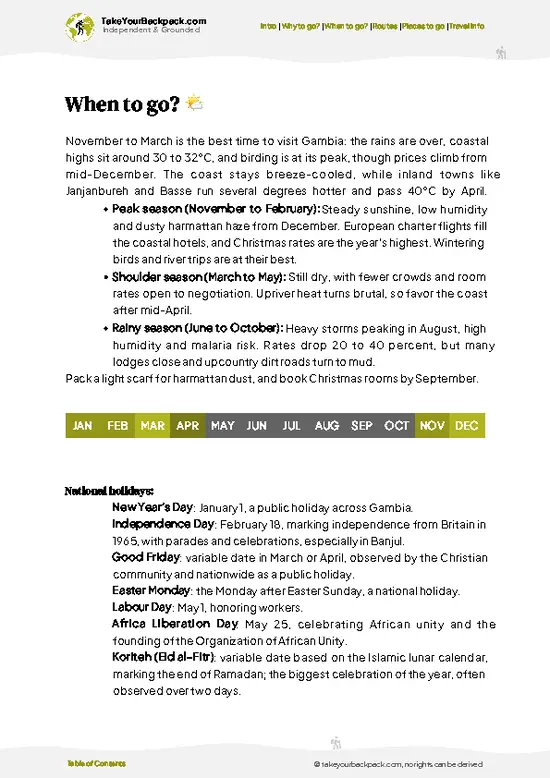
  • Topic: Weather and Temperature: The dry season from November to May is your best bet. Expect daytime highs around 30-34°C (86-93°F), with cooler evenings dropping to 20-22°C (68-72°F). The air feels crisp and less humid, making trekking and exploring far more comfortable than the sticky, wet months.

  • Topic: Daylight Hours: The Gambia sits close to the equator, so daylight is steady year-round—about 12 hours. But during the dry season, clearer skies mean you get more usable daylight without the afternoon cloudbursts that can cut your adventure short.

  • Topic: Crowds and Price Fluctuations: Tourist numbers peak December to February, so expect higher prices and busier guesthouses. If you want to dodge the crowds but keep good weather, aim for the shoulder months of November or March-April
read more 👉

  • Topic: Weather and Temperature: The dry season from November to May is your best bet. Expect daytime highs around 30-34°C (86-93°F), with cooler evenings dropping to 20-22°C (68-72°F). The air feels crisp and less humid, making trekking and exploring far more comfortable than the sticky, wet months.

  • Topic: Daylight Hours: The Gambia sits close to the equator, so daylight is steady year-round—about 12 hours. But during the dry season, clearer skies mean you get more usable daylight without the afternoon cloudbursts that can cut your adventure short.

  • Topic: Crowds and Price Fluctuations: Tourist numbers peak December to February, so expect higher prices and busier guesthouses. If you want to dodge the crowds but keep good weather, aim for the shoulder months of November or March-April for better deals and a quieter vibe.

  • Topic: Seasonal Activities: Dry season opens up river trips, village visits, and wildlife spotting with less mud and mosquitoes. The rainy season (June to October) floods trails and limits outdoor options, so timing your visit outside this window unlocks the full experience.


Pro-tip: Arrive just as the rains end—late October or early November—to catch lush landscapes without the soggy hassle, plus snag early-season rates before the high season kicks in.


source: climatestotravel.comJANJanuary: highly recommended for travelingFEBFebruary: highly recommended for travelingMARMarch: excellent for travelingAPRApril: excellent for travelingMAYMay: good for travelingJUNJune: below average for travelingJULJuly: below average for travelingAUGAugust: below average for travelingSEPSeptember: fair for travelingOCTOctober: good for travelingNOVNovember: excellent for travelingDECDecember: highly recommended for traveling
when-to-go

✈️ The backpacker research shortcutThe Gambia Travel Guide

An offline-friendly backpacking guide with optimized travel routes, ranked highlights, transport advice, and the best areas to stay.
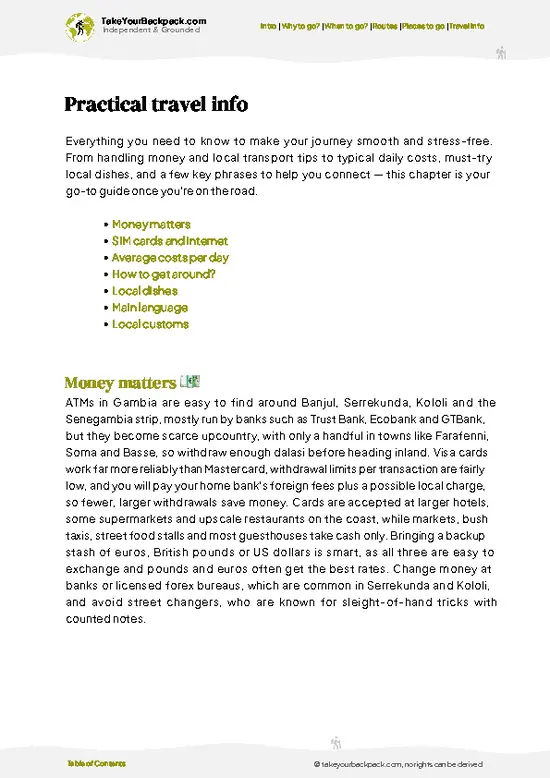
example page 0 from our offline Travel Guide for Gambia
example page 1 from our offline Travel Guide for Gambia
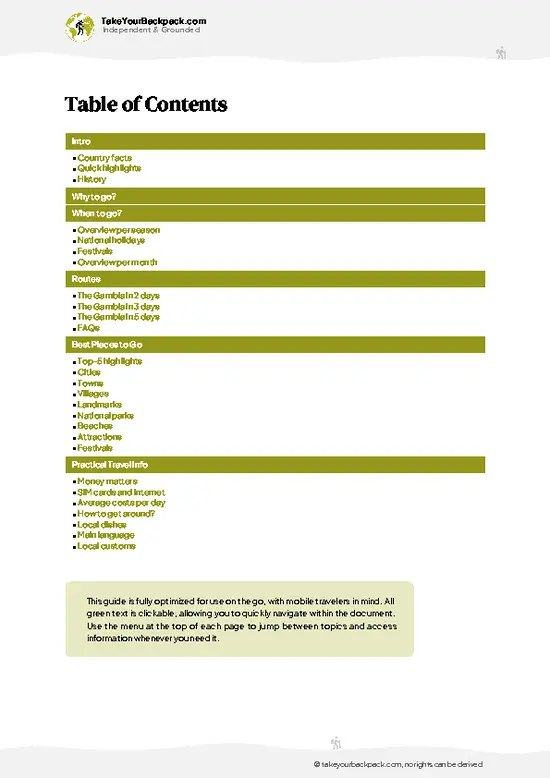
example page 2 from our offline Travel Guide for Gambia
example page 3 from our offline Travel Guide for Gambia
example page 4 from our offline Travel Guide for Gambia
example page 5 from our offline Travel Guide for Gambia
example page 6 from our offline Travel Guide for Gambia
example page 7 from our offline Travel Guide for Gambia
The digital guide (243 pages) contains:
57 highlights, ranked by travel appeal
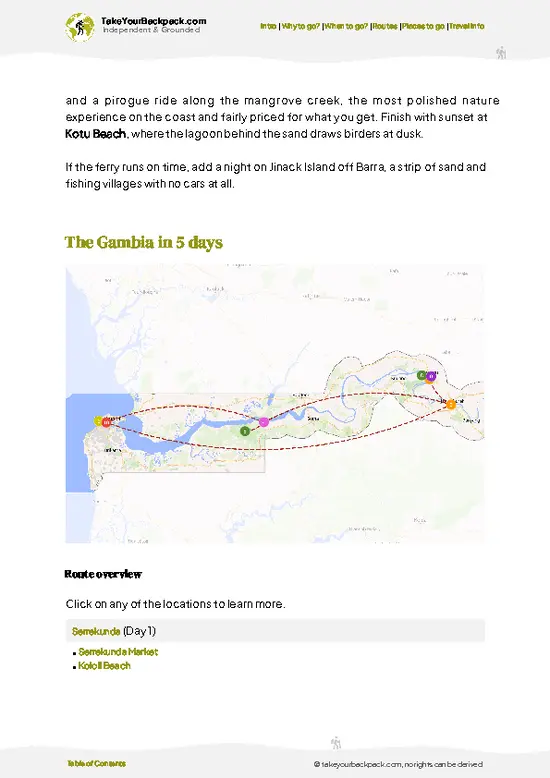
Optimized 2, 3 & 5-day travel routes
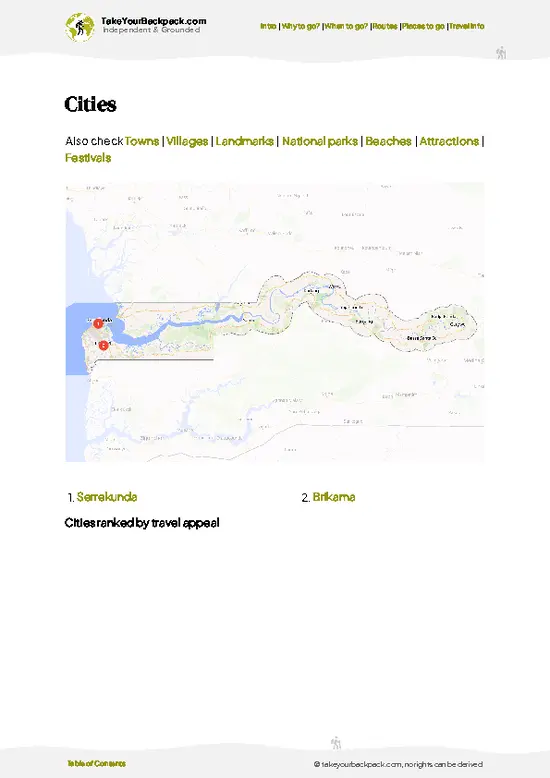
Cities, national parks, landmarks, beaches
How to get around
Offline-friendly for travel without Wi-Fi
👉 Click to see all 30+ guide features

📅 Plan smarter in minutes, not weeks
Month by month travel advice
Festivals & national holidays
Budget expectations

🗺️ Go to the right places, skip the overrated ones
Honest pros & cons of destinations
Top hikes, parks & viewpoints
Lesser-known places most travelers miss
Clear “worth it vs skip it” guidance

🛏️ Travel smoothly without rookie mistakes
Best areas to stay
Transport systems explained simply
Common scams & safety advice
SIM cards, money & practical tips

🌍 Understand the country, not just visit it
Culture & traditions
52 Essential phrases & customs
Festivals worth planning around
Traveler-friendly historical context
Insights that make places more meaningful

📱 Built for real travel conditions
Fully downloadable PDF
Works completely offline
Optimized for phone use
Useful in remote areas & buses
Everything in one place
Save weeks of stressful planning
Get instant access to your full guide. 30‑day money-back guarantee.


By proceeding you agree to our terms.
Sent to your inbox immediately after payment • 100% Secure Checkout
Best Backpacking Travel Advisor 2025 tourism awardBest Backpacking
Travel Advisor
2025
What others say about Take Your Backpack Guides:
⭐⭐⭐⭐⭐
Fantastic, amazing amount of information!
⭐⭐⭐⭐⭐
My goodness this is amazing, it's what I've been looking for hats off too you!
⭐⭐⭐⭐⭐
I think this is absolutely BRILLIANT
⭐⭐⭐⭐
Very complete and informative. It's still missing places, but I gotta to commend you
⭐⭐⭐⭐⭐
This is truly amazing, thank you, can't wait to explore it with my kids!
⭐⭐⭐⭐⭐
Awesome resource, thank you!
⭐⭐⭐⭐⭐
This is amazing! Can't wait to explore the ones I haven't seen
⭐⭐⭐⭐
I love this! Well done, great idea.
⭐⭐⭐⭐⭐
Thanks for taking the time to make this gem!
⭐⭐⭐⭐⭐
This might be the best website I've ever seen.
⭐⭐⭐⭐⭐
Congratulations, and thank you so much for your work; it's incredibly valuable.
⭐⭐⭐⭐
In all seriousness I think you did a great job pointing out the important spots
⭐⭐⭐⭐⭐
10/10 very good
⭐⭐⭐⭐⭐
As someone who's only just starting to visit regularly this is awesome, thank you.
⭐⭐⭐⭐
Thank you very much! I'm going to visit my dad, it's going to be very useful!
⭐⭐⭐⭐⭐
This is really cool! We'll be travelling for the first time and this definitely come in handy.
⭐⭐⭐⭐⭐
You are now our minister of culture, congratulations 👨‍💼
⭐⭐⭐⭐⭐
Just wanted to tell you that this is a pearl! Going to follow your recommendations.
⭐⭐⭐⭐⭐
This is so cool. I'll definitely be using the resource for my travels soon.
⭐⭐⭐⭐⭐
This is very impressive! Good work.
⭐⭐⭐⭐⭐
This is an amazing and informative site. Very well done!

🛏️ Where to stay?Choosing the right base

In Basse Santa Su, the best spot for backpackers is the town center and its immediate surroundings. This area hums with local life—markets spilling fresh mango scents and the chatter of vendors bargaining in Mandinka and Wolof. It’s where you’ll find the handful of budget guesthouses and hostels that cater to solo travelers and small groups, offering a chance to meet others without the touristy gloss. Staying here means you’re steps from the main bus station, so hopping on a shared taxi or minibus to explore the Upper River Region is straightforward, saving you the headache of complicated transport … read more 👉
In Basse Santa Su, the best spot for backpackers is the town center and its immediate surroundings. This area hums with local life—markets spilling fresh mango scents and the chatter of vendors bargaining in Mandinka and Wolof. It’s where you’ll find the handful of budget guesthouses and hostels that cater to solo travelers and small groups, offering a chance to meet others without the touristy gloss. Staying here means you’re steps from the main bus station, so hopping on a shared taxi or minibus to explore the Upper River Region is straightforward, saving you the headache of complicated transport logistics.

Compared to the quieter, more residential outskirts, the center pulses with energy and safety in numbers. The streets are lively but manageable after dark, with enough locals around to keep things grounded and secure. You’ll catch the rhythm of daily Gambian life here—kids playing football on dusty streets, women carrying baskets on their heads, and the occasional call to prayer weaving through the air. This neighborhood isn’t about luxury; it’s about authentic immersion, where the rough edges are part of the charm and the social vibe keeps you connected.

🚌 Getting aroundHow to get around Basse Santa Su

Basse Santa Su moves at its own rhythm—less a clockwork town and more a place where time bends to the sun’s arc and the chatter of market vendors. The air carries the scent of earth and river, and the pace is deliberate but not slow, like a conversation that lets you catch every word without rushing. Here, schedules are suggestions, not laws. You’ll find that blending into the flow means embracing a bit of unpredictability, but that’s where the charm lies: the town rewards patience with moments that feel genuinely earned.


  • Walking: The best way to soak in Basse’s character. The town is compact, and wandering through its dusty streets lets you catch the scent of grilled fish and hear the rhythm of daily life up close. No cost, and you control the pace—perfect for budget travelers wanting
read more 👉
Basse Santa Su moves at its own rhythm—less a clockwork town and more a place where time bends to the sun’s arc and the chatter of market vendors. The air carries the scent of earth and river, and the pace is deliberate but not slow, like a conversation that lets you catch every word without rushing. Here, schedules are suggestions, not laws. You’ll find that blending into the flow means embracing a bit of unpredictability, but that’s where the charm lies: the town rewards patience with moments that feel genuinely earned.


  • Walking: The best way to soak in Basse’s character. The town is compact, and wandering through its dusty streets lets you catch the scent of grilled fish and hear the rhythm of daily life up close. No cost, and you control the pace—perfect for budget travelers wanting to absorb the atmosphere.


  • Shared Taxis: These are the workhorses of local transit. They run from early morning until dusk, usually filling up before they leave, so be ready to hop in quickly. Fares are low—often just a few dalasi—and while the ride can be bumpy and crowded, it’s the fastest way to cover longer distances around town or to nearby villages.


  • Motorbike Taxis (Okadas): For a bit more speed and flexibility, motorbike taxis zip through narrow alleys and traffic jams. They’re pricier than shared taxis but still affordable. Negotiate the fare upfront; rides usually start around 20-30 dalasi. Expect a thrilling, wind-in-your-face experience that’s as much about the ride as the destination.


  • Minibuses: These operate on fixed routes connecting Basse to other towns in The Gambia. They leave when full, so timing is unpredictable, but they’re cheap and reliable for longer trips. Expect a noisy, lively atmosphere inside, with stops dictated by passenger needs rather than a timetable.


  • Bicycle Rentals: If you want to explore beyond the town center at your own pace, renting a bicycle is a solid option. It’s quiet, eco-friendly, and lets you chase the light as it shifts over the riverbanks. Rentals are affordable, and the terrain is mostly flat, making it accessible even if you’re not a seasoned cyclist.

👛 Costs (as of 4 February 2025)Typical daily expenses

Backpacking in Basse Santa Su, The Gambia, offers a straightforward, no-frills experience where your money stretches well if you know where to look. The town hums with the scent of fresh earth and river breeze, but the budget here is tight, reflecting the simplicity of local life.
  • Dorm Accommodation: Expect to pay around €5 to €10 per night for a basic dorm bed. Options are limited and often rustic, with mosquito nets and shared bathrooms. The charm is in the simplicity, but don’t expect luxury—think clean, functional, and local.
  • Meals: Street food and small local eateries dominate. A hearty meal of rice, fish, or chicken with local vegetables will cost about €1.50 to €3. Fresh fruit and snacks are even cheaper. Western-style meals or imported goods push prices higher, but sticking to local
read more 👉
Backpacking in Basse Santa Su, The Gambia, offers a straightforward, no-frills experience where your money stretches well if you know where to look. The town hums with the scent of fresh earth and river breeze, but the budget here is tight, reflecting the simplicity of local life.
  • Dorm Accommodation: Expect to pay around €5 to €10 per night for a basic dorm bed. Options are limited and often rustic, with mosquito nets and shared bathrooms. The charm is in the simplicity, but don’t expect luxury—think clean, functional, and local.
  • Meals: Street food and small local eateries dominate. A hearty meal of rice, fish, or chicken with local vegetables will cost about €1.50 to €3. Fresh fruit and snacks are even cheaper. Western-style meals or imported goods push prices higher, but sticking to local fare keeps costs low and authentic.
  • Local Transport: Transport mainly means shared taxis or bush taxis, costing roughly €0.50 to €1 for short trips within town or nearby villages. For longer rides, like heading out to nearby attractions, budget around €2 to €5. Walking is often the best way to soak in the atmosphere and save money.
  • Basic Activities/Entry Fees: Most local attractions, like markets or river walks, are free or ask for a small tip. If you want to visit cultural sites or take guided tours, expect to pay €2 to €5. These fees support local guides and community projects, so they’re worth it for the insight.
  • Miscellaneous Expenses: This includes bottled water, snacks, phone credit, or small souvenirs. Budget about €1 to €3 daily. Water quality varies, so buying bottled water is a must, especially in the heat and humidity.

All told, a realistic daily budget for backpacking in Basse Santa Su falls between €10 and €22. This range covers the essentials without cutting corners on safety or comfort, letting you experience the town’s raw, grounded vibe without breaking the bank.


source: visitthegambia.gm
⚠️ Prices can change and everyone travels differently, so take this as a rough guide. Hope it helps you plan your adventure!

🚌 Day tripsExploring the surroundings

Basse Santa Su is a fantastic launchpad for exploring the heart of The Gambia. With its vibrant local life and easy access to stunning landscapes, you can dive into rich experiences without the hassle of long travel days.

Trip to Wassu Stone Circles
A visit to the Wassu Stone Circles is like stepping into a time capsule. These ancient megaliths, shrouded in mystery, are a mere 45-minute drive from Basse. The journey is scenic, with the scent of earth and grass filling the air as you pass through small villages. Expect to spend around $10 for transport and entrance fees. Early mornings are best to avoid the heat and crowds. Many first-timers miss the chance to chat with local guides who can share fascinating stories about the stones.


Trip to Janjanbureh
Janjanbureh, about an hour from … read more 👉
Basse Santa Su is a fantastic launchpad for exploring the heart of The Gambia. With its vibrant local life and easy access to stunning landscapes, you can dive into rich experiences without the hassle of long travel days.

Trip to Wassu Stone Circles
A visit to the Wassu Stone Circles is like stepping into a time capsule. These ancient megaliths, shrouded in mystery, are a mere 45-minute drive from Basse. The journey is scenic, with the scent of earth and grass filling the air as you pass through small villages. Expect to spend around $10 for transport and entrance fees. Early mornings are best to avoid the heat and crowds. Many first-timers miss the chance to chat with local guides who can share fascinating stories about the stones.


Trip to Janjanbureh
Janjanbureh, about an hour from Basse, offers a blend of history and nature. The town is steeped in colonial past, with remnants of old buildings lining the streets. You can kayak along the river, where the sounds of birds and rustling leaves create a serene backdrop. Budget around $15 for transport and a kayak rental. The dry season, from November to April, is ideal for this trip. A common mistake is underestimating the river currents; always check local advice before heading out.
👉 Explore Janjanbureh

Trip to Kiang West National Park
For wildlife enthusiasts, Kiang West National Park is a must. Just over an hour’s drive, the park is a haven for birdwatchers and nature lovers alike. The air is filled with the calls of exotic birds, and the landscape shifts from wetlands to savannah. Expect to spend about $20 for transport and park fees. The best time to visit is during the dry season when animals are easier to spot. Many backpackers overlook the guided tours, which can enhance your experience significantly.
👉 Explore Kiang West National Park

Trip to the River Gambia National Park
A trip to the River Gambia National Park is a chance to see the country’s diverse wildlife up close. It’s about a two-hour journey, but the thrill of spotting monkeys and hippos makes it worthwhile. The cost is roughly $25, including transport and entrance fees. Plan your visit during the cooler hours of the day for the best experience. First-timers often forget to bring binoculars, which can make all the difference in wildlife viewing.
👉 Explore River Gambia National Park
Want to know what more The Gambia offers?
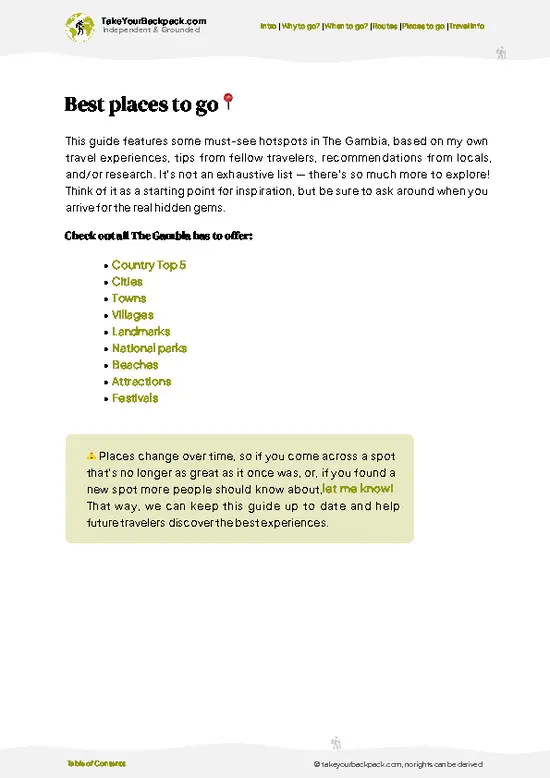
The Gambia Travel Guide describes 57 highlights, from cities to national parks, from beaches to hikes

Get the Travel Guide -

🛡️ SafetyScams, Hazards, and Annoyances

Basse Santa Su is generally safe, but a few practical tips can enhance your experience. Stay aware in crowded markets; pickpockets can be a nuisance. Keep your valuables close and your wits sharper.

If you’re solo, avoid wandering too far after dark. The streets can be quiet, and it’s best to stick to well-lit areas.

Common scams are rare, but be cautious of overly friendly locals who might want to guide you for a fee. A polite “no, thank you” usually suffices.

Annoyances like persistent vendors can test your patience. A friendly smile and firm “no” can help you navigate these interactions without escalating tension. Embrace the rhythm of the town, and you’ll find the beauty in its everyday hustle.

Other Gambian towns near Basse Santa Su

Explore more nearby:

  • Bansang—river crossing, regional hospital, market town| 49 km away
  • Janjanbureh—river island, colonial relics, prison museum| 65 km away
  • Kuntaur—river port, boat launch, rice fields| 83 km away

💡 Not sure where to go next?
Create a personalized itinerary for The Gambia including Basse Santa Su and the places that fit your trip.

Generate my itinerary

👉 Discover all towns

Or checkout all The Gambia has to offer (think cities, towns, villages, national parks, hikes, beaches, festivals)
Country photo of The Gambia

We 💚 feedbackParting advice and final tips

Basse Santa Su has a rhythm all its own. The air hums with the chatter of locals and the scent of grilled fish wafts through the market. You’ll stumble upon the best surprise: the vibrant cultural dances at sunset, where the energy is infectious. Just a heads-up—don’t expect polished tourist traps. Embrace the rawness; it’s where the real magic lies. Trust me, it’s worth every moment.

✍️ Help improve this page!
The information on this page is based on in-depth research, insights shared by experienced travelers, and feedback from the local travel community in The Gambia. While every effort is made to keep the information accurate and current, conditions can change — so if you spot anything incorrect or outdated, please get in touch.


🙋‍♂️ Give feedback

👋 Meet the founderWho’s Behind Take Your Backpack?

Johan, backpacker and founder of TakeYourBackpackHi, I’m Johan (Netherlands 🇳🇱), the creator of TakeYourBackpack. Over the past decade, I’ve backpacked through 80+ countries across six continents, gaining extensive experience with independent travel, long-term trips, and overland routes.

This site is built on a combination of firsthand travel experience and carefully curated insights from other backpackers. Many guides are based on places I’ve personally visited, while others bring together tips, observations, and practical advice shared by trusted travelers I’ve met along the way.

The goal is to provide realistic, experience-driven guidance — not generic itineraries — so you can explore destinations with better context, clearer expectations, and more confidence.

Get full Gambia guide •
Instant download • 57 highlights • Full Offline guide