×

The Gambia🇬🇲 | townsBontoSand lanes, bantaba, farm plots, domoda meals | things to do and best time to go

Explore Basse Santa SuExplore Farafenni

Backpacking in Bonto
👀 For curious travelerstown ranked #15
By Johan Kruseman 🇳🇱 | Updated October 22, 2026

Nobody comes to Bonto for a famous sight. The reason to come is the village itself: sand lanes, compound walls of mud brick and cement, and a morning chorus of roosters and pounding pestles. Bonto sits in the Gambia’s West Coast Region, inland from the beaches and east of Brikama. Evenings are quiet, with no hostel scene, so you meet people through neighbors rather than other backpackers. Public transport thins out after the afternoon because shared taxis leave only when full, so an experienced traveler arrives by midday and carries small notes for tips and snacks.

Discover everything you want to know in the 📖 The Gambia Travel Guide.


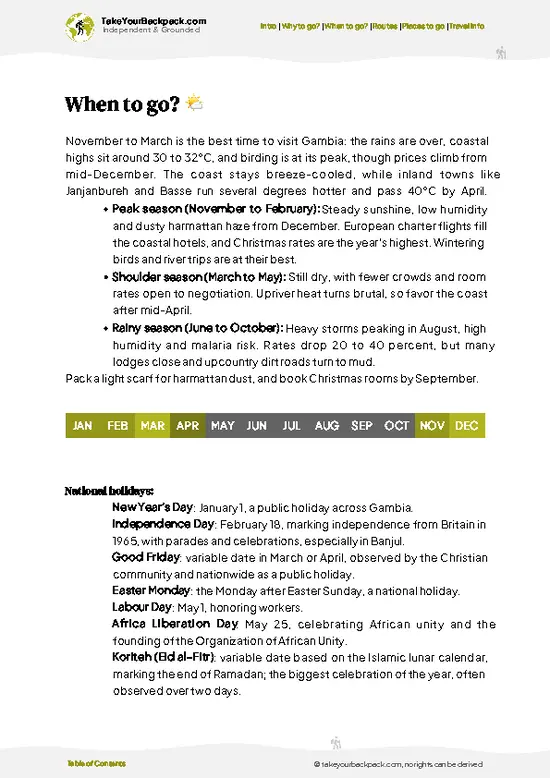
example page 0 from our offline Travel Guide for Gambia
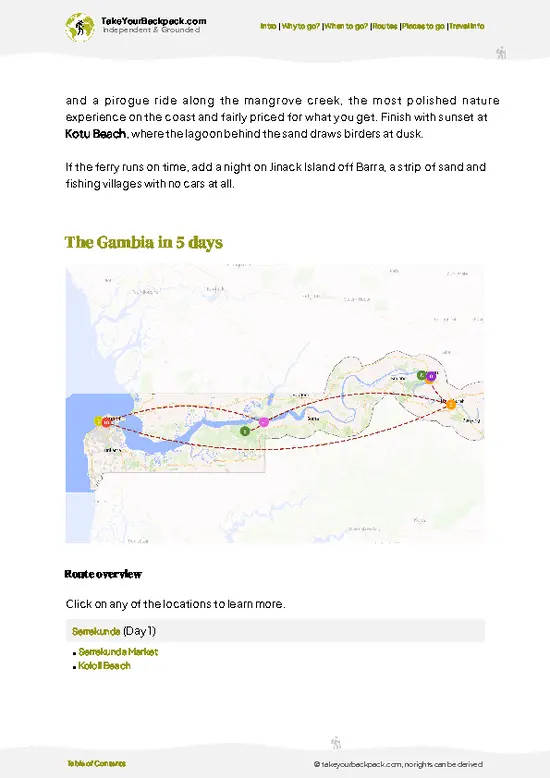
example page 1 from our offline Travel Guide for Gambia
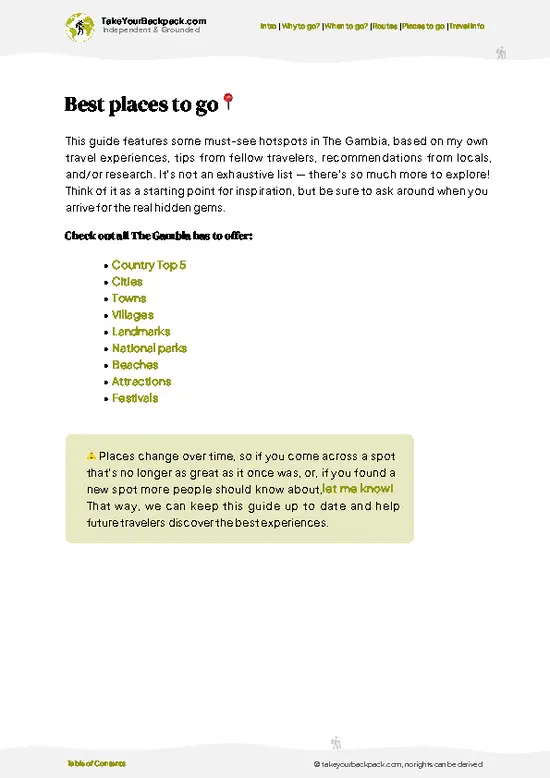
example page 2 from our offline Travel Guide for Gambia
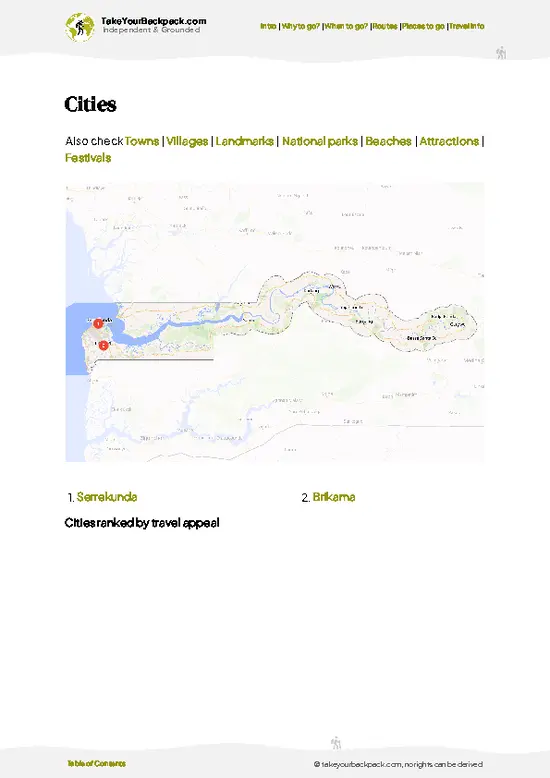
example page 3 from our offline Travel Guide for Gambia
example page 4 from our offline Travel Guide for Gambia
example page 5 from our offline Travel Guide for Gambia
example page 6 from our offline Travel Guide for Gambia
example page 7 from our offline Travel Guide for Gambia
Loading the map 🌍
CLICK TO FILTER
cities
towns
villages
landmarks
national parks
beaches
attractions
festivals
SHOW COUNTRY’S BESTSHOW ALL

✨ Why go?
Ranked #15 town in The Gambia
Why Bonto should be on your travel list

Bonto suits travelers who want a day or two of ordinary Gambian village life away from the coastal strip. You come for the slow rhythm of compound life, with rice and groundnut fields at the edge of the settlement and shared meals cooked over charcoal. Greetings are long and a smile gets you invited to sit under the shade of a bantaba, the open meeting place where elders talk. It works best for slow travelers and curious solo visitors who are happy to read a book, chat and watch the day pass. Nightlife does not exist, so pair it with the beach resorts.

💡 HighlightsPlaces and moments you shouldn't skip

  1. Village walk through the compounds: Wander the sand lanes in the cool early hours, when women sweep yards, children head to school and goats scatter. Greet everyone and accept that photos need permission. It is free and takes 1 to 2 hours.
  2. The bantaba: The shaded meeting place is where news travels. Sit, greet the elders and listen. Late afternoon is liveliest. It is free, though a small gift of kola nuts or tea sugar is polite. Allow 1 hour.
  3. Farm fields and rice plots: Paths lead to groundnut, millet and rice plots, which are greenest after the rains and golden just after harvest. A local guide helps you find the paths for about US$3 to 6. Allow 2 hours.
  4. A home-cooked meal: Domoda (peanut stew) or benachin (one-pot rice) cooked by a host family is the best food here. Arrange it a day ahead and
… read more 👉
  1. Village walk through the compounds: Wander the sand lanes in the cool early hours, when women sweep yards, children head to school and goats scatter. Greet everyone and accept that photos need permission. It is free and takes 1 to 2 hours.
  2. The bantaba: The shaded meeting place is where news travels. Sit, greet the elders and listen. Late afternoon is liveliest. It is free, though a small gift of kola nuts or tea sugar is polite. Allow 1 hour.
  3. Farm fields and rice plots: Paths lead to groundnut, millet and rice plots, which are greenest after the rains and golden just after harvest. A local guide helps you find the paths for about US$3 to 6. Allow 2 hours.
  4. A home-cooked meal: Domoda (peanut stew) or benachin (one-pot rice) cooked by a host family is the best food here. Arrange it a day ahead and expect to pay about US$2 to 4. Allow 1 to 2 hours.
Beyond Bonto, Brikama’s woodcarving market, Abuko Nature Reserve and the beaches near Kartong and Sanyang make easy day trips. The village walk and the bantaba cost nothing at all.
Spotted a mistake or missing something? Contact us.

Things to do near Bonto

Ratings based on Tripadvisor reviews. When you book through this link, you support our work at no extra cost to you.

🏘️ NeighborhoodsKey areas and districts to know

Bonto is a small village on the north bank of the River Gambia, in the North Bank Region near Kerewan, so there are no formal districts, only a few clusters you can cover on foot in an hour. Sandy lanes make sandals better than wheeled luggage, and midday heat empties them, so walk early or late.
  • Riverside landing: Fishing boats rest on mud and wet sand, and the air smells of smoke and drying fish. Mornings and late afternoons are busiest. Ask before photographing people, since fishers are working, not posing.
  • Village center: Compounds with tin and thatch roofs, goats underfoot, and the thump of pestles at mealtimes. Greet everyone with a “Salaam aleikum”, because greetings are how strangers are placed here. Food is simple: rice with fish sauce or peanut stew, eaten from a shared bowl.
  • Rice fields
… read more 👉
Bonto is a small village on the north bank of the River Gambia, in the North Bank Region near Kerewan, so there are no formal districts, only a few clusters you can cover on foot in an hour. Sandy lanes make sandals better than wheeled luggage, and midday heat empties them, so walk early or late.
  • Riverside landing: Fishing boats rest on mud and wet sand, and the air smells of smoke and drying fish. Mornings and late afternoons are busiest. Ask before photographing people, since fishers are working, not posing.
  • Village center: Compounds with tin and thatch roofs, goats underfoot, and the thump of pestles at mealtimes. Greet everyone with a “Salaam aleikum”, because greetings are how strangers are placed here. Food is simple: rice with fish sauce or peanut stew, eaten from a shared bowl.
  • Rice fields and bolong edges: Green and flat in the rains, hard and pale in the dry months. Paths flood, so go with a local guide and bring water, as there is no shade.

⌛️ 1 dayHow to make the most of one day

8:00 AM, Bonto Bolong (river landing)
Start at the water's edge, where the creek of the Gambia River's mangrove-lined channel opens up and fishing pirogues slip in and out. Come early for cool air, the smell of wet mud and woodsmoke, and the sound of paddles knocking wood. Spend an hour here chatting with boatmen.
9:30 AM, Village lanes and morning market
Walk inland along the sandy tracks past compounds, mango trees and women pounding millet. A small roadside market sells groundnuts, bitter tomatoes and dried fish. Buy a bag of roasted peanuts and keep going at an easy pace.
11:30 AM, Rice fields and mangrove edge
This is the corner that rarely appears on a standard tourist route. Follow the footpath behind the village to the tidal rice plots, where women work knee-deep in mud and egrets pick … read more 👉
8:00 AM, Bonto Bolong (river landing)
Start at the water's edge, where the creek of the Gambia River's mangrove-lined channel opens up and fishing pirogues slip in and out. Come early for cool air, the smell of wet mud and woodsmoke, and the sound of paddles knocking wood. Spend an hour here chatting with boatmen.
9:30 AM, Village lanes and morning market
Walk inland along the sandy tracks past compounds, mango trees and women pounding millet. A small roadside market sells groundnuts, bitter tomatoes and dried fish. Buy a bag of roasted peanuts and keep going at an easy pace.
11:30 AM, Rice fields and mangrove edge
This is the corner that rarely appears on a standard tourist route. Follow the footpath behind the village to the tidal rice plots, where women work knee-deep in mud and egrets pick through the shallows. Ask permission before photographing anyone, and go with a local guide if the path floods.
1:00 PM, Lunch in the village
Find a family-run spot for domoda or fish with rice, eaten from a shared bowl. Sit through the hottest hours in the shade, drink attaya (sweet green tea), and let the heat pass.
4:00 PM, Creek by boat
Hire a small pirogue for a slow paddle along the mangrove channels as the heat fades. Listen for kingfishers and the soft slap of water on roots. Return to the landing as the sky turns orange, then finish with a cold drink on a plastic chair.

🌤️ When to go?When to go for the best experience

November to February is the most comfortable window, with dry days around 30 to 34°C (86 to 93°F), cooler nights near 18 to 22°C (64 to 72°F) and roughly 11 hours of daylight.
  • Cool dry season (Nov to Feb): Clear skies, dusty harmattan haze and the busiest period, so riverside lodging costs more.
  • Hot season (Mar to May): Highs reach 36 to 40°C (97 to 104°F), so move at dawn and dusk.
  • Rainy season (Jun to Oct): Humid, 28 to 32°C (82 to 90°F), with heavy downpours from July to September that turn sand tracks muddy. Prices drop, birdlife is lush, and some tracks are impassable.
Book transport a day ahead in December and January.

source: climatestotravel.comJANJanuary: highly recommended for travelingFEBFebruary: highly recommended for travelingMARMarch: excellent for travelingAPRApril: excellent for travelingMAYMay: excellent for travelingJUNJune: fair for travelingJULJuly: fair for travelingAUGAugust: fair for travelingSEPSeptember: fair for travelingOCTOctober: fair for travelingNOVNovember: excellent for travelingDECDecember: highly recommended for traveling
when-to-go

✈️ The backpacker research shortcutThe Gambia Travel Guide

An offline-friendly backpacking guide with optimized travel routes, ranked highlights, transport advice, and the best areas to stay.
example page 0 from our offline Travel Guide for Gambia
example page 1 from our offline Travel Guide for Gambia
example page 2 from our offline Travel Guide for Gambia
example page 3 from our offline Travel Guide for Gambia
example page 4 from our offline Travel Guide for Gambia
example page 5 from our offline Travel Guide for Gambia
example page 6 from our offline Travel Guide for Gambia
example page 7 from our offline Travel Guide for Gambia
The digital guide (213 pages) contains:
✅ 50 highlights, ranked by travel appeal
✅ Optimized 2, 3 & 5-day travel routes
✅ Cities, national parks, landmarks, beaches
✅ How to get around
✅ Offline-friendly for travel without Wi-Fi
👉 Click to see all 30+ guide features

📅 Plan smarter in minutes, not weeks
✅ Month by month travel advice
✅ Festivals & national holidays
✅ Budget expectations

🗺️ Go to the right places, skip the overrated ones
✅ Honest pros & cons of destinations
✅ Top hikes, parks & viewpoints
✅ Lesser-known places most travelers miss
✅ Clear “worth it vs skip it” guidance

🛏️ Travel smoothly without rookie mistakes
✅ Best areas to stay
✅ Transport systems explained simply
✅ Common scams & safety advice
✅ SIM cards, money & practical tips

🌍 Understand the country, not just visit it
✅ Culture & traditions
✅ 52 Essential phrases & customs
✅ Festivals worth planning around
✅ Traveler-friendly historical context
✅ Insights that make places more meaningful

📱 Built for real travel conditions
✅ Fully downloadable PDF
✅ Works completely offline
✅ Optimized for phone use
✅ Useful in remote areas & buses
✅ Everything in one place
Stop searching, start planning
Get instant access to your full guide. 30‑day money-back guarantee.
+ Add another guide for just

By proceeding you agree to our terms.
Sent to your inbox immediately after payment • 100% Secure Checkout
Best Backpacking Travel Advisor 2025 tourism awardBest Backpacking
Travel Advisor
2025
What others say about Take Your Backpack Guides:
⭐⭐⭐⭐⭐
Fantastic, amazing amount of information!
⭐⭐⭐⭐⭐
My goodness this is amazing, it's what I've been looking for hats off too you!
⭐⭐⭐⭐⭐
I think this is absolutely BRILLIANT
⭐⭐⭐⭐
Very complete and informative. It's still missing places, but I gotta to commend you
⭐⭐⭐⭐⭐
This is truly amazing, thank you, can't wait to explore it with my kids!
⭐⭐⭐⭐⭐
Awesome resource, thank you!
⭐⭐⭐⭐⭐
This is amazing! Can't wait to explore the ones I haven't seen
⭐⭐⭐⭐
I love this! Well done, great idea.
⭐⭐⭐⭐⭐
Thanks for taking the time to make this gem!
⭐⭐⭐⭐⭐
This might be the best website I've ever seen.
⭐⭐⭐⭐⭐
Congratulations, and thank you so much for your work; it's incredibly valuable.
⭐⭐⭐⭐
In all seriousness I think you did a great job pointing out the important spots
⭐⭐⭐⭐⭐
10/10 very good
⭐⭐⭐⭐⭐
As someone who's only just starting to visit regularly this is awesome, thank you.
⭐⭐⭐⭐
Thank you very much! I'm going to visit my dad, it's going to be very useful!
⭐⭐⭐⭐⭐
This is really cool! We'll be travelling for the first time and this definitely come in handy.
⭐⭐⭐⭐⭐
You are now our minister of culture, congratulations 👨‍💼
⭐⭐⭐⭐⭐
Just wanted to tell you that this is a pearl! Going to follow your recommendations.
⭐⭐⭐⭐⭐
This is so cool. I'll definitely be using the resource for my travels soon.
⭐⭐⭐⭐⭐
This is very impressive! Good work.
⭐⭐⭐⭐⭐
This is an amazing and informative site. Very well done!

🛏️ Where to stay?Best areas and accommodation options

Stay in Bonto itself for a quiet night in a family-run guesthouse or camp, or in Kerewan if you want more beds and a market within reach. Bonto has few formal beds, so expect basic rooms with fans and shared bathrooms at roughly US$8 to 20. It is calm and safe after dark, though power can cut out, so carry a headlamp. Noise means roosters and early prayer calls rather than nightlife. Kerewan has a wider choice of budget rooms, a bigger market and more frequent shared taxis on the highway, which helps if you are moving on early. Bring cash, as cards and ATMs are rare.

🚌 Getting aroundHow to get around Bonto

Bonto is small enough that the costliest error is hiring a private taxi from the coast for the whole trip when shared vehicles and the ferry run far cheaper. Roads on the north bank are paved only on the main highway, and the last stretch to the village is sandy. Expect dust, goat traffic and drivers who leave only when full.
  • Walking: The village takes under an hour end to end. Go early, because the sand reflects heat by 10 am and sandals fill with grit.
  • Shared taxi or gelle-gelle minibus: Run along the north bank highway toward Farafenni and Barra, usually US$2 to 6 per leg. They leave when packed, so arrive by mid-morning, as afternoon departures thin out and stop by dusk.
  • Barra ferry plus onward transport: From Banjul side, the crossing to Barra costs under US$1 for foot passengers and takes
… read more 👉
Bonto is small enough that the costliest error is hiring a private taxi from the coast for the whole trip when shared vehicles and the ferry run far cheaper. Roads on the north bank are paved only on the main highway, and the last stretch to the village is sandy. Expect dust, goat traffic and drivers who leave only when full.
  • Walking: The village takes under an hour end to end. Go early, because the sand reflects heat by 10 am and sandals fill with grit.
  • Shared taxi or gelle-gelle minibus: Run along the north bank highway toward Farafenni and Barra, usually US$2 to 6 per leg. They leave when packed, so arrive by mid-morning, as afternoon departures thin out and stop by dusk.
  • Barra ferry plus onward transport: From Banjul side, the crossing to Barra costs under US$1 for foot passengers and takes 30 to 45 minutes, plus waits. Queues swell at rush hours, so cross midday.
  • Private taxi or hired driver: US$30 to 60 for a day trip from the coast. It makes sense split among a group, since there is no fixed meter, so agree the fare before you get in.
  • Motorbike or bush taxi for the last stretch: US$1 to 3 over sandy tracks. Hold on tight and keep your bag in front of you.

👛 Costs (as of 22 October 2026)How expensive it really is

Bonto costs about US$28 to 45 a day for a backpacker, since the village has few paid attractions and meals are simple.
CategoryBudget RangeLocal Reality
Dorm or basic roomUS$8 to 15Simple guesthouse or camp room with fan, shared bathroom, dorms are rare
MealsUS$6 to 12Rice with fish or stew from a local cook, bottled water extra
Local transportUS$3 to 8Shared taxis and short motorbike hops on sandy tracks
Basic activities/entry feesUS$3 to 10Guided village or boat outings, negotiable
MiscellaneousUS$3 to 5Phone credit, snacks, small tips
Total Daily BudgetUS$28 to 45Cash only, carry small notes
Eating where your host eats saves money and usually tastes better.
⚠️ Prices can change and everyone travels differently, so take this as a rough guide. Hope it helps you plan your adventure!

🚌 Day tripsShort trips worth adding

Bonto sits on the north bank, so day trips depend on shared taxis and early starts, and overnight stays are not needed for these.Kerewan Market: Kerewan is the regional hub, with a lively market, fabric stalls and cheap lunches. Expect 30 to 60 minutes by shared taxi, roughly US$2 to 4 return. Go on a market morning and haggle gently, because first prices run high.
Farafenni: This trading town sits on the main trans-Gambia highway near the Senegal border, with a big weekly lumo market that draws traders from both countries. Allow about 1.5 to 2 hours each way, US$5 to 10 return. Leave early, since vehicles back thin out by late afternoon.
👉 Explore FarafenniBarra and Fort Bullen: Barra is the ferry terminus, and Fort Bullen has old cannons and a view across the river mouth. Count 1.5 to 2.5 … read more 👉
Bonto sits on the north bank, so day trips depend on shared taxis and early starts, and overnight stays are not needed for these.Kerewan Market: Kerewan is the regional hub, with a lively market, fabric stalls and cheap lunches. Expect 30 to 60 minutes by shared taxi, roughly US$2 to 4 return. Go on a market morning and haggle gently, because first prices run high.
Farafenni: This trading town sits on the main trans-Gambia highway near the Senegal border, with a big weekly lumo market that draws traders from both countries. Allow about 1.5 to 2 hours each way, US$5 to 10 return. Leave early, since vehicles back thin out by late afternoon.
👉 Explore FarafenniBarra and Fort Bullen: Barra is the ferry terminus, and Fort Bullen has old cannons and a view across the river mouth. Count 1.5 to 2.5 hours each way including the ferry, US$8 to 15 total with entry. First-timers often arrive at the ferry at rush hour and lose an hour in the queue.

🛡️ SafetyScams, Hazards, and Annoyances

Bonto is calm, and petty theft is rare. The main nuisances are unofficial guides and kids asking for gifts, so agree prices up front and a smile and firm no work fine. Solo travelers, including women, usually find the village welcoming, but dress modestly and avoid walking dark sandy tracks alone, where you could trip or meet stray dogs. Keep valuables out of sight in the ferry crowds at Barra. Ask permission before photographing people. Drink only bottled or treated water, and use mosquito protection at dusk.

FAQFrequently asked questions about Bonto

Bonto suits a short, quiet visit rather than a stopover, because the draw is village life on the River Gambia, fishing boats and rice fields, not sights. It works well as a side trip from the coast, with Kerewan and Farafenni within 1 to 2 hours by shared taxi.
One night or a full day is enough for Bonto, and two days works if you add a boat outing or a market in Kerewan. Budget about US$28 to 45 a day. Without that extra stop you will have seen the village by midday.
Bonto can be done in a long day from the coast, but the Barra ferry and sandy roads eat 3 to 5 hours of travel each way, so it is tiring. Shared taxis cost about US$8 to 15 for the round trip including the ferry. Staying one night gives a calmer morning on the river.
⚠️ Things can change over time, so always validate details locally before you go.

Other Gambian towns near Bonto

Explore more nearby:

  • Pirang—wetland reserve, rice paddies, birding hotspot| 3 km away
  • Lamin—wetland sanctuary, local compounds, oyster harvesting| 14 km away
  • Kafuta—forest edge, traditional compounds, local crafts| 14 km away

💡 Not sure where to go next?
Create a personalized itinerary for The Gambia including Bonto and the places that fit your trip.

Generate my itinerary

👉 Discover all towns

Or checkout all The Gambia has to offer (think cities, towns, villages, national parks, hikes, beaches, festivals)
Country photo of The Gambia

We 💚 feedbackIs it worth it?

Bonto is best in the early morning during the cooler months after the rains, when the fields are still green and the lanes feel gentle. Be there by first light, bring small gifts for your hosts and leave your plans loose.

✍️ Help improve this page!
The information on this page is based on in-depth research, insights shared by experienced travelers, and feedback from the local travel community in The Gambia. While every effort is made to keep the information accurate and current, conditions can change — so if you spot anything incorrect or outdated, please get in touch.


🙋‍♂️ Give feedback

👋 Meet the founderWho’s Behind Take Your Backpack?

Johan, backpacker and founder of TakeYourBackpackHi, I’m Johan (Netherlands 🇳🇱), the creator of TakeYourBackpack. Over the past 3 decades, I’ve backpacked through 90+ countries across six continents, gaining extensive experience with independent travel, long-term trips, and overland routes.

This site is built on a combination of firsthand travel experience and carefully curated insights from other backpackers. Many guides are based on places I’ve personally visited, while others bring together tips, observations, and practical advice shared by trusted travelers I’ve met along the way.

The goal is to provide realistic, experience-driven guidance — not generic itineraries — so you can explore destinations with better context, clearer expectations, and more confidence.