×

The Gambia🇬🇲 | townsFolonkosacred crocodile pool, local rituals, forest edge | things to do and best time to go

Explore LaminExplore Tanji

Backpacking in Folonko
👀 For curious travelerstown ranked #17
By Johan Kruseman 🇳🇱 | Updated June 13, 2026

Most travelers only realize after leaving: Folonko’s tidal lagoon is best explored at dawn, when the air is cool and the birds are bold—skip midday, when the sun flattens everything. Folonko sits in the south of The Gambia, close to the border with Senegal, a short ride from the coast’s busier strips. The town itself is quiet, more a springboard for the nearby nature reserve than a destination for nightlife or markets. You come here for the mangroves, the salt tang in the air, the chance to spot monkeys and rare birds, not for urban buzz. It’s walkable, but you’ll need a bush taxi or a sturdy sense of direction to reach the lagoon or nearby villages. Hostels are sparse; expect simple guesthouses and slow, social evenings—if you meet other travelers, it’s usually over shared binoculars, not beers. Costs are low, but so is the pace. Compared to brash Bakau or touristy Kololi, Folonko feels stripped-back and honest—less convenient, but more rewarding if you’re chasing the wild edge of The Gambia.

Discover everything you want to know in the 📖 The Gambia Travel Guide.


Get your Gambia guide
57 ranked highlights, routes & tips, works offline (243 pages)
Loading the map 🌍
CLICK TO FILTER
cities
towns
villages
landmarks
national parks
hikes
beaches
attractions
festivals
SHOW COUNTRY’S BESTSHOW ALL

✨ Why go?
Ranked #17 town in The Gambia
Why visitors keep coming back

Folonko draws backpackers for its strategic location along the route to stunning hikes and serene beaches. The walkable streets invite exploration, where you can stumble upon local food stalls serving spicy benachin or fresh fish. Small-scale guesthouses offer a cozy atmosphere, perfect for solo travelers or small groups seeking connection. Many stay a few days, soaking in the friendly vibe and sharing stories with fellow adventurers. It’s not a party hub, but the social energy is palpable, making it ideal for those who appreciate a slower pace. If you’re into hiking or cultural immersion, Folonko is a rewarding stop, not just a pit stop.
Want to include Folonko in your The Gambia route?
Create a personalized The Gambia itinerary that includes Folonko and the places that fit your trip — based on your travel style, budget, and available time. Get your route in seconds.

Generate my trip

💡 HighlightsThe experiences that define the visit

  • Folonko Village Market — The daily market is the town’s heartbeat: fresh produce, homemade snacks, locally woven cloth and a chance to watch bargaining, meet traders and taste street food you won’t find in guidebooks.
  • The Alkalo’s Compound (village chief’s compound) — The traditional seat of local authority where you can observe Gambian village governance, see traditional architecture, and sometimes catch storytelling, dispute resolution or community ceremonies.
  • Folonko Friday Mosque — The mosque is a social as well as spiritual center; visiting outside prayer times lets you appreciate local religious life, simple Sudano-Sahelian architecture and the rhythms of daily community interaction.
  • Community Artisans’ Workshops — Small-scale woodcarvers, tailors and basket-makers work here; watching
read more 👉
  • Folonko Village Market — The daily market is the town’s heartbeat: fresh produce, homemade snacks, locally woven cloth and a chance to watch bargaining, meet traders and taste street food you won’t find in guidebooks.
  • The Alkalo’s Compound (village chief’s compound) — The traditional seat of local authority where you can observe Gambian village governance, see traditional architecture, and sometimes catch storytelling, dispute resolution or community ceremonies.
  • Folonko Friday Mosque — The mosque is a social as well as spiritual center; visiting outside prayer times lets you appreciate local religious life, simple Sudano-Sahelian architecture and the rhythms of daily community interaction.
  • Community Artisans’ Workshops — Small-scale woodcarvers, tailors and basket-makers work here; watching a craftsman at the bench or buying a handmade piece directly supports families and gives a real connection to local skills.
  • Village Waterfront / Riverbank — The town’s access to nearby waterways offers a calm place to see traditional fishing practice, salt pans or rice paddies depending on season, and to catch strong sunset light and local boat traffic.
  • Local School and Youth Projects — Visiting the primary school or community learning projects gives a grounded view of daily life, and many schools welcome respectful visitors who want to see local education efforts and maybe bring small, appropriate supplies.
For quick day trips outside Folonko, head to Tanji Fishing Village and the Tanji Bird Reserve, the Kachikally Crocodile Pool in Bakau, or Bijilo (Monkey) Forest Park — all real, visitable attractions that work well as nearby day excursions.
Spotted a mistake or missing something? Contact us.

Things to do near Folonko

Ratings based on Tripadvisor reviews. When you book through this link, you support our work at no extra cost to you.

🏘️ NeighborhoodsUnderstanding the local layout

Folonko offers a unique blend of culture and community, making it an intriguing stop for backpackers. Here’s how to navigate its neighborhoods:

Central Folonko: This is the heartbeat of the town. You’ll find local markets buzzing with vendors selling fresh produce and handmade crafts. The vibe is lively, perfect for short stays. Walkability is high, and you can easily hop on a shared taxi for longer trips. Nightlife is low-key, with a few bars where locals gather.

Folonko Riverside: If you crave tranquility, this area is your haven. The riverbanks provide stunning views, especially at sunset. It’s quieter, ideal for longer stays where you can soak in the scenery. Transport options are limited, but the peaceful atmosphere makes it worth it.

Folonko Outskirts: A bit more rugged, this area … read more 👉
Folonko offers a unique blend of culture and community, making it an intriguing stop for backpackers. Here’s how to navigate its neighborhoods:

Central Folonko: This is the heartbeat of the town. You’ll find local markets buzzing with vendors selling fresh produce and handmade crafts. The vibe is lively, perfect for short stays. Walkability is high, and you can easily hop on a shared taxi for longer trips. Nightlife is low-key, with a few bars where locals gather.

Folonko Riverside: If you crave tranquility, this area is your haven. The riverbanks provide stunning views, especially at sunset. It’s quieter, ideal for longer stays where you can soak in the scenery. Transport options are limited, but the peaceful atmosphere makes it worth it.

Folonko Outskirts: A bit more rugged, this area offers a taste of rural life. It’s less walkable, so renting a bike is a smart move. The cost of living is lower here, making it great for budget travelers. Expect a slower pace, with occasional community events that showcase local culture.

⌛️ 1 daySeeing the highlights in 24 hours

Folonko, a vibrant town in The Gambia, pulses with life and culture, offering a glimpse into the everyday rhythms of Gambian life. Start your morning at the bustling local market, where the air is thick with the scent of spices and fresh produce. Engage with friendly vendors; their smiles are as warm as the sun rising over the stalls. Grab a breakfast of *bajeh*—a savory bean cake—paired with sweet, milky tea.

As the day unfolds, wander through the narrow streets of the Kotu neighborhood. Here, you’ll find the less-trodden paths leading to the serene Folonko River. Rent a canoe for a peaceful paddle, where the sounds of nature envelop you, and the lush banks offer a refreshing contrast to the market’s chaos.

In the afternoon, visit the local craft center. This spot, often overlooked by … read more 👉
Folonko, a vibrant town in The Gambia, pulses with life and culture, offering a glimpse into the everyday rhythms of Gambian life. Start your morning at the bustling local market, where the air is thick with the scent of spices and fresh produce. Engage with friendly vendors; their smiles are as warm as the sun rising over the stalls. Grab a breakfast of *bajeh*—a savory bean cake—paired with sweet, milky tea.

As the day unfolds, wander through the narrow streets of the Kotu neighborhood. Here, you’ll find the less-trodden paths leading to the serene Folonko River. Rent a canoe for a peaceful paddle, where the sounds of nature envelop you, and the lush banks offer a refreshing contrast to the market’s chaos.

In the afternoon, visit the local craft center. This spot, often overlooked by tourists, showcases artisans at work. You can see traditional weaving and pottery, and maybe even try your hand at it.

As evening approaches, head to the riverside for a sunset picnic. The sky transforms into a canvas of oranges and purples, reflecting on the water. Grab some grilled fish from a nearby vendor, and enjoy the communal atmosphere as locals gather to unwind. This day in Folonko isn’t just about sights; it’s about connecting with the heart of The Gambia.
Turn your Folonko visit into an The Gambia adventure
Build a complete The Gambia route with Folonko, hidden gems, must-see destinations, and realistic travel times included.

Generate my trip

🌤️ When to go?Best time to visit Folonko


  • Weather: Folonko’s dry season from November to May offers clear skies and minimal rain, making trails less slippery and the air crisp. The wet season, June to October, brings humidity and heavy showers that can turn paths into mud traps.

  • Temperature: Expect highs around 30-33°C (86-91°F) in the dry months, with cooler nights dipping to 20°C (68°F). The wet season feels hotter and stickier, often pushing 35°C (95°F) with little relief after sunset.

  • Daylight Hours: Daylight stays steady year-round, roughly 12 hours, but the dry season’s clearer skies mean more usable daylight for hiking and exploring without sudden downpours cutting your day short.

  • Crowds: Peak backpacker season aligns with the dry months, especially December to February, when European travelers escape winter. Folonko
read more 👉

  • Weather: Folonko’s dry season from November to May offers clear skies and minimal rain, making trails less slippery and the air crisp. The wet season, June to October, brings humidity and heavy showers that can turn paths into mud traps.

  • Temperature: Expect highs around 30-33°C (86-91°F) in the dry months, with cooler nights dipping to 20°C (68°F). The wet season feels hotter and stickier, often pushing 35°C (95°F) with little relief after sunset.

  • Daylight Hours: Daylight stays steady year-round, roughly 12 hours, but the dry season’s clearer skies mean more usable daylight for hiking and exploring without sudden downpours cutting your day short.

  • Crowds: Peak backpacker season aligns with the dry months, especially December to February, when European travelers escape winter. Folonko feels lively but not overrun, balancing social energy with space to roam.

  • Seasonal Activities: Dry season unlocks local festivals and open-air markets, where the scent of grilled fish and fresh spices fills the air. Wet season limits outdoor events but brings lush greenery and birdwatching perks.

  • Price Fluctuations: Accommodation and transport costs rise during the dry season’s peak, reflecting demand. The wet season offers bargains but at the cost of comfort and accessibility.


Pro-tip: Aim for late November or early December—when the air is fresh, the crowds are just arriving, and prices haven’t peaked—to catch Folonko’s rhythm at its most rewarding.


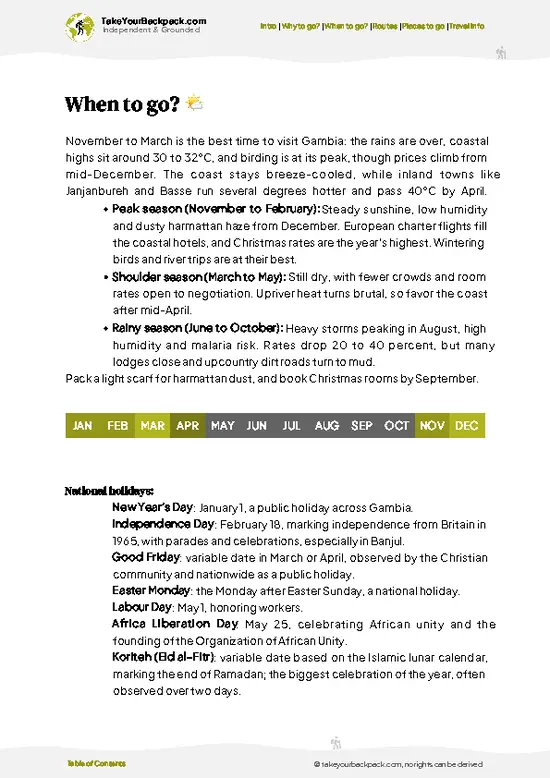
source: climatestotravel.comJANJanuary: excellent for travelingFEBFebruary: excellent for travelingMARMarch: highly recommended for travelingAPRApril: highly recommended for travelingMAYMay: good for travelingJUNJune: fair for travelingJULJuly: fair for travelingAUGAugust: fair for travelingSEPSeptember: fair for travelingOCTOctober: good for travelingNOVNovember: highly recommended for travelingDECDecember: excellent for traveling
when-to-go

✈️ The backpacker research shortcutThe Gambia Travel Guide

An offline-friendly backpacking guide with optimized travel routes, ranked highlights, transport advice, and the best areas to stay.
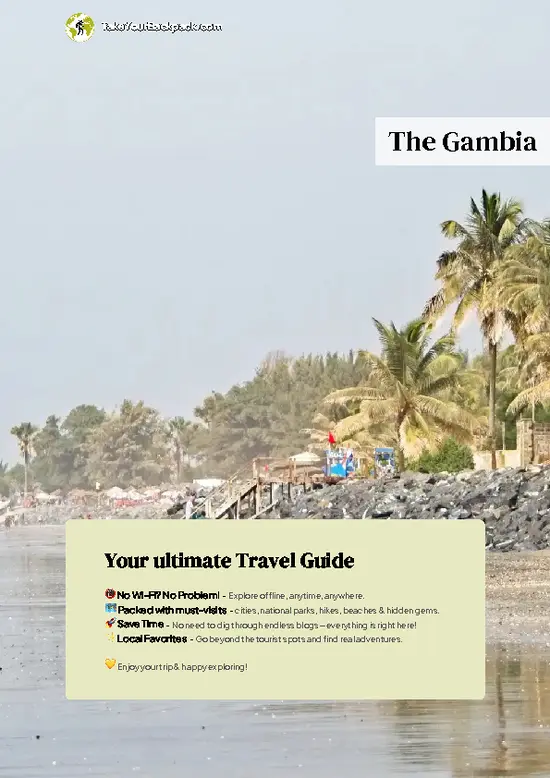
example page 0 from our offline Travel Guide for Gambia
example page 1 from our offline Travel Guide for Gambia
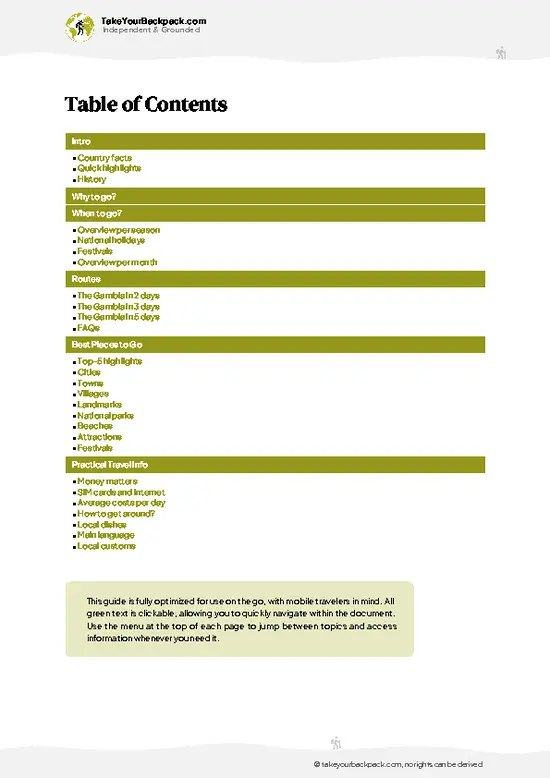
example page 2 from our offline Travel Guide for Gambia
example page 3 from our offline Travel Guide for Gambia
example page 4 from our offline Travel Guide for Gambia
example page 5 from our offline Travel Guide for Gambia
example page 6 from our offline Travel Guide for Gambia
example page 7 from our offline Travel Guide for Gambia
The digital guide (243 pages) contains:
57 highlights, ranked by travel appeal
Optimized 2, 3 & 5-day travel routes
Cities, national parks, landmarks, beaches
How to get around
Offline-friendly for travel without Wi-Fi
👉 Click to see all 30+ guide features

📅 Plan smarter in minutes, not weeks
Month by month travel advice
Festivals & national holidays
Budget expectations

🗺️ Go to the right places, skip the overrated ones
Honest pros & cons of destinations
Top hikes, parks & viewpoints
Lesser-known places most travelers miss
Clear “worth it vs skip it” guidance

🛏️ Travel smoothly without rookie mistakes
Best areas to stay
Transport systems explained simply
Common scams & safety advice
SIM cards, money & practical tips

🌍 Understand the country, not just visit it
Culture & traditions
52 Essential phrases & customs
Festivals worth planning around
Traveler-friendly historical context
Insights that make places more meaningful

📱 Built for real travel conditions
Fully downloadable PDF
Works completely offline
Optimized for phone use
Useful in remote areas & buses
Everything in one place
Save weeks of stressful planning
Get instant access to your full guide. 30‑day money-back guarantee.


By proceeding you agree to our terms.
Sent to your inbox immediately after payment • 100% Secure Checkout
Best Backpacking Travel Advisor 2025 tourism awardBest Backpacking
Travel Advisor
2025
What others say about Take Your Backpack Guides:
⭐⭐⭐⭐⭐
Fantastic, amazing amount of information!
⭐⭐⭐⭐⭐
My goodness this is amazing, it's what I've been looking for hats off too you!
⭐⭐⭐⭐⭐
I think this is absolutely BRILLIANT
⭐⭐⭐⭐
Very complete and informative. It's still missing places, but I gotta to commend you
⭐⭐⭐⭐⭐
This is truly amazing, thank you, can't wait to explore it with my kids!
⭐⭐⭐⭐⭐
Awesome resource, thank you!
⭐⭐⭐⭐⭐
This is amazing! Can't wait to explore the ones I haven't seen
⭐⭐⭐⭐
I love this! Well done, great idea.
⭐⭐⭐⭐⭐
Thanks for taking the time to make this gem!
⭐⭐⭐⭐⭐
This might be the best website I've ever seen.
⭐⭐⭐⭐⭐
Congratulations, and thank you so much for your work; it's incredibly valuable.
⭐⭐⭐⭐
In all seriousness I think you did a great job pointing out the important spots
⭐⭐⭐⭐⭐
10/10 very good
⭐⭐⭐⭐⭐
As someone who's only just starting to visit regularly this is awesome, thank you.
⭐⭐⭐⭐
Thank you very much! I'm going to visit my dad, it's going to be very useful!
⭐⭐⭐⭐⭐
This is really cool! We'll be travelling for the first time and this definitely come in handy.
⭐⭐⭐⭐⭐
You are now our minister of culture, congratulations 👨‍💼
⭐⭐⭐⭐⭐
Just wanted to tell you that this is a pearl! Going to follow your recommendations.
⭐⭐⭐⭐⭐
This is so cool. I'll definitely be using the resource for my travels soon.
⭐⭐⭐⭐⭐
This is very impressive! Good work.
⭐⭐⭐⭐⭐
This is an amazing and informative site. Very well done!

🛏️ Where to stay?Best areas to stay in The Gambia

Folonko’s heart for backpackers beats strongest in the Bakau district. It’s where the streets hum with a mix of local chatter and the easy laughter of travelers swapping stories over shared meals. The air carries a faint scent of grilled fish and fresh mango, grounding you in the moment. Bakau’s compact layout means you’re never far from a lively market or a quiet spot by the beach to unwind after a day’s trek. Hostels here lean toward communal vibes, perfect for solo travelers craving connection without sacrificing safety. Compared to the quieter, more residential areas, Bakau offers a pulse … read more 👉
Folonko’s heart for backpackers beats strongest in the Bakau district. It’s where the streets hum with a mix of local chatter and the easy laughter of travelers swapping stories over shared meals. The air carries a faint scent of grilled fish and fresh mango, grounding you in the moment. Bakau’s compact layout means you’re never far from a lively market or a quiet spot by the beach to unwind after a day’s trek. Hostels here lean toward communal vibes, perfect for solo travelers craving connection without sacrificing safety. Compared to the quieter, more residential areas, Bakau offers a pulse that’s social but never overwhelming—ideal for those who want to dive into The Gambia’s rhythm without losing their footing.

🚌 Getting aroundHow to get around Folonko

Folonko moves at its own rhythm—neither a frantic rush nor a slow drag, but a pulse you feel in the warm air and the chatter spilling from street corners. The town’s flow is a blend of laid-back afternoons and bursts of activity when markets open or fishermen haul in their catch. It’s not about strict timetables but about catching the right moment, reading the light shifting over the red earth, and syncing with the local tempo. You’ll find that patience here isn’t just a virtue; it’s your best tool for unlocking the town’s character.


  • Walking: The heart of Folonko is compact enough to explore on foot. Streets are uneven but shaded by baobab trees, and walking lets you catch the scent of spices and hear the rhythm of daily life up close. No cost, just wear sturdy shoes and keep your eyes
read more 👉
Folonko moves at its own rhythm—neither a frantic rush nor a slow drag, but a pulse you feel in the warm air and the chatter spilling from street corners. The town’s flow is a blend of laid-back afternoons and bursts of activity when markets open or fishermen haul in their catch. It’s not about strict timetables but about catching the right moment, reading the light shifting over the red earth, and syncing with the local tempo. You’ll find that patience here isn’t just a virtue; it’s your best tool for unlocking the town’s character.


  • Walking: The heart of Folonko is compact enough to explore on foot. Streets are uneven but shaded by baobab trees, and walking lets you catch the scent of spices and hear the rhythm of daily life up close. No cost, just wear sturdy shoes and keep your eyes open for sudden market stalls.

  • Shared Minibuses: These are the lifeblood of local transit, running from dawn until dusk for about 50 Dalasi per ride. They’re cramped and noisy but fast enough to get you between neighborhoods and the bus station. Expect stops on demand and a lively, informal atmosphere.

  • Motorbike Taxis (Okadas): For quick hops, these are unbeatable. Prices start around 100 Dalasi, and drivers weave through traffic with a skill that’s part art, part adrenaline. Not the most comfortable, but perfect when time is tight and the sun is high.

  • Bicycle Rentals: A step up from walking, renting a bike costs about 200 Dalasi per day. It’s a smooth way to cover more ground while still feeling the breeze and the town’s textures. Ideal for early mornings or late afternoons when the light softens and the heat eases.

👛 Costs (as of 11 February 2025)How expensive it really is

Backpacking in Folonko, The Gambia, offers a straightforward, no-frills experience where your money stretches well if you know where to look. Here’s the breakdown of what you’ll typically spend each day:
  • Dorm Accommodation: Expect to pay around €5 to €10 per night for a basic dorm bed. These places are simple, often with shared bathrooms and limited hot water, but clean enough to rest after a day in the sun.
  • Meals: Local eateries serve up hearty, filling meals for about €2 to €4 each. Think rice, fish, or chicken with spicy sauces and fresh vegetables. Street food snacks like fried dough balls or grilled corn cost less than a euro, perfect for quick energy boosts.
  • Local Transport: Getting around Folonko is cheap and informal. Shared taxis or minibuses run about €0.50 to €1 per trip within
read more 👉
Backpacking in Folonko, The Gambia, offers a straightforward, no-frills experience where your money stretches well if you know where to look. Here’s the breakdown of what you’ll typically spend each day:
  • Dorm Accommodation: Expect to pay around €5 to €10 per night for a basic dorm bed. These places are simple, often with shared bathrooms and limited hot water, but clean enough to rest after a day in the sun.
  • Meals: Local eateries serve up hearty, filling meals for about €2 to €4 each. Think rice, fish, or chicken with spicy sauces and fresh vegetables. Street food snacks like fried dough balls or grilled corn cost less than a euro, perfect for quick energy boosts.
  • Local Transport: Getting around Folonko is cheap and informal. Shared taxis or minibuses run about €0.50 to €1 per trip within town. If you’re heading a bit further, like to nearby villages, budget up to €2. The roads are dusty, and vehicles are often packed, so brace for a lively ride.
  • Basic Activities/Entry Fees: Most local attractions or community visits charge minimal fees, usually €1 to €3. Guided tours or cultural experiences might push closer to €5, but these are worth it for the insight and connection you gain.
  • Miscellaneous Expenses: Water, snacks, and small essentials add up to about €1 to €2 daily. Keep cash handy for unexpected needs like phone credit or a quick coffee.

All told, you’re looking at roughly €10 to €20 per day to cover the essentials in Folonko. This budget keeps you comfortably on the ground, soaking in the local rhythms without fuss or flash. The modest costs reflect the town’s simplicity, but the real value is in the authentic, unvarnished experience you get for every euro spent.


source: visitthegambia.gm
⚠️ Prices can change and everyone travels differently, so take this as a rough guide. Hope it helps you plan your adventure!

🚌 Day tripsBest day trips from Folonko

Folonko is a fantastic base for exploring the rich tapestry of The Gambia. The town’s laid-back vibe and friendly locals set the stage for memorable day trips that reveal the country’s heart.

Abuko Nature Reserve
Just a short 30-minute ride from Folonko, Abuko is a haven for birdwatchers and nature lovers. The air buzzes with the calls of exotic birds, and the scent of damp earth fills your lungs as you wander the trails. Entry is typically around 25 dalasi, making it a budget-friendly escape. Early mornings are best; the wildlife is most active, and the light filters through the trees beautifully. First-timers often underestimate the reserve’s size—don’t rush; take your time to soak it all in.
👉 Explore Abuko Nature Reserve

Janjanbureh Island
A bit further afield, about an hour and … read more 👉
Folonko is a fantastic base for exploring the rich tapestry of The Gambia. The town’s laid-back vibe and friendly locals set the stage for memorable day trips that reveal the country’s heart.

Abuko Nature Reserve
Just a short 30-minute ride from Folonko, Abuko is a haven for birdwatchers and nature lovers. The air buzzes with the calls of exotic birds, and the scent of damp earth fills your lungs as you wander the trails. Entry is typically around 25 dalasi, making it a budget-friendly escape. Early mornings are best; the wildlife is most active, and the light filters through the trees beautifully. First-timers often underestimate the reserve’s size—don’t rush; take your time to soak it all in.
👉 Explore Abuko Nature Reserve

Janjanbureh Island
A bit further afield, about an hour and a half by bus, Janjanbureh offers a taste of local life and stunning river views. The ferry ride is an adventure in itself, with the cool breeze and the sound of water lapping against the boat. Expect to spend around 100 dalasi for transport. The island’s history and the chance to meet locals make this trip worthwhile. Many backpackers miss the chance to explore the village—don’t just stick to the riverbanks; dive into the community.


Tanji Fishing Village
Only an hour away, Tanji is a vibrant fishing village where you can witness the daily catch being brought in. The salty sea air and the colorful boats create a lively atmosphere. A round trip will cost you about 50 dalasi, plus a few extra for a fresh fish lunch. Late afternoons are perfect for this trip; the light is golden, and the fishermen are bustling. A common mistake is arriving too early—most action happens later in the day.
Want to know what more The Gambia offers?
The Gambia Travel Guide describes 57 highlights, from cities to national parks, from beaches to hikes

Get the Travel Guide -

🛡️ SafetyStaying Safe: What Travelers Should Know

In Folonko, The Gambia, safety is generally solid, but a few nuances can enhance your experience. Stay aware in crowded markets; pickpockets can be crafty. If you’re solo, avoid wandering too far after dark—stick to well-lit areas and main streets.

Common scams include overly friendly locals offering unsolicited help, which can lead to unexpected fees. A polite but firm “no, thank you” usually suffices.

Carry yourself confidently, and engage with locals respectfully. A smile goes a long way, and being aware of your surroundings will keep your adventure smooth and enjoyable.

Other Gambian towns near Folonko

Explore more nearby:

  • Kartong—river mouth, eco-camps, border village| 0 km away
  • Gunjur—fishing beach, community forest, turtle conservation| 10 km away
  • Jambanjelly—agricultural fields, rural compounds, community projects| 21 km away

💡 Not sure where to go next?
Create a personalized itinerary for The Gambia including Folonko and the places that fit your trip.

Generate my itinerary

👉 Discover all towns

Or checkout all The Gambia has to offer (think cities, towns, villages, national parks, hikes, beaches, festivals)
Country photo of The Gambia

We 💚 feedbackFinal thoughts on visiting Folonko

Folonko has a raw, vibrant energy that pulses through its streets. The best surprise? The local food—try the benachin; it’s a flavor explosion. Just be ready for the heat; it can be intense. Embrace the chaos, and you’ll find a rhythm that makes every moment feel alive.

✍️ Help improve this page!
The information on this page is based on in-depth research, insights shared by experienced travelers, and feedback from the local travel community in The Gambia. While every effort is made to keep the information accurate and current, conditions can change — so if you spot anything incorrect or outdated, please get in touch.


🙋‍♂️ Give feedback

👋 Meet the founderWho’s Behind Take Your Backpack?

Johan, backpacker and founder of TakeYourBackpackHi, I’m Johan (Netherlands 🇳🇱), the creator of TakeYourBackpack. Over the past decade, I’ve backpacked through 80+ countries across six continents, gaining extensive experience with independent travel, long-term trips, and overland routes.

This site is built on a combination of firsthand travel experience and carefully curated insights from other backpackers. Many guides are based on places I’ve personally visited, while others bring together tips, observations, and practical advice shared by trusted travelers I’ve met along the way.

The goal is to provide realistic, experience-driven guidance — not generic itineraries — so you can explore destinations with better context, clearer expectations, and more confidence.

Get full Gambia guide •
Instant download • 57 highlights • Full Offline guide