×

The Gambia🇬🇲 | townsPirangwetland reserve, rice paddies, birding hotspot | things to do and best time to go

Explore KuntaurExplore Soma

Backpacking in Pirang
👀 For curious travelerstown ranked #15
By Johan Kruseman 🇳🇱 | Updated June 12, 2026

A rooster’s call cuts through the haze as you step onto Pirang’s sandy lane, the air thick with woodsmoke and the faint tang of river mud. Pirang sits in the southern stretch of The Gambia, not far from the Senegalese border—a town that feels more crossroads than destination. For backpackers, Pirang is less about nightlife or hostels and more about its proximity to the wetlands and the birdlife that draws binoculars from around the world. It’s quiet, with evenings that settle early and a pace that’s unhurried, almost meditative. Buses from Brikama rattle in, but you’ll want to walk or hire a bicycle to see anything beyond the main road. Costs are low, but so is infrastructure—don’t expect much English or a backpacker scene. Compared to bustling Brikama or the beach towns, Pirang is stripped-back and local, best for those who want to trade convenience for immersion.

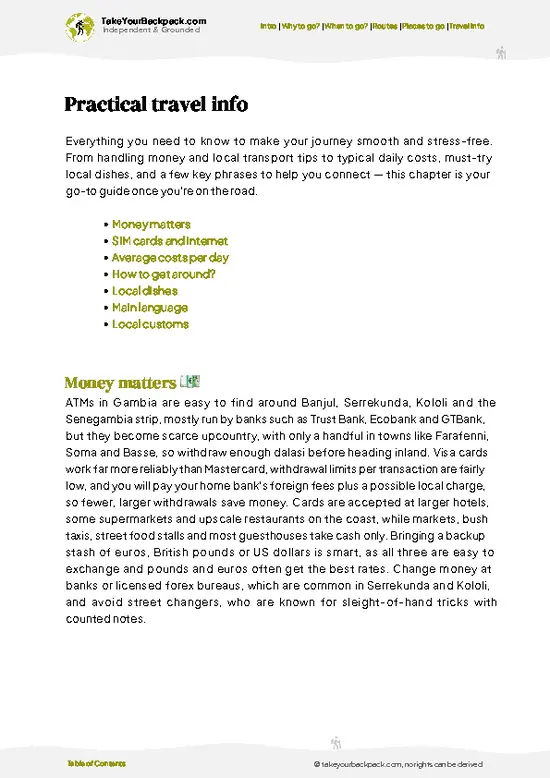
Discover everything you want to know in the 📖 The Gambia Travel Guide.


Get your Gambia guide
57 ranked highlights, routes & tips, works offline (243 pages)
Loading the map 🌍
CLICK TO FILTER
cities
towns
villages
landmarks
national parks
hikes
beaches
attractions
festivals
SHOW COUNTRY’S BESTSHOW ALL

✨ Why go?
Ranked #15 town in The Gambia
The unique appeal for travelers

Pirang is a strategic stop for backpackers exploring The Gambia. Its walkable streets lead to local markets where the scent of grilled fish mingles with spices, inviting you to try authentic dishes. The town serves as a gateway to nearby hikes and beaches, making it easy to dive into nature or relax by the coast. Small-scale guesthouses foster a friendly atmosphere, perfect for solo travelers or small groups looking to connect. Most visitors stay a few days, enjoying the laid-back vibe and the chance to immerse themselves in local culture. If you appreciate a slow travel pace, Pirang offers a meaningful pause on your journey.
Want to include Pirang in your The Gambia route?
Create a personalized The Gambia itinerary that includes Pirang and the places that fit your trip — based on your travel style, budget, and available time. Get your route in seconds.

Generate my trip

💡 HighlightsPlaces and moments you shouldn't skip

  • Pirang fishing landing and beach — The village’s working shoreline is the heart of daily life: brightly painted pirogues, fishermen mending nets, and fresh catches landed and sold right on the sand. It’s the best place to watch authentic coastal routines, take low-key photos, and buy fish straight from the crew.
  • Pirang market — A compact, lively market where locals sell fish, vegetables, groundnuts, and household goods. Visiting gives a real taste of daily Gambian commerce, a chance to try street snacks, and an easy way to meet locals and see traditional foodstuffs and fabrics up close.
  • Central village mosque and compound area — The mosque and surrounding family compounds form Pirang’s social core. Observing the architecture, courtyard life, and the rhythms of prayer time offers insight
read more 👉
  • Pirang fishing landing and beach — The village’s working shoreline is the heart of daily life: brightly painted pirogues, fishermen mending nets, and fresh catches landed and sold right on the sand. It’s the best place to watch authentic coastal routines, take low-key photos, and buy fish straight from the crew.
  • Pirang market — A compact, lively market where locals sell fish, vegetables, groundnuts, and household goods. Visiting gives a real taste of daily Gambian commerce, a chance to try street snacks, and an easy way to meet locals and see traditional foodstuffs and fabrics up close.
  • Central village mosque and compound area — The mosque and surrounding family compounds form Pirang’s social core. Observing the architecture, courtyard life, and the rhythms of prayer time offers insight into local religious and communal routines. Respectful visits show how faith and family shape village life.
  • Mangrove edge and tidal flats near Pirang — The nearby tidal channels and mangrove fringe are great for a short walk at low tide to see shorebirds, crabs, and the tidal ecosystems that support the village fisheries. It’s a quiet, hands-on nature stop that explains why fishing here is sustainable.
Nearby day-trip highlights worth adding onto a Pirang visit include the historic Albreda and Juffureh villages (Kunta Kinte sites), the Tanji Bird Reserve for shorebird and wetland wildlife, and the coastal fishing town of Tanji.
Spotted a mistake or missing something? Contact us.

Things to do near Pirang

Ratings based on Tripadvisor reviews. When you book through this link, you support our work at no extra cost to you.

🏘️ NeighborhoodsHow different areas shape the experience

Pirang is a vibrant hub in The Gambia, offering a mix of local culture and backpacker-friendly amenities. Here’s how to navigate its neighborhoods:

Central Pirang: This area buzzes with life. You’ll find local markets and street food stalls that serve up delicious, affordable meals. It’s walkable, making it easy to explore. The nightlife is low-key, perfect for winding down after a day of adventure. Short stays work well here, but longer visits can feel repetitive.

Pirang Beach: If you crave sun and surf, this is your spot. The beach vibe is laid-back, with guesthouses that cater to backpackers. It’s a bit quieter, ideal for those wanting to relax. Transport options are limited, so plan your outings. Perfect for longer stays if you enjoy the ocean.

Outskirts of Pirang: This area offers … read more 👉
Pirang is a vibrant hub in The Gambia, offering a mix of local culture and backpacker-friendly amenities. Here’s how to navigate its neighborhoods:

Central Pirang: This area buzzes with life. You’ll find local markets and street food stalls that serve up delicious, affordable meals. It’s walkable, making it easy to explore. The nightlife is low-key, perfect for winding down after a day of adventure. Short stays work well here, but longer visits can feel repetitive.

Pirang Beach: If you crave sun and surf, this is your spot. The beach vibe is laid-back, with guesthouses that cater to backpackers. It’s a bit quieter, ideal for those wanting to relax. Transport options are limited, so plan your outings. Perfect for longer stays if you enjoy the ocean.

Outskirts of Pirang: This area offers a more authentic Gambian experience. It’s less touristy, with local interactions that enrich your journey. Walkability can be tricky, but the scenery is rewarding. Ideal for longer stays if you want to immerse yourself in the culture.

⌛️ 1 dayWhat you can realistically do in a day

Pirang, a small town in The Gambia, offers a slice of authentic life away from the tourist hustle. The vibrant local markets, the scent of spices wafting through the air, and the warm smiles of the residents create an inviting atmosphere.

Start your morning at the bustling Pirang Market. The colors of fresh produce and handmade crafts are a feast for the eyes. Engage with local vendors; they love sharing stories about their goods. Grab a breakfast of sweet, fried plantains from a nearby stall, and savor the crispy texture paired with a hint of honey.

In the afternoon, head to the nearby Kachikally Crocodile Pool. This lesser-known spot is a serene escape where you can observe these majestic creatures up close. The cool shade of the surrounding trees and the gentle sounds of water create … read more 👉
Pirang, a small town in The Gambia, offers a slice of authentic life away from the tourist hustle. The vibrant local markets, the scent of spices wafting through the air, and the warm smiles of the residents create an inviting atmosphere.

Start your morning at the bustling Pirang Market. The colors of fresh produce and handmade crafts are a feast for the eyes. Engage with local vendors; they love sharing stories about their goods. Grab a breakfast of sweet, fried plantains from a nearby stall, and savor the crispy texture paired with a hint of honey.

In the afternoon, head to the nearby Kachikally Crocodile Pool. This lesser-known spot is a serene escape where you can observe these majestic creatures up close. The cool shade of the surrounding trees and the gentle sounds of water create a peaceful ambiance. Afterward, stroll through the residential neighborhoods, where you’ll find traditional mud huts and friendly locals eager to chat.

As evening falls, find a local eatery to enjoy a plate of domoda, a rich peanut stew. The warm, earthy flavors will linger as you watch the sunset paint the sky. This day in Pirang, filled with genuine experiences, will resonate long after you leave.
Turn your Pirang visit into an The Gambia adventure
Build a complete The Gambia route with Pirang, hidden gems, must-see destinations, and realistic travel times included.

Generate my trip

🌤️ When to go?Best time to visit Pirang


  • Weather: The dry season from November to May is your best bet. Expect clear skies and minimal humidity, making the air feel crisp and the landscape golden under the sun. The wet season (June to October) brings heavy rains that can turn dirt roads to mud traps, slowing you down and soaking your gear.

  • Temperature: Daytime highs hover around 28-32°C (82-90°F) during the dry months, perfect for trekking without overheating. Nights cool to 18-22°C (64-72°F), so pack a light jacket. The wet season is warmer but stickier, with highs pushing 33°C (91°F) and nights barely dropping.

  • Daylight Hours: Daylight stays steady year-round, roughly 11-12 hours. Early mornings and late afternoons offer softer light and cooler temps, ideal for exploring without frying your skin.

  • Crowds: The dry season
read more 👉

  • Weather: The dry season from November to May is your best bet. Expect clear skies and minimal humidity, making the air feel crisp and the landscape golden under the sun. The wet season (June to October) brings heavy rains that can turn dirt roads to mud traps, slowing you down and soaking your gear.

  • Temperature: Daytime highs hover around 28-32°C (82-90°F) during the dry months, perfect for trekking without overheating. Nights cool to 18-22°C (64-72°F), so pack a light jacket. The wet season is warmer but stickier, with highs pushing 33°C (91°F) and nights barely dropping.

  • Daylight Hours: Daylight stays steady year-round, roughly 11-12 hours. Early mornings and late afternoons offer softer light and cooler temps, ideal for exploring without frying your skin.

  • Crowds: The dry season draws more visitors, especially December to February. You’ll find a livelier vibe but also higher prices and busier guesthouses. The shoulder months (November, March-May) strike a balance—fewer people, better deals, and still great weather.

  • Seasonal Activities: Dry months are prime for fishing festivals and cultural events, adding layers to your experience beyond the usual trails. Wet season’s lush greenery is tempting but often inaccessible due to muddy paths.

  • Price Fluctuations: Expect peak season rates to spike by 20-30%, especially in accommodations and tours. Booking in shoulder seasons can save you cash without sacrificing comfort or access.


Pro-tip: Aim for late November or early March to catch the sweet spot—pleasant weather, manageable crowds, and wallet-friendly prices, all wrapped in that warm, earthy scent of The Gambia’s dry season.


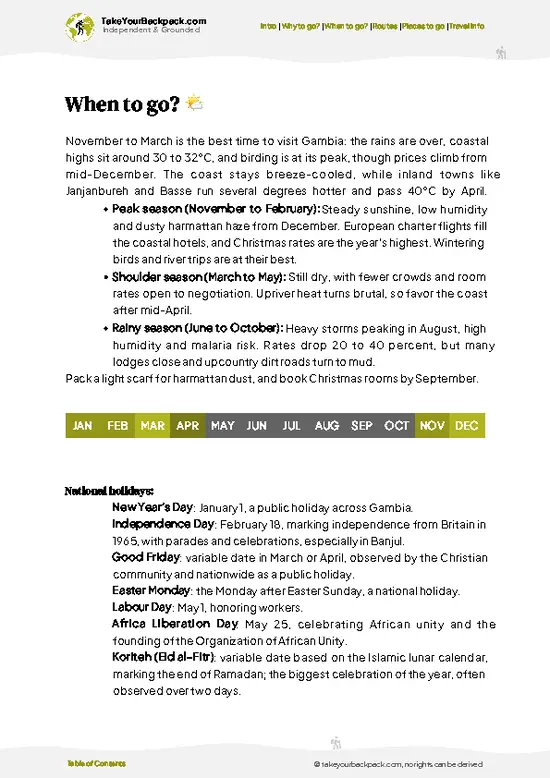
source: climatestotravel.comJANJanuary: highly recommended for travelingFEBFebruary: highly recommended for travelingMARMarch: excellent for travelingAPRApril: excellent for travelingMAYMay: excellent for travelingJUNJune: fair for travelingJULJuly: below average for travelingAUGAugust: below average for travelingSEPSeptember: fair for travelingOCTOctober: fair for travelingNOVNovember: excellent for travelingDECDecember: highly recommended for traveling
when-to-go

✈️ The backpacker research shortcutThe Gambia Travel Guide

An offline-friendly backpacking guide with optimized travel routes, ranked highlights, transport advice, and the best areas to stay.
example page 0 from our offline Travel Guide for Gambia
example page 1 from our offline Travel Guide for Gambia
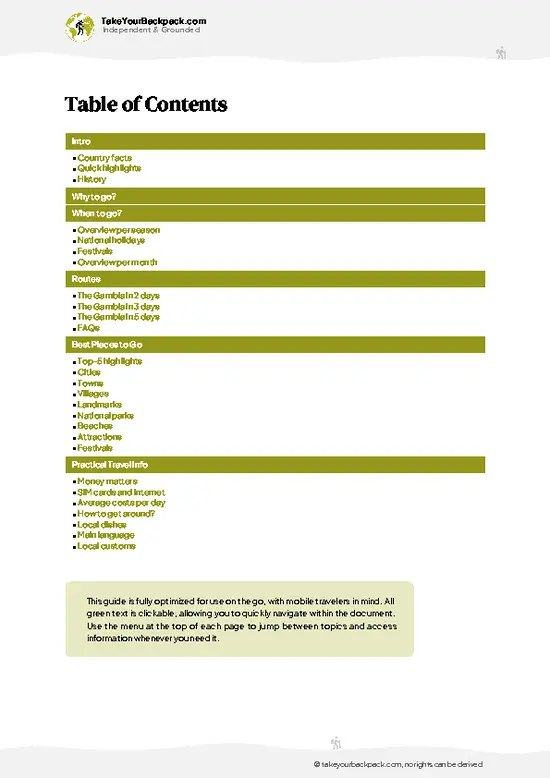
example page 2 from our offline Travel Guide for Gambia
example page 3 from our offline Travel Guide for Gambia
example page 4 from our offline Travel Guide for Gambia
example page 5 from our offline Travel Guide for Gambia
example page 6 from our offline Travel Guide for Gambia
example page 7 from our offline Travel Guide for Gambia
The digital guide (243 pages) contains:
57 highlights, ranked by travel appeal
Optimized 2, 3 & 5-day travel routes
Cities, national parks, landmarks, beaches
How to get around
Offline-friendly for travel without Wi-Fi
👉 Click to see all 30+ guide features

📅 Plan smarter in minutes, not weeks
Month by month travel advice
Festivals & national holidays
Budget expectations

🗺️ Go to the right places, skip the overrated ones
Honest pros & cons of destinations
Top hikes, parks & viewpoints
Lesser-known places most travelers miss
Clear “worth it vs skip it” guidance

🛏️ Travel smoothly without rookie mistakes
Best areas to stay
Transport systems explained simply
Common scams & safety advice
SIM cards, money & practical tips

🌍 Understand the country, not just visit it
Culture & traditions
52 Essential phrases & customs
Festivals worth planning around
Traveler-friendly historical context
Insights that make places more meaningful

📱 Built for real travel conditions
Fully downloadable PDF
Works completely offline
Optimized for phone use
Useful in remote areas & buses
Everything in one place
Save weeks of stressful planning
Get instant access to your full guide. 30‑day money-back guarantee.


By proceeding you agree to our terms.
Sent to your inbox immediately after payment • 100% Secure Checkout
Best Backpacking Travel Advisor 2025 tourism awardBest Backpacking
Travel Advisor
2025
What others say about Take Your Backpack Guides:
⭐⭐⭐⭐⭐
Fantastic, amazing amount of information!
⭐⭐⭐⭐⭐
My goodness this is amazing, it's what I've been looking for hats off too you!
⭐⭐⭐⭐⭐
I think this is absolutely BRILLIANT
⭐⭐⭐⭐
Very complete and informative. It's still missing places, but I gotta to commend you
⭐⭐⭐⭐⭐
This is truly amazing, thank you, can't wait to explore it with my kids!
⭐⭐⭐⭐⭐
Awesome resource, thank you!
⭐⭐⭐⭐⭐
This is amazing! Can't wait to explore the ones I haven't seen
⭐⭐⭐⭐
I love this! Well done, great idea.
⭐⭐⭐⭐⭐
Thanks for taking the time to make this gem!
⭐⭐⭐⭐⭐
This might be the best website I've ever seen.
⭐⭐⭐⭐⭐
Congratulations, and thank you so much for your work; it's incredibly valuable.
⭐⭐⭐⭐
In all seriousness I think you did a great job pointing out the important spots
⭐⭐⭐⭐⭐
10/10 very good
⭐⭐⭐⭐⭐
As someone who's only just starting to visit regularly this is awesome, thank you.
⭐⭐⭐⭐
Thank you very much! I'm going to visit my dad, it's going to be very useful!
⭐⭐⭐⭐⭐
This is really cool! We'll be travelling for the first time and this definitely come in handy.
⭐⭐⭐⭐⭐
You are now our minister of culture, congratulations 👨‍💼
⭐⭐⭐⭐⭐
Just wanted to tell you that this is a pearl! Going to follow your recommendations.
⭐⭐⭐⭐⭐
This is so cool. I'll definitely be using the resource for my travels soon.
⭐⭐⭐⭐⭐
This is very impressive! Good work.
⭐⭐⭐⭐⭐
This is an amazing and informative site. Very well done!

🛏️ Where to stay?Where staying makes the most sense

In Pirang, the heartbeat for backpackers pulses strongest around the town center and the nearby waterfront. This area is a magnet for budget travelers because it balances safety with a lively social scene—think open-air markets where the scent of grilled fish mingles with fresh mangoes, and evenings spill into casual gatherings under wide, starlit skies. Hostels here tend to cluster, offering a mix of dorms and private rooms that make meeting fellow travelers easy without sacrificing comfort. Compared to the quieter, more residential outskirts, staying near the center means you’re steps from local … read more 👉
In Pirang, the heartbeat for backpackers pulses strongest around the town center and the nearby waterfront. This area is a magnet for budget travelers because it balances safety with a lively social scene—think open-air markets where the scent of grilled fish mingles with fresh mangoes, and evenings spill into casual gatherings under wide, starlit skies. Hostels here tend to cluster, offering a mix of dorms and private rooms that make meeting fellow travelers easy without sacrificing comfort. Compared to the quieter, more residential outskirts, staying near the center means you’re steps from local eateries and transport hubs, cutting down on taxi hassles and letting you soak in the rhythm of daily life. It’s the kind of place where the city’s pulse syncs with your own, making every moment feel earned.

🚌 Getting aroundGetting around like a local

Pirang moves at its own rhythm—less a clock-driven city and more a place where the sun and tides set the pace. The air carries a salty tang from the nearby river, mixing with the earthy scent of market spices and the occasional waft of grilled fish. Streets pulse with a blend of purposeful locals and wandering visitors, where timing is flexible but the flow is unmistakable. You won’t find rigid schedules here; instead, you’ll tap into a system that rewards patience and a keen eye for the next ride.


  • Walking: The heart of Pirang is best explored on foot. Streets are compact, and wandering lets you catch the subtle shifts in light and sound—plus, it’s free and perfect for spontaneous detours.

  • Shared Taxis (Bush Taxis): These minibuses run from dawn until early evening, costing just a few
read more 👉
Pirang moves at its own rhythm—less a clock-driven city and more a place where the sun and tides set the pace. The air carries a salty tang from the nearby river, mixing with the earthy scent of market spices and the occasional waft of grilled fish. Streets pulse with a blend of purposeful locals and wandering visitors, where timing is flexible but the flow is unmistakable. You won’t find rigid schedules here; instead, you’ll tap into a system that rewards patience and a keen eye for the next ride.


  • Walking: The heart of Pirang is best explored on foot. Streets are compact, and wandering lets you catch the subtle shifts in light and sound—plus, it’s free and perfect for spontaneous detours.

  • Shared Taxis (Bush Taxis): These minibuses run from dawn until early evening, costing just a few dalasi. They don’t leave until full, so expect some waiting, but they’re the fastest way to cover longer distances without breaking the bank.

  • Motorbike Taxis (Okadas): For quick hops through narrow alleys or when time is tight, okadas zip through traffic with ease. Prices are negotiable, usually cheap, but hold on tight—this is speed with a side of adrenaline.

  • Local Ferries: If your route crosses the river, ferries operate on a loose schedule, often timed with the tides. They’re slow but scenic, offering a cool breeze and a break from the road’s dust.

  • Bicycle Rentals: A budget-friendly middle ground between walking and motorized transport. Renting a bike lets you cover more ground at your own pace, with the added bonus of catching the town’s colors and smells up close.

👛 Costs (as of 12 February 2025)Typical daily expenses

Backpacking in Pirang, The Gambia, offers a raw, authentic experience with costs that reflect its laid-back, small-town vibe. Here’s what you can expect to spend daily:
  • Dorm Accommodation: Dorm beds in basic guesthouses or hostels hover around €5 to €10 per night. These places are simple but clean, often with a fan and mosquito net, which is crucial given the humid air and evening buzz of insects.
  • Meals: Local eateries serve up hearty, flavorful meals for about €2 to €5. Think rice, fish, or chicken stews with fresh vegetables. Street food snacks like fried plantains or akara balls cost less than a euro, perfect for quick bites under the warm sun.
  • Local Transport: Getting around is mostly by shared taxis or minibuses, which cost roughly €0.50 to €1 per trip. The roads are dusty, and the
read more 👉
Backpacking in Pirang, The Gambia, offers a raw, authentic experience with costs that reflect its laid-back, small-town vibe. Here’s what you can expect to spend daily:
  • Dorm Accommodation: Dorm beds in basic guesthouses or hostels hover around €5 to €10 per night. These places are simple but clean, often with a fan and mosquito net, which is crucial given the humid air and evening buzz of insects.
  • Meals: Local eateries serve up hearty, flavorful meals for about €2 to €5. Think rice, fish, or chicken stews with fresh vegetables. Street food snacks like fried plantains or akara balls cost less than a euro, perfect for quick bites under the warm sun.
  • Local Transport: Getting around is mostly by shared taxis or minibuses, which cost roughly €0.50 to €1 per trip. The roads are dusty, and the rides can be bumpy, but they’re the most authentic way to soak in the town’s rhythm and chatter.
  • Basic Activities/Entry Fees: Most local attractions, like village tours or beach access, are free or ask for a small donation around €1 to €3. Organized activities, such as guided cultural walks or fishing trips, might run €5 to €10.
  • Miscellaneous Expenses: Budget around €1 to €3 for essentials like bottled water, snacks, or phone credit. The humid air means you’ll go through water faster than you expect, and staying connected is handy for navigation and local tips.

All told, you’re looking at a daily budget between €10 and €25. This range covers the basics without skimping on comfort or experience, letting you dive into Pirang’s atmosphere without the usual tourist gloss. The modest costs reflect the town’s pace—unhurried, earthy, and real.


source: visitthegambia.gm
⚠️ Prices can change and everyone travels differently, so take this as a rough guide. Hope it helps you plan your adventure!

🚌 Day tripsExploring the surroundings

Pirang is a fantastic base for exploring the vibrant heart of The Gambia. With its friendly locals and easy access to transport, you can dive into some truly enriching day trips.

Abuko Nature Reserve
Just a short 30-minute ride from Pirang, Abuko Nature Reserve is a birdwatcher’s paradise. The air is thick with the sounds of chirping and rustling leaves, and the scent of damp earth fills your lungs as you wander the trails. Entry is around 50 dalasi, making it a budget-friendly escape. Early mornings are best; the light filters through the trees, illuminating the vibrant plumage of the birds. A common mistake? Rushing through without pausing to soak in the atmosphere.
👉 Explore Abuko Nature Reserve

Tanji Fishing Village
About 20 minutes away, Tanji offers a glimpse into local life. … read more 👉
Pirang is a fantastic base for exploring the vibrant heart of The Gambia. With its friendly locals and easy access to transport, you can dive into some truly enriching day trips.

Abuko Nature Reserve
Just a short 30-minute ride from Pirang, Abuko Nature Reserve is a birdwatcher’s paradise. The air is thick with the sounds of chirping and rustling leaves, and the scent of damp earth fills your lungs as you wander the trails. Entry is around 50 dalasi, making it a budget-friendly escape. Early mornings are best; the light filters through the trees, illuminating the vibrant plumage of the birds. A common mistake? Rushing through without pausing to soak in the atmosphere.
👉 Explore Abuko Nature Reserve

Tanji Fishing Village
About 20 minutes away, Tanji offers a glimpse into local life. The salty sea breeze hits you as you stroll along the beach, watching fishermen haul in their catch. Grab a plate of fresh grilled fish for around 100 dalasi. The best time to visit is late afternoon when the sun dips low, casting a golden glow over the water. Don’t miss the vibrant market, but be prepared to haggle; it’s part of the experience!


Jufureh and Kunta Kinteh Island
A bit further afield, about an hour’s journey, Jufureh is steeped in history. The ferry to Kunta Kinteh Island is a must, costing around 200 dalasi round trip. The island’s stories of resilience resonate deeply, especially when you stand at the ruins. Visit in the cooler months to avoid the heat. Many first-timers underestimate the emotional weight of this trip; take your time to reflect.


Gambia River Cruise
For a unique perspective, hop on a river cruise from Banjul, just under an hour from Pirang. The gentle sway of the boat and the scent of the river are mesmerizing. Prices start around 300 dalasi, and the best time is during sunset when the sky ignites with color. A common pitfall? Forgetting to bring a camera; the wildlife sightings are incredible!
Want to know what more The Gambia offers?
The Gambia Travel Guide describes 57 highlights, from cities to national parks, from beaches to hikes

Get the Travel Guide -

🛡️ SafetyTraveler Safety Guide

Pirang is generally safe, but staying aware enhances your experience. The market area can get busy, so keep your belongings close. If you’re solo, avoid wandering too far after dark; stick to well-lit paths and familiar spots.

Scams are rare, but be cautious of overly friendly locals offering unsolicited help—sometimes it leads to a request for money. Everyday annoyances include persistent vendors; a polite but firm “no, thank you” usually does the trick. Embrace the local vibe, but trust your instincts. Enjoy the warmth of the community while staying grounded.

Other Gambian towns near Pirang

Explore more nearby:

  • Bonto—forest trails, eco-lodges, bird habitat| 3 km away
  • Kafuta—forest edge, traditional compounds, local crafts| 11 km away
  • Lamin—wetland sanctuary, local compounds, oyster harvesting| 17 km away

💡 Not sure where to go next?
Create a personalized itinerary for The Gambia including Pirang and the places that fit your trip.

Generate my itinerary

👉 Discover all towns

Or checkout all The Gambia has to offer (think cities, towns, villages, national parks, hikes, beaches, festivals)
Country photo of The Gambia

We 💚 feedbackKey takeaways before you go

Pirang has a laid-back vibe that feels like a warm hug after a long trek. The best surprise? The locals’ infectious laughter and the scent of grilled fish wafting through the air at sunset. Just a heads-up: the roads can be bumpy, so pack patience along with your gear. It’s worth it.

✍️ Help improve this page!
The information on this page is based on in-depth research, insights shared by experienced travelers, and feedback from the local travel community in The Gambia. While every effort is made to keep the information accurate and current, conditions can change — so if you spot anything incorrect or outdated, please get in touch.


🙋‍♂️ Give feedback

👋 Meet the founderWho’s Behind Take Your Backpack?

Johan, backpacker and founder of TakeYourBackpackHi, I’m Johan (Netherlands 🇳🇱), the creator of TakeYourBackpack. Over the past decade, I’ve backpacked through 80+ countries across six continents, gaining extensive experience with independent travel, long-term trips, and overland routes.

This site is built on a combination of firsthand travel experience and carefully curated insights from other backpackers. Many guides are based on places I’ve personally visited, while others bring together tips, observations, and practical advice shared by trusted travelers I’ve met along the way.

The goal is to provide realistic, experience-driven guidance — not generic itineraries — so you can explore destinations with better context, clearer expectations, and more confidence.

Get full Gambia guide •
Instant download • 57 highlights • Full Offline guide