×

The Gambia🇬🇲 | townsKafutaVillage greetings, rice paddies, cashew trees, bantaba tea | things to do and best time to go

Explore JanjanburehExplore Kuntaur

Backpacking in Kafuta
👀 For curious travelerstown ranked #13
By Johan Kruseman 🇳🇱 | Updated October 22, 2026

Roosters start before the light does, and by seven the smell of woodsmoke and frying dough drifts over sandy lanes where goats pick through the dust. That is Kafuta, a small village in the West Coast region on the south side of the Gambia, inland from the beaches. Don’t come for sights. There are no big monuments, and nightlife means a radio and a bench. What deserves your time is the walking, the rice and groundnut fields, and the greetings from every compound. It is quiet and rarely sees other backpackers. Bring small cash and a few Mandinka greetings, because there are no cash machines or tourist services in the village.

Discover everything you want to know in the 📖 The Gambia Travel Guide.


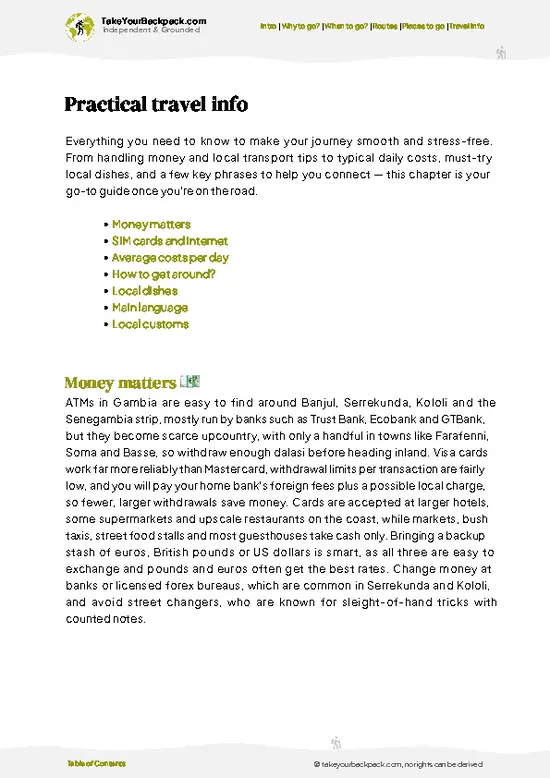
example page 0 from our offline Travel Guide for Gambia
example page 1 from our offline Travel Guide for Gambia
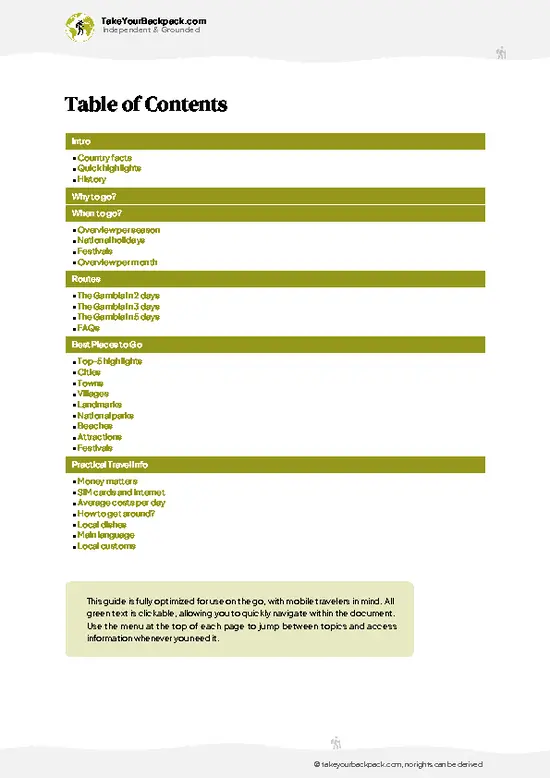
example page 2 from our offline Travel Guide for Gambia
example page 3 from our offline Travel Guide for Gambia
example page 4 from our offline Travel Guide for Gambia
example page 5 from our offline Travel Guide for Gambia
example page 6 from our offline Travel Guide for Gambia
example page 7 from our offline Travel Guide for Gambia
Loading the map 🌍
CLICK TO FILTER
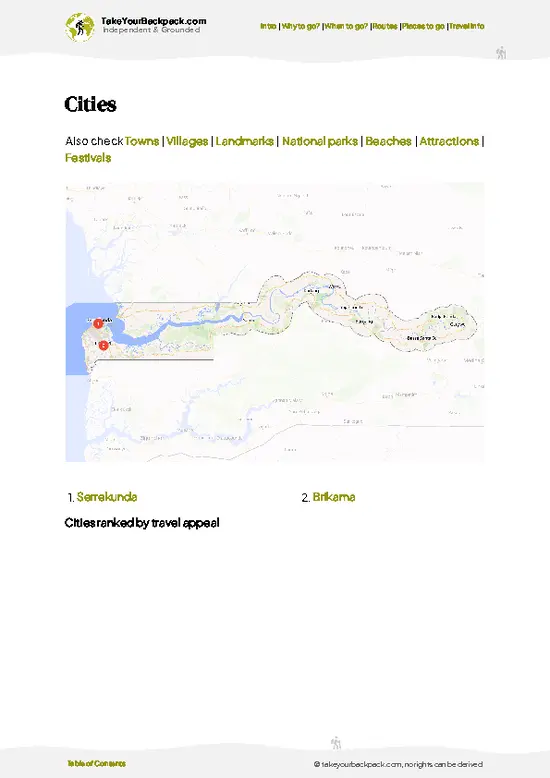
cities
towns
villages
landmarks
national parks
beaches
attractions
festivals
SHOW COUNTRY’S BESTSHOW ALL

✨ Why go?
Ranked #13 town in The Gambia
Why visitors keep coming back

Kafuta suits the traveler who has finished with the coast and wants a few days of ordinary Gambian village life. You won’t tick off attractions. You will walk sandy tracks between farm plots, watch women pounding millet and pounding rice in the early morning, and get invited to share a bowl of domoda if you linger long enough. It is a place for slow travelers, solo walkers and anyone who likes learning a few phrases and being greeted back. Most people stay one to three nights, and a short stop is plenty if you need nightlife or hostels. Evenings are silent beyond cooking fires and prayer calls, so it is a restful pause between busier stops.

💡 HighlightsKey sights and experiences for travelers

  1. Village walk through Kafuta’s lanes and compounds: this is the main experience. Mud-brick and cement compounds, mango and cashew trees, and kids who will walk beside you shouting greetings. Go in early morning or late afternoon when it is cooler and people are outside. Free, 1 to 2 hours, and a local guide from the village is a kind gesture, around US$3 to 6.
  2. Surrounding farmland paths: rice, groundnut and millet plots stretch beyond the last houses, with low-lying wet patches where women work in the rainy season. Walk in the morning to see fieldwork in progress. Free, 1 to 2 hours, and bring water and a hat.
  3. Evening on the village bantaba: the shaded meeting spot is where elders talk and tea is brewed in small glasses, strong and sweet. Sit down, greet people and accept a glass if offered.
… read more 👉
  1. Village walk through Kafuta’s lanes and compounds: this is the main experience. Mud-brick and cement compounds, mango and cashew trees, and kids who will walk beside you shouting greetings. Go in early morning or late afternoon when it is cooler and people are outside. Free, 1 to 2 hours, and a local guide from the village is a kind gesture, around US$3 to 6.
  2. Surrounding farmland paths: rice, groundnut and millet plots stretch beyond the last houses, with low-lying wet patches where women work in the rainy season. Walk in the morning to see fieldwork in progress. Free, 1 to 2 hours, and bring water and a hat.
  3. Evening on the village bantaba: the shaded meeting spot is where elders talk and tea is brewed in small glasses, strong and sweet. Sit down, greet people and accept a glass if offered. Late afternoon to dusk works best. Free or a small gift of tea or sugar, around US$1 to 2, and allow 1 hour.
After exploring Kafuta, the day trips to consider are the woodcarving stalls and craft market of Brikama, the Tanje Village Museum on the coast and the monkeys and crocodiles of Abuko Nature Reserve. None of the village activities in Kafuta need a ticket or advance booking.
Spotted a mistake or missing something? Contact us.

Things to do near Kafuta

Ratings based on Tripadvisor reviews. When you book through this link, you support our work at no extra cost to you.

🏘️ NeighborhoodsNeighborhood guide to Kafuta

Kafuta is a small village on the Kombo coast, south of Brufut and Gunjur, and its pieces are easy to cover on foot in an afternoon. Spend your time where the sand and the sea are.
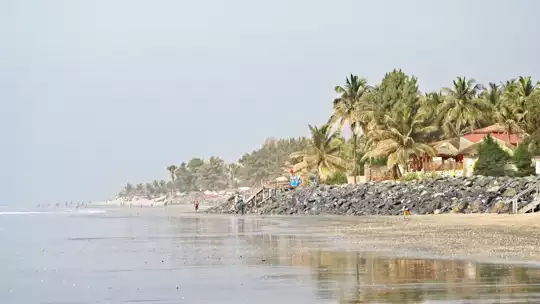
  • Beachfront: The best part. Fishing pirogues are dragged onto the grey-gold sand, the air smells of salt and drying fish, and surf thuds all day. Walk it early, when the sand is cool and nets are being untangled. Little shade, so bring a hat.
  • Village center: Compounds of cement block and tin roofs line sandy lanes, with goats underfoot, pounding mortars, and the call to prayer carrying over the rooftops. Worth a slow wander and a greeting for everyone you pass. Skip it at midday, when the heat flattens everything and the lanes empty.
  • Coast road: Dusty, loud with minibuses and horns, and not pretty. Useful only for shops
… read more 👉
Kafuta is a small village on the Kombo coast, south of Brufut and Gunjur, and its pieces are easy to cover on foot in an afternoon. Spend your time where the sand and the sea are.
  • Beachfront: The best part. Fishing pirogues are dragged onto the grey-gold sand, the air smells of salt and drying fish, and surf thuds all day. Walk it early, when the sand is cool and nets are being untangled. Little shade, so bring a hat.
  • Village center: Compounds of cement block and tin roofs line sandy lanes, with goats underfoot, pounding mortars, and the call to prayer carrying over the rooftops. Worth a slow wander and a greeting for everyone you pass. Skip it at midday, when the heat flattens everything and the lanes empty.
  • Coast road: Dusty, loud with minibuses and horns, and not pretty. Useful only for shops selling water, airtime and fried snacks. Nightlife is absent, so evenings mean quiet and stars.

⌛️ 1 day1-day itinerary for Kafuta

7:30 AM, Village lanes: start with a slow loop through Kafuta while cooking fires are lit and women sweep compound yards. Greet everyone with a salaam and you’ll get a real conversation back. Wander without a map, since the village is small.
9:30 AM, Farm paths: head out past the last compounds onto the field tracks. Cashew, mango and groundnut plots change with the season, and workers are glad to explain what is growing. Carry water and keep a hat on.
12:00 PM, Lunch with a family: arrange ahead through a local contact to share rice and sauce in a compound. Contribute to the ingredients and enjoy the shade while the heat peaks.
2:30 PM, Rest and tea: this is the quiet hour, so rest. Then sit with elders over green tea, three rounds poured slowly, each sweeter than the last.
4:30 PM, Back lanes … read more 👉
7:30 AM, Village lanes: start with a slow loop through Kafuta while cooking fires are lit and women sweep compound yards. Greet everyone with a salaam and you’ll get a real conversation back. Wander without a map, since the village is small.
9:30 AM, Farm paths: head out past the last compounds onto the field tracks. Cashew, mango and groundnut plots change with the season, and workers are glad to explain what is growing. Carry water and keep a hat on.
12:00 PM, Lunch with a family: arrange ahead through a local contact to share rice and sauce in a compound. Contribute to the ingredients and enjoy the shade while the heat peaks.
2:30 PM, Rest and tea: this is the quiet hour, so rest. Then sit with elders over green tea, three rounds poured slowly, each sweeter than the last.
4:30 PM, Back lanes and edges of the village: most visitors never go beyond the main track. Walk the back lanes at the village edge where children play football on bare sand and the light softens. This is the part to enjoy without a camera.
6:30 PM, Bantaba: finish at the meeting place as the day cools and the calls to prayer carry across the fields.

🌤️ When to go?Choosing the right time of year

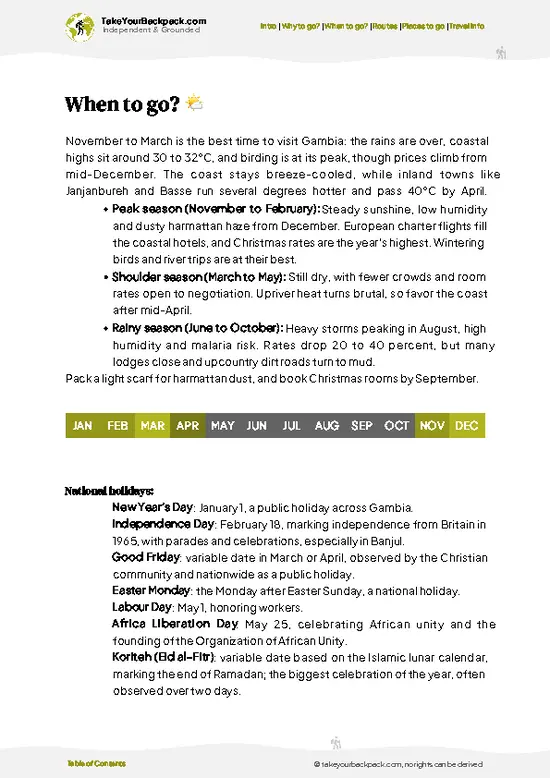
November to February is the easiest window, with dry days around 28 to 32°C (82 to 90°F) and cool, breezy nights near 18 to 21°C (64 to 70°F).
  • Peak Season (Nov to Feb): Nearly rainless, hazy with harmattan dust at times, and the highest prices and fullest beaches.
  • Hot Months (Mar to May): Highs reach 33 to 37°C (91 to 99°F) inland but the coast stays milder. Quiet and cheaper.
  • Rainy Season (Jun to Oct): Humid, 27 to 31°C (81 to 88°F), with downpours that flood sandy roads, peaking in August. Lowest prices, lush green fields, many places closed.
Daylight stays near 11 to 13 hours all year, so plan beach walks for early morning.

source: climatestotravel.comJANJanuary: excellent for travelingFEBFebruary: excellent for travelingMARMarch: highly recommended for travelingAPRApril: highly recommended for travelingMAYMay: good for travelingJUNJune: fair for travelingJULJuly: below average for travelingAUGAugust: below average for travelingSEPSeptember: fair for travelingOCTOctober: good for travelingNOVNovember: highly recommended for travelingDECDecember: excellent for traveling
when-to-go

✈️ The backpacker research shortcutThe Gambia Travel Guide

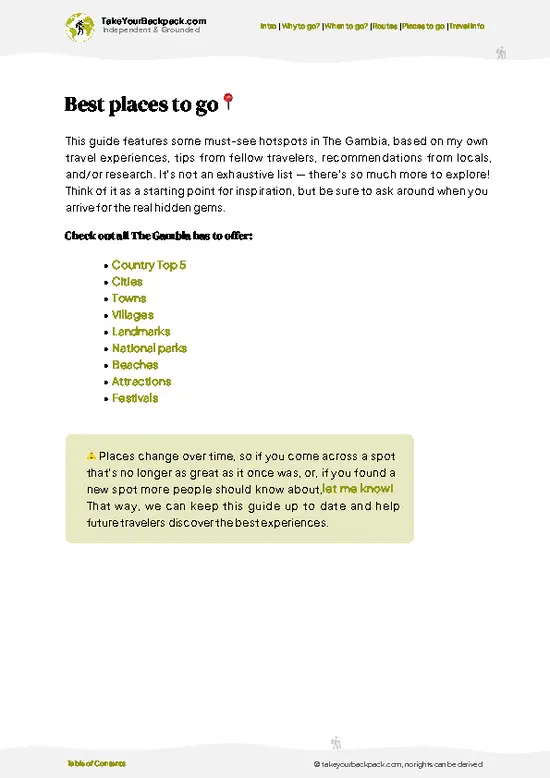
An offline-friendly backpacking guide with optimized travel routes, ranked highlights, transport advice, and the best areas to stay.
example page 0 from our offline Travel Guide for Gambia
example page 1 from our offline Travel Guide for Gambia
example page 2 from our offline Travel Guide for Gambia
example page 3 from our offline Travel Guide for Gambia
example page 4 from our offline Travel Guide for Gambia
example page 5 from our offline Travel Guide for Gambia
example page 6 from our offline Travel Guide for Gambia
example page 7 from our offline Travel Guide for Gambia
The digital guide (213 pages) contains:
✅ 50 highlights, ranked by travel appeal
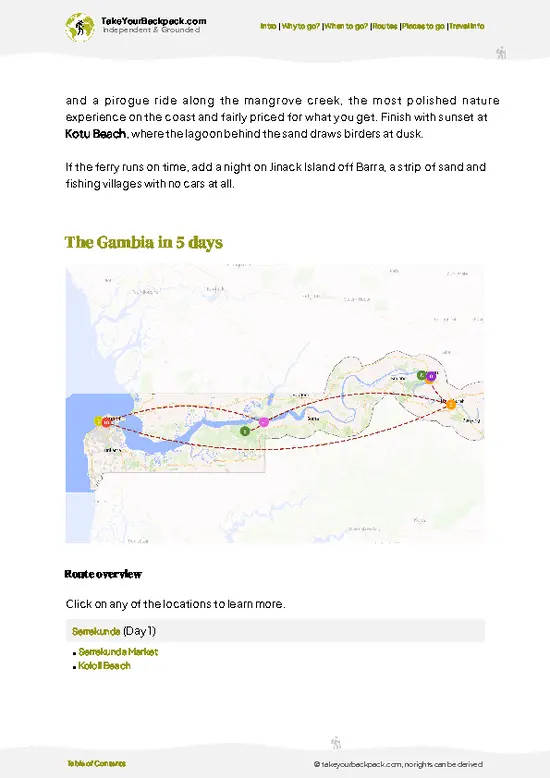
✅ Optimized 2, 3 & 5-day travel routes
✅ Cities, national parks, landmarks, beaches
✅ How to get around
✅ Offline-friendly for travel without Wi-Fi
👉 Click to see all 30+ guide features

📅 Plan smarter in minutes, not weeks
✅ Month by month travel advice
✅ Festivals & national holidays
✅ Budget expectations

🗺️ Go to the right places, skip the overrated ones
✅ Honest pros & cons of destinations
✅ Top hikes, parks & viewpoints
✅ Lesser-known places most travelers miss
✅ Clear “worth it vs skip it” guidance

🛏️ Travel smoothly without rookie mistakes
✅ Best areas to stay
✅ Transport systems explained simply
✅ Common scams & safety advice
✅ SIM cards, money & practical tips

🌍 Understand the country, not just visit it
✅ Culture & traditions
✅ 52 Essential phrases & customs
✅ Festivals worth planning around
✅ Traveler-friendly historical context
✅ Insights that make places more meaningful

📱 Built for real travel conditions
✅ Fully downloadable PDF
✅ Works completely offline
✅ Optimized for phone use
✅ Useful in remote areas & buses
✅ Everything in one place
Stop searching, start planning
Get instant access to your full guide. 30‑day money-back guarantee.
+ Add another guide for just

By proceeding you agree to our terms.
Sent to your inbox immediately after payment • 100% Secure Checkout
Best Backpacking Travel Advisor 2025 tourism awardBest Backpacking
Travel Advisor
2025
What others say about Take Your Backpack Guides:
⭐⭐⭐⭐⭐
Fantastic, amazing amount of information!
⭐⭐⭐⭐⭐
My goodness this is amazing, it's what I've been looking for hats off too you!
⭐⭐⭐⭐⭐
I think this is absolutely BRILLIANT
⭐⭐⭐⭐
Very complete and informative. It's still missing places, but I gotta to commend you
⭐⭐⭐⭐⭐
This is truly amazing, thank you, can't wait to explore it with my kids!
⭐⭐⭐⭐⭐
Awesome resource, thank you!
⭐⭐⭐⭐⭐
This is amazing! Can't wait to explore the ones I haven't seen
⭐⭐⭐⭐
I love this! Well done, great idea.
⭐⭐⭐⭐⭐
Thanks for taking the time to make this gem!
⭐⭐⭐⭐⭐
This might be the best website I've ever seen.
⭐⭐⭐⭐⭐
Congratulations, and thank you so much for your work; it's incredibly valuable.
⭐⭐⭐⭐
In all seriousness I think you did a great job pointing out the important spots
⭐⭐⭐⭐⭐
10/10 very good
⭐⭐⭐⭐⭐
As someone who's only just starting to visit regularly this is awesome, thank you.
⭐⭐⭐⭐
Thank you very much! I'm going to visit my dad, it's going to be very useful!
⭐⭐⭐⭐⭐
This is really cool! We'll be travelling for the first time and this definitely come in handy.
⭐⭐⭐⭐⭐
You are now our minister of culture, congratulations 👨‍💼
⭐⭐⭐⭐⭐
Just wanted to tell you that this is a pearl! Going to follow your recommendations.
⭐⭐⭐⭐⭐
This is so cool. I'll definitely be using the resource for my travels soon.
⭐⭐⭐⭐⭐
This is very impressive! Good work.
⭐⭐⭐⭐⭐
This is an amazing and informative site. Very well done!

🛏️ Where to stay?Best areas to stay in The Gambia

Stay in Kafuta itself if you want quiet and beach access, or in nearby Brufut or Senegambia if you want more choice. Kafuta has a few small guesthouses and basic rooms, but dorm beds are scarce, so expect private rooms at budget prices. Nights are calm and dark, with little street lighting, so carry a headlamp and avoid walking the beach alone late. Noise is mostly roosters, surf and the dawn call to prayer.

Senegambia strip, about an hour away by road, has the widest range of hostels and cheap rooms, restaurants and cash machines, and it is the easier choice for a first night. It is louder, … read more 👉
Stay in Kafuta itself if you want quiet and beach access, or in nearby Brufut or Senegambia if you want more choice. Kafuta has a few small guesthouses and basic rooms, but dorm beds are scarce, so expect private rooms at budget prices. Nights are calm and dark, with little street lighting, so carry a headlamp and avoid walking the beach alone late. Noise is mostly roosters, surf and the dawn call to prayer.

Senegambia strip, about an hour away by road, has the widest range of hostels and cheap rooms, restaurants and cash machines, and it is the easier choice for a first night. It is louder, with bars open late and steady touts. Both areas connect to gelly and shared taxi routes along the coast, though services thin out after early evening.

🚌 Getting aroundMoving around without the hassle

Kafuta is a spot where paying a private taxi fare from the Serrekunda or airport area costs several times what a shared ride does, and most newcomers do exactly that. Flag a shared gelly (minibus) or shared taxi on the coast road instead, and expect hot, packed, noisy rides with sweat, diesel and loud music. The village itself is tiny and flat, so your feet cover everything.
  • Walking: Free and the best way to see the beach and lanes. Go early or late, because sand and midday sun are punishing.
  • Gelly minibus: The budget standard along the coast road, around US$0.50 to 1.50 for most hops, running roughly from early morning until early evening. They leave when full, so waiting 10 to 30 minutes is normal. Confirm the final stop with the driver or fare collector.
  • Shared taxi: Yellow-and-green taxis
… read more 👉
Kafuta is a spot where paying a private taxi fare from the Serrekunda or airport area costs several times what a shared ride does, and most newcomers do exactly that. Flag a shared gelly (minibus) or shared taxi on the coast road instead, and expect hot, packed, noisy rides with sweat, diesel and loud music. The village itself is tiny and flat, so your feet cover everything.
  • Walking: Free and the best way to see the beach and lanes. Go early or late, because sand and midday sun are punishing.
  • Gelly minibus: The budget standard along the coast road, around US$0.50 to 1.50 for most hops, running roughly from early morning until early evening. They leave when full, so waiting 10 to 30 minutes is normal. Confirm the final stop with the driver or fare collector.
  • Shared taxi: Yellow-and-green taxis on fixed routes cost about US$1 to 3 per seat toward Brufut or Serrekunda. Quicker than a gelly, with a tighter squeeze.
  • Private taxi: Worth it after dark or with heavy bags, roughly US$10 to 25 depending on distance. Agree the fare before you get in, and haggle politely.
Ride times to Serrekunda run about 45 to 90 minutes depending on traffic and the number of police checkpoints.

👛 Costs (as of 22 October 2026)Money, prices, and spending tips

Kafuta suits a backpacker budget of about US$24 to 57 a day, with simple rooms and local food keeping costs low.
CategoryBudget RangeLocal Reality
Dorm accommodationUS$10 to 20Dorms are rare locally, so a basic private room is typical; high season is the upper end.
MealsUS$6 to 15Rice and fish plates at roadside spots cost little; restaurant meals cost more.
Local transportUS$2 to 6Gellies and shared taxis along the coast road.
Basic activities/entry feesUS$3 to 10Beach is free; bird reserves and boat trips charge small fees.
Miscellaneous expensesUS$3 to 6Water, airtime, tips and snacks.
Total Daily BudgetUS$24 to 57About US$45 in high season with a private room.
Eating where villagers eat and buying water in large bottles saves a surprising amount each day.
⚠️ Prices can change and everyone travels differently, so take this as a rough guide. Hope it helps you plan your adventure!

🚌 Day tripsBest day trips from Kafuta

Kafuta works as a quiet coastal base, since the main coast road puts several worthwhile outings within one to two hours by shared transport.Tanji Fishing Village and Bird Reserve: Tanji is the best nearby stop, with a huge fish market where hundreds of painted pirogues land their catch and smokehouses fill the air with woodsmoke. The adjacent reserve has dry coastal forest and lagoon birds. Allow 45 minutes each way by gelly or shared taxi, and budget US$8 to 15 with entry and lunch. Go between November and March, and arrive by late afternoon for the boats coming in. Photographing people without asking is the usual first-timer error.
👉 Explore TanjiKartong: Kartong sits at the southern tip near the Senegal border, with a sacred crocodile pool, a village-run bird sanctuary and a wide river mouth. … read more 👉
Kafuta works as a quiet coastal base, since the main coast road puts several worthwhile outings within one to two hours by shared transport.Tanji Fishing Village and Bird Reserve: Tanji is the best nearby stop, with a huge fish market where hundreds of painted pirogues land their catch and smokehouses fill the air with woodsmoke. The adjacent reserve has dry coastal forest and lagoon birds. Allow 45 minutes each way by gelly or shared taxi, and budget US$8 to 15 with entry and lunch. Go between November and March, and arrive by late afternoon for the boats coming in. Photographing people without asking is the usual first-timer error.
👉 Explore TanjiKartong: Kartong sits at the southern tip near the Senegal border, with a sacred crocodile pool, a village-run bird sanctuary and a wide river mouth. The ride takes roughly one hour, with a change in Brikama, and costs about US$3 to 5 in fares. The dry months are best. Bring small notes, because change is hard to find.
👉 Explore KartongBrikama Woodcarvers Market: Brikama is the Gambia’s carving town, where you can watch craftsmen shape djembe drums and masks from local wood. Count about an hour each way and US$2 to 4 in fares. Bargain hard, since opening prices are inflated, and visit in the morning before the heat.
👉 Explore Brikama

🛡️ SafetyScams, Hazards, and Annoyances

Kafuta is a quiet village where visitors rarely meet serious trouble. The most common annoyance is persistent bumsters, informal guides who offer tours, bracelets or friendship; a polite, firm no and a smile usually ends it. Agree prices for rides, guides and souvenirs beforehand, and be wary of any sudden story about needing money. Keep phones and cash out of sight on the beach and avoid walking unlit lanes or the shore alone after dark, which is more about uneven ground than crime. Women traveling solo may hear more attention and should dress modestly in the village. Carry copies of your passport for police checkpoints on the coast road.

FAQCommon questions from travelers

Kafuta is worth a short visit if you want a calm, authentic stretch of Gambian coast rather than resort life. The beach has working fishing boats, the village lanes are easy to wander, and Tanji’s fish market is about 45 minutes away. It is not a place for nightlife or big sights, so treat it as a quiet base or an overnight pause.
One to two nights is enough for Kafuta itself, covering the beach at dawn, the village and a sunset walk. Add a third day if you want day trips to Tanji, Kartong or Brikama, each about 45 to 90 minutes away. Budget around US$35 to 60 a day.
Kafuta can be reached as a day trip from Serrekunda or the Senegambia strip, but the ride takes about 45 to 90 minutes each way by gelly or shared taxi at US$1 to 3 per leg. Transport thins out in the evening, so leave by mid-afternoon. A private taxi round trip costs roughly US$20 to 40 and gives flexibility.
⚠️ Things can change over time, so always validate details locally before you go.

Other Gambian towns near Kafuta

Explore more nearby:

  • Pirang—wetland reserve, rice paddies, birding hotspot| 11 km away
  • Bonto—forest trails, eco-lodges, bird habitat| 14 km away
  • Lamin—wetland sanctuary, local compounds, oyster harvesting| 28 km away

💡 Not sure where to go next?
Create a personalized itinerary for The Gambia including Kafuta and the places that fit your trip.

Generate my itinerary

👉 Discover all towns

Or checkout all The Gambia has to offer (think cities, towns, villages, national parks, hikes, beaches, festivals)
Country photo of The Gambia

We 💚 feedbackKey takeaways before you go

Kafuta is best at two nights: one is rushed, and more than three leaves you short of things to do unless you’re happy repeating the walks. I would bring small bills, a few sachets of tea and sugar as gifts, and plenty of patience for slow mornings.

✍️ Help improve this page!
The information on this page is based on in-depth research, insights shared by experienced travelers, and feedback from the local travel community in The Gambia. While every effort is made to keep the information accurate and current, conditions can change — so if you spot anything incorrect or outdated, please get in touch.


🙋‍♂️ Give feedback

👋 Meet the founderWho’s Behind Take Your Backpack?

Johan, backpacker and founder of TakeYourBackpackHi, I’m Johan (Netherlands 🇳🇱), the creator of TakeYourBackpack. Over the past 3 decades, I’ve backpacked through 90+ countries across six continents, gaining extensive experience with independent travel, long-term trips, and overland routes.

This site is built on a combination of firsthand travel experience and carefully curated insights from other backpackers. Many guides are based on places I’ve personally visited, while others bring together tips, observations, and practical advice shared by trusted travelers I’ve met along the way.

The goal is to provide realistic, experience-driven guidance — not generic itineraries — so you can explore destinations with better context, clearer expectations, and more confidence.