×

Georgia🇬🇪 | landmarksGelati MonasteryByzantine mosaics, hillside monastery, royal tombs | things to do and best time to go

Explore ChaukiExplore Uplistsikhe

Backpacking in Gelati Monastery
UNESCO World Heritage site
🌟 Highlightunique site ranked #2
By Johan Kruseman 🇳🇱 | Updated September 4, 2026

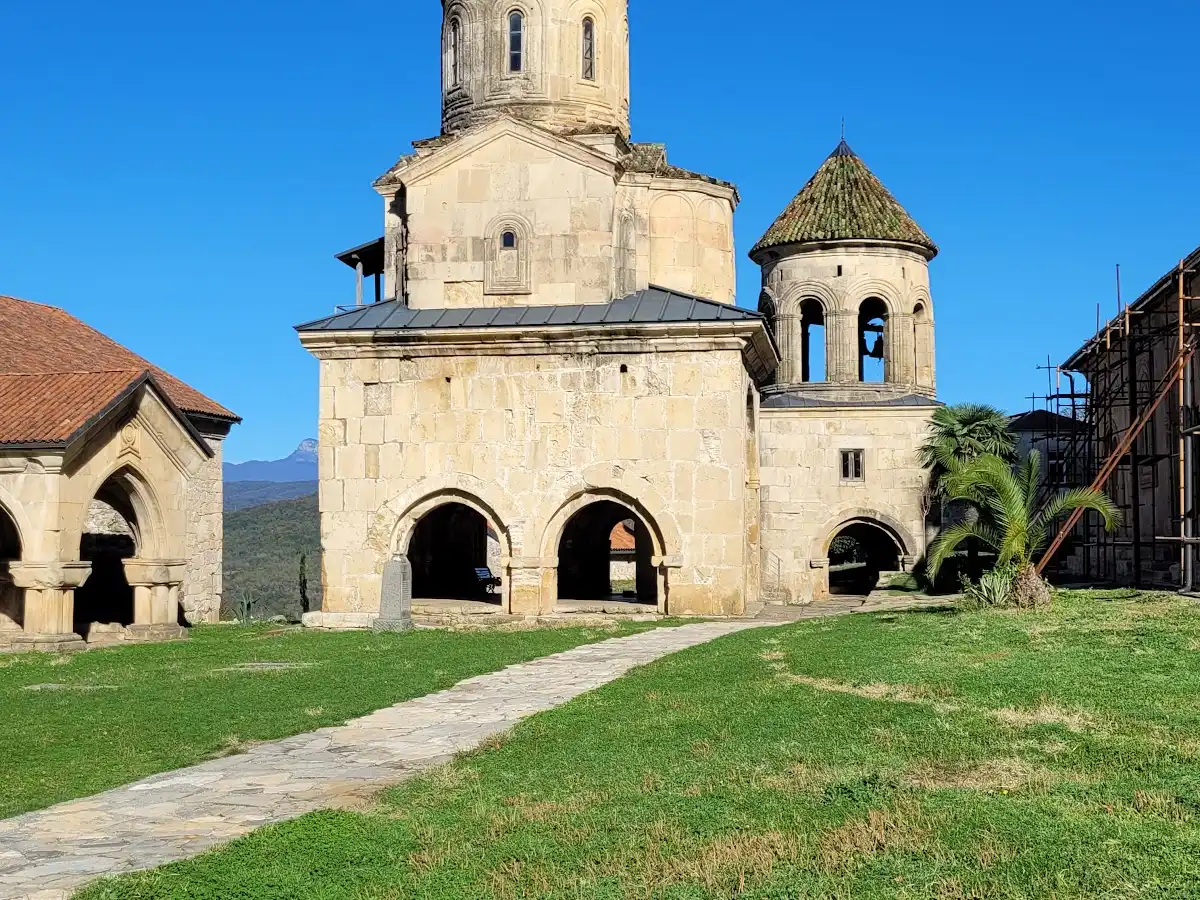
Most people online sell Gelati Monastery as a quick “church stop” near Kutaisi; the surprise is that if you listen, it’s one of the few places in Georgia where you can literally hear medieval scholarship in the silence, not just see old stones. Gelati sits on a hill above Kutaisi in western Georgia, close enough for a cheap marshrutka ride yet far enough that you feel the city drop away. As a backpacker target, it’s low-cost, low-effort, high-brain impact. The frescoes are jaw-dropping, the acoustics turn any chant into goosebumps, and the whole complex whispers “this used to be an intellectual powerhouse, not just a prayer spot.” Downsides: scaffolding and restoration can kill some photo angles, tour buses do roll in, and there’s not much in the way of cafés or facilities. But if you like your history dense and your crowds tolerable, Gelati quietly over-delivers.

Discover everything you want to know in the 📖 Georgia Travel Guide.


Get your Georgia guide
95 ranked highlights, routes & tips, works offline (371 pages)
Loading the map 🌍
CLICK TO FILTER
cities
towns
villages
landmarks
national parks
hikes
beaches
attractions
festivals
regions
SHOW COUNTRY’S BESTSHOW ALL

✨ Why go?
Ranked #2 unique site in Georgia
Reasons people choose to visit here

The Gelati Monastery in Georgia is a must-see, but let’s cut through the hype. Yes, it’s a UNESCO World Heritage site, but it’s also a magnet for tourists. Expect crowds, especially during peak season. However, don’t let that deter you. The real magic lies in its history and architecture. Founded in the 12th century, it’s a stunning example of medieval Georgian design, with intricate frescoes that tell stories of faith and culture.

Getting there is straightforward. It’s just a short drive from Kutaisi, making it an easy stop on your route through western Georgia. The entry fee is minimal, so you won’t break the bank. Plus, the surrounding hills offer a chance to escape the throngs and soak in the landscape.

What makes Gelati truly special is its spiritual energy. Spend time in the quiet … read more 👉
The Gelati Monastery in Georgia is a must-see, but let’s cut through the hype. Yes, it’s a UNESCO World Heritage site, but it’s also a magnet for tourists. Expect crowds, especially during peak season. However, don’t let that deter you. The real magic lies in its history and architecture. Founded in the 12th century, it’s a stunning example of medieval Georgian design, with intricate frescoes that tell stories of faith and culture.

Getting there is straightforward. It’s just a short drive from Kutaisi, making it an easy stop on your route through western Georgia. The entry fee is minimal, so you won’t break the bank. Plus, the surrounding hills offer a chance to escape the throngs and soak in the landscape.

What makes Gelati truly special is its spiritual energy. Spend time in the quiet corners, and you’ll feel the weight of centuries. Pair this with a visit to nearby Motsameta Monastery for a fuller experience. Together, they create a rich tapestry of Georgia’s past that’s worth every step.
Want to include Gelati Monastery in your Georgia route?
Create a personalized Georgia itinerary that includes Gelati Monastery and the places that fit your trip — based on your travel style, budget, and available time. Get your route in seconds.

Generate my trip

💡 HighlightsDon't-miss highlights and experiences

  • The Great Church of the Virgin and its 12th-century mosaic — The heart of Gelati: a massive cross-domed church with a shimmering mosaic of the Virgin and Child in the apse. The gold tesserae and stiff, Byzantine-style faces are a rare, well-preserved example of medieval Georgian mosaic work.
  • Gelati Academy (the medieval “university”) — Once a major learning center in the Caucasus, Gelati hosted theologians, philosophers and scientists. You can still sense the intellectual history here — it’s why locals call it a Georgian center of scholarship, not just a pretty church.
  • Royal burials, including King David IV “the Builder” — Several Georgian monarchs are buried inside the complex; David IV, who founded Gelati in 1106, is the headline. Seeing the royal tombs ties the architecture to real
read more 👉
  • The Great Church of the Virgin and its 12th-century mosaic — The heart of Gelati: a massive cross-domed church with a shimmering mosaic of the Virgin and Child in the apse. The gold tesserae and stiff, Byzantine-style faces are a rare, well-preserved example of medieval Georgian mosaic work.
  • Gelati Academy (the medieval “university”) — Once a major learning center in the Caucasus, Gelati hosted theologians, philosophers and scientists. You can still sense the intellectual history here — it’s why locals call it a Georgian center of scholarship, not just a pretty church.
  • Royal burials, including King David IV “the Builder” — Several Georgian monarchs are buried inside the complex; David IV, who founded Gelati in 1106, is the headline. Seeing the royal tombs ties the architecture to real historic drama and nation-building.
  • Fresco cycles and wall paintings — The interiors are covered in layered frescoes from different periods: saints, royal portraits, and biblical scenes. They’re not all pristine, but that patchwork of styles tells the story of centuries of worship and repair.
  • The hilltop setting and views over the Rioni valley — Gelati sits above Kutaisi and the surrounding valley; the walk up rewards you with broad views and a peaceful cloister atmosphere. Personal favorite — sit on a low wall at sunset and let the light hit the stone. Pure travel brownie points.
  • Architectural details: cross-in-square plan, stone carvings and mini-churches — The complex isn’t just one building; it’s a cluster with smaller chapels, carved stonework and a distinct Georgian take on Byzantine architecture. Great for poking around and noticing little details.
  • Small museum and liturgical treasures — A modest on-site display holds icons, metalwork and manuscript fragments — not a glossy museum, but enough original pieces to connect what you’ve seen in the churches with the people who used them.
Spotted a mistake or missing something? Contact us.

Things to do near Gelati Monastery

Ratings based on Tripadvisor reviews. When you book through this link, you support our work at no extra cost to you.

🌤️ When to go?Weather, crowds, and seasonal trade-offs


  • Weather: The best window is late spring to early autumn. May through September offers dry, warm days perfect for wandering the monastery grounds without soggy boots. Winters are cold, often dipping below freezing, with snow that can block access.

  • Temperature: Expect highs around 20-25°C (68-77°F) in peak season, which is comfortable for hiking and exploring. Shoulder months can be cooler, dropping to 10-15°C (50-59°F), so pack layers.

  • Daylight Hours: Summer brings long days—up to 15 hours of daylight—giving you plenty of time to soak in the frescoes and surrounding nature. Winter days shrink to about 9 hours, rushing your visit.

  • Crowds: The monastery is a popular stop on Georgian tourist routes, so July and August can feel packed, especially mid-day. Early mornings or late afternoons
read more 👉

  • Weather: The best window is late spring to early autumn. May through September offers dry, warm days perfect for wandering the monastery grounds without soggy boots. Winters are cold, often dipping below freezing, with snow that can block access.

  • Temperature: Expect highs around 20-25°C (68-77°F) in peak season, which is comfortable for hiking and exploring. Shoulder months can be cooler, dropping to 10-15°C (50-59°F), so pack layers.

  • Daylight Hours: Summer brings long days—up to 15 hours of daylight—giving you plenty of time to soak in the frescoes and surrounding nature. Winter days shrink to about 9 hours, rushing your visit.

  • Crowds: The monastery is a popular stop on Georgian tourist routes, so July and August can feel packed, especially mid-day. Early mornings or late afternoons in shoulder seasons offer a quieter, more reflective experience.

  • Seasonal Activities: Spring and autumn bring vibrant local festivals and harvest events nearby, adding cultural depth beyond the monastery walls. Winter’s quiet has its own charm but limits outdoor exploration.

  • Price Fluctuations: Accommodation and transport prices spike in summer. Visiting in May or September can save you a good chunk of cash while still enjoying great weather and fewer tourists.


Pro-tip: Aim for May or September mornings—cool, calm, and wallet-friendly—so you get the monastery’s soul without the selfie-stick battalion.


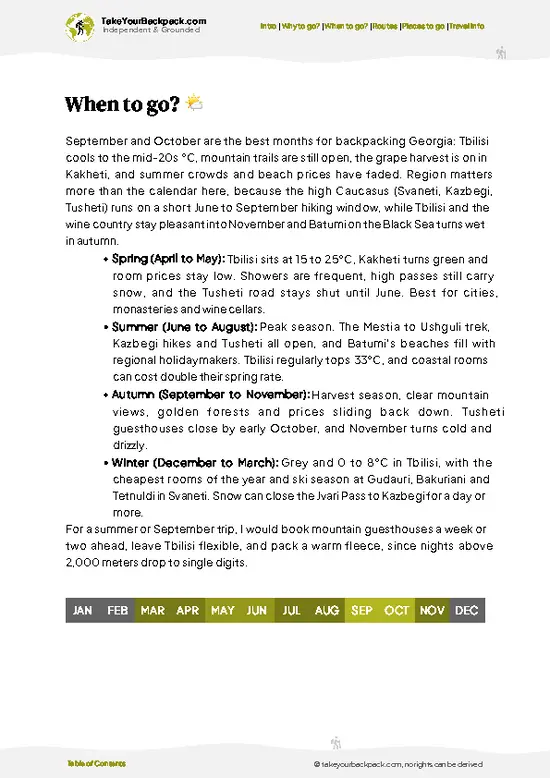
source: climatestotravel.comJANJanuary: below average for travelingFEBFebruary: below average for travelingMARMarch: fair for travelingAPRApril: good for travelingMAYMay: excellent for travelingJUNJune: excellent for travelingJULJuly: highly recommended for travelingAUGAugust: highly recommended for travelingSEPSeptember: excellent for travelingOCTOctober: highly recommended for travelingNOVNovember: fair for travelingDECDecember: below average for traveling
georgia-unique-site-gelati-monastery
© Google |

✈️ The backpacker research shortcutGeorgia Travel Guide

An offline-friendly backpacking guide with optimized travel routes, ranked highlights, transport advice, and the best areas to stay.
example page 0 from our offline Travel Guide for Georgia
example page 1 from our offline Travel Guide for Georgia
example page 2 from our offline Travel Guide for Georgia
example page 3 from our offline Travel Guide for Georgia
example page 4 from our offline Travel Guide for Georgia
example page 5 from our offline Travel Guide for Georgia
example page 6 from our offline Travel Guide for Georgia
example page 7 from our offline Travel Guide for Georgia
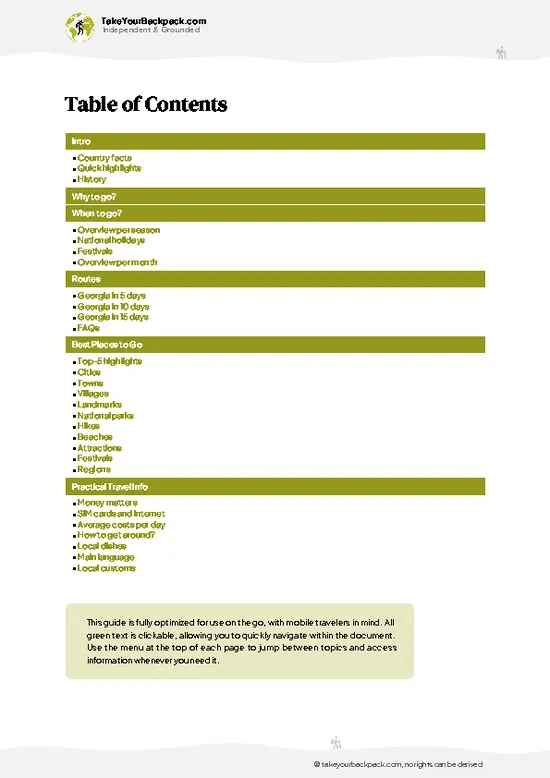
The digital guide (371 pages) contains:
95 highlights, ranked by travel appeal
Optimized 5, 10 & 15-day travel routes
Cities, national parks, landmarks, beaches
How to get around
Offline-friendly for travel without Wi-Fi
👉 Click to see all 30+ guide features

📅 Plan smarter in minutes, not weeks
Month by month travel advice
Festivals & national holidays
Budget expectations

🗺️ Go to the right places, skip the overrated ones
Honest pros & cons of destinations
Top hikes, parks & viewpoints
Lesser-known places most travelers miss
Clear “worth it vs skip it” guidance

🛏️ Travel smoothly without rookie mistakes
Best areas to stay
Transport systems explained simply
Common scams & safety advice
SIM cards, money & practical tips

🌍 Understand the country, not just visit it
Culture & traditions
52 Essential phrases & customs
Festivals worth planning around
Traveler-friendly historical context
Insights that make places more meaningful

📱 Built for real travel conditions
Fully downloadable PDF
Works completely offline
Optimized for phone use
Useful in remote areas & buses
Everything in one place
Save weeks of stressful planning
Get instant access to your full guide. 30‑day money-back guarantee.
+ Add another guide for just US$7.80

By proceeding you agree to our terms.
Sent to your inbox immediately after payment • 100% Secure Checkout
Best Backpacking Travel Advisor 2025 tourism awardBest Backpacking
Travel Advisor
2025
What others say about Take Your Backpack Guides:
⭐⭐⭐⭐⭐
Fantastic, amazing amount of information!
⭐⭐⭐⭐⭐
My goodness this is amazing, it's what I've been looking for hats off too you!
⭐⭐⭐⭐⭐
I think this is absolutely BRILLIANT
⭐⭐⭐⭐
Very complete and informative. It's still missing places, but I gotta to commend you
⭐⭐⭐⭐⭐
This is truly amazing, thank you, can't wait to explore it with my kids!
⭐⭐⭐⭐⭐
Awesome resource, thank you!
⭐⭐⭐⭐⭐
This is amazing! Can't wait to explore the ones I haven't seen
⭐⭐⭐⭐
I love this! Well done, great idea.
⭐⭐⭐⭐⭐
Thanks for taking the time to make this gem!
⭐⭐⭐⭐⭐
This might be the best website I've ever seen.
⭐⭐⭐⭐⭐
Congratulations, and thank you so much for your work; it's incredibly valuable.
⭐⭐⭐⭐
In all seriousness I think you did a great job pointing out the important spots
⭐⭐⭐⭐⭐
10/10 very good
⭐⭐⭐⭐⭐
As someone who's only just starting to visit regularly this is awesome, thank you.
⭐⭐⭐⭐
Thank you very much! I'm going to visit my dad, it's going to be very useful!
⭐⭐⭐⭐⭐
This is really cool! We'll be travelling for the first time and this definitely come in handy.
⭐⭐⭐⭐⭐
You are now our minister of culture, congratulations 👨‍💼
⭐⭐⭐⭐⭐
Just wanted to tell you that this is a pearl! Going to follow your recommendations.
⭐⭐⭐⭐⭐
This is so cool. I'll definitely be using the resource for my travels soon.
⭐⭐⭐⭐⭐
This is very impressive! Good work.
⭐⭐⭐⭐⭐
This is an amazing and informative site. Very well done!

🛏️ Where to stay?Where staying makes the most sense

When you’re heading to Gelati Monastery, skip the cookie-cutter hotels and dive into the local vibe. The town of Kutaisi is your best bet. It’s buzzing with backpackers, making it easy to connect with fellow travelers. The streets are lined with budget-friendly guesthouses and hostels, where you can swap stories over a cup of strong Georgian coffee.

Stay close to the city center. It’s a hub for public transport, so getting to the monastery is a breeze. Plus, you’ll find local eateries serving up khachapuri that won’t break the bank. The atmosphere is friendly, and you’ll feel the warmth of Georgian … read more 👉
When you’re heading to Gelati Monastery, skip the cookie-cutter hotels and dive into the local vibe. The town of Kutaisi is your best bet. It’s buzzing with backpackers, making it easy to connect with fellow travelers. The streets are lined with budget-friendly guesthouses and hostels, where you can swap stories over a cup of strong Georgian coffee.

Stay close to the city center. It’s a hub for public transport, so getting to the monastery is a breeze. Plus, you’ll find local eateries serving up khachapuri that won’t break the bank. The atmosphere is friendly, and you’ll feel the warmth of Georgian hospitality.

If you want a quieter experience, consider the outskirts of Kutaisi. There are charming homestays that offer a more intimate glimpse into local life. You might even find a host who’ll share their family recipes or take you on a hike through the nearby hills.

Just be prepared for crowds at the monastery itself. It’s a popular spot, especially on weekends. But don’t let that deter you; the beauty and history are worth it. Embrace the chaos, and you’ll find your own slice of magic in the experience.

👛 Costs (as of 4 September 2026)Typical daily expenses

Visiting Gelati Monastery in Georgia is a journey into history, but it comes with its own set of costs. Here’s the real deal on what you can expect to spend.
  • Entrance Fee: The monastery itself is free to enter. However, if you want to explore the museum or specific guided tours, expect to pay around €2-€5. This is a small price for a deep dive into the rich history.
  • Transportation: Getting to Gelati from Kutaisi costs about €5-€10 for a taxi or a local bus. If you’re feeling adventurous, a shared marshrutka (minibus) will set you back around €1-€2. Just be ready for a bit of a squeeze.
  • Food and Drink: There are limited options nearby, but if you grab a meal at a local eatery, budget around €5-€15. A hearty khachapuri (cheese bread) and a drink will keep you fueled for exploration.
  • Accommodation:
read more 👉
Visiting Gelati Monastery in Georgia is a journey into history, but it comes with its own set of costs. Here’s the real deal on what you can expect to spend.
  • Entrance Fee: The monastery itself is free to enter. However, if you want to explore the museum or specific guided tours, expect to pay around €2-€5. This is a small price for a deep dive into the rich history.
  • Transportation: Getting to Gelati from Kutaisi costs about €5-€10 for a taxi or a local bus. If you’re feeling adventurous, a shared marshrutka (minibus) will set you back around €1-€2. Just be ready for a bit of a squeeze.
  • Food and Drink: There are limited options nearby, but if you grab a meal at a local eatery, budget around €5-€15. A hearty khachapuri (cheese bread) and a drink will keep you fueled for exploration.
  • Accommodation: If you plan to stay overnight, expect to pay between €15-€30 for a guesthouse or hostel in Kutaisi. This gives you a chance to soak in the local vibe and maybe catch a sunset at the monastery.
  • Guided Tours: If you want a more in-depth experience, guided tours can range from €20-€50. This often includes transportation and a knowledgeable guide who can share stories that you won’t find in any brochure.

These costs can vary, but knowing what to expect helps you plan better. Gelati Monastery is worth every cent for its breathtaking architecture and spiritual ambiance. Just be prepared for the crowds, especially during peak tourist season.


source: georgia.travel
⚠️ Prices can change and everyone travels differently, so take this as a rough guide. Hope it helps you plan your adventure!

FAQTraveler FAQ

Gelati Monastery is a medieval monastic complex near Kutaisi, Georgia, founded in 1106 by King David IV. It is a UNESCO World Heritage site known for its well-preserved frescoes and Georgian Golden Age architecture.
Visiting Gelati Monastery typically takes about 1 to 2 hours to explore the main church, frescoes, and surrounding grounds thoroughly. Allocate extra time if you plan to visit the nearby Motsameta Monastery on the same trip.
To get to Gelati Monastery, travel to Kutaisi first, which is accessible by bus or train from Tbilisi and other major cities. From Kutaisi, the monastery is about 10 kilometers east and can be reached by taxi or local minibus in 20 to 30 minutes.
⚠️ Things can change over time, so always validate details locally before you go.

Other Georgian landmarks near Gelati Monastery

Explore more nearby:

  • Vardzia—cliffside dwellings, hidden monastery, river gorge| 42 km away
  • Uplistsikhe—rock-hewn caves, ancient tunnels, windswept plateau| 116 km away
  • Chauki—alpine lakes, wildflower meadows, remote borderland| 145 km away

💡 Not sure where to go next?
Create a personalized itinerary for Georgia including Gelati Monastery and the places that fit your trip.

Generate my itinerary

👉 Discover all landmarks

Or checkout all Georgia has to offer (think cities, towns, villages, national parks, hikes, beaches, festivals)
Country photo of Georgia

We 💚 feedbackIs it worth it?

Visiting Gelati Monastery is like stepping into a living history book. The intricate frescoes and serene atmosphere are genuinely moving. But let’s be real: the crowds can be overwhelming, especially during peak season. You’ll battle selfie sticks and tour groups. Still, if you can find a quiet moment to soak it all in, the spiritual energy here is worth the hustle. Just be prepared for a bit of chaos along the way.

✈️ When did I visit Georgia?
It was September 2018 when I visited Georgia, starting in Tblisi and making my way up to the mountains.

✍️ Help improve this page!
The information on this page is based on my own backpacking experience in Georgia, supplemented with up-to-date research and feedback from other travelers. Travel details can change, so if you notice anything outdated or incomplete, feel free to let me know.


🙋‍♂️ Give feedback

👋 Meet the founderWho’s Behind Take Your Backpack?

Johan, backpacker and founder of TakeYourBackpackHi, I’m Johan (Netherlands 🇳🇱), the creator of TakeYourBackpack. Over the past decade, I’ve backpacked through 80+ countries across six continents, gaining extensive experience with independent travel, long-term trips, and overland routes.

This site is built on a combination of firsthand travel experience and carefully curated insights from other backpackers. Many guides are based on places I’ve personally visited, while others bring together tips, observations, and practical advice shared by trusted travelers I’ve met along the way.

The goal is to provide realistic, experience-driven guidance — not generic itineraries — so you can explore destinations with better context, clearer expectations, and more confidence.

Get full Georgia guide •
Instant download • 95 highlights • Full Offline guide