×

Ghana🇬🇭 | townsDaboyaShea butter production, white clay mosque, river crossing | things to do and best time to go

Explore TongoExplore Kpandu

Backpacking in Daboya
👀 For curious travelerstown ranked #30
By Johan Kruseman 🇳🇱 | Updated June 11, 2026

Forget the idea that Daboya is just a sleepy pit stop with nothing but dust and goats. Tucked in Ghana’s Northern Region, west of Tamale, Daboya is a working river town where the White Volta’s slow current sets the pace. For backpackers, it’s less a destination for nightlife and more a base for watching traditional smock weaving or wandering the riverside at dusk, when the air smells of woodsmoke and river mud. It’s quiet—no hostels, just simple guesthouses, and you’ll likely be the only foreigner in sight. Getting here means a bumpy tro-tro ride and patience, but the reward is a town that feels lived-in, not staged. Compared to busier Tamale or touristy Mole, Daboya is stripped-back, social only if you make the first move, and best for those who want to slow down and see real, working Ghana. Costs are low, safety is high, and the pace is all yours.

Discover everything you want to know in the 📖 Ghana Travel Guide.


Get your Ghana guide
111 ranked highlights, routes & tips, works offline (424 pages)
Loading the map 🌍
CLICK TO FILTER
cities
towns
villages
landmarks
national parks
hikes
beaches
attractions
festivals
regions
SHOW COUNTRY’S BESTSHOW ALL

✨ Why go?
Ranked #30 town in Ghana
Reasons people choose to visit here

Daboya serves as a gateway for backpackers exploring Ghana’s rich landscapes and culture. Its walkable streets make it easy to navigate, while small-scale hostels offer a cozy, communal vibe perfect for solo travelers or small groups. The town’s proximity to hiking trails and cultural sites means you can dive into local life without feeling rushed. Many travelers linger a few days, enjoying local food experiences that showcase authentic flavors. The atmosphere is friendly but not overwhelming, making it ideal for those who appreciate a balance of social interaction and quiet reflection.
Want to include Daboya in your Ghana route?
Create a personalized Ghana itinerary that includes Daboya and the places that fit your trip — based on your travel style, budget, and available time. Get your route in seconds.

Generate my trip

💡 HighlightsPlaces and moments you shouldn't skip

  • Traditional salt pans of Daboya — The real reason most people come: shallow clay pans where brine is evaporated and salt harvested by hand. Watching the patterned pans from close up gives a vivid sense of a working landscape that’s been here for generations.
  • Salt-boiling hearths and brine wells — Up close you’ll see the low hearths, smoky fires and wooden ladles where brine is concentrated into edible salt. It’s an honest, physical process and a great spot to talk to the women who actually do the work (ask first and tip if you photograph).
  • Drying fields and storage sheds — The stacked salt blocks, drying racks and simple storehouses make for photogenic, tactile scenes and tell the rest of the story: how salt is graded, packed and moved to market.
  • Daboya market (market day) — The village
read more 👉
  • Traditional salt pans of Daboya — The real reason most people come: shallow clay pans where brine is evaporated and salt harvested by hand. Watching the patterned pans from close up gives a vivid sense of a working landscape that’s been here for generations.
  • Salt-boiling hearths and brine wells — Up close you’ll see the low hearths, smoky fires and wooden ladles where brine is concentrated into edible salt. It’s an honest, physical process and a great spot to talk to the women who actually do the work (ask first and tip if you photograph).
  • Drying fields and storage sheds — The stacked salt blocks, drying racks and simple storehouses make for photogenic, tactile scenes and tell the rest of the story: how salt is graded, packed and moved to market.
  • Daboya market (market day) — The village market is where salt traders meet farmers, cloth sellers and food vendors. Visit on market day for bartering theatre, local snacks and the best chance to see salt changing hands at small scale.
  • White Volta riverbank and landing sites — Daboya sits close to the White Volta; the riverbank is a living place of fishing, small boat transport and riverside life. Early morning or late afternoon fishing activity and simple boat crossings are very visitable and atmospheric.
  • Chief’s palace and durbar ground — The traditional ruler’s compound is the cultural heart of the village: palace architecture, ceremonial stools and the durbar ground where festivals and public meetings are held. Visits are possible but do check with local authorities first.
  • Women salt-makers’ compounds — Many salt-makers operate in family or cooperative compounds. Visiting (with permission) shows daily rhythm, offers chances to learn techniques and supports the local economy directly if you buy a bag of salt.
  • Local blacksmith and tool workshops — The small forges that repair pans, make ladles and mend boats are working museums of practical craft. You can see metalworking that keeps the whole salt economy running.
  • Community shrines and sacred groves — Small ancestral shrines and groves (visible in most villages) reflect spiritual life tied to the land and salt-making. Always approach respectfully and ask before entering or photographing; a short talk with a local elder is rewarding.
  • Salt-heritage walking route (self-guided or with a local) — There’s no formal museum, but a short walking loop linking pans, boiling areas, the market and river makes a compact half-day experience. Hire a local guide for context, stories and better access to work compounds.
Nearby day-trip highlights include the historic market town of Salaga (old trading routes and local history), the regional hub Tamale for larger markets and museums, and Mole National Park for a proper wildlife outing.
Spotted a mistake or missing something? Contact us.

Things to do near Daboya

Ratings based on Tripadvisor reviews. When you book through this link, you support our work at no extra cost to you.

🏘️ NeighborhoodsHow different areas shape the experience

Daboya is a vibrant town that offers a unique blend of culture and community, perfect for backpackers seeking authenticity.

Central Daboya: This is the heart of the town, where you’ll find local markets buzzing with energy. The vibe is lively, making it ideal for short stays. Walkability is excellent, with everything within reach. Nightlife is low-key, focusing on local hangouts rather than bars.

Daboya Riverfront: Here, the atmosphere shifts to a more tranquil setting. The river views are stunning, perfect for relaxation. It’s a bit quieter, making it suitable for longer stays. Transport access is decent, but expect to walk a bit more.

Daboya Hills: This area offers breathtaking views and a chance to connect with nature. It’s less developed, so costs are lower. Ideal for those wanting … read more 👉
Daboya is a vibrant town that offers a unique blend of culture and community, perfect for backpackers seeking authenticity.

Central Daboya: This is the heart of the town, where you’ll find local markets buzzing with energy. The vibe is lively, making it ideal for short stays. Walkability is excellent, with everything within reach. Nightlife is low-key, focusing on local hangouts rather than bars.

Daboya Riverfront: Here, the atmosphere shifts to a more tranquil setting. The river views are stunning, perfect for relaxation. It’s a bit quieter, making it suitable for longer stays. Transport access is decent, but expect to walk a bit more.

Daboya Hills: This area offers breathtaking views and a chance to connect with nature. It’s less developed, so costs are lower. Ideal for those wanting a peaceful retreat, but be prepared for a hike to get around.

⌛️ 1 daySeeing the highlights in 24 hours

Daboya, Ghana, is a tapestry of rich culture and vibrant community life, known for its traditional weaving and the warm smiles of its residents. Start your day early at the local market, where the air is thick with the scent of spices and fresh produce. Engage with vendors; their stories are as colorful as their wares.

In the afternoon, head to the nearby Weaving Center. Here, you can witness artisans at work, creating intricate kente cloth. This isn’t just a craft; it’s a living history. Ask questions, and you might even get a chance to try your hand at weaving.

As the sun begins to set, stroll through the residential neighborhoods. The light casts a golden hue on the mud-brick houses, and children play in the streets, laughter echoing. For dinner, seek out a local eatery serving jollof … read more 👉
Daboya, Ghana, is a tapestry of rich culture and vibrant community life, known for its traditional weaving and the warm smiles of its residents. Start your day early at the local market, where the air is thick with the scent of spices and fresh produce. Engage with vendors; their stories are as colorful as their wares.

In the afternoon, head to the nearby Weaving Center. Here, you can witness artisans at work, creating intricate kente cloth. This isn’t just a craft; it’s a living history. Ask questions, and you might even get a chance to try your hand at weaving.

As the sun begins to set, stroll through the residential neighborhoods. The light casts a golden hue on the mud-brick houses, and children play in the streets, laughter echoing. For dinner, seek out a local eatery serving jollof rice. The flavors will linger long after you leave.

Daboya isn’t just a stop; it’s an experience that connects you to the heart of Ghana.
Turn your Daboya visit into an Ghana adventure
Build a complete Ghana route with Daboya, hidden gems, must-see destinations, and realistic travel times included.

Generate my trip

🌤️ When to go?When to go for the best experience


  • Topic: Weather – Daboya’s dry season from November to March offers clear skies and minimal rain, making dusty trails and river crossings manageable. The wet season (April to October) brings heavy rains that can turn paths to mud and swell the White Volta River, complicating travel.

  • Topic: Temperature – Expect highs around 33-38°C (91-100°F) in the dry season, with cooler mornings near 20°C (68°F). The wet season cools slightly but humidity spikes, making heat feel heavier.

  • Topic: Daylight Hours – Daylight stays steady year-round, roughly 12 hours, but dry season mornings bring crisp, golden light perfect for early starts and photography.

  • Topic: Crowds – Daboya sees fewer tourists overall, but the dry season draws local festivals and traders, adding lively energy without overwhelming
read more 👉

  • Topic: Weather – Daboya’s dry season from November to March offers clear skies and minimal rain, making dusty trails and river crossings manageable. The wet season (April to October) brings heavy rains that can turn paths to mud and swell the White Volta River, complicating travel.

  • Topic: Temperature – Expect highs around 33-38°C (91-100°F) in the dry season, with cooler mornings near 20°C (68°F). The wet season cools slightly but humidity spikes, making heat feel heavier.

  • Topic: Daylight Hours – Daylight stays steady year-round, roughly 12 hours, but dry season mornings bring crisp, golden light perfect for early starts and photography.

  • Topic: Crowds – Daboya sees fewer tourists overall, but the dry season draws local festivals and traders, adding lively energy without overwhelming crowds.

  • Topic: Seasonal Activities – Dry months are prime for river fishing and market visits, while the wet season showcases lush landscapes but limits outdoor ventures.

  • Topic: Price Fluctuations – Accommodation and transport costs dip in the wet season due to lower demand, but added travel challenges can offset savings.


Pro-tip: Aim for late dry season—when the air is still dry but the landscape starts to soften—so you get the best mix of comfort, culture, and scenery without the mud.


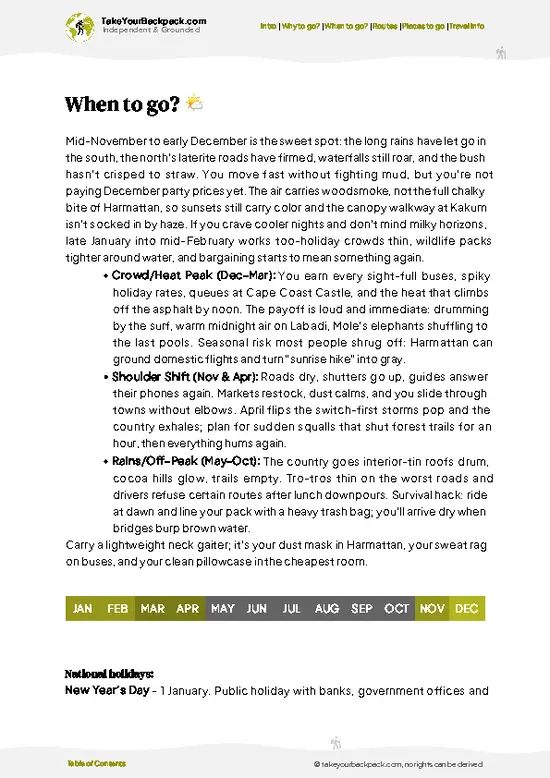
source: climatestotravel.comJANJanuary: excellent for travelingFEBFebruary: excellent for travelingMARMarch: excellent for travelingAPRApril: good for travelingMAYMay: fair for travelingJUNJune: fair for travelingJULJuly: fair for travelingAUGAugust: fair for travelingSEPSeptember: good for travelingOCTOctober: good for travelingNOVNovember: highly recommended for travelingDECDecember: highly recommended for traveling
when-to-go

✈️ The backpacker research shortcutGhana Travel Guide

An offline-friendly backpacking guide with optimized travel routes, ranked highlights, transport advice, and the best areas to stay.
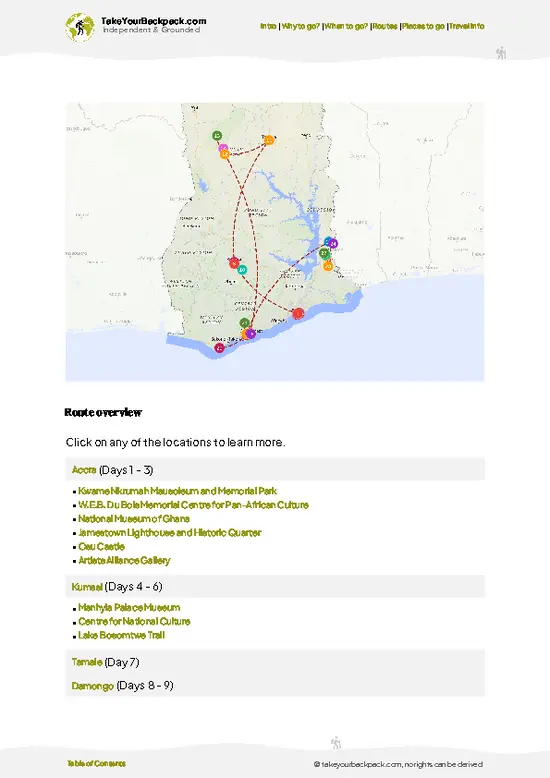
example page 0 from our offline Travel Guide for Ghana
example page 1 from our offline Travel Guide for Ghana
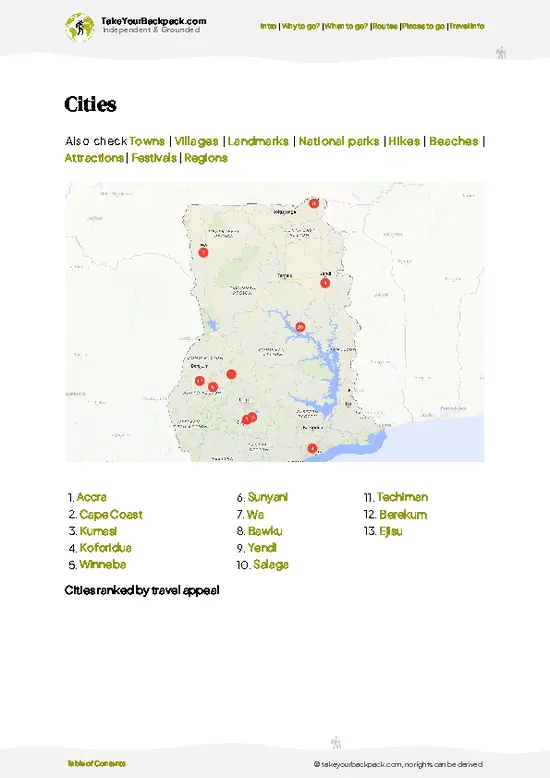
example page 2 from our offline Travel Guide for Ghana
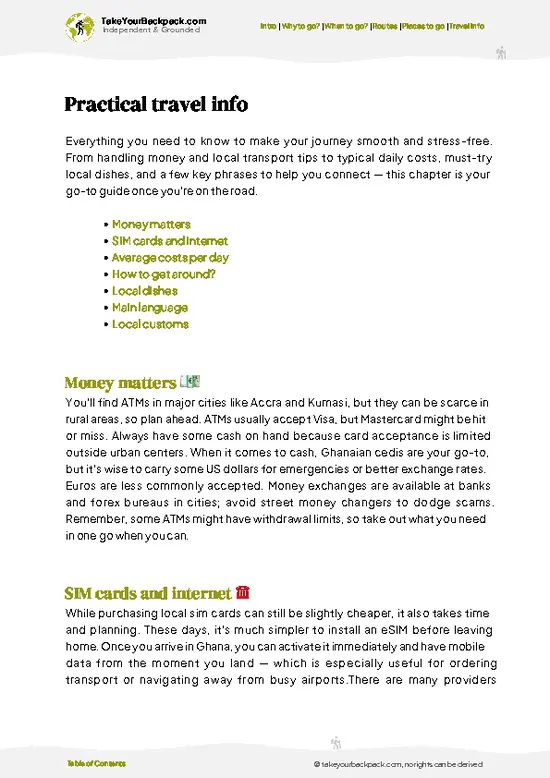
example page 3 from our offline Travel Guide for Ghana
example page 4 from our offline Travel Guide for Ghana
example page 5 from our offline Travel Guide for Ghana
example page 6 from our offline Travel Guide for Ghana
example page 7 from our offline Travel Guide for Ghana
The digital guide (424 pages) contains:
111 highlights, ranked by travel appeal
Optimized 5, 10 & 15-day travel routes
Cities, national parks, landmarks, beaches
How to get around
Offline-friendly for travel without Wi-Fi
👉 Click to see all 30+ guide features

📅 Plan smarter in minutes, not weeks
Month by month travel advice
Festivals & national holidays
Budget expectations

🗺️ Go to the right places, skip the overrated ones
Honest pros & cons of destinations
Top hikes, parks & viewpoints
Lesser-known places most travelers miss
Clear “worth it vs skip it” guidance

🛏️ Travel smoothly without rookie mistakes
Best areas to stay
Transport systems explained simply
Common scams & safety advice
SIM cards, money & practical tips

🌍 Understand the country, not just visit it
Culture & traditions
52 Essential phrases & customs
Festivals worth planning around
Traveler-friendly historical context
Insights that make places more meaningful

📱 Built for real travel conditions
Fully downloadable PDF
Works completely offline
Optimized for phone use
Useful in remote areas & buses
Everything in one place
Save weeks of stressful planning
Get instant access to your full guide. 30‑day money-back guarantee.


By proceeding you agree to our terms.
Sent to your inbox immediately after payment • 100% Secure Checkout
Best Backpacking Travel Advisor 2025 tourism awardBest Backpacking
Travel Advisor
2025
What others say about Take Your Backpack Guides:
⭐⭐⭐⭐⭐
Fantastic, amazing amount of information!
⭐⭐⭐⭐⭐
My goodness this is amazing, it's what I've been looking for hats off too you!
⭐⭐⭐⭐⭐
I think this is absolutely BRILLIANT
⭐⭐⭐⭐
Very complete and informative. It's still missing places, but I gotta to commend you
⭐⭐⭐⭐⭐
This is truly amazing, thank you, can't wait to explore it with my kids!
⭐⭐⭐⭐⭐
Awesome resource, thank you!
⭐⭐⭐⭐⭐
This is amazing! Can't wait to explore the ones I haven't seen
⭐⭐⭐⭐
I love this! Well done, great idea.
⭐⭐⭐⭐⭐
Thanks for taking the time to make this gem!
⭐⭐⭐⭐⭐
This might be the best website I've ever seen.
⭐⭐⭐⭐⭐
Congratulations, and thank you so much for your work; it's incredibly valuable.
⭐⭐⭐⭐
In all seriousness I think you did a great job pointing out the important spots
⭐⭐⭐⭐⭐
10/10 very good
⭐⭐⭐⭐⭐
As someone who's only just starting to visit regularly this is awesome, thank you.
⭐⭐⭐⭐
Thank you very much! I'm going to visit my dad, it's going to be very useful!
⭐⭐⭐⭐⭐
This is really cool! We'll be travelling for the first time and this definitely come in handy.
⭐⭐⭐⭐⭐
You are now our minister of culture, congratulations 👨‍💼
⭐⭐⭐⭐⭐
Just wanted to tell you that this is a pearl! Going to follow your recommendations.
⭐⭐⭐⭐⭐
This is so cool. I'll definitely be using the resource for my travels soon.
⭐⭐⭐⭐⭐
This is very impressive! Good work.
⭐⭐⭐⭐⭐
This is an amazing and informative site. Very well done!

🛏️ Where to stay?Best areas and accommodation options

Daboya’s heart for backpackers beats strongest near the town center, where the market hums with life and the air carries the scent of fresh millet and grilled fish. This area is your best bet—safe enough to wander after dark, with a steady flow of locals and travelers that makes striking up conversations effortless. Unlike the quieter outskirts, here you’ll find simple guesthouses and a couple of budget hostels that cater to solo adventurers craving connection without the fuss. The vibe is unpretentious and grounded, a place where the rhythm of daily life invites you in rather than shuts you out. … read more 👉
Daboya’s heart for backpackers beats strongest near the town center, where the market hums with life and the air carries the scent of fresh millet and grilled fish. This area is your best bet—safe enough to wander after dark, with a steady flow of locals and travelers that makes striking up conversations effortless. Unlike the quieter outskirts, here you’ll find simple guesthouses and a couple of budget hostels that cater to solo adventurers craving connection without the fuss. The vibe is unpretentious and grounded, a place where the rhythm of daily life invites you in rather than shuts you out. Staying here means you’re plugged into Daboya’s pulse, not just passing through.

🚌 Getting aroundTransportation options and practical tips

Daboya moves at its own rhythm—less a clockwork town and more a place where time bends to the sun’s arc and the hum of daily life. The air carries the scent of dry earth and smoke from cooking fires, and the streets pulse with a mix of purposeful strides and relaxed pauses. Here, schedules exist but flex, shaped by the heat and the flow of people rather than rigid timetables. You’ll find that blending into this rhythm means embracing a bit of unpredictability, but also unlocking a smoother, more authentic way to get around.


  • Walking: The heart of Daboya is compact enough to explore on foot. Walking lets you soak in the dusty smells, hear the chatter of market vendors, and catch the shifting light on mud-brick walls. It’s free, flexible, and the best way to discover the town’s character
read more 👉
Daboya moves at its own rhythm—less a clockwork town and more a place where time bends to the sun’s arc and the hum of daily life. The air carries the scent of dry earth and smoke from cooking fires, and the streets pulse with a mix of purposeful strides and relaxed pauses. Here, schedules exist but flex, shaped by the heat and the flow of people rather than rigid timetables. You’ll find that blending into this rhythm means embracing a bit of unpredictability, but also unlocking a smoother, more authentic way to get around.


  • Walking: The heart of Daboya is compact enough to explore on foot. Walking lets you soak in the dusty smells, hear the chatter of market vendors, and catch the shifting light on mud-brick walls. It’s free, flexible, and the best way to discover the town’s character up close.

  • Shared Trotros: These minibuses run on informal schedules, usually starting around 6 a.m. and fading out by early evening. They’re cheap—just a few cedis—and drop you at major points, but expect crowded rides and stops that depend on passenger demand.

  • Motorbike Taxis (Okada): Quick and nimble, okadas dart through traffic and can get you across town in minutes. Negotiate fares upfront—usually low-cost—and be ready for a bumpy, wind-in-your-face ride that’s as much about the experience as the destination.

  • Private Car Hire: For longer trips or if you want to skip the wait, hiring a car with a driver is an option. It’s pricier but offers comfort and control over timing, especially useful if you’re heading out to nearby villages or the river.

👛 Costs (as of 25 October 2025)What things cost and how to budget

Backpacking in Daboya, Ghana, means embracing a raw, authentic slice of northern Ghanaian life, where costs stay low but the experience is rich in texture and local color.
  • Dorm Accommodation: Daboya is a small town with limited formal hostels. Expect basic guesthouses or local lodges offering simple dorm-style rooms or shared spaces. Prices hover around €5-€8 ($5.50-$9) per night. These places won’t have fancy amenities, but they provide a clean bed and a chance to connect with locals or fellow travelers.
  • Meals: Food here is straightforward and hearty. Street food and small local eateries serve up staples like rice balls, beans, and grilled fish or meat for about €1-€2 ($1.10-$2.20) per meal. If you opt for something more substantial or a drink, budget closer to €3 ($3.30). Freshness is
read more 👉
Backpacking in Daboya, Ghana, means embracing a raw, authentic slice of northern Ghanaian life, where costs stay low but the experience is rich in texture and local color.
  • Dorm Accommodation: Daboya is a small town with limited formal hostels. Expect basic guesthouses or local lodges offering simple dorm-style rooms or shared spaces. Prices hover around €5-€8 ($5.50-$9) per night. These places won’t have fancy amenities, but they provide a clean bed and a chance to connect with locals or fellow travelers.
  • Meals: Food here is straightforward and hearty. Street food and small local eateries serve up staples like rice balls, beans, and grilled fish or meat for about €1-€2 ($1.10-$2.20) per meal. If you opt for something more substantial or a drink, budget closer to €3 ($3.30). Freshness is key—meals are often cooked to order, filling the air with the scent of smoky firewood and spices.
  • Local Transport: Daboya’s transport options are minimal but functional. Shared tro-tros (minibuses) or motorbike taxis (okadas) are the norm. A short ride within town costs around €0.30-€0.50 ($0.35-$0.55). For longer trips to nearby villages, expect to pay up to €2 ($2.20). Walking is often the best way to soak in the town’s dusty streets and vibrant market sounds.
  • Basic Activities/Entry Fees: Daboya is more about the atmosphere and local life than formal tourist attractions. Visiting local markets or cultural sites usually has no entry fee, but small donations or tips of €0.50-€1 ($0.55-$1.10) are appreciated if you join guided walks or community experiences.
  • Miscellaneous Expenses: This covers essentials like bottled water, snacks, or phone credit. Bottled water costs about €0.50 ($0.55), and a local SIM card with data can be had for around €3-€5 ($3.30-$5.50), enough to keep you connected without breaking the bank.

All told, a realistic daily budget for Daboya lands between €10 and €18 ($11-$20), depending on how much you lean into local transport and meals. The town’s simplicity means you’re paying for authenticity and the chance to slow down, not luxury. Keep cash handy, as card payments are rare, and embrace the rhythm of a place where every cedi spent feels like an investment in genuine experience.


source: ghana.travel
⚠️ Prices can change and everyone travels differently, so take this as a rough guide. Hope it helps you plan your adventure!

🚌 Day tripsShort trips worth adding

Daboya, Ghana, is a backpacker’s dream base for exploring the rich culture and stunning landscapes of the region.

Weaving Village Tour
Just a short 30-minute trot from Daboya, this tour immerses you in the art of traditional weaving. You’ll meet local artisans who transform vibrant threads into intricate patterns. The air is filled with the rhythmic clacking of looms and the earthy scent of natural dyes. Expect to spend around $5 for the tour, and don’t miss the chance to try your hand at weaving. Many first-timers overlook the importance of engaging with the artisans; it’s not just a tour, it’s a connection.


Lake Volta Adventure
A 1.5-hour journey leads you to the expansive Lake Volta, one of the world’s largest man-made lakes. Rent a canoe for about $10 and paddle through serene … read more 👉
Daboya, Ghana, is a backpacker’s dream base for exploring the rich culture and stunning landscapes of the region.

Weaving Village Tour
Just a short 30-minute trot from Daboya, this tour immerses you in the art of traditional weaving. You’ll meet local artisans who transform vibrant threads into intricate patterns. The air is filled with the rhythmic clacking of looms and the earthy scent of natural dyes. Expect to spend around $5 for the tour, and don’t miss the chance to try your hand at weaving. Many first-timers overlook the importance of engaging with the artisans; it’s not just a tour, it’s a connection.


Lake Volta Adventure
A 1.5-hour journey leads you to the expansive Lake Volta, one of the world’s largest man-made lakes. Rent a canoe for about $10 and paddle through serene waters, surrounded by lush hills. The best time to visit is during the dry season when the skies are clear, and the sunsets are breathtaking. A common mistake is to rush through; take your time to soak in the tranquility and perhaps spot some local wildlife.


Salaga Market Experience
About an hour away, Salaga Market buzzes with life. The vibrant colors of spices and textiles create a feast for the senses. Grab a local meal for under $3 and wander through the stalls. Weekends are the most lively, but weekdays offer a more relaxed vibe. Many backpackers miss the chance to chat with vendors; these conversations can lead to unexpected insights about local life.
Want to know what more Ghana offers?
The Ghana Travel Guide describes 111 highlights, from cities to national parks, from beaches to hikes

Get the Travel Guide -

🛡️ SafetySafety Tips and Common Scams in Daboya

Daboya is generally safe, but staying aware enhances your experience. The market area can get crowded; keep your belongings close and be mindful of your surroundings. If you’re wandering solo at night, stick to well-lit paths and avoid quiet alleys.

Scams are rare, but some vendors may inflate prices for tourists. A friendly smile and a bit of haggling can go a long way. Embrace the local pace, and don’t rush—this is part of the charm. Carry yourself confidently, and you’ll blend right in.

Other Ghanaian towns near Daboya

Explore more nearby:

  • Tamale—mosques, shea butter markets, northern cuisine, mud-brick compounds| 62 km away
  • Damongo—Mole Park access, Gonja heritage, forest edge| 68 km away
  • Tongo—Tengzug shrine, granite outcrops, Talensi villages| 145 km away

💡 Not sure where to go next?
Create a personalized itinerary for Ghana including Daboya and the places that fit your trip.

Generate my itinerary

👉 Discover all towns

Or checkout all Ghana has to offer (think cities, towns, villages, national parks, hikes, beaches, festivals)
Country photo of Ghana

We 💚 feedbackKey takeaways before you go

Daboya’s vibrant weaving culture is a sensory feast. The air buzzes with the rhythm of looms, and the colors pop like a painter’s palette. But be ready for the heat; it can be relentless. Hydrate and take breaks—your reward is a deeper connection to this rich tradition.

✈️ When did I visit Ghana?
Ghana I visited in December 2024, starting in Accra following the coast, then up north to Mole National park to finish in the Volta Region.

✍️ Help improve this page!
The information on this page is based on my own backpacking experience in Ghana, supplemented with up-to-date research and feedback from other travelers. Travel details can change, so if you notice anything outdated or incomplete, feel free to let me know.


🙋‍♂️ Give feedback

👋 Meet the founderWho’s Behind Take Your Backpack?

Johan, backpacker and founder of TakeYourBackpackHi, I’m Johan (Netherlands 🇳🇱), the creator of TakeYourBackpack. Over the past decade, I’ve backpacked through 80+ countries across six continents, gaining extensive experience with independent travel, long-term trips, and overland routes.

This site is built on a combination of firsthand travel experience and carefully curated insights from other backpackers. Many guides are based on places I’ve personally visited, while others bring together tips, observations, and practical advice shared by trusted travelers I’ve met along the way.

The goal is to provide realistic, experience-driven guidance — not generic itineraries — so you can explore destinations with better context, clearer expectations, and more confidence.

Get full Ghana guide •
Instant download • 111 highlights • Full Offline guide