×

Ghana🇬🇭 | townsTamalemosques, shea butter markets, northern cuisine, mud-brick compounds | things to do and best time to go

Explore AmedzofeExplore Elmina

Backpacking in Tamale
🏆 Top picktown ranked #5
By Johan Kruseman 🇳🇱 | Updated June 17, 2026

A rooster crows somewhere behind the mosque as you dodge a blur of motorbikes and the scent of frying yam wafts from a roadside stall. The air is thick, not just with heat, but with the pulse of Tamale—northern Ghana’s unofficial capital of hustle, about 600km north of Accra. Tamale is a city that rewards curiosity more than comfort. You’ll find the mud-and-stick architecture of the Central Mosque, the National Cultural Centre’s crafts, and a market that’s more chaos than charm. It’s cheap, and you’ll eat well for pocket change, but don’t expect polished hostels or a backpacker scene—this isn’t Cape Coast or Kumasi. Locals are friendly, but you’ll stand out. Safety is solid if you keep your wits. Tamale is raw, direct, and alive; it’s for travelers who want Ghana unfiltered, not just another Instagram stop.

Discover everything you want to know in the 📖 Ghana Travel Guide.


Get your Ghana guide
111 ranked highlights, routes & tips, works offline (422 pages)
Loading the map 🌍
CLICK TO FILTER
cities
towns
villages
landmarks
national parks
hikes
beaches
attractions
festivals
regions
SHOW COUNTRY’S BESTSHOW ALL

✨ Why go?
Ranked #5 town in Ghana
The unique appeal for travelers

Tamale is a strategic stop for backpackers weaving through Ghana. It’s not just a place to rest; it’s a basecamp for day trips into the surrounding regions, making it a smart choice for those looking to explore without the hassle of constant travel. The hostels here are budget-friendly and often buzzing with fellow travelers, creating a communal vibe that’s hard to beat.

When it comes to food, you’ll find local dishes that are both delicious and easy on the wallet, fueling your adventures without breaking the bank. The city is walkable, allowing you to soak in the local culture at your own pace. As for nightlife, it’s laid-back but lively enough to enjoy a drink or two with new friends.

Plus, Tamale serves as a convenient hub for onward travel to other destinations in northern Ghana. If … read more 👉
Tamale is a strategic stop for backpackers weaving through Ghana. It’s not just a place to rest; it’s a basecamp for day trips into the surrounding regions, making it a smart choice for those looking to explore without the hassle of constant travel. The hostels here are budget-friendly and often buzzing with fellow travelers, creating a communal vibe that’s hard to beat.

When it comes to food, you’ll find local dishes that are both delicious and easy on the wallet, fueling your adventures without breaking the bank. The city is walkable, allowing you to soak in the local culture at your own pace. As for nightlife, it’s laid-back but lively enough to enjoy a drink or two with new friends.

Plus, Tamale serves as a convenient hub for onward travel to other destinations in northern Ghana. If you’re after a mix of comfort and value, with a dash of local flavor, this city fits the bill perfectly. Just remember, it’s best suited for those who appreciate a blend of exploration and community.
Want to include Tamale in your Ghana route?
Create a personalized Ghana itinerary that includes Tamale and the places that fit your trip — based on your travel style, budget, and available time. Get your route in seconds.

Generate my trip

💡 HighlightsTop highlights of Tamale

  • Tamale Central Market (Main Market) — The beating heart of the city: chaotic stalls, fresh produce, shea and spices, cloth sellers and street-food. Go early, watch bargaining in action, taste kilishi and guinea fowl, and you’ll see everyday Tamale life up close.
  • Tamale Central Mosque (the Grand Mosque) — A striking skyline landmark and active place of worship. Even if you don’t enter, the courtyard life, call-to-prayer rhythms and surrounding markets give a real sense of the city’s social pulse.
  • Aliu Mahama Stadium (Tamale Stadium) — More than football: match days are explosive community theatre, and off game days you can still feel the modern civic pride in the architecture and public space.
  • Tamale Cultural Centre & Craft Market — Small museum/exhibition space and a cluster of craft
read more 👉
  • Tamale Central Market (Main Market) — The beating heart of the city: chaotic stalls, fresh produce, shea and spices, cloth sellers and street-food. Go early, watch bargaining in action, taste kilishi and guinea fowl, and you’ll see everyday Tamale life up close.
  • Tamale Central Mosque (the Grand Mosque) — A striking skyline landmark and active place of worship. Even if you don’t enter, the courtyard life, call-to-prayer rhythms and surrounding markets give a real sense of the city’s social pulse.
  • Aliu Mahama Stadium (Tamale Stadium) — More than football: match days are explosive community theatre, and off game days you can still feel the modern civic pride in the architecture and public space.
  • Tamale Cultural Centre & Craft Market — Small museum/exhibition space and a cluster of craft stalls where you can see batik, weaving and carved goods, catch occasional performances, and buy directly from makers.
  • Artisan quarters (batik, weaving and leather workshops) — Walk a few market blocks to watch fabric being dyed, looms at work and leather being transformed into bags and sandals. It’s hands-on craft culture rather than staged souvenir shopping.
  • Sagnarigu Royal Palace and Compound — A living traditional chief’s compound within the metro area where you can learn about Dagbon chieftaincy, see courtyards and palatial architecture, and (if timing is right) witness local ceremonies or drumming.
  • Tamale International Airport (old terminal area and observation) — Worth a quick visit for aviation and development history; the terminal tells a story of regional connectivity and recent upgrades, and plane-spotting gives an unusual city perspective.
  • Old-town neighborhoods and compound architecture — Roam the older quarters (where it’s safe to do so with respect) to see mud-brick compounds, defensive walls and household life that reveal traditional urban layouts still alive today.
  • Community shea butter cooperatives and markets — Within the city you can visit women’s cooperatives and small processors to watch the shea production chain, learn the economics of a major regional product, and buy pure butter at source.
  • Street-food corridors and evening market stalls — Not a single building, but an essential Tamale experience: try local soups, tubers, grilled meats and sweets in the buzzing evening markets where locals actually eat and socialize.
Nearby day-trip highlights include Mole National Park for wildlife, the centuries-old Larabanga Mosque, and the royal sites and festivals around Yendi (Dagbon) — all easily reachable from Tamale.
Spotted a mistake or missing something? Contact us.

🏘️ NeighborhoodsKey areas and districts to know

Tamale, the bustling capital of the Northern Region of Ghana, offers a unique blend of culture and accessibility for backpackers. Here’s how to navigate its neighborhoods:

Central Tamale: This area is the heartbeat of the city. Expect a lively atmosphere with street vendors and local eateries. It’s budget-friendly, making it ideal for short stays. Walkability is high, but be cautious of traffic. Nightlife is modest, with a few bars and live music spots. Public transport is easily accessible, connecting you to other neighborhoods.

Gbewaa: Known for its quieter vibe, Gbewaa is perfect for those seeking a more laid-back experience. Accommodations here are affordable, and it’s a short walk to local markets. The area is less bustling at night, making it suitable for longer stays if you prefer … read more 👉
Tamale, the bustling capital of the Northern Region of Ghana, offers a unique blend of culture and accessibility for backpackers. Here’s how to navigate its neighborhoods:

Central Tamale: This area is the heartbeat of the city. Expect a lively atmosphere with street vendors and local eateries. It’s budget-friendly, making it ideal for short stays. Walkability is high, but be cautious of traffic. Nightlife is modest, with a few bars and live music spots. Public transport is easily accessible, connecting you to other neighborhoods.

Gbewaa: Known for its quieter vibe, Gbewaa is perfect for those seeking a more laid-back experience. Accommodations here are affordable, and it’s a short walk to local markets. The area is less bustling at night, making it suitable for longer stays if you prefer peace over party. Transport options are decent, but you might need to rely on taxis for late-night outings.

Tamale Airport Area: This neighborhood is convenient for those flying in or out. While it lacks the local charm of Central Tamale, it offers comfortable lodgings and quick access to the airport. It’s less walkable, but you can find transport easily. Nightlife is minimal, making it better for short stays or if you’re just passing through.

Choose wisely based on your priorities, and you’ll find the right fit in Tamale.

⌛️ 1 dayA smart one-day plan

Tamale, the capital of Ghana’s Northern Region, pulses with a unique energy that’s both vibrant and grounded. It’s a city where tradition meets modernity, and the warmth of its people is palpable. You’ll find bustling markets, rich cultural heritage, and a rhythm of life that invites you to slow down and engage.

Start your day in the heart of the city at the Tamale Central Market. The early morning is when the market truly comes alive. Vendors shout their wares, and the air is thick with the scent of spices and fresh produce. Grab a breakfast of *chibom*—a local dish of bread and beans—while you soak in the sights and sounds. It’s a sensory overload in the best way possible.

After breakfast, head to the nearby Naa Gbewaa Palace. This historic site offers a glimpse into the traditional leadership … read more 👉
Tamale, the capital of Ghana’s Northern Region, pulses with a unique energy that’s both vibrant and grounded. It’s a city where tradition meets modernity, and the warmth of its people is palpable. You’ll find bustling markets, rich cultural heritage, and a rhythm of life that invites you to slow down and engage.

Start your day in the heart of the city at the Tamale Central Market. The early morning is when the market truly comes alive. Vendors shout their wares, and the air is thick with the scent of spices and fresh produce. Grab a breakfast of *chibom*—a local dish of bread and beans—while you soak in the sights and sounds. It’s a sensory overload in the best way possible.

After breakfast, head to the nearby Naa Gbewaa Palace. This historic site offers a glimpse into the traditional leadership of the Dagbon Kingdom. The architecture is striking, and the stories shared by the caretakers will deepen your appreciation for the local culture. Spend a couple of hours here; it’s not just a photo op, but a chance to connect with the history of the area.

In the afternoon, make your way to the Sagnarigu District, where you can visit the vibrant arts and crafts market. Here, you’ll find handmade textiles and pottery that reflect the region’s artistry. Don’t miss the chance to chat with local artisans; their passion is infectious, and you might even pick up a unique souvenir.

As evening approaches, head to the outskirts of the city to explore the lesser-known Tongo Hills. This area is often overlooked by tourists but offers stunning views and a peaceful atmosphere. It’s the perfect spot to unwind as the sun sets, painting the sky in hues of orange and pink.

Finish your day with dinner at a local eatery, where you can savor a bowl of *fufu* with light soup. The flavors will linger long after you leave, just like the memories of your day in Tamale. Embrace the trade-offs of time, money, and comfort; each choice you make here enriches your experience, turning a simple day into something truly special.
Turn your Tamale visit into an Ghana adventure
Build a complete Ghana route with Tamale, hidden gems, must-see destinations, and realistic travel times included.

Generate my trip

🌤️ When to go?Seasonal considerations and timing


  • Topic: Weather – Tamale’s climate is distinctly tropical savanna, with a clear wet season from May to October and a dry season from November to April. The dry season offers more predictable, sunny days, while the wet season brings heavy rains that can disrupt travel plans and trail conditions.

  • Topic: Temperature – Temperatures hover between 24°C to 38°C (75°F to 100°F) year-round. The coolest months are December to February, when highs are closer to 30°C (86°F), making trekking and city exploration more comfortable.

  • Topic: Daylight Hours – Near the equator, Tamale enjoys roughly 12 hours of daylight year-round, so timing your activities is less about daylight and more about avoiding midday heat.

  • Topic: Crowds – Tourist traffic peaks during the dry season, especially December and January,
read more 👉

  • Topic: Weather – Tamale’s climate is distinctly tropical savanna, with a clear wet season from May to October and a dry season from November to April. The dry season offers more predictable, sunny days, while the wet season brings heavy rains that can disrupt travel plans and trail conditions.

  • Topic: Temperature – Temperatures hover between 24°C to 38°C (75°F to 100°F) year-round. The coolest months are December to February, when highs are closer to 30°C (86°F), making trekking and city exploration more comfortable.

  • Topic: Daylight Hours – Near the equator, Tamale enjoys roughly 12 hours of daylight year-round, so timing your activities is less about daylight and more about avoiding midday heat.

  • Topic: Crowds – Tourist traffic peaks during the dry season, especially December and January, coinciding with holiday travel. Expect more fellow backpackers and higher prices then.

  • Topic: Seasonal Activities – The dry season is prime for cultural festivals and outdoor markets, while the wet season offers lush landscapes but fewer events and more travel challenges.

  • Topic: Price Fluctuations – Accommodation and transport costs spike in the dry season, particularly around Christmas and New Year. The wet season sees lower prices but trade-offs in comfort and accessibility.


Pro-tip: Aim for late November or early December to catch the tail end of the rains when the landscape is still green but before the dry season crowds and prices hit their peak.


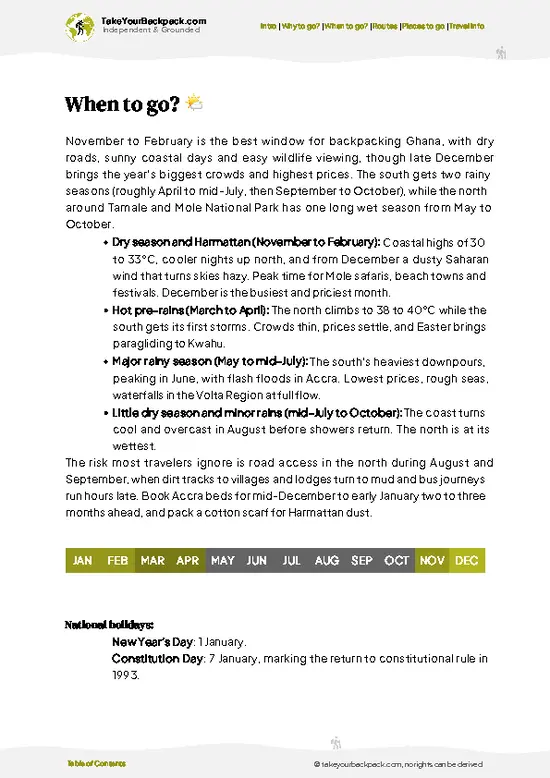
source: climatestotravel.comJANJanuary: highly recommended for travelingFEBFebruary: highly recommended for travelingMARMarch: highly recommended for travelingAPRApril: good for travelingMAYMay: fair for travelingJUNJune: fair for travelingJULJuly: fair for travelingAUGAugust: fair for travelingSEPSeptember: fair for travelingOCTOctober: fair for travelingNOVNovember: good for travelingDECDecember: highly recommended for traveling
when-to-go

✈️ The backpacker research shortcutGhana Travel Guide

An offline-friendly backpacking guide with optimized travel routes, ranked highlights, transport advice, and the best areas to stay.
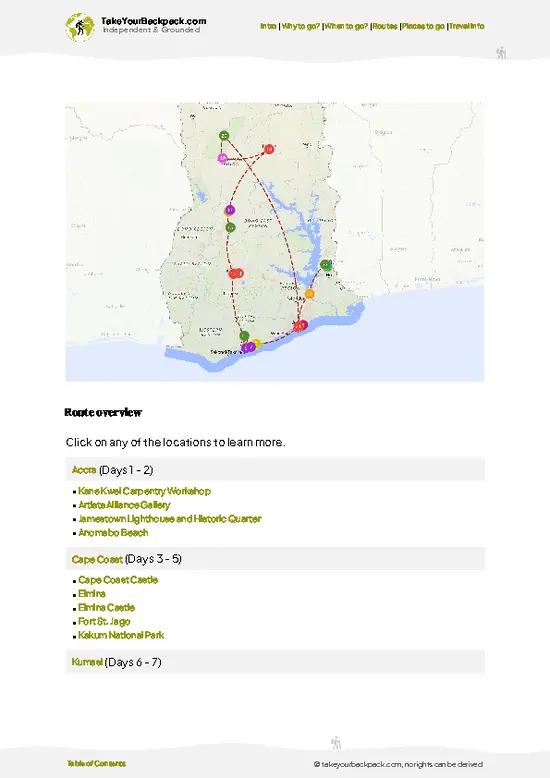
example page 0 from our offline Travel Guide for Ghana
example page 1 from our offline Travel Guide for Ghana
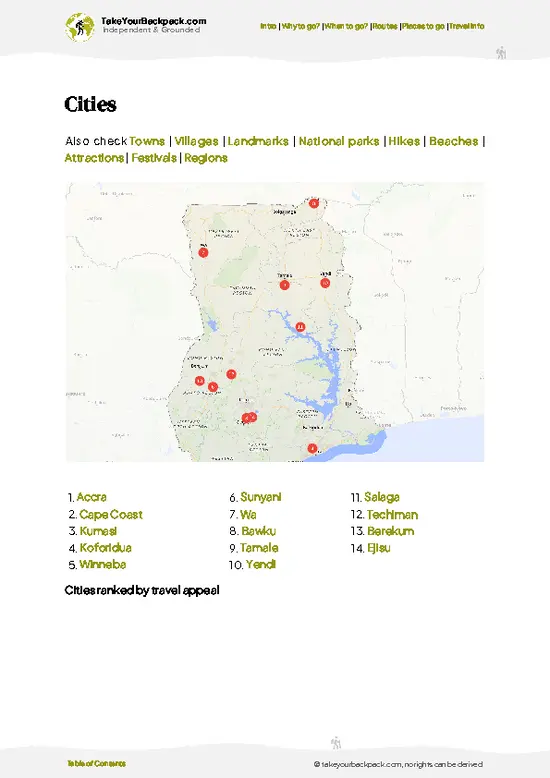
example page 2 from our offline Travel Guide for Ghana
example page 3 from our offline Travel Guide for Ghana
example page 4 from our offline Travel Guide for Ghana
example page 5 from our offline Travel Guide for Ghana
example page 6 from our offline Travel Guide for Ghana
example page 7 from our offline Travel Guide for Ghana
The digital guide (422 pages) contains:
111 highlights, ranked by travel appeal
Optimized 5, 10 & 15-day travel routes
Cities, national parks, landmarks, beaches
How to get around
Offline-friendly for travel without Wi-Fi
👉 Click to see all 30+ guide features

📅 Plan smarter in minutes, not weeks
Month by month travel advice
Festivals & national holidays
Budget expectations

🗺️ Go to the right places, skip the overrated ones
Honest pros & cons of destinations
Top hikes, parks & viewpoints
Lesser-known places most travelers miss
Clear “worth it vs skip it” guidance

🛏️ Travel smoothly without rookie mistakes
Best areas to stay
Transport systems explained simply
Common scams & safety advice
SIM cards, money & practical tips

🌍 Understand the country, not just visit it
Culture & traditions
52 Essential phrases & customs
Festivals worth planning around
Traveler-friendly historical context
Insights that make places more meaningful

📱 Built for real travel conditions
Fully downloadable PDF
Works completely offline
Optimized for phone use
Useful in remote areas & buses
Everything in one place
Save weeks of stressful planning
Get instant access to your full guide. 30‑day money-back guarantee.


By proceeding you agree to our terms.
Sent to your inbox immediately after payment • 100% Secure Checkout
Best Backpacking Travel Advisor 2025 tourism awardBest Backpacking
Travel Advisor
2025
What others say about Take Your Backpack Guides:
⭐⭐⭐⭐⭐
Fantastic, amazing amount of information!
⭐⭐⭐⭐⭐
My goodness this is amazing, it's what I've been looking for hats off too you!
⭐⭐⭐⭐⭐
I think this is absolutely BRILLIANT
⭐⭐⭐⭐
Very complete and informative. It's still missing places, but I gotta to commend you
⭐⭐⭐⭐⭐
This is truly amazing, thank you, can't wait to explore it with my kids!
⭐⭐⭐⭐⭐
Awesome resource, thank you!
⭐⭐⭐⭐⭐
This is amazing! Can't wait to explore the ones I haven't seen
⭐⭐⭐⭐
I love this! Well done, great idea.
⭐⭐⭐⭐⭐
Thanks for taking the time to make this gem!
⭐⭐⭐⭐⭐
This might be the best website I've ever seen.
⭐⭐⭐⭐⭐
Congratulations, and thank you so much for your work; it's incredibly valuable.
⭐⭐⭐⭐
In all seriousness I think you did a great job pointing out the important spots
⭐⭐⭐⭐⭐
10/10 very good
⭐⭐⭐⭐⭐
As someone who's only just starting to visit regularly this is awesome, thank you.
⭐⭐⭐⭐
Thank you very much! I'm going to visit my dad, it's going to be very useful!
⭐⭐⭐⭐⭐
This is really cool! We'll be travelling for the first time and this definitely come in handy.
⭐⭐⭐⭐⭐
You are now our minister of culture, congratulations 👨‍💼
⭐⭐⭐⭐⭐
Just wanted to tell you that this is a pearl! Going to follow your recommendations.
⭐⭐⭐⭐⭐
This is so cool. I'll definitely be using the resource for my travels soon.
⭐⭐⭐⭐⭐
This is very impressive! Good work.
⭐⭐⭐⭐⭐
This is an amazing and informative site. Very well done!

🛏️ Where to stay?Choosing the right base

In Tamale, the backpacker sweet spot is the central area around the Tamale Central Market and the nearby neighborhoods stretching toward the Tamale Teaching Hospital. This zone nails the balance between safety, social buzz, and budget-friendly options. It’s where you’ll find the most hostels and guesthouses catering to solo travelers and those watching their wallets. The vibe here is lively but manageable—think local markets humming with activity, street food stalls serving up spicy waakye, and enough fellow travelers to swap stories without feeling like a tourist trap.

Compared to the outskirts … read more 👉
In Tamale, the backpacker sweet spot is the central area around the Tamale Central Market and the nearby neighborhoods stretching toward the Tamale Teaching Hospital. This zone nails the balance between safety, social buzz, and budget-friendly options. It’s where you’ll find the most hostels and guesthouses catering to solo travelers and those watching their wallets. The vibe here is lively but manageable—think local markets humming with activity, street food stalls serving up spicy waakye, and enough fellow travelers to swap stories without feeling like a tourist trap.

Compared to the outskirts or more residential zones, this central cluster offers a clear advantage: you’re close to transport hubs and eateries, which means less time and money spent on taxis or long walks. The streets are well-trafficked, which ups safety without sacrificing authenticity. Other parts of Tamale can feel quieter or less connected, which might suit some, but for a backpacker looking to plug into the city’s pulse without breaking the bank or risking sketchy areas, this is the strategic base. You’re trading a bit of peace for access and community—and that’s a trade worth making when you want to maximize your experience.

🚌 Getting aroundHow to get around Tamale

Tamale moves at its own rhythm—less about strict timetables and more about a pulse you catch by watching the locals. It’s a city where the flow is flexible, shaped by market hours, mosque calls, and the ebb of daily errands. You won’t find a clock dictating every step, but you will find a system that rewards those who read between the lines: a blend of informal networks and practical shortcuts. Here, time, money, and comfort are constantly in negotiation, and understanding the trade-offs is your ticket to mastering the city’s transit game.


  • Walking: The ultimate budget option and the best way to soak in Tamale’s street life. It’s free, obviously, but also the slowest—expect 20 to 30 minutes to cross central neighborhoods. Comfort depends on the weather; midday heat can be punishing, so
read more 👉
Tamale moves at its own rhythm—less about strict timetables and more about a pulse you catch by watching the locals. It’s a city where the flow is flexible, shaped by market hours, mosque calls, and the ebb of daily errands. You won’t find a clock dictating every step, but you will find a system that rewards those who read between the lines: a blend of informal networks and practical shortcuts. Here, time, money, and comfort are constantly in negotiation, and understanding the trade-offs is your ticket to mastering the city’s transit game.


  • Walking: The ultimate budget option and the best way to soak in Tamale’s street life. It’s free, obviously, but also the slowest—expect 20 to 30 minutes to cross central neighborhoods. Comfort depends on the weather; midday heat can be punishing, so mornings and late afternoons are your sweet spots.


  • Tro-Tro (Shared Minibus): The backbone of Tamale’s public transit. Runs roughly from 6 AM to 9 PM, fares hover around 1 to 2 Ghanaian cedis. It’s cheap and relatively quick, but expect cramped conditions and frequent stops. The schedule is loose—vehicles leave when full, so timing can be unpredictable. Comfort is minimal, but the price and speed make it a no-brainer for budget travelers.


  • Motorbike Taxi (Okada): When time is tight and you want to cut through traffic, Okadas are your go-to. They operate 24/7, with fares starting at about 3 cedis for short trips. Speed is their advantage, but comfort and safety take a hit—helmet use varies, and the ride can be bumpy. Great for quick hops but not for long hauls or if you’re carrying heavy gear.


  • Shared Taxi (Car): Slightly pricier than tro-tros, around 5 to 10 cedis depending on distance, but faster and more comfortable. These run on main routes and leave when full, so you might wait a bit. They’re a solid middle ground if you want to save time without splurging on private taxis.


  • Private Taxi: The comfort kingpin, offering door-to-door service with air conditioning and space for luggage. Expect to pay 20 cedis or more for typical city rides. It’s the fastest and most comfortable option, but it eats into your budget quickly. Best reserved for airport transfers or when you’re running on a tight schedule.

👛 Costs (as of 25 October 2025)How expensive it really is

Backpacking in Tamale, Ghana, offers a clear trade-off between cost and comfort, with prices reflecting the city’s developing infrastructure and local lifestyle. Here’s the breakdown of what you’re likely to spend daily as an independent traveler:
  • Dorm Accommodation (High Season): Expect to pay around $8 to $12 per night. High season sees a slight bump due to demand, but options remain basic—think simple beds, shared bathrooms, and limited amenities.
  • Dorm Accommodation (Off-Season): Prices drop to about $5 to $8. Fewer tourists mean better bargaining power, but facilities stay modest, so don’t expect luxury.
  • Meals: Local eateries serve hearty meals for $2 to $4 each. Street food is even cheaper, often under $1.50, but if you want a mix of local and occasional Western-style dishes, budget
read more 👉
Backpacking in Tamale, Ghana, offers a clear trade-off between cost and comfort, with prices reflecting the city’s developing infrastructure and local lifestyle. Here’s the breakdown of what you’re likely to spend daily as an independent traveler:
  • Dorm Accommodation (High Season): Expect to pay around $8 to $12 per night. High season sees a slight bump due to demand, but options remain basic—think simple beds, shared bathrooms, and limited amenities.
  • Dorm Accommodation (Off-Season): Prices drop to about $5 to $8. Fewer tourists mean better bargaining power, but facilities stay modest, so don’t expect luxury.
  • Meals: Local eateries serve hearty meals for $2 to $4 each. Street food is even cheaper, often under $1.50, but if you want a mix of local and occasional Western-style dishes, budget around $6 to $10 daily.
  • Local Transport: Shared tro-tros (minibuses) and motorbike taxis dominate. A typical ride costs between $0.30 and $1.50 depending on distance. Budget $2 to $4 for daily hopping around.
  • City Transport Pass: Tamale doesn’t have a formal city transport pass system yet, so individual fares apply. This means you pay per ride, which can add up if you’re moving frequently.
  • Basic Activities/Entry Fees: Cultural sites and markets usually have minimal or no entry fees, around $1 to $3 if charged. Guided tours or special events can push this higher, but casual exploration stays affordable.
  • Miscellaneous Expenses: Think bottled water, occasional snacks, phone credit, or small tips. Around $2 to $5 daily covers these extras comfortably.

All told, a realistic daily budget for backpacking in Tamale ranges from about $15 on a shoestring to $30 if you lean toward a bit more comfort and convenience. This city rewards those who embrace simplicity and local rhythms—spending less often means a more authentic experience rather than a stripped-down one.


source: ghana.travel
⚠️ Prices can change and everyone travels differently, so take this as a rough guide. Hope it helps you plan your adventure!

🚌 Day tripsBest day trips from Tamale

Tamale, Ghana, is a fantastic launchpad for day trips that blend culture, adventure, and local flavor. Here are some standout options that will enrich your experience without draining your wallet.

Kintampo Waterfalls
A two-hour bus ride from Tamale, Kintampo Waterfalls is a refreshing escape. The cascading waters create a serene atmosphere perfect for a picnic or a quick dip. The area is less commercialized than other tourist spots, allowing you to connect with nature and locals alike. Bring a packed lunch and some water shoes; the rocks can be slippery. Aim for the dry season, when the water flow is manageable, and avoid weekends to dodge the crowds.
👉 Explore Kintampo Waterfalls

Mole National Park
Just a three-hour journey from Tamale, Mole National Park offers a chance to see wildlife … read more 👉
Tamale, Ghana, is a fantastic launchpad for day trips that blend culture, adventure, and local flavor. Here are some standout options that will enrich your experience without draining your wallet.

Kintampo Waterfalls
A two-hour bus ride from Tamale, Kintampo Waterfalls is a refreshing escape. The cascading waters create a serene atmosphere perfect for a picnic or a quick dip. The area is less commercialized than other tourist spots, allowing you to connect with nature and locals alike. Bring a packed lunch and some water shoes; the rocks can be slippery. Aim for the dry season, when the water flow is manageable, and avoid weekends to dodge the crowds.
👉 Explore Kintampo Waterfalls

Mole National Park
Just a three-hour journey from Tamale, Mole National Park offers a chance to see wildlife in their natural habitat. You can spot elephants, antelopes, and various bird species on a guided walking safari. The park’s entrance fee is reasonable, and you can often find local guides who know the best spots. The dry season from November to April is ideal for wildlife viewing, but be prepared for the heat. A common mistake is underestimating the need for water and sun protection—bring both!
👉 Explore Mole National Park

Tamale Market Tour
Staying local? Spend a morning exploring the bustling Tamale Central Market. It’s a sensory overload of colors, sounds, and smells. You’ll find everything from spices to textiles, and the prices are incredibly low. A guided tour can help you navigate the maze and introduce you to local vendors. Aim for early morning to avoid the heat and crowds. Don’t miss out on trying some street food; just be cautious about hygiene.


Salaga
A quick 45-minute drive from Tamale, Salaga is rich in history and culture. Once a major slave trade hub, it offers a glimpse into Ghana’s past. Visit the local museum and engage with the community to learn about their traditions. The trip is budget-friendly, with minimal transport costs. The best time to visit is during the dry season when the roads are more accessible. First-timers often overlook the importance of local customs, so be respectful and open-minded.
👉 Explore Salaga

Gambaga
About an hour from Tamale, Gambaga is known for its intriguing “witches’ camp.” Here, women accused of witchcraft find refuge. Visiting offers a unique perspective on local beliefs and social issues. Engage with the residents to understand their stories, but approach the topic sensitively. The trip is inexpensive, and the best time to go is during the cooler months. A common mistake is rushing through; take your time to absorb the experience.
Want to know what more Ghana offers?
The Ghana Travel Guide describes 111 highlights, from cities to national parks, from beaches to hikes

Get the Travel Guide -

🍲 FoodWhat to Eat & Drink

In Tamale, food is a vibrant tapestry of flavors that tells the story of the North. Start with fufu, a starchy staple made from cassava or plantains, often paired with a rich, spicy soup. The light soup with goat or chicken is a must-try, bursting with local spices that dance on your palate.

Street food is where the magic happens. Vendors line the bustling markets, serving up waakye—rice and beans—often topped with fried plantains and a spicy sauce. Grab a bowl and enjoy it while mingling with locals; it’s a communal experience that’s as much about the food as it is about connection.

When it comes to drinks, don’t miss out on sobolo, a refreshing hibiscus drink that’s both tart and sweet. It’s perfect for cooling off in the heat.

Eating customs here are relaxed. You’ll often see people … read more 👉
In Tamale, food is a vibrant tapestry of flavors that tells the story of the North. Start with fufu, a starchy staple made from cassava or plantains, often paired with a rich, spicy soup. The light soup with goat or chicken is a must-try, bursting with local spices that dance on your palate.

Street food is where the magic happens. Vendors line the bustling markets, serving up waakye—rice and beans—often topped with fried plantains and a spicy sauce. Grab a bowl and enjoy it while mingling with locals; it’s a communal experience that’s as much about the food as it is about connection.

When it comes to drinks, don’t miss out on sobolo, a refreshing hibiscus drink that’s both tart and sweet. It’s perfect for cooling off in the heat.

Eating customs here are relaxed. You’ll often see people sharing meals, so don’t hesitate to join in. Just remember to eat with your right hand—it’s a sign of respect. Embrace the local vibe, and you’ll find that every bite is a step deeper into the heart of Tamale.

🛡️ SafetyTraveler Safety Guide

Tamale is generally safe for backpackers, but a few situational awareness tips can enhance your experience. Stick to well-lit areas at night, especially if you’re solo. The city has a friendly vibe, but it’s wise to avoid wandering too far from the main streets after dark.

While serious scams are rare, be cautious with taxi drivers. Agree on a fare before you hop in; some may try to inflate prices for tourists. Street vendors are usually straightforward, but keep an eye on your belongings in crowded markets.

Annoyances can include persistent sellers or locals who may approach you for a chat, often with an ulterior motive. A polite but firm “no, thank you” usually does the trick. Carry yourself confidently and engage with locals; they’re often eager to share their culture. This approach not only keeps you safe but enriches your journey.

Other Ghanaian towns near Tamale

Explore more nearby:

  • Daboya—Shea butter production, white clay mosque, river crossing| 62 km away
  • Damongo—Mole Park access, Gonja heritage, forest edge| 114 km away
  • Bimbilla—Nanumba chieftaincy, market days, rural crossroads| 116 km away

💡 Not sure where to go next?
Create a personalized itinerary for Ghana including Tamale and the places that fit your trip.

Generate my itinerary

👉 Discover all towns

Or checkout all Ghana has to offer (think cities, towns, villages, national parks, hikes, beaches, festivals)
Country photo of Ghana

We 💚 feedbackParting advice and final tips

Tamale is a vibrant hub of culture and warmth, where you can dive into the rich tapestry of Dagbon traditions. The local markets are a sensory feast, and the people are genuinely welcoming. However, be prepared for the heat; it can be relentless. If you’re not a fan of sweltering days, plan your outings early or late. Embrace the rhythm, and you’ll find it’s worth every bead of sweat.

✈️ When did I visit Ghana?
Ghana I visited in December 2024, starting in Accra following the coast, then up north to Mole National park to finish in the Volta Region.

✍️ Help improve this page!
The information on this page is based on my own backpacking experience in Ghana, supplemented with up-to-date research and feedback from other travelers. Travel details can change, so if you notice anything outdated or incomplete, feel free to let me know.


🙋‍♂️ Give feedback

👋 Meet the founderWho’s Behind Take Your Backpack?

Johan, backpacker and founder of TakeYourBackpackHi, I’m Johan (Netherlands 🇳🇱), the creator of TakeYourBackpack. Over the past decade, I’ve backpacked through 80+ countries across six continents, gaining extensive experience with independent travel, long-term trips, and overland routes.

This site is built on a combination of firsthand travel experience and carefully curated insights from other backpackers. Many guides are based on places I’ve personally visited, while others bring together tips, observations, and practical advice shared by trusted travelers I’ve met along the way.

The goal is to provide realistic, experience-driven guidance — not generic itineraries — so you can explore destinations with better context, clearer expectations, and more confidence.

Get full Ghana guide •
Instant download • 111 highlights • Full Offline guide