×

Ghana🇬🇭 | attractionsKane Kwei Carpentry Workshopfantasy coffins, woodworking studio, custom designs | things to do and best time to go

Explore Nubuke FoundationExplore Ada Foah Beach

Backpacking in Kane Kwei Carpentry Workshop
👀 For curious travelersattraction ranked #16
By Johan Kruseman 🇳🇱 | Updated May 26, 2026

A rasp of saw against wood, the sharp tang of lacquer, and the low hum of conversation in Ga and English—this is what hits you first, not the Instagrammed riot of color. You’re standing in a sunlit Accra workshop, sweat beading on your neck, watching a coffin shaped like a chili pepper take form under the hands of a craftsman who barely glances up. This is the Kane Kwei Carpentry Workshop, tucked into Teshie, a coastal suburb of Ghana’s capital.

Let’s cut through the myth: you’re not coming here for a polished museum or a crowd-pleasing photo op. The wow-factor is real, but it’s not about spectacle—it’s the jolt of seeing death and artistry collide, Ghana-style, in a place that feels more like a family garage than a tourist attraction. Yes, it’s accessible by tro-tro or taxi, and yes, you’ll pay a small fee for a tour, but you’ll likely be the only foreigner in sight. There’s no air-conditioning, no curated narrative, just raw creativity and a slice of living tradition. Compared to Ghana’s castles or national parks, this place is intimate, weird, and deeply human—less bucket-list, more gut-punch. If you’re after something real, this is it.

Discover everything you want to know in the 📖 Ghana Travel Guide.


Get your Ghana guide
111 ranked highlights, routes & tips, works offline (422 pages)
Loading the map 🌍
CLICK TO FILTER
cities
towns
villages
landmarks
national parks
hikes
beaches
attractions
festivals
regions
SHOW COUNTRY’S BESTSHOW ALL

✨ Why go?
Ranked #16 attraction in Ghana
Why visitors keep coming back

The Kane Kwei Carpentry Workshop in Ghana isn’t just another stop on the tourist checklist—it’s a full-throttle dive into a world where craftsmanship meets cultural storytelling. Sure, you’ll find crowds here, especially during peak hours, and yes, the prices for the custom coffins might make you blink twice if you’re used to budget backpacking. But this place is worth every cedi and every minute of your time. Why? Because these coffins aren’t just containers for the dead—they’re vibrant, living symbols of identity and celebration in Ghanaian culture. The workshop’s founder, Seth Kane Kwei, revolutionized funerary art, turning coffins into bold, personalized statements that capture the essence of the deceased’s life, from fish to airplanes. Watching artisans carve and assemble these masterpieces … read more 👉
The Kane Kwei Carpentry Workshop in Ghana isn’t just another stop on the tourist checklist—it’s a full-throttle dive into a world where craftsmanship meets cultural storytelling. Sure, you’ll find crowds here, especially during peak hours, and yes, the prices for the custom coffins might make you blink twice if you’re used to budget backpacking. But this place is worth every cedi and every minute of your time. Why? Because these coffins aren’t just containers for the dead—they’re vibrant, living symbols of identity and celebration in Ghanaian culture. The workshop’s founder, Seth Kane Kwei, revolutionized funerary art, turning coffins into bold, personalized statements that capture the essence of the deceased’s life, from fish to airplanes. Watching artisans carve and assemble these masterpieces is like witnessing history and creativity collide in real time. For backpackers trekking through Ghana, this stop is a milestone—it’s where you move beyond the surface and connect with a tradition that’s as much about life as it is about death. The adrenaline rush comes from seeing something so unique and raw, a reminder that travel isn’t just about pretty views but about encountering stories that shake your perspective. Skip it, and you miss a core chapter of Ghana’s soul.
Want to include Kane Kwei Carpentry Workshop in your Ghana route?
Create a personalized Ghana itinerary that includes Kane Kwei Carpentry Workshop and the places that fit your trip — based on your travel style, budget, and available time. Get your route in seconds.

Generate my trip

💡 HighlightsTop highlights of Kane Kwei Carpentry Workshop

1. Witness the Birthplace of Fantasy Coffins
Forget the Instagram shots of brightly painted coffins shaped like chili peppers or Coca-Cola bottles—those are just the tip of the iceberg. The Kane Kwei Carpentry Workshop is ground zero for Ghana’s world-famous “fantasy coffins.” This isn’t a tourist sideshow; it’s a working shop where you’ll see sawdust, sweat, and the kind of creative bravado that turns a pineapple into a vessel for the afterlife. The real magic is watching the craftsmen translate a family’s story into wood and paint, right in front of you. It’s not sanitized for visitors—expect hammering, laughter, and the occasional power tool meltdown.


2. Meet the Artisans—No Filter, No Script
You’re not getting a rehearsed spiel or a bored guide here. The carpenters are the real deal: multi-generational, … read more 👉
1. Witness the Birthplace of Fantasy Coffins
Forget the Instagram shots of brightly painted coffins shaped like chili peppers or Coca-Cola bottles—those are just the tip of the iceberg. The Kane Kwei Carpentry Workshop is ground zero for Ghana’s world-famous “fantasy coffins.” This isn’t a tourist sideshow; it’s a working shop where you’ll see sawdust, sweat, and the kind of creative bravado that turns a pineapple into a vessel for the afterlife. The real magic is watching the craftsmen translate a family’s story into wood and paint, right in front of you. It’s not sanitized for visitors—expect hammering, laughter, and the occasional power tool meltdown.


2. Meet the Artisans—No Filter, No Script
You’re not getting a rehearsed spiel or a bored guide here. The carpenters are the real deal: multi-generational, fiercely proud, and happy to talk shop if you show genuine interest. Ask about their wildest commissions or how they learned the trade, and you’ll get stories that are better than any museum audio guide. This is where the Instagram version falls flat—no influencer can capture the charisma and candor of these craftsmen. If you’re lucky, you’ll catch an apprentice getting roasted for a rookie mistake, or a master carver sketching out a new design on the fly.


3. See the Workshop in Full Chaos Mode
This isn’t a sterile gallery. It’s a living, breathing workshop—half art studio, half construction zone. You’ll dodge planks, step over paint cans, and maybe get a little sawdust in your shoes. The energy is infectious. There’s a rhythm to the chaos: the whir of saws, the slap of paint, the banter in Ga and English. If you want to see creativity with its sleeves rolled up, this is it. No velvet ropes, no “do not touch” signs—just raw, unfiltered process.


4. The Gallery of Finished Coffins
Here’s where the spectacle hits you: a fleet of completed coffins shaped like fish, airplanes, sneakers, and even mobile phones. Each one is a punchline and a love letter rolled into one—equal parts humor, reverence, and technical wizardry. You’ll realize these aren’t just quirky art pieces; they’re deeply personal tributes, each with a backstory that’s as wild as the design. My personal favorite? The giant eagle coffin, wings outstretched, which manages to be both majestic and a little bit cheeky. It’s a reminder that death, here, is met with imagination, not fear.


5. Commission Your Own (If You Dare)
This isn’t just a look-but-don’t-touch operation. If you’re feeling bold—and have the budget—you can actually commission your own fantasy coffin. The process is collaborative, creative, and surprisingly emotional. Even if you’re not in the market for a custom casket, hearing how families dream up these designs is worth the visit alone. It’s a window into how Ghanaians celebrate life and legacy, with humor and heart.
Spotted a mistake or missing something? Contact us.

Things to do near Kane Kwei Carpentry Workshop

Ratings based on Tripadvisor reviews. When you book through this link, you support our work at no extra cost to you.

🌤️ When to go?When to go for the best experience


  • Weather: The best time to visit the Kane Kwei Carpentry Workshop is during Ghana’s dry season, from November to March. Expect less rain, which means fewer interruptions while you explore the intricate coffin-making process. The wet season, especially April to October, brings heavy downpours that can make travel and outdoor viewing a hassle.

  • Temperature: Temperatures hover between 24°C and 32°C (75°F to 90°F) year-round, but the dry season feels more comfortable with lower humidity. The wet season’s heat combined with humidity can be draining if you’re trekking around all day.

  • Daylight Hours: Ghana enjoys roughly 11 to 12 hours of daylight year-round, so timing your visit isn’t about daylight but more about avoiding rain and crowds.

  • Crowds: Tourist traffic peaks from December to February
read more 👉

  • Weather: The best time to visit the Kane Kwei Carpentry Workshop is during Ghana’s dry season, from November to March. Expect less rain, which means fewer interruptions while you explore the intricate coffin-making process. The wet season, especially April to October, brings heavy downpours that can make travel and outdoor viewing a hassle.

  • Temperature: Temperatures hover between 24°C and 32°C (75°F to 90°F) year-round, but the dry season feels more comfortable with lower humidity. The wet season’s heat combined with humidity can be draining if you’re trekking around all day.

  • Daylight Hours: Ghana enjoys roughly 11 to 12 hours of daylight year-round, so timing your visit isn’t about daylight but more about avoiding rain and crowds.

  • Crowds: Tourist traffic peaks from December to February when international travelers flock to Ghana. Visiting in November or March means fewer crowds, giving you a better chance to chat with artisans and watch the craft up close without feeling rushed.

  • Seasonal Activities: The dry season coincides with local festivals and market days, adding cultural layers to your visit. The workshop is more lively then, with artisans often showcasing new designs inspired by these events.

  • Price Fluctuations: Expect higher prices for tours and accommodations during the peak dry season months (December to February). Visiting in shoulder months like November or March can save you money without sacrificing the experience.


Pro-tip: Aim for late November or early March—dry enough for smooth travel, quiet enough to soak in the craft, and wallet-friendly enough to keep your trip smart.


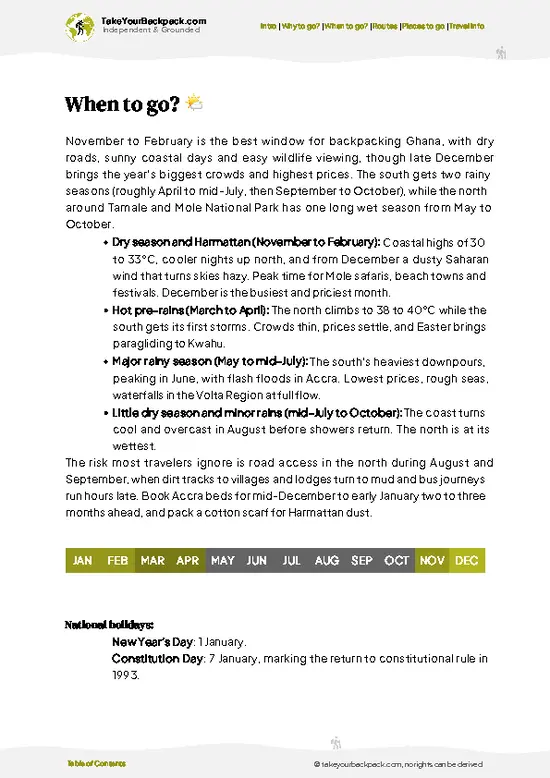
source: climatestotravel.comJANJanuary: highly recommended for travelingFEBFebruary: highly recommended for travelingMARMarch: excellent for travelingAPRApril: fair for travelingMAYMay: fair for travelingJUNJune: fair for travelingJULJuly: fair for travelingAUGAugust: fair for travelingSEPSeptember: fair for travelingOCTOctober: fair for travelingNOVNovember: excellent for travelingDECDecember: highly recommended for traveling
when-to-go

✈️ The backpacker research shortcutGhana Travel Guide

An offline-friendly backpacking guide with optimized travel routes, ranked highlights, transport advice, and the best areas to stay.
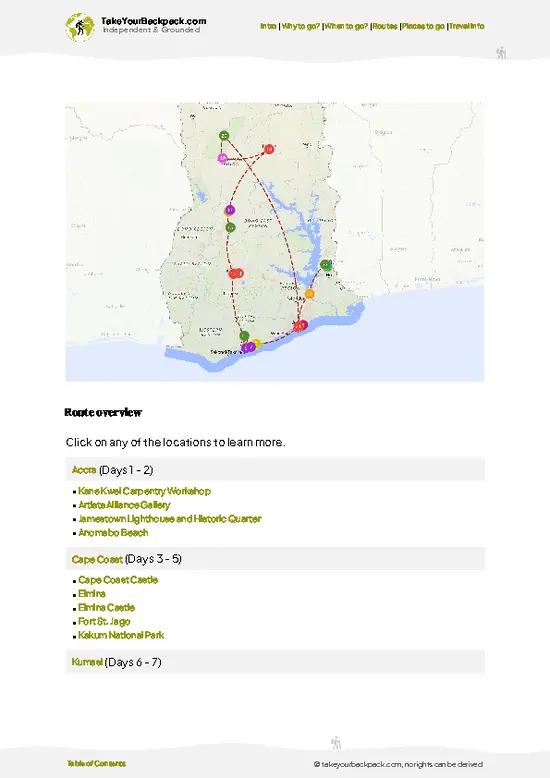
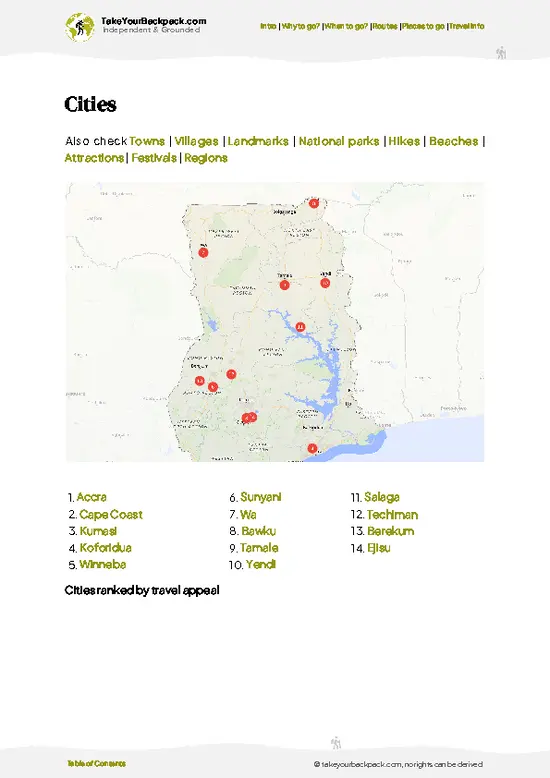
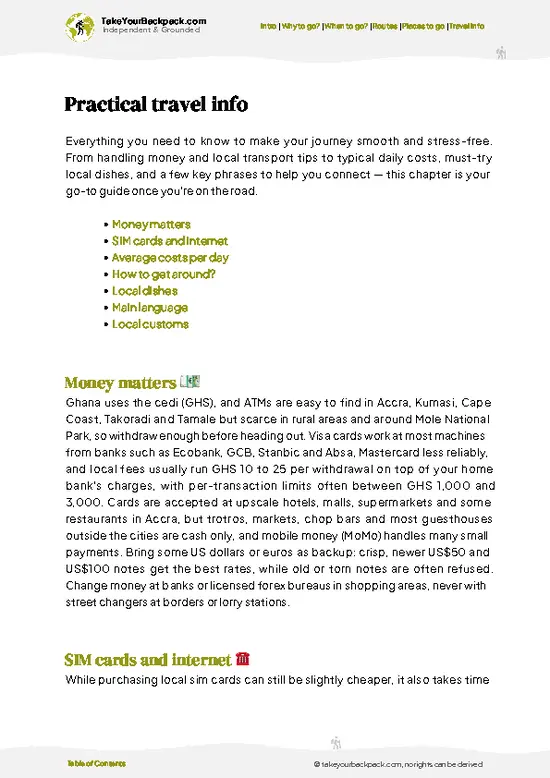
example page 0 from our offline Travel Guide for Ghana
example page 1 from our offline Travel Guide for Ghana
example page 2 from our offline Travel Guide for Ghana
example page 3 from our offline Travel Guide for Ghana
example page 4 from our offline Travel Guide for Ghana
example page 5 from our offline Travel Guide for Ghana
example page 6 from our offline Travel Guide for Ghana
example page 7 from our offline Travel Guide for Ghana
The digital guide (422 pages) contains:
111 highlights, ranked by travel appeal
Optimized 5, 10 & 15-day travel routes
Cities, national parks, landmarks, beaches
How to get around
Offline-friendly for travel without Wi-Fi
👉 Click to see all 30+ guide features

📅 Plan smarter in minutes, not weeks
Month by month travel advice
Festivals & national holidays
Budget expectations

🗺️ Go to the right places, skip the overrated ones
Honest pros & cons of destinations
Top hikes, parks & viewpoints
Lesser-known places most travelers miss
Clear “worth it vs skip it” guidance

🛏️ Travel smoothly without rookie mistakes
Best areas to stay
Transport systems explained simply
Common scams & safety advice
SIM cards, money & practical tips

🌍 Understand the country, not just visit it
Culture & traditions
52 Essential phrases & customs
Festivals worth planning around
Traveler-friendly historical context
Insights that make places more meaningful

📱 Built for real travel conditions
Fully downloadable PDF
Works completely offline
Optimized for phone use
Useful in remote areas & buses
Everything in one place
Save weeks of stressful planning
Get instant access to your full guide. 30‑day money-back guarantee.


By proceeding you agree to our terms.
Sent to your inbox immediately after payment • 100% Secure Checkout
Best Backpacking Travel Advisor 2025 tourism awardBest Backpacking
Travel Advisor
2025
What others say about Take Your Backpack Guides:
⭐⭐⭐⭐⭐
Fantastic, amazing amount of information!
⭐⭐⭐⭐⭐
My goodness this is amazing, it's what I've been looking for hats off too you!
⭐⭐⭐⭐⭐
I think this is absolutely BRILLIANT
⭐⭐⭐⭐
Very complete and informative. It's still missing places, but I gotta to commend you
⭐⭐⭐⭐⭐
This is truly amazing, thank you, can't wait to explore it with my kids!
⭐⭐⭐⭐⭐
Awesome resource, thank you!
⭐⭐⭐⭐⭐
This is amazing! Can't wait to explore the ones I haven't seen
⭐⭐⭐⭐
I love this! Well done, great idea.
⭐⭐⭐⭐⭐
Thanks for taking the time to make this gem!
⭐⭐⭐⭐⭐
This might be the best website I've ever seen.
⭐⭐⭐⭐⭐
Congratulations, and thank you so much for your work; it's incredibly valuable.
⭐⭐⭐⭐
In all seriousness I think you did a great job pointing out the important spots
⭐⭐⭐⭐⭐
10/10 very good
⭐⭐⭐⭐⭐
As someone who's only just starting to visit regularly this is awesome, thank you.
⭐⭐⭐⭐
Thank you very much! I'm going to visit my dad, it's going to be very useful!
⭐⭐⭐⭐⭐
This is really cool! We'll be travelling for the first time and this definitely come in handy.
⭐⭐⭐⭐⭐
You are now our minister of culture, congratulations 👨‍💼
⭐⭐⭐⭐⭐
Just wanted to tell you that this is a pearl! Going to follow your recommendations.
⭐⭐⭐⭐⭐
This is so cool. I'll definitely be using the resource for my travels soon.
⭐⭐⭐⭐⭐
This is very impressive! Good work.
⭐⭐⭐⭐⭐
This is an amazing and informative site. Very well done!

🛏️ Where to stay?Best areas and accommodation options

Staying near the Kane Kwei Carpentry Workshop in Teshie means diving into a part of Accra that’s raw, real, and far from the polished tourist corridors. Forget the glossy, sanitized spots downtown—this is where you get a pulse on everyday Ghanaian life. The best areas for backpackers are Teshie itself and the neighboring Nungua. These neighborhoods aren’t about luxury; they’re about authenticity, community, and a vibe that’s both gritty and welcoming.

Safety here is relative—stick to well-trodden streets, especially after dark, and you’ll be fine. The locals are friendly but keep your wits about … read more 👉
Staying near the Kane Kwei Carpentry Workshop in Teshie means diving into a part of Accra that’s raw, real, and far from the polished tourist corridors. Forget the glossy, sanitized spots downtown—this is where you get a pulse on everyday Ghanaian life. The best areas for backpackers are Teshie itself and the neighboring Nungua. These neighborhoods aren’t about luxury; they’re about authenticity, community, and a vibe that’s both gritty and welcoming.

Safety here is relative—stick to well-trodden streets, especially after dark, and you’ll be fine. The locals are friendly but keep your wits about you. These areas aren’t flooded with tourists, so you won’t find the usual backpacker bubble. Instead, you’ll meet artisans, traders, and young creatives who make this place hum. Social spots are modest but lively—think street food stalls, small bars, and local hangouts where you can swap stories and soak up the atmosphere without breaking the bank.

Budget travelers love this zone because it’s affordable and offers a genuine slice of Ghanaian culture. It’s not about polished comfort; it’s about connection. If you want to understand the soul behind the Kane Kwei workshop’s famous fantasy coffins, staying here puts you right in the middle of the story, not just on the sidelines.

👛 Costs (as of 3 October 2025)How expensive it really is

As of the most recent estimates, visiting the Kane Kwei Carpentry Workshop in Accra, Ghana, typically involves participating in a half-day tour priced between €90 and €120. This tour often includes transportation, a guided visit to the workshop, and sometimes additional activities like a coastal beachfront lunch. Please note that these prices are subject to change and may vary based on the tour operator and specific inclusions.

source: kanekwei.com
⚠️ Prices can change and everyone travels differently, so take this as a rough guide. Hope it helps you plan your adventure!

Other Ghanaian attractions near Kane Kwei Carpentry Workshop

Explore more nearby:


💡 Not sure where to go next?
Create a personalized itinerary for Ghana including Kane Kwei Carpentry Workshop and the places that fit your trip.

Generate my itinerary

👉 Discover all attractions

Or checkout all Ghana has to offer (think cities, towns, villages, national parks, hikes, beaches, festivals)
Country photo of Ghana

We 💚 feedbackWhat to keep in mind

The Kane Kwei Carpentry Workshop isn’t some polished tourist showroom—it’s a working space where creativity bursts out in the form of coffins shaped like everything from airplanes to fish. It’s raw, loud, and a bit chaotic, which means it’s not for those expecting a quiet museum vibe. But if you want to see how art and tradition collide in a way that’s unapologetically real, this place delivers a punch you won’t forget. Just brace yourself for the noise and the crowds.

✈️ When did I visit Ghana?
Ghana I visited in December 2024, starting in Accra following the coast, then up north to Mole National park to finish in the Volta Region.

✍️ Help improve this page!
The information on this page is based on my own backpacking experience in Ghana, supplemented with up-to-date research and feedback from other travelers. Travel details can change, so if you notice anything outdated or incomplete, feel free to let me know.


🙋‍♂️ Give feedback

👋 Meet the founderWho’s Behind Take Your Backpack?

Johan, backpacker and founder of TakeYourBackpackHi, I’m Johan (Netherlands 🇳🇱), the creator of TakeYourBackpack. Over the past decade, I’ve backpacked through 80+ countries across six continents, gaining extensive experience with independent travel, long-term trips, and overland routes.

This site is built on a combination of firsthand travel experience and carefully curated insights from other backpackers. Many guides are based on places I’ve personally visited, while others bring together tips, observations, and practical advice shared by trusted travelers I’ve met along the way.

The goal is to provide realistic, experience-driven guidance — not generic itineraries — so you can explore destinations with better context, clearer expectations, and more confidence.

Get full Ghana guide •
Instant download • 111 highlights • Full Offline guide