v2.webp)
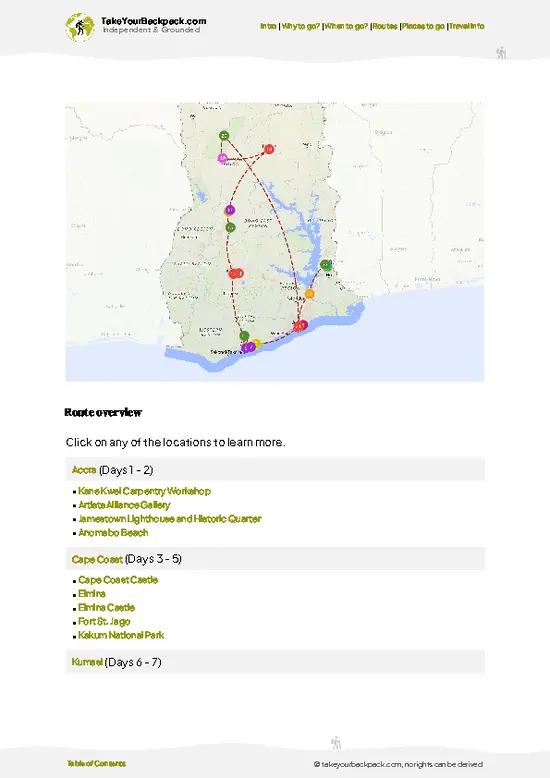
- The Kente and Adinkra textile displays: Woven strips of Asante and Ewe kente sit behind glass, and the color logic is easy to read once a guide explains it: gold for status, green for renewal, blue for harmony. Adinkra cloth stamped with symbols like Gye Nyame (“except God”) shows how proverbs became pattern.
- Asante gold weights and regalia: Tiny brass figures once used to measure gold dust, shaped as animals, tools and proverbs. Hold your face close to the case and you can see the lost-wax casting marks. They are small, odd and charming, and they explain how trade worked long before banks.
- Carved stools: The stool is the seat of Akan authority, and the collection shows the variety of forms, from simple stools to elaborate ones with carved supports. Each design carries meaning, and the dark
- The Kente and Adinkra textile displays: Woven strips of Asante and Ewe kente sit behind glass, and the color logic is easy to read once a guide explains it: gold for status, green for renewal, blue for harmony. Adinkra cloth stamped with symbols like Gye Nyame (“except God”) shows how proverbs became pattern.
- Asante gold weights and regalia: Tiny brass figures once used to measure gold dust, shaped as animals, tools and proverbs. Hold your face close to the case and you can see the lost-wax casting marks. They are small, odd and charming, and they explain how trade worked long before banks.
- Carved stools: The stool is the seat of Akan authority, and the collection shows the variety of forms, from simple stools to elaborate ones with carved supports. Each design carries meaning, and the dark polished wood is worth a slow look.
- Masks and ritual sculpture: Carved figures and masks from different parts of Ghana and West Africa fill several rooms. The expressions range from calm to unsettling, and the labels connect each piece to a ceremony or community.
- Archaeological and ancient material: Pottery, tools and terracotta pieces point to settlements across the country long before colonial contact. It is a quieter room, and a good one if you want context for the forts you may visit on the coast.
- Musical instruments: Drums, xylophones (gyil) and horns are displayed with their regional origins. The Ewe and Dagomba drum traditions are the ones to look for, and you will start recognizing the sounds when you hear drumming outside the museum.
- Colonial-era and slave trade history exhibits: Objects and documents here cover the Atlantic trade and the colonial period. The mood is sober, and it pairs well with a later trip to Cape Coast Castle.
Spotted a mistake or missing something? Contact us.

Accra Guided City Tour: Cultural and Historical Experience

Accra Detailed City Tour

10 Days Ghana Cultural and Heritage Trip

Know Ghana in 4 hrs - Accra City Tour

Ghana Heritage Tours - Beyond The Return

Full-Day Private Culture and History Tour of Accra

Experience Authentic Ghana in a Personalized Accra City Tour

Accra City Tour Experience

A 9 Days Experience Of The Motherland Ghana


 Best Backpacking
.jpg) Hi, I’m Johan (Netherlands 🇳🇱), the creator of TakeYourBackpack. Over the past 3 decades, I’ve backpacked through 90+ countries across six continents, gaining extensive experience with independent travel, long-term trips, and overland routes.
Hi, I’m Johan (Netherlands 🇳🇱), the creator of TakeYourBackpack. Over the past 3 decades, I’ve backpacked through 90+ countries across six continents, gaining extensive experience with independent travel, long-term trips, and overland routes.