×

Ghana🇬🇭 | citiesSunyanitree-lined avenues, regional markets, administrative center, nearby reserves | things to do and best time to go

Explore TechimanExplore Bawku

Backpacking in Sunyani
🌟 Highlightcity ranked #8
By Johan Kruseman 🇳🇱 | Updated June 4, 2026

Picture this: you’ve landed in Sunyani, Ghana, and you’re staring down the classic traveler’s fork in the road—do you splurge on a private taxi to shave hours off your journey, or do you squeeze into a tro-tro, save cash, and soak up the local rhythm (and maybe a stranger’s elbow)? This choice isn’t just about transport; it’s about how you want to experience the Brong-Ahafo region, with Sunyani sitting quietly at its heart, a half-day’s ride northwest of Kumasi. Sunyani isn’t Accra’s wild cousin or Kumasi’s cultural heavyweight; it’s a mellow, tree-lined city where the pace slows and the smiles come easy. The city’s market pulses with daily life, and the colonial-era clocktower is worth a look, but don’t expect blockbuster museums or a backpacker bar crawl. You’ll find clean streets, low-key nightlife, and a sense of safety that’s rare in bigger cities, but you’ll work a bit harder to meet fellow travelers—this is a place for those who like their adventures unscripted and their budgets intact.

Discover everything you want to know in the 📖 Ghana Travel Guide.


Get your Ghana guide
111 ranked highlights, routes & tips, works offline (424 pages)
Loading the map 🌍
CLICK TO FILTER
cities
towns
villages
landmarks
national parks
hikes
beaches
attractions
festivals
regions
SHOW COUNTRY’S BESTSHOW ALL

✨ Why go?
Ranked #8 city in Ghana
Why Sunyani should be on your travel list

Sunyani is a strategic stop for backpackers weaving through Ghana. It offers a unique blend of affordability and authenticity that’s hard to beat. The hostels here are not just budget-friendly; they foster a community vibe, making it easy to connect with fellow travelers. You’ll find delicious local food at every corner, from street vendors to cozy eateries, ensuring you fuel up without breaking the bank.

The city is walkable, allowing you to soak in the local life without the hassle of transport. Plus, it serves as a basecamp for day trips to nearby attractions, maximizing your time without the need for extensive travel. When the sun sets, the nightlife is low-key but lively, perfect for unwinding after a day of exploration.

If you’re looking for a place that balances comfort and value, … read more 👉
Sunyani is a strategic stop for backpackers weaving through Ghana. It offers a unique blend of affordability and authenticity that’s hard to beat. The hostels here are not just budget-friendly; they foster a community vibe, making it easy to connect with fellow travelers. You’ll find delicious local food at every corner, from street vendors to cozy eateries, ensuring you fuel up without breaking the bank.

The city is walkable, allowing you to soak in the local life without the hassle of transport. Plus, it serves as a basecamp for day trips to nearby attractions, maximizing your time without the need for extensive travel. When the sun sets, the nightlife is low-key but lively, perfect for unwinding after a day of exploration.

If you’re looking for a place that balances comfort and value, Sunyani fits the bill. It’s not just a stopover; it’s a chance to experience the heart of Ghana while keeping your travel plans flexible.
Get the complete Travel Guide for Ghana
Everything organized for offline planning — routes, highlights, costs & tips

See what’s inside 👉

Get the Travel Guide -

💡 HighlightsPlaces and moments you shouldn't skip

  • Sunyani Central Market — The beating heart of the city: stalls stacked with produce, fresh grilled fish and street food, kente and wax prints, cheap phone credit, and local craftsmen. Best place to watch daily life, haggle like a local, and score cheap meals and transport connections.
  • Sunyani Children’s Park & Zoo — A small municipal park with playgrounds, picnic spots and a modest collection of native animals and birds. It’s a relaxed spot for an afternoon walk, people-watching, and getting a quick feel for local family life without leaving the city.
  • University of Energy and Natural Resources (UENR) campus — Green campus with tree-lined paths, student cafés and occasional cultural events or public lectures. Walking the grounds gives a calm, local perspective on contemporary Bono life
read more 👉
  • Sunyani Central Market — The beating heart of the city: stalls stacked with produce, fresh grilled fish and street food, kente and wax prints, cheap phone credit, and local craftsmen. Best place to watch daily life, haggle like a local, and score cheap meals and transport connections.
  • Sunyani Children’s Park & Zoo — A small municipal park with playgrounds, picnic spots and a modest collection of native animals and birds. It’s a relaxed spot for an afternoon walk, people-watching, and getting a quick feel for local family life without leaving the city.
  • University of Energy and Natural Resources (UENR) campus — Green campus with tree-lined paths, student cafés and occasional cultural events or public lectures. Walking the grounds gives a calm, local perspective on contemporary Bono life and is good for meeting students, finding affordable meals, and exploring small campus exhibits.
  • Bono (Brong-Ahafo) Regional Museum — Local artifacts, traditional regalia, and displays on the history and chieftaincy culture of the region. Worth a stop to connect Sunyani to the larger cultural and historical context of Bono people and see items you won’t find in guidebooks.
Nearby day-trip highlights worth pairing with Sunyani include Wenchi Crater Lake (my personal favorite), the Kintampo Waterfalls, and Bui National Park/Bui Dam.
Spotted a mistake or missing something? Contact us.

🏘️ NeighborhoodsKey areas and districts to know

Sunyani, the capital of the Brong-Ahafo Region, offers a unique blend of culture and accessibility for backpackers. Here’s how its neighborhoods stack up:

Central Sunyani: This is the heartbeat of the city. You’ll find local markets, eateries, and a vibrant street life. Costs are moderate, and it’s highly walkable. Perfect for short stays, you can soak in the local vibe and easily access transport options for day trips.

Abesim: A quieter suburb just a short ride from the center. It’s more residential, offering a laid-back atmosphere. Ideal for longer stays, you’ll find affordable guesthouses and a chance to connect with locals. Transport is less frequent, but the peace is worth it.

Chiraa: A bit further out, this area is known for its natural beauty. If you’re into hiking or exploring the … read more 👉
Sunyani, the capital of the Brong-Ahafo Region, offers a unique blend of culture and accessibility for backpackers. Here’s how its neighborhoods stack up:

Central Sunyani: This is the heartbeat of the city. You’ll find local markets, eateries, and a vibrant street life. Costs are moderate, and it’s highly walkable. Perfect for short stays, you can soak in the local vibe and easily access transport options for day trips.

Abesim: A quieter suburb just a short ride from the center. It’s more residential, offering a laid-back atmosphere. Ideal for longer stays, you’ll find affordable guesthouses and a chance to connect with locals. Transport is less frequent, but the peace is worth it.

Chiraa: A bit further out, this area is known for its natural beauty. If you’re into hiking or exploring the countryside, this is your spot. Costs are lower, but you’ll need to plan your transport. It’s best for those looking to escape the city buzz for a while.

Sunyani East: This area balances nightlife and tranquility. You’ll find bars and restaurants, but it’s not overwhelming. Great for those who want a taste of local nightlife without sacrificing comfort. Walkability is decent, making it suitable for both short and longer visits.

⌛️ 1 dayA smart one-day plan

Sunyani, the capital of the Bono Region in Ghana, is a vibrant hub that pulses with local culture and warmth. It’s not the typical tourist hotspot, but that’s what makes it special. You’ll find a blend of bustling markets, friendly faces, and a rich tapestry of traditions that invite exploration.

Start your morning at the Sunyani Central Market. The air is thick with the scent of spices and fresh produce. Vendors call out, showcasing colorful fabrics and handcrafted goods. Grab a local breakfast of kelewele (spicy fried plantains) from a street vendor. It’s a delicious way to fuel up for the day ahead.

Afterward, stroll over to the nearby Bui National Park office. While many skip this, it’s worth a visit to learn about the park’s wildlife and conservation efforts. If you’re feeling adventurous, … read more 👉
Sunyani, the capital of the Bono Region in Ghana, is a vibrant hub that pulses with local culture and warmth. It’s not the typical tourist hotspot, but that’s what makes it special. You’ll find a blend of bustling markets, friendly faces, and a rich tapestry of traditions that invite exploration.

Start your morning at the Sunyani Central Market. The air is thick with the scent of spices and fresh produce. Vendors call out, showcasing colorful fabrics and handcrafted goods. Grab a local breakfast of kelewele (spicy fried plantains) from a street vendor. It’s a delicious way to fuel up for the day ahead.

Afterward, stroll over to the nearby Bui National Park office. While many skip this, it’s worth a visit to learn about the park’s wildlife and conservation efforts. If you’re feeling adventurous, consider a guided tour for later in your trip.

In the afternoon, head to the serene Abesim neighborhood. Here, you can visit the local artisans who create beautiful pottery. Watching them work is a unique experience that connects you to the local craft. Don’t miss the chance to chat with them; their stories are as rich as their creations.

As the sun begins to set, make your way to the Sunyani Sports Stadium. If there’s a local football match, grab a ticket. The energy is electric, and cheering alongside locals is a fantastic way to immerse yourself in the community.

End your day at a local eatery, savoring a bowl of light soup with fufu. Reflect on your day, knowing you’ve experienced the heart of Sunyani, far beyond the usual tourist trails.
Build the Right Itinerary
Use the Ghana Travel Guide’s 5, 10 & 15-day routes as a starting point to plan a trip that actually works on the ground.

Get the Travel Guide -

🌤️ When to go?Choosing the right time of year


  • Topic: Weather – Sunyani experiences a tropical climate with a pronounced wet season from April to October. Heavy rains can turn trails into mud traps and disrupt plans, so avoid these months if you want dry, reliable hiking conditions.

  • Topic: Temperature – Temperatures hover between 24°C to 32°C (75°F to 90°F) year-round. The coolest months are December to February, offering more comfortable heat for trekking without the oppressive humidity.

  • Topic: Daylight Hours – Near the equator, daylight is steady year-round, roughly 12 hours daily. This consistency means you don’t have to juggle short days or long nights when planning your hikes or city explorations.

  • Topic: Crowds – Tourist traffic peaks during the dry season, especially December to February. If you prefer fewer people and more
read more 👉

  • Topic: Weather – Sunyani experiences a tropical climate with a pronounced wet season from April to October. Heavy rains can turn trails into mud traps and disrupt plans, so avoid these months if you want dry, reliable hiking conditions.

  • Topic: Temperature – Temperatures hover between 24°C to 32°C (75°F to 90°F) year-round. The coolest months are December to February, offering more comfortable heat for trekking without the oppressive humidity.

  • Topic: Daylight Hours – Near the equator, daylight is steady year-round, roughly 12 hours daily. This consistency means you don’t have to juggle short days or long nights when planning your hikes or city explorations.

  • Topic: Crowds – Tourist traffic peaks during the dry season, especially December to February. If you prefer fewer people and more authentic local interactions, shoulder months like March or November are quieter but still manageable weather-wise.

  • Topic: Seasonal Activities – Festivals like the Apoo Festival in March offer cultural immersion but come with higher local prices and busier accommodations. Weigh the value of these experiences against your budget and comfort needs.

  • Topic: Price Fluctuations – Accommodation and transport costs spike during the dry season and festival periods. Traveling just before or after these peaks can save money without sacrificing much on weather or experience.


Pro-tip: Aim for late November or early March to balance dry trails, cooler temps, fewer crowds, and better prices—this sweet spot turns timing into your secret weapon for a high-value Sunyani trip.


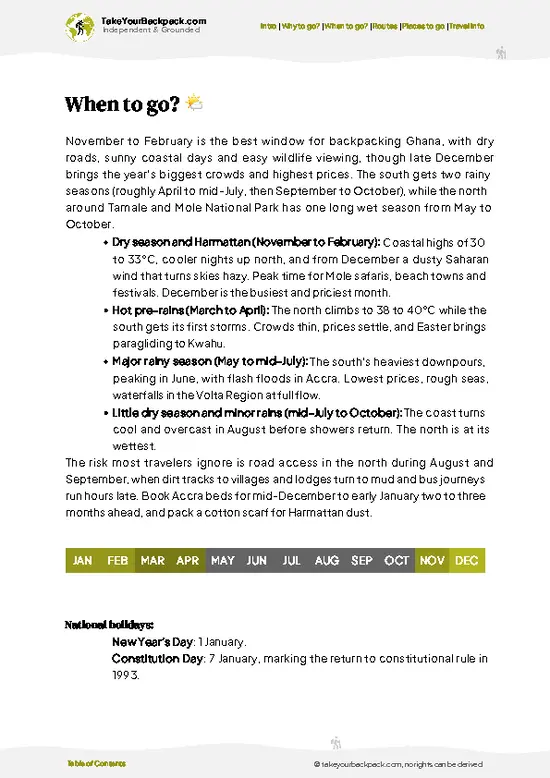
source: climatestotravel.comJANJanuary: excellent for travelingFEBFebruary: excellent for travelingMARMarch: highly recommended for travelingAPRApril: fair for travelingMAYMay: fair for travelingJUNJune: fair for travelingJULJuly: fair for travelingAUGAugust: fair for travelingSEPSeptember: fair for travelingOCTOctober: fair for travelingNOVNovember: highly recommended for travelingDECDecember: excellent for traveling
when-to-go

✈️ The backpacker research shortcutGhana Travel Guide

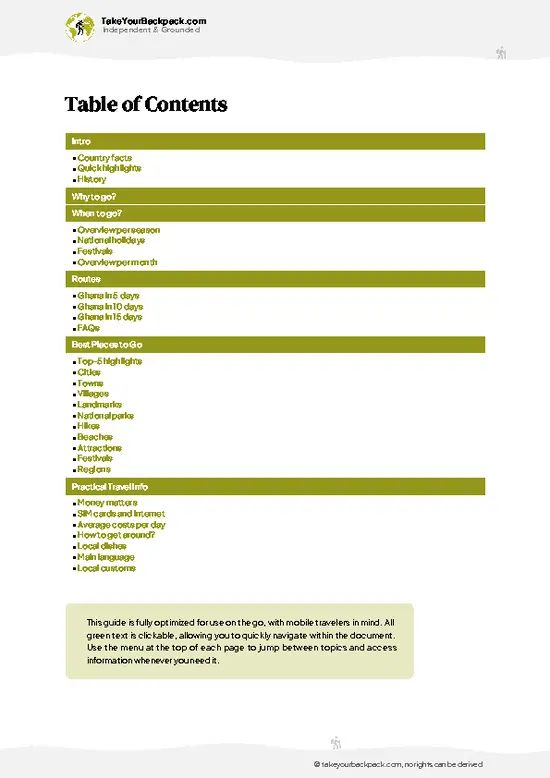
An offline-friendly backpacking guide with optimized travel routes, ranked highlights, transport advice, and the best areas to stay.
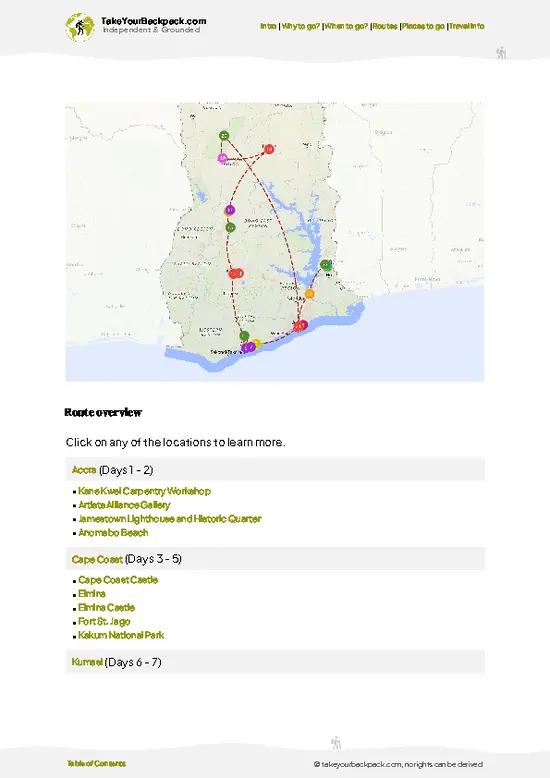
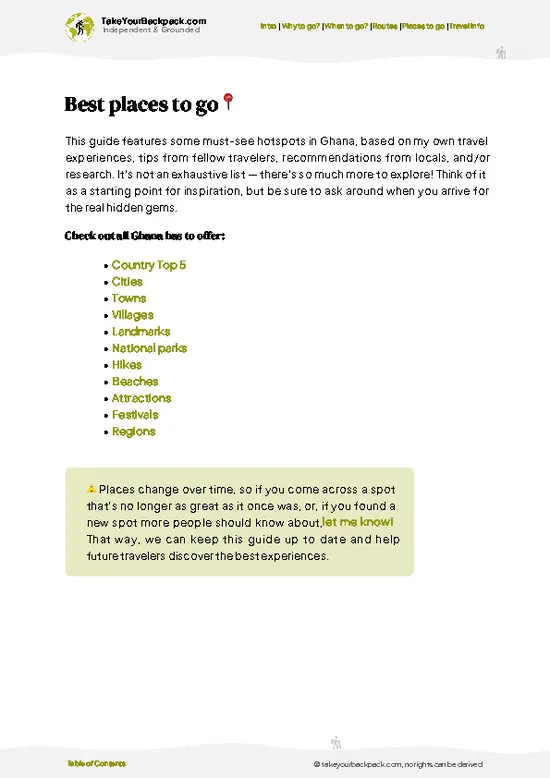
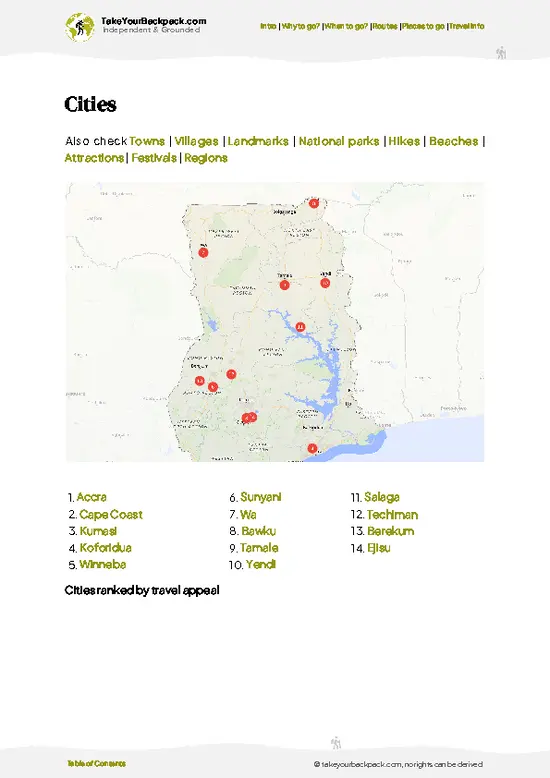
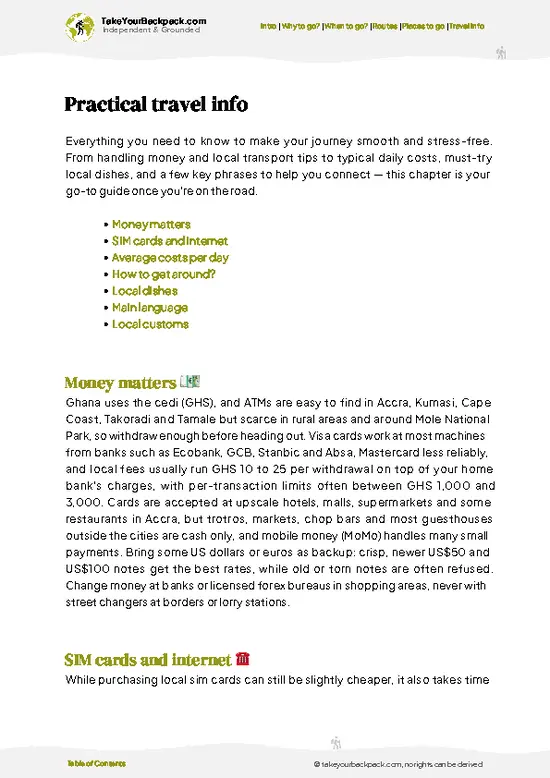
example page 0 from our offline Travel Guide for Ghanaexample page 1 from our offline Travel Guide for Ghanaexample page 2 from our offline Travel Guide for Ghanaexample page 3 from our offline Travel Guide for Ghanaexample page 4 from our offline Travel Guide for Ghanaexample page 5 from our offline Travel Guide for Ghanaexample page 6 from our offline Travel Guide for Ghanaexample page 7 from our offline Travel Guide for Ghana
The digital guide (424 pages) contains:
111 highlights, ranked by travel appeal
Optimized 5, 10 & 15-day travel routes
Cities, national parks, beaches, historical sites, ...
How to get around
Offline-friendly for travel without Wi-Fi
👉 Click to see all 30+ guide features

📅 Plan smarter in minutes, not weeks
Month by month travel advice
Festivals & national holidays
Budget expectations

🗺️ Go to the right places, skip the overrated ones
Honest pros & cons of destinations
Top hikes, parks & viewpoints
Lesser-known places most travelers miss
Clear “worth it vs skip it” guidance

🛏️ Travel smoothly without rookie mistakes
Best areas to stay
Transport systems explained simply
Common scams & safety advice
SIM cards, money & practical tips

🌍 Understand the country, not just visit it
Culture & traditions
52 Essential phrases & customs
Festivals worth planning around
Traveler-friendly historical context
Insights that make places more meaningful

📱 Built for real travel conditions
Fully downloadable PDF
Works completely offline
Optimized for phone use
Useful in remote areas & buses
Everything in one place
Save weeks of stressful planning
Get instant access to the full guide directly. 30-day money-back guarantee.


Sent to your inbox immediately after payment • 100% Secure Checkout
Best Backpacking Travel Advisor 2025 tourism awardBest Backpacking
Travel Advisor
2025
What others say about Take Your Backpack Guides:
⭐⭐⭐⭐⭐
Fantastic, amazing amount of information!
⭐⭐⭐⭐⭐
My goodness this is amazing, it's what I've been looking for hats off too you!
⭐⭐⭐⭐⭐
I think this is absolutely BRILLIANT
⭐⭐⭐⭐
Very complete and informative. It's still missing places, but I gotta to commend you
⭐⭐⭐⭐⭐
This is truly amazing, thank you, can't wait to explore it with my kids!
⭐⭐⭐⭐⭐
Awesome resource, thank you!
⭐⭐⭐⭐⭐
This is amazing! Can't wait to explore the ones I haven't seen
⭐⭐⭐⭐
I love this! Well done, great idea.
⭐⭐⭐⭐⭐
Thanks for taking the time to make this gem!
⭐⭐⭐⭐⭐
This might be the best website I've ever seen.
⭐⭐⭐⭐⭐
Congratulations, and thank you so much for your work; it's incredibly valuable.
⭐⭐⭐⭐
In all seriousness I think you did a great job pointing out the important spots
⭐⭐⭐⭐⭐
10/10 very good
⭐⭐⭐⭐⭐
As someone who's only just starting to visit regularly this is awesome, thank you.
⭐⭐⭐⭐
Thank you very much! I'm going to visit my dad, it's going to be very useful!
⭐⭐⭐⭐⭐
This is really cool! We'll be travelling for the first time and this definitely come in handy.
⭐⭐⭐⭐⭐
You are now our minister of culture, congratulations 👨‍💼
⭐⭐⭐⭐⭐
Just wanted to tell you that this is a pearl! Going to follow your recommendations.
⭐⭐⭐⭐⭐
This is so cool. I'll definitely be using the resource for my travels soon.
⭐⭐⭐⭐⭐
This is very impressive! Good work.
⭐⭐⭐⭐⭐
This is an amazing and informative site. Very well done!

🛏️ Where to stay?Best areas and accommodation options

Sunyani’s sweet spot for backpackers is the area around the Central Business District (CBD). It’s where the city’s pulse is strongest without tipping into chaos. This neighborhood strikes a solid balance between safety and social buzz, making it a natural magnet for solo travelers and budget adventurers. You’ll find a handful of hostels and guesthouses here, offering basic but clean accommodations that won’t drain your wallet. The vibe is low-key but lively—street vendors, local eateries, and small markets create a steady hum of activity that’s easy to plug into without feeling overwhelmed.

Compared … read more 👉
Sunyani’s sweet spot for backpackers is the area around the Central Business District (CBD). It’s where the city’s pulse is strongest without tipping into chaos. This neighborhood strikes a solid balance between safety and social buzz, making it a natural magnet for solo travelers and budget adventurers. You’ll find a handful of hostels and guesthouses here, offering basic but clean accommodations that won’t drain your wallet. The vibe is low-key but lively—street vendors, local eateries, and small markets create a steady hum of activity that’s easy to plug into without feeling overwhelmed.

Compared to the outskirts or more residential zones, the CBD cuts down on transport hassles and keeps you close to essential services and nightlife spots. It’s not flashy, but it’s authentic and practical. Other parts of Sunyani tend to be quieter but less convenient and sometimes sketchier after dark, which is a trade-off that rarely pays off for solo backpackers. In short, the CBD area is your best bet for mixing comfort, safety, and social opportunities without blowing your budget or your schedule.

🚌 Getting aroundGetting around like a local

Sunyani moves at its own rhythm—neither a frantic rush nor a slow crawl. It’s a city where time feels flexible but not sloppy, where schedules exist but bend to the flow of daily life. You’ll find that punctuality is a suggestion, not a rule, and the real pulse is in the ebb and flow of people and vehicles negotiating space with a mix of patience and hustle. This means your travel choices here aren’t just about getting from A to B—they’re about reading the city’s tempo and deciding how much time, money, and comfort you want to invest in that journey.


  • Walking: The ultimate budget option and the best way to soak in Sunyani’s local vibe. Most neighborhoods are compact, so you can cover key spots on foot in under an hour. No cost, full control over pace, and zero waiting—just watch for uneven
read more 👉
Sunyani moves at its own rhythm—neither a frantic rush nor a slow crawl. It’s a city where time feels flexible but not sloppy, where schedules exist but bend to the flow of daily life. You’ll find that punctuality is a suggestion, not a rule, and the real pulse is in the ebb and flow of people and vehicles negotiating space with a mix of patience and hustle. This means your travel choices here aren’t just about getting from A to B—they’re about reading the city’s tempo and deciding how much time, money, and comfort you want to invest in that journey.


  • Walking: The ultimate budget option and the best way to soak in Sunyani’s local vibe. Most neighborhoods are compact, so you can cover key spots on foot in under an hour. No cost, full control over pace, and zero waiting—just watch for uneven sidewalks and occasional street vendors.


  • Tro-Tro (Shared Minibus): The backbone of local transit. Runs roughly from 6 AM to 9 PM, fares hover around 1-2 GHS ($0.15-$0.30). It’s cheap and frequent but expect crowding and stops on demand, which slows things down. Comfort is minimal; seats are tight, and ventilation depends on open windows or doors. Perfect if you want to stretch your budget and don’t mind a bit of chaos.


  • Motorbike Taxis (Okada): Fast and flexible, these zoom through traffic and can get you anywhere quickly, especially when time is tight. Prices vary but generally start around 3-5 GHS ($0.40-$0.70) for short trips. They’re less comfortable and riskier than other options, but if you value speed over comfort and don’t mind the wind in your face, they’re unbeatable.


  • Private Taxis: More expensive, with fares starting around 15 GHS ($2) for short rides, but they offer door-to-door comfort and reliability. They run 24/7, so you can count on them when tro-tros stop running. Ideal if you’re carrying heavy gear or want to avoid waiting and standing.


Understanding these trade-offs means you’re not just hopping on whatever’s available—you’re playing the game smart. Want to save money? Walk or take a tro-tro. Need speed? Okada’s your friend. Craving comfort and convenience? Shell out for a taxi. Each choice shifts your balance of time, money, and comfort, and knowing this lets you tailor your Sunyani experience exactly how you want it.

👛 Costs (as of 24 October 2025)How expensive it really is

Backpacking in Sunyani, Ghana, offers a clear-cut trade-off between cost and comfort, with prices that let you stretch your budget without sacrificing the essentials.
  • Dorm Accommodation (High Season and Off-Season): Dorm beds in Sunyani typically range from about $5 to $10 per night during the high season when demand spikes slightly. Off-season, you can find beds closer to $3 to $6. These are basic but clean guesthouses or hostels, often with shared bathrooms and simple amenities.
  • Meals: Local food is both affordable and filling. Street food or small local eateries will cost you around $1 to $3 per meal. If you opt for a mid-range restaurant, expect to pay $4 to $7 for a decent meal. Fresh fruit and snacks from markets are even cheaper, often under $1.
  • Local Transport: Getting around town
read more 👉
Backpacking in Sunyani, Ghana, offers a clear-cut trade-off between cost and comfort, with prices that let you stretch your budget without sacrificing the essentials.
  • Dorm Accommodation (High Season and Off-Season): Dorm beds in Sunyani typically range from about $5 to $10 per night during the high season when demand spikes slightly. Off-season, you can find beds closer to $3 to $6. These are basic but clean guesthouses or hostels, often with shared bathrooms and simple amenities.
  • Meals: Local food is both affordable and filling. Street food or small local eateries will cost you around $1 to $3 per meal. If you opt for a mid-range restaurant, expect to pay $4 to $7 for a decent meal. Fresh fruit and snacks from markets are even cheaper, often under $1.
  • Local Transport: Getting around town mainly involves tro-tros (shared minibuses) or motorbike taxis. Tro-tros cost about $0.20 to $0.50 per ride, while motorbike taxis are around $0.50 to $1.50 depending on distance and negotiation skills.
  • City Transport Pass: Sunyani doesn’t have a formal city transport pass system. Budget for individual rides or occasional motorbike hires instead.
  • Basic Activities/Entry Fees: Most local attractions or cultural sites have minimal or no entry fees, usually under $1 to $3. Guided tours or special experiences might push this up to $5 to $10, but these are optional and often negotiable.
  • Miscellaneous Expenses: This covers bottled water, occasional snacks, phone credit, or small souvenirs. Expect to spend around $1 to $3 daily, depending on your habits.

In total, a backpacker in Sunyani can expect to spend roughly $10 to $20 per day, depending on how much comfort and convenience they want. This range gives you a solid grip on your daily outlay, letting you decide if you want to splurge on a nicer meal or save by sticking to street food and tro-tros. The key is knowing where your money goes so you can pick the experiences that matter most to you.


source: ghana.travel
⚠️ Prices can change and everyone travels differently, so take this as a rough guide. Hope it helps you plan your adventure!

🚌 Day tripsEasy escapes and nearby places

Sunyani, Ghana, is a fantastic launchpad for day trips that blend adventure, culture, and nature. Here’s how to maximize your experience without breaking the bank.

Kintampo Waterfalls
Just a two-hour ride from Sunyani, Kintampo Waterfalls is a refreshing escape. The cascading waters invite you to take a dip, and the surrounding lush greenery offers a perfect backdrop for a picnic. Expect to spend around 20 GHS for transport and a small entry fee. The best time to visit is during the rainy season when the falls are at their most powerful. A common mistake? Forgetting your swimsuit—trust me, you’ll want to jump in!
👉 Explore Kintampo Waterfalls

Bono Regional Museum
A quick 30-minute jaunt from Sunyani, the Bono Regional Museum is a treasure trove of local history and culture. For just … read more 👉
Sunyani, Ghana, is a fantastic launchpad for day trips that blend adventure, culture, and nature. Here’s how to maximize your experience without breaking the bank.

Kintampo Waterfalls
Just a two-hour ride from Sunyani, Kintampo Waterfalls is a refreshing escape. The cascading waters invite you to take a dip, and the surrounding lush greenery offers a perfect backdrop for a picnic. Expect to spend around 20 GHS for transport and a small entry fee. The best time to visit is during the rainy season when the falls are at their most powerful. A common mistake? Forgetting your swimsuit—trust me, you’ll want to jump in!
👉 Explore Kintampo Waterfalls

Bono Regional Museum
A quick 30-minute jaunt from Sunyani, the Bono Regional Museum is a treasure trove of local history and culture. For just 10 GHS, you can explore artifacts that tell the story of the Bono people. It’s a great way to connect with the region’s heritage. The museum is open year-round, but weekdays are quieter, allowing for a more intimate experience. Many first-timers overlook this spot, thinking museums are boring—this one is anything but!


Abrafo Forest Reserve
About an hour from Sunyani, Abrafo Forest Reserve is a nature lover’s paradise. The trails here are perfect for hiking, and you might even spot some wildlife. The entry fee is minimal, around 5 GHS, and you can easily spend a few hours wandering the paths. The dry season is ideal for hiking, as the trails can get muddy during the rains. A common oversight is underestimating the need for sturdy footwear—don’t skimp on your shoes!


Wamfie Market
For a taste of local life, head to Wamfie Market, just 45 minutes away. This bustling market is a sensory overload of colors, sounds, and smells. You can grab a meal for under 15 GHS and pick up unique crafts. Weekends are the busiest, so if you want a more relaxed experience, go on a weekday. First-timers often miss the chance to haggle—embrace it; it’s part of the fun!
Want to know what more Ghana offers?
The Ghana Travel Guide describes 111 highlights, from cities to national parks, from beaches to hikes

Get the Travel Guide -

🍲 FoodEating & Drinking in Sunyani

In Sunyani, food is a vibrant tapestry of flavors that tells the story of its people. Dive into fufu, a starchy staple made from cassava and plantains, often paired with rich, spicy light soup or groundnut stew. The texture is unique, and the experience of dipping it into the soup is a must.

Street food is where the magic happens. Vendors line the streets with sizzling kebabs and waakye, a hearty rice and beans dish that’s a local favorite. The aroma of grilled meats fills the air, inviting you to join the bustling crowd. Markets are alive with chatter, and you’ll find locals enjoying their meals right on the pavement, a true slice of daily life.

When it comes to drinks, don’t miss out on sobolo, a refreshing hibiscus drink that’s both sweet and tangy. It’s often served chilled, perfect … read more 👉
In Sunyani, food is a vibrant tapestry of flavors that tells the story of its people. Dive into fufu, a starchy staple made from cassava and plantains, often paired with rich, spicy light soup or groundnut stew. The texture is unique, and the experience of dipping it into the soup is a must.

Street food is where the magic happens. Vendors line the streets with sizzling kebabs and waakye, a hearty rice and beans dish that’s a local favorite. The aroma of grilled meats fills the air, inviting you to join the bustling crowd. Markets are alive with chatter, and you’ll find locals enjoying their meals right on the pavement, a true slice of daily life.

When it comes to drinks, don’t miss out on sobolo, a refreshing hibiscus drink that’s both sweet and tangy. It’s often served chilled, perfect for the warm climate. As for customs, sharing food is common; don’t be surprised if someone offers you a taste. Embrace the communal spirit, and you’ll find that every bite and sip connects you deeper to the heart of Sunyani.

🛡️ SafetyTraveler Safety Guide

Sunyani is generally safe for backpackers, but a few situational awareness tips can enhance your experience. Stick to well-lit areas at night, especially if you’re solo; the streets can feel quiet, and a little caution goes a long way.

Watch for common scams, like overly friendly locals offering unsolicited help that leads to a request for money. Politely decline and keep your plans to yourself.

Everyday annoyances include the occasional aggressive taxi driver or street vendor. A firm but friendly “no, thank you” usually does the trick.

Carry yourself confidently, and don’t flash valuables. A relaxed demeanor often disarms potential issues. Overall, with a bit of mindfulness, you can navigate Sunyani smoothly and enjoy its vibrant local culture.

Other Ghanaian cities near Sunyani

Explore more nearby:

  • Berekum—Brong market, football culture, cocoa farms| 33 km away
  • Techiman—central market, transport crossroads, yam trading, rural outskirts| 50 km away
  • Kumasi—Kejetia Market, royal palace, craft villages, Ashanti traditions| 107 km away

👉 Discover all cities

Or checkout all Ghana has to offer (think cities, towns, villages, national parks, hikes, beaches, festivals)
Country photo of Ghana

We 💚 feedbackFinal thoughts on visiting Sunyani

Sunyani offers a genuine slice of Ghanaian life, where you can connect with locals over fresh kelewele and lively storytelling. It’s a place that feels real, not polished for tourists. However, be prepared for limited infrastructure. Public transport can be a challenge, and English isn’t always widely spoken. Embrace the adventure, but know that navigating can take time. It’s all part of the experience.

✈️ When did I visit Ghana?
Ghana I visited in December 2024, starting in Accra following the coast, then up north to Mole National park to finish in the Volta Region.

✍️ Help improve this page!
The information on this page is based on my own backpacking experience in Ghana, supplemented with up-to-date research and feedback from other travelers. Travel details can change, so if you notice anything outdated or incomplete, feel free to let me know.


🙋‍♂️ Give feedback

👋 Meet the founderWho’s Behind Take Your Backpack?

Johan, backpacker and founder of TakeYourBackpackHi, I’m Johan (Netherlands 🇳🇱), the creator of TakeYourBackpack. Over the past decade, I’ve backpacked through 80+ countries across six continents, gaining extensive experience with independent travel, long-term trips, and overland routes.

This site is built on a combination of firsthand travel experience and carefully curated insights from other backpackers. Many guides are based on places I’ve personally visited, while others bring together tips, observations, and practical advice shared by trusted travelers I’ve met along the way.

The goal is to provide realistic, experience-driven guidance — not generic itineraries — so you can explore destinations with better context, clearer expectations, and more confidence.

Get full Ghana guide •
Instant download • 111 highlights • Full Offline guide