×

Ghana🇬🇭 | best citiesExplore the 10 Best cities in Ghana

Ghana’s cities do not share one rhythm. On the coast, salt air, diesel fumes and grilled fish smoke hang over streets that crawl with tro-tros and honking taxis. Inland, red dust settles on market stalls and the pace shifts with the heat. The south is humid, busy and the easiest to reach, while the north is drier, quieter and cheaper, with longer bus rides between stops. For backpackers and other independent travelers, the real question is whether you want history and nightlife, craft markets and Ashanti culture, or savanna calm. Expect noise, heat and traffic everywhere. Expect warm welcomes too.

By Johan Kruseman 🇳🇱 | Updated October 23, 2026
Explore the best towns in Ghana

Why go?Understanding Their Importance

Ghana suits city travel because its urban life grew from trade, and you can still feel that in the street. Gold, cocoa and the Atlantic slave trade shaped where people settled, so the coast carries European-built forts, while the forest belt and the savanna each developed their own kingdom traditions and market habits. Chiefs still hold real standing in towns, and festivals, funerals and drumming spill into public space on a regular basis.

The climate and infrastructure shape the experience. The south is humid year-round, with heat that settles on your skin by mid-morning, and the north swings between dusty dry months and heavy rain. Roads between major hubs are mostly paved, but journeys run long, and minibuses called tro-tros leave only when full. Power cuts and patchy water happen, and … read more 👉
Ghana suits city travel because its urban life grew from trade, and you can still feel that in the street. Gold, cocoa and the Atlantic slave trade shaped where people settled, so the coast carries European-built forts, while the forest belt and the savanna each developed their own kingdom traditions and market habits. Chiefs still hold real standing in towns, and festivals, funerals and drumming spill into public space on a regular basis.

The climate and infrastructure shape the experience. The south is humid year-round, with heat that settles on your skin by mid-morning, and the north swings between dusty dry months and heavy rain. Roads between major hubs are mostly paved, but journeys run long, and minibuses called tro-tros leave only when full. Power cuts and patchy water happen, and sidewalks are often broken or taken over by vendors.

Before choosing Ghana for its cities, know that this is English-speaking and relatively easy for first-time visitors in West Africa, with mobile money and ride-hailing common in the larger centers. Cities are working places rather than polished sights, so expect smells of woodsmoke, frying plantain and gutters, plus constant friendly conversation. Many highlights are small and spread out, so patience pays.
How the List Was Created
The list of best cities in Ghana is created based on culture, vibe, attractions, transport ease, and local charm. If you feel a city is missing in this list, please let us know.

When to go?Optimal Periods for Travel

Best months: The best months for Ghana’s cities are November to March, when the dry season brings lower humidity and clear skies, though the harmattan wind can fill the air with fine dust. Southern daytime highs sit around 30 to 33°C, while the north is hotter, often 35 to 40°C by March and April, so mornings and evenings are for walking.

Shoulder and wet seasons: In the south, the main rains fall from April to July, with a shorter wet spell in September to October. Downpours can flood streets and slow tro-tros, but they usually arrive as heavy afternoon bursts, and rainfall totals on the coast run roughly 750 to 1,500 mm a year, rising in the forest belt. The north has one rainy season, around May to September, when roads can turn muddy and the landscape is green.

Shoulder months like April … read more 👉
Best months: The best months for Ghana’s cities are November to March, when the dry season brings lower humidity and clear skies, though the harmattan wind can fill the air with fine dust. Southern daytime highs sit around 30 to 33°C, while the north is hotter, often 35 to 40°C by March and April, so mornings and evenings are for walking.

Shoulder and wet seasons: In the south, the main rains fall from April to July, with a shorter wet spell in September to October. Downpours can flood streets and slow tro-tros, but they usually arrive as heavy afternoon bursts, and rainfall totals on the coast run roughly 750 to 1,500 mm a year, rising in the forest belt. The north has one rainy season, around May to September, when roads can turn muddy and the landscape is green.

Shoulder months like April and October still work if you carry a light rain jacket and start early. Humidity stays high, and fabric dries slowly.

Peak periods: Crowds and prices rise around December and early January, when diaspora visitors return, flights tighten and mid-range rooms can cost 20 to 50 percent more. Festivals and Easter can also fill accommodation. Booking a few weeks ahead for those dates is sensible, while the rest of the year usually allows easy walk-in options.

city hoppingSuggested Travel Strategies

How long to allow: A trip linking several Ghanaian cities needs 10 to 16 days, because the distances look short on a map but road time adds up. Most travelers group the coastal south (Accra and the Cape Coast corridor), the forest belt around Kumasi, and the savanna north around Tamale. Moving from the coast inland and then north keeps you traveling one way, so you avoid retracing routes.

Pacing and transport: Allow 2 to 4 nights per stop, since arriving, finding a bed and adjusting to the heat consume the first afternoon. Accra to Cape Coast takes about 3 to 4 hours by road, Accra to Kumasi 4 to 6 hours, and Kumasi to Tamale 6 to 8 hours. Northern legs can stretch longer after rain. Comfortable intercity coaches leave from main terminals and are better than shared minibuses for long hauls, … read more 👉
How long to allow: A trip linking several Ghanaian cities needs 10 to 16 days, because the distances look short on a map but road time adds up. Most travelers group the coastal south (Accra and the Cape Coast corridor), the forest belt around Kumasi, and the savanna north around Tamale. Moving from the coast inland and then north keeps you traveling one way, so you avoid retracing routes.

Pacing and transport: Allow 2 to 4 nights per stop, since arriving, finding a bed and adjusting to the heat consume the first afternoon. Accra to Cape Coast takes about 3 to 4 hours by road, Accra to Kumasi 4 to 6 hours, and Kumasi to Tamale 6 to 8 hours. Northern legs can stretch longer after rain. Comfortable intercity coaches leave from main terminals and are better than shared minibuses for long hauls, with fares typically US$5 to 15 depending on the leg. Domestic flights to Tamale save a day but cost more.

Common planning mistakes: The biggest error is cramming too many stops into a week, spending most of it in cabs on hot, dusty highways. Another is leaving Accra traffic out of the calculation, since leaving the capital at rush hour can add 1 to 2 hours. Travel early, book morning departures, and keep one buffer day before any flight home.

The ListThe Best cities of Ghana

1 Accra

Jamestown lighthouse, Osu nightlife, Makola Market, Independence Square

Walk from the fishing harbor at Jamestown to the stalls of Makola, then end the day over grilled tilapia and live highlife in Osu.

2 Cape Coast

Cape Coast Castle, Kakum canopy walk, Fort William, beach fishing

Tour the castle dungeons on a guided visit, then head inland to Kakum National Park for a rope walkway above the rainforest.

ghana-city-cape-coast
© Google |

3 Kumasi

Manhyia Palace, Kejetia Market, Ashanti kingdom, Lake Bosomtwe

Pick through one of West Africa’s largest open markets, tour the Manhyia Palace Museum, and finish with a swim at Lake Bosomtwe.

4 Koforidua

Bead market, Eastern Region hills, Boti Falls, Umbrella Rock

Shop the Big Market for glass beads on market day, then take a day trip to Boti Falls and the nearby Umbrella Rock.

5 Winneba

Aboakyer festival, Effutu coast, university campus, Atlantic surf

Time your trip for early May to watch the Aboakyer deer hunt festival, or stay for the calm beaches and fresh fish along the Effutu shore.

6 Sunyani

Bono Region capital, orderly grid, Tano Valley, cocoa farm trips

Use the calm, tidy capital as a rest stop between Kumasi and the north, with good markets, cheap guesthouses, and quick access to forest villages.

7 Wa

Wa Naa’s Palace, Larabanga-area mosques, Sudanic architecture, Upper West hub

See the mud-walled palace of the Wa Naa, then continue to Wechiau hippo sanctuary for a canoe trip on the Black Volta.

8 Bawku

Northeast border trade, Bawku market, Kusasi culture, savanna heat

Visit on a market day to see Kusasi traders, Sahelian goods, and cross-border commerce with Burkina Faso and Togo, within reach of the savanna.

9 Tamale

Northern gateway, smock markets, bicycle rides, tuo zaafi stalls

Wander the spice-heavy central market, join a guided bike ride through back lanes, and end the day over grilled meat at dusk.

10 Yendi

Dagomba palace, Dalun traditions, Damba festival, northern Ghana crossroads

Meet the Dagbon heartland at the Ya Naa’s palace, and plan around Damba, when drummers and horsemen fill the town.

11 Salaga

Slave market ruins, kola trade history, Gonja land, dusty trading town

Walk the old slave market site and nearby wells to trace the caravan trade that once linked Salaga with the Sahel and the forest.

12 Techiman

Food crop market, Bono Manso sites, Kintampo route, Tuesday trading

Arrive early at one of the country’s busiest food markets, where trucks of yams, maize, and tomatoes feed buyers from across Ghana.

ghana-city-techiman
© Google |

13 Berekum

Bono farmland, cocoa and cashew belt, Berekum Mountain, quiet crossroads

Stop here to climb the nearby hill, buy produce from surrounding farms, and see everyday Bono life away from the main tourist routes.

14 Ejisu

Ashanti craft villages, Bonwire kente, Adanwomase weaving, Ashanti ruins

Use this town as a gateway to Bonwire and Adanwomase, where you can watch kente cloth woven on narrow looms and buy directly.

Think you know Ghana?

Prove you’re a true local — uncover 4 lesser-known cities in Ghana that locals tend to keep to themselves.
Loading the map 🌍

Expert viewExpert Commentary on cities

How many cities to visit: Three to four cities suit most backpackers in Ghana, because road days are long and the best moments come from lingering: a market lunch of waakye, a late chat with a taxi driver, an evening of highlife drifting from a bar. Pack in more and you trade those for hours in hot vehicles.

Choosing between kinds of cities: If you like history and nightlife, favor the coast, where the sea breeze softens the heat and the food scene runs late. If crafts, kente weaving and royal heritage appeal, lean to the forest belt, where red earth, loud markets and ceremonial culture dominate. For quiet, open skies and mud-brick architecture, pick the north, where days start early and evenings are calm. First-timers usually do best starting in the south, then adding one inland or northern … read more 👉
How many cities to visit: Three to four cities suit most backpackers in Ghana, because road days are long and the best moments come from lingering: a market lunch of waakye, a late chat with a taxi driver, an evening of highlife drifting from a bar. Pack in more and you trade those for hours in hot vehicles.

Choosing between kinds of cities: If you like history and nightlife, favor the coast, where the sea breeze softens the heat and the food scene runs late. If crafts, kente weaving and royal heritage appeal, lean to the forest belt, where red earth, loud markets and ceremonial culture dominate. For quiet, open skies and mud-brick architecture, pick the north, where days start early and evenings are calm. First-timers usually do best starting in the south, then adding one inland or northern stop once they have their bearings.

What it costs: Budget about US$25 to 45 a day in Ghana’s cities: dorm or basic guesthouse beds at US$10 to 25, street meals at US$2 to 5, and local-restaurant plates at US$5 to 10. Shared taxis and tro-tros cost under US$1 for short hops, while ride-hailing runs roughly US$2 to 6 across town. Museums and forts charge modest entry, often US$3 to 15 for foreigners, and a local guide for a half day typically costs US$15 to 40. A single city visit, with a few sights and transport, usually adds up to US$40 to 80 beyond your bed. Carry cash in small notes, since change is scarce, and use mobile money or ATMs in larger centers.

Safety and etiquette: Ghana is generally one of West Africa’s calmer destinations, but petty theft happens in crowded markets and transit hubs, so keep your phone in a front pocket and avoid walking alone late at night. Use registered taxis or ride-hailing after dark. Open drains, uneven sidewalks and fast motorbikes are the everyday hazards, so watch your step.

Culture matters. Greet people before asking for anything, and use your right hand for eating, giving and receiving. Ask before photographing people, shrines or funerals, and dress modestly in northern towns and near chiefs’ palaces. Drinking tap water is not advised, so carry a filter bottle. Same-sex relations are criminalized, so discretion is wise. Follow these habits and you get warmer conversations, better prices and invitations that no guidebook can promise.

✈️ The backpacker research shortcutGhana Travel Guide

An offline-friendly backpacking guide with optimized travel routes, ranked highlights, transport advice, and the best areas to stay.
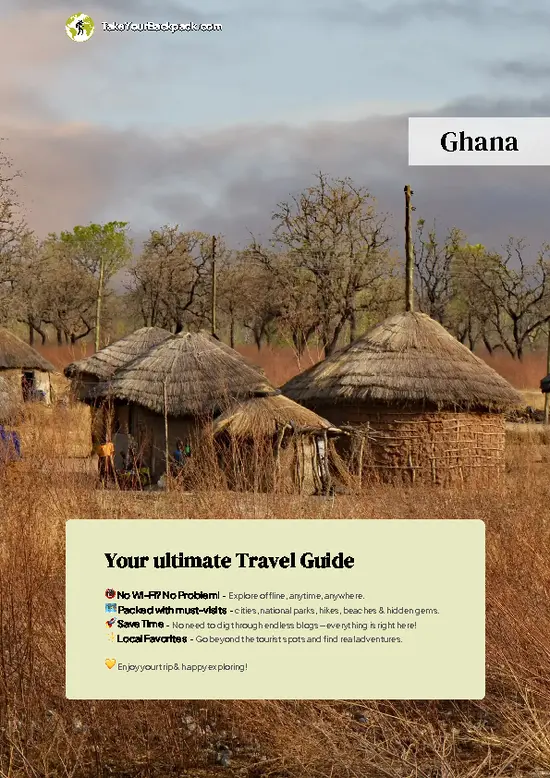
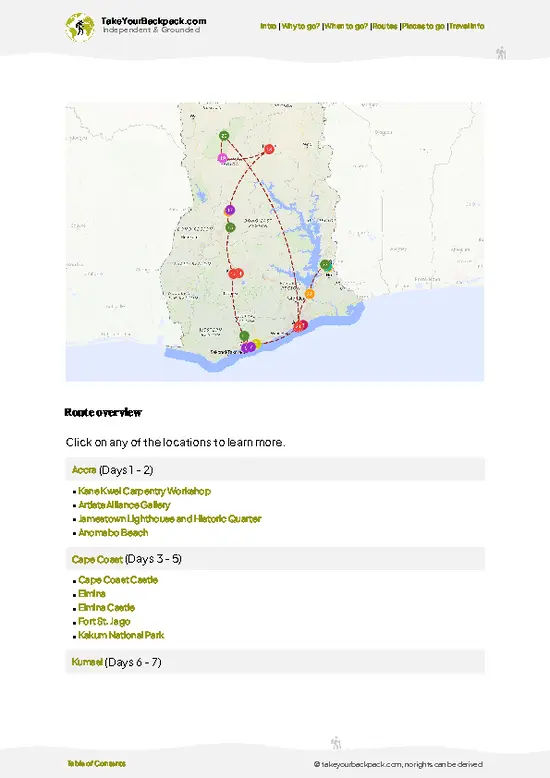
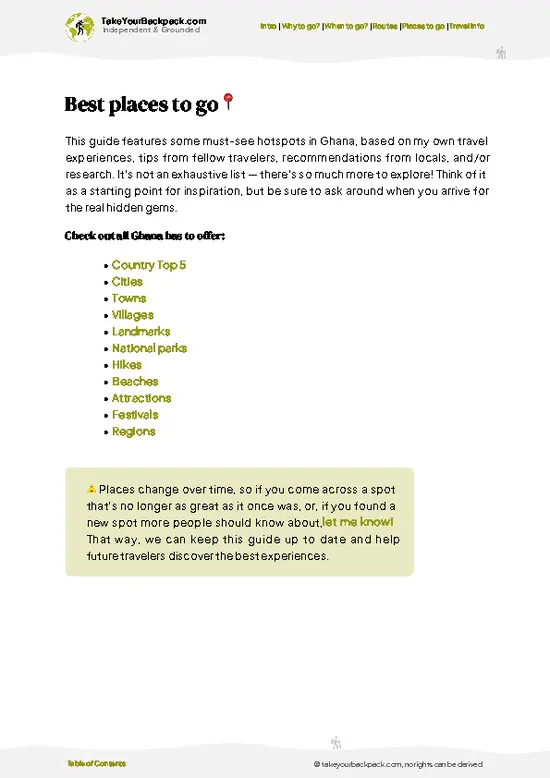
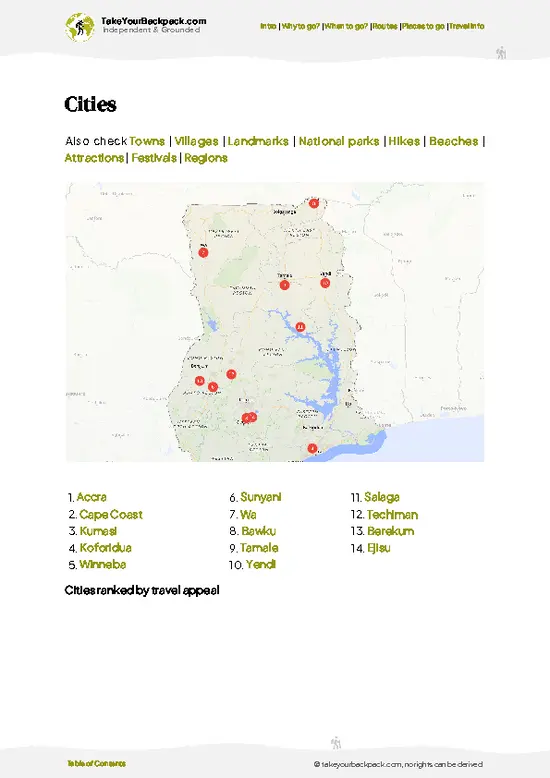
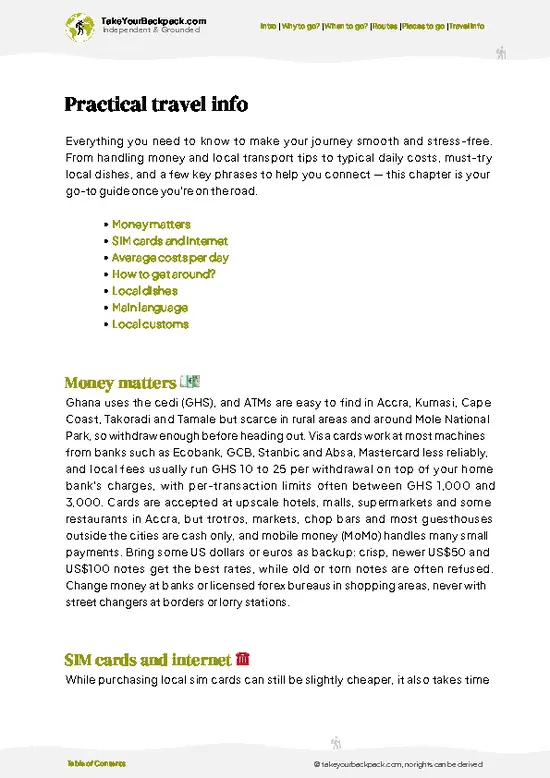
example page 0 from our offline Travel Guide for Ghana
example page 1 from our offline Travel Guide for Ghana
example page 2 from our offline Travel Guide for Ghana
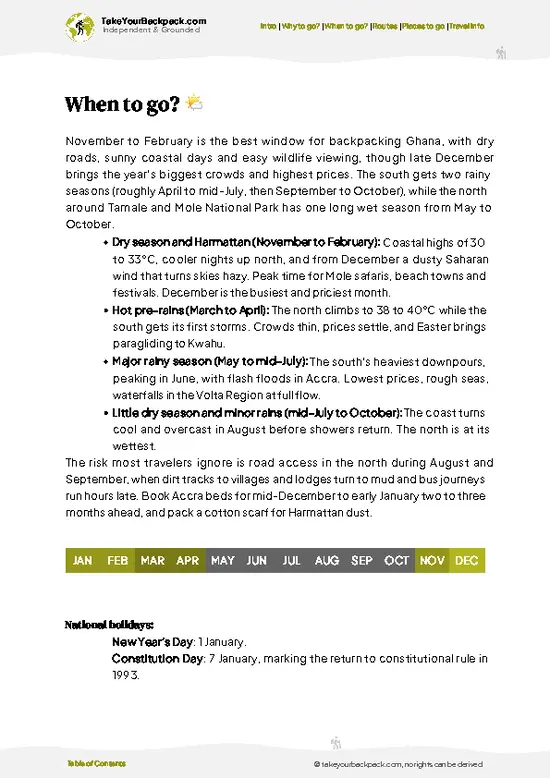
example page 3 from our offline Travel Guide for Ghana
example page 4 from our offline Travel Guide for Ghana
example page 5 from our offline Travel Guide for Ghana
example page 6 from our offline Travel Guide for Ghana
example page 7 from our offline Travel Guide for Ghana
The digital guide (321 pages) contains:
✅ 105 highlights, ranked by travel appeal
✅ Optimized 5, 10 & 15-day travel routes
✅ Cities, national parks, landmarks, beaches
✅ How to get around
✅ Offline-friendly for travel without Wi-Fi
👉 Click to see all 30+ guide features

📅 Plan smarter in minutes, not weeks
✅ Month by month travel advice
✅ Festivals & national holidays
✅ Budget expectations

🗺️ Go to the right places, skip the overrated ones
✅ Honest pros & cons of destinations
✅ Top hikes, parks & viewpoints
✅ Lesser-known places most travelers miss
✅ Clear “worth it vs skip it” guidance

🛏️ Travel smoothly without rookie mistakes
✅ Best areas to stay
✅ Transport systems explained simply
✅ Common scams & safety advice
✅ SIM cards, money & practical tips

🌍 Understand the country, not just visit it
✅ Culture & traditions
✅ 52 Essential phrases & customs
✅ Festivals worth planning around
✅ Traveler-friendly historical context
✅ Insights that make places more meaningful

📱 Built for real travel conditions
✅ Fully downloadable PDF
✅ Works completely offline
✅ Optimized for phone use
✅ Useful in remote areas & buses
✅ Everything in one place
Stop searching, start planning
Get instant access to your full guide. 30‑day money-back guarantee.
+ Add another guide for just

By proceeding you agree to our terms.
Sent to your inbox immediately after payment • 100% Secure Checkout
Best Backpacking Travel Advisor 2025 tourism awardBest Backpacking
Travel Advisor
2025
What others say about Take Your Backpack Guides:
⭐⭐⭐⭐⭐
Fantastic, amazing amount of information!
⭐⭐⭐⭐⭐
My goodness this is amazing, it's what I've been looking for hats off too you!
⭐⭐⭐⭐⭐
I think this is absolutely BRILLIANT
⭐⭐⭐⭐
Very complete and informative. It's still missing places, but I gotta to commend you
⭐⭐⭐⭐⭐
This is truly amazing, thank you, can't wait to explore it with my kids!
⭐⭐⭐⭐⭐
Awesome resource, thank you!
⭐⭐⭐⭐⭐
This is amazing! Can't wait to explore the ones I haven't seen
⭐⭐⭐⭐
I love this! Well done, great idea.
⭐⭐⭐⭐⭐
Thanks for taking the time to make this gem!
⭐⭐⭐⭐⭐
This might be the best website I've ever seen.
⭐⭐⭐⭐⭐
Congratulations, and thank you so much for your work; it's incredibly valuable.
⭐⭐⭐⭐
In all seriousness I think you did a great job pointing out the important spots
⭐⭐⭐⭐⭐
10/10 very good
⭐⭐⭐⭐⭐
As someone who's only just starting to visit regularly this is awesome, thank you.
⭐⭐⭐⭐
Thank you very much! I'm going to visit my dad, it's going to be very useful!
⭐⭐⭐⭐⭐
This is really cool! We'll be travelling for the first time and this definitely come in handy.
⭐⭐⭐⭐⭐
You are now our minister of culture, congratulations 👨‍💼
⭐⭐⭐⭐⭐
Just wanted to tell you that this is a pearl! Going to follow your recommendations.
⭐⭐⭐⭐⭐
This is so cool. I'll definitely be using the resource for my travels soon.
⭐⭐⭐⭐⭐
This is very impressive! Good work.
⭐⭐⭐⭐⭐
This is an amazing and informative site. Very well done!

🛏️ Where to stay?Best Places to Stay in Ghana

Ghana has a modest but growing hostel scene, with dorm beds typically around GH₵150 to 300 (US$12 to 25) and basic guesthouse rooms from about GH₵350 (US$30), concentrated mostly in Accra and along the coast. In Accra, Osu puts you on Oxford Street’s bars, cheap chop bars and late nights but comes with noise and heavy traffic, while East Legon and Airport Residential are quieter, leafier and handy for flights yet far from the action and pricier per night. Elsewhere, beachy Kokrobite west of Accra is laid-back and drum-filled on weekends, Cape Coast keeps you walking distance from the castle and the fishing harbor, and Adum in Kumasi is central and cheap but loud and chaotic around the market. … read more 👉
Ghana has a modest but growing hostel scene, with dorm beds typically around GH₵150 to 300 (US$12 to 25) and basic guesthouse rooms from about GH₵350 (US$30), concentrated mostly in Accra and along the coast. In Accra, Osu puts you on Oxford Street’s bars, cheap chop bars and late nights but comes with noise and heavy traffic, while East Legon and Airport Residential are quieter, leafier and handy for flights yet far from the action and pricier per night. Elsewhere, beachy Kokrobite west of Accra is laid-back and drum-filled on weekends, Cape Coast keeps you walking distance from the castle and the fishing harbor, and Adum in Kumasi is central and cheap but loud and chaotic around the market.

If you enjoy meeting fellow travelers, consider choosing hostels with high ratings for atmosphere. On the other hand, if you prefer having your own space, a hotel might be a better option.

GhanaExplore Ghana

👋 Meet the founderWho’s Behind Take Your Backpack?

Johan, backpacker and founder of TakeYourBackpackHi, I’m Johan (Netherlands 🇳🇱), the creator of TakeYourBackpack. Over the past 3 decades, I’ve backpacked through 90+ countries across six continents, gaining extensive experience with independent travel, long-term trips, and overland routes.

This site is built on a combination of firsthand travel experience and carefully curated insights from other backpackers. Many guides are based on places I’ve personally visited, while others bring together tips, observations, and practical advice shared by trusted travelers I’ve met along the way.

The goal is to provide realistic, experience-driven guidance — not generic itineraries — so you can explore destinations with better context, clearer expectations, and more confidence.