×

Ghana🇬🇭 | citiesBerekumBono farmland, cocoa and cashew belt, Berekum Mountain, quiet crossroads | things to do and best time to go

Explore YendiExplore Ejisu

Backpacking in Berekum
👀 For curious travelerscity ranked #12
By Johan Kruseman 🇳🇱 | Updated October 22, 2026

Berekum is not a Sunyani suburb, and it is not a dead stop on the way to Côte d’Ivoire. It sits in Bono Region, about 30 km northwest of Sunyani. A shared taxi or trotro takes 40 to 60 minutes for roughly GH¢10 to 15, which costs less than a private taxi and saves cash for chop bars, though you trade legroom for it. I once stood in the central market at dusk as charcoal smoke, grilled plantain and diesel fumes mixed under a coppery sky. Berekum suits patient, curious travelers and disappoints anyone wanting hostels or nightlife. Sunyani has more beds, Techiman more buzz.

Discover everything you want to know in the 📖 Ghana Travel Guide.


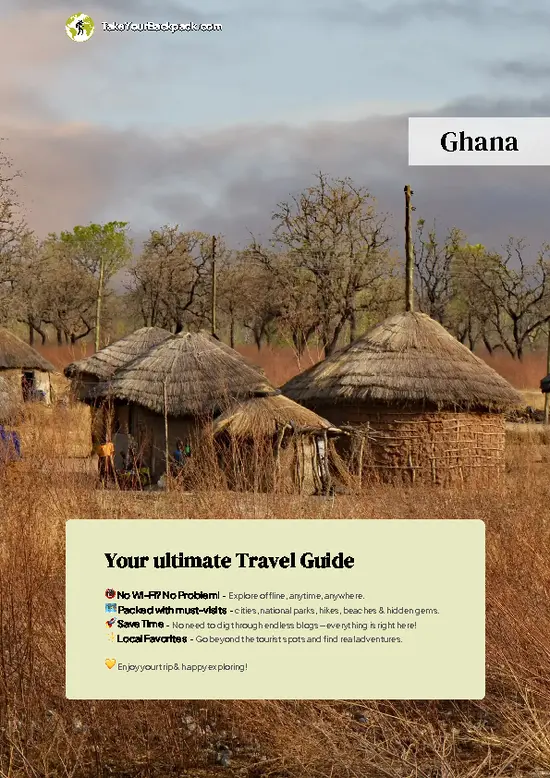
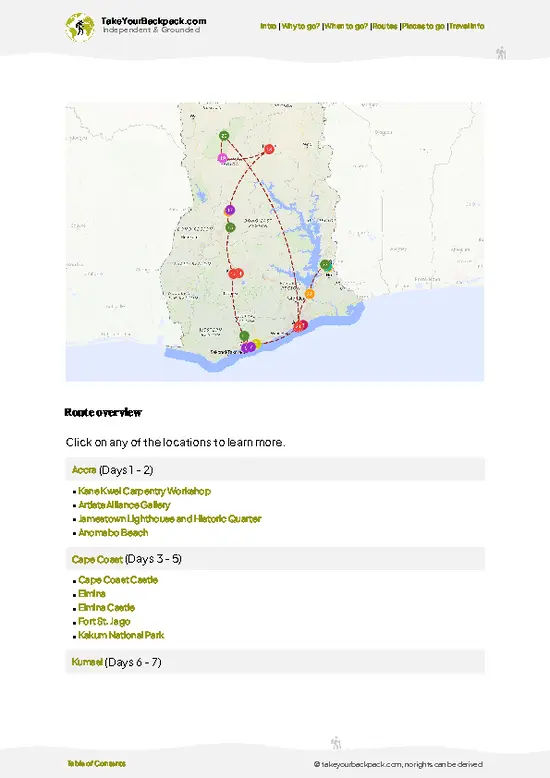
example page 0 from our offline Travel Guide for Ghana
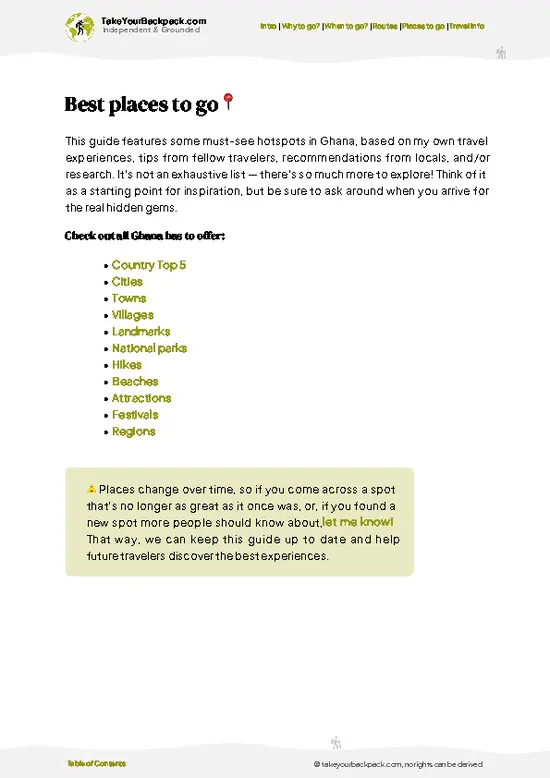
example page 1 from our offline Travel Guide for Ghana
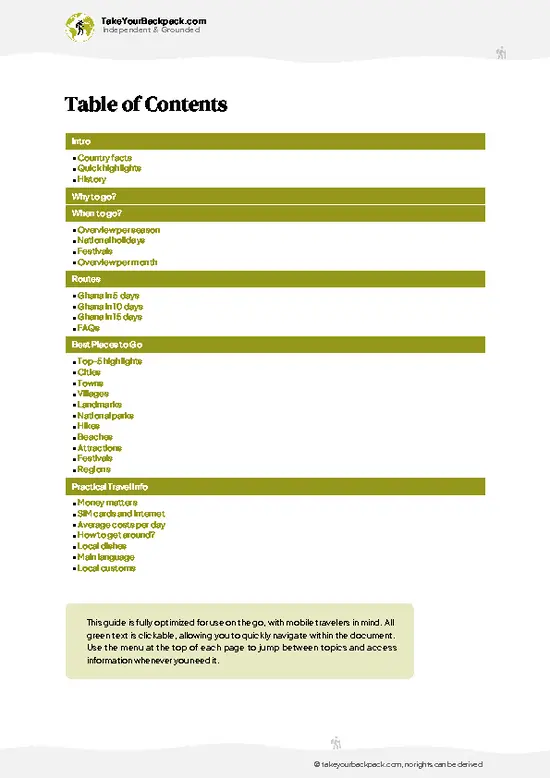
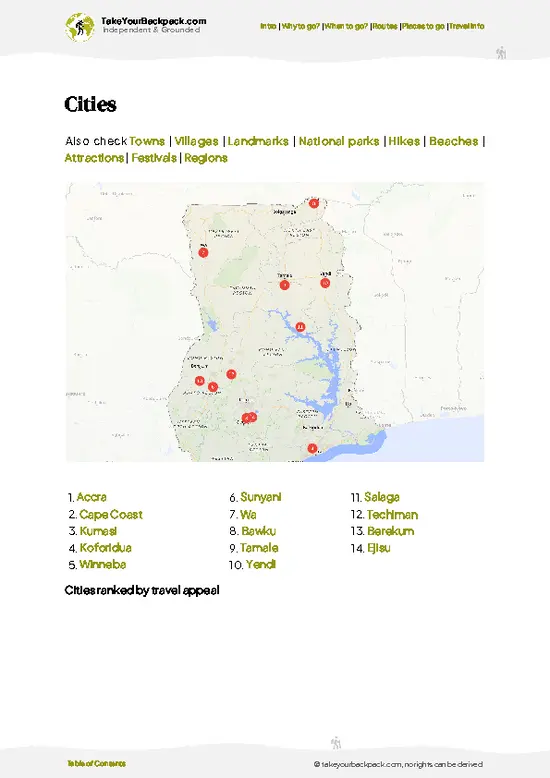
example page 2 from our offline Travel Guide for Ghana
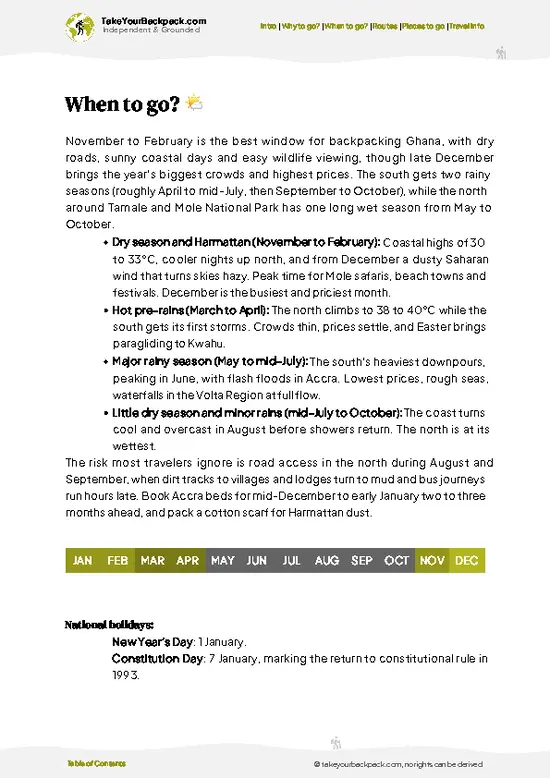
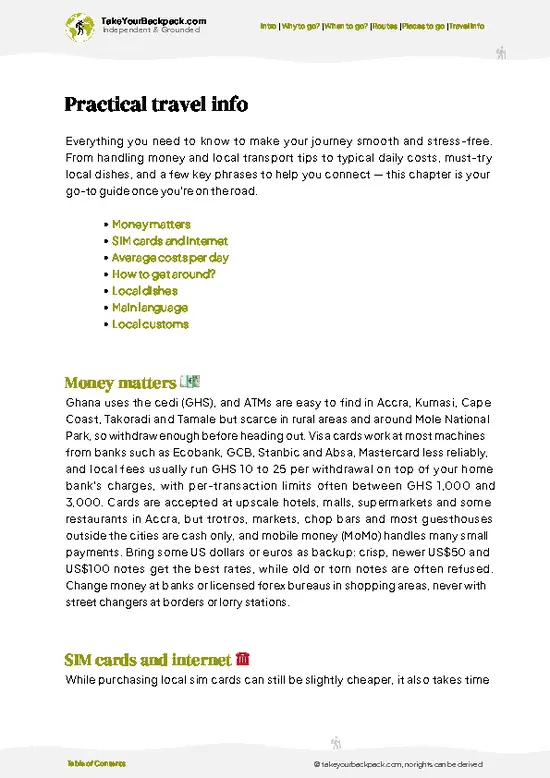
example page 3 from our offline Travel Guide for Ghana
example page 4 from our offline Travel Guide for Ghana
example page 5 from our offline Travel Guide for Ghana
example page 6 from our offline Travel Guide for Ghana
example page 7 from our offline Travel Guide for Ghana
Loading the map 🌍
CLICK TO FILTER
cities
towns
villages
landmarks
national parks
hikes
beaches
attractions
festivals
regions
SHOW COUNTRY’S BESTSHOW ALL

✨ Why go?
Ranked #12 city in Ghana
Reasons people choose to visit here

Berekum works as a low-cost cultural stop on a route through Bono Region, not a place to spend a week. You get a working Ghanaian town with local chop bars where a plate of fufu or banku runs about GH¢25 to 50, a compact center you can cover on foot, and a real football culture thanks to its Premier League club. Guesthouses are simple and cheap, and you will find no backpacker hostel scene. Its real value is position: roads connect it to Sunyani, Dormaa Ahenkro, Wenchi and Techiman, so you can break up long bus days and keep going in the morning. Come for a night or two, stay longer only if the festival calendar lines up.

💡 HighlightsWhat this place is best known for

  1. Central Market: The town’s main trading hub, with produce, cloth, smoked fish and spices stacked in tight lanes. Go in the morning when stalls are fullest. Free to enter, 1 to 2 hours.
  2. Berekum Traditional Palace: The seat of the Berekumhene, the paramount chief. Visits depend on the chief’s schedule, so ask a local or your guesthouse to arrange an introduction. Dress modestly and bring a small gift such as a drink. Free to US$5 in gifts, about 30 to 45 minutes, mornings are best.
  3. Kwafie Festival: The Berekum Traditional Area’s main annual celebration, usually around November or December, with durbars, drumming, kente and chiefs in procession. Confirm dates locally. Mostly free to watch, a full day.
  4. Berekum Sports Stadium: Catch a home match of Berekum Chelsea, the town’s Premier League side,
… read more 👉
  1. Central Market: The town’s main trading hub, with produce, cloth, smoked fish and spices stacked in tight lanes. Go in the morning when stalls are fullest. Free to enter, 1 to 2 hours.
  2. Berekum Traditional Palace: The seat of the Berekumhene, the paramount chief. Visits depend on the chief’s schedule, so ask a local or your guesthouse to arrange an introduction. Dress modestly and bring a small gift such as a drink. Free to US$5 in gifts, about 30 to 45 minutes, mornings are best.
  3. Kwafie Festival: The Berekum Traditional Area’s main annual celebration, usually around November or December, with durbars, drumming, kente and chiefs in procession. Confirm dates locally. Mostly free to watch, a full day.
  4. Berekum Sports Stadium: Catch a home match of Berekum Chelsea, the town’s Premier League side, when the league is in season. Tickets typically cost GH¢20 to 50. Allow 2 to 3 hours, and go for afternoon kickoffs when the whole town seems to turn out.
  5. Chop bar crawl: Sit on a plastic stool at a local spot for fufu with light soup, banku with grilled tilapia or kenkey with pepper. Evening is best when charcoal grills fire up. Budget US$2 to 5 per meal and an hour.
For day trips, the Boabeng-Fiema Monkey Sanctuary (about 2 to 2.5 hours via Techiman), the Tano Boase Sacred Grove near Techiman and Kintampo Waterfalls (about 2.5 to 3 hours) are all reachable. I would go to Boabeng-Fiema first because the mona and black-and-white colobus monkeys walk through the village in daylight.
Spotted a mistake or missing something? Contact us.

🏘️ NeighborhoodsKey areas and districts to know

Berekum is a compact Bono Region town where you can cover most areas on foot or with a short shared ride, and the real choice is how to spend your hours.
  • Town Center and Main Market: Red dust, horns, and the smell of frying plantain and smoked fish hit you at once. Walk it in 2 to 3 hours for free. Market days are the best time, and a plate of street food runs GHS 15 to 40. Most value for a backpacker.
  • Berekum Traditional Area (Chief’s Palace zone): Quieter lanes, drumming at festival times, and older compounds with swept earthen yards. Free to look, a 10 to 20 minute walk or a GHS 5 to 10 ride from the center. Ask before photographing anything.
  • Lake Road and Hilltop Outskirts: Cooler air, birdsong, and fewer people, but sparse lighting after dark. A taxi costs GHS 15 to 30, so go in daylight.
… read more 👉
Berekum is a compact Bono Region town where you can cover most areas on foot or with a short shared ride, and the real choice is how to spend your hours.
  • Town Center and Main Market: Red dust, horns, and the smell of frying plantain and smoked fish hit you at once. Walk it in 2 to 3 hours for free. Market days are the best time, and a plate of street food runs GHS 15 to 40. Most value for a backpacker.
  • Berekum Traditional Area (Chief’s Palace zone): Quieter lanes, drumming at festival times, and older compounds with swept earthen yards. Free to look, a 10 to 20 minute walk or a GHS 5 to 10 ride from the center. Ask before photographing anything.
  • Lake Road and Hilltop Outskirts: Cooler air, birdsong, and fewer people, but sparse lighting after dark. A taxi costs GHS 15 to 30, so go in daylight. Comfortable, though not cheap for what you see.
  • Roadside Chop Bars near the Station: Loud, smoky, and cheap, with fufu pounding audible from the street. Eat here for GHS 20 to 45 and save your time and money for the market.

⌛️ 1 dayHow to make the most of one day

Berekum rewards a slow day of markets, chiefs’ history and local food rather than sightseeing marathons.
7:30 AM: Breakfast near the lorry park
Start with hot koko and bofrot or waakye from a street seller, about GH¢10 to 20. It is the fastest way to see the town wake up.
9:00 AM: Central Market
Walk or take a short taxi ride. Browse the spice, fish and cloth sections, and buy fruit for later. Allow about 90 minutes.
11:00 AM: Palace area
Ask a local to guide you toward the Berekumhene’s palace and request permission before entering. Learn about chieftaincy and stool history, then walk back toward the center.
1:00 PM: Lunch at a chop bar
Order fufu with light soup. Take your time, since the afternoon heat is strong.
3:00 PM: Off-route neighborhood walk
Wander the residential lanes away from the main … read more 👉
Berekum rewards a slow day of markets, chiefs’ history and local food rather than sightseeing marathons.
7:30 AM: Breakfast near the lorry park
Start with hot koko and bofrot or waakye from a street seller, about GH¢10 to 20. It is the fastest way to see the town wake up.
9:00 AM: Central Market
Walk or take a short taxi ride. Browse the spice, fish and cloth sections, and buy fruit for later. Allow about 90 minutes.
11:00 AM: Palace area
Ask a local to guide you toward the Berekumhene’s palace and request permission before entering. Learn about chieftaincy and stool history, then walk back toward the center.
1:00 PM: Lunch at a chop bar
Order fufu with light soup. Take your time, since the afternoon heat is strong.
3:00 PM: Off-route neighborhood walk
Wander the residential lanes away from the main road, where you will see cocoa drying, wood-fired kitchens and church choirs practicing. Greet everyone, since greetings open doors here.
5:30 PM: Stadium or sunset
Catch a match if one is on, otherwise find a spot by the road for sunset and kenkey with grilled fish before you turn in.

🌤️ When to go?Seasonal considerations and timing

The best time for Berekum is November to February, when the dry season brings clear days and the lowest chance of washed-out roads.
  • Dry Season (November to February): Days reach 30 to 34°C (86 to 93°F), nights drop to 20 to 23°C (68 to 73°F). Harmattan haze and dust can dull the light. Daylight runs about 11.5 to 12 hours.
  • Hot Season (March to April): Peaks at 33 to 36°C (91 to 97°F) with humid afternoons and rising storm chances.
  • Major Rains (May to July): Heavy downpours, muddy tracks, 25 to 30°C (77 to 86°F).
  • Minor Rains (September to October): Shorter showers, green hills, quiet lodging.
  • Festival Periods: Local festivals can lift transport and room prices by 10 to 30%.
Start early each day, because storms and heat both build after midday.

source: climatestotravel.comJANJanuary: highly recommended for travelingFEBFebruary: highly recommended for travelingMARMarch: highly recommended for travelingAPRApril: good for travelingMAYMay: fair for travelingJUNJune: fair for travelingJULJuly: fair for travelingAUGAugust: fair for travelingSEPSeptember: fair for travelingOCTOctober: good for travelingNOVNovember: highly recommended for travelingDECDecember: excellent for traveling
when-to-go

✈️ The backpacker research shortcutGhana Travel Guide

An offline-friendly backpacking guide with optimized travel routes, ranked highlights, transport advice, and the best areas to stay.
example page 0 from our offline Travel Guide for Ghana
example page 1 from our offline Travel Guide for Ghana
example page 2 from our offline Travel Guide for Ghana
example page 3 from our offline Travel Guide for Ghana
example page 4 from our offline Travel Guide for Ghana
example page 5 from our offline Travel Guide for Ghana
example page 6 from our offline Travel Guide for Ghana
example page 7 from our offline Travel Guide for Ghana
The digital guide (321 pages) contains:
✅ 105 highlights, ranked by travel appeal
✅ Optimized 5, 10 & 15-day travel routes
✅ Cities, national parks, landmarks, beaches
✅ How to get around
✅ Offline-friendly for travel without Wi-Fi
👉 Click to see all 30+ guide features

📅 Plan smarter in minutes, not weeks
✅ Month by month travel advice
✅ Festivals & national holidays
✅ Budget expectations

🗺️ Go to the right places, skip the overrated ones
✅ Honest pros & cons of destinations
✅ Top hikes, parks & viewpoints
✅ Lesser-known places most travelers miss
✅ Clear “worth it vs skip it” guidance

🛏️ Travel smoothly without rookie mistakes
✅ Best areas to stay
✅ Transport systems explained simply
✅ Common scams & safety advice
✅ SIM cards, money & practical tips

🌍 Understand the country, not just visit it
✅ Culture & traditions
✅ 52 Essential phrases & customs
✅ Festivals worth planning around
✅ Traveler-friendly historical context
✅ Insights that make places more meaningful

📱 Built for real travel conditions
✅ Fully downloadable PDF
✅ Works completely offline
✅ Optimized for phone use
✅ Useful in remote areas & buses
✅ Everything in one place
Stop searching, start planning
Get instant access to your full guide. 30‑day money-back guarantee.
+ Add another guide for just

By proceeding you agree to our terms.
Sent to your inbox immediately after payment • 100% Secure Checkout
Best Backpacking Travel Advisor 2025 tourism awardBest Backpacking
Travel Advisor
2025
What others say about Take Your Backpack Guides:
⭐⭐⭐⭐⭐
Fantastic, amazing amount of information!
⭐⭐⭐⭐⭐
My goodness this is amazing, it's what I've been looking for hats off too you!
⭐⭐⭐⭐⭐
I think this is absolutely BRILLIANT
⭐⭐⭐⭐
Very complete and informative. It's still missing places, but I gotta to commend you
⭐⭐⭐⭐⭐
This is truly amazing, thank you, can't wait to explore it with my kids!
⭐⭐⭐⭐⭐
Awesome resource, thank you!
⭐⭐⭐⭐⭐
This is amazing! Can't wait to explore the ones I haven't seen
⭐⭐⭐⭐
I love this! Well done, great idea.
⭐⭐⭐⭐⭐
Thanks for taking the time to make this gem!
⭐⭐⭐⭐⭐
This might be the best website I've ever seen.
⭐⭐⭐⭐⭐
Congratulations, and thank you so much for your work; it's incredibly valuable.
⭐⭐⭐⭐
In all seriousness I think you did a great job pointing out the important spots
⭐⭐⭐⭐⭐
10/10 very good
⭐⭐⭐⭐⭐
As someone who's only just starting to visit regularly this is awesome, thank you.
⭐⭐⭐⭐
Thank you very much! I'm going to visit my dad, it's going to be very useful!
⭐⭐⭐⭐⭐
This is really cool! We'll be travelling for the first time and this definitely come in handy.
⭐⭐⭐⭐⭐
You are now our minister of culture, congratulations 👨‍💼
⭐⭐⭐⭐⭐
Just wanted to tell you that this is a pearl! Going to follow your recommendations.
⭐⭐⭐⭐⭐
This is so cool. I'll definitely be using the resource for my travels soon.
⭐⭐⭐⭐⭐
This is very impressive! Good work.
⭐⭐⭐⭐⭐
This is an amazing and informative site. Very well done!

🛏️ Where to stay?How to pick the right area

The best area to sleep in Berekum is the town center near the main road and station, where budget guesthouses are easiest to find, usually at GHS 100 to 250 a night. Dedicated hostels are rare in Berekum, so expect simple private rooms with fans or basic AC instead of dorm beds.
The center puts you within walking distance of food stalls, mobile money agents, and shared taxis, and you can reach the transport station in minutes at dawn. Evenings are lively until about 10 pm with music from drinking spots, so ask for a room at the back and bring earplugs.
The quieter edges toward the hilltop outskirts … read more 👉
The best area to sleep in Berekum is the town center near the main road and station, where budget guesthouses are easiest to find, usually at GHS 100 to 250 a night. Dedicated hostels are rare in Berekum, so expect simple private rooms with fans or basic AC instead of dorm beds.
The center puts you within walking distance of food stalls, mobile money agents, and shared taxis, and you can reach the transport station in minutes at dawn. Evenings are lively until about 10 pm with music from drinking spots, so ask for a room at the back and bring earplugs.
The quieter edges toward the hilltop outskirts offer calmer nights and cooler air, but streets are poorly lit and taxis cost more, so they suit you better if you arrive by car or have booked ahead. For most backpackers, the center wins on safety, convenience, and price.

🚌 Getting aroundGetting around like a local

The center of Berekum is walkable in under 30 minutes end to end, but walking stops making sense on the highway stretches, in midday heat of 32°C (90°F) or more, and after dark when streetlights thin out. Expect dust, honking, and a steady stream of motorbikes. Public transport is informal and runs on filling up rather than fixed timetables.
  • Walking: Free and the fastest way to see the market and center. Cost nothing, take 10 to 25 minutes between main points, and bring water and a hat. Best value for short hops.
  • Shared Taxis (drop-in): Beaten-up sedans honk along the main road and charge about GHS 3 to 8 per seat within town. Cheap and quick, but cramped, with four passengers in the back and no AC. Good compromise on money and time.
  • Motorbike Taxis (okada): GHS 5 to 15 for a short ride and the
… read more 👉
The center of Berekum is walkable in under 30 minutes end to end, but walking stops making sense on the highway stretches, in midday heat of 32°C (90°F) or more, and after dark when streetlights thin out. Expect dust, honking, and a steady stream of motorbikes. Public transport is informal and runs on filling up rather than fixed timetables.
  • Walking: Free and the fastest way to see the market and center. Cost nothing, take 10 to 25 minutes between main points, and bring water and a hat. Best value for short hops.
  • Shared Taxis (drop-in): Beaten-up sedans honk along the main road and charge about GHS 3 to 8 per seat within town. Cheap and quick, but cramped, with four passengers in the back and no AC. Good compromise on money and time.
  • Motorbike Taxis (okada): GHS 5 to 15 for a short ride and the fastest in jammed traffic. Helmets are rare and you get the full smell of exhaust and roadside grilling, so comfort and safety are lowest. Use for short trips only if the rider is calm.
  • Private Taxi: GHS 20 to 50 around town, more for outskirts, with a negotiated fare before you get in. The most comfortable and best after dark, though costs add up.
  • Minibuses (trotro) and Coaches: Trotros to Sunyani take roughly 45 to 75 minutes and cost GHS 15 to 30. Coaches to Kumasi take 3 to 4 hours for about GHS 60 to 100. Early mornings fill fastest, and last departures are typically late afternoon.

👛 Costs (as of 22 October 2026)How expensive it really is

Berekum costs a backpacker about US$27 a day when you sleep in a basic guesthouse room, eat local meals and use shared transport. Prices are in cedis, so carry small notes, and note that Berekum has no dorm culture, so the lowest bed is a simple private room.
CategoryBudget RangeLocal Reality
Dorm accommodation (high season)US$10 to 15No true dorms. A basic fan room in a guesthouse is the cheapest bed, and prices rise a little around Christmas and Easter.
Dorm accommodation (off-season)US$7 to 11Rooms are easy to find without booking, and owners often bargain.
MealsUS$5 to 8Waakye, fufu with light soup, rice and stew at stalls and small eateries.
Local transportUS$1 to 3Shared taxis within town cost pennies, and motorbike taxis run slightly higher.
City transport passNot availableNo pass exists.
… read more 👉
Berekum costs a backpacker about US$27 a day when you sleep in a basic guesthouse room, eat local meals and use shared transport. Prices are in cedis, so carry small notes, and note that Berekum has no dorm culture, so the lowest bed is a simple private room.
CategoryBudget RangeLocal Reality
Dorm accommodation (high season)US$10 to 15No true dorms. A basic fan room in a guesthouse is the cheapest bed, and prices rise a little around Christmas and Easter.
Dorm accommodation (off-season)US$7 to 11Rooms are easy to find without booking, and owners often bargain.
MealsUS$5 to 8Waakye, fufu with light soup, rice and stew at stalls and small eateries.
Local transportUS$1 to 3Shared taxis within town cost pennies, and motorbike taxis run slightly higher.
City transport passNot availableNo pass exists. You pay per ride in cash.
Basic activities/entry feesUS$2 to 5Mostly free wandering and markets. A guide or small donation may be needed at nearby sites such as Fiema monkey sanctuary.
MiscellaneousUS$2 to 4Water, mobile data and snacks.
Total Daily BudgetUS$27Based on high-season accommodation.
Buy water in sachets rather than bottles, and eat your main meal at midday when portions are biggest and prices lowest.
⚠️ Prices can change and everyone travels differently, so take this as a rough guide. Hope it helps you plan your adventure!

🚌 Day tripsWhere to go beyond the main area

Berekum works well as a base for day trips because Sunyani, Kumasi side routes, and western border areas are reachable by shared transport within one day.
Sunyani
The regional capital has larger markets, better ATMs, and cafés, and it is about 45 to 75 minutes by trotro for GHS 15 to 30 each way. Go on a weekday morning, and avoid the common mistake of arriving after 3 pm, when return vehicles thin out.
👉 Explore Sunyani
Fiema Monkey Sanctuary
Sacred mona monkeys roam freely among villagers here, which makes it one of the more memorable wildlife stops in the region. Allow 2 to 3 hours each way by trotro and taxi, with a total of GHS 120 to 200 including the guide fee. The dry season is best, and first-timers often skip the village donation.

Wenchi
A calm market town with an easy pace and cheap … read more 👉
Berekum works well as a base for day trips because Sunyani, Kumasi side routes, and western border areas are reachable by shared transport within one day.
Sunyani
The regional capital has larger markets, better ATMs, and cafés, and it is about 45 to 75 minutes by trotro for GHS 15 to 30 each way. Go on a weekday morning, and avoid the common mistake of arriving after 3 pm, when return vehicles thin out.
👉 Explore Sunyani
Fiema Monkey Sanctuary
Sacred mona monkeys roam freely among villagers here, which makes it one of the more memorable wildlife stops in the region. Allow 2 to 3 hours each way by trotro and taxi, with a total of GHS 120 to 200 including the guide fee. The dry season is best, and first-timers often skip the village donation.

Wenchi
A calm market town with an easy pace and cheap local food, it takes about 1 to 1.5 hours by shared transport and costs GHS 25 to 50 return. Visit November to February when roads are dry, and start early.

Kintampo Waterfalls
The falls offer cool swimming and shaded pools, and require a long day of roughly 2.5 to 3.5 hours each way. Budget GHS 200 to 300 with entry and transport. Go in the rainy season for stronger flow, but leave very early.
👉 Explore Kintampo Waterfalls

🍲 FoodEating & Drinking in Berekum

Berekum eats like the rest of Bono: hearty, spicy, and built around starch. Try fufu with light soup, pounded cassava and plantain in a peppery broth, eaten with your right hand only. Banku with grilled tilapia comes with fiery shito and sliced onion, and waakye is a rice and beans breakfast sold from early morning.
For cheap eating, head to chop bars near the station and the main market, where plates cost GHS 20 to 45. At dusk, roadside stalls sell kelewele (spiced fried plantain) and skewered suya, with smoke drifting across the street.
Drinks are simple: cold Star or Club beer in open-air spots, sweet palm wine from local sellers, and sachet water everywhere. Wash your hands before meals, eat with your right hand, and expect to share a bowl.

🛡️ SafetyScams, Hazards, and Annoyances

Berekum is broadly safe for backpackers, and most problems are petty. Keep your phone out of sight in the busy market and station areas, where pickpocketing can happen in crowds. Agree on motorbike and taxi fares before you set off, since foreigners are sometimes quoted double. Solo travelers, women included, generally report friendly curiosity, though unsolicited requests for money or gifts do occur. Politely decline and keep moving. After dark, stick to lit main roads and take a taxi rather than walking the outskirts, where streetlights are scarce and uneven pavement is a bigger hazard than crime. Drink only bottled or sachet-sealed water, and carry some cash because ATMs sometimes run dry.

FAQFrequently asked questions about Berekum

One to two days is enough for Berekum. That covers Central Market, a visit to the palace area and a chop bar evening, plus a Berekum Chelsea match if the season is on. Add a third day only for a day trip to Boabeng-Fiema Monkey Sanctuary, roughly 2 to 2.5 hours away via Techiman.
Berekum is generally considered safe for solo backpackers, with friendly locals and low tourist-targeted crime. Take normal precautions: avoid walking alone on unlit roads late at night, keep your phone and cash out of sight in crowded markets, and use licensed taxis after dark. Taxis in town cost roughly GH¢10 to 30, and Sunyani, about 40 to 60 minutes away, has the nearest larger hospitals.
Berekum is known for its Bono chieftaincy, the Kwafie Festival (usually November or December) and its Premier League football club, Berekum Chelsea. It is also a trading and farming town, with cocoa and cashew in the surrounding area. It sits roughly 30 km northwest of Sunyani, which makes it an easy stop on the road toward the Côte d’Ivoire border.
⚠️ Things can change over time, so always validate details locally before you go.

Other Ghanaian cities near Berekum

Explore more nearby:

  • Sunyani—Bono Region capital, orderly grid, Tano Valley, cocoa farm trips| 33 km away
  • Techiman—Food crop market, Bono Manso sites, Kintampo route, Tuesday trading| 73 km away
  • Kumasi—Manhyia Palace, Kejetia Market, Ashanti kingdom, Lake Bosomtwe| 136 km away

💡 Not sure where to go next?
Create a personalized itinerary for Ghana including Berekum and the places that fit your trip.

Generate my itinerary

👉 Discover all cities

Or checkout all Ghana has to offer (think cities, towns, villages, national parks, hikes, beaches, festivals)
Country photo of Ghana

We 💚 feedbackSumming up the experience

I came away liking Berekum for its unperformed everyday life. Nobody is selling you a show, and a chief, a market woman or a football fan will happily chat. The drawback is practical: few places to stay, little backpacker infrastructure, and slow transport once the afternoon heat sets in. Treat it as a one-night stop, bring cash, and you will be fine.

✈️ When did I visit Ghana?
Ghana I visited in December 2024, starting in Accra following the coast, then up north to Mole National park to finish in the Volta Region.

✍️ Help improve this page!
The information on this page is based on my own backpacking experience in Ghana, supplemented with up-to-date research and feedback from other travelers. Travel details can change, so if you notice anything outdated or incomplete, feel free to let me know.


🙋‍♂️ Give feedback

👋 Meet the founderWho’s Behind Take Your Backpack?

Johan, backpacker and founder of TakeYourBackpackHi, I’m Johan (Netherlands 🇳🇱), the creator of TakeYourBackpack. Over the past 3 decades, I’ve backpacked through 90+ countries across six continents, gaining extensive experience with independent travel, long-term trips, and overland routes.

This site is built on a combination of firsthand travel experience and carefully curated insights from other backpackers. Many guides are based on places I’ve personally visited, while others bring together tips, observations, and practical advice shared by trusted travelers I’ve met along the way.

The goal is to provide realistic, experience-driven guidance — not generic itineraries — so you can explore destinations with better context, clearer expectations, and more confidence.