v2.webp)





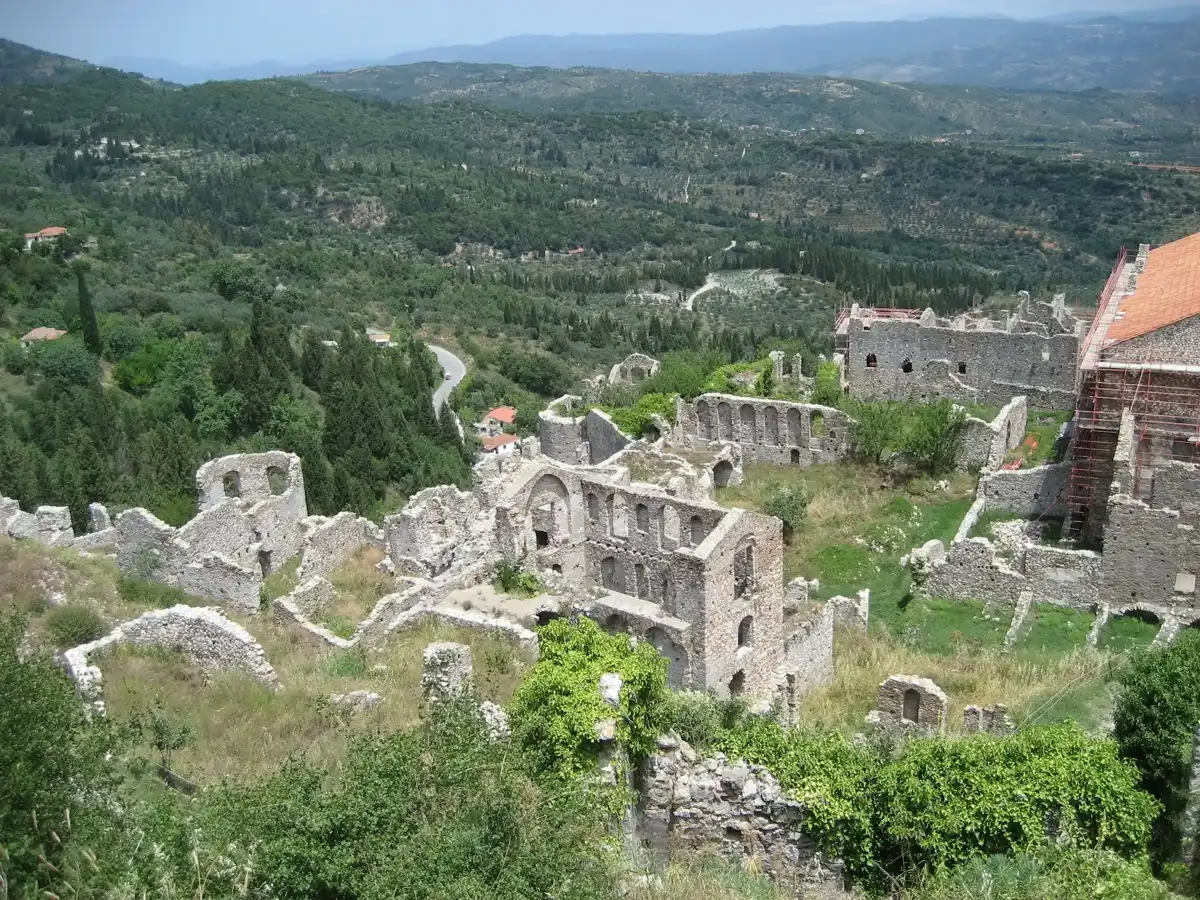
- Despot’s Palace — The political heart of Mystras: terrace walls, ruined halls and cisterns where the Despots ran the province in the late Byzantine era. The mix of defensive masonry and palace fragments gives a real sense of how power was projected here, and the location offers some of the best vantage points down the slope.
- The Castle/Acropolis — The hilltop fortress with its towers and curtain walls that once guarded the settlement. Climbing up rewards you with dramatic views over the Laconian plain and Taygetos mountains, and you can still pick out the strategic lines that made Mystras a stronghold for centuries.
- Peribleptos Church (Panagia Peribleptos) — Famous for its vivid 14th-15th century frescoes and intimate, candlelit interior. The iconographic program and color palette are
- Despot’s Palace — The political heart of Mystras: terrace walls, ruined halls and cisterns where the Despots ran the province in the late Byzantine era. The mix of defensive masonry and palace fragments gives a real sense of how power was projected here, and the location offers some of the best vantage points down the slope.
- The Castle/Acropolis — The hilltop fortress with its towers and curtain walls that once guarded the settlement. Climbing up rewards you with dramatic views over the Laconian plain and Taygetos mountains, and you can still pick out the strategic lines that made Mystras a stronghold for centuries.
- Peribleptos Church (Panagia Peribleptos) — Famous for its vivid 14th-15th century frescoes and intimate, candlelit interior. The iconographic program and color palette are outstanding; it’s my personal favorite because the frescoes feel alive and the space is unexpectedly peaceful despite being one of the site’s showpieces.
- Pantanassa Monastery — A still-functioning monastery with a lovely courtyard, preserved frescoes and a simple, well-restored church. It’s one of the easiest places to see living monastic tradition at Mystras and often less crowded than the big monuments.
- The Metropolis (Cathedral) — The bishop’s cathedral with important fresco cycles and an imposing medieval presence in the town. It helps you understand Mystras as an ecclesiastical center, not just a military or noble residence.
- Byzantine Museum of Mystras — Small but well-curated: icons, liturgical objects, fragments of frescoes and everyday finds that explain the art and daily life behind the ruins. Worth a stop before or after wandering the site so the stones start making sense.
- Medieval streets, chapels and panoramic viewpoints — The charm isn’t only in singular monuments but in the network of cobbled lanes, tiny chapels tucked into houses and viewpoints that frame ruins against the valley below. Take time to wander without a map; you’ll find quiet corners and photo ops that guidebooks don’t always show.
Spotted a mistake or missing something? Contact us.


 Best Backpacking
.jpg) Hi, I’m Johan (Netherlands 🇳🇱), the creator of TakeYourBackpack. Over the past 3 decades, I’ve backpacked through 90+ countries across six continents, gaining extensive experience with independent travel, long-term trips, and overland routes.
Hi, I’m Johan (Netherlands 🇳🇱), the creator of TakeYourBackpack. Over the past 3 decades, I’ve backpacked through 90+ countries across six continents, gaining extensive experience with independent travel, long-term trips, and overland routes.