×

Greece🇬🇷 | best landmarksThe 9 Top landmarks in Greece

Landmarks in Greece are mostly stone: marble columns gone the color of honey by late afternoon, Byzantine monasteries clinging to rock, Venetian fortresses with sea wind whistling through the gates. The experience changes sharply by region. Athens and the Peloponnese mean dusty paths, cicadas and tour buses. The islands bring ferry timetables and higher prices. The north and mountain interiors are quieter and cheaper, with fewer English signs. Backpackers and independent travelers can reach most sites by bus, train or ferry, but rural ones may need a rental scooter or a patient wait at a village kafeneio. Expect hot stone underfoot and little shade.

By Johan Kruseman 🇳🇱 | Updated October 19, 2026
Explore the best national parks in Greece

Why go?Why These unique site Stand Out

Greece packs an unusual density of ancient, Byzantine and medieval sites into a country small enough to cross in a day. Classical civilization, Roman rule, Byzantine monasticism, Venetian and Ottoman occupation each left physical layers, so a single hillside can hold a temple, a chapel and a fortress wall. Limestone and marble, quarried locally, survive the climate well and glow against the blue Aegean and Ionian light, which is hard and white in summer and softer in spring.

The landscape matters as much as the ruins. Sites sit on hilltops, headlands and cliff edges, so visiting usually means climbing worn, slippery stone steps in sun with little shade. Summer heat, often above 35°C (95°F), is part of the deal, along with the scent of thyme, pine resin and dust.

Before choosing Greece, know … read more 👉
Greece packs an unusual density of ancient, Byzantine and medieval sites into a country small enough to cross in a day. Classical civilization, Roman rule, Byzantine monasticism, Venetian and Ottoman occupation each left physical layers, so a single hillside can hold a temple, a chapel and a fortress wall. Limestone and marble, quarried locally, survive the climate well and glow against the blue Aegean and Ionian light, which is hard and white in summer and softer in spring.

The landscape matters as much as the ruins. Sites sit on hilltops, headlands and cliff edges, so visiting usually means climbing worn, slippery stone steps in sun with little shade. Summer heat, often above 35°C (95°F), is part of the deal, along with the scent of thyme, pine resin and dust.

Before choosing Greece, know that the biggest names draw heavy crowds and timed-entry queues, while lesser sites can be nearly empty and free of fuss. Most state-run sites charge entry, typically €6 to 30, with combined tickets for several in Athens. Public transport is dependable between major cities but thin in the countryside and on small islands, where ferries are weather-dependent and meltemi winds can cancel sailings.
How the List Was Created
The list of best unique sites in Greece is created based on history or culture, wow factor, atmosphere, quirks, and memorability. If you feel a unique site is missing in this list, please let us know.

When to go?When to Plan Your Trip

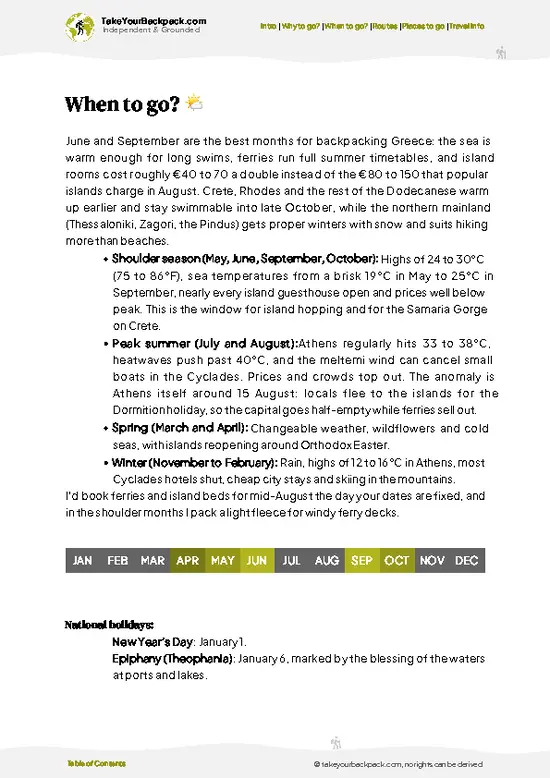
Best months and weather: April to early June and mid-September to October are the best months for landmarks in Greece, because daytime highs sit around 20 to 29°C (68 to 84°F), the light is clear and exposed hilltop sites are walkable. Spring brings wildflowers and green slopes among the ruins, and autumn leaves the sea warm for a swim after a day of walking.

Summer peak: July and August push temperatures to 33 to 40°C (91 to 104°F) in Athens and the Peloponnese, with stone too hot to touch by midday. Most sites open at 8:00, and arriving then gives you a few cool hours before cruise groups and tour buses fill the paths. Accommodation on popular islands can cost two to three times the shoulder-season rate, and ferries sell out. The meltemi, a dry north wind, blows across the Aegean in summer … read more 👉
Best months and weather: April to early June and mid-September to October are the best months for landmarks in Greece, because daytime highs sit around 20 to 29°C (68 to 84°F), the light is clear and exposed hilltop sites are walkable. Spring brings wildflowers and green slopes among the ruins, and autumn leaves the sea warm for a swim after a day of walking.

Summer peak: July and August push temperatures to 33 to 40°C (91 to 104°F) in Athens and the Peloponnese, with stone too hot to touch by midday. Most sites open at 8:00, and arriving then gives you a few cool hours before cruise groups and tour buses fill the paths. Accommodation on popular islands can cost two to three times the shoulder-season rate, and ferries sell out. The meltemi, a dry north wind, blows across the Aegean in summer and can delay boats.

Winter and closures: November to March is mild in the south, around 10 to 15°C (50 to 59°F), but wetter, with most rain between November and February. Days are short, some sites close early at around 15:00 or 16:00, and small islands see reduced ferries and shuttered guesthouses. Mountain regions in the north and center can have snow. Winter suits Athens and the Peloponnese, with lower prices and empty ruins.

unique site hoppingHow to Combine landmarks Into One Trip

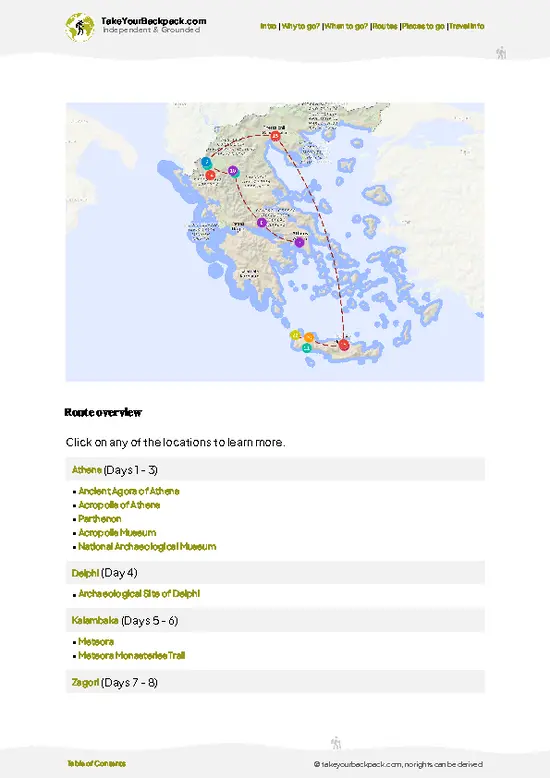
How many days to plan: A trip linking several landmarks in Greece needs 10 to 14 days to avoid constant transit. Athens works as the hub, with its airport, metro, intercity buses at Kifissos and Liosion terminals, and ferries from Piraeus and Rafina.

Which regions group well: The Peloponnese (Corinth, Nafplio, Mycenae region) pairs naturally with Athens, about 1.5 to 2.5 hours by bus. Central Greece links Athens with Delphi (roughly 2.5 to 3 hours by bus) and onward to Meteora, reached via Kalambaka by train or bus (about 5 hours from Athens). Northern Greece, around Thessaloniki, sits 4 to 5 hours from Kalambaka by road. Islands such as Crete, Rhodes or Delos need a separate block: ferries from Piraeus to Crete take 6 to 9 hours, so many travelers fly instead.

A sensible direction runs … read more 👉
How many days to plan: A trip linking several landmarks in Greece needs 10 to 14 days to avoid constant transit. Athens works as the hub, with its airport, metro, intercity buses at Kifissos and Liosion terminals, and ferries from Piraeus and Rafina.

Which regions group well: The Peloponnese (Corinth, Nafplio, Mycenae region) pairs naturally with Athens, about 1.5 to 2.5 hours by bus. Central Greece links Athens with Delphi (roughly 2.5 to 3 hours by bus) and onward to Meteora, reached via Kalambaka by train or bus (about 5 hours from Athens). Northern Greece, around Thessaloniki, sits 4 to 5 hours from Kalambaka by road. Islands such as Crete, Rhodes or Delos need a separate block: ferries from Piraeus to Crete take 6 to 9 hours, so many travelers fly instead.

A sensible direction runs south first, then north: Athens, Peloponnese, back through Athens to Delphi and Meteora, then Thessaloniki, with an island flight or ferry added at the start or end.

Pacing and common mistakes: Allow half a day for most sites and a full day for large complexes. The usual error is cramming three regions into one week, ending up with long bus rides and noon visits in peak heat. Another is trusting ferry times on windy days. Build in a spare day, schedule sites for early morning or late afternoon, and book trains and island ferries ahead in summer.

The ListThe Best landmarks of Greece

1 Acropolis of Athens

ancient citadel, marble ruins, panoramic city views

Ascend the rocky plateau to encounter iconic temples and sweeping vistas, where the city’s ancient and modern layers converge in one glance.

Greece - the Acropolis of Athens

2 Parthenon

Doric columns, sculpted frieze, temple platform

Stand beneath monumental stonework and intricate carvings, observing the enduring craftsmanship that has defined Western architecture for centuries.

Greece - the Parthenon

3 Meteora

towering rock pillars, cliffside monasteries, winding stone steps

Climb steep trails to reach centuries-old monasteries perched above valleys, where silence and dramatic geology define the experience.

greece-unique-site-meteora
© Google | Marjan Petrovski

4 Archaeological Site of Delphi

mountain slopes, oracle remains, sacred way

Follow winding paths through pine forests and terraced ruins, tracing the footsteps of pilgrims who once sought guidance from the legendary oracle.

greece-unique-site-archaeological-site-of-delphi
© Google | Jeremy Hylton

5 Archaeological Site of Olympia

ancient stadium, temple remains, olive groves

Walk among weathered columns and grassy fields where athletes competed, surrounded by the quiet landscape that inspired the Olympic tradition.

greece-unique-site-archaeological-site-of-olympia
© Google | Fabio Orfeo

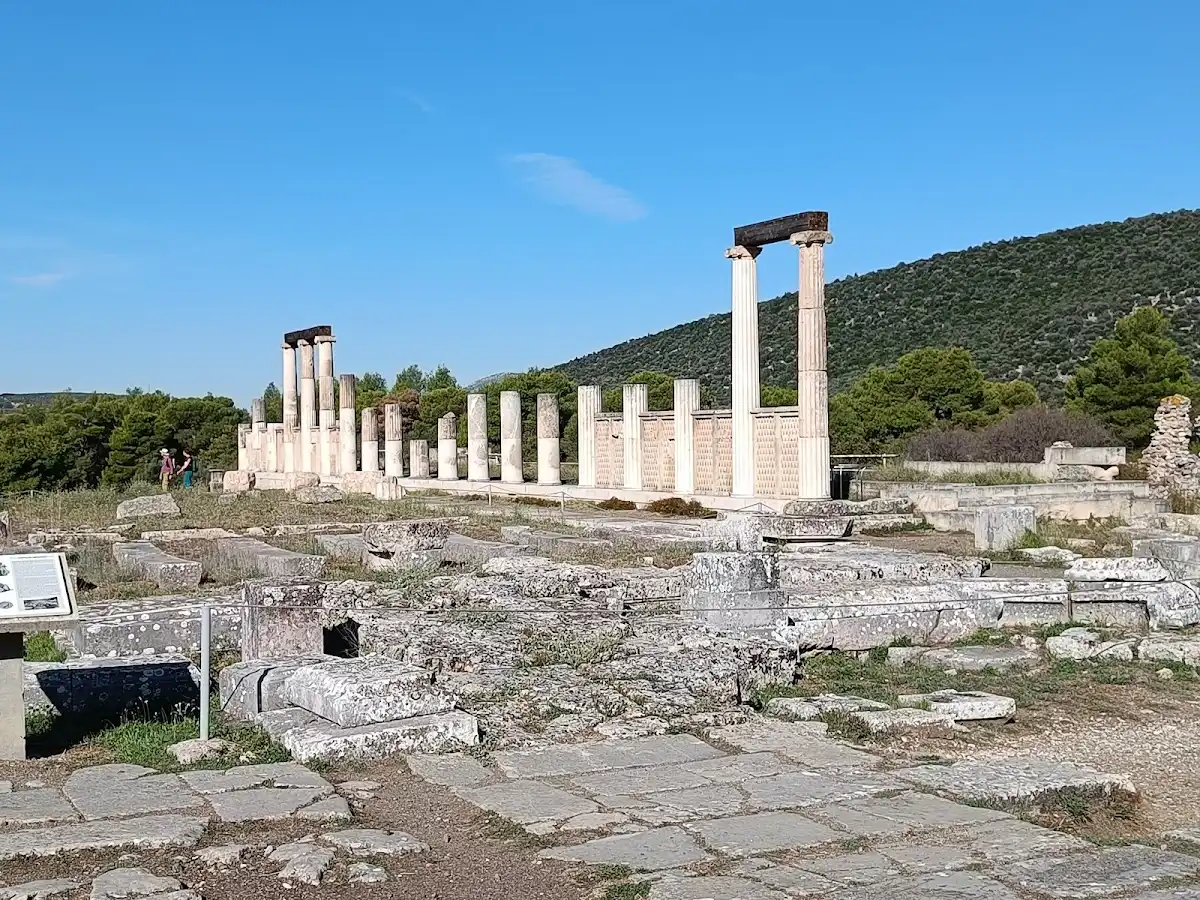
6 Sanctuary of Asklepios at Epidaurus

ancient theater, healing center, cypress groves

Sit in a remarkably preserved amphitheater renowned for its acoustics, then wander through the remains of a sanctuary dedicated to ancient healing practices.

greece-unique-site-sanctuary-of-asklepios-at-epidaurus
© Google |

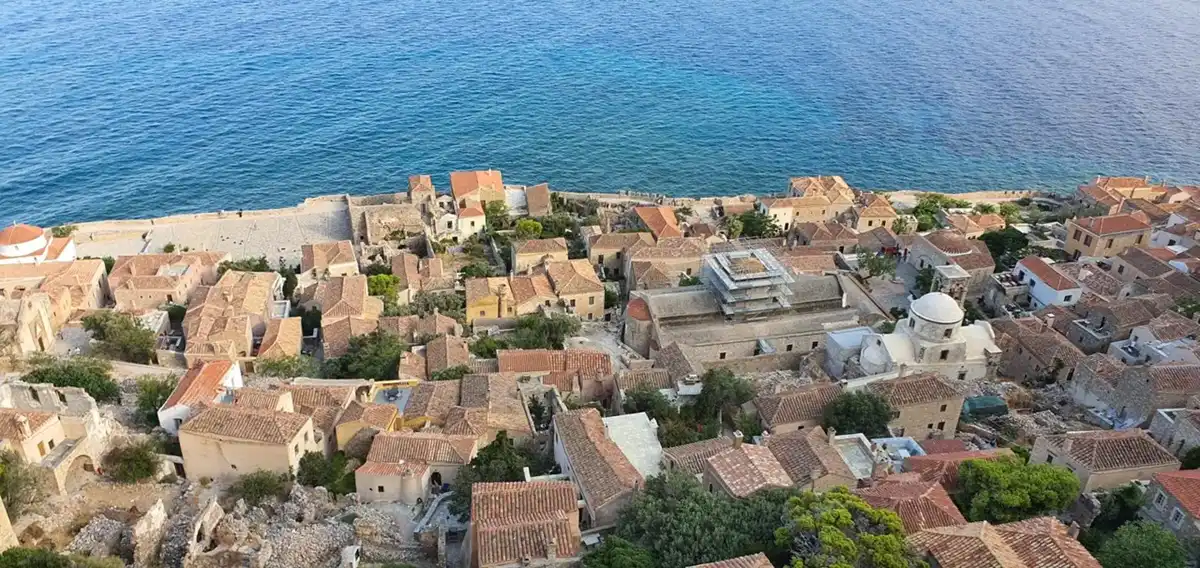
7 Monemvasia

walled island town, sea-facing ramparts, cobbled alleys

Cross a narrow causeway to explore a medieval enclave carved into rock, with layered architecture and sweeping views over the Aegean.

greece-unique-site-monemvasia
© Google | Sakis Mafredas

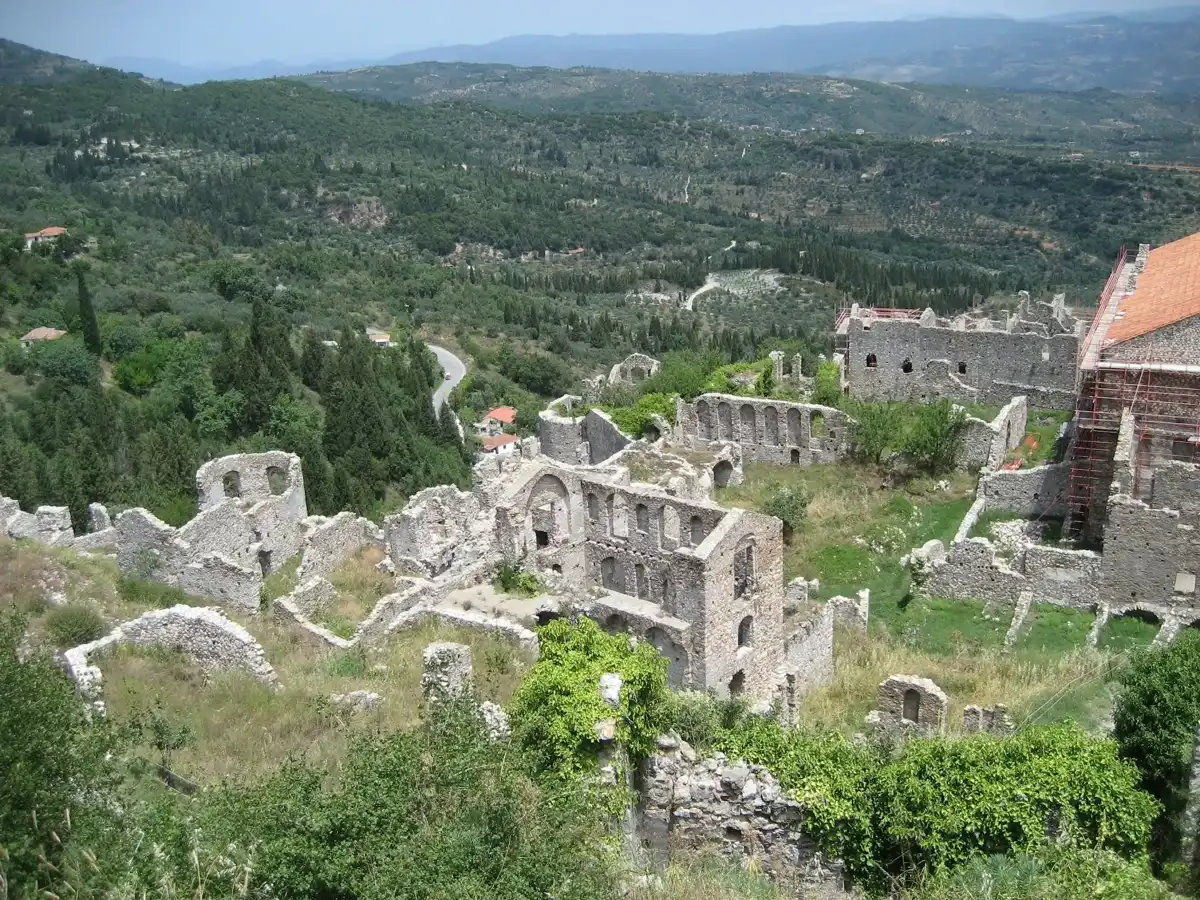
8 Archaeological Site of Mystras

Byzantine churches, hillside fortress, medieval mosaics

Wander through a maze of stone lanes and crumbling monasteries, discovering frescoed chapels and fortified walls set against a rugged mountain backdrop.

greece-unique-site-archaeological-site-of-mystras
© Google | Roberto Garagnani

9 Archaeological Site of Philippi

Roman forum, early Christian basilicas, battlefield plain

Traverse open ruins and mosaic floors, exploring a site shaped by Roman conquest, early Christianity, and pivotal moments in European history.

greece-unique-site-archaeological-site-of-philippi
© Google | Anargk
Loading the map 🌍

Expert viewTips and Advice from Travelers

How many landmarks to visit: I advise six to eight landmarks across a two-week trip. Greece rewards depth over volume: after a fourth ruin in the same heat, columns blur together and your legs and attention fade. Fewer sites leave time for a late lunch, a swim and the evening walk when stone cools and the smell of grilled meat drifts through village streets. A backpacker who tries ten or more pays in bus time, fatigue and sunburn, for little extra.

Which kinds to prioritize: Ancient sites suit history-minded travelers and cost the most in entry fees and crowds, but they give the clearest sense of Greece. Byzantine monasteries and churches suit people after atmosphere and quiet. They are usually cheaper, though they ask for modest dress and have odd opening hours. Venetian and Ottoman fortresses … read more 👉
How many landmarks to visit: I advise six to eight landmarks across a two-week trip. Greece rewards depth over volume: after a fourth ruin in the same heat, columns blur together and your legs and attention fade. Fewer sites leave time for a late lunch, a swim and the evening walk when stone cools and the smell of grilled meat drifts through village streets. A backpacker who tries ten or more pays in bus time, fatigue and sunburn, for little extra.

Which kinds to prioritize: Ancient sites suit history-minded travelers and cost the most in entry fees and crowds, but they give the clearest sense of Greece. Byzantine monasteries and churches suit people after atmosphere and quiet. They are usually cheaper, though they ask for modest dress and have odd opening hours. Venetian and Ottoman fortresses and old towns are often free or nearly so, and you can wander them without a ticket or a schedule. On a tight budget, mix one or two major paid sites with several free or low-cost ones. If you only want photos and atmosphere, favor hilltop villages and fortresses over big archaeological parks. If you want context, a few paid museums add more than extra ruins.

What it costs: Plan on roughly US$55 to 90 (€50 to 85) a day all in for a mid-range backpacker, or US$40 to 60 (€35 to 55) if you eat from bakeries and stay in hostels. Entry to major archaeological sites typically runs €6 to 30, with Athens combined tickets covering several sites for about €30. Smaller sites are often €2 to 8, and some are free on certain days, such as the first Sunday of the month in winter. Local guides charge about €60 to 150 for a private tour; audio guides cost €5 to 10. Buses between regional towns run €10 to 30 a leg. Bring a refillable bottle, since sites rarely have cheap water.

Safety and etiquette: Heat is the main danger. Carry at least 1.5 liters of water, wear a hat and sturdy shoes, because polished marble becomes slick and uneven. Never climb on ancient stones or take fragments. Monasteries and churches require covered shoulders and knees, and photography may be banned inside. Petty theft happens in crowded Athens, so keep valuables in front pockets. Drones are restricted at heritage sites. Wildfires in summer can close roads and sites, so check local news before heading to remote areas.

✈️ The backpacker research shortcutGreece Travel Guide

An offline-friendly backpacking guide with optimized travel routes, ranked highlights, transport advice, and the best areas to stay.
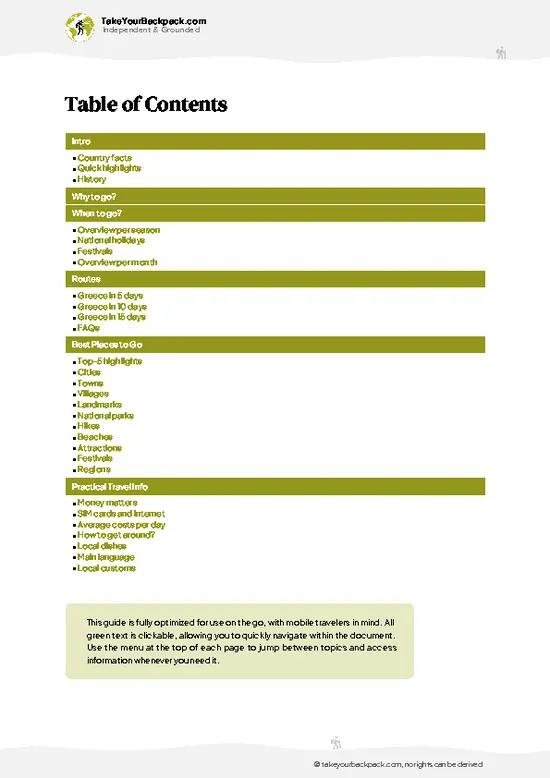
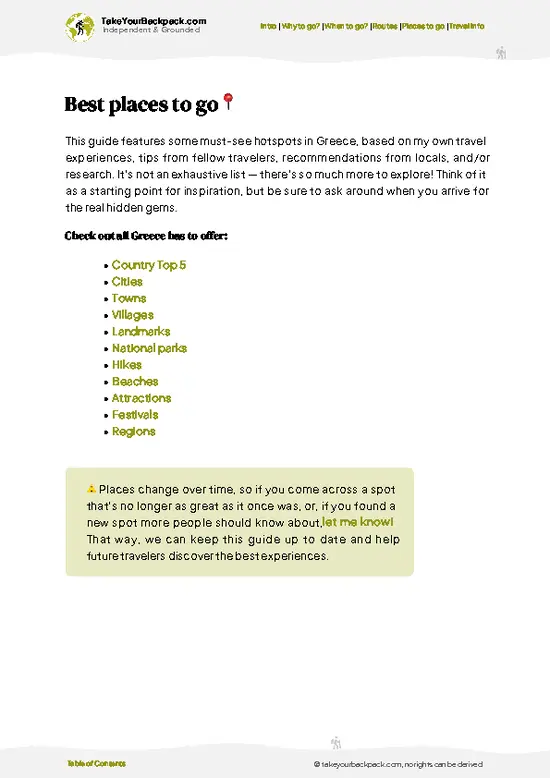
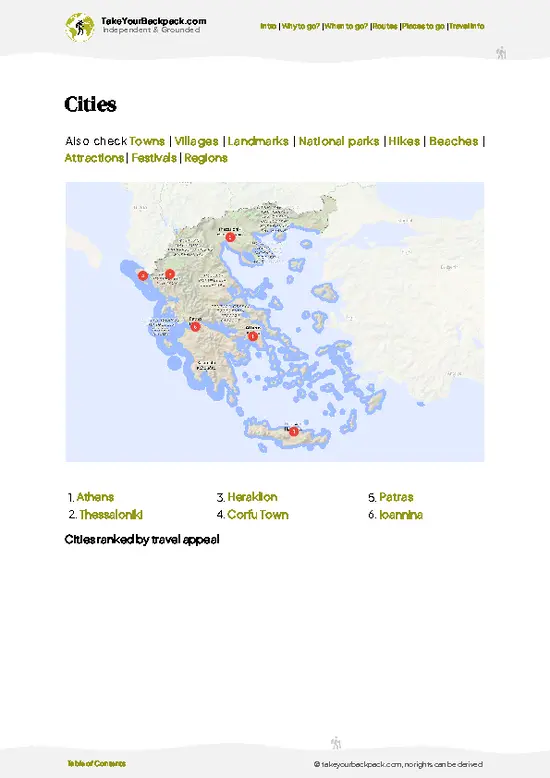
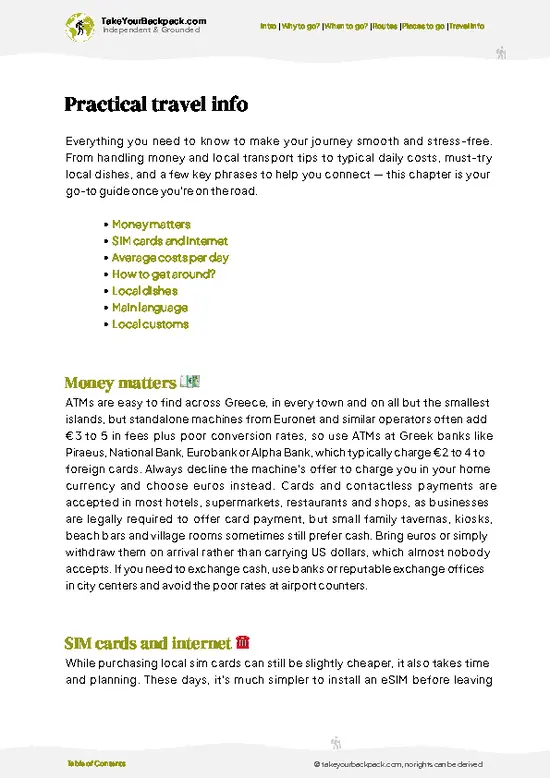
example page 0 from our offline Travel Guide for Greece
example page 1 from our offline Travel Guide for Greece
example page 2 from our offline Travel Guide for Greece
example page 3 from our offline Travel Guide for Greece
example page 4 from our offline Travel Guide for Greece
example page 5 from our offline Travel Guide for Greece
example page 6 from our offline Travel Guide for Greece
example page 7 from our offline Travel Guide for Greece
The digital guide (417 pages) contains:
✅ 114 highlights, ranked by travel appeal
✅ Optimized 5, 10 & 15-day travel routes
✅ Cities, national parks, landmarks, beaches
✅ How to get around
✅ Offline-friendly for travel without Wi-Fi
👉 Click to see all 30+ guide features

📅 Plan smarter in minutes, not weeks
✅ Month by month travel advice
✅ Festivals & national holidays
✅ Budget expectations

🗺️ Go to the right places, skip the overrated ones
✅ Honest pros & cons of destinations
✅ Top hikes, parks & viewpoints
✅ Lesser-known places most travelers miss
✅ Clear “worth it vs skip it” guidance

🛏️ Travel smoothly without rookie mistakes
✅ Best areas to stay
✅ Transport systems explained simply
✅ Common scams & safety advice
✅ SIM cards, money & practical tips

🌍 Understand the country, not just visit it
✅ Culture & traditions
✅ 52 Essential phrases & customs
✅ Festivals worth planning around
✅ Traveler-friendly historical context
✅ Insights that make places more meaningful

📱 Built for real travel conditions
✅ Fully downloadable PDF
✅ Works completely offline
✅ Optimized for phone use
✅ Useful in remote areas & buses
✅ Everything in one place
Stop searching, start planning
Get instant access to your full guide. 30‑day money-back guarantee.
+ Add another guide for just

By proceeding you agree to our terms.
Sent to your inbox immediately after payment • 100% Secure Checkout
Best Backpacking Travel Advisor 2025 tourism awardBest Backpacking
Travel Advisor
2025
What others say about Take Your Backpack Guides:
⭐⭐⭐⭐⭐
Fantastic, amazing amount of information!
⭐⭐⭐⭐⭐
My goodness this is amazing, it's what I've been looking for hats off too you!
⭐⭐⭐⭐⭐
I think this is absolutely BRILLIANT
⭐⭐⭐⭐
Very complete and informative. It's still missing places, but I gotta to commend you
⭐⭐⭐⭐⭐
This is truly amazing, thank you, can't wait to explore it with my kids!
⭐⭐⭐⭐⭐
Awesome resource, thank you!
⭐⭐⭐⭐⭐
This is amazing! Can't wait to explore the ones I haven't seen
⭐⭐⭐⭐
I love this! Well done, great idea.
⭐⭐⭐⭐⭐
Thanks for taking the time to make this gem!
⭐⭐⭐⭐⭐
This might be the best website I've ever seen.
⭐⭐⭐⭐⭐
Congratulations, and thank you so much for your work; it's incredibly valuable.
⭐⭐⭐⭐
In all seriousness I think you did a great job pointing out the important spots
⭐⭐⭐⭐⭐
10/10 very good
⭐⭐⭐⭐⭐
As someone who's only just starting to visit regularly this is awesome, thank you.
⭐⭐⭐⭐
Thank you very much! I'm going to visit my dad, it's going to be very useful!
⭐⭐⭐⭐⭐
This is really cool! We'll be travelling for the first time and this definitely come in handy.
⭐⭐⭐⭐⭐
You are now our minister of culture, congratulations 👨‍💼
⭐⭐⭐⭐⭐
Just wanted to tell you that this is a pearl! Going to follow your recommendations.
⭐⭐⭐⭐⭐
This is so cool. I'll definitely be using the resource for my travels soon.
⭐⭐⭐⭐⭐
This is very impressive! Good work.
⭐⭐⭐⭐⭐
This is an amazing and informative site. Very well done!

🛏️ Where to stay?Top Places to Consider Staying

Greece has a solid spread of hostels, budget guesthouses and family-run rooms, with dorm beds in Athens typically running €18 to 35 in summer and the densest choice found in the capital, Thessaloniki and party-friendly islands like Ios and Corfu. In Athens, Psyri and Monastiraki put you a short walk from the Acropolis and the city’s busiest bar streets but stay loud until 3 a.m., Koukaki is calmer, residential and right below the Acropolis’ south slope, while Exarchia is the cheapest and most lively, though its late-night street scene can feel edgy. In Thessaloniki, Ladadika sits by the port with the best nightlife, and on the islands you’ll save money and ferry stress by staying in the main … read more 👉
Greece has a solid spread of hostels, budget guesthouses and family-run rooms, with dorm beds in Athens typically running €18 to 35 in summer and the densest choice found in the capital, Thessaloniki and party-friendly islands like Ios and Corfu. In Athens, Psyri and Monastiraki put you a short walk from the Acropolis and the city’s busiest bar streets but stay loud until 3 a.m., Koukaki is calmer, residential and right below the Acropolis’ south slope, while Exarchia is the cheapest and most lively, though its late-night street scene can feel edgy. In Thessaloniki, Ladadika sits by the port with the best nightlife, and on the islands you’ll save money and ferry stress by staying in the main port town rather than out at the beaches.

If you enjoy meeting fellow travelers, consider choosing hostels with high ratings for atmosphere. On the other hand, if you prefer having your own space, a hotel might be a better option.

GreeceMore Places Across Greece

👋 Meet the founderWho’s Behind Take Your Backpack?

Johan, backpacker and founder of TakeYourBackpackHi, I’m Johan (Netherlands 🇳🇱), the creator of TakeYourBackpack. Over the past 3 decades, I’ve backpacked through 90+ countries across six continents, gaining extensive experience with independent travel, long-term trips, and overland routes.

This site is built on a combination of firsthand travel experience and carefully curated insights from other backpackers. Many guides are based on places I’ve personally visited, while others bring together tips, observations, and practical advice shared by trusted travelers I’ve met along the way.

The goal is to provide realistic, experience-driven guidance — not generic itineraries — so you can explore destinations with better context, clearer expectations, and more confidence.