×

Guatemala🇬🇹 | citiesAntiguaYellow arch, volcano views, convent ruins, cobbled streets | things to do and best time to go

Explore Punta de PalmaExplore Cobán

Backpacking in Antigua
🏆 Top pickcity ranked #1
By Johan Kruseman 🇳🇱 | Updated October 22, 2026

Antigua suits travelers who like to wander cobbled streets, study Spanish, climb volcanoes and eat well without a plan. If you want beaches, raw jungle or nightlife that runs past 2 AM, you will find it thin, and the cobblestones are murder on wheeled luggage. The city sits in the central highlands of Guatemala, in a valley ringed by three volcanoes. I would skip the souvenir stalls near the arch and spend that time in the market and the ruins instead. At a corner stand near the market I once ate a plate of chicken tamales wrapped in banana leaf, steaming and heavy with masa, with a mug of sweet atol de elote, for about US$3. That is the right scale for the place. Ash-gray volcano outlines behind pastel walls, church bells at odd hours, and the smell of woodsmoke and roasting coffee drifting down Calle del Arco.

Discover everything you want to know in the 📖 Guatemala Travel Guide.


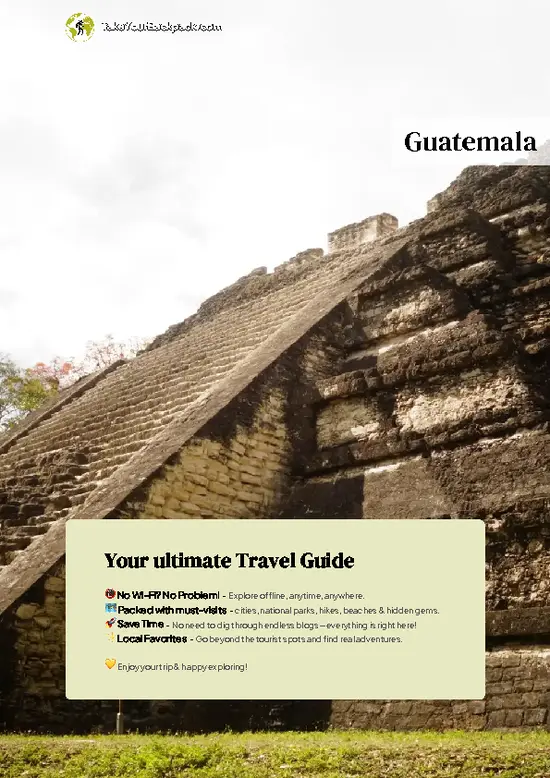
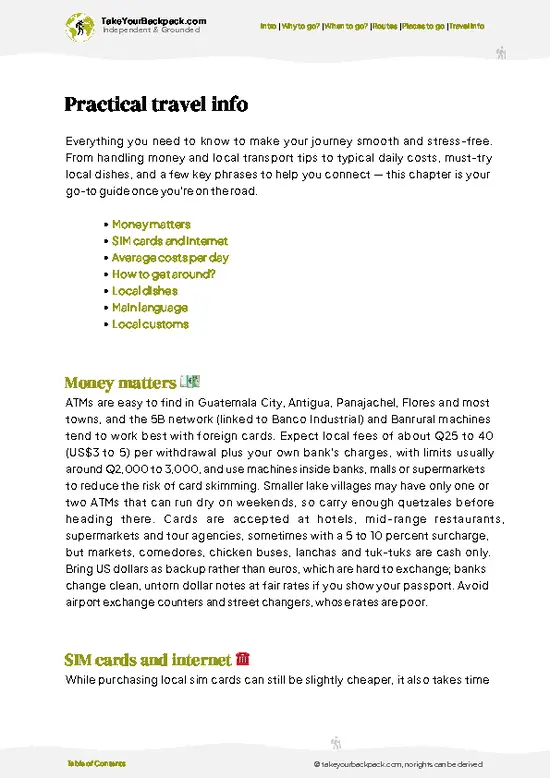
example page 0 from our offline Travel Guide for Guatemala
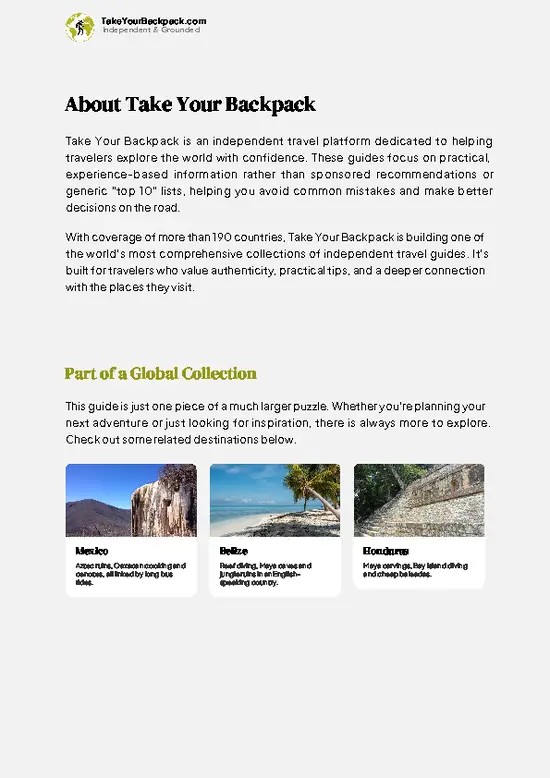
example page 1 from our offline Travel Guide for Guatemala
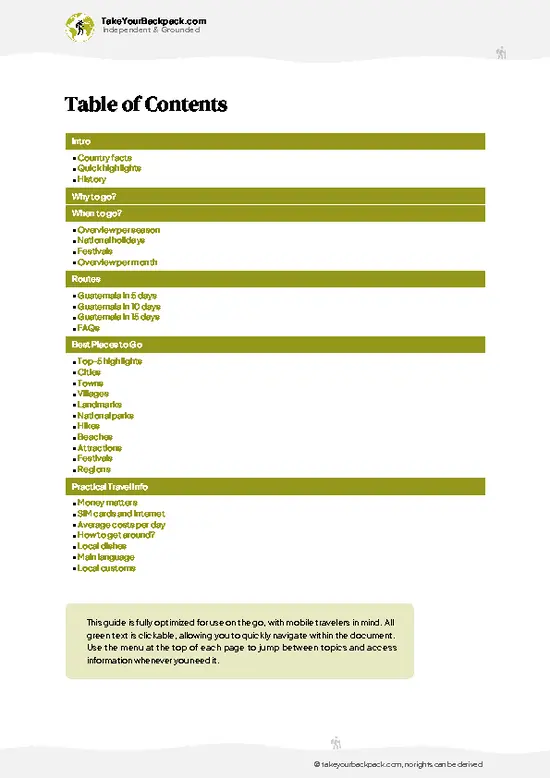
example page 2 from our offline Travel Guide for Guatemala
example page 3 from our offline Travel Guide for Guatemala
example page 4 from our offline Travel Guide for Guatemala
example page 5 from our offline Travel Guide for Guatemala
example page 6 from our offline Travel Guide for Guatemala
example page 7 from our offline Travel Guide for Guatemala
Loading the map 🌍
CLICK TO FILTER
cities
towns
villages
landmarks
national parks
hikes
beaches
attractions
festivals
regions
SHOW COUNTRY’S BESTSHOW ALL

✨ Why go?
Ranked #1 city in Guatemala
What makes this city worth visiting

Antigua works as a backpacker stop because everything useful sits within a 20-minute walk on a flat grid, so you can drop your bag and not touch transport for days. The city holds a dense scene of Spanish schools, which makes it the place in Guatemala where many travelers spend a week or two learning the language with a local family. Hostels here are social, with rooftop terraces that look straight at Volcán de Agua, and it is easy to meet people for group hikes and shared shuttles. Food ranges from market comedores to polished cafés, so you can eat cheaply most days and splurge once. Onward travel is simple, with shuttles heading to Lake Atitlán, Guatemala City airport and the Pacific side, so Antigua slots into most routes as a hub. Expect tourist crowds on weekends and prices above the … read more 👉
Antigua works as a backpacker stop because everything useful sits within a 20-minute walk on a flat grid, so you can drop your bag and not touch transport for days. The city holds a dense scene of Spanish schools, which makes it the place in Guatemala where many travelers spend a week or two learning the language with a local family. Hostels here are social, with rooftop terraces that look straight at Volcán de Agua, and it is easy to meet people for group hikes and shared shuttles. Food ranges from market comedores to polished cafés, so you can eat cheaply most days and splurge once. Onward travel is simple, with shuttles heading to Lake Atitlán, Guatemala City airport and the Pacific side, so Antigua slots into most routes as a hub. Expect tourist crowds on weekends and prices above the national norm. Even so, the ruined colonial churches on nearly every block give it a depth that few Central American towns match. Plan three to five days, longer if you enroll in classes.

💡 HighlightsMust-see experiences and standout moments

  1. Arco de Santa Catalina: The yellow arch framing Volcán de Agua is the image everyone comes for. It once let nuns cross the street unseen. Go before 8 AM for clear light and no crowds. Free, 15 minutes, with the bakery next door worth a stop.
  2. Cerro de la Cruz: A short climb on the north side gives a clean view of the city grid with the volcano behind it. Go early morning, and take a taxi or a group in case of safety concerns. Free, about 1 hour including the walk.
  3. Convento de las Capuchinas: Ruins of a 1700s convent with a circular tower of nun cells around a courtyard. Visit in the morning. Entry is about US$5, allow 1 hour.
  4. Iglesia y Convento de La Merced: A bright yellow baroque church with carved facade detail and a large fountain in the cloister. Open most days, and the cloister costs about
… read more 👉
  1. Arco de Santa Catalina: The yellow arch framing Volcán de Agua is the image everyone comes for. It once let nuns cross the street unseen. Go before 8 AM for clear light and no crowds. Free, 15 minutes, with the bakery next door worth a stop.
  2. Cerro de la Cruz: A short climb on the north side gives a clean view of the city grid with the volcano behind it. Go early morning, and take a taxi or a group in case of safety concerns. Free, about 1 hour including the walk.
  3. Convento de las Capuchinas: Ruins of a 1700s convent with a circular tower of nun cells around a courtyard. Visit in the morning. Entry is about US$5, allow 1 hour.
  4. Iglesia y Convento de La Merced: A bright yellow baroque church with carved facade detail and a large fountain in the cloister. Open most days, and the cloister costs about US$1. Allow 45 minutes.
  5. Ruinas de San Francisco: Ruined church and active chapel holding the tomb of Hermano Pedro, a saint to Guatemalans. Quiet and atmospheric. Entry is about US$2 to 3, with 45 minutes needed.
  6. Mercado Central: A working market with textiles, produce, flowers and cheap meals. Come before noon for the best stalls. Free to enter, a meal costs US$2 to 4, and 1 hour is plenty.
  7. Casa Santo Domingo and its museums: A hotel built in a ruined monastery, with archaeological and glass museums and candlelit gardens. Late afternoon is best. Entry is roughly US$5 to 6, for 1 to 2 hours.
  8. Parque Central: The main plaza, with a fountain, the Palacio de los Capitanes General arcade and the cathedral ruins. Evenings fill with families and vendors. Free, 30 to 60 minutes.
Beyond the city, Antigua pairs well with the day hikes up Pacaya volcano, the coffee farms on the slopes and the nearby village of San Antonio Aguas Calientes. Tickets or advance booking matter for Pacaya tours, but none of the sights in town need either.
Spotted a mistake or missing something? Contact us.

Things to do in Antigua

Ratings based on Tripadvisor reviews. When you book through this link, you support our work at no extra cost to you.

🏘️ NeighborhoodsNeighborhood guide to Antigua

Antigua is a grid of about 30 blocks, and the best parts sit within a 15-minute walk of each other. Cobblestones are brutal on ankles, so wear real shoes.
  • Parque Central and the core: Worth your time first thing, around 7 a.m., when the fountain is quiet and the volcano Agua sits clear above the rooftops. By midday the portico cafés fill with tour groups and prices climb. Walk through, don’t eat here.
  • Calle del Arco and 5th Avenue North: The yellow Santa Catalina arch is the photo everyone takes, and it is worth doing once, early. Bakeries pour out the smell of sweet bread and chocolate. Skip the souvenir shops along the strip; the real markets are better.
  • Mercado and the bus terminal side (west): Loud, diesel-smoky and the most honest part of town. Stalls sell produce, herbs, woven cloth and
… read more 👉
Antigua is a grid of about 30 blocks, and the best parts sit within a 15-minute walk of each other. Cobblestones are brutal on ankles, so wear real shoes.
  • Parque Central and the core: Worth your time first thing, around 7 a.m., when the fountain is quiet and the volcano Agua sits clear above the rooftops. By midday the portico cafés fill with tour groups and prices climb. Walk through, don’t eat here.
  • Calle del Arco and 5th Avenue North: The yellow Santa Catalina arch is the photo everyone takes, and it is worth doing once, early. Bakeries pour out the smell of sweet bread and chocolate. Skip the souvenir shops along the strip; the real markets are better.
  • Mercado and the bus terminal side (west): Loud, diesel-smoky and the most honest part of town. Stalls sell produce, herbs, woven cloth and plates of rice and stew for a few dollars. Go for lunch, watch your bag, and leave before the afternoon chaos.
  • La Merced and the north: Calmer, with a pale-yellow baroque church and the sound of church bells over quiet streets. Good for slow wandering, with fewer crowds and more local life.
  • Ruins district (south and east): Roofless convents like Santa Clara and Capuchinas show how earthquakes shaped the city. Entry is small, and the stone courtyards are cool and echoing. Pick one or two, not all.
  • Cerro de la Cruz: A hillside viewpoint north of the center. Go in daylight and in a group or with a tour, then walk down for the view of Agua.
Nightlife is compact: rooftop bars and a few late-night spots around the central blocks, loud on weekends and finished early on weeknights.

⌛️ 1 day1-day itinerary for Antigua

The day works on foot, since the grid is flat and compact, with a long lunch to dodge midday sun and a short taxi for the evening.
7:30 AM: Arco de Santa Catalina Start at the arch while the street is empty and the volcano is clear. Buy a pastry at the corner bakery, then walk five minutes east.
8:30 AM: Convento de las Capuchinas Wander the round tower and cloister before tour groups arrive. Walk 10 minutes toward the center.
10:30 AM: Parque Central Sit by the fountain, look at the cathedral ruins and the arcaded palace, then head west along the main street toward the market.
11:30 AM: Mercado Central Browse produce and textiles, and eat a comedor lunch of stew and tortillas. The market sprawls behind the bus terminal, so keep a hand on your bag.
1:30 PM: Walk to Ruinas de San Francisco Cross … read more 👉
The day works on foot, since the grid is flat and compact, with a long lunch to dodge midday sun and a short taxi for the evening.
7:30 AM: Arco de Santa Catalina Start at the arch while the street is empty and the volcano is clear. Buy a pastry at the corner bakery, then walk five minutes east.
8:30 AM: Convento de las Capuchinas Wander the round tower and cloister before tour groups arrive. Walk 10 minutes toward the center.
10:30 AM: Parque Central Sit by the fountain, look at the cathedral ruins and the arcaded palace, then head west along the main street toward the market.
11:30 AM: Mercado Central Browse produce and textiles, and eat a comedor lunch of stew and tortillas. The market sprawls behind the bus terminal, so keep a hand on your bag.
1:30 PM: Walk to Ruinas de San Francisco Cross the town on the quieter streets south of the center. The ruins and chapel hold a quiet atmosphere, and the cool stone is welcome after the midday heat.
3:00 PM: Café break Rest at a courtyard café. Order a pour-over from a local farm, since the nearby slopes grow some of the best beans in the country.
4:30 PM: San Pedro Las Huertas This small neighboring village is off the standard route. Take a short tuk-tuk or taxi ride to see the church, local bakeries and everyday life without tourist shops.
6:00 PM: Cerro de la Cruz Take a taxi up for the evening view, when lights come on across the grid, then ride back down for dinner.

🌤️ When to go?Choosing the right time of year

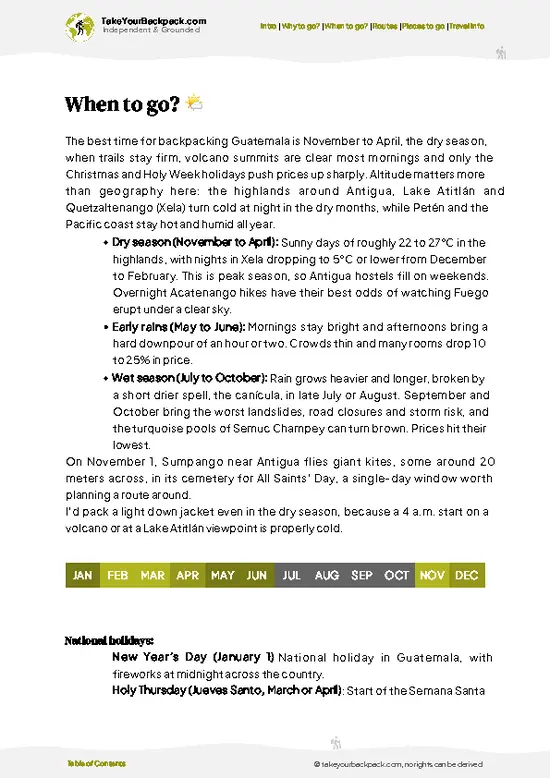
November to April is the most reliable window, with dry sunny days and cool nights. Days sit near 24 to 26°C (75 to 79°F), but evenings drop to 10 to 14°C (50 to 57°F) in December and January, so bring a fleece.
  • Dry Season (November to April): Volcano views are sharp, and hiking Acatenango is most rewarding. Crowds peak around Christmas, New Year and especially Semana Santa (March or April), when beds sell out weeks ahead and prices rise noticeably.
  • Green Season (May to October): Mornings are often bright, then storms roll in most afternoons, usually between 2 and 5 p.m. Temperatures stay around 20 to 25°C (68 to 77°F). Streets are quieter, dorm beds are cheaper, and the hills turn deep green, though volcano summits are often clouded in.
  • Daylight: Days run about 11 to 13 hours all year, so plan
… read more 👉
November to April is the most reliable window, with dry sunny days and cool nights. Days sit near 24 to 26°C (75 to 79°F), but evenings drop to 10 to 14°C (50 to 57°F) in December and January, so bring a fleece.
  • Dry Season (November to April): Volcano views are sharp, and hiking Acatenango is most rewarding. Crowds peak around Christmas, New Year and especially Semana Santa (March or April), when beds sell out weeks ahead and prices rise noticeably.
  • Green Season (May to October): Mornings are often bright, then storms roll in most afternoons, usually between 2 and 5 p.m. Temperatures stay around 20 to 25°C (68 to 77°F). Streets are quieter, dorm beds are cheaper, and the hills turn deep green, though volcano summits are often clouded in.
  • Daylight: Days run about 11 to 13 hours all year, so plan hikes to start early.
  • Festivals: Semana Santa brings carpets of colored sawdust on the streets and large processions. Independence celebrations in mid-September are lively and loud.
Book Semana Santa lodging months ahead, or visit in early November for dry weather without the crowds.


source: climatestotravel.comJANJanuary: excellent for travelingFEBFebruary: excellent for travelingMARMarch: excellent for travelingAPRApril: highly recommended for travelingMAYMay: fair for travelingJUNJune: fair for travelingJULJuly: fair for travelingAUGAugust: fair for travelingSEPSeptember: fair for travelingOCTOctober: good for travelingNOVNovember: highly recommended for travelingDECDecember: highly recommended for traveling
guatemala-city-antigua
© Google | Nelson Gonzalez

✈️ The backpacker research shortcutGuatemala Travel Guide

An offline-friendly backpacking guide with optimized travel routes, ranked highlights, transport advice, and the best areas to stay.
example page 0 from our offline Travel Guide for Guatemala
example page 1 from our offline Travel Guide for Guatemala
example page 2 from our offline Travel Guide for Guatemala
example page 3 from our offline Travel Guide for Guatemala
example page 4 from our offline Travel Guide for Guatemala
example page 5 from our offline Travel Guide for Guatemala
example page 6 from our offline Travel Guide for Guatemala
example page 7 from our offline Travel Guide for Guatemala
The digital guide (272 pages) contains:
✅ 85 highlights, ranked by travel appeal
✅ Optimized 5, 10 & 15-day travel routes
✅ Cities, national parks, landmarks, beaches
✅ How to get around
✅ Offline-friendly for travel without Wi-Fi
👉 Click to see all 30+ guide features

📅 Plan smarter in minutes, not weeks
✅ Month by month travel advice
✅ Festivals & national holidays
✅ Budget expectations

🗺️ Go to the right places, skip the overrated ones
✅ Honest pros & cons of destinations
✅ Top hikes, parks & viewpoints
✅ Lesser-known places most travelers miss
✅ Clear “worth it vs skip it” guidance

🛏️ Travel smoothly without rookie mistakes
✅ Best areas to stay
✅ Transport systems explained simply
✅ Common scams & safety advice
✅ SIM cards, money & practical tips

🌍 Understand the country, not just visit it
✅ Culture & traditions
✅ 52 Essential phrases & customs
✅ Festivals worth planning around
✅ Traveler-friendly historical context
✅ Insights that make places more meaningful

📱 Built for real travel conditions
✅ Fully downloadable PDF
✅ Works completely offline
✅ Optimized for phone use
✅ Useful in remote areas & buses
✅ Everything in one place
Stop searching, start planning
Get instant access to your full guide. 30‑day money-back guarantee.
+ Add another guide for just

By proceeding you agree to our terms.
Sent to your inbox immediately after payment • 100% Secure Checkout
Best Backpacking Travel Advisor 2025 tourism awardBest Backpacking
Travel Advisor
2025
What others say about Take Your Backpack Guides:
⭐⭐⭐⭐⭐
Fantastic, amazing amount of information!
⭐⭐⭐⭐⭐
My goodness this is amazing, it's what I've been looking for hats off too you!
⭐⭐⭐⭐⭐
I think this is absolutely BRILLIANT
⭐⭐⭐⭐
Very complete and informative. It's still missing places, but I gotta to commend you
⭐⭐⭐⭐⭐
This is truly amazing, thank you, can't wait to explore it with my kids!
⭐⭐⭐⭐⭐
Awesome resource, thank you!
⭐⭐⭐⭐⭐
This is amazing! Can't wait to explore the ones I haven't seen
⭐⭐⭐⭐
I love this! Well done, great idea.
⭐⭐⭐⭐⭐
Thanks for taking the time to make this gem!
⭐⭐⭐⭐⭐
This might be the best website I've ever seen.
⭐⭐⭐⭐⭐
Congratulations, and thank you so much for your work; it's incredibly valuable.
⭐⭐⭐⭐
In all seriousness I think you did a great job pointing out the important spots
⭐⭐⭐⭐⭐
10/10 very good
⭐⭐⭐⭐⭐
As someone who's only just starting to visit regularly this is awesome, thank you.
⭐⭐⭐⭐
Thank you very much! I'm going to visit my dad, it's going to be very useful!
⭐⭐⭐⭐⭐
This is really cool! We'll be travelling for the first time and this definitely come in handy.
⭐⭐⭐⭐⭐
You are now our minister of culture, congratulations 👨‍💼
⭐⭐⭐⭐⭐
Just wanted to tell you that this is a pearl! Going to follow your recommendations.
⭐⭐⭐⭐⭐
This is so cool. I'll definitely be using the resource for my travels soon.
⭐⭐⭐⭐⭐
This is very impressive! Good work.
⭐⭐⭐⭐⭐
This is an amazing and informative site. Very well done!

🛏️ Where to stay?Best areas to stay in Guatemala

The best bet for a budget bed is the area within about six blocks of Parque Central, where hostel and guesthouse supply is deepest and everything is walkable. Dorm beds here run about US$8 to 15, and you are close to shuttle offices, tour operators, ATMs and cafés. Streets are well lit and busy until late, so walking back at night feels easy. The downside is noise: bars and rooftops near the center can keep going until the early hours, so light sleepers should request a quiet room or bring earplugs.
The second option is the northern side near La Merced, a short walk from the center. It is calmer … read more 👉
The best bet for a budget bed is the area within about six blocks of Parque Central, where hostel and guesthouse supply is deepest and everything is walkable. Dorm beds here run about US$8 to 15, and you are close to shuttle offices, tour operators, ATMs and cafés. Streets are well lit and busy until late, so walking back at night feels easy. The downside is noise: bars and rooftops near the center can keep going until the early hours, so light sleepers should request a quiet room or bring earplugs.
The second option is the northern side near La Merced, a short walk from the center. It is calmer and more residential, with guesthouses, small family-run places and a slower pace. Prices are a touch lower, and the streets are quiet at night, though lighting is dimmer and a few blocks are emptier after dark, so take a tuk-tuk if you arrive late. Transport links are still fine, as the central square is only about ten minutes away on foot.
The area around the market and bus terminal on the western edge has cheap rooms, but noise starts before dawn from engines and street vendors, and the surrounding streets feel rougher at night. Unless you have an early bus, it is better to stay further in. Book ahead for Semana Santa and December, when budget beds disappear quickly.

🚌 Getting aroundHow to get from A to B

Antigua’s center is flat, compact and best covered on foot, since most sights and cafés sit within about 15 minutes of Parque Central. Walking stops making sense when you head to the outer neighborhoods, the Cerro de la Cruz viewpoint after dark, or anywhere beyond town where distances are long and roads are steep.
  • Walking: Free and the best way to see the city. The cobblestones are uneven, so wear sturdy shoes. Streets are narrow, and vehicles do not always stop for pedestrians, so stay alert on corners.
  • Tuk-tuks: Three-wheeled and noisy, they zip around the center and nearby villages. A short ride usually costs US$1.50 to 4, depending on distance and negotiation. Agree on the price first. They are handy for luggage runs and for getting back at night.
  • Chicken buses: Repainted, loud school buses
… read more 👉
Antigua’s center is flat, compact and best covered on foot, since most sights and cafés sit within about 15 minutes of Parque Central. Walking stops making sense when you head to the outer neighborhoods, the Cerro de la Cruz viewpoint after dark, or anywhere beyond town where distances are long and roads are steep.
  • Walking: Free and the best way to see the city. The cobblestones are uneven, so wear sturdy shoes. Streets are narrow, and vehicles do not always stop for pedestrians, so stay alert on corners.
  • Tuk-tuks: Three-wheeled and noisy, they zip around the center and nearby villages. A short ride usually costs US$1.50 to 4, depending on distance and negotiation. Agree on the price first. They are handy for luggage runs and for getting back at night.
  • Chicken buses: Repainted, loud school buses that leave from the main terminal beside the market. Fares for nearby towns such as Ciudad Vieja or San Antonio Aguas Calientes are about US$0.40 to 1. They are cheap and lively but crowded, and you should keep bags in front of you. Services start early and run until roughly dusk.
  • Shared shuttles: The easiest way to reach Guatemala City, the airport, Lake Atitlán or Chichicastenango. Tickets generally cost US$10 to 20, depending on destination, and trips take 1 to 4 hours. Book through hostels or tour offices a day ahead. They are worth the money for comfort and door-to-door pickup, especially with a big pack.
  • Taxis and ride apps: Taxis wait around the central park and charge a bit more than tuk-tuks. Fares for short rides run about US$3 to 6. Use them after dark if you prefer the extra security.
Most backpackers skip renting a vehicle, since parking is tight and cobblestone streets are slow. Walk by day, take a tuk-tuk home at night, and reserve shuttles for longer trips.

👛 Costs (as of 22 October 2026)Money, prices, and spending tips

Antigua costs about US$38 to 62 a day for a backpacker, and a comfortable budget traveler can expect to spend around US$47 in high season.
CategoryBudget RangeLocal Reality
Dorm accommodation (high season)US$10 to 15Busy from November to April and around Semana Santa. Book ahead.
Dorm accommodation (off-season)US$7 to 11May to October offers cheaper beds and more choice.
MealsUS$10 to 18Market comedores cost US$2 to 4, while cafés charge US$5 to 10 per meal.
Local transportUS$2 to 5Tuk-tuks cost US$1.50 to 4, and chicken buses to nearby villages cost under US$1.
City transport passUS$0No pass exists. The center is walkable, and rides are paid individually.
Basic activities and entry feesUS$5 to 12Ruins cost US$3 to 5 each. Volcano tours cost US$12 to 20 plus park entry.
MiscellaneousUS$3 to 6Water,
… read more 👉
Antigua costs about US$38 to 62 a day for a backpacker, and a comfortable budget traveler can expect to spend around US$47 in high season.
CategoryBudget RangeLocal Reality
Dorm accommodation (high season)US$10 to 15Busy from November to April and around Semana Santa. Book ahead.
Dorm accommodation (off-season)US$7 to 11May to October offers cheaper beds and more choice.
MealsUS$10 to 18Market comedores cost US$2 to 4, while cafés charge US$5 to 10 per meal.
Local transportUS$2 to 5Tuk-tuks cost US$1.50 to 4, and chicken buses to nearby villages cost under US$1.
City transport passUS$0No pass exists. The center is walkable, and rides are paid individually.
Basic activities and entry feesUS$5 to 12Ruins cost US$3 to 5 each. Volcano tours cost US$12 to 20 plus park entry.
MiscellaneousUS$3 to 6Water, snacks, laundry and the occasional beer.
Total Daily BudgetUS$47Mid-range of the items above, using the high-season dorm rate.
Eating your main meal at the market at lunchtime, when set plates are cheapest, saves several dollars a day.
⚠️ Prices can change and everyone travels differently, so take this as a rough guide. Hope it helps you plan your adventure!

🚌 Day tripsEasy escapes and nearby places

Antigua works well as a base because shuttles and chicken buses fan out to volcanoes, lakes and villages, and most trips return by evening.
Pacaya Volcano:
This is the classic half-day outing, with a guided hike across black lava fields and a chance to see glowing rock on clear days. The drive takes about 1.5 hours each way, and tours cost roughly US$12 to 20, plus a park entry fee of around US$7 to 10. Go in the afternoon or morning, and dress in layers because the summit is windy. First-timers often wear thin sneakers and regret it on the sharp rock.

Acatenango Volcano:
A serious full-day push for the best view of the erupting neighboring volcano Fuego, with about 5 to 6 hours of steep climbing. Most people do it as an overnight, so for a day trip you can hike up and down in one long day … read more 👉
Antigua works well as a base because shuttles and chicken buses fan out to volcanoes, lakes and villages, and most trips return by evening.
Pacaya Volcano:
This is the classic half-day outing, with a guided hike across black lava fields and a chance to see glowing rock on clear days. The drive takes about 1.5 hours each way, and tours cost roughly US$12 to 20, plus a park entry fee of around US$7 to 10. Go in the afternoon or morning, and dress in layers because the summit is windy. First-timers often wear thin sneakers and regret it on the sharp rock.

Acatenango Volcano:
A serious full-day push for the best view of the erupting neighboring volcano Fuego, with about 5 to 6 hours of steep climbing. Most people do it as an overnight, so for a day trip you can hike up and down in one long day for a lower price, but start before dawn and be fit. Dry season gives the clearest conditions. Pack warm layers and plenty of water.
👉 Explore Acatenango Volcano
Ciudad Vieja and San Antonio Aguas Calientes:
A cheap, easy outing by chicken bus, about 20 to 30 minutes each way for under US$2. The second village is known for its weaving, and you can buy textiles directly from the women who make them. Go in the morning, when markets are busiest.

Lake Atitlán:
This is a long day, with shuttles taking about 2.5 to 3 hours each way and costing US$10 to 20 one way. It works if you take the first shuttle and head straight to Panajachel and a boat to one village. Many travelers try to see several villages and end up rushing, so choose one or two.
👉 Explore Lake Atitlán

🍲 FoodEating & Drinking in Antigua

Antigua’s food scene mixes Guatemalan home cooking with international cafés, and the local standout is pepián, a thick, spiced stew of roasted seeds and chiles, often served with chicken and rice. Look also for rellenitos, fried plantain turnovers filled with sweet black beans, and chocolate, since the city has a long cacao tradition and several workshops make it by hand. Sweet shops along the center sell dulces típicos such as candied fruit and milk sweets, often wrapped in paper.
For budget eating, head to the central market in the morning or at lunch, where comedores serve a plate of rice, beans, meat and tortillas for around US$2 to 4. Street carts around the central park sell elotes (grilled corn), tostadas and fruit with lime and chile in the evenings, for about US$0.50 to 2. Casual cafés … read more 👉
Antigua’s food scene mixes Guatemalan home cooking with international cafés, and the local standout is pepián, a thick, spiced stew of roasted seeds and chiles, often served with chicken and rice. Look also for rellenitos, fried plantain turnovers filled with sweet black beans, and chocolate, since the city has a long cacao tradition and several workshops make it by hand. Sweet shops along the center sell dulces típicos such as candied fruit and milk sweets, often wrapped in paper.
For budget eating, head to the central market in the morning or at lunch, where comedores serve a plate of rice, beans, meat and tortillas for around US$2 to 4. Street carts around the central park sell elotes (grilled corn), tostadas and fruit with lime and chile in the evenings, for about US$0.50 to 2. Casual cafés around the center offer set lunches for US$4 to 7. Coffee grown on nearby slopes is excellent, and many cafés roast their own.
For drinks, try Gallo or Cabro beer, or a local rum. Bars and rooftops fill up on weekends, and prices are higher closer to the main square.

🛡️ SafetySafety Tips and Common Scams in Antigua

Antigua is among the easier places in Guatemala for backpackers, and most problems are small ones like pickpocketing and bag snatching in crowded places. Keep phones and cameras out of sight on the market side, on chicken buses and around the bus terminal. After dark, stay on the well-lit central blocks and take a tuk-tuk or taxi rather than walk to the edges of town, particularly if you have been drinking. Solo travelers, including women, generally get around fine in the center, but avoid empty side streets late at night. The Cerro de la Cruz viewpoint has had robberies, so go in daylight and with others or on a guided walk. Volcano hikes are best done with registered guides. Agree on tuk-tuk prices before you get in, and keep an eye on your bag in crowded cafés. Use ATMs inside banks or shops.

FAQTraveler FAQ

Three days is enough for Antigua’s ruins, markets, cafés and a volcano hike, with a fourth if you want Acatenango or a Lake Atitlán day. Day one covers the center and ruins on foot, day two suits Pacaya, which takes about 1.5 hours each way, and day three fits villages like San Antonio Aguas Calientes for under US$2 by bus.
Antigua is one of the easier places in Guatemala for solo backpackers, with a walkable center, lots of hostels and steady foot traffic. Petty theft is the main issue, especially around the market and on chicken buses, so keep valuables hidden. Take a tuk-tuk (about US$1.50 to 4) after dark instead of walking quiet side streets, and visit Cerro de la Cruz only in daylight with others.
Antigua is known for its Spanish colonial architecture, cobblestone streets and the views of Agua, Fuego and Acatenango volcanoes. The ruined churches and convents, such as Santa Clara and Capuchinas, show the effect of the 1773 earthquakes. It is also famous for Semana Santa processions with sawdust carpets, chocolate, coffee and Spanish-language schools, and it is a short shuttle ride of about 1 hour from Guatemala City.
⚠️ Things can change over time, so always validate details locally before you go.

Other Guatemalan cities near Antigua

Explore more nearby:

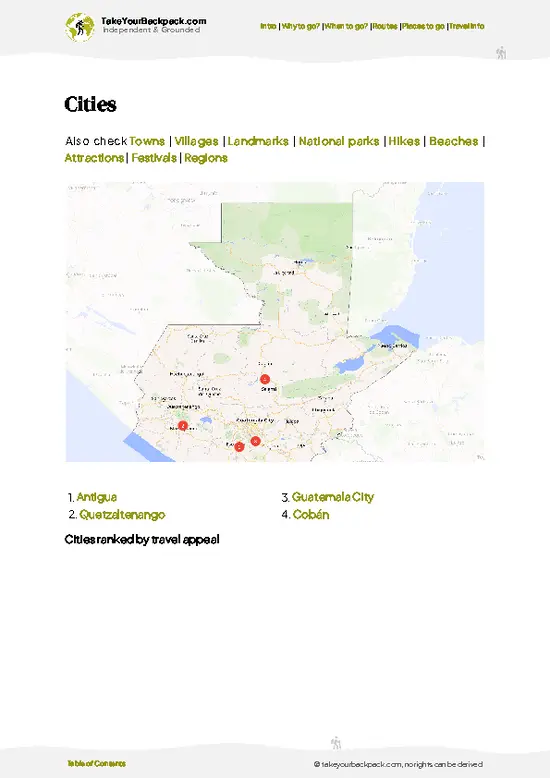
  • Guatemala City—Maya jade, Zona 4 cafés, relief map, Zona 1 markets| 26 km away
  • Quetzaltenango—Xela, Spanish schools, steam baths, cemetery colors| 91 km away
  • Cobán—Cardamom farms, orchids, Verapaz market, drizzle| 109 km away

💡 Not sure where to go next?
Create a personalized itinerary for Guatemala including Antigua and the places that fit your trip.

Generate my itinerary

👉 Discover all cities

Or checkout all Guatemala has to offer (think cities, towns, villages, national parks, hikes, beaches, festivals)
Country photo of Guatemala

We 💚 feedbackWhat to keep in mind

Many people treat Antigua as a two-day photo stop and rush the arch, the plaza and a souvenir stall. Antigua rewards slower plans, so I would spend a full day outside the center in the market and the quiet southern ruins. Bring a daypack with layers for cool mornings, and leave the roller bag at the hostel.

✈️ When did I visit Guatemala?
Guatemala I visited during my half year trip through South and Central America back in 2003

✍️ Help improve this page!
The information on this page is based on my own backpacking experience in Guatemala, supplemented with up-to-date research and feedback from other travelers. Travel details can change, so if you notice anything outdated or incomplete, feel free to let me know.


🙋‍♂️ Give feedback

👋 Meet the founderWho’s Behind Take Your Backpack?

Johan, backpacker and founder of TakeYourBackpackHi, I’m Johan (Netherlands 🇳🇱), the creator of TakeYourBackpack. Over the past 3 decades, I’ve backpacked through 90+ countries across six continents, gaining extensive experience with independent travel, long-term trips, and overland routes.

This site is built on a combination of firsthand travel experience and carefully curated insights from other backpackers. Many guides are based on places I’ve personally visited, while others bring together tips, observations, and practical advice shared by trusted travelers I’ve met along the way.

The goal is to provide realistic, experience-driven guidance — not generic itineraries — so you can explore destinations with better context, clearer expectations, and more confidence.