v2.webp)
The Ruined Cloisters at Dusk
Forget the Instagram-perfect arches at noon. The real show is after the tour groups vanish and the light gets moody. These ruined cloisters are not just photogenic—they’re a living memory of earthquakes, monks, and centuries of Guatemalan resilience. Walk the mossy stones, and you’ll feel the weight of time. The silence is thick, broken only by the occasional bird. It’s not just a backdrop; it’s a portal. This is where Antigua’s soul lingers, long after the crowds have moved on.
The Crypts and Underground Passages
Most visitors snap a few shots above ground and call it a day. But the real thrill is below. The crypts are raw, shadowy, and a little eerie—exactly what you want from a centuries-old monastery. You’ll see faded frescoes, old tombs, and the kind of stonework … read more 👉
Forget the Instagram-perfect arches at noon. The real show is after the tour groups vanish and the light gets moody. These ruined cloisters are not just photogenic—they’re a living memory of earthquakes, monks, and centuries of Guatemalan resilience. Walk the mossy stones, and you’ll feel the weight of time. The silence is thick, broken only by the occasional bird. It’s not just a backdrop; it’s a portal. This is where Antigua’s soul lingers, long after the crowds have moved on.
The Crypts and Underground Passages
Most visitors snap a few shots above ground and call it a day. But the real thrill is below. The crypts are raw, shadowy, and a little eerie—exactly what you want from a centuries-old monastery. You’ll see faded frescoes, old tombs, and the kind of stonework … read more 👉
The Ruined Cloisters at Dusk
Forget the Instagram-perfect arches at noon. The real show is after the tour groups vanish and the light gets moody. These ruined cloisters are not just photogenic—they’re a living memory of earthquakes, monks, and centuries of Guatemalan resilience. Walk the mossy stones, and you’ll feel the weight of time. The silence is thick, broken only by the occasional bird. It’s not just a backdrop; it’s a portal. This is where Antigua’s soul lingers, long after the crowds have moved on.
The Crypts and Underground Passages
Most visitors snap a few shots above ground and call it a day. But the real thrill is below. The crypts are raw, shadowy, and a little eerie—exactly what you want from a centuries-old monastery. You’ll see faded frescoes, old tombs, and the kind of stonework that makes you wonder how anything survived the region’s legendary quakes. It’s not sanitized or over-explained. You’re left to piece together the stories yourself, which is half the fun.
The Pre-Columbian Artifacts Room
This isn’t your standard “pottery behind glass” situation. The collection is small but punchy, with obsidian blades, jade jewelry, and ceramics that predate the Spanish by centuries. What makes it special? The curation is tight and personal. You’re not overwhelmed by endless cases; instead, you get a focused hit of ancient Maya artistry, right inside a colonial ruin. It’s a collision of timelines that actually works.
The Contemporary Art Gallery
Here’s the curveball: Casa Santo Domingo isn’t stuck in the past. The contemporary art gallery is a rotating showcase of Guatemalan and Latin American artists, and it’s refreshingly unpredictable. One visit might land you in a room full of kinetic sculptures; another, a wall of political photography. The contrast between modern creativity and ancient stone is electric. It’s proof that Antigua isn’t just a relic—it’s alive and evolving.
The Candle Workshop
This is my personal favorite. Not because it’s flashy, but because it’s so tactile and real. The candle workshop is tucked away, easy to miss if you’re not paying attention. Here, artisans hand-pour and carve candles using techniques passed down for generations. The smell of beeswax hangs in the air, and if you time it right, you can watch the process up close. It’s a rare, un-touristy window into local craft—no filter, no hype, just skill and tradition.
The On-Site Chapel
You don’t have to be religious to appreciate the chapel’s atmosphere. It’s still in use, and if you’re lucky, you’ll catch a wedding or a quiet moment of prayer. The blend of ancient stone, flickering candles, and fresh flowers is disarmingly beautiful. It’s a reminder that this place isn’t just a museum—it’s woven into the daily life of Antigua.
Forget the Instagram-perfect arches at noon. The real show is after the tour groups vanish and the light gets moody. These ruined cloisters are not just photogenic—they’re a living memory of earthquakes, monks, and centuries of Guatemalan resilience. Walk the mossy stones, and you’ll feel the weight of time. The silence is thick, broken only by the occasional bird. It’s not just a backdrop; it’s a portal. This is where Antigua’s soul lingers, long after the crowds have moved on.
The Crypts and Underground Passages
Most visitors snap a few shots above ground and call it a day. But the real thrill is below. The crypts are raw, shadowy, and a little eerie—exactly what you want from a centuries-old monastery. You’ll see faded frescoes, old tombs, and the kind of stonework that makes you wonder how anything survived the region’s legendary quakes. It’s not sanitized or over-explained. You’re left to piece together the stories yourself, which is half the fun.
The Pre-Columbian Artifacts Room
This isn’t your standard “pottery behind glass” situation. The collection is small but punchy, with obsidian blades, jade jewelry, and ceramics that predate the Spanish by centuries. What makes it special? The curation is tight and personal. You’re not overwhelmed by endless cases; instead, you get a focused hit of ancient Maya artistry, right inside a colonial ruin. It’s a collision of timelines that actually works.
The Contemporary Art Gallery
Here’s the curveball: Casa Santo Domingo isn’t stuck in the past. The contemporary art gallery is a rotating showcase of Guatemalan and Latin American artists, and it’s refreshingly unpredictable. One visit might land you in a room full of kinetic sculptures; another, a wall of political photography. The contrast between modern creativity and ancient stone is electric. It’s proof that Antigua isn’t just a relic—it’s alive and evolving.
The Candle Workshop
This is my personal favorite. Not because it’s flashy, but because it’s so tactile and real. The candle workshop is tucked away, easy to miss if you’re not paying attention. Here, artisans hand-pour and carve candles using techniques passed down for generations. The smell of beeswax hangs in the air, and if you time it right, you can watch the process up close. It’s a rare, un-touristy window into local craft—no filter, no hype, just skill and tradition.
The On-Site Chapel
You don’t have to be religious to appreciate the chapel’s atmosphere. It’s still in use, and if you’re lucky, you’ll catch a wedding or a quiet moment of prayer. The blend of ancient stone, flickering candles, and fresh flowers is disarmingly beautiful. It’s a reminder that this place isn’t just a museum—it’s woven into the daily life of Antigua.
Spotted a mistake or missing something? Contact us.

Guatemalan Cooking Class & Market Tour
✓ Free cancellation

Coffee Tour Adventure Antigua Guatemala
✓ Free cancellation

Private Ground Transfer From Antigua To Guatemala City Airport
✓ Free cancellation

Experience: Organic Coffee, Avocados, Honey & More!
✓ Free cancellation

Coffee Tour in Antigua Guatemala
✓ Free cancellation

Street Food Tour Around Antigua
✓ Free cancellation

Walking Tour to Understand Mayan Culture in Guatemala, Antigua.
✓ Free cancellation

Cooking class and market tour/Pepian Workshop
✓ Free cancellation

Make your own Mayan Pepian - Cooking class
✓ Free cancellation

Nighthawk Birding Guided Tours in Antigua Guatemala
✓ Free cancellation
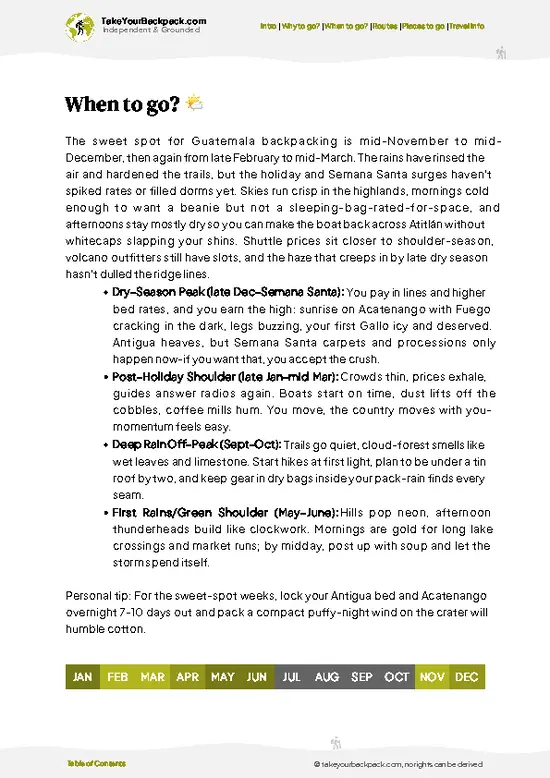
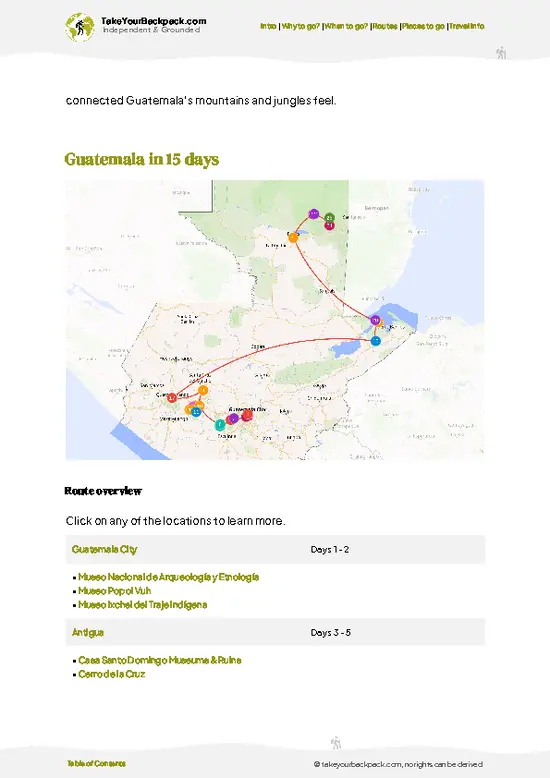

 Best Backpacking
.jpg) Hi, I’m Johan (Netherlands 🇳🇱), the creator of TakeYourBackpack. Over the past decade, I’ve backpacked through 80+ countries across six continents, gaining extensive experience with independent travel, long-term trips, and overland routes.
Hi, I’m Johan (Netherlands 🇳🇱), the creator of TakeYourBackpack. Over the past decade, I’ve backpacked through 80+ countries across six continents, gaining extensive experience with independent travel, long-term trips, and overland routes.