×

Guatemala🇬🇹 | attractionsMuseo Ixchel del Traje Indígenatextile collections, traditional dress, weaving techniques, indigenous symbolism | things to do and best time to go

Explore Museo Popol VuhExplore Casa Santo Domingo Museums & Ruins

Backpacking in Museo Ixchel del Traje Indígena
🌟 Highlightattraction ranked #7
By Johan Kruseman 🇳🇱 | Updated May 15, 2026

Here’s what nobody tells you: Museo Ixchel del Traje Indígena is one of the only museums in Central America where you can actually touch (yes, touch) some of the traditional textiles—if you ask politely and don’t act like a tourist on a sugar rush. Tucked inside the Universidad Francisco Marroquín campus in Guatemala City, this place is a world away from the volcanoes and colonial facades that dominate most backpacker itineraries. Let’s be real: you won’t find adrenaline junkies or Instagram mobs here, and the entry fee is less than what you’d pay for a single cocktail in Antigua. The wow-factor isn’t in flashy exhibits or epic views, but in the raw, intricate artistry of Maya weaving—living history you can see, smell, and sometimes even feel. It’s quiet, almost meditative, and the staff actually want to talk to you about the stories behind the patterns. If you’re craving authenticity over spectacle, this is where Guatemala’s soul is stitched, not staged.

Discover everything you want to know in the 📖 Guatemala Travel Guide.
Loading the map 🌍
CLICK TO FILTER
cities
towns
villages
landmarks
national parks
hikes
beaches
attractions
festivals
regions
SHOW COUNTRY’S BESTSHOW ALL

✨ Why go?
Ranked #7 attraction in Guatemala
The unique appeal for travelers

Museo Ixchel del Traje Indígena isn’t just another stop on the Guatemala tourist circuit—it’s a deep dive into the country’s soul, stitched together through centuries of indigenous textile art. Yes, it’s popular, and yes, it can get crowded, especially during peak tourist seasons. But here’s the kicker: this museum isn’t about flashy displays or Instagram-ready backdrops. It’s about understanding the painstaking craftsmanship behind every thread, every pattern, and every color that tells a story of identity, resistance, and survival.

Backpackers who make time for Museo Ixchel aren’t just ticking a box; they’re connecting with Guatemala’s living history. The collection spans hundreds of years, showcasing garments from various indigenous groups, each with distinct symbolism and technique. This … read more 👉
Museo Ixchel del Traje Indígena isn’t just another stop on the Guatemala tourist circuit—it’s a deep dive into the country’s soul, stitched together through centuries of indigenous textile art. Yes, it’s popular, and yes, it can get crowded, especially during peak tourist seasons. But here’s the kicker: this museum isn’t about flashy displays or Instagram-ready backdrops. It’s about understanding the painstaking craftsmanship behind every thread, every pattern, and every color that tells a story of identity, resistance, and survival.

Backpackers who make time for Museo Ixchel aren’t just ticking a box; they’re connecting with Guatemala’s living history. The collection spans hundreds of years, showcasing garments from various indigenous groups, each with distinct symbolism and technique. This place is a milestone on any Central American route because it offers context that no guidebook can match—how textiles are woven into the fabric of community life, spirituality, and politics.

The effort-to-reward ratio here is off the charts. You don’t need adrenaline-fueled hikes or pricey tours to get a profound cultural hit. Instead, you get an intimate, tactile experience that enriches your entire journey through Guatemala. If you want to understand the country beyond the surface, Museo Ixchel is non-negotiable.
Want to include Museo Ixchel del Traje Indígena in your Guatemala route?
Create a personalized Guatemala itinerary that includes Museo Ixchel del Traje Indígena and the places that fit your trip — based on your travel style, budget, and available time. Get your route in seconds.

Generate my trip

💡 HighlightsDon't-miss highlights and experiences

1. The Textile Hall: A Crash Course in Color and Craft
Forget the Instagram feeds of “boho” travelers twirling in borrowed huipiles. The Textile Hall is the real deal: a floor-to-ceiling, wall-to-wall explosion of handwoven garments from every corner of Guatemala. Each piece is a living document—coded with symbols, colors, and patterns that shout out a specific village, a family, even a single weaver’s story. You’ll see the difference between a Chichicastenango corte and a Santiago Atitlán huipil in the warp and weft, not just the label. This is the antidote to mass-produced “artisan” markets. Stand in front of a hundred years of weaving tradition and try not to feel the weight of it.


2. The Backstrap Loom Demonstration: Real Skill, Zero Filters
Here’s where the museum pulls back the curtain. … read more 👉
1. The Textile Hall: A Crash Course in Color and Craft
Forget the Instagram feeds of “boho” travelers twirling in borrowed huipiles. The Textile Hall is the real deal: a floor-to-ceiling, wall-to-wall explosion of handwoven garments from every corner of Guatemala. Each piece is a living document—coded with symbols, colors, and patterns that shout out a specific village, a family, even a single weaver’s story. You’ll see the difference between a Chichicastenango corte and a Santiago Atitlán huipil in the warp and weft, not just the label. This is the antidote to mass-produced “artisan” markets. Stand in front of a hundred years of weaving tradition and try not to feel the weight of it.


2. The Backstrap Loom Demonstration: Real Skill, Zero Filters
Here’s where the museum pulls back the curtain. You’ll watch a master weaver—usually a local Maya woman—work a backstrap loom, the same technology that’s been used for centuries. No electricity, no shortcuts, just muscle memory and ancestral knowledge. The rhythm of the loom is hypnotic, and the process is painstakingly slow. This isn’t a staged show for tourists; it’s a living skill, and you’ll walk away with a new respect for the price (and value) of a real handwoven textile.


3. The Symbolism Room: Decoding the Language of Thread
If you think a pattern is just a pretty design, you’re missing the point. The Symbolism Room breaks down the meaning behind the motifs—snakes, stars, maize, and more—woven into every piece. These aren’t random decorations; they’re loaded with history, cosmology, and resistance. You’ll leave knowing that every zigzag and diamond is a message, not just an aesthetic choice.


4. The Historical Timeline: Fashion as Survival
This isn’t a dry timeline with dusty dates. The museum lays out how indigenous dress has survived colonization, civil war, and globalization. You’ll see how styles adapted, sometimes out of necessity, sometimes as an act of quiet rebellion. It’s a crash course in resilience, told through fabric instead of textbooks.


5. The Contemporary Gallery: Tradition Meets Now
My personal favorite. This section is where the museum stops being a relic and becomes a conversation. Here, you’ll see how young designers and weavers are remixing tradition—incorporating ancient patterns into modern fashion, or using textiles as political statements. It’s proof that Maya weaving isn’t stuck in the past; it’s evolving, and it’s still a tool for self-expression and identity. If you want to see culture alive and kicking, this is the room that delivers.


6. The Gift Shop: Not Your Average Souvenir Trap
Skip the airport trinkets. The museum’s shop is a curated showcase of high-quality textiles and crafts, often made by the same artisans featured in the exhibits. Prices aren’t rock-bottom, but you’re paying for authenticity and fair wages, not a middleman’s markup. If you want a piece of Guatemala that actually means something, this is where you get it.
Spotted a mistake or missing something? Contact us.

Things to do around Museo Ixchel del Traje Indígena

Ratings based on Tripadvisor reviews. When you book through this link, you support our work at no extra cost to you.

🌤️ When to go?Seasonal considerations and timing


  • Weather: The dry season from November to April is your best bet. Expect clear skies and minimal rain, which means no soggy shoes or dodging puddles while exploring the museum’s intricate textiles. May through October brings heavy rains that can put a damper on your visit.

  • Temperature: Daytime temps hover between 20-25°C (68-77°F) year-round, but mornings and evenings can dip to a crisp 10-15°C (50-59°F), especially in the dry season. Pack layers—you’ll want a light jacket for early mornings and evenings.

  • Daylight Hours: Guatemala enjoys fairly consistent daylight, roughly 11 to 12 hours daily. From November to February, days are slightly shorter, but you still have plenty of time to soak in the exhibits without rushing.

  • Crowds: Peak tourist season aligns with the dry months, especially
read more 👉

  • Weather: The dry season from November to April is your best bet. Expect clear skies and minimal rain, which means no soggy shoes or dodging puddles while exploring the museum’s intricate textiles. May through October brings heavy rains that can put a damper on your visit.

  • Temperature: Daytime temps hover between 20-25°C (68-77°F) year-round, but mornings and evenings can dip to a crisp 10-15°C (50-59°F), especially in the dry season. Pack layers—you’ll want a light jacket for early mornings and evenings.

  • Daylight Hours: Guatemala enjoys fairly consistent daylight, roughly 11 to 12 hours daily. From November to February, days are slightly shorter, but you still have plenty of time to soak in the exhibits without rushing.

  • Crowds: Peak tourist season aligns with the dry months, especially December and January. The museum can get busy, so visiting on weekdays or early mornings helps you avoid the crush and get a more intimate look at the collections.

  • Seasonal Activities: November to February offers cultural events and festivals nearby, adding layers to your visit. These months bring authentic local energy that spills into the museum experience, unlike the quieter, rain-soaked off-season.

  • Price Fluctuations: Entrance fees stay stable year-round, but accommodation and transport costs spike during the dry season and holidays. Budget accordingly if you’re visiting in December or Easter week.


Pro-tip: Aim for late November or early February—dry weather, manageable crowds, and local festivals create the perfect storm for an immersive, hassle-free visit.


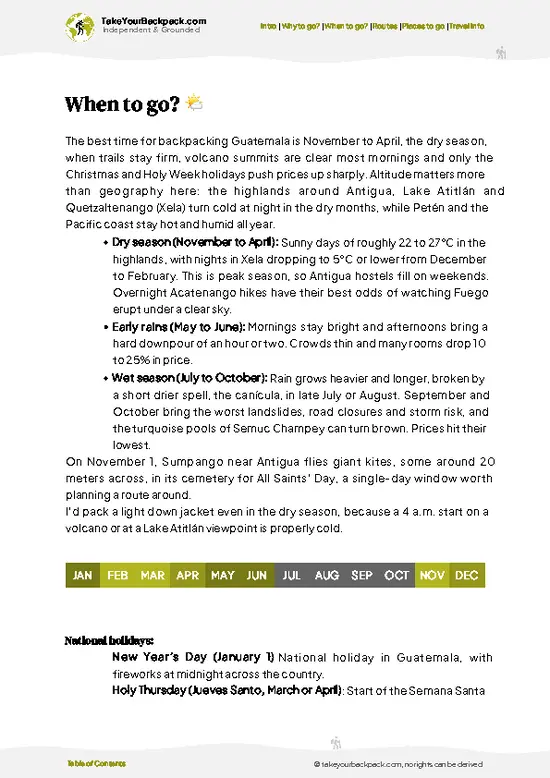
source: climatestotravel.comJANJanuary: highly recommended for travelingFEBFebruary: excellent for travelingMARMarch: excellent for travelingAPRApril: highly recommended for travelingMAYMay: fair for travelingJUNJune: fair for travelingJULJuly: fair for travelingAUGAugust: fair for travelingSEPSeptember: fair for travelingOCTOctober: fair for travelingNOVNovember: excellent for travelingDECDecember: highly recommended for traveling
when-to-go

✈️ The backpacker research shortcutGuatemala Travel Guide

An offline-friendly backpacking guide with optimized travel routes, ranked highlights, transport advice, and the best areas to stay.
example page 0 from our offline Travel Guide for Guatemala
example page 1 from our offline Travel Guide for Guatemala
example page 2 from our offline Travel Guide for Guatemala
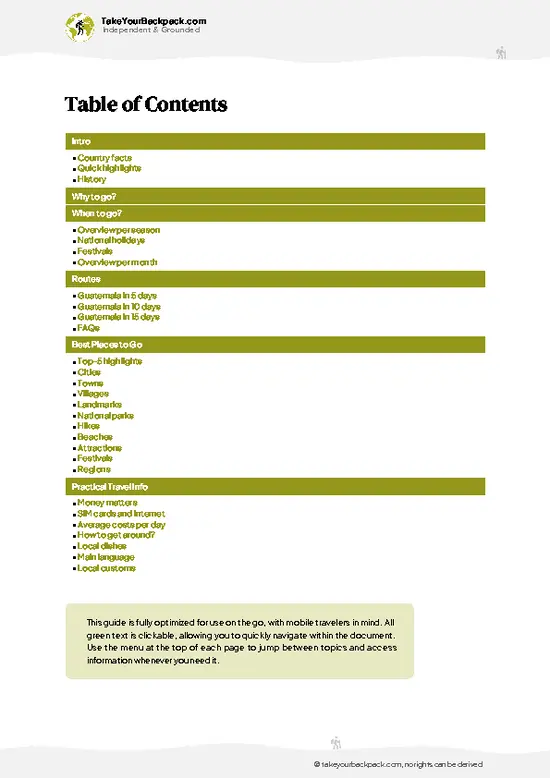
example page 3 from our offline Travel Guide for Guatemala
example page 4 from our offline Travel Guide for Guatemala
example page 5 from our offline Travel Guide for Guatemala
example page 6 from our offline Travel Guide for Guatemala
example page 7 from our offline Travel Guide for Guatemala
The digital guide (396 pages) contains:
100 highlights, ranked by travel appeal
Optimized 5, 10 & 15-day travel routes
Cities, national parks, landmarks, beaches
How to get around
Offline-friendly for travel without Wi-Fi
👉 Click to see all 30+ guide features

📅 Plan smarter in minutes, not weeks
Month by month travel advice
Festivals & national holidays
Budget expectations

🗺️ Go to the right places, skip the overrated ones
Honest pros & cons of destinations
Top hikes, parks & viewpoints
Lesser-known places most travelers miss
Clear “worth it vs skip it” guidance

🛏️ Travel smoothly without rookie mistakes
Best areas to stay
Transport systems explained simply
Common scams & safety advice
SIM cards, money & practical tips

🌍 Understand the country, not just visit it
Culture & traditions
52 Essential phrases & customs
Festivals worth planning around
Traveler-friendly historical context
Insights that make places more meaningful

📱 Built for real travel conditions
Fully downloadable PDF
Works completely offline
Optimized for phone use
Useful in remote areas & buses
Everything in one place
Save weeks of stressful planning
Get instant access to your full guide. 30‑day money-back guarantee.


By proceeding you agree to our terms.
Sent to your inbox immediately after payment • 100% Secure Checkout
Best Backpacking Travel Advisor 2025 tourism awardBest Backpacking
Travel Advisor
2025
What others say about Take Your Backpack Guides:
⭐⭐⭐⭐⭐
Fantastic, amazing amount of information!
⭐⭐⭐⭐⭐
My goodness this is amazing, it's what I've been looking for hats off too you!
⭐⭐⭐⭐⭐
I think this is absolutely BRILLIANT
⭐⭐⭐⭐
Very complete and informative. It's still missing places, but I gotta to commend you
⭐⭐⭐⭐⭐
This is truly amazing, thank you, can't wait to explore it with my kids!
⭐⭐⭐⭐⭐
Awesome resource, thank you!
⭐⭐⭐⭐⭐
This is amazing! Can't wait to explore the ones I haven't seen
⭐⭐⭐⭐
I love this! Well done, great idea.
⭐⭐⭐⭐⭐
Thanks for taking the time to make this gem!
⭐⭐⭐⭐⭐
This might be the best website I've ever seen.
⭐⭐⭐⭐⭐
Congratulations, and thank you so much for your work; it's incredibly valuable.
⭐⭐⭐⭐
In all seriousness I think you did a great job pointing out the important spots
⭐⭐⭐⭐⭐
10/10 very good
⭐⭐⭐⭐⭐
As someone who's only just starting to visit regularly this is awesome, thank you.
⭐⭐⭐⭐
Thank you very much! I'm going to visit my dad, it's going to be very useful!
⭐⭐⭐⭐⭐
This is really cool! We'll be travelling for the first time and this definitely come in handy.
⭐⭐⭐⭐⭐
You are now our minister of culture, congratulations 👨‍💼
⭐⭐⭐⭐⭐
Just wanted to tell you that this is a pearl! Going to follow your recommendations.
⭐⭐⭐⭐⭐
This is so cool. I'll definitely be using the resource for my travels soon.
⭐⭐⭐⭐⭐
This is very impressive! Good work.
⭐⭐⭐⭐⭐
This is an amazing and informative site. Very well done!

🛏️ Where to stay?Where staying makes the most sense

Museo Ixchel del Traje Indígena sits in Guatemala City’s Zona 10, a neighborhood that’s the real deal for backpackers who want to be close to the action without getting swallowed by tourist traps. This area isn’t just about proximity; it’s where safety and social life intersect in a way that makes solo travelers feel like they’ve landed in a community, not just a city.

Zona 10 is known for its walkability and a vibe that balances local authenticity with enough amenities to keep you comfortable. You’ll find plenty of cafes, casual eateries, and small bars where you can strike up conversations … read more 👉
Museo Ixchel del Traje Indígena sits in Guatemala City’s Zona 10, a neighborhood that’s the real deal for backpackers who want to be close to the action without getting swallowed by tourist traps. This area isn’t just about proximity; it’s where safety and social life intersect in a way that makes solo travelers feel like they’ve landed in a community, not just a city.

Zona 10 is known for its walkability and a vibe that balances local authenticity with enough amenities to keep you comfortable. You’ll find plenty of cafes, casual eateries, and small bars where you can strike up conversations with fellow travelers or locals who aren’t just there to sell you something. It’s a place where you can actually relax after a day of museum-hopping without second-guessing your surroundings.

Don’t expect the polished, sanitized experience of tourist-heavy zones. This is a neighborhood with character—some streets are quieter, others buzz with street vendors and local life. It’s a place where you can catch a glimpse of everyday Guatemalan culture, which is exactly what makes the Museo Ixchel experience richer. Staying here means you’re not just ticking off a museum visit; you’re stepping into the fabric of the city that shapes the textiles and stories inside those walls.

👛 Costs (as of 19 June 2025)What things cost and how to budget

Admission fees at Museo Ixchel del Traje Indígena in Guatemala City are as follows:

- Adults: Q45 (approximately €5)
- University students: Q25 (approximately €3)
- Children: Q15 (approximately €2)

Guided tours are available for an additional fee:

- Spanish-speaking tours: Q100 per person (approximately €12)
- English-speaking tours: Q125 per person (approximately €15)

Please note that these prices are subject to change; it's advisable to check the museum's official website for the most current information.

source: museoixchel.org
⚠️ Prices can change and everyone travels differently, so take this as a rough guide. Hope it helps you plan your adventure!

Other Guatemalan attractions near Museo Ixchel del Traje Indígena

Explore more nearby:


💡 Not sure where to go next?
Create a personalized itinerary for Guatemala including Museo Ixchel del Traje Indígena and the places that fit your trip.

Generate my itinerary

👉 Discover all attractions

Or checkout all Guatemala has to offer (think cities, towns, villages, national parks, hikes, beaches, festivals)
Country photo of Guatemala

We 💚 feedbackSumming up the experience

Museo Ixchel del Traje Indígena isn’t some polished, touristy showcase—it’s a raw dive into the living art of Guatemalan indigenous textiles. The real magic? Seeing centuries of culture stitched into every thread, not just a display behind glass. But heads up: it can get crowded, especially midday, and the entry fee isn’t pocket change for budget travelers. Still, if you care about authentic stories woven into fabric, this place punches way above its weight.

✈️ When did I visit Guatemala?
Guatemala I visited during my half year trip through South and Central America back in 2003

✍️ Help improve this page!
The information on this page is based on my own backpacking experience in Guatemala, supplemented with up-to-date research and feedback from other travelers. Travel details can change, so if you notice anything outdated or incomplete, feel free to let me know.


🙋‍♂️ Give feedback

👋 Meet the founderWho’s Behind Take Your Backpack?

Johan, backpacker and founder of TakeYourBackpackHi, I’m Johan (Netherlands 🇳🇱), the creator of TakeYourBackpack. Over the past decade, I’ve backpacked through 80+ countries across six continents, gaining extensive experience with independent travel, long-term trips, and overland routes.

This site is built on a combination of firsthand travel experience and carefully curated insights from other backpackers. Many guides are based on places I’ve personally visited, while others bring together tips, observations, and practical advice shared by trusted travelers I’ve met along the way.

The goal is to provide realistic, experience-driven guidance — not generic itineraries — so you can explore destinations with better context, clearer expectations, and more confidence.

Get full Guatemala guide •
Instant download • 100 highlights • Full Offline guide