×

Guatemala🇬🇹 | citiesQuetzaltenangoXela, Spanish schools, steam baths, cemetery colors | things to do and best time to go

Explore Guatemala CityExplore Día de los Muertos

Backpacking in Quetzaltenango
🌟 Highlightcity ranked #2
By Johan Kruseman 🇳🇱 | Updated October 22, 2026

Spending a week on Spanish classes or passing through Quetzaltenango for one night on the way to Lake Atitlán is the choice most travelers face here. One night costs almost nothing extra and still leaves you with only a plaza and a dinner. A week of one-on-one lessons with a host family takes more time and a bit more money, but it also covers your bed, your meals and a teacher, and for a backpacker that week gives the most. Quetzaltenango, which everyone calls Xela, sits in the western highlands of Guatemala. I expected a sleepy colonial square. Instead a school marimba band was hammering out tunes in front of the old cathedral facade at dusk, with grilled corn smoke drifting over the stone while kids ran between the music stands. Chicken buses grind over cobbles, diesel hangs in the side streets and the paint peels. Travelers who want volcano hikes, real language progress and few tourists will love it. Anyone chasing beaches, polish or late-night parties will be bored.

Discover everything you want to know in the 📖 Guatemala Travel Guide.


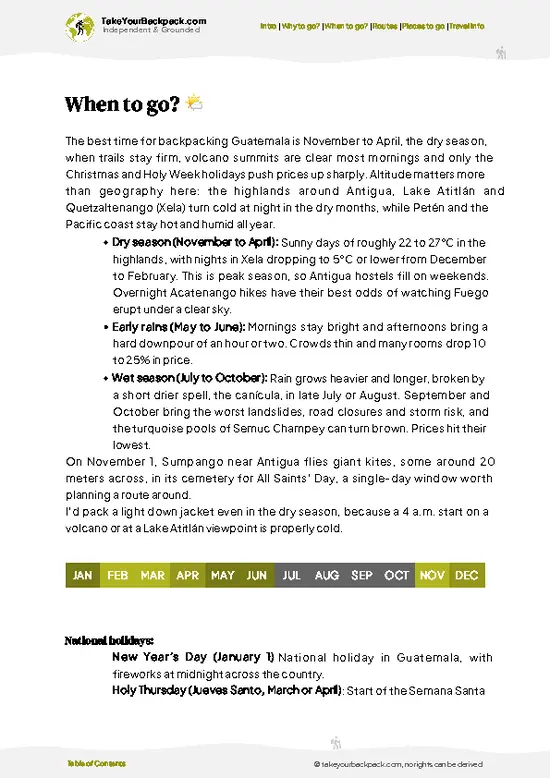
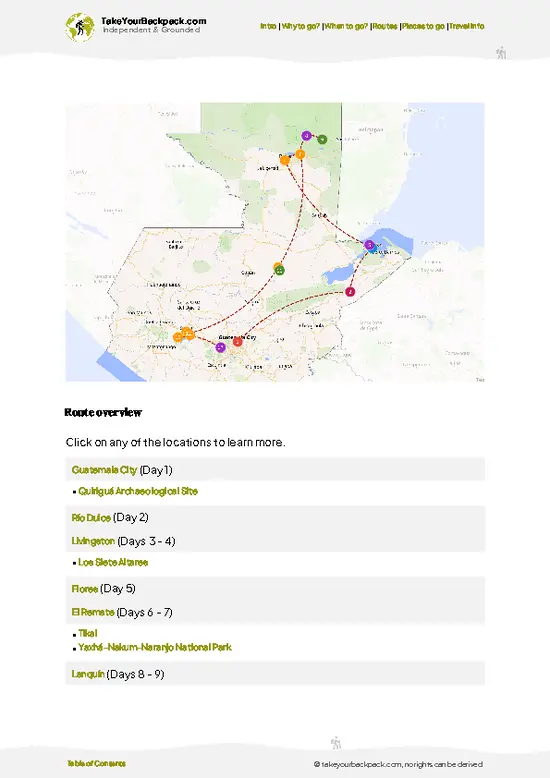
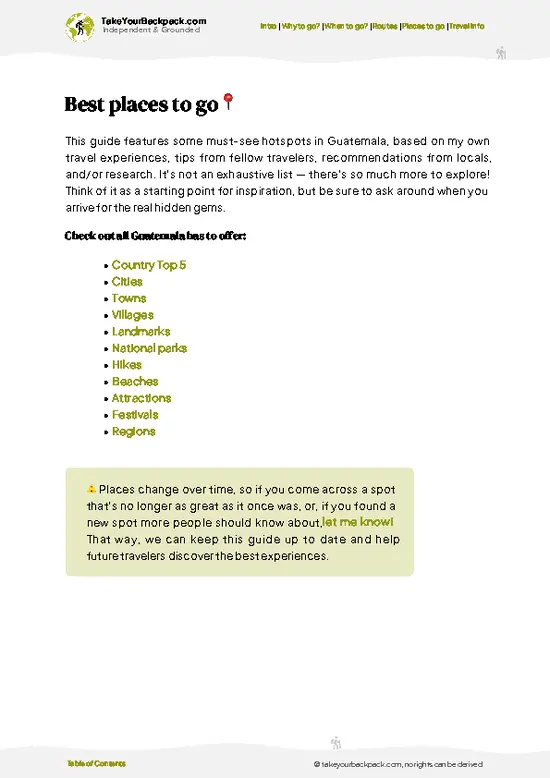
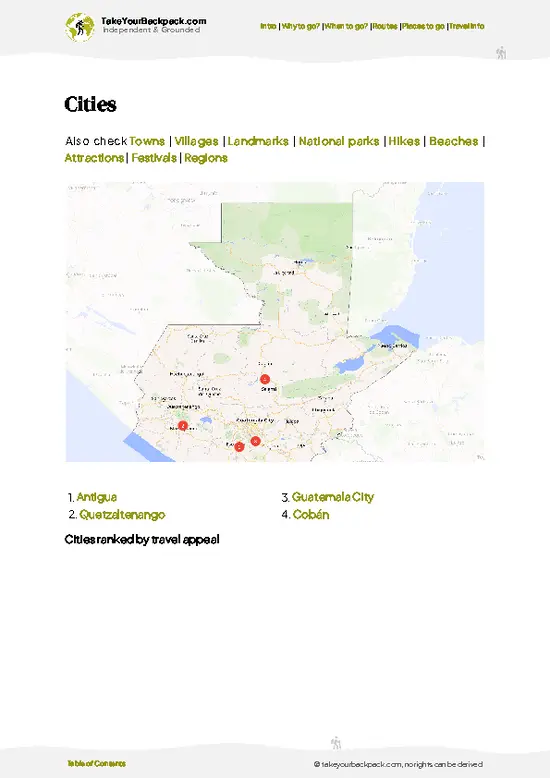
example page 0 from our offline Travel Guide for Guatemala
example page 1 from our offline Travel Guide for Guatemala
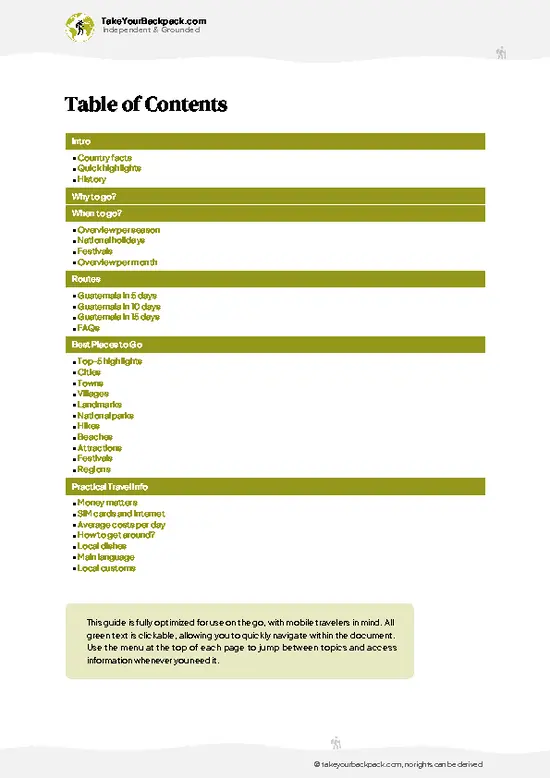
example page 2 from our offline Travel Guide for Guatemala
example page 3 from our offline Travel Guide for Guatemala
example page 4 from our offline Travel Guide for Guatemala
example page 5 from our offline Travel Guide for Guatemala
example page 6 from our offline Travel Guide for Guatemala
example page 7 from our offline Travel Guide for Guatemala
Loading the map 🌍
CLICK TO FILTER
cities
towns
villages
landmarks
national parks
hikes
beaches
attractions
festivals
regions
SHOW COUNTRY’S BESTSHOW ALL

✨ Why go?
Ranked #2 city in Guatemala
Why Quetzaltenango should be on your travel list

Quetzaltenango works as a place to stay put rather than a place to tick off, and that is the whole appeal. The city is a highland hub with dozens of Spanish schools, so the long-stay crowd gives hostels and cafés a steady, friendly rhythm instead of the weekend churn of Antigua. The center is small enough to cross on foot in 15 minutes, and the streets around it hold Guatemalan families, students and market vendors far more than other tourists. Outdoors is the second draw. Volcanoes ring the valley, and the nonprofit Quetzaltrekkers runs hikes whose profits go to local children’s projects, including a famous multi-day trek ending at Lake Atitlán. Chicken buses fan out from the terminals to hot springs, villages and markets, so you can leave a pack in your dorm and wander. A week suits most … read more 👉
Quetzaltenango works as a place to stay put rather than a place to tick off, and that is the whole appeal. The city is a highland hub with dozens of Spanish schools, so the long-stay crowd gives hostels and cafés a steady, friendly rhythm instead of the weekend churn of Antigua. The center is small enough to cross on foot in 15 minutes, and the streets around it hold Guatemalan families, students and market vendors far more than other tourists. Outdoors is the second draw. Volcanoes ring the valley, and the nonprofit Quetzaltrekkers runs hikes whose profits go to local children’s projects, including a famous multi-day trek ending at Lake Atitlán. Chicken buses fan out from the terminals to hot springs, villages and markets, so you can leave a pack in your dorm and wander. A week suits most people. If you only want checklist sights, two nights covers the center, and the rest of the time you would be taking a class or climbing a volcano.

💡 HighlightsThe experiences that define the visit

  1. Parque Centroamericano: the main plaza, framed by neoclassical buildings and the surviving carved facade of the old cathedral, which is the image most people associate with Xela. Come late afternoon, when the stone turns gold and families fill the benches. Free, 30 to 60 minutes.
  2. Museo de Historia Natural: a small, old-fashioned museum on the plaza, with stuffed animals, marimba history and Maya artifacts. Go in the morning, when it is quiet. About US$1 to 2, 30 to 45 minutes.
  3. Teatro Municipal: an ornate neoclassical theater a short walk from the plaza, with a gilded interior of balconies. Visit by day for a look inside or check the evening program for a performance. Entry for a look is usually under US$2, and tickets for shows vary. Allow 30 minutes.
  4. Mercado La Democracia: the main working market,
… read more 👉
  1. Parque Centroamericano: the main plaza, framed by neoclassical buildings and the surviving carved facade of the old cathedral, which is the image most people associate with Xela. Come late afternoon, when the stone turns gold and families fill the benches. Free, 30 to 60 minutes.
  2. Museo de Historia Natural: a small, old-fashioned museum on the plaza, with stuffed animals, marimba history and Maya artifacts. Go in the morning, when it is quiet. About US$1 to 2, 30 to 45 minutes.
  3. Teatro Municipal: an ornate neoclassical theater a short walk from the plaza, with a gilded interior of balconies. Visit by day for a look inside or check the evening program for a performance. Entry for a look is usually under US$2, and tickets for shows vary. Allow 30 minutes.
  4. Mercado La Democracia: the main working market, where you can see produce, flowers, tortilla makers, cheap clothes and food stalls selling fresh juices and plates of stewed meat. Go before 10 AM for the most activity. Free to walk, 1 to 2 hours.
  5. Cementerio Municipal: a walled cemetery of painted tombs, mausoleums and flowers, with a hush that is rare in the city. Visit in late morning. Free, 45 to 60 minutes, and it is most colorful around the start of November.
  6. Templo de Minerva: a small Greek-style temple on the edge of town, built in the early 1900s to promote education. It has a quiet park around it and is worth a stop between other plans. Free, 20 to 30 minutes.
  7. Baños Los Vahos: a steam bath built into the hillside outside the center, where you sit in a small stone cell heated by volcanic steam. Book an afternoon slot, when the air is cooler. About US$4 to 8, 1 to 2 hours.
The plaza and the Museo de Historia Natural pair easily in a single morning, followed by the market before it winds down.
Quetzaltenango also puts you in reach of day trips to the thermal pools of Fuentes Georginas, the market town of Zunil, the hot-spring village of Almolonga, the crater lake of Laguna Chicabal and the summit of Volcán Santa María.
Spotted a mistake or missing something? Contact us.

Things to do in Quetzaltenango

Ratings based on Tripadvisor reviews. When you book through this link, you support our work at no extra cost to you.

🏘️ NeighborhoodsWhere things are and how it's laid out

Xela’s center is compact, and the best areas sit within a 20-minute walk of each other, so you rarely need to pay for a ride between them. Here is how they compare for a backpacker.
  • Parque Central and the Zona 1 core: The colonnaded square is ringed by a neoclassical cathedral facade, a pale stone arcade and pigeons that start up at dawn. Cafés, bakeries, language schools and cheap comedores pack the surrounding grid, and the cobbles are steep enough to feel in your calves. This gives you the most for the least: you walk everywhere and spend almost nothing on transport.
  • Zona 3 and the Minerva area: The Minerva market is a roaring maze of diesel fumes, wet produce, plastic buckets and shouting bus ayudantes. It is loud and grimy, but it is where the chicken buses leave and where a plate of food
… read more 👉
Xela’s center is compact, and the best areas sit within a 20-minute walk of each other, so you rarely need to pay for a ride between them. Here is how they compare for a backpacker.
  • Parque Central and the Zona 1 core: The colonnaded square is ringed by a neoclassical cathedral facade, a pale stone arcade and pigeons that start up at dawn. Cafés, bakeries, language schools and cheap comedores pack the surrounding grid, and the cobbles are steep enough to feel in your calves. This gives you the most for the least: you walk everywhere and spend almost nothing on transport.
  • Zona 3 and the Minerva area: The Minerva market is a roaring maze of diesel fumes, wet produce, plastic buckets and shouting bus ayudantes. It is loud and grimy, but it is where the chicken buses leave and where a plate of food costs the least. Come for errands and departures, not for a stroll after dark.
  • Zona 3 around Parque Benito Juárez: A short walk from the center, this area is quieter, with local bakeries, corner stores and the smell of wood smoke on cold mornings. It suits a long stay near the schools and costs little in comfort.
  • Zona 2 and the Calle Rodolfo Robles corridor: Bars, live music and student crowds fill the evenings here, and the street hums until late. The walk is easy, and a short taxi ride home saves your legs at night.
  • Zona 9 and Zona 8: Malls and chain restaurants sit along wide avenues. Skip them unless you need an ATM or a supermarket run.

⌛️ 1 dayHow to make the most of one day

This is a market-and-plaza day, mostly on foot, with one cemetery detour for the quiet hours. Altitude here is around 2,350 meters, so walk slowly and carry a layer.
8:00 AM: Parque Central
Start with coffee under the arcades of the old Casa de la Cultura, now home to the Museo de Historia Natural and the Museo del Ferrocarril de los Altos. The cathedral facade of the Catedral del Espíritu Santo, built into the front of the old church, is the one to photograph before the square fills up. Entry to the museums is a few dollars at most (US$1 to 2).
9:30 AM: Mercado La Democracia
Walk about ten minutes to this working market, where locals buy produce, tortillas and secondhand clothes. Eat a plate of caldo or chuchitos at a stall (US$2 to 4). Keep your phone in a front pocket and bring small bills. … read more 👉
This is a market-and-plaza day, mostly on foot, with one cemetery detour for the quiet hours. Altitude here is around 2,350 meters, so walk slowly and carry a layer.
8:00 AM: Parque Central
Start with coffee under the arcades of the old Casa de la Cultura, now home to the Museo de Historia Natural and the Museo del Ferrocarril de los Altos. The cathedral facade of the Catedral del Espíritu Santo, built into the front of the old church, is the one to photograph before the square fills up. Entry to the museums is a few dollars at most (US$1 to 2).
9:30 AM: Mercado La Democracia
Walk about ten minutes to this working market, where locals buy produce, tortillas and secondhand clothes. Eat a plate of caldo or chuchitos at a stall (US$2 to 4). Keep your phone in a front pocket and bring small bills.
11:30 AM: Cementerio General
This is off the standard tourist path and worth the short taxi ride (US$2 to 3). Painted mausoleums in pink, turquoise and yellow stand in neat rows, and the quiet is a relief after the market. Give it 45 minutes. Entry is free.
1:00 PM: Pasaje Enríquez
Back in the center, have lunch in this restored 1900 arcade just off the main square. Choose a café with a set menu (US$5 to 8) and stay for a slow second coffee.
3:00 PM: Parque Zona 3 and Templo de Minerva
Take a taxi or a chicken bus uphill to the Greco-style Minerva temple, a quirky nod to the city’s school-day parades. The grounds are quiet, and the carousel and food stalls nearby give a fine local snapshot.
5:30 PM: Parque Central at dusk
Return on foot or by bus. The square’s lamps come on, kids chase pigeons, and the air cools quickly, so put on that layer. Finish with dinner and a local Quetzalteca aguardiente tasting at a bar nearby, or a cheap beer.

🌤️ When to go?Seasonal considerations and timing

November to April is the dry season, and it is the easiest window for volcano hikes. At 2,300 meters, Quetzaltenango stays cool all year.
  • Dry Season (November to April): Days reach about 18 to 22°C (64 to 72°F), and nights drop to near freezing, around 0 to 5°C (32 to 41°F), especially December to February. Skies are crisp, and Santa María and Tajumulco are best now. Christmas and Semana Santa raise prices and fill the dorms.
  • Rainy Season (May to October): Afternoons bring downpours, often starting after 1 pm. Mornings are usually clear, with highs of 17 to 21°C (63 to 70°F). Summit views get hazier, but trails are green and schools offer the cheapest rates.
  • Local Festivals: The Feria de Xelajú in September fills the streets with parades and music, so book beds early.
Start summit hikes early … read more 👉
November to April is the dry season, and it is the easiest window for volcano hikes. At 2,300 meters, Quetzaltenango stays cool all year.
  • Dry Season (November to April): Days reach about 18 to 22°C (64 to 72°F), and nights drop to near freezing, around 0 to 5°C (32 to 41°F), especially December to February. Skies are crisp, and Santa María and Tajumulco are best now. Christmas and Semana Santa raise prices and fill the dorms.
  • Rainy Season (May to October): Afternoons bring downpours, often starting after 1 pm. Mornings are usually clear, with highs of 17 to 21°C (63 to 70°F). Summit views get hazier, but trails are green and schools offer the cheapest rates.
  • Local Festivals: The Feria de Xelajú in September fills the streets with parades and music, so book beds early.
Start summit hikes early in any season, since clouds often roll in by mid-morning.


source: climatestotravel.comJANJanuary: highly recommended for travelingFEBFebruary: highly recommended for travelingMARMarch: excellent for travelingAPRApril: excellent for travelingMAYMay: fair for travelingJUNJune: fair for travelingJULJuly: fair for travelingAUGAugust: fair for travelingSEPSeptember: good for travelingOCTOctober: fair for travelingNOVNovember: highly recommended for travelingDECDecember: highly recommended for traveling
guatemala-city-quetzaltenango
© Google | Luis Rodríguez

✈️ The backpacker research shortcutGuatemala Travel Guide

An offline-friendly backpacking guide with optimized travel routes, ranked highlights, transport advice, and the best areas to stay.
example page 0 from our offline Travel Guide for Guatemala
example page 1 from our offline Travel Guide for Guatemala
example page 2 from our offline Travel Guide for Guatemala
example page 3 from our offline Travel Guide for Guatemala
example page 4 from our offline Travel Guide for Guatemala
example page 5 from our offline Travel Guide for Guatemala
example page 6 from our offline Travel Guide for Guatemala
example page 7 from our offline Travel Guide for Guatemala
The digital guide (272 pages) contains:
✅ 85 highlights, ranked by travel appeal
✅ Optimized 5, 10 & 15-day travel routes
✅ Cities, national parks, landmarks, beaches
✅ How to get around
✅ Offline-friendly for travel without Wi-Fi
👉 Click to see all 30+ guide features

📅 Plan smarter in minutes, not weeks
✅ Month by month travel advice
✅ Festivals & national holidays
✅ Budget expectations

🗺️ Go to the right places, skip the overrated ones
✅ Honest pros & cons of destinations
✅ Top hikes, parks & viewpoints
✅ Lesser-known places most travelers miss
✅ Clear “worth it vs skip it” guidance

🛏️ Travel smoothly without rookie mistakes
✅ Best areas to stay
✅ Transport systems explained simply
✅ Common scams & safety advice
✅ SIM cards, money & practical tips

🌍 Understand the country, not just visit it
✅ Culture & traditions
✅ 52 Essential phrases & customs
✅ Festivals worth planning around
✅ Traveler-friendly historical context
✅ Insights that make places more meaningful

📱 Built for real travel conditions
✅ Fully downloadable PDF
✅ Works completely offline
✅ Optimized for phone use
✅ Useful in remote areas & buses
✅ Everything in one place
Stop searching, start planning
Get instant access to your full guide. 30‑day money-back guarantee.
+ Add another guide for just

By proceeding you agree to our terms.
Sent to your inbox immediately after payment • 100% Secure Checkout
Best Backpacking Travel Advisor 2025 tourism awardBest Backpacking
Travel Advisor
2025
What others say about Take Your Backpack Guides:
⭐⭐⭐⭐⭐
Fantastic, amazing amount of information!
⭐⭐⭐⭐⭐
My goodness this is amazing, it's what I've been looking for hats off too you!
⭐⭐⭐⭐⭐
I think this is absolutely BRILLIANT
⭐⭐⭐⭐
Very complete and informative. It's still missing places, but I gotta to commend you
⭐⭐⭐⭐⭐
This is truly amazing, thank you, can't wait to explore it with my kids!
⭐⭐⭐⭐⭐
Awesome resource, thank you!
⭐⭐⭐⭐⭐
This is amazing! Can't wait to explore the ones I haven't seen
⭐⭐⭐⭐
I love this! Well done, great idea.
⭐⭐⭐⭐⭐
Thanks for taking the time to make this gem!
⭐⭐⭐⭐⭐
This might be the best website I've ever seen.
⭐⭐⭐⭐⭐
Congratulations, and thank you so much for your work; it's incredibly valuable.
⭐⭐⭐⭐
In all seriousness I think you did a great job pointing out the important spots
⭐⭐⭐⭐⭐
10/10 very good
⭐⭐⭐⭐⭐
As someone who's only just starting to visit regularly this is awesome, thank you.
⭐⭐⭐⭐
Thank you very much! I'm going to visit my dad, it's going to be very useful!
⭐⭐⭐⭐⭐
This is really cool! We'll be travelling for the first time and this definitely come in handy.
⭐⭐⭐⭐⭐
You are now our minister of culture, congratulations 👨‍💼
⭐⭐⭐⭐⭐
Just wanted to tell you that this is a pearl! Going to follow your recommendations.
⭐⭐⭐⭐⭐
This is so cool. I'll definitely be using the resource for my travels soon.
⭐⭐⭐⭐⭐
This is very impressive! Good work.
⭐⭐⭐⭐⭐
This is an amazing and informative site. Very well done!

🛏️ Where to stay?Choosing the right base

Zona 1 is the best area for budget beds, with hostels, guesthouses and homestays within a few blocks of Parque Central. Competition among the language schools keeps dorm prices low, and most places are a short walk from the bakeries, cafés and bus stops to the market.
The streets around the center are lively in the evening but calm after about 10 pm, and walking short distances at night is common. Rooms facing the square can catch noise from bars and church bells, so ask for an interior room if you sleep lightly. Many places include simple breakfasts and cold-weather blankets, and hot showers vary, … read more 👉
Zona 1 is the best area for budget beds, with hostels, guesthouses and homestays within a few blocks of Parque Central. Competition among the language schools keeps dorm prices low, and most places are a short walk from the bakeries, cafés and bus stops to the market.
The streets around the center are lively in the evening but calm after about 10 pm, and walking short distances at night is common. Rooms facing the square can catch noise from bars and church bells, so ask for an interior room if you sleep lightly. Many places include simple breakfasts and cold-weather blankets, and hot showers vary, so check before paying.
The second option is the quieter northern part of Zona 3 and nearby residential streets. You trade a ten-minute walk for peace, and you stay close to the Minerva terminal for early departures to the Santa María trailhead or other towns. Choose this if you plan an extended stay with a language school or need early starts. For most visitors on a short stay, Zona 1 keeps taxi costs at zero and gives more options for food and social evenings. Book ahead around Semana Santa, Christmas and the September fair.

🚌 Getting aroundGetting around like a local

A ride on a city bus costs about US$0.15 to 0.25, paid in cash to the ayudante in quetzales, and exact change makes it smoother. Most backpackers walk the center and use buses only for the farther zones and for trips out of town. Traffic around the Minerva market and the outer ring can crawl, and the altitude makes any uphill stroll slower than you expect.
  • Walking: The center is flat enough in places and steep in others, and everything in Zona 1 sits within about 20 minutes on foot. It costs nothing and shows you the bakeries, murals and cathedral facade at your own pace. By day it is the best choice. After dark, cold air and empty streets argue for a short taxi.
  • City buses: The old school buses and newer buses run to Minerva and the outer zones for roughly US$0.15 to 0.25. They are crowded,
… read more 👉
A ride on a city bus costs about US$0.15 to 0.25, paid in cash to the ayudante in quetzales, and exact change makes it smoother. Most backpackers walk the center and use buses only for the farther zones and for trips out of town. Traffic around the Minerva market and the outer ring can crawl, and the altitude makes any uphill stroll slower than you expect.
  • Walking: The center is flat enough in places and steep in others, and everything in Zona 1 sits within about 20 minutes on foot. It costs nothing and shows you the bakeries, murals and cathedral facade at your own pace. By day it is the best choice. After dark, cold air and empty streets argue for a short taxi.
  • City buses: The old school buses and newer buses run to Minerva and the outer zones for roughly US$0.15 to 0.25. They are crowded, loud and slow, and the diesel smell stays in your jacket. Use them when a route saves you a long uphill walk.
  • Chicken buses: These repainted school buses leave from the Minerva terminal for Almolonga, Zunil, San Francisco El Alto and Huehuetenango. Fares run US$0.50 to 3 depending on distance, and you squeeze three to a bench, with luggage on the roof. They are the cheapest way out of town, and the most uncomfortable if you carry a big pack.
  • Taxis and tuk-tuks: A short ride in the center usually costs US$2 to 4, and a late-night trip a bit more. Agree the price before getting in. For one or two people at night, it is worth the small extra cost for comfort and safety.
  • Shuttles: Shared minibuses run to Lake Atitlán, Antigua and the Mexican border at about US$10 to 20 per person. They take 2.5 to 6 hours depending on the destination, and they save you a messy chicken bus transfer when you carry a lot.

👛 Costs (as of 22 October 2026)How expensive it really is

Quetzaltenango costs about US$30 to 40 a day for a backpacker, and this estimate comes to US$34 using a high-season dorm bed. Prices are paid in quetzales and are among the lowest of any major Guatemalan base.
CategoryBudget RangeLocal Reality
Dorm bed (high season)US$8 to 12Hostels in Zona 1 with breakfast often included, filling from December to April.
Dorm bed (off-season)US$6 to 9Rainy months from May to October bring lower rates and more empty beds.
MealsUS$8 to 14Market plates run US$2 to 4, and a café meal costs about US$5 to 8.
Local transportUS$1 to 3City buses cost US$0.15 to 0.25, and short taxis US$2 to 4.
City transport passNot availableNo pass exists. Pay cash on each bus.
Activities and entry feesUS$5 to 10Hot springs are about US$7, and guided volcano hikes US$20 to 30.
MiscellaneousUS$3
… read more 👉
Quetzaltenango costs about US$30 to 40 a day for a backpacker, and this estimate comes to US$34 using a high-season dorm bed. Prices are paid in quetzales and are among the lowest of any major Guatemalan base.
CategoryBudget RangeLocal Reality
Dorm bed (high season)US$8 to 12Hostels in Zona 1 with breakfast often included, filling from December to April.
Dorm bed (off-season)US$6 to 9Rainy months from May to October bring lower rates and more empty beds.
MealsUS$8 to 14Market plates run US$2 to 4, and a café meal costs about US$5 to 8.
Local transportUS$1 to 3City buses cost US$0.15 to 0.25, and short taxis US$2 to 4.
City transport passNot availableNo pass exists. Pay cash on each bus.
Activities and entry feesUS$5 to 10Hot springs are about US$7, and guided volcano hikes US$20 to 30.
MiscellaneousUS$3 to 5Laundry, snacks, drinking water and a nightly drink.
Total Daily BudgetUS$34Per person, per day, in high season.
Eat the main meal at lunch, when comedores sell set menus for US$2 to 4, and keep dinner light.
⚠️ Prices can change and everyone travels differently, so take this as a rough guide. Hope it helps you plan your adventure!

🚌 Day tripsWhere to go beyond the main area

Quetzaltenango works well as a base, since chicken buses and shuttles reach most highlights in under two hours for a few dollars.
Fuentes Georginas:
Hot springs sit in a cloud-forest pocket above Zunil, with steaming pools framed by ferns and rock walls. A chicken bus to Zunil takes about 30 to 40 minutes, then a pickup or taxi climbs the rest. Entry is about US$7 and total cost around US$12 to 15. Many first-timers arrive late in the afternoon and miss the clear morning air.

Laguna Chicabal:
A volcanic crater lake sits inside a misty forest, reached by a steep stair then a trail down to the shore. Take a bus to San Martín Sacatepéquez, about 1 hour, then a pickup to the trailhead. Expect to spend US$8 to 12. Go in the dry months, and arrive early because clouds fill the crater by midday.
… read more 👉
Quetzaltenango works well as a base, since chicken buses and shuttles reach most highlights in under two hours for a few dollars.
Fuentes Georginas:
Hot springs sit in a cloud-forest pocket above Zunil, with steaming pools framed by ferns and rock walls. A chicken bus to Zunil takes about 30 to 40 minutes, then a pickup or taxi climbs the rest. Entry is about US$7 and total cost around US$12 to 15. Many first-timers arrive late in the afternoon and miss the clear morning air.

Laguna Chicabal:
A volcanic crater lake sits inside a misty forest, reached by a steep stair then a trail down to the shore. Take a bus to San Martín Sacatepéquez, about 1 hour, then a pickup to the trailhead. Expect to spend US$8 to 12. Go in the dry months, and arrive early because clouds fill the crater by midday.

Almolonga and Zunil:
Farming towns in a valley of enormous vegetables, with a market full of radishes, carrots and flowers. Buses take 20 to 40 minutes and cost under US$1. Thursday and Saturday are the busiest market days, and early morning is best.

Volcán Santa María:
The summit hike climbs 1,200 meters over about four to five hours and ends with views of the smoking Santiaguito dome. Guided groups start before dawn and cost around US$20 to 30, with transport included. Bring warm layers, since the summit is bitterly cold.

🍲 FoodEating & Drinking in Quetzaltenango

Quetzaltenango’s cold highland air shapes a hearty table. Look for caldo de res and pepián on chilly evenings, thick stews that steam up the windows of simple comedores. The city is known for Xelapan-style breads, with bakeries selling sweet rolls, pan de yema and crusty loaves from wood ovens, and the smell fills the early streets. A regional specialty is rellenitos and champurradas dunked in hot chocolate or atol de elote, a warm sweet corn drink sold from street carts.
The nearby farm valley supplies fresh vegetables, so look for plates with big radishes, carrots and greens. The Minerva market is the cheapest place to eat, with fondas serving a full plate of meat, rice and tortillas for about US$2 to 4. The Mercado La Democracia area and the streets around Parque Central have bakeries and … read more 👉
Quetzaltenango’s cold highland air shapes a hearty table. Look for caldo de res and pepián on chilly evenings, thick stews that steam up the windows of simple comedores. The city is known for Xelapan-style breads, with bakeries selling sweet rolls, pan de yema and crusty loaves from wood ovens, and the smell fills the early streets. A regional specialty is rellenitos and champurradas dunked in hot chocolate or atol de elote, a warm sweet corn drink sold from street carts.
The nearby farm valley supplies fresh vegetables, so look for plates with big radishes, carrots and greens. The Minerva market is the cheapest place to eat, with fondas serving a full plate of meat, rice and tortillas for about US$2 to 4. The Mercado La Democracia area and the streets around Parque Central have bakeries and breakfast spots.
For drinks, try Quetzalteca, the local cane spirit, in small bars in Zona 1 and Zona 2. Coffee from the western highlands is easy to find in the cafés around the center, where students linger over laptops. Evenings are social at cafés and bars with live music.

🛡️ SafetyStaying Safe: What Travelers Should Know

Quetzaltenango is calmer than Guatemala City or Antigua at night, and most trouble is petty. The area around the Minerva market and terminal is where phones and bags disappear, so keep your pack in front on buses and avoid taking out a camera in the crush. At night, stay on the lit streets of Zona 1 and use a taxi for anything beyond a few blocks, especially after the bars on Zona 2 close. Solo travelers, women included, find the center easy by day and should skip empty side streets after dark. Cold air and altitude can make a late walk feel longer than it is. Hiking is another place to take care: use a registered guide for Santa María, start early and avoid isolated trails alone, since robberies have been reported on some routes. Taxi drivers may quote high prices, so agree the fare before … read more 👉
Quetzaltenango is calmer than Guatemala City or Antigua at night, and most trouble is petty. The area around the Minerva market and terminal is where phones and bags disappear, so keep your pack in front on buses and avoid taking out a camera in the crush. At night, stay on the lit streets of Zona 1 and use a taxi for anything beyond a few blocks, especially after the bars on Zona 2 close. Solo travelers, women included, find the center easy by day and should skip empty side streets after dark. Cold air and altitude can make a late walk feel longer than it is. Hiking is another place to take care: use a registered guide for Santa María, start early and avoid isolated trails alone, since robberies have been reported on some routes. Taxi drivers may quote high prices, so agree the fare before leaving. Keep photocopies of your passport and carry only the cash you need for the day.

FAQCommon questions from travelers

Two to three days covers Quetzaltenango’s center, the Minerva market and a hot springs or Almolonga day trip. Add a fourth day if you want the Santa María sunrise hike, which takes four to five hours up and costs around US$20 to 30 with a guide. Language students often stay a week or more, with classes in the mornings and trips in the afternoons.
Quetzaltenango is considered one of the calmer big cities in Guatemala for solo backpackers, and the center is easy to walk by day. Stay alert around the Minerva market and terminal, where petty theft happens, and take a taxi for US$2 to 4 after dark. Use a registered guide for volcano hikes and start early.
Quetzaltenango is known for Spanish language schools, volcano hikes and highland hot springs. Santa María is the classic climb, and Fuentes Georginas near Zunil is about 40 minutes by bus plus a short ride up. The city also has a neoclassical Parque Central, strong bakeries and a cool climate at 2,300 meters.
⚠️ Things can change over time, so always validate details locally before you go.

Other Guatemalan cities near Quetzaltenango

Explore more nearby:

  • Antigua—Yellow arch, volcano views, convent ruins, cobbled streets| 91 km away
  • Guatemala City—Maya jade, Zona 4 cafés, relief map, Zona 1 markets| 112 km away
  • Cobán—Cardamom farms, orchids, Verapaz market, drizzle| 142 km away

💡 Not sure where to go next?
Create a personalized itinerary for Guatemala including Quetzaltenango and the places that fit your trip.

Generate my itinerary

👉 Discover all cities

Or checkout all Guatemala has to offer (think cities, towns, villages, national parks, hikes, beaches, festivals)
Country photo of Guatemala

We 💚 feedbackParting advice and final tips

Quetzaltenango is at its best on a November to April morning, when the volcanoes stand sharp over the plaza and the day is dry enough for a summit hike. Set out before sunrise. Evenings turn cold, so I would bring a real jacket and plan to be indoors by dark with a book or a language class. Skip the rainy afternoons for climbing, and spend them in cafés instead.

✈️ When did I visit Guatemala?
Guatemala I visited during my half year trip through South and Central America back in 2003

✍️ Help improve this page!
The information on this page is based on my own backpacking experience in Guatemala, supplemented with up-to-date research and feedback from other travelers. Travel details can change, so if you notice anything outdated or incomplete, feel free to let me know.


🙋‍♂️ Give feedback

👋 Meet the founderWho’s Behind Take Your Backpack?

Johan, backpacker and founder of TakeYourBackpackHi, I’m Johan (Netherlands 🇳🇱), the creator of TakeYourBackpack. Over the past 3 decades, I’ve backpacked through 90+ countries across six continents, gaining extensive experience with independent travel, long-term trips, and overland routes.

This site is built on a combination of firsthand travel experience and carefully curated insights from other backpackers. Many guides are based on places I’ve personally visited, while others bring together tips, observations, and practical advice shared by trusted travelers I’ve met along the way.

The goal is to provide realistic, experience-driven guidance — not generic itineraries — so you can explore destinations with better context, clearer expectations, and more confidence.