×

Guatemala🇬🇹 | regionsRío DulceJungle gorge, sailboat moorings, Garifuna coast, hot springs | things to do and best time to go

Explore Lake IzabalExplore Chichicastenango

Backpacking in Río Dulce
🏆 Top pickregion ranked #2
By Johan Kruseman 🇳🇱 | Updated October 22, 2026

Río Dulce is the only place in Guatemala where you can sleep on a sailboat anchored beside a jungle wall for the price of a dorm bed, and many yachts from the Caribbean wait out hurricane season here. It sits in the east of Guatemala, where Lake Izabal drains through a gorge toward the Caribbean. The town itself is a noisy strip of trucks and shops under a huge bridge, and I wouldn’t linger there. The river is the point. Take a lancha instead of a bus: it costs a little more, but you save hours and get cliffs, hot springs and herons. I expected silence on the gorge. Instead the walls hummed with insects, and a fisherman’s paddle clicked against his dugout in a steady rhythm while the air smelled of wet leaves and diesel. Comfort is basic, with mosquitoes and humid nights. Compared with Lake Atitlán, it is far less polished, cheaper and much less crowded.

Discover everything you want to know in the 📖 Guatemala Travel Guide.


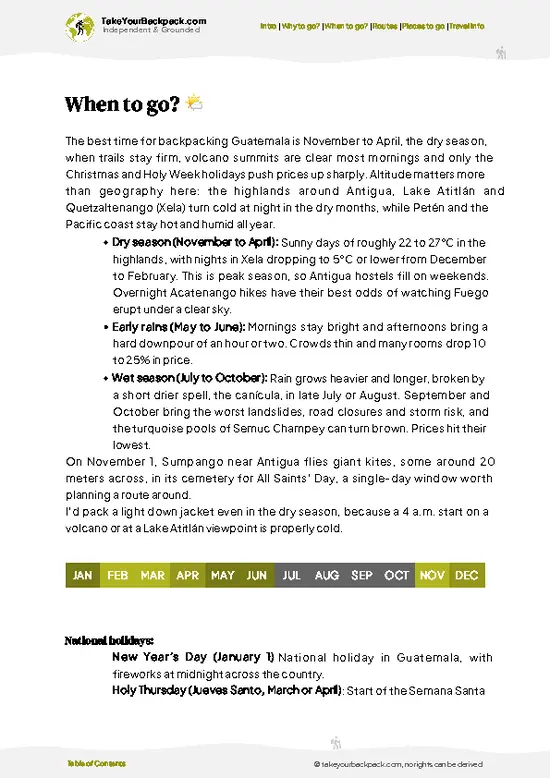
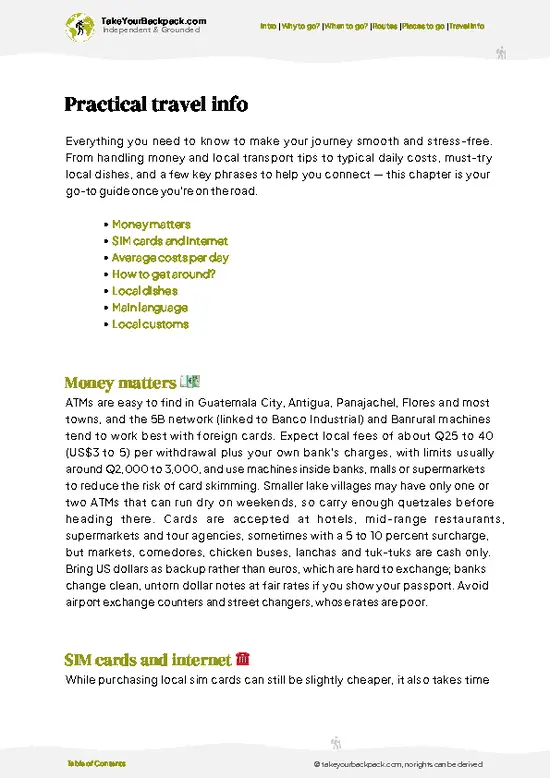
example page 0 from our offline Travel Guide for Guatemala
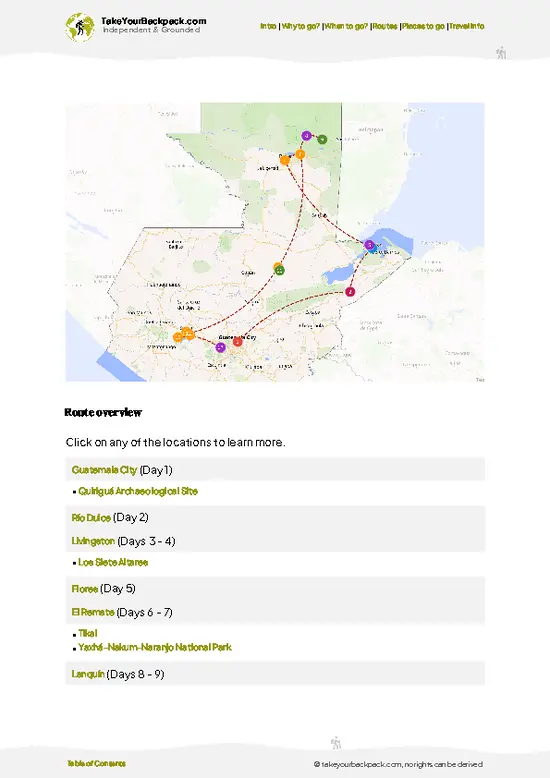
example page 1 from our offline Travel Guide for Guatemala
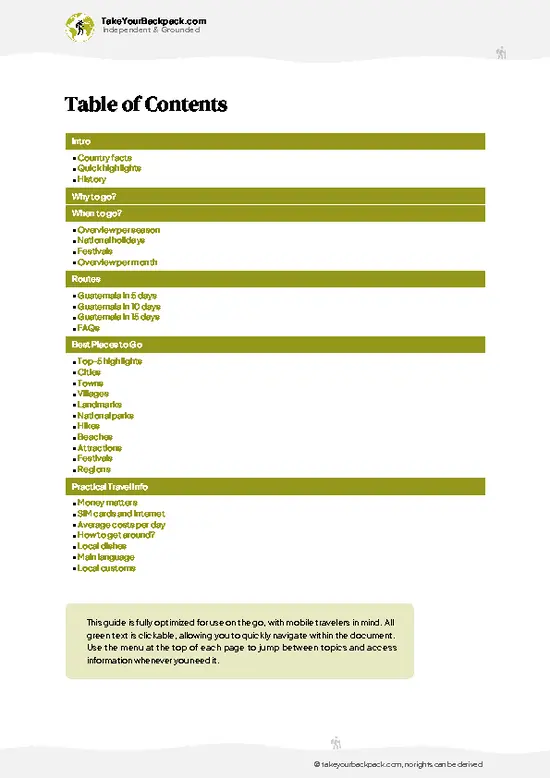
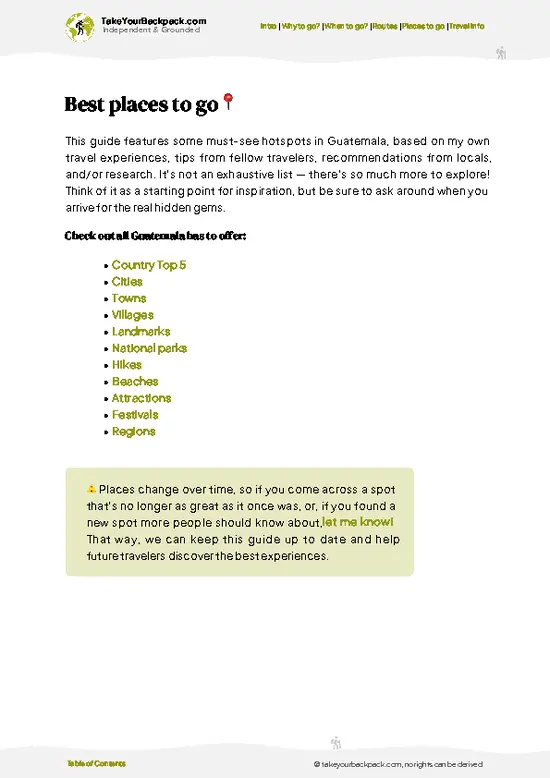
example page 2 from our offline Travel Guide for Guatemala
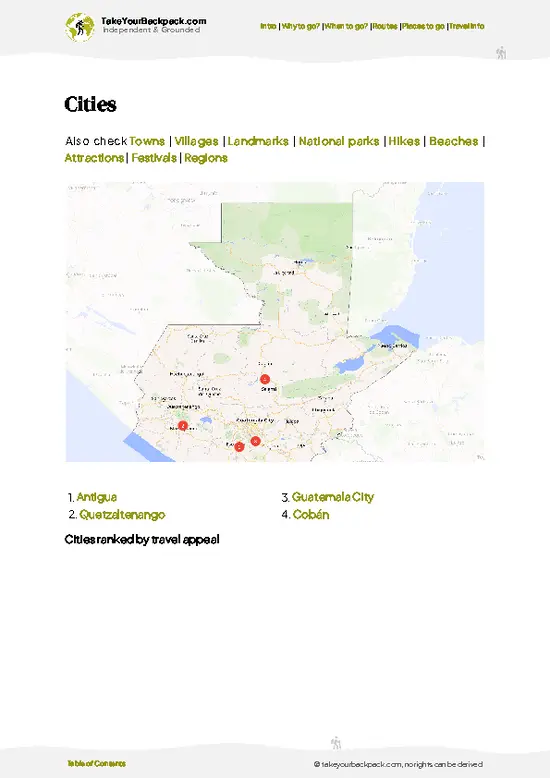
example page 3 from our offline Travel Guide for Guatemala
example page 4 from our offline Travel Guide for Guatemala
example page 5 from our offline Travel Guide for Guatemala
example page 6 from our offline Travel Guide for Guatemala
example page 7 from our offline Travel Guide for Guatemala
Loading the map 🌍
CLICK TO FILTER
cities
towns
villages
landmarks
national parks
hikes
beaches
attractions
festivals
regions
SHOW COUNTRY’S BESTSHOW ALL

✨ Why go?
Ranked #2 region in Guatemala
What makes it a must-see region

Río Dulce works because one river links several very different experiences without you repacking constantly. From the Castillo de San Felipe at the lake mouth, boats run down the gorge toward Livingston, passing limestone cliffs, nesting birds and a spring where hot water meets cool river. You can sleep in a stilt-house hostel, take a boat each day and never touch a bus.

The second reason is the mix of nature and culture. Livingston has a Garifuna community with its own language, drumming and coconut-based seafood stews, which feel nothing like the highland Maya towns most backpackers see first. Nearby, the Biotopo Chocón Machacas protects manatee habitat and mangrove channels you can paddle quietly.

The pace is slow by necessity. Boats leave when full, kitchens run on island time, and you … read more 👉
Río Dulce works because one river links several very different experiences without you repacking constantly. From the Castillo de San Felipe at the lake mouth, boats run down the gorge toward Livingston, passing limestone cliffs, nesting birds and a spring where hot water meets cool river. You can sleep in a stilt-house hostel, take a boat each day and never touch a bus.

The second reason is the mix of nature and culture. Livingston has a Garifuna community with its own language, drumming and coconut-based seafood stews, which feel nothing like the highland Maya towns most backpackers see first. Nearby, the Biotopo Chocón Machacas protects manatee habitat and mangrove channels you can paddle quietly.

The pace is slow by necessity. Boats leave when full, kitchens run on island time, and you end up reading in a hammock. That suits anyone arriving tired from the long road between Guatemala City and Tikal, and the river rewards the stop.

💡 HighlightsEssential experiences to have while visiting Río Dulce

  1. Castillo de San Felipe de Lara: a 17th-century Spanish fort at the narrow point where the lake meets the river, built against pirates. Its small stone rooms and cannon-lined walls sit in a shaded park, and the entry fee is small.
  2. Río Dulce gorge boat ride: sheer green cliffs rise on both sides, with egrets, kingfishers and cormorants along the banks. A lancha ride through it is the signature experience.
  3. Livingston: a town reachable only by water, where Garifuna food, punta music and Caribbean-style wooden houses set it apart from the rest of Guatemala.
  4. Siete Altares: a series of waterfalls and freshwater pools a walk from Livingston, good for swimming and quieter outside the midday rush.
  5. Biotopo Chocón Machacas: a reserve of mangrove canals where manatees live. You rarely see them, but the paddling
… read more 👉
  1. Castillo de San Felipe de Lara: a 17th-century Spanish fort at the narrow point where the lake meets the river, built against pirates. Its small stone rooms and cannon-lined walls sit in a shaded park, and the entry fee is small.
  2. Río Dulce gorge boat ride: sheer green cliffs rise on both sides, with egrets, kingfishers and cormorants along the banks. A lancha ride through it is the signature experience.
  3. Livingston: a town reachable only by water, where Garifuna food, punta music and Caribbean-style wooden houses set it apart from the rest of Guatemala.
  4. Siete Altares: a series of waterfalls and freshwater pools a walk from Livingston, good for swimming and quieter outside the midday rush.
  5. Biotopo Chocón Machacas: a reserve of mangrove canals where manatees live. You rarely see them, but the paddling and birdlife are good.
  6. Aguas Calientes hot springs: a hot stream pours into the cool river, and you can mix temperatures by moving a few feet.
  7. Finca Paraíso: a hot waterfall dropping into a cool pool near Lake Izabal, reached by a short walk through farmland.
  8. Playa Blanca: a quiet beach near Livingston reached by boat, with simple seafood shacks and calm water.
  9. Cueva de la Vaca: the narrowest stretch of the gorge just upriver from Livingston, where the canyon walls rise about 90 meters.
  10. Hacienda Tijax: a working rubber and teak farm with a river-edge setting, trails and a good place for a relaxed lunch.
Río Dulce’s cheapest sight is the public stretch of riverside around the bridge, which costs nothing to watch boats and birds.
Spotted a mistake or missing something? Contact us.

⌛️ 5 daysSeeing the highlights in 5 days

Day 1: Castillo de San Felipe
Start at the fort, because it gives you the geography: the lake narrows, the river begins and the hostels on stilts make sense. Stay on the water nearby, since boats are the only practical way to move after that and early departures are easier when you wake beside the dock.
Day 2: Río Dulce gorge: Take a morning lancha downriver, stopping at the hot springs and the bird islands along the way. Boats leave when they fill, so go early and ask at your hostel dock to be sure of a seat.
Day 3: Livingston: Arrive by water and spend the evening on food and music. The town has no real road in, so the boat schedule dictates your timing. Eat tapado, a coconut seafood stew, and walk the shoreline slowly.
Day 4: Siete Altares: Walk or hire a boat to the waterfalls, swim in the … read more 👉
Day 1: Castillo de San Felipe
Start at the fort, because it gives you the geography: the lake narrows, the river begins and the hostels on stilts make sense. Stay on the water nearby, since boats are the only practical way to move after that and early departures are easier when you wake beside the dock.
Day 2: Río Dulce gorge: Take a morning lancha downriver, stopping at the hot springs and the bird islands along the way. Boats leave when they fill, so go early and ask at your hostel dock to be sure of a seat.
Day 3: Livingston: Arrive by water and spend the evening on food and music. The town has no real road in, so the boat schedule dictates your timing. Eat tapado, a coconut seafood stew, and walk the shoreline slowly.
Day 4: Siete Altares: Walk or hire a boat to the waterfalls, swim in the pools and return for another night. Detour: take a boat to Playa Blanca for calm water and a long lunch without changing your base.
Day 5: Biotopo Chocón Machacas: Return upriver and paddle the mangrove canals early, when wildlife is more active. Then head to the highway for onward buses.

If you only have one day to justify the trip, make it day 2: the gorge at morning pace, cliffs rising in mist, is the best the region offers.

🌤️ When to go?Choosing the right time of year

  • Dry Season (February to May): Río Dulce is at its easiest from February to May, with highs of 31 to 35°C (88 to 95°F), little rain and the best swimming at Finca Paraíso hot springs and Playa Blanca. Humidity stays high and April can feel airless by midday.
  • Early Rains (June to September): Expect warm mornings, then downpours most afternoons, with temperatures of 26 to 33°C (79 to 91°F). Rooms are cheaper and the river is quiet, though dirt roads to Livingston-side villages turn to mud.
  • Wettest Months (October to January): Rain can last for days, especially in October and November, and river haze hides the canyon cliffs. Lows dip to about 21°C (70°F) in December and January. Christmas and Semana Santa bring Guatemalan families and higher prices.
  • Daylight: Days run close to 11 to 13 hours all
… read more 👉
  • Dry Season (February to May): Río Dulce is at its easiest from February to May, with highs of 31 to 35°C (88 to 95°F), little rain and the best swimming at Finca Paraíso hot springs and Playa Blanca. Humidity stays high and April can feel airless by midday.
  • Early Rains (June to September): Expect warm mornings, then downpours most afternoons, with temperatures of 26 to 33°C (79 to 91°F). Rooms are cheaper and the river is quiet, though dirt roads to Livingston-side villages turn to mud.
  • Wettest Months (October to January): Rain can last for days, especially in October and November, and river haze hides the canyon cliffs. Lows dip to about 21°C (70°F) in December and January. Christmas and Semana Santa bring Guatemalan families and higher prices.
  • Daylight: Days run close to 11 to 13 hours all year, so plan boat trips for the morning, when the water is calm and the birds are active.
Book the Livingston boat and canyon tour for the first hours of the day, before wind chops the lake and clouds build.


source: climatestotravel.comJANJanuary: excellent for travelingFEBFebruary: excellent for travelingMARMarch: excellent for travelingAPRApril: highly recommended for travelingMAYMay: fair for travelingJUNJune: fair for travelingJULJuly: fair for travelingAUGAugust: fair for travelingSEPSeptember: fair for travelingOCTOctober: fair for travelingNOVNovember: highly recommended for travelingDECDecember: excellent for traveling
guatemala-region-rio-dulce
© Google | Simone

✈️ The backpacker research shortcutGuatemala Travel Guide

An offline-friendly backpacking guide with optimized travel routes, ranked highlights, transport advice, and the best areas to stay.
example page 0 from our offline Travel Guide for Guatemala
example page 1 from our offline Travel Guide for Guatemala
example page 2 from our offline Travel Guide for Guatemala
example page 3 from our offline Travel Guide for Guatemala
example page 4 from our offline Travel Guide for Guatemala
example page 5 from our offline Travel Guide for Guatemala
example page 6 from our offline Travel Guide for Guatemala
example page 7 from our offline Travel Guide for Guatemala
The digital guide (272 pages) contains:
✅ 85 highlights, ranked by travel appeal
✅ Optimized 5, 10 & 15-day travel routes
✅ Cities, national parks, landmarks, beaches
✅ How to get around
✅ Offline-friendly for travel without Wi-Fi
👉 Click to see all 30+ guide features

📅 Plan smarter in minutes, not weeks
✅ Month by month travel advice
✅ Festivals & national holidays
✅ Budget expectations

🗺️ Go to the right places, skip the overrated ones
✅ Honest pros & cons of destinations
✅ Top hikes, parks & viewpoints
✅ Lesser-known places most travelers miss
✅ Clear “worth it vs skip it” guidance

🛏️ Travel smoothly without rookie mistakes
✅ Best areas to stay
✅ Transport systems explained simply
✅ Common scams & safety advice
✅ SIM cards, money & practical tips

🌍 Understand the country, not just visit it
✅ Culture & traditions
✅ 52 Essential phrases & customs
✅ Festivals worth planning around
✅ Traveler-friendly historical context
✅ Insights that make places more meaningful

📱 Built for real travel conditions
✅ Fully downloadable PDF
✅ Works completely offline
✅ Optimized for phone use
✅ Useful in remote areas & buses
✅ Everything in one place
Stop searching, start planning
Get instant access to your full guide. 30‑day money-back guarantee.
+ Add another guide for just

By proceeding you agree to our terms.
Sent to your inbox immediately after payment • 100% Secure Checkout
Best Backpacking Travel Advisor 2025 tourism awardBest Backpacking
Travel Advisor
2025
What others say about Take Your Backpack Guides:
⭐⭐⭐⭐⭐
Fantastic, amazing amount of information!
⭐⭐⭐⭐⭐
My goodness this is amazing, it's what I've been looking for hats off too you!
⭐⭐⭐⭐⭐
I think this is absolutely BRILLIANT
⭐⭐⭐⭐
Very complete and informative. It's still missing places, but I gotta to commend you
⭐⭐⭐⭐⭐
This is truly amazing, thank you, can't wait to explore it with my kids!
⭐⭐⭐⭐⭐
Awesome resource, thank you!
⭐⭐⭐⭐⭐
This is amazing! Can't wait to explore the ones I haven't seen
⭐⭐⭐⭐
I love this! Well done, great idea.
⭐⭐⭐⭐⭐
Thanks for taking the time to make this gem!
⭐⭐⭐⭐⭐
This might be the best website I've ever seen.
⭐⭐⭐⭐⭐
Congratulations, and thank you so much for your work; it's incredibly valuable.
⭐⭐⭐⭐
In all seriousness I think you did a great job pointing out the important spots
⭐⭐⭐⭐⭐
10/10 very good
⭐⭐⭐⭐⭐
As someone who's only just starting to visit regularly this is awesome, thank you.
⭐⭐⭐⭐
Thank you very much! I'm going to visit my dad, it's going to be very useful!
⭐⭐⭐⭐⭐
This is really cool! We'll be travelling for the first time and this definitely come in handy.
⭐⭐⭐⭐⭐
You are now our minister of culture, congratulations 👨‍💼
⭐⭐⭐⭐⭐
Just wanted to tell you that this is a pearl! Going to follow your recommendations.
⭐⭐⭐⭐⭐
This is so cool. I'll definitely be using the resource for my travels soon.
⭐⭐⭐⭐⭐
This is very impressive! Good work.
⭐⭐⭐⭐⭐
This is an amazing and informative site. Very well done!

🛏️ Where to stay?Best areas and accommodation options

Río Dulce town is the practical base for a backpacker, with the most hostels and boat access, but Livingston and the riverside lodges nearby have the stronger social scene. Staying in the town costs roughly US$8 to 20 a night, and you will be close to the bus stops, the bridge and the lanchas.
Río Dulce town sits right on the highway, which makes it easy to arrive late or leave early. The streets near the bridge are loud with trucks and tuk-tuks, and the center feels rough at night, so stay near the docks where other travelers gather. Many places on the water sit across the river, and you reach … read more 👉
Río Dulce town is the practical base for a backpacker, with the most hostels and boat access, but Livingston and the riverside lodges nearby have the stronger social scene. Staying in the town costs roughly US$8 to 20 a night, and you will be close to the bus stops, the bridge and the lanchas.
Río Dulce town sits right on the highway, which makes it easy to arrive late or leave early. The streets near the bridge are loud with trucks and tuk-tuks, and the center feels rough at night, so stay near the docks where other travelers gather. Many places on the water sit across the river, and you reach them by boat, which means swimming off a dock at sunrise and sharing meals with other guests.
Livingston is the best choice if you want music, Garifuna culture and a late evening on the waterfront. It has no road access, so everyone arrives by boat, and the town feels distinctly Caribbean. Rooms cost about US$8 to 25. It is relaxed and walkable, though you should keep to lit streets after dark.
Lodges along the river and around Lago de Izabal suit travelers who want hammocks, jungle noise and quiet. Dorms there often cost about US$8 to 15, and meals are usually eaten together, which makes it easy to meet people.

🚌 Getting aroundGetting around like a local

Taking a tourist shuttle from Guatemala City or Antigua all the way to Río Dulce is the move that costs travelers the most, since the same ride on a regular bus is a fraction of the price. The town sits at the bridge on the CA-9 highway, so everything funnels through it, and you can reach most places by water or by a battered minibus. The system is rough and loud, but it works and rarely leaves you stuck for long.
  • Long-distance bus: Litegua and Fuente del Norte run from Guatemala City (5 to 6 hours, about US$10 to 15) and onward to Flores (about 3 to 4 hours, around US$10 to 15). Seats are cramped and the air conditioning is often arctic, so bring a layer. This gives a backpacker the best value for the longer legs.
  • Shuttle minivan: Door-to-door from Antigua, Guatemala City or Flores costs roughly
… read more 👉
Taking a tourist shuttle from Guatemala City or Antigua all the way to Río Dulce is the move that costs travelers the most, since the same ride on a regular bus is a fraction of the price. The town sits at the bridge on the CA-9 highway, so everything funnels through it, and you can reach most places by water or by a battered minibus. The system is rough and loud, but it works and rarely leaves you stuck for long.
  • Long-distance bus: Litegua and Fuente del Norte run from Guatemala City (5 to 6 hours, about US$10 to 15) and onward to Flores (about 3 to 4 hours, around US$10 to 15). Seats are cramped and the air conditioning is often arctic, so bring a layer. This gives a backpacker the best value for the longer legs.
  • Shuttle minivan: Door-to-door from Antigua, Guatemala City or Flores costs roughly US$20 to 35 and saves a change of bus. You pay more for comfort and a pickup, but you lose flexibility. It suits a tight schedule, and little else.
  • Lancha (boat): Public boats to Livingston take about 1.5 to 2 hours with stops and cost around US$16 each way. You pass limestone cliffs, herons and the smell of diesel and wet jungle. Leaving early means flat water, and this is the best use of money in the region.
  • Tuk-tuk and minibus: A tuk-tuk across town costs about US$1 to 2, and minibuses to nearby spots such as Finca Paraíso cost a few dollars. They are noisy, packed and hot, but quick.
  • Private boat hire: A boat to Castillo de San Felipe or the hot springs costs roughly US$15 to 40 per boat, so splitting it with others brings the price down. This is only worth doing in a group.
Carry small bills for fares, since drivers rarely have change, and ask at the dock what the going rate is before you step aboard.

🍲 FoodWhat to Eat & Drink

Eat tapado first. This Garifuna seafood soup of fish, shrimp, crab and plantain simmers in coconut milk until the broth turns thick, sweet and faintly smoky, and a bowl runs about US$6 to 12. Along the river, you will also find fried fish with patacones (twice-fried green plantain) and a squeeze of lime, plus ceviche with a bright, sharp bite.
For cheap meals, head to the comedores near the bus stops and the market, where a plate of rice, beans, chicken and tortillas costs about US$3 to 5. Grilled meat and chicken stalls fill the air with woodsmoke in the evening. Riverside lodges serve set dinners at long tables, usually US$6 to 10, and they are the easiest place to swap stories. In Livingston, look for coconut bread sold warm from street baskets, and for rice and beans cooked in coconut milk. … read more 👉
Eat tapado first. This Garifuna seafood soup of fish, shrimp, crab and plantain simmers in coconut milk until the broth turns thick, sweet and faintly smoky, and a bowl runs about US$6 to 12. Along the river, you will also find fried fish with patacones (twice-fried green plantain) and a squeeze of lime, plus ceviche with a bright, sharp bite.
For cheap meals, head to the comedores near the bus stops and the market, where a plate of rice, beans, chicken and tortillas costs about US$3 to 5. Grilled meat and chicken stalls fill the air with woodsmoke in the evening. Riverside lodges serve set dinners at long tables, usually US$6 to 10, and they are the easiest place to swap stories. In Livingston, look for coconut bread sold warm from street baskets, and for rice and beans cooked in coconut milk.
To drink, order licuados and fresh juice, or try Gallo, the local lager, served very cold for about US$1.50 to 3. In Livingston, ask for guifiti, a Garifuna herbal rum, usually sold in small shots.
Service is unhurried, and a meal can take a good half hour to arrive. Tipping about 10 percent is normal in sit-down places. Ask the price before you order seafood, because it is often sold by weight.

FAQFrequently asked questions about Río Dulce

Two to three days covers Río Dulce well. Spend one day on the boat ride through the canyon to Livingston, another at Finca Paraíso hot springs and Castillo de San Felipe, and add a third for Playa Blanca or a night in a riverside lodge. Most travelers stop here for one night between Guatemala City and Flores, but the region is better with a longer stay.
Río Dulce is easy to reach without a car. Buses on the CA-9 highway link it with Guatemala City (5 to 6 hours, about US$10 to 15) and Flores (3 to 4 hours), and public lanchas reach Livingston in about 1.5 to 2 hours for roughly US$16. Tuk-tuks cover short hops around town for US$1 to 2, while private boats serve nearby sights and cost about US$15 to 40 per boat.
Río Dulce is known for its wide, jungle-lined river, the limestone canyon between Lago de Izabal and the Caribbean, and the Castillo de San Felipe, a Spanish fort from the 1600s. It also has hot springs at Finca Paraíso, a large yachting community, and easy boat access to Livingston, the Garifuna town. Many travelers come for swimming, birdwatching and slow days on the water, usually for US$10 to 25 a day on accommodation and boats.
⚠️ Things can change over time, so always validate details locally before you go.

Other Guatemalan regions near Río Dulce

Explore more nearby:

  • Lake Izabal—Stilt villages, Q’eqchi’ farms, manatee mangroves, public launches| 56 km away
  • Atitlán Lake—volcanic basin, Maya villages, artisan markets, lakeshore trails| 292 km away

💡 Not sure where to go next?
Create a personalized itinerary for Guatemala including Río Dulce and the places that fit your trip.

Generate my itinerary

👉 Discover all regions

Or checkout all Guatemala has to offer (think cities, towns, villages, national parks, hikes, beaches, festivals)
Country photo of Guatemala

We 💚 feedbackWhat to keep in mind

Río Dulce is best in the early morning, when mist hangs over the gorge, the herons are active and the boats are quiet. I would skip the midday heat and plan around dawn. Bring insect repellent, a dry bag and patience for boat schedules that change with the weather.

✈️ When did I visit Guatemala?
Guatemala I visited during my half year trip through South and Central America back in 2003

✍️ Help improve this page!
The information on this page is based on my own backpacking experience in Guatemala, supplemented with up-to-date research and feedback from other travelers. Travel details can change, so if you notice anything outdated or incomplete, feel free to let me know.


🙋‍♂️ Give feedback

👋 Meet the founderWho’s Behind Take Your Backpack?

Johan, backpacker and founder of TakeYourBackpackHi, I’m Johan (Netherlands 🇳🇱), the creator of TakeYourBackpack. Over the past 3 decades, I’ve backpacked through 90+ countries across six continents, gaining extensive experience with independent travel, long-term trips, and overland routes.

This site is built on a combination of firsthand travel experience and carefully curated insights from other backpackers. Many guides are based on places I’ve personally visited, while others bring together tips, observations, and practical advice shared by trusted travelers I’ve met along the way.

The goal is to provide realistic, experience-driven guidance — not generic itineraries — so you can explore destinations with better context, clearer expectations, and more confidence.