
×

Guinea-Bissau🇬🇼 | festivalsBijagós Archipelago FestivalBijagós masks, island drumming, Bubaque port, saltwater hippos | things to do and best time to go

Explore GabúExplore Bissau International Film Festival

Backpacking in Bijagós Archipelago
🏆 Top pickfestival ranked #2
By Johan Kruseman 🇳🇱 | Updated October 22, 2026

Bijagós Archipelago Festival suits travelers who like their culture unpolished, who sleep happily in a basic guesthouse and treat a late boat as part of the plan. Anyone who needs fixed schedules, air conditioning or a polished stage show will find it less rewarding. The festival takes place among the islands off the coast of Guinea-Bissau, with Bubaque as the usual gateway. Expect drums carrying across the village after dark, dancers in raffia skirts and masks kicking up red dust, woodsmoke, and palm wine poured from plastic jugs. Mosquitoes arrive with the evenings and so does the heat, but you get a close look at a matrilineal island culture that holds its ceremonies on its own terms. The music is tied to Bijagós tradition, and the crowd mixes islanders, Bissau residents and a handful of overlanders. On a first day, land at Bubaque, drop your pack, walk the sandy lanes to the beach and follow the drumming at dusk.

Discover everything you want to know in the 📖 Guinea-Bissau Travel Guide.


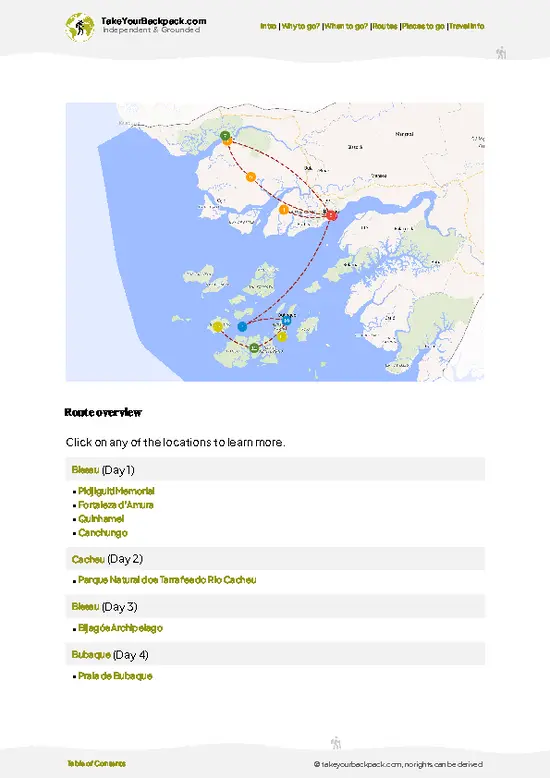
example page 0 from our offline Travel Guide for Guinea-Bissau
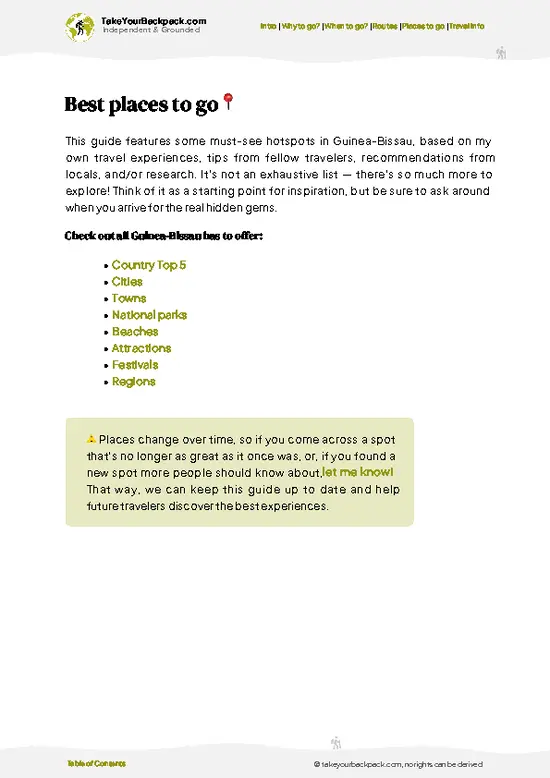
example page 1 from our offline Travel Guide for Guinea-Bissau
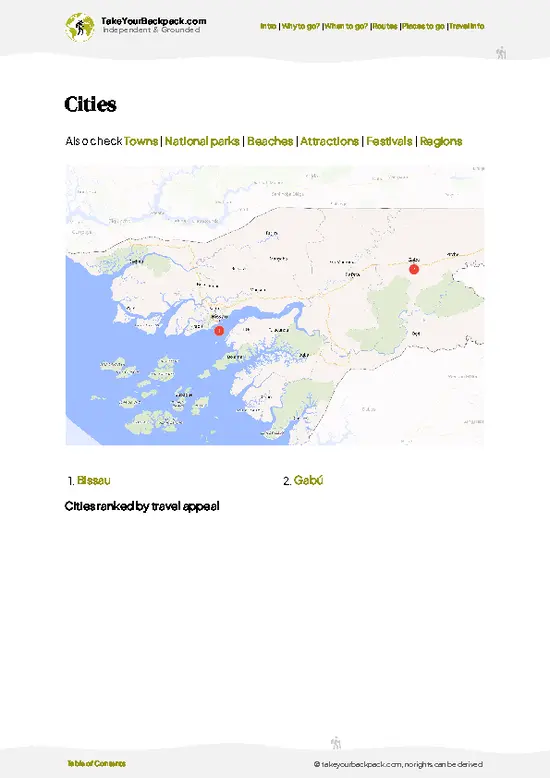
example page 2 from our offline Travel Guide for Guinea-Bissau
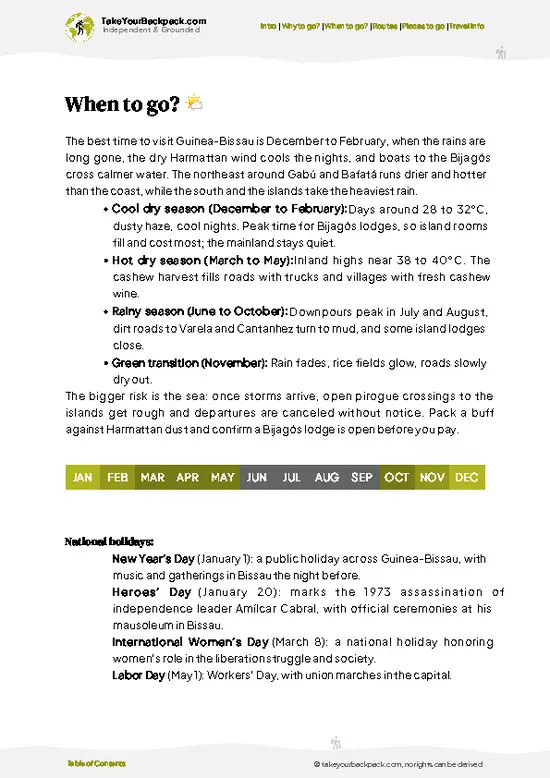
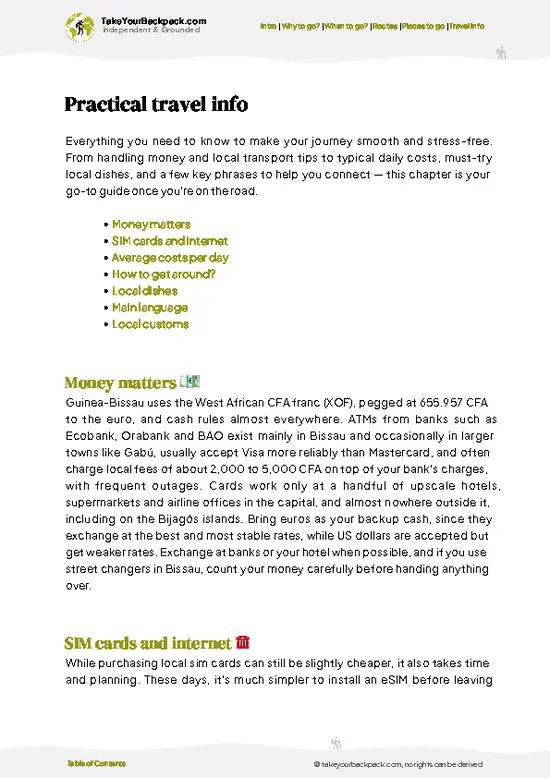
example page 3 from our offline Travel Guide for Guinea-Bissau
example page 4 from our offline Travel Guide for Guinea-Bissau
example page 5 from our offline Travel Guide for Guinea-Bissau
example page 6 from our offline Travel Guide for Guinea-Bissau
example page 7 from our offline Travel Guide for Guinea-Bissau
Loading the map 🌍
CLICK TO FILTER
cities
towns
national parks
beaches
attractions
festivals
regions
SHOW COUNTRY’S BESTSHOW ALL

✨ Why go?
Ranked #2 festival in Guinea-Bissau
What sets this place apart

Bijagós Archipelago Festival gives you a reason to cross the water to islands that most itineraries in West Africa never touch. The Bijagós people have a society where women hold real authority and where masks, initiation rites and sacred groves still shape village life. Seeing the dances in their own setting, with neighbors drumming and children darting between the performers, tells you more than any museum case in Bissau could.

The social side works because there are so few visitors. Guesthouses on Bubaque fill with the same small group of travelers, and by the second evening you are sharing boat rides, grilled fish and plans for the next island. It feels like a temporary village rather than a crowd.

It also pairs well with the rest of the archipelago. From the festival you can add a trip … read more 👉
Bijagós Archipelago Festival gives you a reason to cross the water to islands that most itineraries in West Africa never touch. The Bijagós people have a society where women hold real authority and where masks, initiation rites and sacred groves still shape village life. Seeing the dances in their own setting, with neighbors drumming and children darting between the performers, tells you more than any museum case in Bissau could.

The social side works because there are so few visitors. Guesthouses on Bubaque fill with the same small group of travelers, and by the second evening you are sharing boat rides, grilled fish and plans for the next island. It feels like a temporary village rather than a crowd.

It also pairs well with the rest of the archipelago. From the festival you can add a trip toward Orango National Park, where saltwater hippos wade near the shore, or simply stay for the empty beaches. Compared with big African music festivals, the entry is simple and the spending is modest, though getting there takes planning and patience.

💡 HighlightsMust-see experiences and standout moments

  1. Bijagós mask dances: This is what the festival is best known for. Dancers wear carved animal masks, among them the wild cow and the shark, and imitate the animals’ movements to a driving drum beat. Each mask carries meaning within Bijagós initiation traditions, so watch the footwork and the way the crowd reacts.
  2. Bubaque town and port: The main island’s small hub is where boats arrive and the festival energy spills into the streets. Sandy lanes, a lively market and open-air bars make it the easiest place to meet other travelers and islanders, and to eat fresh fish after the dances.
  3. Praia Bruce and Bijante beaches: Quiet stretches of pale sand on Bubaque, backed by palms and almost empty on non-festival days. They suit a slow morning swim after a late night of drumming, with nothing to do but
… read more 👉
  1. Bijagós mask dances: This is what the festival is best known for. Dancers wear carved animal masks, among them the wild cow and the shark, and imitate the animals’ movements to a driving drum beat. Each mask carries meaning within Bijagós initiation traditions, so watch the footwork and the way the crowd reacts.
  2. Bubaque town and port: The main island’s small hub is where boats arrive and the festival energy spills into the streets. Sandy lanes, a lively market and open-air bars make it the easiest place to meet other travelers and islanders, and to eat fresh fish after the dances.
  3. Praia Bruce and Bijante beaches: Quiet stretches of pale sand on Bubaque, backed by palms and almost empty on non-festival days. They suit a slow morning swim after a late night of drumming, with nothing to do but float and recover.
  4. Orango National Park: Part of the Bijagós UNESCO biosphere reserve, this group of islands is known for its saltwater hippos, which graze along the mangrove edges. A pirogue trip here adds wildlife to a trip otherwise built around culture, and the mangrove channels are quiet and shaded.
  5. Poilão and the turtle nesting beaches: The João Vieira and Poilão marine park is one of West Africa’s most important nesting sites for green turtles. Poilão itself is a sacred island, so access is carefully controlled and guided. If your dates match the nesting season, it is the most memorable add-on in the archipelago.
Bijagós Archipelago Festival itself fills about three days, and adding a hippo trip or the beaches stretches the whole plan to roughly a week.
Spotted a mistake or missing something? Contact us.

🌤️ When to go?When is the celebration of Bijagós Archipelago Festival?

The Bijagós Archipelago Festival is usually held in February over a few days, with the dates set by local organizers each year, and centers on Bubaque, the main island of the archipelago.
  • Best day: Go for the main day of processions and masked dances, when island communities arrive by boat and the crowd is largest. Quieter weekdays suit you if you prefer talking with dancers and elders.
  • Weather: Expect almost no rain, daytime highs of 30 to 33°C (86 to 91°F) and nights near 22°C (72°F). Bring a wide-brimmed hat, reef-safe sunscreen, a light rain shell for rare squalls and a headlamp for unlit paths.
  • Booking: Bubaque has few beds, so reserve a room 4 to 8 weeks ahead. Prices commonly rise 20 to 40% (about €5 to 15 extra a night) around the festival dates.
  • Arrival and departure: Boats from Bissau
… read more 👉
The Bijagós Archipelago Festival is usually held in February over a few days, with the dates set by local organizers each year, and centers on Bubaque, the main island of the archipelago.
  • Best day: Go for the main day of processions and masked dances, when island communities arrive by boat and the crowd is largest. Quieter weekdays suit you if you prefer talking with dancers and elders.
  • Weather: Expect almost no rain, daytime highs of 30 to 33°C (86 to 91°F) and nights near 22°C (72°F). Bring a wide-brimmed hat, reef-safe sunscreen, a light rain shell for rare squalls and a headlamp for unlit paths.
  • Booking: Bubaque has few beds, so reserve a room 4 to 8 weeks ahead. Prices commonly rise 20 to 40% (about €5 to 15 extra a night) around the festival dates.
  • Arrival and departure: Boats from Bissau fill fast on the day before and the day after the main events, so travel two days earlier or one day later than the rush. Buy return boat seats early and leave Bissau port by mid-morning.
Arrive a full day before the opening so you can settle in and watch the island set up.


source: climatestotravel.comJANJanuary: highly recommended for travelingFEBFebruary: highly recommended for travelingMARMarch: highly recommended for travelingAPRApril: highly recommended for travelingMAYMay: highly recommended for travelingJUNJune: not recommended for travelingJULJuly: not recommended for travelingAUGAugust: not recommended for travelingSEPSeptember: not recommended for travelingOCTOctober: not recommended for travelingNOVNovember: highly recommended for travelingDECDecember: not recommended for traveling

✈️ The backpacker research shortcutGuinea-Bissau Travel Guide

An offline-friendly backpacking guide with optimized travel routes, ranked highlights, transport advice, and the best areas to stay.
example page 0 from our offline Travel Guide for Guinea-Bissau
example page 1 from our offline Travel Guide for Guinea-Bissau
example page 2 from our offline Travel Guide for Guinea-Bissau
example page 3 from our offline Travel Guide for Guinea-Bissau
example page 4 from our offline Travel Guide for Guinea-Bissau
example page 5 from our offline Travel Guide for Guinea-Bissau
example page 6 from our offline Travel Guide for Guinea-Bissau
example page 7 from our offline Travel Guide for Guinea-Bissau
The digital guide (214 pages) contains:
✅ 48 highlights, ranked by travel appeal
✅ Optimized 2, 3 & 5-day travel routes
✅ Cities, national parks, landmarks, beaches
✅ How to get around
✅ Offline-friendly for travel without Wi-Fi
👉 Click to see all 30+ guide features

📅 Plan smarter in minutes, not weeks
✅ Month by month travel advice
✅ Festivals & national holidays
✅ Budget expectations

🗺️ Go to the right places, skip the overrated ones
✅ Honest pros & cons of destinations
✅ Top hikes, parks & viewpoints
✅ Lesser-known places most travelers miss
✅ Clear “worth it vs skip it” guidance

🛏️ Travel smoothly without rookie mistakes
✅ Best areas to stay
✅ Transport systems explained simply
✅ Common scams & safety advice
✅ SIM cards, money & practical tips

🌍 Understand the country, not just visit it
✅ Culture & traditions
✅ 52 Essential phrases & customs
✅ Festivals worth planning around
✅ Traveler-friendly historical context
✅ Insights that make places more meaningful

📱 Built for real travel conditions
✅ Fully downloadable PDF
✅ Works completely offline
✅ Optimized for phone use
✅ Useful in remote areas & buses
✅ Everything in one place
Stop searching, start planning
Get instant access to your full guide. 30‑day money-back guarantee.
+ Add another guide for just

By proceeding you agree to our terms.
Sent to your inbox immediately after payment • 100% Secure Checkout
Best Backpacking Travel Advisor 2025 tourism awardBest Backpacking
Travel Advisor
2025
What others say about Take Your Backpack Guides:
⭐⭐⭐⭐⭐
Fantastic, amazing amount of information!
⭐⭐⭐⭐⭐
My goodness this is amazing, it's what I've been looking for hats off too you!
⭐⭐⭐⭐⭐
I think this is absolutely BRILLIANT
⭐⭐⭐⭐
Very complete and informative. It's still missing places, but I gotta to commend you
⭐⭐⭐⭐⭐
This is truly amazing, thank you, can't wait to explore it with my kids!
⭐⭐⭐⭐⭐
Awesome resource, thank you!
⭐⭐⭐⭐⭐
This is amazing! Can't wait to explore the ones I haven't seen
⭐⭐⭐⭐
I love this! Well done, great idea.
⭐⭐⭐⭐⭐
Thanks for taking the time to make this gem!
⭐⭐⭐⭐⭐
This might be the best website I've ever seen.
⭐⭐⭐⭐⭐
Congratulations, and thank you so much for your work; it's incredibly valuable.
⭐⭐⭐⭐
In all seriousness I think you did a great job pointing out the important spots
⭐⭐⭐⭐⭐
10/10 very good
⭐⭐⭐⭐⭐
As someone who's only just starting to visit regularly this is awesome, thank you.
⭐⭐⭐⭐
Thank you very much! I'm going to visit my dad, it's going to be very useful!
⭐⭐⭐⭐⭐
This is really cool! We'll be travelling for the first time and this definitely come in handy.
⭐⭐⭐⭐⭐
You are now our minister of culture, congratulations 👨‍💼
⭐⭐⭐⭐⭐
Just wanted to tell you that this is a pearl! Going to follow your recommendations.
⭐⭐⭐⭐⭐
This is so cool. I'll definitely be using the resource for my travels soon.
⭐⭐⭐⭐⭐
This is very impressive! Good work.
⭐⭐⭐⭐⭐
This is an amazing and informative site. Very well done!

🛏️ Where to stay?How to pick the right area

Bubaque town is the place to sleep, because it is where the festival happens and it is the only spot on the islands with a real cluster of budget beds, restaurants and a port. Staying near the port and central market keeps you within a short walk of the festival, the boat ticket offices and the evening bars where travelers and locals mix. It is also the easiest area for meeting other solo backpackers, since everyone passes through the same few streets, and the lit main roads make walking back after dark feel manageable.

If you want more space, look along the beach strips south of town, a short … read more 👉
Bubaque town is the place to sleep, because it is where the festival happens and it is the only spot on the islands with a real cluster of budget beds, restaurants and a port. Staying near the port and central market keeps you within a short walk of the festival, the boat ticket offices and the evening bars where travelers and locals mix. It is also the easiest area for meeting other solo backpackers, since everyone passes through the same few streets, and the lit main roads make walking back after dark feel manageable.

If you want more space, look along the beach strips south of town, a short moto-taxi ride away. Here you get quieter nights, sand at your door and smaller guesthouses where the owners often organize island trips and swap tips over meals. The trade-off is that you rely on motorbikes after dark, so arrange a ride back in advance.

Camping and very basic rooms in town suit tight budgets, but they fill first when festival visitors arrive. Many travelers also base in Bissau on the mainland and cross by boat for the days that matter. That works for a single day of parades, though you miss the quieter village conversations. For the full experience, sleep on the island at least two nights and book early.

👛 Costs (as of 22 October 2026)Money, prices, and spending tips

Bijagós Archipelago Festival costs roughly €31 to 75 per day for an independent traveler, with accommodation and the boat from Bissau making up most of the spend. Prices are approximate and you pay in cash.
CategoryBudget RangeLocal Reality
Festival tickets€0 to 5Street events are mostly open to all. Some venues or village events may ask for a small donation.
Accommodation€15 to 35Basic guesthouse rooms and simple beach huts in Bubaque. Prices rise and rooms fill around the main day.
Local transport€3 to 10Moto-taxis in town cost about €1 to 2 a ride. The Bissau boat is a separate cost, around €10 to 20 each way.
Food & drinks€8 to 15Grilled fish with rice at a local stall costs about €3 to 6. Beer is around €1 to 2.
Miscellaneous expenses€5 to 10Water, sunscreen, small gifts or donations, and a
… read more 👉
Bijagós Archipelago Festival costs roughly €31 to 75 per day for an independent traveler, with accommodation and the boat from Bissau making up most of the spend. Prices are approximate and you pay in cash.
CategoryBudget RangeLocal Reality
Festival tickets€0 to 5Street events are mostly open to all. Some venues or village events may ask for a small donation.
Accommodation€15 to 35Basic guesthouse rooms and simple beach huts in Bubaque. Prices rise and rooms fill around the main day.
Local transport€3 to 10Moto-taxis in town cost about €1 to 2 a ride. The Bissau boat is a separate cost, around €10 to 20 each way.
Food & drinks€8 to 15Grilled fish with rice at a local stall costs about €3 to 6. Beer is around €1 to 2.
Miscellaneous expenses€5 to 10Water, sunscreen, small gifts or donations, and a tip for guides or photographers if you ask for photos.
Total Daily Budget€31 to 75Higher end applies on the main festival days and in high season.


source: gov.uk
⚠️ Prices can change and everyone travels differently, so take this as a rough guide. Hope it helps you plan your adventure!

🍲 FoodEating & Drinking in Bijagós Archipelago

Food here is island food, and the Bijagós diet leans on the sea. Around the festival, women set up stalls and shaded tables selling grilled fish, rice with fish stew, fried plantain and sometimes oysters gathered from the mangroves. Fish is usually served whole with rice and a spicy onion sauce, and a plate typically costs €3 to 6.

For drinks, cashew wine and palm wine are the authentic choices, sold from plastic bottles and jugs, tangy and slightly fizzy. Cana, a strong sugarcane spirit, appears at celebrations and is handed around in small cups. Cold beer and soft drinks are sold in bars around town for about €1 to 2, and cashew fruit juice is a seasonal treat worth chasing. Try wine only from a stall that looks busy with locals.

A few quirks help. Pay in cash only, in small notes, since … read more 👉
Food here is island food, and the Bijagós diet leans on the sea. Around the festival, women set up stalls and shaded tables selling grilled fish, rice with fish stew, fried plantain and sometimes oysters gathered from the mangroves. Fish is usually served whole with rice and a spicy onion sauce, and a plate typically costs €3 to 6.

For drinks, cashew wine and palm wine are the authentic choices, sold from plastic bottles and jugs, tangy and slightly fizzy. Cana, a strong sugarcane spirit, appears at celebrations and is handed around in small cups. Cold beer and soft drinks are sold in bars around town for about €1 to 2, and cashew fruit juice is a seasonal treat worth chasing. Try wine only from a stall that looks busy with locals.

A few quirks help. Pay in cash only, in small notes, since change is scarce and no stall takes cards. Meals are often cooked to order, so expect to wait and settle in rather than hurry. If someone offers you a sip or a bite, accepting is polite, and sharing a bowl with new friends is normal. Carry your own water bottle, because supplies can run low on the main day. Eat early if you want the best fish.

FAQCommon questions from travelers

Bijagós Archipelago Festival is held in the dry season, usually around February, in Bubaque town on Bubaque island. Events run over a few days, with the main parade and dance day usually on a weekend. Exact dates change each year, so confirm with local organizers or your guesthouse in Bubaque. Boats from Bissau take around 3 to 4 hours, so arrive a day early.
Bijagós Archipelago Festival is mostly free to watch, with a small donation sometimes expected at certain events, so budget €0 to 5. Your main costs are the boat from Bissau at about €10 to 20 each way and a guesthouse bed in Bubaque for €15 to 35 a night. Grilled fish meals cost about €3 to 6. Plan on roughly €31 to 75 per day in total.
Bijagós Archipelago Festival does not usually require advance tickets, because most of the parades and dances take place in the open in Bubaque. What you do need to book early is a bed on the island, ideally two to three weeks ahead, since rooms are few. Buy your boat ticket from Bissau a day before the event and secure your return as soon as you arrive. Carry cash, as there are no card facilities.
⚠️ Things can change over time, so always validate details locally before you go.

Other Bissau-Guinean festivals near Bijagós Archipelago

Explore more nearby:


💡 Not sure where to go next?
Create a personalized itinerary for Guinea-Bissau including Bijagós Archipelago and the places that fit your trip.

Generate my itinerary

👉 Discover all festivals

Or checkout all Guinea-Bissau has to offer (think cities, towns, villages, national parks, hikes, beaches, festivals)
Country photo of Guinea-Bissau

We 💚 feedbackWhat to keep in mind

Bijagós Archipelago Festival deserves at least five days, not a rushed weekend. Boats run on tide and mood, so build in a buffer at both ends. I would spend the festival nights on Bubaque, then use the remaining days for the beaches or a pirogue trip into the quieter islands. Bring a headlamp, plenty of repellent and small bills for everything on the islands.

✍️ Help improve this page!
The information on this page is based on in-depth research, insights shared by experienced travelers, and feedback from the local travel community in Guinea-Bissau. While every effort is made to keep the information accurate and current, conditions can change — so if you spot anything incorrect or outdated, please get in touch.


🙋‍♂️ Give feedback

👋 Meet the founderWho’s Behind Take Your Backpack?

Johan, backpacker and founder of TakeYourBackpackHi, I’m Johan (Netherlands 🇳🇱), the creator of TakeYourBackpack. Over the past 3 decades, I’ve backpacked through 90+ countries across six continents, gaining extensive experience with independent travel, long-term trips, and overland routes.

This site is built on a combination of firsthand travel experience and carefully curated insights from other backpackers. Many guides are based on places I’ve personally visited, while others bring together tips, observations, and practical advice shared by trusted travelers I’ve met along the way.

The goal is to provide realistic, experience-driven guidance — not generic itineraries — so you can explore destinations with better context, clearer expectations, and more confidence.