×

Guinea-Bissau🇬🇼 | attractionsCentro Cultural Franco-Bissau-GuineenseGumbe nights, shaded courtyard, local art shows, program board | things to do and best time to go

Explore Mercado de CaracolExplore Palácio Presidencial

Backpacking in Centro Cultural Franco-Bissau-Guineense
👍 Recommendedattraction ranked #5
By Johan Kruseman 🇳🇱 | Updated October 22, 2026

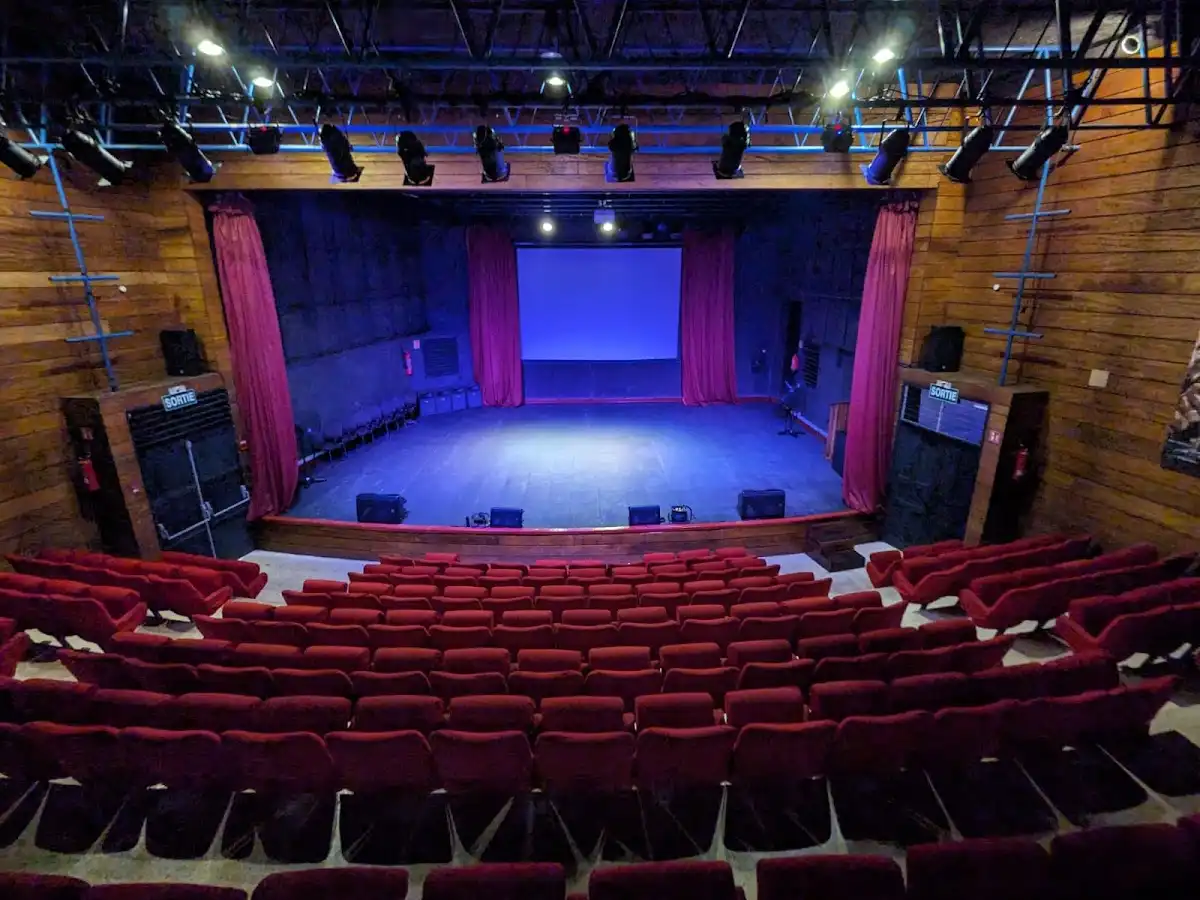
The Centro Cultural Franco-Bissau-Guineense is a working cultural institute with a program calendar, not a museum with fixed opening hours or a ticket booth. It sits in Bissau, Guinea-Bissau’s capital, on the city’s central avenues, a short walk from the old Praça do Império. Because shows depend on the schedule, the useful move is to stop by or check the posted program first, since a quiet afternoon can mean an empty courtyard. The setting is a low colonial-era building with shaded space, the hum of motorbike taxis outside and the smell of dust and fried street snacks drifting in. Power cuts happen across the city, so evening events may run by generator, with the thump of speakers and sticky heat. Entry to many events is cheap or free, which makes it good value, though it will not impress anyone seeking monuments. Arrive mid-morning, look at the notice board, then return at dusk for music.

Discover everything you want to know in the 📖 Guinea-Bissau Travel Guide.


example page 0 from our offline Travel Guide for Guinea-Bissau
example page 1 from our offline Travel Guide for Guinea-Bissau
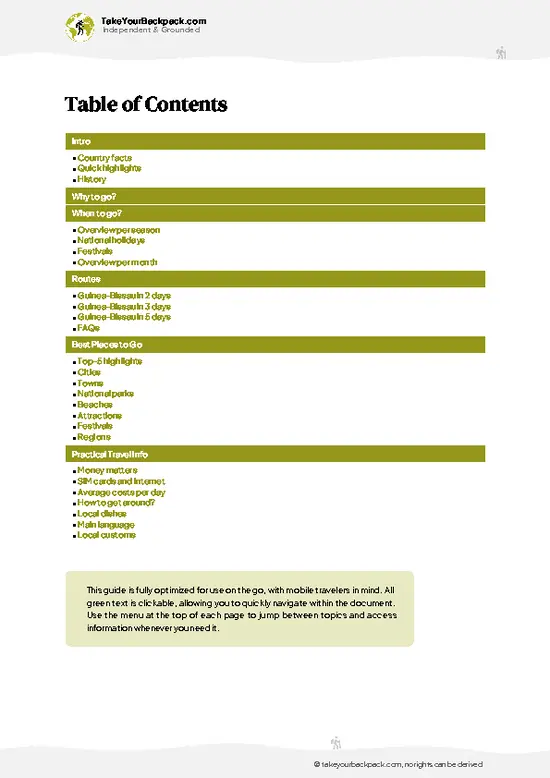
example page 2 from our offline Travel Guide for Guinea-Bissau
example page 3 from our offline Travel Guide for Guinea-Bissau
example page 4 from our offline Travel Guide for Guinea-Bissau
example page 5 from our offline Travel Guide for Guinea-Bissau
example page 6 from our offline Travel Guide for Guinea-Bissau
example page 7 from our offline Travel Guide for Guinea-Bissau
Loading the map 🌍
CLICK TO FILTER
cities
towns
national parks
beaches
attractions
festivals
regions
SHOW COUNTRY’S BESTSHOW ALL

✨ Why go?
Ranked #5 attraction in Guinea-Bissau
The unique appeal for travelers

Centro Cultural Franco-Bissau-Guineense gives you a way into Bissau that the market stalls and guesthouse corridors do not: a place where local artists, musicians and students actually gather. Guinea-Bissau has few formal venues for the arts, so a room that hosts live gumbe and tina rhythms, theater and exhibitions carries real weight. Gumbe is the country’s signature sound, and hearing it played by locals beats any recorded playlist.

The second reason is language and connection. The institute is a French cultural outpost, so you meet Portuguese, Kriol and French speakers in one courtyard, and conversations start easily. Many travelers find that an evening here leads to invitations, tips on villages and contacts for the Bijagós islands.

It also suits a rest day on a route through the country. … read more 👉
Centro Cultural Franco-Bissau-Guineense gives you a way into Bissau that the market stalls and guesthouse corridors do not: a place where local artists, musicians and students actually gather. Guinea-Bissau has few formal venues for the arts, so a room that hosts live gumbe and tina rhythms, theater and exhibitions carries real weight. Gumbe is the country’s signature sound, and hearing it played by locals beats any recorded playlist.

The second reason is language and connection. The institute is a French cultural outpost, so you meet Portuguese, Kriol and French speakers in one courtyard, and conversations start easily. Many travelers find that an evening here leads to invitations, tips on villages and contacts for the Bijagós islands.

It also suits a rest day on a route through the country. Bissau is a stop for permits, transport and supplies, and an evening show turns that wait into one of the better parts of the trip, at little cost.

💡 HighlightsTop highlights of Centro Cultural Franco-Bissau-Guineense

  1. Live music nights: Gumbe, tina and modern Bissau-Guinean bands play here when the program allows, and the crowd tends to be local, loud and happy to teach you a step.
  2. The courtyard: The open, shaded space is where people linger before and after events, with cold drinks and easy conversation.
  3. Exhibitions by local artists: Painting, photography and craft shows give a view of how Bissau-Guineans see their own country, beyond the souvenir stalls.
  4. Theater and dance performances: Troupes stage pieces in Kriol and Portuguese, and the physical energy carries even when you miss the words.
  5. Film screenings: Francophone and African films appear on the program, a cool, dark refuge from the midday heat.
  6. The notice board and program: Posters and handwritten notices show what is on across the city, including concerts
… read more 👉
  1. Live music nights: Gumbe, tina and modern Bissau-Guinean bands play here when the program allows, and the crowd tends to be local, loud and happy to teach you a step.
  2. The courtyard: The open, shaded space is where people linger before and after events, with cold drinks and easy conversation.
  3. Exhibitions by local artists: Painting, photography and craft shows give a view of how Bissau-Guineans see their own country, beyond the souvenir stalls.
  4. Theater and dance performances: Troupes stage pieces in Kriol and Portuguese, and the physical energy carries even when you miss the words.
  5. Film screenings: Francophone and African films appear on the program, a cool, dark refuge from the midday heat.
  6. The notice board and program: Posters and handwritten notices show what is on across the city, including concerts elsewhere.
  7. Language and arts classes: The institute offers French courses, and watching the students come and go gives a sense of the city’s younger generation.
For a first visit, pick a live music night, since the courtyard, the crowd and the band all come together then.
Spotted a mistake or missing something? Contact us.
🌤️ When to go?Seasonal considerations and timing

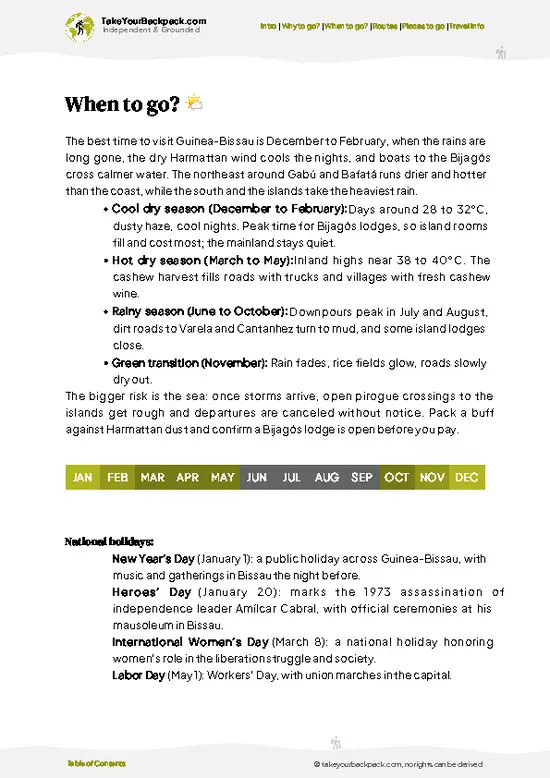
  • Dry Season (November to May): Rain is rare and the Bissau evenings are comfortable at 22 to 26°C (72 to 79°F), with afternoons reaching 30 to 35°C (86 to 95°F). Harmattan haze can dull the light between December and February. This is when concerts and exhibitions are easiest to plan around.
  • Carnival (February or March): Bissau’s Carnival fills the streets with costumes and drumming, and cultural events cluster around it. Rooms and shared taxis fill up, so prices edge up.
  • Hot Months (April and May): Highs of 33 to 38°C (91 to 100°F) and sticky air make midday visits tiring. Go early or late.
  • Rainy Season (June to October): Downpours flood Bissau’s unpaved side streets, humidity stays above 80 percent, and temperatures sit at 27 to 32°C (81 to 90°F). Visitor numbers are low and rooms are cheaper,
… read more 👉
  • Dry Season (November to May): Rain is rare and the Bissau evenings are comfortable at 22 to 26°C (72 to 79°F), with afternoons reaching 30 to 35°C (86 to 95°F). Harmattan haze can dull the light between December and February. This is when concerts and exhibitions are easiest to plan around.
  • Carnival (February or March): Bissau’s Carnival fills the streets with costumes and drumming, and cultural events cluster around it. Rooms and shared taxis fill up, so prices edge up.
  • Hot Months (April and May): Highs of 33 to 38°C (91 to 100°F) and sticky air make midday visits tiring. Go early or late.
  • Rainy Season (June to October): Downpours flood Bissau’s unpaved side streets, humidity stays above 80 percent, and temperatures sit at 27 to 32°C (81 to 90°F). Visitor numbers are low and rooms are cheaper, but programming thins out.
Check the center’s event listings with the French cultural network a week ahead, since opening hours shift around programs.


source: climatestotravel.comJANJanuary: excellent for travelingFEBFebruary: excellent for travelingMARMarch: excellent for travelingAPRApril: excellent for travelingMAYMay: highly recommended for travelingJUNJune: fair for travelingJULJuly: fair for travelingAUGAugust: fair for travelingSEPSeptember: fair for travelingOCTOctober: fair for travelingNOVNovember: highly recommended for travelingDECDecember: excellent for traveling
guinea-bissau-attraction-centro-cultural-franco-bissau-guineense v1
© Google |

✈️ The backpacker research shortcutGuinea-Bissau Travel Guide

An offline-friendly backpacking guide with optimized travel routes, ranked highlights, transport advice, and the best areas to stay.
example page 0 from our offline Travel Guide for Guinea-Bissau
example page 1 from our offline Travel Guide for Guinea-Bissau
example page 2 from our offline Travel Guide for Guinea-Bissau
example page 3 from our offline Travel Guide for Guinea-Bissau
example page 4 from our offline Travel Guide for Guinea-Bissau
example page 5 from our offline Travel Guide for Guinea-Bissau
example page 6 from our offline Travel Guide for Guinea-Bissau
example page 7 from our offline Travel Guide for Guinea-Bissau
The digital guide (214 pages) contains:
✅ 48 highlights, ranked by travel appeal
✅ Optimized 2, 3 & 5-day travel routes
✅ Cities, national parks, landmarks, beaches
✅ How to get around
✅ Offline-friendly for travel without Wi-Fi
👉 Click to see all 30+ guide features

📅 Plan smarter in minutes, not weeks
✅ Month by month travel advice
✅ Festivals & national holidays
✅ Budget expectations

🗺️ Go to the right places, skip the overrated ones
✅ Honest pros & cons of destinations
✅ Top hikes, parks & viewpoints
✅ Lesser-known places most travelers miss
✅ Clear “worth it vs skip it” guidance

🛏️ Travel smoothly without rookie mistakes
✅ Best areas to stay
✅ Transport systems explained simply
✅ Common scams & safety advice
✅ SIM cards, money & practical tips

🌍 Understand the country, not just visit it
✅ Culture & traditions
✅ 52 Essential phrases & customs
✅ Festivals worth planning around
✅ Traveler-friendly historical context
✅ Insights that make places more meaningful

📱 Built for real travel conditions
✅ Fully downloadable PDF
✅ Works completely offline
✅ Optimized for phone use
✅ Useful in remote areas & buses
✅ Everything in one place
Stop searching, start planning
Get instant access to your full guide. 30‑day money-back guarantee.
+ Add another guide for just

By proceeding you agree to our terms.
Sent to your inbox immediately after payment • 100% Secure Checkout
Best Backpacking Travel Advisor 2025 tourism awardBest Backpacking
Travel Advisor
2025
What others say about Take Your Backpack Guides:
⭐⭐⭐⭐⭐
Fantastic, amazing amount of information!
⭐⭐⭐⭐⭐
My goodness this is amazing, it's what I've been looking for hats off too you!
⭐⭐⭐⭐⭐
I think this is absolutely BRILLIANT
⭐⭐⭐⭐
Very complete and informative. It's still missing places, but I gotta to commend you
⭐⭐⭐⭐⭐
This is truly amazing, thank you, can't wait to explore it with my kids!
⭐⭐⭐⭐⭐
Awesome resource, thank you!
⭐⭐⭐⭐⭐
This is amazing! Can't wait to explore the ones I haven't seen
⭐⭐⭐⭐
I love this! Well done, great idea.
⭐⭐⭐⭐⭐
Thanks for taking the time to make this gem!
⭐⭐⭐⭐⭐
This might be the best website I've ever seen.
⭐⭐⭐⭐⭐
Congratulations, and thank you so much for your work; it's incredibly valuable.
⭐⭐⭐⭐
In all seriousness I think you did a great job pointing out the important spots
⭐⭐⭐⭐⭐
10/10 very good
⭐⭐⭐⭐⭐
As someone who's only just starting to visit regularly this is awesome, thank you.
⭐⭐⭐⭐
Thank you very much! I'm going to visit my dad, it's going to be very useful!
⭐⭐⭐⭐⭐
This is really cool! We'll be travelling for the first time and this definitely come in handy.
⭐⭐⭐⭐⭐
You are now our minister of culture, congratulations 👨‍💼
⭐⭐⭐⭐⭐
Just wanted to tell you that this is a pearl! Going to follow your recommendations.
⭐⭐⭐⭐⭐
This is so cool. I'll definitely be using the resource for my travels soon.
⭐⭐⭐⭐⭐
This is very impressive! Good work.
⭐⭐⭐⭐⭐
This is an amazing and informative site. Very well done!

🛏️ Where to stay?Where staying makes the most sense

The best area for backpackers is central Bissau, around Avenida Amílcar Cabral and the old Bissau Velho quarter, within walking distance or a short taxi hop of the center. This is where the few budget guesthouses, cafés and the main shared-taxi stops sit, so you can arrange onward travel easily.
Bissau Velho is the most atmospheric option. Its Portuguese-era streets are quiet by day, you can walk to the port and the old fortress area, and you will meet other travelers over meals at nearby restaurants. Evenings are calmer here than elsewhere, though lighting is patchy, so take a taxi after dark. … read more 👉
The best area for backpackers is central Bissau, around Avenida Amílcar Cabral and the old Bissau Velho quarter, within walking distance or a short taxi hop of the center. This is where the few budget guesthouses, cafés and the main shared-taxi stops sit, so you can arrange onward travel easily.
Bissau Velho is the most atmospheric option. Its Portuguese-era streets are quiet by day, you can walk to the port and the old fortress area, and you will meet other travelers over meals at nearby restaurants. Evenings are calmer here than elsewhere, though lighting is patchy, so take a taxi after dark.
The streets near the Bandim market suit those who want local color and the cheapest food, but the area is crowded and chaotic, and pickpocketing happens. It works better as a daytime visit than as a place to sleep.
The residential districts toward Avenida dos Combatentes da Liberdade da Pátria have a few quieter guesthouses with generators, useful during power cuts. Solo travelers should favor places with a staffed gate. Book ahead in Carnival season, because the limited beds go quickly.

👛 Costs (as of 22 October 2026)Travel costs and budget guide for Centro Cultural Franco-Bissau-Guineense

Budget about €30 to 45 a day for Centro Cultural Franco-Bissau-Guineense and a day around Bissau, with the visit itself usually costing little or nothing. Travelers pay in West African CFA francs, and cash is the norm.
CategoryBudget RangeLocal Reality
Entry to the center€0 to 2Browsing is often free, while concerts, films and exhibitions may charge a small door fee.
Accommodation (high season)€18 to 30Basic guesthouse rooms with fan or air conditioning, cheaper in the rainy season at €12 to 22.
Meals€4 to 8Rice and fish at local eateries, with café meals costing more.
Drinks and coffee€1 to 3Café drinks at the center and nearby spots cost more than street stalls.
Local transport€1 to 4Shared taxis within Bissau cost under €1 per hop, and a private taxi around town costs €2 to 4.
Events and extras€0
… read more 👉
Budget about €30 to 45 a day for Centro Cultural Franco-Bissau-Guineense and a day around Bissau, with the visit itself usually costing little or nothing. Travelers pay in West African CFA francs, and cash is the norm.
CategoryBudget RangeLocal Reality
Entry to the center€0 to 2Browsing is often free, while concerts, films and exhibitions may charge a small door fee.
Accommodation (high season)€18 to 30Basic guesthouse rooms with fan or air conditioning, cheaper in the rainy season at €12 to 22.
Meals€4 to 8Rice and fish at local eateries, with café meals costing more.
Drinks and coffee€1 to 3Café drinks at the center and nearby spots cost more than street stalls.
Local transport€1 to 4Shared taxis within Bissau cost under €1 per hop, and a private taxi around town costs €2 to 4.
Events and extras€0 to 5Workshops and special evenings vary.
Total Daily Budget€30 to 45Lower if you eat locally and walk.


source: ccfbg.net
⚠️ Prices can change and everyone travels differently, so take this as a rough guide. Hope it helps you plan your adventure!

FAQCommon questions from travelers

Plan on one to two hours at Centro Cultural Franco-Bissau-Guineense for the exhibitions, library and café. Add an evening if a concert, film or theater night is scheduled. Most visitors fit it into a half day alongside other central Bissau sights such as the port and the old quarter.
Centro Cultural Franco-Bissau-Guineense is usually free to enter, with small charges of roughly €0 to 2 for some events, so it is easy value. It is one of the few places in Bissau with regular art, music and film programming. A coffee in the café and a look at the notice board cost little and show you the local scene.
Centro Cultural Franco-Bissau-Guineense sits in central Bissau, reachable by taxi from the Osvaldo Vieira International Airport in about 10 to 15 minutes for roughly €4 to 6. From the center of town, shared taxis cost under €1 and private taxis about €2 to 4. Many travelers arrive from Senegal by road via Ziguinchor, a journey of about 4 to 6 hours plus border time.
⚠️ Things can change over time, so always validate details locally before you go.

Other Bissau-Guinean attractions near Centro Cultural Franco-Bissau-Guineense

Explore more nearby:


💡 Not sure where to go next?
Create a personalized itinerary for Guinea-Bissau including Centro Cultural Franco-Bissau-Guineense and the places that fit your trip.

Generate my itinerary

👉 Discover all attractions

Or checkout all Guinea-Bissau has to offer (think cities, towns, villages, national parks, hikes, beaches, festivals)
Country photo of Guinea-Bissau

We 💚 feedbackIs it worth it?

Centro Cultural Franco-Bissau-Guineense suits curious travelers who care more about people than monuments, and anyone spending a few days in Bissau. Musicians, language learners and slow-travel types will get the most from it. I would check the program in the morning, bring small change for drinks and stay for the late set.

✍️ Help improve this page!
The information on this page is based on in-depth research, insights shared by experienced travelers, and feedback from the local travel community in Guinea-Bissau. While every effort is made to keep the information accurate and current, conditions can change — so if you spot anything incorrect or outdated, please get in touch.


🙋‍♂️ Give feedback

👋 Meet the founderWho’s Behind Take Your Backpack?

Johan, backpacker and founder of TakeYourBackpackHi, I’m Johan (Netherlands 🇳🇱), the creator of TakeYourBackpack. Over the past 3 decades, I’ve backpacked through 90+ countries across six continents, gaining extensive experience with independent travel, long-term trips, and overland routes.

This site is built on a combination of firsthand travel experience and carefully curated insights from other backpackers. Many guides are based on places I’ve personally visited, while others bring together tips, observations, and practical advice shared by trusted travelers I’ve met along the way.

The goal is to provide realistic, experience-driven guidance — not generic itineraries — so you can explore destinations with better context, clearer expectations, and more confidence.