×

Guinea-Bissau🇬🇼 | best attractionsWhere to Find the 8 Best attractions in Guinea-Bissau

Guinea-Bissau’s best attractions unfold through a raw, often unpredictable landscape where coastal mangroves meet dusty inland villages. For the backpacker, choices hinge on region and season—wet months can turn trails into mud, while dry spells reveal vibrant markets and wildlife. Selecting the right spot shapes your experience: from the laid-back rhythm of the Bijagós Islands to the bustling, gritty streets of Bissau, each destination demands different budgets, safety awareness, and degrees of cultural immersion.

By Johan Kruseman 🇳🇱 | Updated September 4, 2026
Explore the best festivals in Guinea-Bissau

Why go?What Makes Them Special

Guinea-Bissau’s attractions stand apart because they demand patience and a willingness to embrace unpredictability. The country’s sparse infrastructure means travel can be slow and rough, but this friction filters out the casual tourist, leaving space for deeper immersion. The landscape—mangrove-lined coasts, archipelagos, and savannah—offers a rawness rarely found elsewhere, shaped by a tropical climate that alternates between oppressive heat and sudden, cleansing rains. Cultural layers run deep here, with a blend of indigenous traditions and Portuguese colonial echoes that resist easy categorization. This is not a place for polished convenience; instead, it rewards those who accept the trade-off between accessibility and authenticity. The payoff is a visceral connection to a place where … read more 👉
Guinea-Bissau’s attractions stand apart because they demand patience and a willingness to embrace unpredictability. The country’s sparse infrastructure means travel can be slow and rough, but this friction filters out the casual tourist, leaving space for deeper immersion. The landscape—mangrove-lined coasts, archipelagos, and savannah—offers a rawness rarely found elsewhere, shaped by a tropical climate that alternates between oppressive heat and sudden, cleansing rains. Cultural layers run deep here, with a blend of indigenous traditions and Portuguese colonial echoes that resist easy categorization. This is not a place for polished convenience; instead, it rewards those who accept the trade-off between accessibility and authenticity. The payoff is a visceral connection to a place where nature and culture pulse in tandem, revealing stories and scenes that feel earned rather than packaged. Travelers must weigh the effort against the richness of experience, knowing that Guinea-Bissau’s attractions unfold slowly but leave a lasting imprint.
Evaluating the Top Choices
The list of best attractions in Guinea-Bissau is created based on cultural significance or entertainment value. If you feel a attraction is missing in this list, please let us know.

When to go?Best Time to Visit Guinea-Bissau for attractions

Guinea-Bissau’s climate swings sharply between a wet season and a dry season, shaping every step of your journey. The dry months bring relentless sun and dusty trails, making outdoor exploration more straightforward but exposing you to heat that can sap energy quickly. This is when the skies clear, and the landscape’s raw colors come alive, rewarding the sweat with wide, uninterrupted views and easier travel conditions. The wet season, by contrast, drenches the country in heavy rains that swell rivers and soften the earth, turning some paths into mud traps and limiting access to certain areas. Yet, this period also breathes life into the environment—lush greenery bursts forth, and wildlife activity intensifies, offering a different kind of payoff for those willing to brave the humidity and
read more 👉
Guinea-Bissau’s climate swings sharply between a wet season and a dry season, shaping every step of your journey. The dry months bring relentless sun and dusty trails, making outdoor exploration more straightforward but exposing you to heat that can sap energy quickly. This is when the skies clear, and the landscape’s raw colors come alive, rewarding the sweat with wide, uninterrupted views and easier travel conditions. The wet season, by contrast, drenches the country in heavy rains that swell rivers and soften the earth, turning some paths into mud traps and limiting access to certain areas. Yet, this period also breathes life into the environment—lush greenery bursts forth, and wildlife activity intensifies, offering a different kind of payoff for those willing to brave the humidity and occasional downpours. Shoulder seasons straddle these extremes, presenting a mix of manageable weather and fewer visitors, but with the risk of sudden showers or lingering dampness. Planning around these rhythms means balancing comfort, crowd levels, and the kind of experience you want—whether it’s the stark clarity of dry-season landscapes or the vibrant pulse of the rains.

attraction hoppingTips for Visiting Multiple Destinations

How to Combine the Best Attractions of Guinea-Bissau Into One Trip


Navigating Guinea-Bissau’s attractions demands a clear sense of regional flow. The country’s highlights cluster into coastal mangroves, inland forests, and island archipelagos, so plan a route that moves logically between these zones to avoid backtracking. Allocate at least two days per major area to absorb the atmosphere without rushing—whether that’s the slow rhythm of Bijagós Islands or the raw energy of Bissau’s markets. Many travelers underestimate travel times on rough roads, leading to crammed schedules that sacrifice depth for speed. Balancing budget and comfort means choosing between local transport’s authenticity and private vehicles’ efficiency. Flexibility is key: some detours might reveal unexpected wildlife or … read more 👉

How to Combine the Best Attractions of Guinea-Bissau Into One Trip


Navigating Guinea-Bissau’s attractions demands a clear sense of regional flow. The country’s highlights cluster into coastal mangroves, inland forests, and island archipelagos, so plan a route that moves logically between these zones to avoid backtracking. Allocate at least two days per major area to absorb the atmosphere without rushing—whether that’s the slow rhythm of Bijagós Islands or the raw energy of Bissau’s markets. Many travelers underestimate travel times on rough roads, leading to crammed schedules that sacrifice depth for speed. Balancing budget and comfort means choosing between local transport’s authenticity and private vehicles’ efficiency. Flexibility is key: some detours might reveal unexpected wildlife or cultural moments worth lingering for. The payoff comes when the effort to reach these spots reveals a landscape or encounter that feels truly earned, not just checked off a list.

The ListTop attractions of Guinea-Bissau

1 Porto Pidjiguiti Monument and Waterfront

harbor views, historic monument, riverside promenade

Stroll along the waterfront to see the memorial marking a pivotal event and watch daily activity unfold along the busy port.

2 Mercado de Bandim

open-air stalls, fresh produce, daily commerce

Navigate crowded aisles lined with seasonal fruits, textiles, and household goods, gaining insight into the city’s trading rhythms.

3 Fortaleza d’Amura

military fortress, colonial walls, presidential mausoleum

Walk the perimeter of a centuries-old stronghold and glimpse the resting place of national leaders within its fortified grounds.

guinea-bissau-attraction-fortaleza-damura
© Google |

4 Igreja da Nossa Senhora da Candelária

colonial church, stained glass, religious ceremonies

Step inside a landmark church to see colorful windows and observe moments of quiet devotion amid Bissau’s urban bustle.

guinea-bissau-attraction-igreja-da-nossa-senhora-da-candelaria
© Google |

5 Centro Cultural Franco-Bissau-Guineense

art exhibitions, language classes, performance space

Attend contemporary art shows or join a language workshop in a venue that connects local and international creative communities.

guinea-bissau-attraction-centro-cultural-franco-bissau-guineense v1
© Google |

6 Mercado de Caracol

seafood vendors, local snacks, neighborhood market

Sample regional street food and watch fishmongers at work in a market known for its informal atmosphere and local specialties.

7 Palácio Presidencial da República da Guiné-Bissau

government building, colonial architecture, city landmark

View the seat of national leadership from the outside and note its architectural details that reflect Bissau’s political history.

8 Estádio Lino Correia

football matches, local fans, city stadium

Watch a match alongside passionate supporters and observe how sport shapes daily life and social gatherings in Bissau.

Loading the map 🌍

Expert viewExpert Commentary on attractions

Expert Commentary

Guinea-Bissau’s attractions demand a mindset that balances patience with curiosity. You won’t be ticking off a dozen sites in a week here—two to four well-chosen stops are the sweet spot. The country’s infrastructure is patchy, so travel between points can stretch out longer than expected, especially when roads turn to dirt and the rainy season mud shows up uninvited. Factor in extra time for these slow stretches; rushing only dulls the experience.

Budget-wise, Guinea-Bissau leans toward the modest side, but don’t mistake low cost for low effort. Local transport options are basic, and accommodations range from simple to rustic. This means you’re paying more in sweat and adaptability than in cash. The reward is a raw encounter with a place that hasn’t been polished for tourists. … read more 👉

Expert Commentary

Guinea-Bissau’s attractions demand a mindset that balances patience with curiosity. You won’t be ticking off a dozen sites in a week here—two to four well-chosen stops are the sweet spot. The country’s infrastructure is patchy, so travel between points can stretch out longer than expected, especially when roads turn to dirt and the rainy season mud shows up uninvited. Factor in extra time for these slow stretches; rushing only dulls the experience.

Budget-wise, Guinea-Bissau leans toward the modest side, but don’t mistake low cost for low effort. Local transport options are basic, and accommodations range from simple to rustic. This means you’re paying more in sweat and adaptability than in cash. The reward is a raw encounter with a place that hasn’t been polished for tourists. You’ll find yourself immersed in a landscape where the air carries the salt tang of the Atlantic, and the scent of cashew blossoms drifts through villages that feel paused in time.

Prioritize attractions that offer a blend of natural and cultural immersion. The country’s coastal and island areas provide a sensory feast—think humid breezes, the slap of waves against mangroves, and the chatter of fishermen hauling in their catch. Inland, the rhythm slows, and you’ll notice the earthy smell of laterite soil and the vibrant colors of traditional markets. Each spot requires a willingness to embrace unpredictability: transport delays, language barriers, and the occasional power outage are part of the package.

Safety is straightforward but not to be taken lightly. Stick to daylight travel when possible, respect local customs, and keep an eye on your belongings in crowded areas. The warmth of the people is genuine, but the country’s economic challenges mean you should stay alert without paranoia.

In short, Guinea-Bissau’s best attractions reward those who come prepared to slow down and engage deeply. The payoff isn’t just a view or a landmark—it’s the feeling of stepping into a world that resists easy categorization, where every effort to connect is met with a moment of unexpected clarity.

✈️ The backpacker research shortcutGuinea-Bissau Travel Guide

An offline-friendly backpacking guide with optimized travel routes, ranked highlights, transport advice, and the best areas to stay.
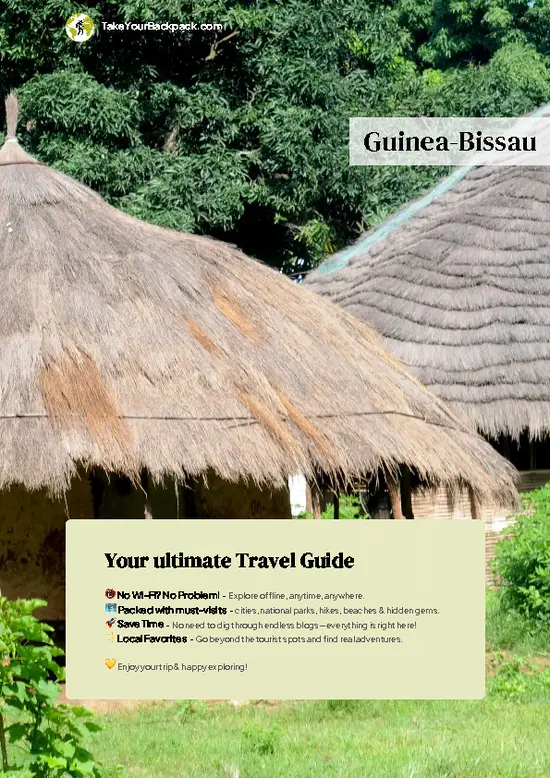
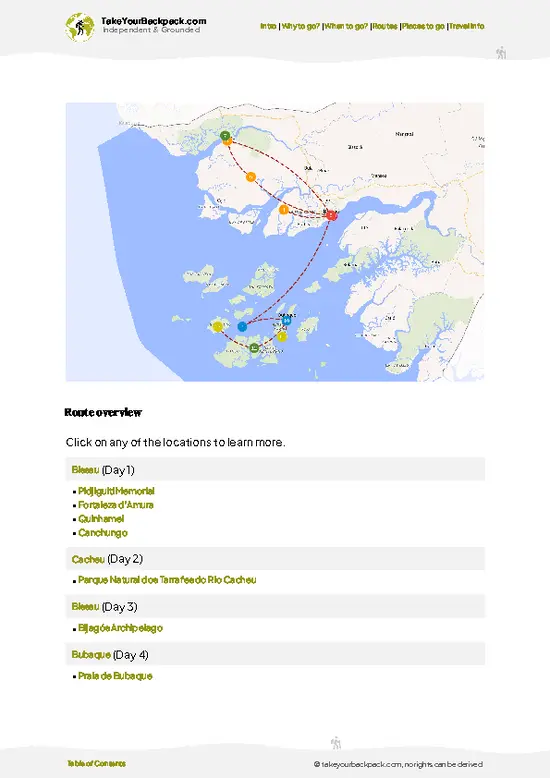
example page 0 from our offline Travel Guide for Guinea-Bissau
example page 1 from our offline Travel Guide for Guinea-Bissau
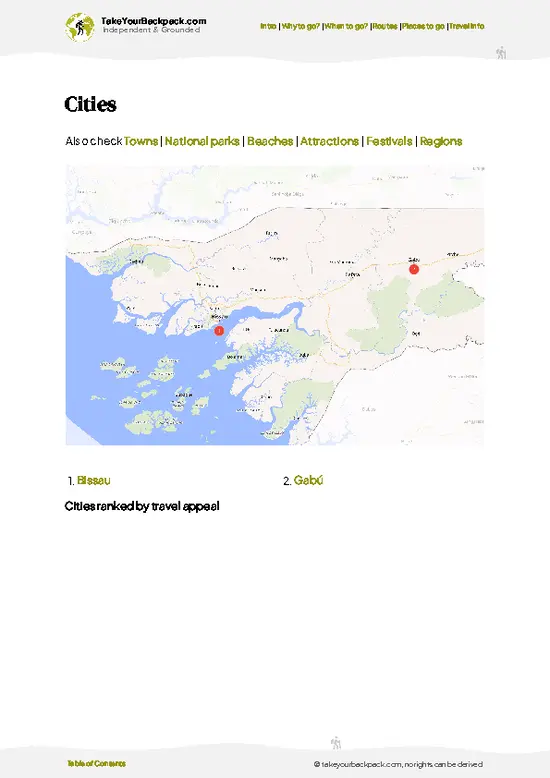
example page 2 from our offline Travel Guide for Guinea-Bissau
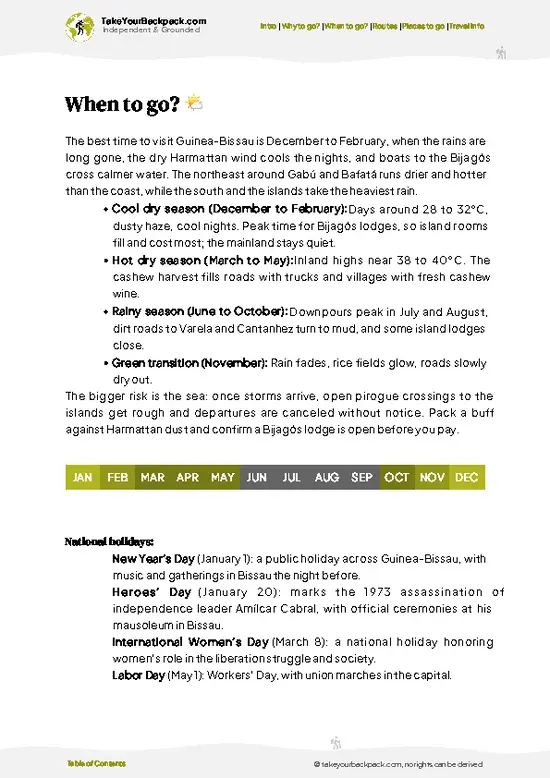
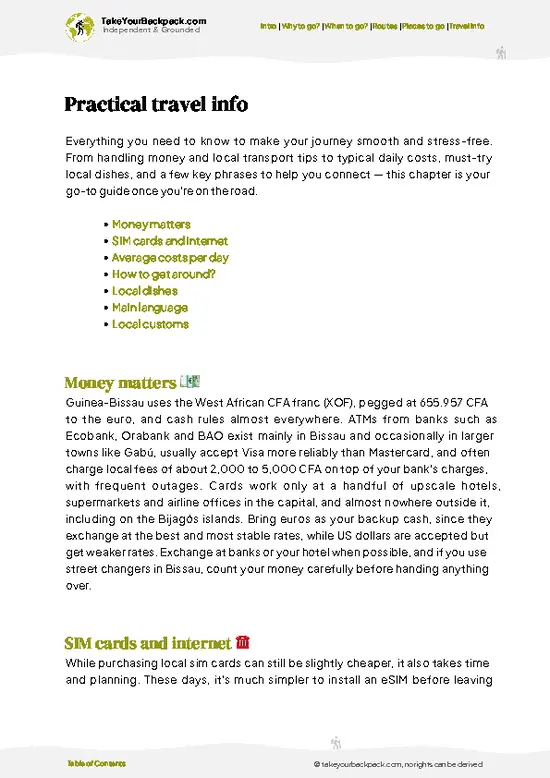
example page 3 from our offline Travel Guide for Guinea-Bissau
example page 4 from our offline Travel Guide for Guinea-Bissau
example page 5 from our offline Travel Guide for Guinea-Bissau
example page 6 from our offline Travel Guide for Guinea-Bissau
example page 7 from our offline Travel Guide for Guinea-Bissau
The digital guide (230 pages) contains:
53 highlights, ranked by travel appeal
Optimized 2, 3 & 5-day travel routes
Cities, national parks, landmarks, beaches
How to get around
Offline-friendly for travel without Wi-Fi
👉 Click to see all 30+ guide features

📅 Plan smarter in minutes, not weeks
Month by month travel advice
Festivals & national holidays
Budget expectations

🗺️ Go to the right places, skip the overrated ones
Honest pros & cons of destinations
Top hikes, parks & viewpoints
Lesser-known places most travelers miss
Clear “worth it vs skip it” guidance

🛏️ Travel smoothly without rookie mistakes
Best areas to stay
Transport systems explained simply
Common scams & safety advice
SIM cards, money & practical tips

🌍 Understand the country, not just visit it
Culture & traditions
52 Essential phrases & customs
Festivals worth planning around
Traveler-friendly historical context
Insights that make places more meaningful

📱 Built for real travel conditions
Fully downloadable PDF
Works completely offline
Optimized for phone use
Useful in remote areas & buses
Everything in one place
Save weeks of stressful planning
Get instant access to your full guide. 30‑day money-back guarantee.
+ Add another guide for just US$7.80

By proceeding you agree to our terms.
Sent to your inbox immediately after payment • 100% Secure Checkout
Best Backpacking Travel Advisor 2025 tourism awardBest Backpacking
Travel Advisor
2025
What others say about Take Your Backpack Guides:
⭐⭐⭐⭐⭐
Fantastic, amazing amount of information!
⭐⭐⭐⭐⭐
My goodness this is amazing, it's what I've been looking for hats off too you!
⭐⭐⭐⭐⭐
I think this is absolutely BRILLIANT
⭐⭐⭐⭐
Very complete and informative. It's still missing places, but I gotta to commend you
⭐⭐⭐⭐⭐
This is truly amazing, thank you, can't wait to explore it with my kids!
⭐⭐⭐⭐⭐
Awesome resource, thank you!
⭐⭐⭐⭐⭐
This is amazing! Can't wait to explore the ones I haven't seen
⭐⭐⭐⭐
I love this! Well done, great idea.
⭐⭐⭐⭐⭐
Thanks for taking the time to make this gem!
⭐⭐⭐⭐⭐
This might be the best website I've ever seen.
⭐⭐⭐⭐⭐
Congratulations, and thank you so much for your work; it's incredibly valuable.
⭐⭐⭐⭐
In all seriousness I think you did a great job pointing out the important spots
⭐⭐⭐⭐⭐
10/10 very good
⭐⭐⭐⭐⭐
As someone who's only just starting to visit regularly this is awesome, thank you.
⭐⭐⭐⭐
Thank you very much! I'm going to visit my dad, it's going to be very useful!
⭐⭐⭐⭐⭐
This is really cool! We'll be travelling for the first time and this definitely come in handy.
⭐⭐⭐⭐⭐
You are now our minister of culture, congratulations 👨‍💼
⭐⭐⭐⭐⭐
Just wanted to tell you that this is a pearl! Going to follow your recommendations.
⭐⭐⭐⭐⭐
This is so cool. I'll definitely be using the resource for my travels soon.
⭐⭐⭐⭐⭐
This is very impressive! Good work.
⭐⭐⭐⭐⭐
This is an amazing and informative site. Very well done!

🛏️ Where to stay?Top Areas to Stay

Yes — hostels and budget accommodation exist but are limited: most are basic guesthouses and small budget hotels concentrated in Bissau city centre and on the Bijagós islands (mainly Bubaque and Bolama), with few options outside those hubs.
In Bissau city centre you get proximity to markets, transport links and some nightlife but must expect noise, simple facilities and take precautions against petty crime; the Bandim/market area is cheapest and best for local food and day trips but very basic and loud; the Bijagós islands offer quiet beaches and wildlife with generally relaxed safety but far fewer services, irregular transport and sometimes higher prices for essentials.

If you enjoy meeting … read more 👉
Yes — hostels and budget accommodation exist but are limited: most are basic guesthouses and small budget hotels concentrated in Bissau city centre and on the Bijagós islands (mainly Bubaque and Bolama), with few options outside those hubs.
In Bissau city centre you get proximity to markets, transport links and some nightlife but must expect noise, simple facilities and take precautions against petty crime; the Bandim/market area is cheapest and best for local food and day trips but very basic and loud; the Bijagós islands offer quiet beaches and wildlife with generally relaxed safety but far fewer services, irregular transport and sometimes higher prices for essentials.

If you enjoy meeting fellow travelers, consider choosing hostels with high ratings for atmosphere. On the other hand, if you prefer having your own space, a hotel might be a better option.

Guinea-BissauDiscover the Country

👋 Meet the founderWho’s Behind Take Your Backpack?

Johan, backpacker and founder of TakeYourBackpackHi, I’m Johan (Netherlands 🇳🇱), the creator of TakeYourBackpack. Over the past decade, I’ve backpacked through 80+ countries across six continents, gaining extensive experience with independent travel, long-term trips, and overland routes.

This site is built on a combination of firsthand travel experience and carefully curated insights from other backpackers. Many guides are based on places I’ve personally visited, while others bring together tips, observations, and practical advice shared by trusted travelers I’ve met along the way.

The goal is to provide realistic, experience-driven guidance — not generic itineraries — so you can explore destinations with better context, clearer expectations, and more confidence.

Get full country guide •
Instant download • 53 highlights • Full Offline guide