×

Guinea🇬🇳 | citiesBokeport city, bauxite export, Atlantic coastline | things to do and best time to go

Explore Plage de Bel AirExplore Conakry

Backpacking in Boke
👍 Recommendedcity ranked #7
By Johan Kruseman 🇳🇱 | Updated June 13, 2026

Most travelers only realize after arriving: Boke’s real advantage is how it slows you down, forcing you to recalibrate your expectations of West African travel. Tucked in Guinea’s northwest, not far from the border with Guinea-Bissau, Boke is a river town where the air smells faintly of mud and mangoes, and the pace is dictated by the tides and the heat. For backpackers, Boke isn’t a destination that dazzles on arrival—there’s no grand old town or wild nightlife—but it’s a practical, low-key stopover if you’re heading to the Fouta Djallon highlands or crossing borders. The riverside market is lively, with smoked fish and kola nuts, and the colonial-era fort offers a sobering glimpse into the region’s history. You’ll find basic guesthouses, but don’t expect a hostel scene or easy camaraderie—this is a town for travelers, not tourists. It’s walkable, though the dust and humidity can sap your energy, and local taxis fill the gaps. Costs are low, safety is typical for rural Guinea (watch your valuables, but relax), and compared to busier Conakry or the more scenic Labé, Boke feels like a functional pause: less beautiful, more real, and sometimes exactly what you need between adventures.

Discover everything you want to know in the 📖 Guinea Travel Guide.


Get your Guinea guide
67 ranked highlights, routes & tips, works offline (282 pages)
Loading the map 🌍
CLICK TO FILTER
cities
towns
landmarks
national parks
hikes
beaches
attractions
festivals
regions
SHOW COUNTRY’S BESTSHOW ALL

✨ Why go?
Ranked #7 city in Guinea
What makes this city worth visiting

Boke, Guinea, is a strategic pit stop for backpackers seeking a blend of cultural immersion and natural beauty. Its walkable streets invite you to explore local markets, where the scent of grilled fish mingles with spices, creating an authentic culinary experience. The town serves as a gateway to nearby hikes and beaches, making it easy to transition from urban exploration to nature’s embrace.

Accommodations here are small-scale, with guesthouses and hostels that foster a friendly atmosphere, perfect for solo travelers or small groups looking to connect. You’ll find a mix of slow travelers who linger for a few days, soaking in the local vibe, and those who use Boke as a brief stopover before heading to more remote destinations.

While nightlife isn’t the main draw, the social scene is warm … read more 👉
Boke, Guinea, is a strategic pit stop for backpackers seeking a blend of cultural immersion and natural beauty. Its walkable streets invite you to explore local markets, where the scent of grilled fish mingles with spices, creating an authentic culinary experience. The town serves as a gateway to nearby hikes and beaches, making it easy to transition from urban exploration to nature’s embrace.

Accommodations here are small-scale, with guesthouses and hostels that foster a friendly atmosphere, perfect for solo travelers or small groups looking to connect. You’ll find a mix of slow travelers who linger for a few days, soaking in the local vibe, and those who use Boke as a brief stopover before heading to more remote destinations.

While nightlife isn’t the main draw, the social scene is warm and inviting, encouraging conversations over shared meals. If you appreciate a balance of adventure and community, Boke might just be the perfect chapter in your backpacking story.
Want to include Boke in your Guinea route?
Create a personalized Guinea itinerary that includes Boke and the places that fit your trip — based on your travel style, budget, and available time. Get your route in seconds.

Generate my trip

💡 HighlightsKey sights and experiences for travelers

  • Marché central de Boké - The town’s beating heart: piles of produce, fabrics, phone chargers, and snacks. Great for people-watching, trying street food, bargaining for cheap souvenirs, and getting a feel for daily life.
  • Quai de la rivière Nunez - A dusty, lively riverfront where pirogues land and fishermen sort their catch. Walk the quay at sunset, watch boats head out, and take short local boat rides to nearby villages.
  • Grande mosquée de Boké - The main mosque is a focal point of spiritual and social life. Even if you don’t go inside, the architecture and the rhythms of prayer time give an authentic glimpse of the town’s culture.
  • Quartier colonial et bâtiments administratifs anciens - Scattered colonial-era buildings and the old prefectural offices show Boké’s French Guinea past. They’re
read more 👉
  • Marché central de Boké - The town’s beating heart: piles of produce, fabrics, phone chargers, and snacks. Great for people-watching, trying street food, bargaining for cheap souvenirs, and getting a feel for daily life.
  • Quai de la rivière Nunez - A dusty, lively riverfront where pirogues land and fishermen sort their catch. Walk the quay at sunset, watch boats head out, and take short local boat rides to nearby villages.
  • Grande mosquée de Boké - The main mosque is a focal point of spiritual and social life. Even if you don’t go inside, the architecture and the rhythms of prayer time give an authentic glimpse of the town’s culture.
  • Quartier colonial et bâtiments administratifs anciens - Scattered colonial-era buildings and the old prefectural offices show Boké’s French Guinea past. They’re not polished tourist monuments, but they’re photogenic and tell local history if you listen.
  • Zone portuaire et vues sur l’industrie de la bauxite - From public vantage points you can watch the conveyor belts, barges and trucks that feed Guinea’s bauxite trade. It’s gritty, impressive industrial scenery — a different kind of local landmark.
  • Marché aux poissons (sur le quai) - Early-morning spectacle: fish landed straight off the boats, scales flashing, buyers shouting. A must for foodies and photographers (ask before shooting people).
  • Maison des Jeunes / centre culturel local - The youth/cultural center where bands rehearse, dancers practice, and community events happen. Drop in and you’ll often catch live music or a rehearsal; it’s where local culture is made.
  • Stade municipal de Boké - Football match day is raw and energetic: cheap entry, loud crowds, and a good place to mix with locals and feel the town’s pulse.
  • Ateliers d’artisanat et quartier des forgerons - Small workshops where tailors, carpenters and blacksmiths still work by hand. Watching a craftsman at his bench is one of the more honest souvenirs you can take.
  • Place du 28 Septembre / espace public central - The main civic square where markets, ceremonies and daily social life converge. A useful meeting point and a place to feel the cadence of Boké’s public life.
A few solid day trips from Boké: the bauxite operations and mining town of Sangaredi, the port town of Kamsar and its estuary/beaches, and river/mangrove villages along the lower Nunez that are best explored by a short boat trip.
Spotted a mistake or missing something? Contact us.

🏘️ NeighborhoodsWhere things are and how it's laid out

Boke, a lively town in Guinea, offers a blend of culture and adventure that’s perfect for backpackers looking to dive deep into local life. Here’s how to navigate its neighborhoods:

Centre Ville: This is the heart of Boke. You’ll find bustling markets and street vendors serving up local dishes. The vibe is energetic, making it ideal for short stays. Walkability is high, with everything within reach. Nightlife is low-key, but you can find a few bars where locals gather. Transport options are plentiful, with shared taxis and buses connecting you to other areas.

Quartier Kamsar: A bit quieter, this neighborhood is perfect for those seeking a more laid-back experience. It’s less touristy, giving you a genuine feel of daily life. Accommodation here is affordable, and the atmosphere is relaxed. … read more 👉
Boke, a lively town in Guinea, offers a blend of culture and adventure that’s perfect for backpackers looking to dive deep into local life. Here’s how to navigate its neighborhoods:

Centre Ville: This is the heart of Boke. You’ll find bustling markets and street vendors serving up local dishes. The vibe is energetic, making it ideal for short stays. Walkability is high, with everything within reach. Nightlife is low-key, but you can find a few bars where locals gather. Transport options are plentiful, with shared taxis and buses connecting you to other areas.

Quartier Kamsar: A bit quieter, this neighborhood is perfect for those seeking a more laid-back experience. It’s less touristy, giving you a genuine feel of daily life. Accommodation here is affordable, and the atmosphere is relaxed. While nightlife is minimal, the local cafes offer a cozy spot to unwind. It’s a good base for longer stays, with easy access to nature trails nearby.

Quartier Koulima: Known for its vibrant community, Koulima is where you’ll find art and music. The streets are alive with creativity, making it a great spot for inspiration. Costs are moderate, and it’s walkable, though some areas may require a short taxi ride. Nightlife is more vibrant here, with occasional live music events. Perfect for those wanting to immerse themselves in local culture for a few days.

⌛️ 1 dayA smart one-day plan

Boke, Guinea, is a vibrant town that pulses with life, culture, and the scent of fresh spices wafting through the air. It’s a place where the rhythm of daily life unfolds against a backdrop of lush greenery and bustling markets. You’ll find a mix of traditional and modern influences, making it a fascinating spot to explore.

Start your morning at the local market in the heart of Boke. The sun filters through the vibrant awnings, illuminating stalls brimming with colorful fruits and vegetables. Engage with the vendors; their warmth is infectious. Grab a few bananas or some roasted peanuts to fuel your day. Afterward, take a stroll through the nearby neighborhoods, where you can admire the unique architecture and the artistry of local craftspeople. The streets are alive with chatter and laughter, … read more 👉
Boke, Guinea, is a vibrant town that pulses with life, culture, and the scent of fresh spices wafting through the air. It’s a place where the rhythm of daily life unfolds against a backdrop of lush greenery and bustling markets. You’ll find a mix of traditional and modern influences, making it a fascinating spot to explore.

Start your morning at the local market in the heart of Boke. The sun filters through the vibrant awnings, illuminating stalls brimming with colorful fruits and vegetables. Engage with the vendors; their warmth is infectious. Grab a few bananas or some roasted peanuts to fuel your day. Afterward, take a stroll through the nearby neighborhoods, where you can admire the unique architecture and the artistry of local craftspeople. The streets are alive with chatter and laughter, giving you a genuine feel for the community.

In the afternoon, head to the Boke River. The gentle sound of water flowing creates a serene atmosphere. Rent a canoe from a local fisherman and paddle along the river. You’ll see families gathering along the banks, children splashing in the water, and perhaps even spot a heron or two. This isn’t just a scenic escape; it’s a chance to connect with the locals and witness their daily routines.

As evening approaches, make your way to the town square. The air cools, and the atmosphere shifts. Street food vendors set up their stalls, filling the air with the tantalizing aroma of grilled fish and spicy stews. Try the local dish, “fufu,” paired with a rich sauce. It’s a hearty meal that embodies the flavors of Guinea.

End your day by soaking in the vibrant energy of the square, where music often fills the air, and locals gather to share stories. Boke isn’t just a stop on your journey; it’s a place that invites you to slow down and savor every moment.
Turn your Boke visit into an Guinea adventure
Build a complete Guinea route with Boke, hidden gems, must-see destinations, and realistic travel times included.

Generate my trip

🌤️ When to go?Best time to visit Boke


  • Topic: Weather and Temperature — Boke’s climate swings between a hot, humid rainy season (May to October) with daily highs around 30-33°C (86-91°F) and a drier, cooler season (November to April) where temperatures drop to a more manageable 24-28°C (75-82°F). The dry season offers clearer skies and less sweat-soaked gear.

  • Topic: Daylight Hours — Near the equator, daylight barely shifts, hovering around 12 hours year-round. This means you can plan hikes and explorations without worrying about early sunsets, but mornings and evenings stay consistently warm or muggy depending on the season.

  • Topic: Crowds — Boke isn’t a tourist hotspot, so crowds are minimal year-round. However, local festivals and market days during the dry season bring a lively buzz, offering a richer cultural experience
read more 👉

  • Topic: Weather and Temperature — Boke’s climate swings between a hot, humid rainy season (May to October) with daily highs around 30-33°C (86-91°F) and a drier, cooler season (November to April) where temperatures drop to a more manageable 24-28°C (75-82°F). The dry season offers clearer skies and less sweat-soaked gear.

  • Topic: Daylight Hours — Near the equator, daylight barely shifts, hovering around 12 hours year-round. This means you can plan hikes and explorations without worrying about early sunsets, but mornings and evenings stay consistently warm or muggy depending on the season.

  • Topic: Crowds — Boke isn’t a tourist hotspot, so crowds are minimal year-round. However, local festivals and market days during the dry season bring a lively buzz, offering a richer cultural experience without overwhelming your pace.

  • Topic: Seasonal Activities — The dry season is prime for trekking and visiting nearby natural sites without the mud and mosquitoes that flood the rainy months. The rainy season, while challenging, transforms the landscape into lush green, rewarding those who don’t mind a bit of grit with dramatic scenery.

  • Topic: Price Fluctuations — Accommodation and transport costs dip slightly during the rainy season due to fewer visitors, but expect to pay a premium for comfort and reliability. The dry season’s steadier prices reflect higher demand but smoother logistics.


Pro-tip: Aim for the early dry season (November to January) when the air is fresh, the landscape still holds some green, and you dodge the peak tourist buzz and peak prices.


source: climatestotravel.comJANJanuary: excellent for travelingFEBFebruary: highly recommended for travelingMARMarch: highly recommended for travelingAPRApril: highly recommended for travelingMAYMay: fair for travelingJUNJune: fair for travelingJULJuly: fair for travelingAUGAugust: fair for travelingSEPSeptember: fair for travelingOCTOctober: fair for travelingNOVNovember: excellent for travelingDECDecember: excellent for traveling
when-to-go

✈️ The backpacker research shortcutGuinea Travel Guide

An offline-friendly backpacking guide with optimized travel routes, ranked highlights, transport advice, and the best areas to stay.
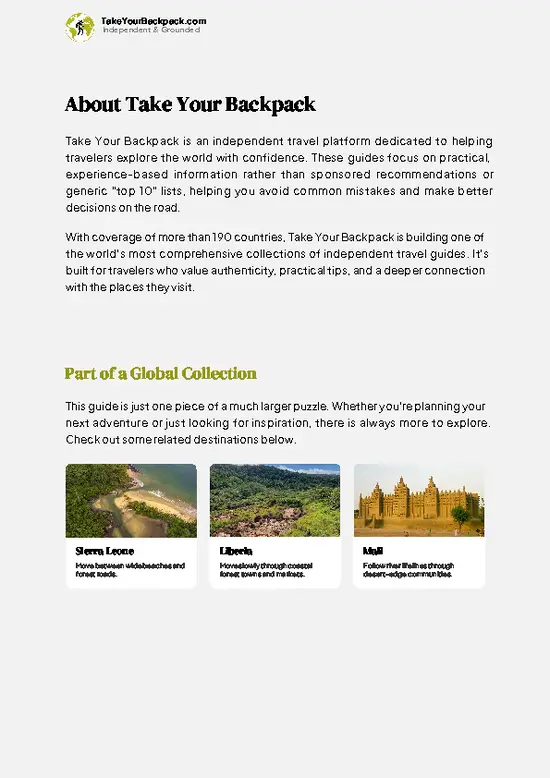
example page 0 from our offline Travel Guide for Guinea
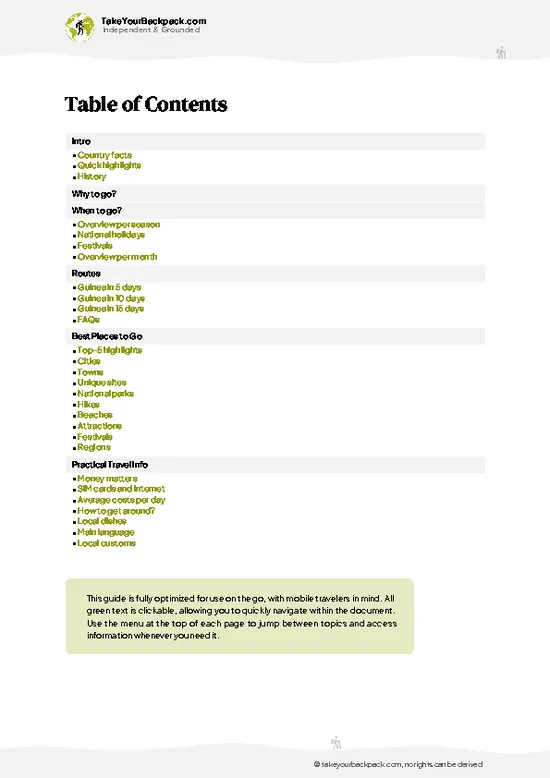
example page 1 from our offline Travel Guide for Guinea
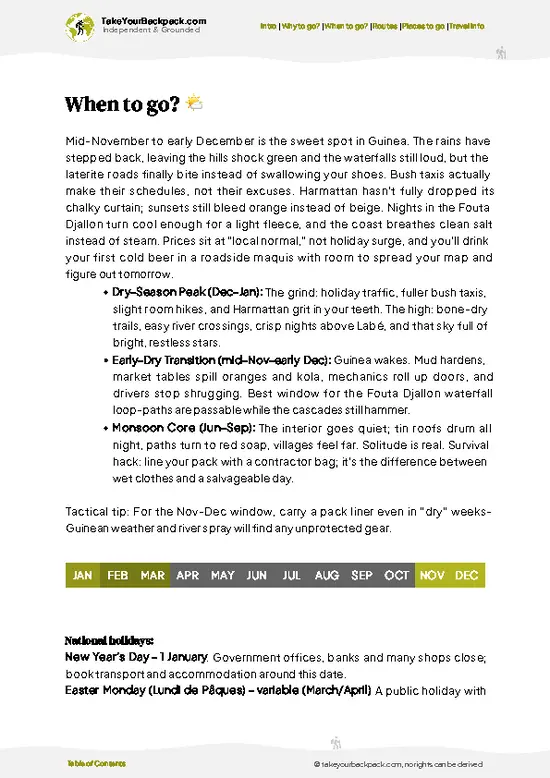
example page 2 from our offline Travel Guide for Guinea
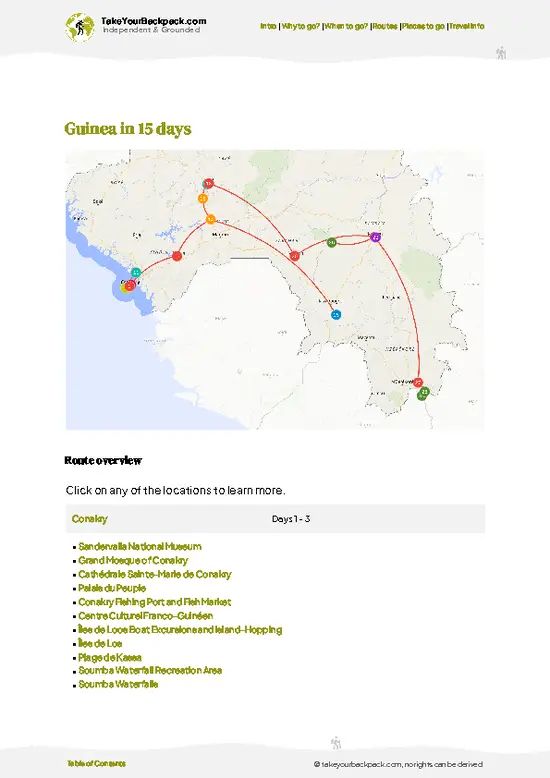
example page 3 from our offline Travel Guide for Guinea
example page 4 from our offline Travel Guide for Guinea
example page 5 from our offline Travel Guide for Guinea
example page 6 from our offline Travel Guide for Guinea
example page 7 from our offline Travel Guide for Guinea
The digital guide (282 pages) contains:
67 highlights, ranked by travel appeal
Optimized 5, 10 & 15-day travel routes
Cities, national parks, landmarks, beaches
How to get around
Offline-friendly for travel without Wi-Fi
👉 Click to see all 30+ guide features

📅 Plan smarter in minutes, not weeks
Month by month travel advice
Festivals & national holidays
Budget expectations

🗺️ Go to the right places, skip the overrated ones
Honest pros & cons of destinations
Top hikes, parks & viewpoints
Lesser-known places most travelers miss
Clear “worth it vs skip it” guidance

🛏️ Travel smoothly without rookie mistakes
Best areas to stay
Transport systems explained simply
Common scams & safety advice
SIM cards, money & practical tips

🌍 Understand the country, not just visit it
Culture & traditions
52 Essential phrases & customs
Festivals worth planning around
Traveler-friendly historical context
Insights that make places more meaningful

📱 Built for real travel conditions
Fully downloadable PDF
Works completely offline
Optimized for phone use
Useful in remote areas & buses
Everything in one place
Save weeks of stressful planning
Get instant access to your full guide. 30‑day money-back guarantee.


By proceeding you agree to our terms.
Sent to your inbox immediately after payment • 100% Secure Checkout
Best Backpacking Travel Advisor 2025 tourism awardBest Backpacking
Travel Advisor
2025
What others say about Take Your Backpack Guides:
⭐⭐⭐⭐⭐
Fantastic, amazing amount of information!
⭐⭐⭐⭐⭐
My goodness this is amazing, it's what I've been looking for hats off too you!
⭐⭐⭐⭐⭐
I think this is absolutely BRILLIANT
⭐⭐⭐⭐
Very complete and informative. It's still missing places, but I gotta to commend you
⭐⭐⭐⭐⭐
This is truly amazing, thank you, can't wait to explore it with my kids!
⭐⭐⭐⭐⭐
Awesome resource, thank you!
⭐⭐⭐⭐⭐
This is amazing! Can't wait to explore the ones I haven't seen
⭐⭐⭐⭐
I love this! Well done, great idea.
⭐⭐⭐⭐⭐
Thanks for taking the time to make this gem!
⭐⭐⭐⭐⭐
This might be the best website I've ever seen.
⭐⭐⭐⭐⭐
Congratulations, and thank you so much for your work; it's incredibly valuable.
⭐⭐⭐⭐
In all seriousness I think you did a great job pointing out the important spots
⭐⭐⭐⭐⭐
10/10 very good
⭐⭐⭐⭐⭐
As someone who's only just starting to visit regularly this is awesome, thank you.
⭐⭐⭐⭐
Thank you very much! I'm going to visit my dad, it's going to be very useful!
⭐⭐⭐⭐⭐
This is really cool! We'll be travelling for the first time and this definitely come in handy.
⭐⭐⭐⭐⭐
You are now our minister of culture, congratulations 👨‍💼
⭐⭐⭐⭐⭐
Just wanted to tell you that this is a pearl! Going to follow your recommendations.
⭐⭐⭐⭐⭐
This is so cool. I'll definitely be using the resource for my travels soon.
⭐⭐⭐⭐⭐
This is very impressive! Good work.
⭐⭐⭐⭐⭐
This is an amazing and informative site. Very well done!

🛏️ Where to stay?Best areas to stay in Guinea

In Boke, Guinea, the best spot for backpackers is the central district around the main market and the town square. This area hums with life from dawn to dusk—vendors shouting, the smell of fresh spices mingling with dust and sweat, and locals weaving through narrow streets. It’s where you’ll find the most budget-friendly guesthouses and a handful of hostels that cater to solo travelers and small groups. Staying here means you’re plugged into the pulse of the town, with easy access to street food stalls and communal spaces where conversations spark over shared meals.

Compared to the quieter, more … read more 👉
In Boke, Guinea, the best spot for backpackers is the central district around the main market and the town square. This area hums with life from dawn to dusk—vendors shouting, the smell of fresh spices mingling with dust and sweat, and locals weaving through narrow streets. It’s where you’ll find the most budget-friendly guesthouses and a handful of hostels that cater to solo travelers and small groups. Staying here means you’re plugged into the pulse of the town, with easy access to street food stalls and communal spaces where conversations spark over shared meals.

Compared to the quieter, more residential outskirts, this central zone feels safer simply because it’s busy and well-trafficked, which is a backpacker’s best defense. Plus, the social vibe is unbeatable—you’re never far from someone who’s also figuring out the rhythm of Boke. Venturing beyond this hub means losing that immediate connection and stepping into areas where accommodations are sparse and the local scene is less accessible. For a first-timer or a seasoned traveler craving authentic interaction without sacrificing safety, the heart of Boke is where you want to drop your pack.

🚌 Getting aroundHow to get from A to B

Boke moves at its own rhythm—less a clock-driven city and more a place where the sun’s position and the hum of daily life set the pace. The air carries the scent of dry earth and distant river water, mixing with the occasional waft of grilled street food. Here, schedules exist but flex, bending to the flow of local markets and the chatter of vendors. You’ll find that patience is your best companion, and a loose plan often beats a rigid itinerary. The town’s pulse is steady but unhurried, inviting you to sync with its natural tempo rather than fight it.


  • Walking: The most reliable and immersive way to get around Boke, especially in the central areas. Streets are compact and often unpaved, so sturdy shoes are a must. Walking lets you catch the subtle shifts in light and the texture of daily
read more 👉
Boke moves at its own rhythm—less a clock-driven city and more a place where the sun’s position and the hum of daily life set the pace. The air carries the scent of dry earth and distant river water, mixing with the occasional waft of grilled street food. Here, schedules exist but flex, bending to the flow of local markets and the chatter of vendors. You’ll find that patience is your best companion, and a loose plan often beats a rigid itinerary. The town’s pulse is steady but unhurried, inviting you to sync with its natural tempo rather than fight it.


  • Walking: The most reliable and immersive way to get around Boke, especially in the central areas. Streets are compact and often unpaved, so sturdy shoes are a must. Walking lets you catch the subtle shifts in light and the texture of daily life—plus, it’s free.


  • Shared Taxis (Taxi Collectifs): These minibuses or cars run set routes between Boke and nearby towns. They leave when full, so timing is unpredictable but usually frequent during daylight hours. Fares are low, often under a dollar, making them a budget staple. Expect a bumpy ride and a lively atmosphere as locals squeeze in and out.


  • Motorcycle Taxis (Moto-Taxis): Perfect for short hops or when time is tight. They dart through traffic and unpaved roads with ease. Prices are negotiable but generally affordable. Helmets aren’t always provided, so bring your own if safety is a priority. They operate from dawn until dusk, fading out as the town quiets.


  • Bicycle Rentals: A quiet, flexible option to cover more ground without losing the sensory connection to the environment. Rentals are inexpensive and available near the market area. The terrain is mostly flat but watch for loose gravel and occasional potholes.


  • Local Buses: Less common within Boke itself but useful for reaching outlying villages. They run on rough schedules, often departing early morning and mid-afternoon. Tickets are cheap, but comfort is minimal—expect crowded, hot conditions and frequent stops.

👛 Costs (as of 28 April 2026)Travel costs and budget guide for Boke

Backpacking in Boke, Guinea, means embracing a raw, off-the-beaten-path vibe where every dollar counts and local rhythms shape your experience. Here’s what you’ll typically spend day-to-day:
  • Dorm Accommodation: Expect basic guesthouses or hostels with shared rooms. Prices hover around €5 to €10 per night. These places are no-frills—think simple beds, a fan or two, and sometimes spotty electricity. It’s about function over comfort, but it keeps you close to the town’s pulse.
  • Meals: Street food and small local eateries dominate. A hearty meal of rice, grilled fish or chicken, and fresh vegetables will set you back about €1.50 to €3. The flavors are straightforward but filling, with smoky charcoal scents and the occasional hit of spicy pepper.
  • Local Transport: Getting around means shared taxis
read more 👉
Backpacking in Boke, Guinea, means embracing a raw, off-the-beaten-path vibe where every dollar counts and local rhythms shape your experience. Here’s what you’ll typically spend day-to-day:
  • Dorm Accommodation: Expect basic guesthouses or hostels with shared rooms. Prices hover around €5 to €10 per night. These places are no-frills—think simple beds, a fan or two, and sometimes spotty electricity. It’s about function over comfort, but it keeps you close to the town’s pulse.
  • Meals: Street food and small local eateries dominate. A hearty meal of rice, grilled fish or chicken, and fresh vegetables will set you back about €1.50 to €3. The flavors are straightforward but filling, with smoky charcoal scents and the occasional hit of spicy pepper.
  • Local Transport: Getting around means shared taxis or minibuses. Short rides cost roughly €0.30 to €0.70. The vehicles are often crowded and noisy, but they’re the fastest way to navigate the town’s dusty streets and catch glimpses of everyday life.
  • Basic Activities/Entry Fees: Boke isn’t a tourist hotspot, so entry fees are minimal or nonexistent. Visiting local markets or natural spots might cost around €1 to €2 if there’s a small fee. The real value is in wandering and soaking up the atmosphere rather than paid attractions.
  • Miscellaneous Expenses: Budget a few euros for bottled water, snacks, or phone credit—around €1 to €2 daily. Clean drinking water isn’t always guaranteed, so bottled water is a must, and staying connected requires topping up your SIM card regularly.

All told, you’re looking at roughly €10 to €18 per day to cover the essentials in Boke. It’s a lean budget, but it unlocks a genuine, unvarnished experience where every moment feels earned through the simplicity and grit of the place.
⚠️ Prices can change and everyone travels differently, so take this as a rough guide. Hope it helps you plan your adventure!

🚌 Day tripsExploring the surroundings

Boke, Guinea, is a backpacker’s dream base for day trips, offering a blend of culture, nature, and adventure. The town itself has a laid-back vibe, with the scent of grilled plantains wafting through the air and friendly locals eager to share stories. Here are some day trips that will make your journey truly rewarding.

Mount Nimba
A trek to Mount Nimba is a must. The journey takes about two hours by shared taxi, and the views from the summit are breathtaking. You’ll navigate through lush forests, where the air is thick with the scent of damp earth and wildflowers. The climb is challenging but manageable, rewarding you with panoramic vistas of Guinea and Côte d’Ivoire. Aim for the dry season, from November to April, to avoid muddy trails. A common mistake is underestimating the need for … read more 👉
Boke, Guinea, is a backpacker’s dream base for day trips, offering a blend of culture, nature, and adventure. The town itself has a laid-back vibe, with the scent of grilled plantains wafting through the air and friendly locals eager to share stories. Here are some day trips that will make your journey truly rewarding.

Mount Nimba
A trek to Mount Nimba is a must. The journey takes about two hours by shared taxi, and the views from the summit are breathtaking. You’ll navigate through lush forests, where the air is thick with the scent of damp earth and wildflowers. The climb is challenging but manageable, rewarding you with panoramic vistas of Guinea and Côte d’Ivoire. Aim for the dry season, from November to April, to avoid muddy trails. A common mistake is underestimating the need for sturdy footwear; flip-flops won’t cut it here.


Kankan Market
Just over an hour away, Kankan’s bustling market is a sensory overload in the best way. The vibrant colors of spices and textiles pop against the backdrop of lively chatter. You can grab a hearty meal for under $5 and soak in the local culture. Weekends are particularly lively, but be prepared for crowds. First-timers often miss the chance to haggle; it’s part of the experience, so dive in!


Fouta Djallon
A trip to the Fouta Djallon region is like stepping into a postcard. It’s about a two-hour drive, and the rolling hills and cascading waterfalls will leave you breathless. Bring a picnic and enjoy it by one of the many streams. The best time to visit is during the rainy season, when the waterfalls are at their most impressive. Many backpackers overlook the importance of staying hydrated; the heat can sneak up on you.
👉 Explore Fouta Djallon

Bafing River
The Bafing River is perfect for a day of relaxation and exploration. It’s a short 30-minute ride from Boke. You can rent a canoe for a few dollars and paddle through tranquil waters, surrounded by lush greenery. The best time to go is early morning when the mist rises off the water. Don’t forget your sunscreen; the sun can be fierce, and you’ll want to enjoy every moment on the river.


Each of these trips offers a unique glimpse into Guinea’s rich tapestry, making Boke an ideal launchpad for your adventures.
Want to know what more Guinea offers?
The Guinea Travel Guide describes 67 highlights, from cities to national parks, from beaches to hikes

Get the Travel Guide -

🍲 FoodLocal Cuisine & Drinks

In Boke, Guinea, food is a lively expression of local life, not just fuel. The city’s signature dish, , a tangy chicken stew marinated in lemon and onions, hits your palate with a punch of bright, savory layers. Another must-try is Fufu, a dense, doughy staple made from cassava or plantains, perfect for scooping up rich, spicy sauces.

Backpackers will find themselves drawn to the bustling markets and street stalls where the air is thick with the scent of grilled meats and smoky spices. These spots are where the real flavor lives—casual, communal, and wallet-friendly. Small cafés and roadside bars offer a chance to sip on ginger beer or locally brewed palm wine, drinks that carry the warmth of tradition and the buzz of social connection.

Eating in Boke is a hands-on affair. Sharing plates is common, and meals often stretch into long, relaxed conversations. Don’t rush; the rhythm here is slow and social. Expect to use your right hand for eating—left is reserved for less clean tasks. This is food as culture, a chance to taste the city’s heartbeat one bite at a time.

🛡️ SafetyTraveler Safety Guide

Boke, Guinea, is generally safe, but a few practical tips can enhance your experience. The bustling market area is vibrant, filled with the scent of spices and the chatter of locals. Stay aware of your surroundings here; pickpockets can lurk in crowded spots.

If you’re traveling solo, especially after dark, stick to well-lit areas and avoid wandering too far from your accommodation. The streets can feel quiet, and while the locals are friendly, it’s wise to keep your wits about you.

Common scams are rare, but be cautious of overly eager vendors who may inflate prices. A firm but polite “no” usually suffices. Carry a small amount of cash for small purchases, as many places don’t accept cards. Overall, approach Boke with an open heart and a keen eye, and you’ll find its charm rewarding.

Other Guinean cities near Boke

Explore more nearby:

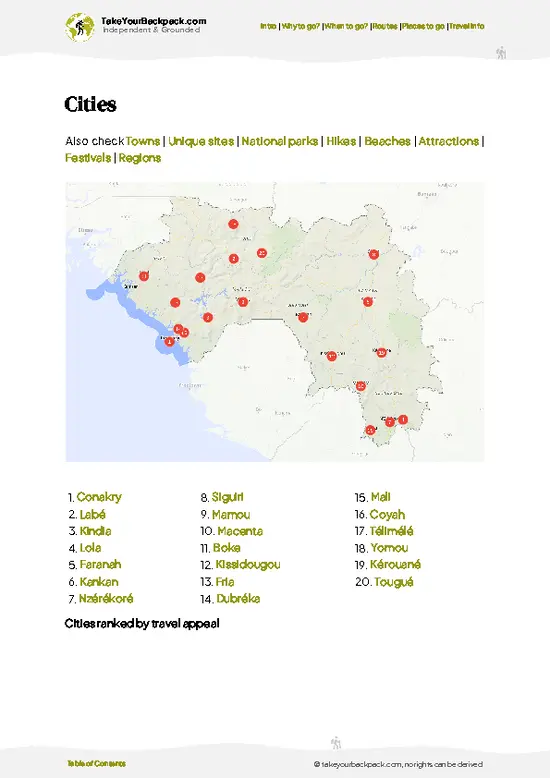
  • Fria—bauxite mines, industrial legacy, planned neighborhoods| 99 km away
  • Télimélé—Fouta Djallon foothills, Fulani villages, local livestock markets| 137 km away
  • Dubréka—mangrove estuaries, river delta, gateway to Conakry| 153 km away

💡 Not sure where to go next?
Create a personalized itinerary for Guinea including Boke and the places that fit your trip.

Generate my itinerary

👉 Discover all cities

Or checkout all Guinea has to offer (think cities, towns, villages, national parks, hikes, beaches, festivals)
Country photo of Guinea

We 💚 feedbackFinal thoughts on visiting Boke

Boke has a pulse that’s hard to ignore. The air is thick with the scent of grilled fish and spices, and the laughter of locals fills the streets. Don’t miss the market; it’s a sensory overload in the best way. But be ready for the heat—stay hydrated and pace yourself. The best surprise? The warmth of the people; they’ll share stories that make you feel like family. Embrace the chaos; it’s part of the charm.

✍️ Help improve this page!
The information on this page is based on in-depth research, insights shared by experienced travelers, and feedback from the local travel community in Guinea. While every effort is made to keep the information accurate and current, conditions can change — so if you spot anything incorrect or outdated, please get in touch.


🙋‍♂️ Give feedback

👋 Meet the founderWho’s Behind Take Your Backpack?

Johan, backpacker and founder of TakeYourBackpackHi, I’m Johan (Netherlands 🇳🇱), the creator of TakeYourBackpack. Over the past decade, I’ve backpacked through 80+ countries across six continents, gaining extensive experience with independent travel, long-term trips, and overland routes.

This site is built on a combination of firsthand travel experience and carefully curated insights from other backpackers. Many guides are based on places I’ve personally visited, while others bring together tips, observations, and practical advice shared by trusted travelers I’ve met along the way.

The goal is to provide realistic, experience-driven guidance — not generic itineraries — so you can explore destinations with better context, clearer expectations, and more confidence.

Get full Guinea guide •
Instant download • 67 highlights • Full Offline guide