×

Guinea🇬🇳 | citiesDubrékamangrove estuaries, river delta, gateway to Conakry | things to do and best time to go

Explore MacentaExplore Fria

Backpacking in Dubréka
👌 Worth visitingcity ranked #10
By Johan Kruseman 🇳🇱 | Updated June 8, 2026

Dubréka will surprise you: it’s one of the few places near Conakry where the air actually smells green after rain—think crushed leaves and wet earth, not exhaust. Just 30 kilometers northeast of Guinea’s capital, Dubréka is less a destination for city thrills and more a launchpad for the lush, palm-fringed foothills that rise behind it. The town itself is modest, with a slow pulse—don’t expect a buzzing backpacker scene or nightlife, but do expect friendly market banter and the occasional shared taxi packed with laughter. Most travelers use Dubréka as a base for day hikes to the Cascades de la Soumba, or as a breather between the chaos of Conakry and the deeper, wilder Fouta Djallon. It’s cheaper and calmer than the capital, but you’ll need patience for local transport and a willingness to make your own fun. Safety is typical for rural Guinea—watch your valuables, but the vibe is more sleepy than sketchy. Compared to Kindia or Coyah, Dubréka feels more like a green threshold than a destination, but that’s exactly its charm.

Discover everything you want to know in the 📖 Guinea Travel Guide.


Get your Guinea guide
67 ranked highlights, routes & tips, works offline (282 pages)
Loading the map 🌍
CLICK TO FILTER
cities
towns
landmarks
national parks
hikes
beaches
attractions
festivals
regions
SHOW COUNTRY’S BESTSHOW ALL

✨ Why go?
Ranked #10 city in Guinea
What makes this city worth visiting

Dubréka serves as a gateway for backpackers seeking a blend of nature and culture in Guinea. Its proximity to stunning hikes in the nearby Fouta Djallon region makes it a perfect base for those eager to explore lush landscapes. The local guesthouses offer a cozy atmosphere, where you can swap stories over a bowl of fufu or a plate of jollof rice. Streets are walkable, allowing you to soak in the scent of street food and the warmth of local smiles.

Travelers often linger here for a few days, enjoying the slow pace and friendly vibe, making it ideal for solo adventurers or small groups looking to connect. While it’s not a nightlife hub, the communal feel encourages social interactions. If you’re after a genuine experience rather than a quick stop, Dubréka’s charm will draw you in.
Want to include Dubréka in your Guinea route?
Create a personalized Guinea itinerary that includes Dubréka and the places that fit your trip — based on your travel style, budget, and available time. Get your route in seconds.

Generate my trip

💡 HighlightsMust-see experiences and standout moments

  1. Dubréka Central Market (Marché de Dubréka) — Bustling, colorful place where locals sell fresh fish, fruit, vegetables, and handmade goods; prime spot to soak up daily life, try street food, and watch the trade rhythms that drive the town.
  2. Préfecture / Town Hall area — The administrative heart of Dubréka with government offices and a busy public square; useful for understanding local civic life and often a meeting point for markets, public events, and civic architecture.
  3. Main Mosque of Dubréka — A focal point of community life and religious practice; visiting around prayer times offers a clear perspective on local culture, dress, and social rhythms.
  4. Dubréka mangrove shoreline and estuary — Saltwater marshes and mangrove channels right at the town’s edge provide scenic walks, birdwatching,
read more 👉
  1. Dubréka Central Market (Marché de Dubréka) — Bustling, colorful place where locals sell fresh fish, fruit, vegetables, and handmade goods; prime spot to soak up daily life, try street food, and watch the trade rhythms that drive the town.
  2. Préfecture / Town Hall area — The administrative heart of Dubréka with government offices and a busy public square; useful for understanding local civic life and often a meeting point for markets, public events, and civic architecture.
  3. Main Mosque of Dubréka — A focal point of community life and religious practice; visiting around prayer times offers a clear perspective on local culture, dress, and social rhythms.
  4. Dubréka mangrove shoreline and estuary — Saltwater marshes and mangrove channels right at the town’s edge provide scenic walks, birdwatching, and insight into the fishing and crabbing activities that sustain the local economy.
  5. Local fishing landing and fish market — Early-morning landings show fishermen hauling catches and the immediate marketplace where the freshest seafood is traded; great for photography and tasting raw, local flavors.
For easy day trips from Dubréka, head to nearby Conakry for its markets, the National Museum and the Grand Mosque, or take a boat out to the Îles de Los for beaches and island village visits.
Spotted a mistake or missing something? Contact us.

🏘️ NeighborhoodsWhere things are and how it's laid out

Dubréka offers a unique blend of local culture and natural beauty, making it a rewarding stop for backpackers. Here’s how to navigate its neighborhoods:

Centre Ville: This is the heart of Dubréka, buzzing with local markets and street vendors. The vibe is lively, perfect for soaking in the daily rhythms of life. Costs are low, and you can easily walk to most attractions. Nightlife is minimal, but the evenings come alive with local music. Ideal for short stays, as you can explore the essentials quickly.

Kamsar: A quieter area, Kamsar is known for its lush surroundings and scenic views. It’s a bit more spread out, so be prepared to walk or use local transport. Costs are slightly higher here, but the tranquility is worth it. Perfect for longer stays if you want to unwind and enjoy nature without … read more 👉
Dubréka offers a unique blend of local culture and natural beauty, making it a rewarding stop for backpackers. Here’s how to navigate its neighborhoods:

Centre Ville: This is the heart of Dubréka, buzzing with local markets and street vendors. The vibe is lively, perfect for soaking in the daily rhythms of life. Costs are low, and you can easily walk to most attractions. Nightlife is minimal, but the evenings come alive with local music. Ideal for short stays, as you can explore the essentials quickly.

Kamsar: A quieter area, Kamsar is known for its lush surroundings and scenic views. It’s a bit more spread out, so be prepared to walk or use local transport. Costs are slightly higher here, but the tranquility is worth it. Perfect for longer stays if you want to unwind and enjoy nature without the hustle.

Banankoro: This neighborhood is a hidden treasure, offering a more authentic experience. The atmosphere is laid-back, with friendly locals. It’s walkable, but you might need a taxi for longer distances. Costs are very budget-friendly. Great for those looking to immerse themselves in local life for a while.

⌛️ 1 daySeeing the highlights in 24 hours

Dubréka, Guinea, is a vibrant town that pulses with life, nestled between lush greenery and the banks of the Konkouré River. It’s a place where the air is thick with the scent of grilled fish and spices, and the sounds of laughter and conversation fill the streets. Start your day early with a stroll through the bustling market in the heart of town. The vibrant colors of fresh produce and handmade crafts will awaken your senses. Engage with local vendors; their stories are as rich as the goods they sell.

After soaking in the market’s energy, head to the nearby **Konkouré River** for a peaceful morning. The gentle lapping of water against the shore is a soothing backdrop as you sip on a local drink, perhaps a refreshing bissap. This is a perfect spot to reflect and plan your next moves.

In … read more 👉
Dubréka, Guinea, is a vibrant town that pulses with life, nestled between lush greenery and the banks of the Konkouré River. It’s a place where the air is thick with the scent of grilled fish and spices, and the sounds of laughter and conversation fill the streets. Start your day early with a stroll through the bustling market in the heart of town. The vibrant colors of fresh produce and handmade crafts will awaken your senses. Engage with local vendors; their stories are as rich as the goods they sell.

After soaking in the market’s energy, head to the nearby **Konkouré River** for a peaceful morning. The gentle lapping of water against the shore is a soothing backdrop as you sip on a local drink, perhaps a refreshing bissap. This is a perfect spot to reflect and plan your next moves.

In the afternoon, explore the **Kassa Island** area, a hidden treasure not typically on tourist maps. A short boat ride will take you there, where you can wander through quiet villages and witness traditional fishing practices. The simplicity of life here is a stark contrast to the bustling market, offering a deeper understanding of the local culture.

As the sun sets, return to Dubréka and find a local eatery. Enjoy a plate of **fufu** and **soup**, savoring the flavors that define Guinean cuisine. The warm atmosphere and friendly faces will make you feel at home. End your day with a leisurely walk through the streets, where the soft glow of lanterns illuminates the town, leaving you with a sense of connection and fulfillment.
Turn your Dubréka visit into an Guinea adventure
Build a complete Guinea route with Dubréka, hidden gems, must-see destinations, and realistic travel times included.

Generate my trip

🌤️ When to go?Best time to visit Dubréka


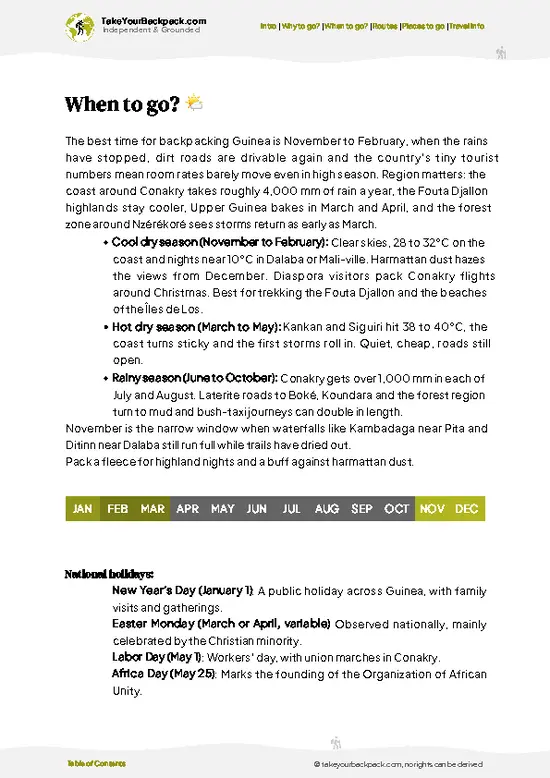
  • Topic: Weather – The dry season from November to April is your best bet. Expect clear skies and minimal rain, which means trails won’t turn to mud and your gear stays dry. The wet season (May to October) brings heavy, humid downpours that can turn paths slippery and unpredictable.

  • Topic: Temperature – Daytime highs hover around 28-32°C (82-90°F) during the dry months, with nights cooling to a comfortable 20-24°C (68-75°F). The wet season feels hotter and stickier, often pushing 33°C (91°F) or more, making hiking tougher.

  • Topic: Daylight Hours – Near the equator, daylight is steady year-round, roughly 12 hours. This consistency means you can plan your days without worrying about early sunsets or long twilights.

  • Topic: Crowds – Dubréka isn’t a tourist hotspot, so crowds are light year-round.
read more 👉

  • Topic: Weather – The dry season from November to April is your best bet. Expect clear skies and minimal rain, which means trails won’t turn to mud and your gear stays dry. The wet season (May to October) brings heavy, humid downpours that can turn paths slippery and unpredictable.

  • Topic: Temperature – Daytime highs hover around 28-32°C (82-90°F) during the dry months, with nights cooling to a comfortable 20-24°C (68-75°F). The wet season feels hotter and stickier, often pushing 33°C (91°F) or more, making hiking tougher.

  • Topic: Daylight Hours – Near the equator, daylight is steady year-round, roughly 12 hours. This consistency means you can plan your days without worrying about early sunsets or long twilights.

  • Topic: Crowds – Dubréka isn’t a tourist hotspot, so crowds are light year-round. However, local festivals during the dry season can bring a lively buzz, offering a chance to dive into authentic cultural experiences.

  • Topic: Seasonal Activities – The dry season opens up outdoor options like hiking and river excursions. The wet season limits these but transforms the landscape into lush green, perfect for photography if you don’t mind the rain.

  • Topic: Price Fluctuations – Expect slightly higher prices in the dry season when travel is easier and demand peaks. The wet season sees fewer visitors, so you can negotiate better deals on lodging and guides.


Pro-tip: Aim for late November or early December—when the air is fresh, the trails are firm, and the town’s energy is just waking up from the rains. It’s the sweet spot for smooth travel and authentic encounters.


source: climatestotravel.comJANJanuary: excellent for travelingFEBFebruary: excellent for travelingMARMarch: excellent for travelingAPRApril: excellent for travelingMAYMay: fair for travelingJUNJune: fair for travelingJULJuly: fair for travelingAUGAugust: fair for travelingSEPSeptember: fair for travelingOCTOctober: fair for travelingNOVNovember: highly recommended for travelingDECDecember: excellent for traveling
when-to-go

✈️ The backpacker research shortcutGuinea Travel Guide

An offline-friendly backpacking guide with optimized travel routes, ranked highlights, transport advice, and the best areas to stay.
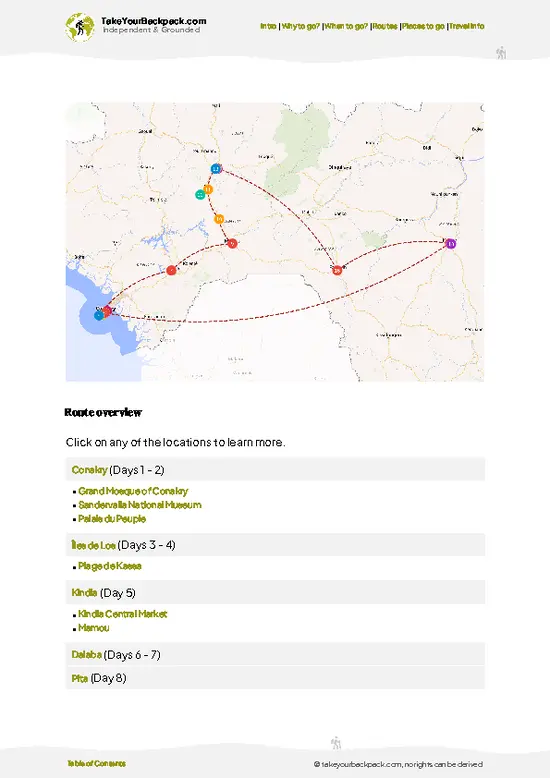
example page 0 from our offline Travel Guide for Guinea
example page 1 from our offline Travel Guide for Guinea
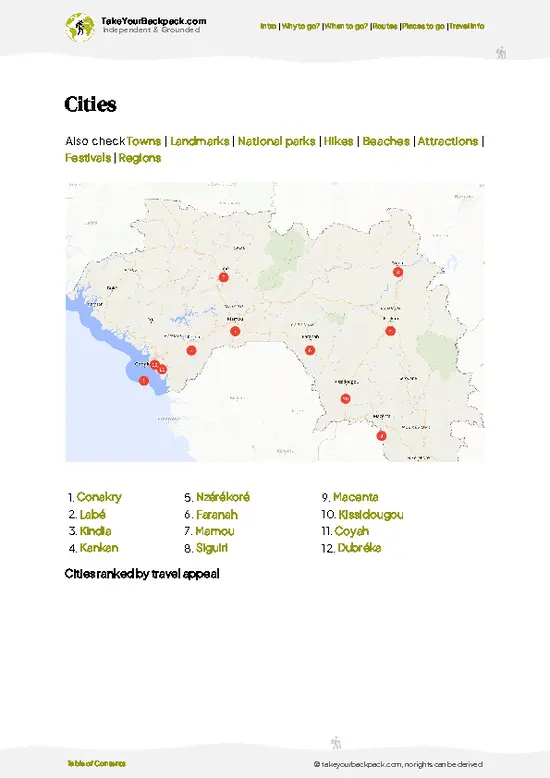
example page 2 from our offline Travel Guide for Guinea
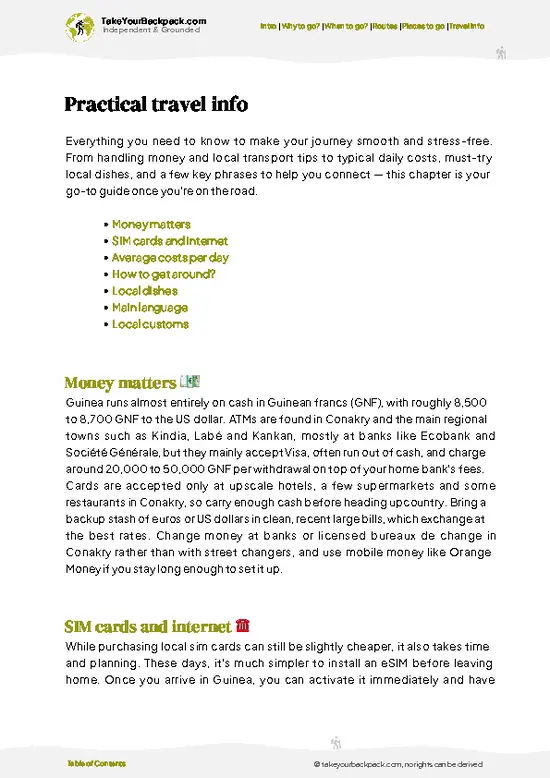
example page 3 from our offline Travel Guide for Guinea
example page 4 from our offline Travel Guide for Guinea
example page 5 from our offline Travel Guide for Guinea
example page 6 from our offline Travel Guide for Guinea
example page 7 from our offline Travel Guide for Guinea
The digital guide (282 pages) contains:
67 highlights, ranked by travel appeal
Optimized 5, 10 & 15-day travel routes
Cities, national parks, landmarks, beaches
How to get around
Offline-friendly for travel without Wi-Fi
👉 Click to see all 30+ guide features

📅 Plan smarter in minutes, not weeks
Month by month travel advice
Festivals & national holidays
Budget expectations

🗺️ Go to the right places, skip the overrated ones
Honest pros & cons of destinations
Top hikes, parks & viewpoints
Lesser-known places most travelers miss
Clear “worth it vs skip it” guidance

🛏️ Travel smoothly without rookie mistakes
Best areas to stay
Transport systems explained simply
Common scams & safety advice
SIM cards, money & practical tips

🌍 Understand the country, not just visit it
Culture & traditions
52 Essential phrases & customs
Festivals worth planning around
Traveler-friendly historical context
Insights that make places more meaningful

📱 Built for real travel conditions
Fully downloadable PDF
Works completely offline
Optimized for phone use
Useful in remote areas & buses
Everything in one place
Save weeks of stressful planning
Get instant access to your full guide. 30‑day money-back guarantee.


By proceeding you agree to our terms.
Sent to your inbox immediately after payment • 100% Secure Checkout
Best Backpacking Travel Advisor 2025 tourism awardBest Backpacking
Travel Advisor
2025
What others say about Take Your Backpack Guides:
⭐⭐⭐⭐⭐
Fantastic, amazing amount of information!
⭐⭐⭐⭐⭐
My goodness this is amazing, it's what I've been looking for hats off too you!
⭐⭐⭐⭐⭐
I think this is absolutely BRILLIANT
⭐⭐⭐⭐
Very complete and informative. It's still missing places, but I gotta to commend you
⭐⭐⭐⭐⭐
This is truly amazing, thank you, can't wait to explore it with my kids!
⭐⭐⭐⭐⭐
Awesome resource, thank you!
⭐⭐⭐⭐⭐
This is amazing! Can't wait to explore the ones I haven't seen
⭐⭐⭐⭐
I love this! Well done, great idea.
⭐⭐⭐⭐⭐
Thanks for taking the time to make this gem!
⭐⭐⭐⭐⭐
This might be the best website I've ever seen.
⭐⭐⭐⭐⭐
Congratulations, and thank you so much for your work; it's incredibly valuable.
⭐⭐⭐⭐
In all seriousness I think you did a great job pointing out the important spots
⭐⭐⭐⭐⭐
10/10 very good
⭐⭐⭐⭐⭐
As someone who's only just starting to visit regularly this is awesome, thank you.
⭐⭐⭐⭐
Thank you very much! I'm going to visit my dad, it's going to be very useful!
⭐⭐⭐⭐⭐
This is really cool! We'll be travelling for the first time and this definitely come in handy.
⭐⭐⭐⭐⭐
You are now our minister of culture, congratulations 👨‍💼
⭐⭐⭐⭐⭐
Just wanted to tell you that this is a pearl! Going to follow your recommendations.
⭐⭐⭐⭐⭐
This is so cool. I'll definitely be using the resource for my travels soon.
⭐⭐⭐⭐⭐
This is very impressive! Good work.
⭐⭐⭐⭐⭐
This is an amazing and informative site. Very well done!

🛏️ Where to stay?Where staying makes the most sense

Dubréka’s best backpacker zone is the area around the town center, where the pulse of daily life hums strongest. This neighborhood balances safety with a lively social scene—think street vendors grilling fresh fish, the scent of smoky palm oil mingling with tropical humidity. It’s where budget travelers naturally converge, drawn by affordable guesthouses and a handful of hostels that cater to solo adventurers. The vibe here is unpretentious and open, with locals chatting over shared meals and travelers swapping stories under flickering street lamps.

Compared to the quieter, more residential outskirts, … read more 👉
Dubréka’s best backpacker zone is the area around the town center, where the pulse of daily life hums strongest. This neighborhood balances safety with a lively social scene—think street vendors grilling fresh fish, the scent of smoky palm oil mingling with tropical humidity. It’s where budget travelers naturally converge, drawn by affordable guesthouses and a handful of hostels that cater to solo adventurers. The vibe here is unpretentious and open, with locals chatting over shared meals and travelers swapping stories under flickering street lamps.

Compared to the quieter, more residential outskirts, staying near the center means you’re never far from markets, transport hubs, and informal hangouts where you can plug into the local rhythm without feeling like an outsider. The streets are busy but manageable, lit enough to feel secure after dark, and the hum of motorbikes and laughter keeps the night alive without overwhelming. This is where you get the authentic Dubréka experience—raw, real, and ready to welcome you in.

🚌 Getting aroundHow to get around Dubréka

Dubréka moves at its own rhythm—less a clockwork town and more a pulse you feel underfoot. The air carries the scent of earth and salt from the nearby coast, mingling with the chatter of market vendors and the occasional honk of a shared taxi weaving through narrow streets. Here, schedules are more like guidelines, and the best way to get around is to tune into the local tempo rather than fight it. The town’s transport options reflect this blend of order and improvisation, offering budget travelers a mix of straightforward and flexible ways to navigate without breaking the bank.


  • Walking: The most reliable and immersive way to explore Dubréka. Streets are compact and often bustling with life, so walking lets you soak in the textures—the cracked pavement, the smell of grilled street food,
read more 👉
Dubréka moves at its own rhythm—less a clockwork town and more a pulse you feel underfoot. The air carries the scent of earth and salt from the nearby coast, mingling with the chatter of market vendors and the occasional honk of a shared taxi weaving through narrow streets. Here, schedules are more like guidelines, and the best way to get around is to tune into the local tempo rather than fight it. The town’s transport options reflect this blend of order and improvisation, offering budget travelers a mix of straightforward and flexible ways to navigate without breaking the bank.


  • Walking: The most reliable and immersive way to explore Dubréka. Streets are compact and often bustling with life, so walking lets you soak in the textures—the cracked pavement, the smell of grilled street food, the calls of vendors. It’s free, naturally, and perfect for short hops between markets, cafes, and the waterfront.


  • Shared Taxis (Taxi Collectifs): These minibuses or cars run set routes but leave only when full, so timing is fluid. Expect to pay around 500 to 1,000 GNF per ride. They’re faster than walking and cover longer distances, but be ready for a bit of a squeeze and a lively atmosphere inside. They typically run from early morning until early evening, but don’t count on strict schedules.


  • Motorcycle Taxis (Moto-Taxis): When you want speed and flexibility, moto-taxis zip through traffic and narrow alleys. Prices are negotiable but usually start low for short trips. Helmets aren’t always standard, so hold on tight and keep your wits about you. They operate from dawn until late evening, perfect for quick errands or catching a ride after dark.


  • Local Buses: Larger buses connect Dubréka to nearby towns and the capital, Conakry. They run on rough schedules, often departing when full, with fares around 1,000 to 2,000 GNF. The ride can be bumpy and crowded, but it’s a genuine slice of local life and a budget-friendly way to cover distance.

👛 Costs (as of 25 April 2026)Money, prices, and spending tips

Backpacking in Dubréka, Guinea, means embracing a pace where every dollar stretches, but the experience feels grounded in local rhythms and textures.
  • Dorm Accommodation: Expect to pay around €5 to €10 per night for a basic dorm bed. Options are limited and often simple, with mosquito nets and shared bathrooms. The lighting tends to be soft and warm, casting long shadows in the evenings, which adds a quiet charm despite the modest facilities.
  • Meals: Street food and local eateries dominate here, with meals costing between €1.50 and €3.50. Think fresh, spicy sauces, grilled fish or chicken, and rice or cassava, served on plastic plates under the shade of a tree or a tin roof. The aroma of smoky charcoal and sizzling spices fills the air, making each bite a sensory anchor to the place.
  • Local
read more 👉
Backpacking in Dubréka, Guinea, means embracing a pace where every dollar stretches, but the experience feels grounded in local rhythms and textures.
  • Dorm Accommodation: Expect to pay around €5 to €10 per night for a basic dorm bed. Options are limited and often simple, with mosquito nets and shared bathrooms. The lighting tends to be soft and warm, casting long shadows in the evenings, which adds a quiet charm despite the modest facilities.
  • Meals: Street food and local eateries dominate here, with meals costing between €1.50 and €3.50. Think fresh, spicy sauces, grilled fish or chicken, and rice or cassava, served on plastic plates under the shade of a tree or a tin roof. The aroma of smoky charcoal and sizzling spices fills the air, making each bite a sensory anchor to the place.
  • Local Transport: Shared taxis and minibuses are the norm, with fares typically around €0.30 to €0.70 per trip. The vehicles are often packed, windows down, letting in the warm, humid air mixed with the scent of dust and exhaust. It’s a rough ride but a direct line into daily life here.
  • Basic Activities/Entry Fees: Most local attractions or natural sites have minimal or no entry fees, usually under €1. Guided tours are rare and informal, so expect to negotiate directly with locals if you want a deeper dive. The payoff is a raw, unfiltered connection to the environment and culture.
  • Miscellaneous Expenses: Budget around €1 to €2 for essentials like bottled water, snacks, or phone credit. These small purchases keep you connected and hydrated, crucial in the humid heat where the air feels thick and the sun presses down relentlessly.

All told, a realistic daily budget for backpacking in Dubréka hovers between €9 and €17. This range covers the essentials without glossing over the rough edges, letting you soak in the place’s genuine character while keeping your wallet intact.


source: guineaembassyusa.org
⚠️ Prices can change and everyone travels differently, so take this as a rough guide. Hope it helps you plan your adventure!

🚌 Day tripsExploring the surroundings

Dubréka is a fantastic base for exploring the rich landscapes and vibrant culture of Guinea. With its proximity to natural wonders and local experiences, you can dive into the heart of this beautiful country without the hassle of long travel times.

Mount Nimba
A trek to Mount Nimba is a must for any backpacker. The journey takes about two hours by shared taxi, and the views from the summit are breathtaking. You’ll encounter lush greenery and unique wildlife along the way. The best time to visit is during the dry season, from November to April, when the trails are more manageable. Budget around $10 for transport and a small fee for park entry. A common mistake is underestimating the trail’s difficulty; wear sturdy shoes and bring plenty of water.


Conakry
Just a short ride away, Conakry … read more 👉
Dubréka is a fantastic base for exploring the rich landscapes and vibrant culture of Guinea. With its proximity to natural wonders and local experiences, you can dive into the heart of this beautiful country without the hassle of long travel times.

Mount Nimba
A trek to Mount Nimba is a must for any backpacker. The journey takes about two hours by shared taxi, and the views from the summit are breathtaking. You’ll encounter lush greenery and unique wildlife along the way. The best time to visit is during the dry season, from November to April, when the trails are more manageable. Budget around $10 for transport and a small fee for park entry. A common mistake is underestimating the trail’s difficulty; wear sturdy shoes and bring plenty of water.


Conakry
Just a short ride away, Conakry offers a vibrant urban experience. Spend the day exploring the bustling markets, like Marché Madina, where the scents of spices and fresh produce fill the air. It’s about an hour’s drive, costing around $5. Aim for a weekday visit to avoid the weekend crowds. Don’t miss the chance to try local street food, but be cautious with what you eat; stick to freshly cooked items to avoid stomach issues.
👉 Explore Conakry

Les Cascades de la Soumba
These stunning waterfalls are a refreshing escape, located about 30 minutes from Dubréka. The sound of rushing water and the cool mist create an inviting atmosphere. Entry is usually free, but you might want to bring a small donation for maintenance. The best time to visit is early morning when the light dances on the water. Many first-timers miss the best viewpoints; take the time to explore the trails around the falls for the best photos.


Kindia
A trip to Kindia, roughly an hour away, offers a glimpse into local life. The town is known for its rich agricultural landscape and friendly locals. You can wander through the markets, sample fresh fruits, and soak in the laid-back vibe. Expect to spend about $5 on transport. The rainy season can make roads tricky, so plan your visit during the dry months. Many travelers overlook the cultural significance of the area; engage with locals to learn about their traditions.
👉 Explore Kindia
Want to know what more Guinea offers?
The Guinea Travel Guide describes 67 highlights, from cities to national parks, from beaches to hikes

Get the Travel Guide -

🍲 FoodEating & Drinking in Dubréka

Dubréka’s food scene is a lively dive into Guinea’s coastal flavors, where maafe—a rich peanut stew—dominates plates with its creamy, nutty punch. Don’t miss fufu, the sticky, doughy side that’s perfect for scooping up every last drop. The city’s markets are a sensory overload: sizzling grills, fresh fish caught nearby, and piles of spicy peppers that hint at the heat to come. Backpackers often find themselves drawn to these bustling spots, where the air is thick with smoke and chatter, and meals are as much about the social buzz as the food itself.

Drinking here is straightforward but essential—expect to sip on bissap, a tart hibiscus drink that cools the palate after fiery bites, or the local palm wine, which carries a sweet, fermented tang. Sharing a drink is a gesture of friendship, so … read more 👉
Dubréka’s food scene is a lively dive into Guinea’s coastal flavors, where maafe—a rich peanut stew—dominates plates with its creamy, nutty punch. Don’t miss fufu, the sticky, doughy side that’s perfect for scooping up every last drop. The city’s markets are a sensory overload: sizzling grills, fresh fish caught nearby, and piles of spicy peppers that hint at the heat to come. Backpackers often find themselves drawn to these bustling spots, where the air is thick with smoke and chatter, and meals are as much about the social buzz as the food itself.

Drinking here is straightforward but essential—expect to sip on bissap, a tart hibiscus drink that cools the palate after fiery bites, or the local palm wine, which carries a sweet, fermented tang. Sharing a drink is a gesture of friendship, so don’t be shy to join in. Eating customs lean casual but communal; meals are often shared from a common bowl, so loosen up and dive in with your hands if you want the full experience.

🛡️ SafetySafety Tips and Common Scams in Dubréka

Dubréka is generally safe, but staying aware enhances your experience. The bustling market areas can be lively, so keep your belongings close. When wandering solo, especially at night, stick to well-lit streets and avoid isolated paths.

Common scams are rare, but be cautious of overly friendly locals who may try to guide you for a fee. If someone offers unsolicited help, a polite decline usually suffices.

Annoyances can include persistent vendors; a firm but friendly “no, thank you” works wonders. Embrace the local pace, and don’t rush. The beauty of Dubréka lies in its rhythm, so take a moment to soak in the sights and sounds. Your awareness will transform potential pitfalls into enriching encounters.

Other Guinean cities near Dubréka

Explore more nearby:

  • Coyah—transport junction, roadside commerce, river crossing| 17 km away
  • Conakry—Atlantic coastline, urban sprawl, port activity, music venues| 38 km away
  • Fria—bauxite mines, industrial legacy, planned neighborhoods| 65 km away

💡 Not sure where to go next?
Create a personalized itinerary for Guinea including Dubréka and the places that fit your trip.

Generate my itinerary

👉 Discover all cities

Or checkout all Guinea has to offer (think cities, towns, villages, national parks, hikes, beaches, festivals)
Country photo of Guinea

We 💚 feedbackFinal thoughts on visiting Dubréka

Dubréka has a pulse that feels alive, a blend of laughter and the scent of grilled fish wafting through the air. The best surprise? Stumbling upon a local festival, where the rhythm of drums pulls you into a dance you didn’t know you could do. Just a heads-up: the roads can be rough, so take your time. Embrace the journey; it’s part of the charm.

✍️ Help improve this page!
The information on this page is based on in-depth research, insights shared by experienced travelers, and feedback from the local travel community in Guinea. While every effort is made to keep the information accurate and current, conditions can change — so if you spot anything incorrect or outdated, please get in touch.


🙋‍♂️ Give feedback

👋 Meet the founderWho’s Behind Take Your Backpack?

Johan, backpacker and founder of TakeYourBackpackHi, I’m Johan (Netherlands 🇳🇱), the creator of TakeYourBackpack. Over the past decade, I’ve backpacked through 80+ countries across six continents, gaining extensive experience with independent travel, long-term trips, and overland routes.

This site is built on a combination of firsthand travel experience and carefully curated insights from other backpackers. Many guides are based on places I’ve personally visited, while others bring together tips, observations, and practical advice shared by trusted travelers I’ve met along the way.

The goal is to provide realistic, experience-driven guidance — not generic itineraries — so you can explore destinations with better context, clearer expectations, and more confidence.

Get full Guinea guide •
Instant download • 67 highlights • Full Offline guide