×

Guinea🇬🇳 | citiesCoyahtransport junction, roadside commerce, river crossing | things to do and best time to go

Explore LolaExplore Conakry International Film Festival

Backpacking in Coyah
👌 Worth visitingcity ranked #15
By Johan Kruseman 🇳🇱 | Updated June 10, 2026

A rooster’s call cuts through the haze as you step off the battered minibus, the air thick with woodsmoke and the tang of ripe mangoes. Coyah sits just east of Conakry, where Guinea’s coastal sprawl gives way to the first green folds of the Fouta Djallon. For backpackers, Coyah isn’t a destination that dazzles—it’s a crossroads, a place where you swap city grit for red-dirt roads and the promise of waterfalls upcountry. The town itself is practical: markets hum, moto-taxis buzz, but nightlife is a slow burn and hostels are rare. It’s more relaxed than Conakry, less scenic than Kindia, but if you want a real Guinean pit stop—cheap, safe enough if you keep your wits, and close to the action—Coyah earns its place on the route.

Discover everything you want to know in the 📖 Guinea Travel Guide.


Get your Guinea guide
67 ranked highlights, routes & tips, works offline (282 pages)
Loading the map 🌍
CLICK TO FILTER
cities
towns
landmarks
national parks
hikes
beaches
attractions
festivals
regions
SHOW COUNTRY’S BESTSHOW ALL

✨ Why go?
Ranked #15 city in Guinea
What makes it a must-see city

Backpackers flock to Coyah for its strategic location along the route to Guinea’s stunning hikes and cultural sites. The town serves as a convenient base for exploring the Mount Nimba range or heading to the beaches of Conakry. With a handful of small-scale hostels and guesthouses, you’ll find cozy spots that encourage interaction among travelers. The local food scene is a treat; savor spicy fufu or fresh grilled fish while chatting with fellow adventurers. Streets are walkable, making it easy to soak in the atmosphere without feeling rushed. Most travelers stay a couple of days, enjoying the friendly vibe that invites both solo explorers and small groups to linger. If you appreciate a blend of cultural immersion and outdoor adventure, Coyah is a rewarding stop on your journey.
Want to include Coyah in your Guinea route?
Create a personalized Guinea itinerary that includes Coyah and the places that fit your trip — based on your travel style, budget, and available time. Get your route in seconds.

Generate my trip

💡 HighlightsThe experiences that define the visit

  • Marché de Coyah (Main Market) — The town’s busiest place: an open-air jumble of fresh produce, fish, spices, fabrics and small workshops. Visiting at dawn gives the strongest sense of daily life and bargaining culture; you’ll see villagers, traders and cooks in action and can pick up inexpensive snacks and crafts.
  • Coyah Railway Station (Gare de Coyah) — A visible reminder of Guinea’s rail link to the interior. The old station, tracks and passing freight trains are worth seeing for anyone interested in transport history and local logistics; photographers and train-spotters get real value here.
  • Main Bus/Taxi Hub (Gare Routière de Coyah) — The practical heart of travel in and out of Coyah. It’s a lively place to watch regional transport culture, catch a bush taxi to Conakry or Kindia, and
read more 👉
  • Marché de Coyah (Main Market) — The town’s busiest place: an open-air jumble of fresh produce, fish, spices, fabrics and small workshops. Visiting at dawn gives the strongest sense of daily life and bargaining culture; you’ll see villagers, traders and cooks in action and can pick up inexpensive snacks and crafts.
  • Coyah Railway Station (Gare de Coyah) — A visible reminder of Guinea’s rail link to the interior. The old station, tracks and passing freight trains are worth seeing for anyone interested in transport history and local logistics; photographers and train-spotters get real value here.
  • Main Bus/Taxi Hub (Gare Routière de Coyah) — The practical heart of travel in and out of Coyah. It’s a lively place to watch regional transport culture, catch a bush taxi to Conakry or Kindia, and observe how goods move between city and countryside.
Conakry’s Grand Mosque and markets, the Îles de Los off Conakry for beaches and island villages, and nearby Kindia with its busy markets and access to the surrounding countryside are all real, visitable highlights that make excellent day trips from Coyah.
Spotted a mistake or missing something? Contact us.
🏘️ NeighborhoodsHow different areas shape the experience

Coyah, a vibrant town in Guinea, offers a mix of local culture and accessibility for backpackers. Here’s how to navigate its neighborhoods:

Centre Ville: This is the heart of Coyah, buzzing with energy. You’ll find local markets and street food stalls that fill the air with spices and grilled meats. It’s walkable, making it easy to explore on foot. Prices are reasonable, and you can find budget accommodations. Ideal for short stays, it’s lively but can get noisy at night.

Quartier Koulé: A quieter area, perfect for those seeking a more laid-back vibe. The streets are lined with trees, and you can hear the distant sounds of children playing. It’s a bit further from the main transport hubs, but the peace is worth it. Accommodations here are slightly pricier, catering to longer stays.

Quartier read more 👉
Coyah, a vibrant town in Guinea, offers a mix of local culture and accessibility for backpackers. Here’s how to navigate its neighborhoods:

Centre Ville: This is the heart of Coyah, buzzing with energy. You’ll find local markets and street food stalls that fill the air with spices and grilled meats. It’s walkable, making it easy to explore on foot. Prices are reasonable, and you can find budget accommodations. Ideal for short stays, it’s lively but can get noisy at night.

Quartier Koulé: A quieter area, perfect for those seeking a more laid-back vibe. The streets are lined with trees, and you can hear the distant sounds of children playing. It’s a bit further from the main transport hubs, but the peace is worth it. Accommodations here are slightly pricier, catering to longer stays.

Quartier Kankou Moussa: This neighborhood is a hidden treasure for nightlife. Small bars and music venues create a lively atmosphere after dark. It’s walkable, but be cautious at night. Prices are moderate, and it’s great for socializing, making it suitable for both short and longer visits.

Each area has its own charm, so choose based on your vibe and needs.

⌛️ 1 daySeeing the highlights in 24 hours

Coyah, Guinea, is a vibrant town that pulses with life and culture, often overlooked by travelers. Nestled between lush hills and the winding banks of the Konkouré River, it offers a blend of local charm and rich traditions. Start your day early at the bustling market in the heart of town. The air is thick with the scent of spices and fresh produce, and the chatter of vendors creates a lively soundtrack. Grab a breakfast of *fufu* and *soup* from a local stall—it’s hearty and will fuel your adventures.

After breakfast, wander through the neighborhoods of Kouroussa and Kankan. Here, you’ll find colorful murals and friendly locals who are eager to share their stories. Visit the lesser-known *Mosquée de Coyah*, a stunning example of local architecture, where the intricate tile work and serene … read more 👉
Coyah, Guinea, is a vibrant town that pulses with life and culture, often overlooked by travelers. Nestled between lush hills and the winding banks of the Konkouré River, it offers a blend of local charm and rich traditions. Start your day early at the bustling market in the heart of town. The air is thick with the scent of spices and fresh produce, and the chatter of vendors creates a lively soundtrack. Grab a breakfast of *fufu* and *soup* from a local stall—it’s hearty and will fuel your adventures.

After breakfast, wander through the neighborhoods of Kouroussa and Kankan. Here, you’ll find colorful murals and friendly locals who are eager to share their stories. Visit the lesser-known *Mosquée de Coyah*, a stunning example of local architecture, where the intricate tile work and serene atmosphere invite reflection.

In the afternoon, head to the nearby hills for a hike. The trails are well-trodden but not overly crowded, offering breathtaking views of the surrounding landscape. The scent of wildflowers fills the air, and the sound of rustling leaves accompanies your ascent.

As evening approaches, return to town and settle in at a local eatery. Try the grilled fish, fresh from the river, paired with a cold *soda*. The sun sets, casting a golden hue over the town, and you’ll find yourself immersed in the warmth of Coyah’s community. This day, filled with sensory experiences and genuine connections, will linger long after you leave.
Turn your Coyah visit into an Guinea adventure
Build a complete Guinea route with Coyah, hidden gems, must-see destinations, and realistic travel times included.

Generate my trip

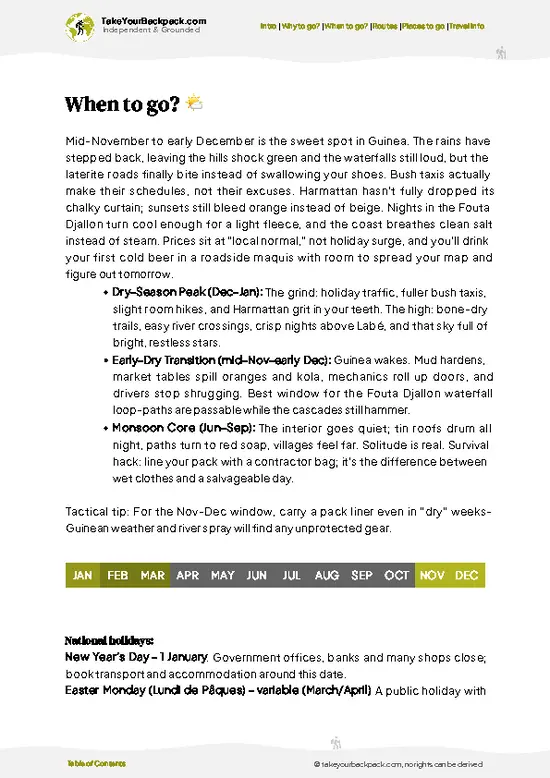
🌤️ When to go?Weather, crowds, and seasonal trade-offs


  • Topic: Weather – The dry season from November to April is your best bet. Expect clear skies and minimal rain, which means trails stay firm and the air feels crisp rather than muggy.

  • Topic: Temperature – Daytime highs hover around 28-32°C (82-90°F) during the dry months, perfect for trekking without overheating. The wet season pushes humidity up, making 30°C (86°F) feel sticky and exhausting.

  • Topic: Daylight Hours – Near the equator, daylight stays steady year-round, roughly 12 hours. This consistency means you can plan hikes without worrying about early nightfall.

  • Topic: Crowds – Coyah isn’t a tourist hotspot, so crowds are light year-round. Still, the dry season draws more local visitors, adding a lively but manageable buzz.

  • Topic: Seasonal Activities – Dry months open up access
read more 👉

  • Topic: Weather – The dry season from November to April is your best bet. Expect clear skies and minimal rain, which means trails stay firm and the air feels crisp rather than muggy.

  • Topic: Temperature – Daytime highs hover around 28-32°C (82-90°F) during the dry months, perfect for trekking without overheating. The wet season pushes humidity up, making 30°C (86°F) feel sticky and exhausting.

  • Topic: Daylight Hours – Near the equator, daylight stays steady year-round, roughly 12 hours. This consistency means you can plan hikes without worrying about early nightfall.

  • Topic: Crowds – Coyah isn’t a tourist hotspot, so crowds are light year-round. Still, the dry season draws more local visitors, adding a lively but manageable buzz.

  • Topic: Seasonal Activities – Dry months open up access to outdoor markets and cultural festivals, giving you a richer, more immersive experience.

  • Topic: Price Fluctuations – Accommodation and transport costs dip slightly during the wet season, but the trade-off is muddy trails and unpredictable weather.


Pro-tip: Aim for late November to early April to lock in dry trails and vibrant local life—your boots will thank you.


source: climatestotravel.comJANJanuary: excellent for travelingFEBFebruary: excellent for travelingMARMarch: excellent for travelingAPRApril: excellent for travelingMAYMay: fair for travelingJUNJune: fair for travelingJULJuly: below average for travelingAUGAugust: below average for travelingSEPSeptember: fair for travelingOCTOctober: fair for travelingNOVNovember: highly recommended for travelingDECDecember: excellent for traveling
when-to-go

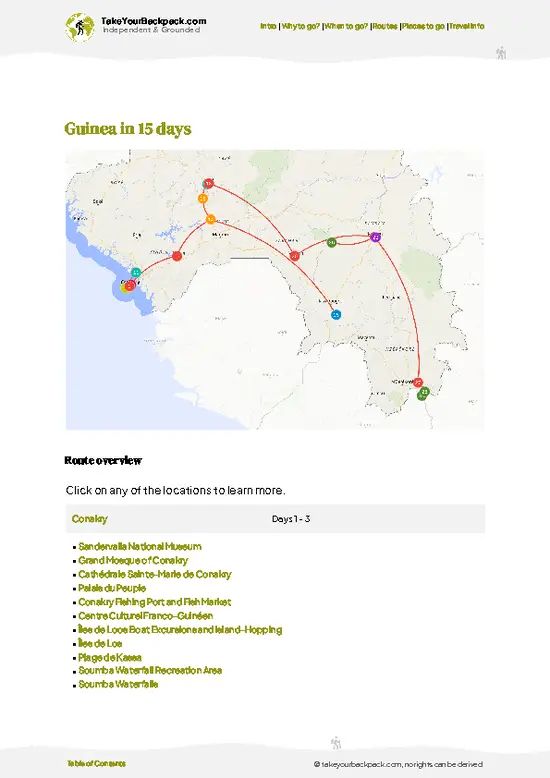
✈️ The backpacker research shortcutGuinea Travel Guide

An offline-friendly backpacking guide with optimized travel routes, ranked highlights, transport advice, and the best areas to stay.
example page 0 from our offline Travel Guide for Guinea
example page 1 from our offline Travel Guide for Guinea
example page 2 from our offline Travel Guide for Guinea
example page 3 from our offline Travel Guide for Guinea
example page 4 from our offline Travel Guide for Guinea
example page 5 from our offline Travel Guide for Guinea
example page 6 from our offline Travel Guide for Guinea
example page 7 from our offline Travel Guide for Guinea
The digital guide (282 pages) contains:
67 highlights, ranked by travel appeal
Optimized 5, 10 & 15-day travel routes
Cities, national parks, landmarks, beaches
How to get around
Offline-friendly for travel without Wi-Fi
👉 Click to see all 30+ guide features

📅 Plan smarter in minutes, not weeks
Month by month travel advice
Festivals & national holidays
Budget expectations

🗺️ Go to the right places, skip the overrated ones
Honest pros & cons of destinations
Top hikes, parks & viewpoints
Lesser-known places most travelers miss
Clear “worth it vs skip it” guidance

🛏️ Travel smoothly without rookie mistakes
Best areas to stay
Transport systems explained simply
Common scams & safety advice
SIM cards, money & practical tips

🌍 Understand the country, not just visit it
Culture & traditions
52 Essential phrases & customs
Festivals worth planning around
Traveler-friendly historical context
Insights that make places more meaningful

📱 Built for real travel conditions
Fully downloadable PDF
Works completely offline
Optimized for phone use
Useful in remote areas & buses
Everything in one place
Save weeks of stressful planning
Get instant access to your full guide. 30‑day money-back guarantee.


By proceeding you agree to our terms.
Sent to your inbox immediately after payment • 100% Secure Checkout
Best Backpacking Travel Advisor 2025 tourism awardBest Backpacking
Travel Advisor
2025
What others say about Take Your Backpack Guides:
⭐⭐⭐⭐⭐
Fantastic, amazing amount of information!
⭐⭐⭐⭐⭐
My goodness this is amazing, it's what I've been looking for hats off too you!
⭐⭐⭐⭐⭐
I think this is absolutely BRILLIANT
⭐⭐⭐⭐
Very complete and informative. It's still missing places, but I gotta to commend you
⭐⭐⭐⭐⭐
This is truly amazing, thank you, can't wait to explore it with my kids!
⭐⭐⭐⭐⭐
Awesome resource, thank you!
⭐⭐⭐⭐⭐
This is amazing! Can't wait to explore the ones I haven't seen
⭐⭐⭐⭐
I love this! Well done, great idea.
⭐⭐⭐⭐⭐
Thanks for taking the time to make this gem!
⭐⭐⭐⭐⭐
This might be the best website I've ever seen.
⭐⭐⭐⭐⭐
Congratulations, and thank you so much for your work; it's incredibly valuable.
⭐⭐⭐⭐
In all seriousness I think you did a great job pointing out the important spots
⭐⭐⭐⭐⭐
10/10 very good
⭐⭐⭐⭐⭐
As someone who's only just starting to visit regularly this is awesome, thank you.
⭐⭐⭐⭐
Thank you very much! I'm going to visit my dad, it's going to be very useful!
⭐⭐⭐⭐⭐
This is really cool! We'll be travelling for the first time and this definitely come in handy.
⭐⭐⭐⭐⭐
You are now our minister of culture, congratulations 👨‍💼
⭐⭐⭐⭐⭐
Just wanted to tell you that this is a pearl! Going to follow your recommendations.
⭐⭐⭐⭐⭐
This is so cool. I'll definitely be using the resource for my travels soon.
⭐⭐⭐⭐⭐
This is very impressive! Good work.
⭐⭐⭐⭐⭐
This is an amazing and informative site. Very well done!

🛏️ Where to stay?Best areas to stay in Guinea

Coyah’s best spot for backpackers is the town center, where the pulse of daily life hums strongest. Here, the streets are alive with market chatter and the scent of grilled street food—think smoky, spicy, and fresh. It’s where you’ll find the most budget-friendly guesthouses and a handful of hostels that cater to solo travelers looking to swap stories over shared meals. Safety feels tangible here, thanks to the steady flow of locals and a watchful community vibe that keeps things grounded after dark.

Venture outside this core, and the quiet neighborhoods start to feel isolated, with fewer options … read more 👉
Coyah’s best spot for backpackers is the town center, where the pulse of daily life hums strongest. Here, the streets are alive with market chatter and the scent of grilled street food—think smoky, spicy, and fresh. It’s where you’ll find the most budget-friendly guesthouses and a handful of hostels that cater to solo travelers looking to swap stories over shared meals. Safety feels tangible here, thanks to the steady flow of locals and a watchful community vibe that keeps things grounded after dark.

Venture outside this core, and the quiet neighborhoods start to feel isolated, with fewer options for socializing or grabbing a quick bite. Staying central means you’re not just avoiding the hassle of unreliable transport—you’re stepping into the heart of Coyah’s rhythm, where every corner offers a chance to connect and recharge before your next move.

🚌 Getting aroundMoving around without the hassle

Coyah moves with a rhythm that’s part spontaneous pulse, part stubborn routine. The sun hits the red earth hard by mid-morning, and the streets fill with a mix of honking motos and pedestrians weaving through the dust. It’s not a place where you’ll find a clockwork schedule, but there’s a flow to the chaos — a kind of local intuition that guides when and where transport appears. The scent of grilled street food mingles with exhaust and earth, grounding you in the moment. If you want to move like a local here, you’ll need to embrace the unpredictability but also know the key arteries that keep Coyah ticking.


  • Walking: The most reliable way to get around Coyah’s compact center. Streets are dusty but navigable, and walking lets you soak in the street vendors’ calls and the shifting light on
read more 👉
Coyah moves with a rhythm that’s part spontaneous pulse, part stubborn routine. The sun hits the red earth hard by mid-morning, and the streets fill with a mix of honking motos and pedestrians weaving through the dust. It’s not a place where you’ll find a clockwork schedule, but there’s a flow to the chaos — a kind of local intuition that guides when and where transport appears. The scent of grilled street food mingles with exhaust and earth, grounding you in the moment. If you want to move like a local here, you’ll need to embrace the unpredictability but also know the key arteries that keep Coyah ticking.


  • Walking: The most reliable way to get around Coyah’s compact center. Streets are dusty but navigable, and walking lets you soak in the street vendors’ calls and the shifting light on the red clay walls. No cost, and you’ll catch the town’s heartbeat up close.

  • Shared Taxis (Taxi Brousse): These minibuses run between Coyah and Conakry or other nearby towns. They don’t have fixed departure times — they leave when full, which can mean waiting up to an hour. Cost is low, around 2,000-3,000 GNF, but expect crowded, bumpy rides on uneven roads.

  • Motos (Motorcycle Taxis): The quickest way to dart through traffic or reach spots off the main roads. Prices vary but usually start around 1,000 GNF for short trips. Helmets aren’t guaranteed, so hold on tight and prepare for the wind and dust.

  • Private Taxis: More comfortable and faster than shared options, but pricier — expect to pay 10,000 GNF or more for a ride into town or to the bus station. Best for early mornings or late nights when other options thin out.

👛 Costs (as of 27 April 2026)Money, prices, and spending tips

Backpacking in Coyah, Guinea, means embracing a raw, unfiltered West African town where every dollar stretches but the experience feels grounded in real life. Here’s what your daily costs will look like if you’re traveling independently and want to keep it practical.
  • Dorm Accommodation: Expect basic guesthouses or small hostels with shared rooms. Prices hover around €5 to €10 per night. These places are simple—think a fan, a bed, and a mosquito net—but clean enough to rest after a day in the heat and dust.
  • Meals: Street food and local eateries dominate. You’ll find hearty meals like rice with sauce, grilled fish, or fried plantains for about €1.50 to €3 each. If you stick to local flavors and avoid imported goods, you can eat well on €4 to €6 daily.
  • Local Transport: Transport is mostly
read more 👉
Backpacking in Coyah, Guinea, means embracing a raw, unfiltered West African town where every dollar stretches but the experience feels grounded in real life. Here’s what your daily costs will look like if you’re traveling independently and want to keep it practical.
  • Dorm Accommodation: Expect basic guesthouses or small hostels with shared rooms. Prices hover around €5 to €10 per night. These places are simple—think a fan, a bed, and a mosquito net—but clean enough to rest after a day in the heat and dust.
  • Meals: Street food and local eateries dominate. You’ll find hearty meals like rice with sauce, grilled fish, or fried plantains for about €1.50 to €3 each. If you stick to local flavors and avoid imported goods, you can eat well on €4 to €6 daily.
  • Local Transport: Transport is mostly shared taxis or bush taxis. Short rides within town cost around €0.30 to €0.60. Longer trips to nearby villages or markets might push you to €1.50 or €2. Budget around €1 to €3 daily depending on your movement.
  • Basic Activities/Entry Fees: Coyah isn’t a tourist hotspot, so entry fees are minimal or nonexistent. Visiting local markets, walking around town, or exploring nearby natural spots won’t cost more than €0 to €2. If you hire a local guide for a day trip, expect to pay around €10 to €15.
  • Miscellaneous Expenses: This covers bottled water, snacks, phone credit, and occasional small purchases. Plan for about €1 to €3 daily. Water is crucial—tap water isn’t safe, so bottled or filtered water is a must.

Coyah’s daily budget for a backpacker comfortably ranges between €12 and €25. This keeps you grounded in the local rhythm without overspending on unnecessary comforts. The town’s simplicity means your money goes directly into authentic experiences, not inflated tourist prices.


source: guineaembassyusa.org
⚠️ Prices can change and everyone travels differently, so take this as a rough guide. Hope it helps you plan your adventure!

🚌 Day tripsBest day trips from Coyah

Coyah, Guinea, is a backpacker’s dream base for day trips, offering a rich tapestry of culture and nature just waiting to be explored.

Mount Nimba
A trek to Mount Nimba is a must. The journey takes about two hours by shared taxi, winding through lush landscapes that shift from bustling markets to serene hills. The summit offers breathtaking views of the surrounding valleys, and the air is crisp and invigorating. Bring a packed lunch to savor at the top, and don’t forget your camera; the golden hour light is magical. Aim for the dry season, from November to April, to avoid muddy trails. A common mistake? Underestimating the altitude; take your time and hydrate.


Conakry
Just an hour away, Conakry pulses with life. The capital city is a sensory overload of sounds and scents—street vendors … read more 👉
Coyah, Guinea, is a backpacker’s dream base for day trips, offering a rich tapestry of culture and nature just waiting to be explored.

Mount Nimba
A trek to Mount Nimba is a must. The journey takes about two hours by shared taxi, winding through lush landscapes that shift from bustling markets to serene hills. The summit offers breathtaking views of the surrounding valleys, and the air is crisp and invigorating. Bring a packed lunch to savor at the top, and don’t forget your camera; the golden hour light is magical. Aim for the dry season, from November to April, to avoid muddy trails. A common mistake? Underestimating the altitude; take your time and hydrate.


Conakry
Just an hour away, Conakry pulses with life. The capital city is a sensory overload of sounds and scents—street vendors selling spicy grilled fish and the vibrant colors of local fabrics. Spend the day exploring the National Museum and the lively markets. Public transport is cheap, but be prepared for a bit of a squeeze. Weekends are bustling, so if you prefer a quieter experience, aim for a weekday visit. A rookie error is sticking to tourist spots; dive into the local eateries for authentic flavors.
👉 Explore Conakry

Fouta Djallon
For a taste of Guinea’s stunning highlands, head to Fouta Djallon. It’s about a three-hour ride, but the journey is part of the adventure, with rolling hills and traditional villages along the way. Once there, hike to waterfalls and enjoy the cool mist on your skin. The best time to visit is during the rainy season when the waterfalls are at their most impressive. Many first-timers miss out by not packing a swimsuit; you’ll want to take a dip!
👉 Explore Fouta Djallon

Lake Kossou
A trip to Lake Kossou is perfect for a relaxing day. It’s roughly an hour and a half from Coyah, and the tranquil waters are ideal for a picnic or a swim. Bring a fishing rod if you’re feeling adventurous; the locals often share tips on the best spots. The dry season is best for clear skies and calm waters. A common pitfall is forgetting sunscreen; the sun can be relentless.
Want to know what more Guinea offers?
The Guinea Travel Guide describes 67 highlights, from cities to national parks, from beaches to hikes

Get the Travel Guide -

🍲 FoodLocal Flavors for Backpackers

Coyah’s food scene is a playground for your taste buds, where rich, earthy flavors dominate. Don’t miss trying fufu, a dense, doughy staple made from cassava or plantains, often paired with spicy peanut or okra sauces that hit your palate with a satisfying punch. The local markets are alive with vendors grilling fresh fish over open flames, filling the air with smoky, salty aromas that pull you in like a magnet.

Backpackers will find themselves drawn to these bustling street food stalls and casual eateries where meals are served on simple plates, eaten with hands, and shared among friends. Drinking here is more than hydration—it’s a social ritual. Sipping on bissap, a tart hibiscus drink, or cooling off with a locally brewed palm wine connects you to the rhythm of daily life. Expect to see … read more 👉
Coyah’s food scene is a playground for your taste buds, where rich, earthy flavors dominate. Don’t miss trying fufu, a dense, doughy staple made from cassava or plantains, often paired with spicy peanut or okra sauces that hit your palate with a satisfying punch. The local markets are alive with vendors grilling fresh fish over open flames, filling the air with smoky, salty aromas that pull you in like a magnet.

Backpackers will find themselves drawn to these bustling street food stalls and casual eateries where meals are served on simple plates, eaten with hands, and shared among friends. Drinking here is more than hydration—it’s a social ritual. Sipping on bissap, a tart hibiscus drink, or cooling off with a locally brewed palm wine connects you to the rhythm of daily life. Expect to see communal eating, where passing dishes and laughter flow freely—no rush, just the joy of breaking bread together.

🛡️ SafetyScams, Hazards, and Annoyances

Coyah is generally safe, but like any place, it has its quirks. Stay aware in crowded markets, where pickpockets might lurk. Keep your valuables close and avoid flashy displays of wealth.

If you’re solo, stick to well-lit areas after dark. The atmosphere shifts at night; it’s quieter, and fewer people are around. Trust your instincts—if something feels off, it probably is.

Scams aren’t rampant, but some locals might overcharge tourists for transport or goods. Always negotiate prices upfront, and don’t hesitate to walk away if it feels wrong.

Embrace the local vibe, engage with the community, and you’ll find that most interactions are genuine and welcoming.

Other Guinean cities near Coyah

Explore more nearby:

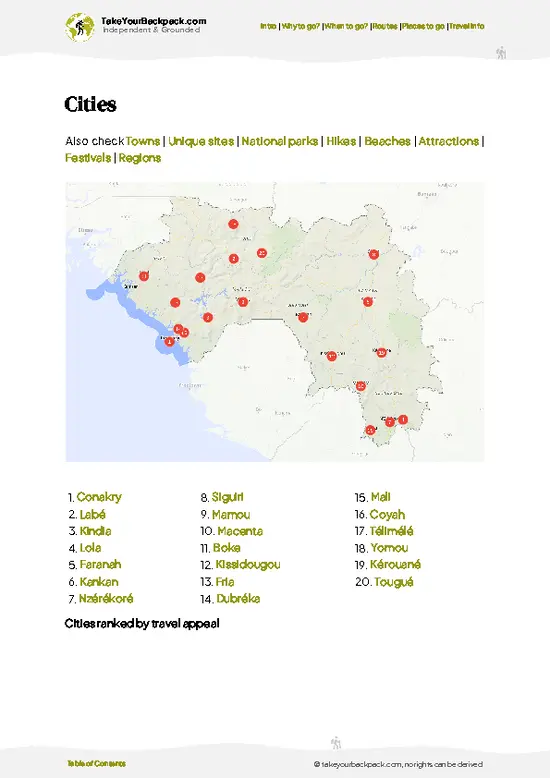
  • Dubréka—mangrove estuaries, river delta, gateway to Conakry| 17 km away
  • Conakry—Atlantic coastline, urban sprawl, port activity, music venues| 42 km away
  • Kindia—waterfalls, agricultural center, fruit markets| 68 km away

💡 Not sure where to go next?
Create a personalized itinerary for Guinea including Coyah and the places that fit your trip.

Generate my itinerary

👉 Discover all cities

Or checkout all Guinea has to offer (think cities, towns, villages, national parks, hikes, beaches, festivals)
Country photo of Guinea

We 💚 feedbackIs it worth it?

Coyah has a pulse that’s hard to ignore. The air is thick with the scent of grilled plantains and the chatter of locals fills the streets. Don’t miss the bustling market; it’s a sensory overload in the best way. Just be ready for the heat—hydrate often. Embrace the chaos; it’s where the real stories unfold. You’ll leave with more than just memories.

✍️ Help improve this page!
The information on this page is based on in-depth research, insights shared by experienced travelers, and feedback from the local travel community in Guinea. While every effort is made to keep the information accurate and current, conditions can change — so if you spot anything incorrect or outdated, please get in touch.


🙋‍♂️ Give feedback

👋 Meet the founderWho’s Behind Take Your Backpack?

Johan, backpacker and founder of TakeYourBackpackHi, I’m Johan (Netherlands 🇳🇱), the creator of TakeYourBackpack. Over the past decade, I’ve backpacked through 80+ countries across six continents, gaining extensive experience with independent travel, long-term trips, and overland routes.

This site is built on a combination of firsthand travel experience and carefully curated insights from other backpackers. Many guides are based on places I’ve personally visited, while others bring together tips, observations, and practical advice shared by trusted travelers I’ve met along the way.

The goal is to provide realistic, experience-driven guidance — not generic itineraries — so you can explore destinations with better context, clearer expectations, and more confidence.

Get full Guinea guide •
Instant download • 67 highlights • Full Offline guide