v2.webp)
The Open-Air Chaos: The Heartbeat of Kindia
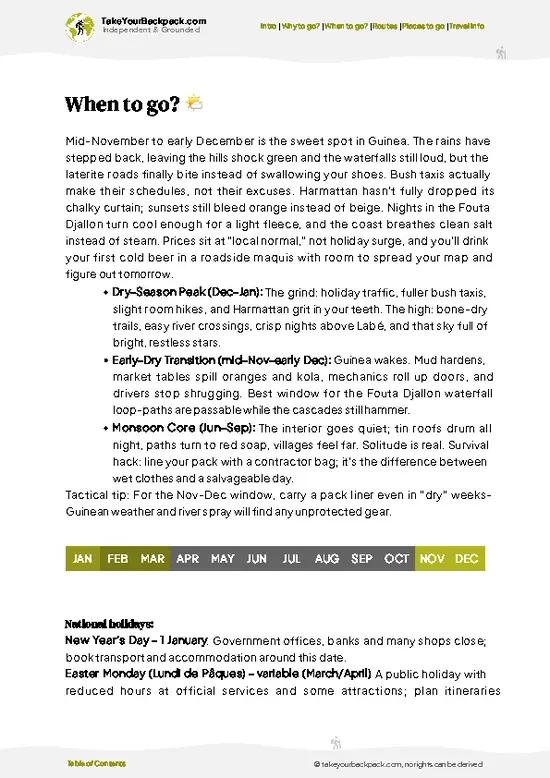
Forget the filtered snapshots of empty, sunlit stalls. The real Kindia Central Market is a living, breathing organism—loud, packed, and unapologetically alive. You’ll be shoulder-to-shoulder with locals, dodging wheelbarrows and haggling grandmothers. The sensory overload is the point: the shouts, the laughter, the clatter of coins, the aroma of smoked fish and ripe mangoes. This isn’t a market for passive browsing; it’s a full-contact sport. If you want to understand how Kindia ticks, this is the clockwork.
Guinean Textiles: Color That Punches You Awake
The fabric stalls aren’t just a photo op—they’re a masterclass in West African style. Bolts of wax print, bazin, and indigo-dyed cloth spill across tables and hang from rafters. You’ll see patterns … read more 👉
Forget the filtered snapshots of empty, sunlit stalls. The real Kindia Central Market is a living, breathing organism—loud, packed, and unapologetically alive. You’ll be shoulder-to-shoulder with locals, dodging wheelbarrows and haggling grandmothers. The sensory overload is the point: the shouts, the laughter, the clatter of coins, the aroma of smoked fish and ripe mangoes. This isn’t a market for passive browsing; it’s a full-contact sport. If you want to understand how Kindia ticks, this is the clockwork.
Guinean Textiles: Color That Punches You Awake
The fabric stalls aren’t just a photo op—they’re a masterclass in West African style. Bolts of wax print, bazin, and indigo-dyed cloth spill across tables and hang from rafters. You’ll see patterns … read more 👉
The Open-Air Chaos: The Heartbeat of Kindia
Forget the filtered snapshots of empty, sunlit stalls. The real Kindia Central Market is a living, breathing organism—loud, packed, and unapologetically alive. You’ll be shoulder-to-shoulder with locals, dodging wheelbarrows and haggling grandmothers. The sensory overload is the point: the shouts, the laughter, the clatter of coins, the aroma of smoked fish and ripe mangoes. This isn’t a market for passive browsing; it’s a full-contact sport. If you want to understand how Kindia ticks, this is the clockwork.
Guinean Textiles: Color That Punches You Awake
The fabric stalls aren’t just a photo op—they’re a masterclass in West African style. Bolts of wax print, bazin, and indigo-dyed cloth spill across tables and hang from rafters. You’ll see patterns that would make a Paris runway look timid. These aren’t souvenirs; they’re statements. Watch the vendors cut and measure with the speed of a Vegas card dealer, and don’t be shy about touching the goods. If you want to buy, bargain hard—locals expect it, and you’ll earn respect for trying.
Craft Stalls: Real Hands, Real Stories
Skip the generic trinkets. The best stalls are run by artisans who actually made what’s on the table—wooden masks, hand-carved utensils, woven baskets. Ask about the process and you’ll get a story, not a sales pitch. This is where you find objects with fingerprints, not factory barcodes. Prices are rarely marked, so negotiation is part of the ritual. If you want something with soul, this is where you dig.
Street Food Gauntlet: Guinea’s Snack Attack
You’ll smell the food before you see it—grilled brochettes, fried plantains, spicy peanut sauce, and the ever-present baguettes. This is not the place for a delicate stomach, but if you’re game, you’ll eat better (and cheaper) than in any restaurant. Vendors cook right in front of you, and the best stalls have a crowd of locals. Don’t expect menus or English; just point, smile, and let your taste buds do the talking.
Market Day Mayhem: The Real Show
If you’re lucky enough to hit Kindia on a big market day (usually every few days), brace yourself. The entire town seems to pour in, and the energy spikes. Farmers haul in produce by the sack, traders shout over each other, and the market spills into the streets. It’s not for the faint of heart, but it’s the closest you’ll get to the raw, unscripted pulse of Guinean life. This is the spectacle—messy, loud, and absolutely worth the sweat.
Forget the filtered snapshots of empty, sunlit stalls. The real Kindia Central Market is a living, breathing organism—loud, packed, and unapologetically alive. You’ll be shoulder-to-shoulder with locals, dodging wheelbarrows and haggling grandmothers. The sensory overload is the point: the shouts, the laughter, the clatter of coins, the aroma of smoked fish and ripe mangoes. This isn’t a market for passive browsing; it’s a full-contact sport. If you want to understand how Kindia ticks, this is the clockwork.
Guinean Textiles: Color That Punches You Awake
The fabric stalls aren’t just a photo op—they’re a masterclass in West African style. Bolts of wax print, bazin, and indigo-dyed cloth spill across tables and hang from rafters. You’ll see patterns that would make a Paris runway look timid. These aren’t souvenirs; they’re statements. Watch the vendors cut and measure with the speed of a Vegas card dealer, and don’t be shy about touching the goods. If you want to buy, bargain hard—locals expect it, and you’ll earn respect for trying.
Craft Stalls: Real Hands, Real Stories
Skip the generic trinkets. The best stalls are run by artisans who actually made what’s on the table—wooden masks, hand-carved utensils, woven baskets. Ask about the process and you’ll get a story, not a sales pitch. This is where you find objects with fingerprints, not factory barcodes. Prices are rarely marked, so negotiation is part of the ritual. If you want something with soul, this is where you dig.
Street Food Gauntlet: Guinea’s Snack Attack
You’ll smell the food before you see it—grilled brochettes, fried plantains, spicy peanut sauce, and the ever-present baguettes. This is not the place for a delicate stomach, but if you’re game, you’ll eat better (and cheaper) than in any restaurant. Vendors cook right in front of you, and the best stalls have a crowd of locals. Don’t expect menus or English; just point, smile, and let your taste buds do the talking.
Market Day Mayhem: The Real Show
If you’re lucky enough to hit Kindia on a big market day (usually every few days), brace yourself. The entire town seems to pour in, and the energy spikes. Farmers haul in produce by the sack, traders shout over each other, and the market spills into the streets. It’s not for the faint of heart, but it’s the closest you’ll get to the raw, unscripted pulse of Guinean life. This is the spectacle—messy, loud, and absolutely worth the sweat.
Spotted a mistake or missing something? Contact us.


 Best Backpacking
.jpg) Hi, I’m Johan (Netherlands 🇳🇱), the creator of TakeYourBackpack. Over the past decade, I’ve backpacked through 80+ countries across six continents, gaining extensive experience with independent travel, long-term trips, and overland routes.
Hi, I’m Johan (Netherlands 🇳🇱), the creator of TakeYourBackpack. Over the past decade, I’ve backpacked through 80+ countries across six continents, gaining extensive experience with independent travel, long-term trips, and overland routes.