
×

Guyana🇬🇾 | citiesGeorgetowncolonial architecture, Stabroek Market, Demerara River, botanical gardens | things to do and best time to go

Explore Shell BeachExplore Bartica Regatta

Backpacking in Georgetown
🏆 Top pickcity ranked #1
By Johan Kruseman 🇳🇱 | Updated September 4, 2026

You land in Georgetown and hit your first real fork: do you burn time and money hiding in an air‑conned hotel bubble near the seawall, or trade some comfort to base yourself closer to Stabroek Market and the minibus chaos where the city actually breathes? That choice matters, because Georgetown is where you decide how much of Guyana you’re really going to feel versus just transit through.

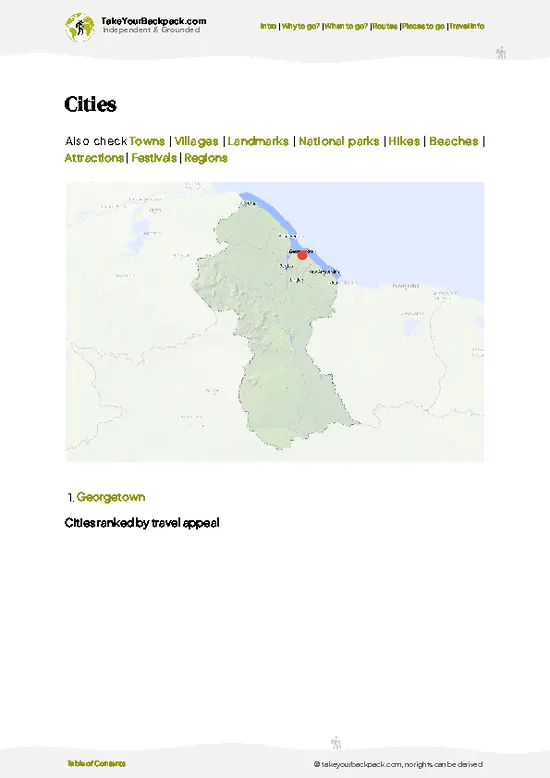
Georgetown sits on the muddy Atlantic coast in the north of Guyana, where the Demerara River meets the sea. For backpackers, it’s gritty, humid, and fascinating in short bursts. The wooden colonial buildings, St. George’s Cathedral, and the chaos around Stabroek and Bourda Markets are the main draw, plus a few low‑key bars and rum shops rather than polished nightlife. It’s cheaper than most Caribbean capitals but not rock‑bottom, moderately safe if you stay street‑smart, and less social than Lethem or interior lodges, where meeting other travelers is easier and the payoff per day is higher. Georgetown’s vibe: functional capital with flashes of charm, best treated as a launchpad, not the whole trip.

Discover everything you want to know in the 📖 Guyana Travel Guide.


Get your Guyana guide
46 ranked highlights, routes & tips, works offline (205 pages)
Loading the map 🌍
CLICK TO FILTER
cities
towns
villages
landmarks
national parks
hikes
beaches
attractions
festivals
regions
SHOW COUNTRY’S BESTSHOW ALL

✨ Why go?
Ranked #1 city in Guyana
Why Georgetown should be on your travel list

Georgetown, Guyana, is a strategic basecamp for backpackers navigating the region. It’s not just about the highlights; it’s the value it offers for your time and money. The city is packed with affordable hostels that cater to budget travelers, making it easy to find a place to crash after a day of exploration.

You’ll appreciate the walkability of Georgetown, where you can wander through vibrant streets lined with colonial architecture and local markets. This makes it simple to soak in the culture without burning through your cash on transport. When the sun sets, the nightlife kicks in, offering everything from lively bars to local eateries where you can dive into authentic Guyanese cuisine without breaking the bank.

Georgetown also serves as a launchpad for day trips into the surrounding … read more 👉
Georgetown, Guyana, is a strategic basecamp for backpackers navigating the region. It’s not just about the highlights; it’s the value it offers for your time and money. The city is packed with affordable hostels that cater to budget travelers, making it easy to find a place to crash after a day of exploration.

You’ll appreciate the walkability of Georgetown, where you can wander through vibrant streets lined with colonial architecture and local markets. This makes it simple to soak in the culture without burning through your cash on transport. When the sun sets, the nightlife kicks in, offering everything from lively bars to local eateries where you can dive into authentic Guyanese cuisine without breaking the bank.

Georgetown also serves as a launchpad for day trips into the surrounding natural beauty, whether you’re heading to the rainforest or the coast. This means you can maximize your experience without sacrificing comfort or convenience. If you’re looking for a place that balances affordability with a rich cultural experience, Georgetown is worth more than just a quick stop. It’s a smart choice for any backpacker’s itinerary.
Want to include Georgetown in your Guyana route?
Create a personalized Guyana itinerary that includes Georgetown and the places that fit your trip — based on your travel style, budget, and available time. Get your route in seconds.

Generate my trip

💡 HighlightsKey sights and experiences for travelers

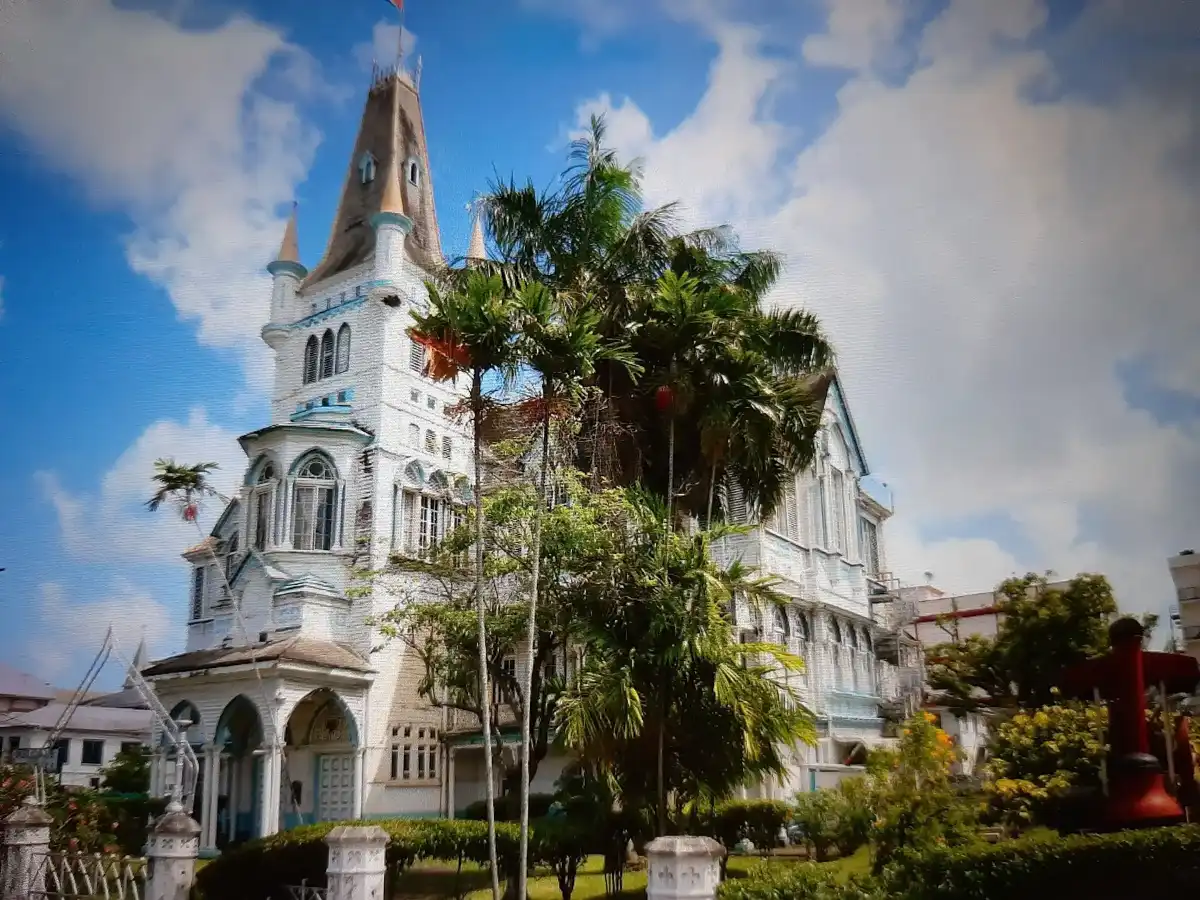
  • St. George’s Cathedral — One of the tallest wooden churches in the world, its soaring Gothic timber interior and stained glass make it instantly memorable; great for architecture buffs and anyone who likes a quiet, photogenic spot in the middle of the city.
  • Stabroek Market & Clock Tower — A chaotic, colorful market under an unmistakable iron clock tower; it’s the beating heart of Georgetown where you can watch traders, sample local snacks, and see the city’s daily life up close.
  • Georgetown Seawall (The Promenade) — Walkable concrete barrier along the Atlantic with wind, fishermen, and big skies; perfect for sunset, people-watching, and feeling how the city faces the ocean (bring sunscreen and a windbreaker).
  • Guyana National Museum — Small but rich in natural history and cultural exhibits
read more 👉
  • St. George’s Cathedral — One of the tallest wooden churches in the world, its soaring Gothic timber interior and stained glass make it instantly memorable; great for architecture buffs and anyone who likes a quiet, photogenic spot in the middle of the city.
  • Stabroek Market & Clock Tower — A chaotic, colorful market under an unmistakable iron clock tower; it’s the beating heart of Georgetown where you can watch traders, sample local snacks, and see the city’s daily life up close.
  • Georgetown Seawall (The Promenade) — Walkable concrete barrier along the Atlantic with wind, fishermen, and big skies; perfect for sunset, people-watching, and feeling how the city faces the ocean (bring sunscreen and a windbreaker).
  • Guyana National Museum — Small but rich in natural history and cultural exhibits (including Amerindian artifacts and colonial-era displays); a compact primer on the country’s story that’s worth a stop after a downtown walk.
  • Walter Roth Museum of Anthropology — A niche but excellent collection of Amerindian objects and ethnographic material; if you care about indigenous cultures, this place gives context you won’t find in bigger, more general museums.
  • Botanical Gardens & Guyana Zoo — Shady avenues, giant trees, and the famous Victoria water lilies in the pond; the attached zoo is small but home to local species and the grounds are an easy escape from city noise.
  • Umana Yana & National Cultural Centre — The striking conical benab (thatched Amerindian house) built as a cultural meeting place; it’s a great spot to catch performances, craft fairs, or just appreciate a major symbol of Guyanese indigenous design.
  • Parliament Building & Cenotaph — Beautiful colonial-era architecture on Brickdam with the Cenotaph war memorial out front; the exterior and surrounding square tell a lot about Guyana’s political history and give good photo ops.
  • Georgetown City Hall & Promenade Gardens — The red-brick City Hall is an architectural gem and the adjacent Promenade Gardens are a neat, quiet patch of colonial-era landscaping—both offer a calmer counterpoint to the nearby market bustle.
  • Bourda Cemetery — Old, atmospheric burial ground with colonial-era tombs and stories of early settlers and local notables; it’s a tangible slice of Georgetown’s layered past if you’re interested in history off the main tourist trail.
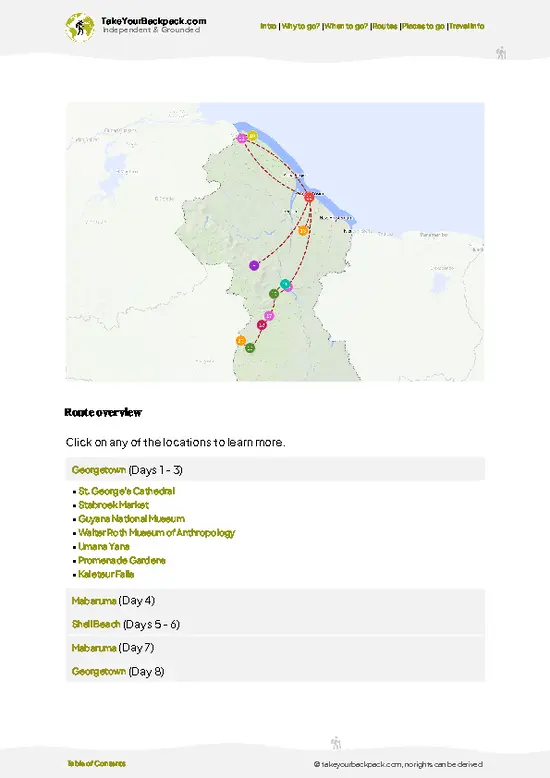
A few excellent day trips nearby: Kaieteur Falls (short charter flight from Georgetown), the Essequibo River islands and Dutch-era ruins at Fort Island (Kyk-Over-Al), and Bartica — the river gateway into Guyana’s interior.
Spotted a mistake or missing something? Contact us.

Things to do in Georgetown

Ratings based on Tripadvisor reviews. When you book through this link, you support our work at no extra cost to you.

🏘️ NeighborhoodsWhere things are and how it's laid out

Georgetown, Guyana, is a vibrant mix of colonial charm and Caribbean flair. Each neighborhood offers unique experiences that can shape your trip. Here’s a breakdown to help you navigate your choices.

Stabroek Market: This bustling area is the heart of Georgetown. It’s a sensory overload with local vendors selling everything from fresh produce to handmade crafts. The vibe is energetic, perfect for those who thrive on activity. Costs are low, and it’s highly walkable. Nightlife is minimal, but you can find local eateries. Ideal for short stays to soak in the local culture.

Camp Street: Known for its cafes and bars, this area is a favorite among backpackers looking for a lively atmosphere. Prices can vary, but you’ll find budget-friendly options. It’s walkable, with good transport links to … read more 👉
Georgetown, Guyana, is a vibrant mix of colonial charm and Caribbean flair. Each neighborhood offers unique experiences that can shape your trip. Here’s a breakdown to help you navigate your choices.

Stabroek Market: This bustling area is the heart of Georgetown. It’s a sensory overload with local vendors selling everything from fresh produce to handmade crafts. The vibe is energetic, perfect for those who thrive on activity. Costs are low, and it’s highly walkable. Nightlife is minimal, but you can find local eateries. Ideal for short stays to soak in the local culture.

Camp Street: Known for its cafes and bars, this area is a favorite among backpackers looking for a lively atmosphere. Prices can vary, but you’ll find budget-friendly options. It’s walkable, with good transport links to other parts of the city. The nightlife here is vibrant, making it suitable for longer stays if you enjoy socializing.

Queenstown: A quieter neighborhood, Queenstown offers a more relaxed vibe. It’s slightly pricier, but the comfort level is higher with cozy guesthouses. Walkability is decent, and it’s a short ride to the city center. This area is perfect for longer stays if you prefer a peaceful retreat after a day of exploration.

Water Street: This area is picturesque, lined with colonial architecture and waterfront views. Costs are moderate, and it’s very walkable. While nightlife is subdued, the scenic views make it a great spot for evening strolls. Best for short stays if you want a taste of Georgetown’s history without the hustle.

⌛️ 1 daySeeing the highlights in 24 hours

Georgetown, the capital of Guyana, is a vibrant blend of colonial architecture, rich history, and a lively cultural scene. The city pulses with a unique energy, where the echoes of its past meet the hustle of modern life. You’ll find colorful wooden houses, bustling markets, and the aroma of local cuisine wafting through the air. It’s a place that invites exploration, and you can easily fill a day with memorable experiences.

Start your morning in the historic Stabroek Market. This is where the city comes alive. The market is a sensory overload—vendors shouting, spices mingling, and fresh produce on display. Grab a local breakfast of roti and curry from one of the stalls. It’s a delicious way to fuel up for the day ahead. Afterward, take a stroll along the waterfront at the Promenade Gardens. … read more 👉
Georgetown, the capital of Guyana, is a vibrant blend of colonial architecture, rich history, and a lively cultural scene. The city pulses with a unique energy, where the echoes of its past meet the hustle of modern life. You’ll find colorful wooden houses, bustling markets, and the aroma of local cuisine wafting through the air. It’s a place that invites exploration, and you can easily fill a day with memorable experiences.

Start your morning in the historic Stabroek Market. This is where the city comes alive. The market is a sensory overload—vendors shouting, spices mingling, and fresh produce on display. Grab a local breakfast of roti and curry from one of the stalls. It’s a delicious way to fuel up for the day ahead. Afterward, take a stroll along the waterfront at the Promenade Gardens. The lush greenery and views of the Demerara River provide a peaceful contrast to the market’s chaos.

In the afternoon, head to the National Museum of Guyana. It’s not just a collection of artifacts; it tells the story of the country’s diverse cultures. Spend some time absorbing the history, then wander over to the nearby Botanical Gardens. This area is often overlooked by tourists but offers a serene escape with its sprawling lawns and exotic plants. Keep an eye out for the resident capybaras lounging by the water.

As evening approaches, make your way to the lively neighborhood of Bourda. Here, you’ll find a variety of local eateries. Try a plate of pepperpot, a traditional dish that’s a must-have. After dinner, stroll through the streets, soaking in the local nightlife. If you’re up for it, pop into a nearby bar for live music, where you can mingle with locals and soak up the rhythm of Georgetown.

This day in Georgetown is a tapestry of experiences—each moment a thread that weaves together the city’s essence. You’ll leave with a deeper understanding of its culture and a heart full of memories.
Turn your Georgetown visit into an Guyana adventure
Build a complete Guyana route with Georgetown, hidden gems, must-see destinations, and realistic travel times included.

Generate my trip

🌤️ When to go?When to go for the best experience


  • Topic: Weather – Georgetown’s climate is tropical, with a wet season from May to August and a drier stretch from September to April. The wet season means heavy, frequent rains that can turn trails into mud baths and slow down your plans. The drier months offer more reliable sunshine, making outdoor exploration far more enjoyable.

  • Topic: Temperature – Temperatures hover between 24°C and 31°C (75°F to 88°F) year-round, so heat is a constant companion. The wet season feels hotter and more humid, while the dry season brings slightly more comfortable, breezy conditions.

  • Topic: Daylight Hours – Near the equator, daylight is steady, roughly 12 hours daily all year. This consistency means you don’t have to juggle your schedule around shifting sunrise or sunset times.

  • Topic: Crowds – Tourist
read more 👉

  • Topic: Weather – Georgetown’s climate is tropical, with a wet season from May to August and a drier stretch from September to April. The wet season means heavy, frequent rains that can turn trails into mud baths and slow down your plans. The drier months offer more reliable sunshine, making outdoor exploration far more enjoyable.

  • Topic: Temperature – Temperatures hover between 24°C and 31°C (75°F to 88°F) year-round, so heat is a constant companion. The wet season feels hotter and more humid, while the dry season brings slightly more comfortable, breezy conditions.

  • Topic: Daylight Hours – Near the equator, daylight is steady, roughly 12 hours daily all year. This consistency means you don’t have to juggle your schedule around shifting sunrise or sunset times.

  • Topic: Crowds – Tourist traffic peaks during the dry season, especially December to March, when international visitors escape colder climates. Expect busier hostels and higher prices then. The wet season sees fewer travelers, offering solitude but also fewer open services.

  • Topic: Seasonal Activities – The dry season is prime for river tours, wildlife spotting, and cultural festivals like Mashramani in February. The wet season limits outdoor activities but can be rewarding for birdwatchers chasing migratory species.

  • Topic: Price Fluctuations – Accommodation and tours spike in the dry season due to demand. Booking ahead is crucial. The wet season offers lower prices and last-minute deals, but with the trade-off of unpredictable weather.


Pro-tip: Aim for the shoulder months of April or September to balance fewer crowds, decent weather, and better prices—your sweet spot for smart backpacking in Georgetown.


source: climatestotravel.comJANJanuary: highly recommended for travelingFEBFebruary: highly recommended for travelingMARMarch: highly recommended for travelingAPRApril: highly recommended for travelingMAYMay: fair for travelingJUNJune: fair for travelingJULJuly: fair for travelingAUGAugust: fair for travelingSEPSeptember: highly recommended for travelingOCTOctober: good for travelingNOVNovember: good for travelingDECDecember: highly recommended for traveling
guyana-city-georgetown
© Google | Abdelmajid Ouazine

✈️ The backpacker research shortcutGuyana Travel Guide

An offline-friendly backpacking guide with optimized travel routes, ranked highlights, transport advice, and the best areas to stay.
example page 0 from our offline Travel Guide for Guyana
example page 1 from our offline Travel Guide for Guyana
example page 2 from our offline Travel Guide for Guyana
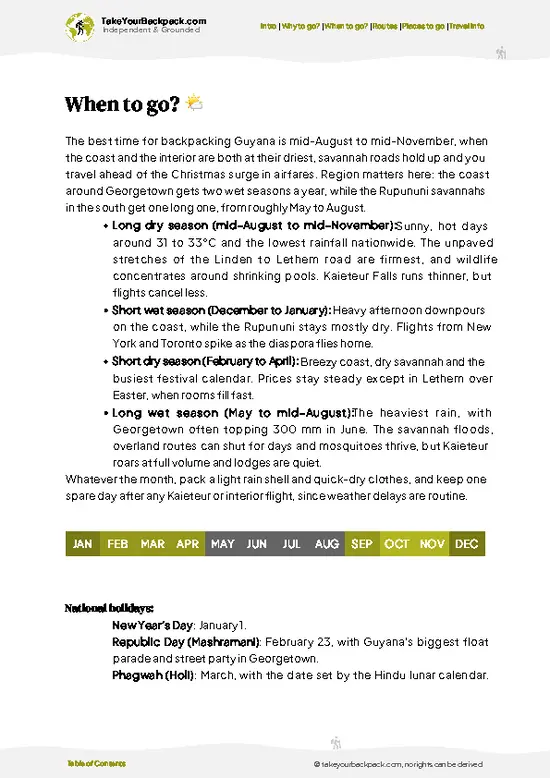
example page 3 from our offline Travel Guide for Guyana
example page 4 from our offline Travel Guide for Guyana
example page 5 from our offline Travel Guide for Guyana
example page 6 from our offline Travel Guide for Guyana
example page 7 from our offline Travel Guide for Guyana
The digital guide (205 pages) contains:
46 highlights, ranked by travel appeal
Optimized 5, 10 & 15-day travel routes
Cities, national parks, landmarks, beaches
How to get around
Offline-friendly for travel without Wi-Fi
👉 Click to see all 30+ guide features

📅 Plan smarter in minutes, not weeks
Month by month travel advice
Festivals & national holidays
Budget expectations

🗺️ Go to the right places, skip the overrated ones
Honest pros & cons of destinations
Top hikes, parks & viewpoints
Lesser-known places most travelers miss
Clear “worth it vs skip it” guidance

🛏️ Travel smoothly without rookie mistakes
Best areas to stay
Transport systems explained simply
Common scams & safety advice
SIM cards, money & practical tips

🌍 Understand the country, not just visit it
Culture & traditions
Local customs
Festivals worth planning around
Traveler-friendly historical context
Insights that make places more meaningful

📱 Built for real travel conditions
Fully downloadable PDF
Works completely offline
Optimized for phone use
Useful in remote areas & buses
Everything in one place
Save weeks of stressful planning
Get instant access to your full guide. 30‑day money-back guarantee.
+ Add another guide for just US$7.80

By proceeding you agree to our terms.
Sent to your inbox immediately after payment • 100% Secure Checkout
Best Backpacking Travel Advisor 2025 tourism awardBest Backpacking
Travel Advisor
2025
What others say about Take Your Backpack Guides:
⭐⭐⭐⭐⭐
Fantastic, amazing amount of information!
⭐⭐⭐⭐⭐
My goodness this is amazing, it's what I've been looking for hats off too you!
⭐⭐⭐⭐⭐
I think this is absolutely BRILLIANT
⭐⭐⭐⭐
Very complete and informative. It's still missing places, but I gotta to commend you
⭐⭐⭐⭐⭐
This is truly amazing, thank you, can't wait to explore it with my kids!
⭐⭐⭐⭐⭐
Awesome resource, thank you!
⭐⭐⭐⭐⭐
This is amazing! Can't wait to explore the ones I haven't seen
⭐⭐⭐⭐
I love this! Well done, great idea.
⭐⭐⭐⭐⭐
Thanks for taking the time to make this gem!
⭐⭐⭐⭐⭐
This might be the best website I've ever seen.
⭐⭐⭐⭐⭐
Congratulations, and thank you so much for your work; it's incredibly valuable.
⭐⭐⭐⭐
In all seriousness I think you did a great job pointing out the important spots
⭐⭐⭐⭐⭐
10/10 very good
⭐⭐⭐⭐⭐
As someone who's only just starting to visit regularly this is awesome, thank you.
⭐⭐⭐⭐
Thank you very much! I'm going to visit my dad, it's going to be very useful!
⭐⭐⭐⭐⭐
This is really cool! We'll be travelling for the first time and this definitely come in handy.
⭐⭐⭐⭐⭐
You are now our minister of culture, congratulations 👨‍💼
⭐⭐⭐⭐⭐
Just wanted to tell you that this is a pearl! Going to follow your recommendations.
⭐⭐⭐⭐⭐
This is so cool. I'll definitely be using the resource for my travels soon.
⭐⭐⭐⭐⭐
This is very impressive! Good work.
⭐⭐⭐⭐⭐
This is an amazing and informative site. Very well done!

🛏️ Where to stay?Best areas to stay in Guyana

In Georgetown, the real backpacker sweet spot is the downtown area, especially around Camp Street and the nearby streets that fan out toward the Stabroek Market. This zone nails the balance between safety, social buzz, and budget-friendly options. It’s where you’ll find the pulse of the city—street vendors hawking pepperpot and fresh fruit, locals chatting on benches, and a handful of hostels that cater to solo travelers and budget adventurers. The vibe here is gritty but welcoming, a genuine urban experience without the polished tourist gloss.

Compared to the more residential or business-heavy … read more 👉
In Georgetown, the real backpacker sweet spot is the downtown area, especially around Camp Street and the nearby streets that fan out toward the Stabroek Market. This zone nails the balance between safety, social buzz, and budget-friendly options. It’s where you’ll find the pulse of the city—street vendors hawking pepperpot and fresh fruit, locals chatting on benches, and a handful of hostels that cater to solo travelers and budget adventurers. The vibe here is gritty but welcoming, a genuine urban experience without the polished tourist gloss.

Compared to the more residential or business-heavy districts, downtown Georgetown offers a compact, walkable layout that’s crucial when you’re relying on foot or cheap public transport. It’s also where you’re most likely to bump into other backpackers, making it easier to swap stories or team up for day trips to the nearby botanical gardens or the Essequibo River.

Areas like Bourda or Queenstown lean quieter and safer but lack the social energy and hostel density that make a backpacker’s stay lively and connected. Meanwhile, neighborhoods farther from the center tend to be less secure and more isolated, which can eat into your comfort and peace of mind. So, downtown Georgetown isn’t just a place to crash—it’s your launchpad for the authentic Guyanese city experience, with the right mix of budget, safety, and social life.

🚌 Getting aroundHow to get around Georgetown

Georgetown moves at its own rhythm—a curious blend of colonial order and Caribbean spontaneity. The city’s pulse isn’t dictated by strict timetables but by a flexible dance between locals and visitors who know when to wait and when to jump on the next ride. You’ll find that the flow here rewards those who understand the trade-offs between time, money, and comfort. It’s not about rushing; it’s about choosing your battles wisely. Every transit choice is a strategic move in a game where saving a few dollars might cost you an hour or two, or where splurging on a bit of comfort can unlock a smoother, less stressful day. Knowing this lets you play the system like a pro, turning what looks like chaos into a well-oiled machine.


  • Walking: Georgetown’s compact layout makes walking the default mode—free,
read more 👉
Georgetown moves at its own rhythm—a curious blend of colonial order and Caribbean spontaneity. The city’s pulse isn’t dictated by strict timetables but by a flexible dance between locals and visitors who know when to wait and when to jump on the next ride. You’ll find that the flow here rewards those who understand the trade-offs between time, money, and comfort. It’s not about rushing; it’s about choosing your battles wisely. Every transit choice is a strategic move in a game where saving a few dollars might cost you an hour or two, or where splurging on a bit of comfort can unlock a smoother, less stressful day. Knowing this lets you play the system like a pro, turning what looks like chaos into a well-oiled machine.


  • Walking: Georgetown’s compact layout makes walking the default mode—free, flexible, and often the fastest way to navigate the historic core. You control your pace, soak in the architecture, and avoid any waiting. The trade-off? It’s only comfortable if the weather cooperates; midday sun can be brutal, so plan your legs accordingly.


  • Public Minibuses: These are the city’s budget backbone. Running roughly from 5:30 AM to 9 PM, fares hover around $0.50 to $1. They’re slow, often packed, and unpredictable in timing, but they cover most routes and won’t break your wallet. Expect a noisy, crowded ride where comfort is sacrificed for price and local color.


  • Taxi Troupes: Shared taxis operate on fixed routes but leave only when full, which means you might wait a bit. Prices are modest—usually $2 to $3 per ride—and the speed is decent, faster than minibuses but slower than private taxis. Comfort is basic but better than the minibus crush. Ideal if you want a middle ground between cost and convenience.


  • Private Taxis: Available 24/7, these offer the fastest and most comfortable rides with air conditioning and door-to-door service. Expect to pay $10 or more for typical city trips. This is the choice when time is tight or you’re carrying heavy gear, but it’s the most expensive option by far.


  • Bicycle Rentals: A clever hack for those who want speed and flexibility without the taxi price tag. Rentals cost around $5 to $10 per day. You avoid traffic jams and can cover more ground than walking, but you’ll need to be comfortable navigating busy streets and occasional hills. Weather-dependent and requires a bit of physical effort.

👛 Costs (as of 4 September 2026)Travel costs and budget guide for Georgetown

Backpacking in Georgetown, Guyana, offers a clear trade-off between cost and comfort, with prices reflecting the city’s developing infrastructure and local economy. Here’s the breakdown of what you can expect to spend daily:
  • Dorm Accommodation (High Season): Expect to pay around $10 to $15 USD per night. High season sees a slight bump due to demand, but options remain basic with modest facilities.
  • Dorm Accommodation (Off-Season): Prices drop to about $7 to $12 USD. Off-season travelers can find quieter spots and sometimes negotiate better rates, though quality stays consistent.
  • Meals: Street food and local eateries dominate the scene, with meals costing between $3 and $7 USD. You’ll find hearty portions of local staples like pepperpot or roti, enough to keep you fueled without breaking
read more 👉
Backpacking in Georgetown, Guyana, offers a clear trade-off between cost and comfort, with prices reflecting the city’s developing infrastructure and local economy. Here’s the breakdown of what you can expect to spend daily:
  • Dorm Accommodation (High Season): Expect to pay around $10 to $15 USD per night. High season sees a slight bump due to demand, but options remain basic with modest facilities.
  • Dorm Accommodation (Off-Season): Prices drop to about $7 to $12 USD. Off-season travelers can find quieter spots and sometimes negotiate better rates, though quality stays consistent.
  • Meals: Street food and local eateries dominate the scene, with meals costing between $3 and $7 USD. You’ll find hearty portions of local staples like pepperpot or roti, enough to keep you fueled without breaking the bank.
  • Local Transport: Minibuses and shared taxis are the norm, with fares typically ranging from $0.50 to $1.50 USD per trip. It’s cheap but expect crowded conditions and irregular schedules.
  • City Transport Pass: Georgetown doesn’t have a formal city transport pass system. Budget around $3 to $5 USD daily if you plan to use taxis or multiple bus rides frequently.
  • Basic Activities/Entry Fees: Museums, botanical gardens, and cultural sites usually charge between $2 and $5 USD. These modest fees give access to authentic local experiences without the tourist markup.
  • Miscellaneous Expenses: Budget $2 to $5 USD for essentials like bottled water, snacks, or small personal items. Prices can vary slightly depending on where you shop.

In total, a backpacker in Georgetown can expect to spend roughly $25 to $40 USD per day. This range balances the essentials—sleep, food, transport, and activities—allowing you to decide where to tighten or loosen the purse strings based on your comfort preferences and time constraints.


source: guyanatourism.com
⚠️ Prices can change and everyone travels differently, so take this as a rough guide. Hope it helps you plan your adventure!

🚌 Day tripsEasy escapes and nearby places

Georgetown, Guyana, is a fantastic launchpad for day trips that blend adventure with cultural immersion. You can easily explore the surrounding wonders without sacrificing comfort or breaking the bank. Here are some standout options.

Kaieteur Falls
A trip to Kaieteur Falls is like stepping into a postcard. The falls are one of the world’s largest single-drop waterfalls, plunging 741 feet into the Potaro River. The journey takes about an hour by plane from Georgetown, and while flights can be pricey (around $300 round-trip), the experience is worth every penny. The best time to visit is during the dry season (September to November) when the water flow is manageable. Don’t forget your camera; the views are breathtaking. A common mistake is underestimating the time needed for the flight and … read more 👉
Georgetown, Guyana, is a fantastic launchpad for day trips that blend adventure with cultural immersion. You can easily explore the surrounding wonders without sacrificing comfort or breaking the bank. Here are some standout options.

Kaieteur Falls
A trip to Kaieteur Falls is like stepping into a postcard. The falls are one of the world’s largest single-drop waterfalls, plunging 741 feet into the Potaro River. The journey takes about an hour by plane from Georgetown, and while flights can be pricey (around $300 round-trip), the experience is worth every penny. The best time to visit is during the dry season (September to November) when the water flow is manageable. Don’t forget your camera; the views are breathtaking. A common mistake is underestimating the time needed for the flight and tour, so plan accordingly.
👉 Explore Kaieteur Falls

Linden
Just a couple of hours from Georgetown, Linden offers a glimpse into local life. The town is known for its rich mining history and vibrant culture. You can take a bus for about $1.50, making it a budget-friendly option. Spend your day exploring the local markets and enjoying traditional dishes like pepperpot. The best time to visit is during the dry season when the weather is more pleasant. Many first-timers miss out on the local eateries, so dive into the food scene for an authentic experience.
👉 Explore Linden

Essequibo River
A day trip to the Essequibo River is a chance to unwind and soak in nature. You can hire a boat for around $50, which can accommodate a small group. The river is dotted with islands, and you can explore spots like Fort Island, where remnants of colonial history linger. The trip takes about an hour from Georgetown. The dry season is ideal for clearer waters and better wildlife spotting. A common pitfall is not bringing enough snacks; the river can be remote, so pack wisely.


Berbice River
The Berbice River is another gem, offering a mix of history and nature. It’s about a two-hour bus ride to New Amsterdam, where you can catch a boat. The round trip will cost around $20. The river is rich in biodiversity, and you might spot dolphins if you’re lucky. The best time to visit is during the dry season. First-timers often overlook the historical significance of the area, so take some time to learn about the local culture and heritage.


Orinduik Falls
Orinduik Falls is a stunning series of cascades on the border with Brazil. The trip involves a flight to Lethem, followed by a short drive. Expect to spend around $350 for the flight, but the natural beauty is unparalleled. The best time to visit is during the dry season. Many travelers underestimate the rugged terrain, so wear sturdy shoes and be prepared for a bit of hiking.
👉 Explore Orinduik Falls
Want to know what more Guyana offers?
The Guyana Travel Guide describes 46 highlights, from cities to national parks, from beaches to hikes

Get the Travel Guide -

🍲 FoodLocal Cuisine & Drinks

In Georgetown, Guyana, food is a vibrant tapestry of cultures, and every bite tells a story. You can’t miss trying pepperpot, a rich, spiced meat stew that’s a holiday staple but available year-round. Pair it with cassava bread for a delightful contrast. Then there’s roti, stuffed with curried meats or vegetables, which you’ll find sizzling at street stalls. The curry here is a must, bursting with flavors that reflect the Indian influence.

For drinks, dive into a glass of mauby, a sweet, herbal beverage made from the bark of the mauby tree, or try ginger beer for a spicy kick. If you’re feeling adventurous, sample the local rum—it’s smooth and often enjoyed neat or in cocktails.

Backpackers will find the heart of Georgetown’s food scene in its markets and street vendors. The Stabroek Marketread more 👉
In Georgetown, Guyana, food is a vibrant tapestry of cultures, and every bite tells a story. You can’t miss trying pepperpot, a rich, spiced meat stew that’s a holiday staple but available year-round. Pair it with cassava bread for a delightful contrast. Then there’s roti, stuffed with curried meats or vegetables, which you’ll find sizzling at street stalls. The curry here is a must, bursting with flavors that reflect the Indian influence.

For drinks, dive into a glass of mauby, a sweet, herbal beverage made from the bark of the mauby tree, or try ginger beer for a spicy kick. If you’re feeling adventurous, sample the local rum—it’s smooth and often enjoyed neat or in cocktails.

Backpackers will find the heart of Georgetown’s food scene in its markets and street vendors. The Stabroek Market is a sensory overload, with vendors calling out, spices wafting through the air, and fresh produce on display. Casual eateries serve up hearty meals at prices that won’t break the bank.

When dining, expect a communal vibe. Sharing food is common, and locals often invite you to join in. Just remember, it’s polite to greet your hosts and say “thank you” after a meal. Embrace the flavors and the warmth of the people; it’s all part of the experience.

🛡️ SafetyStaying Safe: What Travelers Should Know

Georgetown, Guyana, is generally safe for backpackers, but a little awareness goes a long way. Stick to well-lit areas, especially at night. The waterfront and main streets are usually bustling, but quieter neighborhoods can feel a bit sketchy after dark. If you’re solo, consider joining a group for evening outings; it’s more fun and adds a layer of safety.

Watch for common scams, like overly friendly locals offering unsolicited help or guiding you to shops where they earn a commission. Politely decline and trust your instincts. Street vendors can be persistent, but a firm “no, thank you” usually does the trick.

Keep your belongings close, especially in crowded markets. A crossbody bag or a money belt can be your best friend. Overall, Georgetown’s charm outweighs the minor annoyances. Approach … read more 👉
Georgetown, Guyana, is generally safe for backpackers, but a little awareness goes a long way. Stick to well-lit areas, especially at night. The waterfront and main streets are usually bustling, but quieter neighborhoods can feel a bit sketchy after dark. If you’re solo, consider joining a group for evening outings; it’s more fun and adds a layer of safety.

Watch for common scams, like overly friendly locals offering unsolicited help or guiding you to shops where they earn a commission. Politely decline and trust your instincts. Street vendors can be persistent, but a firm “no, thank you” usually does the trick.

Keep your belongings close, especially in crowded markets. A crossbody bag or a money belt can be your best friend. Overall, Georgetown’s charm outweighs the minor annoyances. Approach each day with curiosity and confidence, and you’ll navigate the city like a pro.

FAQCommon questions from travelers

2 to 3 days are sufficient to explore Georgetown's main attractions, including St. George's Cathedral, the Botanical Gardens, and the vibrant Stabroek Market. This allows time for cultural sites and a day trip to nearby nature reserves.
Yes, Georgetown is generally safe for solo backpackers if standard precautions are taken, such as avoiding poorly lit areas at night and not displaying valuables. Staying in well-reviewed guesthouses and using registered taxis enhances safety.
Georgetown is known for its colonial architecture, especially the wooden St. George's Cathedral, one of the tallest wooden churches in the world. It is also famous for its diverse cultural heritage and bustling markets like Stabroek Market.
⚠️ Things can change over time, so always validate details locally before you go.

Where to go next

Georgetown isn’t the only highlight in Guyana. Explore all what Guyana has to offer.
Country photo of Guyana

We 💚 feedbackKey takeaways before you go

Georgetown has a pulse that’s hard to ignore. The streets hum with a mix of Caribbean flair and colonial echoes. You’ll stumble upon the best surprise at the Stabroek Market—an explosion of colors and flavors that’ll make your taste buds dance. Just a heads-up: the heat can be relentless, so hydrate and pace yourself. Embrace the chaos; it’s part of the charm. This city isn’t polished, but that’s what makes it real. Dive in, and you’ll find treasures that linger long after you leave.

✍️ Help improve this page!
The information on this page is based on in-depth research, insights shared by experienced travelers, and feedback from the local travel community in Guyana. While every effort is made to keep the information accurate and current, conditions can change — so if you spot anything incorrect or outdated, please get in touch.


🙋‍♂️ Give feedback

👋 Meet the founderWho’s Behind Take Your Backpack?

Johan, backpacker and founder of TakeYourBackpackHi, I’m Johan (Netherlands 🇳🇱), the creator of TakeYourBackpack. Over the past decade, I’ve backpacked through 80+ countries across six continents, gaining extensive experience with independent travel, long-term trips, and overland routes.

This site is built on a combination of firsthand travel experience and carefully curated insights from other backpackers. Many guides are based on places I’ve personally visited, while others bring together tips, observations, and practical advice shared by trusted travelers I’ve met along the way.

The goal is to provide realistic, experience-driven guidance — not generic itineraries — so you can explore destinations with better context, clearer expectations, and more confidence.

Get full Guyana guide •
Instant download • 46 highlights • Full Offline guide